Flash Memoir Prompt: Last Time You Did Something with a Parent before They Became Older

Memoir Prompt parent

A brief writing invitation for remembering the last ordinary thing you shared with a parent before age changed the way you saw them.

Maybe you did not know it was the last time. You were carrying groceries together, walking through an airport, painting a fence, or sitting in the front seat while your parent drove too fast and knew every shortcut.

Then, later, something shifted. They stopped climbing ladders. They handed you the keys. They asked you to read the small print. This flash memoir prompt last time something parent before old age became visible asks you to return to that earlier scene, when your parent still seemed like the stronger one.

Memoir Prompt parent

The Prompt

Write about the last time you did something with a parent before they became older.

This prompt can unlock a memory you may have passed over because it seemed normal at the time. The day itself may not have announced anything. There may have been no hospital room, no dramatic talk, no clear goodbye to who your parent had been.

That is what gives the memory power. Often, we notice change only after it has already happened. A flash memoir prompt about the last time you did something with a parent before age changed them can help you study the small evidence: a hand on a steering wheel, a laugh across a table, a parent carrying something you would later carry for them.

Why This Memory Matters

This kind of story often lives in the space between childhood and adulthood. Even if you were already grown, your parent may still have felt fixed in your mind. Capable. Busy. Hard to impress. Hard to imagine as fragile.

Then one memory, when viewed from years later, becomes a hinge. Maybe it was the last hike before their knees started to fail. Maybe it was the last road trip before night driving became too much. Maybe it was the last time they lifted a grandchild, danced at a wedding, or stood at the grill like the whole backyard depended on them.

The story is not only about age. It is about what you did not know you were losing. It is about the moment before the roles began to tilt.

When you write this memory, try not to turn your parent into a symbol too quickly. Let them be a person first. If they complained, include that. If they were stubborn, proud, silly, or distracted, let that stay in the scene. A real parent on the page will feel more honest than a perfect one.

If you want a helpful way to think about your parent as a person in the story, you might borrow tools from literature. This guide on how to analyze characters in literature can help you notice habits, contradictions, and choices without flattening someone into one simple role.

How to Approach This Prompt

Begin with one physical detail. Do not start by explaining your whole relationship. Start with your father’s work boots by the back door. Start with your mother’s sunglasses on the dashboard. Start with the paper cup of gas station coffee your parent balanced between their knees.

Then narrow the memory to one scene. A scene gives the reader a place to stand. Instead of covering a decade of decline, choose the afternoon at the lake, the grocery run after church, or the last time your parent helped you move a couch.

Write what you noticed before you explain what it meant. At the time, maybe you noticed your parent’s quick walk, their joke, their impatience, or the way they waved away help. Years later, you may see that memory differently. Let both versions exist.

You can use this simple starting line if you need one: “The last time I remember my parent seeming young was when…” Then move right into action.

Keep the first draft small. You do not have to tell the whole story of illness, aging, family duty, or grief. This flash memoir prompt last time something parent before age changed the family works best when you stay close to one moment and let the meaning rise from the details.

If marking up memories helps you think, you may enjoy using the same habits readers use with books. This guide on how to annotate literature can also work for memoir drafts. Circle the strongest image. Underline the sentence that feels most true. Ask what the scene is really about.

A Quick Example

The last time my mother seemed young to me was at the garden center in April. She lifted two bags of potting soil into the cart before I could stop her. “Don’t fuss,” she said, wiping her hands on her jeans. She had dirt under one thumbnail and a blue sweatshirt tied around her waist. I was thirty-two, with my own mortgage and my own gray hairs starting, but beside her I still felt like a child sent to fetch the marigolds. We argued over tomato plants. She wanted the tall ones. I wanted the cheap ones. She won, of course. Three summers later, I would kneel in her yard and plant everything myself while she watched from a folding chair. But that day she pushed the cart, fast and crooked, like she had somewhere important to be.

Try It Yourself

Set a timer for ten minutes and write the scene as plainly as you can. Choose one shared action: driving, cooking, shopping, fixing, walking, waiting. Let the memory stay ordinary.

If emotion arrives, let it in, but do not force a big ending. You might close on an object, a gesture, or a line of dialogue. The quietest ending may be the one that stays with the reader.

This flash memoir prompt last time something parent before they became old may bring up tenderness, regret, gratitude, or surprise. You do not need to solve those feelings today. Just put one true moment on the page.

Want More Flash Memoir Prompts?

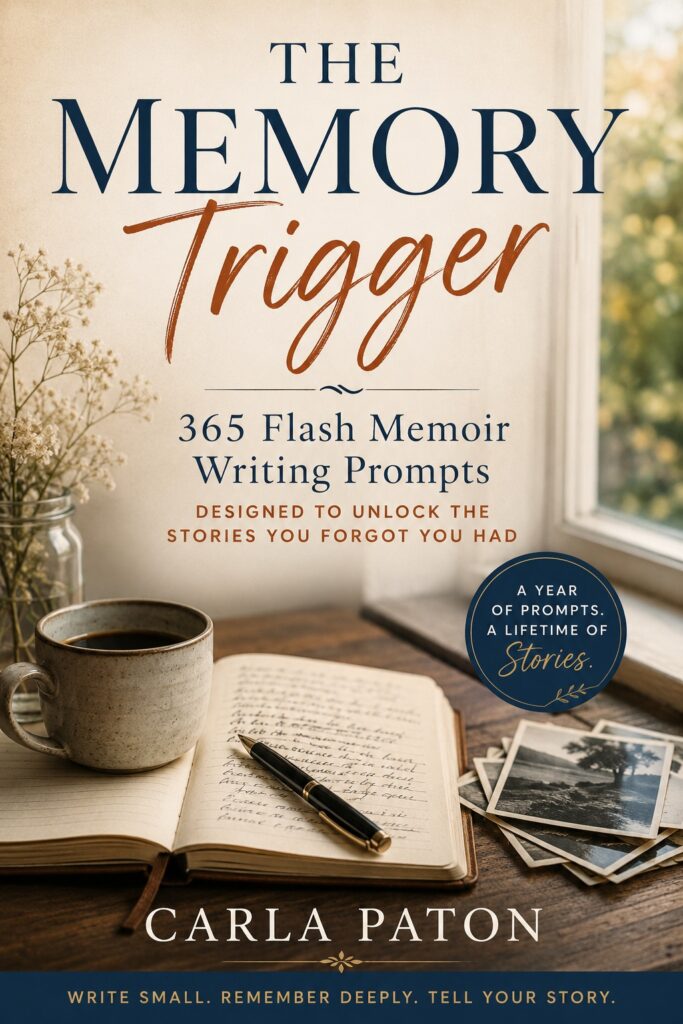
If this prompt helped you remember one clear scene, keep going. Short prompts can open doors you did not know were still there. Explore all 365 prompts in The Memory Trigger: 365 Flash Memoir Writing Prompts.

The Memory Trigger

Themes in The Kite Runner: A Student-Friendly Guide

kite runner themes

The Kite Runner is a powerful novel about guilt, love, and the hard work of repair. This guide explains the major themes in The Kite Runner so students can read the story with more confidence and write stronger essays.

This article contains affiliate links.

In this Guide

kite runner themes

Why the Themes in The Kite Runner Matter

The novel asks readers to think about what people owe to those they have hurt.

The themes in The Kite Runner matter because the story is not only about Amir’s childhood. It is also about how one choice can echo across a whole life.

Khaled Hosseini sets personal pain against political change in Afghanistan. You can learn more about the author through Britannica’s profile of Khaled Hosseini.

For students, the key is to connect each theme to character choice. Amir’s actions reveal the novel’s deepest questions about fear, courage, and repair.

Guilt and Redemption in The Kite Runner

Guilt drives much of the novel’s plot, but redemption gives it shape.

Amir feels guilt because he does not help Hassan during a traumatic assault. He also lies afterward, which deepens the harm.

This guilt does not fade with time. Even after Amir moves to America, his past follows him.

The phrase “There is a way to be good again” becomes one of the novel’s most important ideas. It suggests that redemption is possible, but it is not easy or quick.

In this way, the novel resembles Macbeth, where guilt damages the mind. The difference is that Amir seeks a path back, while Macbeth sinks deeper into violence.

Betrayal and Loyalty

The novel shows how betrayal can break trust, even when love is still present.

Hassan is loyal to Amir, often at great cost to himself. His famous line, “For you, a thousand times over,” shows devotion that Amir does not yet know how to return.

Amir betrays Hassan through silence. Later, he betrays him again by framing him for theft.

These moments make the friendship painful to read. The novel asks whether love matters if it does not lead to action.

Many themes in The Kite Runner become clear through this broken friendship. Loyalty is not just a feeling. It must show up when it matters most.

Fathers, Sons, and Emotional Inheritance

The father-son conflict shapes Amir’s view of himself.

Amir wants Baba’s love, but he feels he can never earn it. Baba values bravery, while Amir sees himself as weak.

This hurt affects how Amir treats Hassan. He often competes for Baba’s attention instead of seeing Hassan as a true friend.

Baba also carries secrets. His choices show that parents can pass down shame as well as love.

Like Hamlet, this novel connects family pressure to moral choice. Sons live in the shadow of fathers, but they must still decide who they will become.

Class, Ethnicity, and Power in Afghanistan

The novel shows how social systems can make cruelty seem normal.

Amir is Pashtun, while Hassan is Hazara. This difference shapes their lives from the start.

Even though the boys grow up together, they do not hold equal power. Hassan serves in Amir’s home, and society treats him as lower.

This theme helps explain why Amir can excuse his own behavior for so long. The world around him teaches him that Hassan’s pain counts less.

Students may compare this to To Kill a Mockingbird, where social injustice affects how people see truth. Both novels show that prejudice can hide inside everyday life.

Memory, Storytelling, and the Past

Amir tells the story because he cannot escape the past.

The novel begins with memory. Amir looks back on a winter day that changed everything.

Storytelling becomes a way to face what he once avoided. By telling the truth, Amir starts to understand his own guilt.

This is one reason the themes in The Kite Runner work so well for essays. The plot moves forward, but the meaning often comes from looking backward.

Memory is not neutral in the novel. It hurts, but it also pushes Amir toward action.

Religion, Shame, and Moral Choice

Faith appears in the novel as both comfort and conflict.

Some characters use religion to seek meaning. Others use it to control or harm people.

The Taliban’s abuse of faith shows how power can twist moral language. The novel separates true goodness from public displays of righteousness.

Amir’s journey is not only about feeling sorry. He must make a moral choice when he returns to Afghanistan.

This makes shame different from redemption. Shame traps Amir in self-hatred, while redemption asks him to act.

How to Write About Themes in The Kite Runner

A strong theme paragraph connects an idea to a choice, a conflict, and a change.

To write about themes in The Kite Runner, avoid broad claims like “guilt is important.” Instead, explain how guilt changes Amir’s actions over time.

A better claim might be: Hosseini shows that redemption requires risk because Amir can only confront his guilt by protecting Sohrab.

Notice how that sentence names the theme and ties it to plot. It also shows change.

If you need help moving from plot summary to deeper analysis, use our guide on how to analyze characters in literature.

If you want extra support for class notes, you can also use a printable theme study guide to track quotes and evidence.

When students discuss themes in The Kite Runner, the best answers focus on cause and effect. Ask what a character wants, what blocks that desire, and what the choice reveals.

Relevant Books to Read Next

These books pair well with The Kite Runner because they explore memory, war, and moral courage.

  • A Thousand Splendid Suns by Khaled Hosseini
  • The Book Thief by Markus Zusak

FAQ: Themes in The Kite Runner

What are the main themes in The Kite Runner?

The main themes in The Kite Runner include guilt, redemption, betrayal, loyalty, and the effects of social power.

What is the most important theme in the novel?

Redemption is often seen as the central theme. Amir’s story asks whether a person can repair harm through honest action.

How does Hassan show loyalty?

Hassan shows loyalty through his words and actions. He protects Amir, even when Amir does not protect him.

Why is class important in the novel?

Class matters because Amir and Hassan do not have equal status. Their friendship is shaped by ethnic and social divisions.

How can I write a thesis about the novel’s themes?

Choose one theme and connect it to a character’s change. A clear thesis should explain what the novel teaches about that idea.

Key Takeaway

The themes in The Kite Runner show that the past cannot be erased, but people can still choose repair. For students, the strongest insight is this: redemption begins when guilt turns into action.

Flash Memoir Prompt: Last Time You Cried in Front of Someone Else

Memoir prompt cried

Your tears may have come at the worst possible time: in a hallway, across a kitchen table, during a phone call, or beside someone who suddenly saw more of you than you meant to show.

Memoir prompt cried

The Prompt

Write about the last time you cried in front of someone else.

This flash memoir prompt last time cried front someone asks you to return to a moment when emotion became visible. That can be uncomfortable, but it can also lead to honest writing. Tears change a scene. They shift the room, the conversation, and sometimes the relationship.

You do not have to explain your whole life to write this piece. You only need one moment. Who was there? Where were you standing or sitting? What happened in the seconds before you realized you were crying?

Why This Memory Matters

Crying in front of someone else can feel like losing control, but in memoir, that loss of control often reveals the truth of the scene. Maybe you cried because you were hurt. Maybe you cried from relief. Maybe you had been holding yourself together for so long that one kind question broke the seal.

The person who saw you cry matters too. A parent, teacher, friend, nurse, stranger, partner, or child can change the meaning of the memory. Were they gentle? Awkward? Silent? Did they look away, hand you a tissue, make a joke, or cry too?

This kind of memory can uncover a story about trust. It may show who felt safe to you, who did not, or who surprised you. It may also reveal something about how you were taught to handle emotion. Some people grew up hearing, “Don’t cry.” Others were comforted right away. Many of us carry mixed lessons.

A strong flash memoir does not need a dramatic event. The real story might be the tiny action that followed the tears. A hand on your shoulder. A door closing softly. Someone saying your name in a different voice. These details help readers feel the moment without needing a long explanation.

How to Approach This Prompt

For this flash memoir prompt last time cried front someone, begin with a physical detail. Do not start by explaining the whole problem. Start with the body.

Maybe your throat tightened. Maybe your face felt hot. Or maybe you stared at the floor because eye contact would make the tears fall faster. Write that first.

Then narrow the memory to one scene. Keep yourself in one place if you can. A car parked outside a school. A doctor’s office. A living room after everyone else went to bed. The smaller the scene, the easier it is to make it vivid.

Write what you noticed before you write what it meant. What color was the room? What did the other person do with their hands? Was there a sound in the background, like a dishwasher, traffic, or a phone buzzing on the table?

If you want help paying closer attention to small details, the same habits used when you annotate literature can help with memoir. Notice what repeats. Notice what feels charged. Notice where the silence sits.

You can also think of the other person in the scene the way you might study a character. What did their reaction reveal? If that idea interests you, this guide to analyzing characters in literature can give you a useful lens for real-life people too.

Avoid trying to tell the entire relationship history at once. You can hint at it through one action. If your sister passed you a napkin without looking at you, that may say more than three paragraphs of background.

A Quick Example

I cried in front of my boss in the copy room, which felt like the least dignified place possible. The printer had jammed again, and I was holding a stack of half-warm papers against my chest. She asked, “Are you okay?” in a voice so normal and kind that I could not answer. My eyes filled before I could turn away. I hated the buzzing light above us. I hated the smell of toner. She did not ask for details. She just closed the copy room door and said, “Take a minute.” That made me cry harder. It was not because of the printer. It was because someone had finally noticed I was not fine, and she did not make me prove it.

Try It Yourself

Set a timer for ten minutes and write the scene without stopping. Use the prompt exactly as it is: write about the last time you cried in front of someone else.

Do not worry about sounding polished. Focus on what happened in the room. Let the meaning rise from the details. If you get stuck, return to the body: your face, your hands, your breath, your voice.

You might find that the memory is softer than you expected. You might also find that it still stings. Either response is welcome on the page. The goal is not to judge the tears. The goal is to remember them clearly enough to understand what they carried.

This flash memoir prompt last time cried front someone works best when you let the scene stay small. One person. One moment. One visible emotion. That is enough for a powerful piece of writing.

Want More Flash Memoir Prompts?

Explore all 365 prompts in The Memory Trigger: 365 Flash Memoir Writing Prompts.

The Memory Trigger


Flash Memoir Prompt: Last Time You Talked to a Version of Yourself that No Longer Exists

memoir version of yourself

A brief, tender writing invitation to explore the last time you talked to a version of yourself that no longer exists, using one clear memory, one physical detail, and one emotional truth.

Maybe it happened while deleting old photos. Maybe you found a message thread from years ago and barely recognized the person typing your words. The jokes were familiar, but the need inside them was not. You were trying so hard to be liked, brave, difficult, invisible, impressive, or fine.

This flash memoir prompt last time talked version no longer exists asks you to pause at that strange edge between who you were and who you are now. It is not about judging your old self. It is about meeting them for one small scene and noticing what they still have to tell you.

memoir version of yourself

The Prompt

Write about the last time you talked to a version of yourself that no longer exists.

This prompt can unlock a memory because it gives you a person to write toward. That person is you, but also not quite you anymore. Maybe it is the student who thought one bad grade would ruin everything. Maybe it is the parent who had no idea how tired they were. Maybe it is the younger you who stayed too long in a place that made them small.

A flash memoir prompt last time talked version no longer exists works best when you choose one real moment. Do not try to explain your whole life change. Instead, look for a final conversation, a private thought, a mirror glance, a journal entry, or a moment when you realize, “I do not live in that old self anymore.”

Why This Memory Matters

We often change without a ceremony. There is no bell when we become less afraid. There is no receipt when we stop needing approval from someone who once held too much power. One day, we answer differently. One day, we walk away sooner. One day, we read an old note and think, “Oh, I remember being that person.”

This kind of memory matters because it shows growth without turning it into a speech. The old version of you might have been hopeful, lonely, stubborn, proud, or scared. They might have been doing the best they could with what they knew.

Writing about them with care can help you see the distance you have traveled. It can also help you avoid making your past self the villain. In memoir, the strongest moments often come from honest attention, not perfect wisdom.

If you are a student or newer writer, this prompt is also a useful way to study tone. Are you writing with regret, kindness, humor, or relief? If you want help noticing that difference, this guide to tone vs. mood in literature can help you name the feeling your scene creates.

How to Approach This Prompt

Begin with a physical detail. Choose something small enough to hold the scene in place. A cracked phone screen. A bathroom mirror. A school hallway. A coffee cup you gripped too tightly. A sweatshirt you wore during a hard year.

Then write the scene before you explain it. What did you see? What did your body feel like? What words were said out loud, if any? Memoir becomes more powerful when the reader can stand inside the moment with you.

Try starting with this sentence: “The last time I felt like that version of me, I was…” Let the sentence lead you into one place. Keep the frame tight. You do not need to tell every reason that version of you disappeared.

You might also write as if you are speaking directly to your old self. Use “you” if it feels natural. For example: “You thought silence would keep the peace. You did not know it was costing you sleep.” This can create a quiet conversation between past and present.

If you get stuck, slow down and observe the memory like a reader. Notice what repeats, what feels strange now, and what detail carries the most emotion. For more practice with close attention, you might enjoy this guide on how to annotate literature, since the same skill can help you read your own memories more carefully.

The goal is not to prove you are better now. The goal is to tell the truth about a small ending. This flash memoir prompt last time talked version no longer exists is really about the quiet goodbye we do not always know we are saying.

A Quick Example

I found her in the notes app, between a grocery list and a half-written apology. She was twenty-three and convinced that if she explained herself clearly enough, everyone would understand and stay. The note began, “I know I’m probably overreacting.” I sat on the edge of my bed in my work clothes, shoes still on, and read the whole thing twice. Outside, someone was dragging trash bins to the curb. I wanted to reach through the screen and take the phone from her hand. I wanted to say, “You are allowed to be upset before someone else agrees with you.” Instead, I deleted the note. Then I opened a blank one and wrote, “I believe you.”

Try It Yourself

Set a timer for ten minutes and write one scene. Choose the last time you remember being close to that old version of yourself. Do not worry about making it polished. Just stay near the moment.

You may write about a conversation with another person, or you may write about a silent exchange with yourself. A photograph can count. A journal page can count. A song that pulls you back into an old room can count.

When you finish, read it once and underline the sentence that feels most true. That sentence may be the heart of the piece. If you revise later, build around it, but do not rush to explain it away.

Want More Flash Memoir Prompts?

If this prompt opened a memory you did not expect, keep following that thread. Short prompts can lead to honest writing because they ask for one clear scene instead of a whole life story. Explore all 365 prompts in The Memory Trigger: 365 Flash Memoir Writing Prompts.

The Memory Trigger

Flash Memoir Prompt: Something You Used to Do Every Day that Quietly Stopped

flash memoir prompt habit

You find the old charger in a drawer, or hear the kettle click, and suddenly remember a whole version of yourself: the person who once did the same small thing every day until, without ceremony, you stopped.

The Prompt

Write about something you used to do every day that quietly stopped.

This flash memoir prompt about something you used to do every day invites you to notice the small routines that shaped a season of your life. It might be a phone call, a walk, a lunch packed in a certain way, a game on the bus, or the habit of checking the window before bed.

The quiet part matters. This is not about a dramatic ending. It is about the kind of change you only see later. One day was the last day, but no one knew it at the time.

flash memoir prompt habit

Why This Memory Matters

Daily habits can tell the truth about who we were. They show what we needed, what we feared, who we loved, and how we made it through our days.

You may write about something childish that faded as you grew up. Maybe you stopped sleeping with the hallway light on. Maybe you stopped drawing stars in the margins of your notes. Maybe you stopped waiting for someone to call because, at some point, waiting became too heavy.

You may also write about a habit that belonged to a relationship. A good morning text. A ride to school. A shared snack after practice. A certain seat at the dinner table. When the habit stopped, the relationship may have changed too, even if no one said it out loud.

That is why this flash memoir prompt something used do every day can lead to a strong piece of writing. A small routine can hold a larger story. The trick is to stay close to the moment instead of trying to explain your whole life at once.

If you enjoy looking closely at meaning in small details, you may also like this guide on how to annotate literature. The same skill helps in memoir: mark what stands out, then ask why it stayed with you.

How to Approach This Prompt

Begin with the object or action, not the explanation. Put your reader in the room with you.

Instead of starting with, “I used to be really close to my grandmother,” try starting with the phone cord twisted around your finger. Start with the smell of toast in her kitchen. Start with the way the call always ended with the same sentence.

Narrow the memory to one scene. Pick one ordinary day when the habit still existed. Do not rush to the last time yet. Let us see the routine while it was still normal.

For example, if you used to write in a diary every night, choose one night. Where were you sitting? What pen did you use? Were you hiding the notebook under your pillow? Was your handwriting neat at first, then tired by the end?

After you write what you noticed, you can move toward what it meant. This order helps the memory feel alive. The meaning will land better if the reader has already touched the scene through your details.

You might also think about tone. Is this memory funny now? Sad? Tender? A little embarrassing? If you want help naming that feeling, this explanation of tone vs. mood in literature can help you think about the emotional effect of your own writing.

Try not to force a big lesson. The strongest ending may be simple: you noticed the habit was gone, and you missed the person you had been when it still mattered.

A Quick Example

Every morning in seventh grade, I checked the mailbox before school, even though the mail never came that early. I was waiting for a letter from my father, who had moved two states away and promised he would write. The mailbox was cold in winter and hot in May. I remember the metal handle sticking to my fingers and the hollow sound when I pulled the door open. Most days there was nothing inside except dust and a curled grocery flyer from the day before. I stopped checking sometime that spring. I do not remember deciding to stop. I only remember walking past it one morning with my backpack bouncing against my hip and realizing, halfway to the bus stop, that I had not looked.

Try It Yourself

Set a timer for ten minutes and write the first version quickly. Choose one habit that belonged to a clear part of your life. It can be small. In fact, small may work better.

Use this flash memoir prompt something used do every day as a doorway into one scene. Write the daily action first. Let the emotion arrive later. If you get stuck, finish this sentence: “I did it every day until one day I didn’t, and I didn’t notice because…”

You do not need to solve the memory. You only need to notice it honestly. The quiet stopping may be the whole point.

Want More Flash Memoir Prompts?

If this prompt opened a memory, keep going. Short prompts can help you build a steady writing practice without pressure. Explore all 365 prompts in The Memory Trigger: 365 Flash Memoir Writing Prompts.

The Memory Trigger


Most Influential Redemption Arcs in Literature

Redemption arc

The Most Influential Redemption Arcs show how flawed people can change, repair harm, or face the truth about themselves. These stories matter because they help readers think about guilt, mercy, justice, and hope.

From old classics to modern novels, redemption arcs ask one hard question: can a person become better after doing wrong?

In this Guide

Redemption arc

Why the Most Influential Redemption Arcs Still Matter

Redemption arcs turn moral failure into a story of change.

The Most Influential Redemption Arcs do not excuse bad choices. They show what happens when a character sees the damage they caused and tries to change course.

This is why students often meet these arcs in English class. They give readers a clear way to study character growth, conflict, theme, and moral choice.

A strong redemption arc usually has a few key parts. The character causes harm, faces a crisis, feels the weight of guilt, and makes a choice that proves real change.

That final choice matters most. A character is not redeemed just because they feel sorry. They must act.

Most Influential Redemption Arcs in Classic Literature

Classic literature gives us some of the clearest examples of moral change.

These Most Influential Redemption Arcs have lasted because they feel honest. The characters do not become perfect overnight. Their change costs them something.

Ebenezer Scrooge in A Christmas Carol

Charles Dickens gives readers one of the most famous redemption stories ever written. Scrooge starts as cold, greedy, and cruel to the less fortunate.

After visits from the ghosts, he sees his past, present, and possible future. These visions force him to face the lonely life he has built.

Scrooge changes because he chooses kindness while he still has time. His redemption feels joyful, but it also comes from fear, shame, and self-knowledge.

For background on Dickens and his work, see Britannica’s overview of Charles Dickens.

Jean Valjean in Les Misérables

Victor Hugo’s Jean Valjean begins as a man marked by prison and poverty. After he steals silver from a bishop, the bishop protects him instead of turning him in.

That act of mercy changes Valjean’s life. He becomes a man who helps others, even when it puts him at risk.

Valjean’s arc shows that redemption is not one moment. It is a lifetime of hard choices.

Sydney Carton in A Tale of Two Cities

Sydney Carton starts as bitter and wasted. He sees himself as a failure with little purpose.

His final act changes how readers see him. By giving his life to save another man, he turns regret into sacrifice.

Carton’s redemption is tragic, but it is powerful. He cannot fix his whole past, yet he can give his life meaning.

Severus Snape in the Harry Potter Series

Snape is one of modern literature’s most debated redemption arcs. He is cruel, secretive, and often unfair.

Yet his hidden loyalty reveals a more complex person. His choices do not erase his harm, but they show a long struggle with guilt and love.

This is why Snape remains important in classroom and fan debates. His arc asks whether sacrifice can balance past cruelty.

Themes and Symbols in Redemption Arcs

Redemption stories often use symbols to show inner change.

Light and darkness appear often in redemption arcs. A character may move from shadow into light, which can show moral growth or new hope.

Journeys also matter. A road, a prison, or a return home can show that change takes effort. Jean Valjean’s movement through France reflects his search for grace and safety.

Names can carry meaning too. When a character takes a new name, it may show a new self. Valjean becomes Monsieur Madeleine, which points to his attempt to live beyond his prison past.

Time is another key symbol. In A Christmas Carol, the ghosts use time to teach Scrooge. The past brings regret, while the future offers warning.

If you want to sharpen your close reading of symbols, imagery, and word choice, try our guide on how to read Emily Dickinson. The same skills can help you study longer novels.

Modern Lessons from the Most Influential Redemption Arcs

Redemption arcs still shape how readers talk about justice and change.

The Most Influential Redemption Arcs are not simple “good guy” stories. They often ask if people deserve a second chance after real harm.

This question feels modern because people still debate it in schools, courts, families, and online spaces. Literature gives readers a safer place to think through the problem.

Some arcs stress forgiveness. Others focus on responsibility. The best ones do not make the answer too easy.

That is why redemption arcs work well in essays. You can ask what the character did wrong, what they learned, and whether their final choice truly repairs anything.

These books are strong choices for students who want deeper examples.

  • A Christmas Carol by Charles Dickens
  • Les Misérables by Victor Hugo

Both books show redemption in a clear but serious way. They also give students rich material for theme, character, and symbolism essays.

For shorter practice, pair a novel with poetry study. A poem can train you to notice small details that reveal change. Our post on reading Emily Dickinson is a useful place to start.

FAQs About the Most Influential Redemption Arcs

What are the Most Influential Redemption Arcs in literature?

The Most Influential Redemption Arcs often include Scrooge in A Christmas Carol, Jean Valjean in Les Misérables, and Sydney Carton in A Tale of Two Cities.

What makes a redemption arc believable?

A believable arc shows guilt, effort, and real change. The character must act in a way that proves they have learned from the past.

Is redemption the same as forgiveness?

No. A character may seek redemption without being fully forgiven. Forgiveness depends on others, while redemption depends on moral change.

Why do teachers assign books with redemption arcs?

These books help students study character growth, theme, and conflict. They also lead to strong essay topics about justice and mercy.

Key Takeaway

The Most Influential Redemption Arcs remind us that change is possible, but never cheap. Great literature shows that redemption requires truth, action, and the courage to become someone better.

Themes in Pride and Prejudice: A Student-Friendly Guide

Themes in Pride and Prejudice

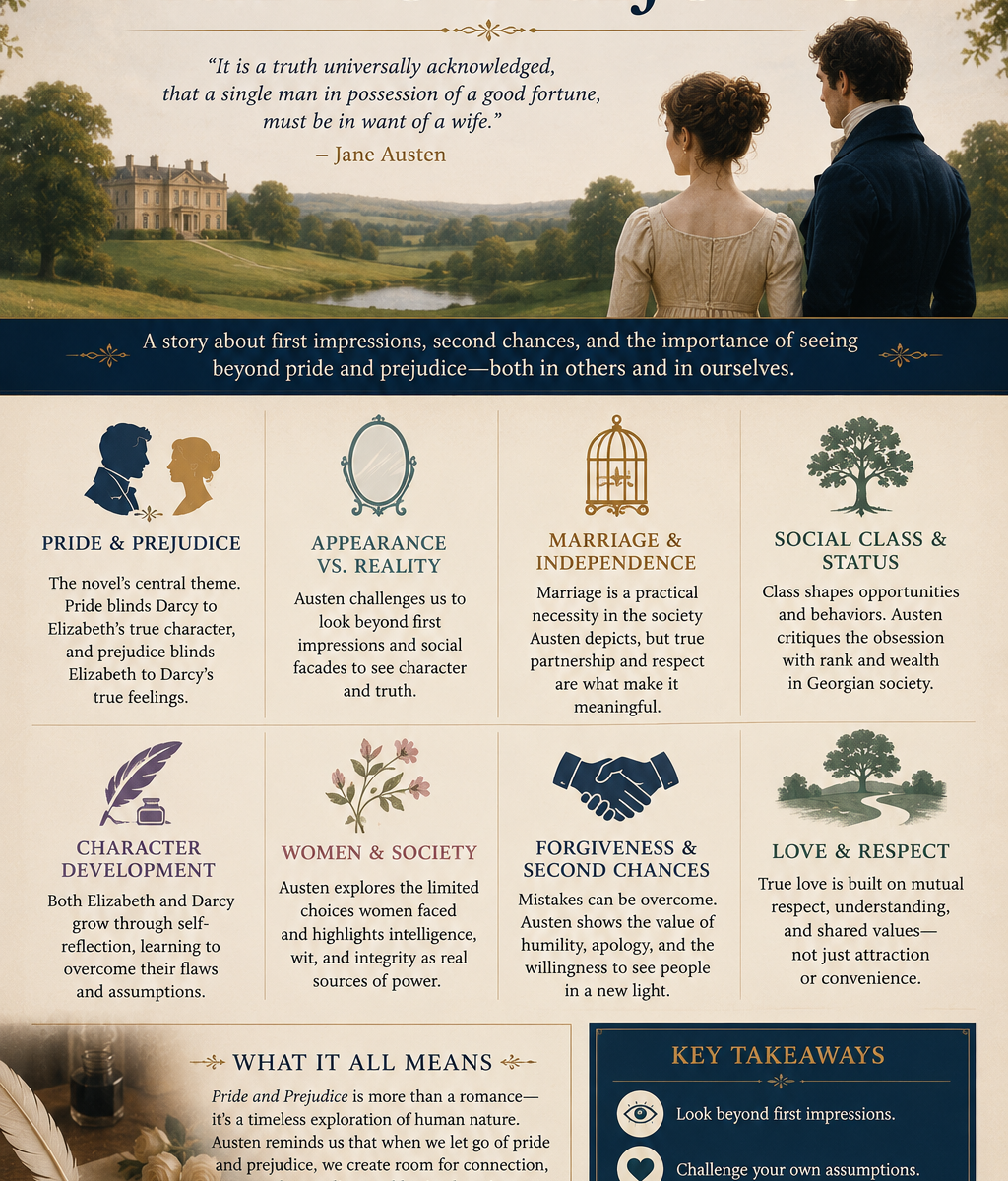
Jane Austen’s novel may look like a love story, but its ideas run much deeper. This guide explains the major themes in Pride and Prejudice so students can see how love, class, pride, and choice shape the whole book.

In this Guide

Use this quick map to find the part you need for class, notes, or an essay.

  • Why the ideas matter
  • Pride, prejudice, and self-knowledge
  • Love and marriage
  • Class and reputation
  • Money and limited choices
  • Gender and power
  • Family and education
  • Essay tips and FAQ
Themes in Pride and Prejudice

Why the themes in Pride and Prejudice matter

The novel’s themes help explain why a book from 1813 still feels fresh today.

Austen writes about people who judge too fast, protect their social rank, and search for a life with dignity. Those issues still matter in schools, friendships, and families.

The themes in Pride and Prejudice also help students see Austen’s craft. She does not preach. She uses wit, dialogue, and character change to make her ideas clear.

For helpful background on Austen’s life and era, see this overview from Britannica.

Theme 1: Pride, prejudice, and self-knowledge

Elizabeth and Darcy both have to face the truth about themselves.

Pride is not always bad in the novel. A person needs self-respect. But Darcy’s pride makes him cold, while Elizabeth’s confidence makes her judge him too quickly.

Prejudice means more than unfair dislike. It also means forming an opinion before you know the facts. Elizabeth believes Wickham because he seems charming. Darcy misreads Elizabeth’s family and social rank.

A central part of the themes in Pride and Prejudice is the need to grow. Elizabeth changes because she can admit error. Darcy changes because he can see how his behavior has hurt others.

This is similar to Pip in Great Expectations. Pip must learn that status does not equal worth. Both novels ask students to notice how a character’s wrong ideas shape the plot.

Theme 2: Love, marriage, and good judgment

Austen shows that love works best when feeling and reason stay linked.

Marriage is a major plot force in the novel. Mrs. Bennet wants her daughters married because their future is at risk. But Austen does not treat marriage as only a business deal.

Elizabeth refuses Mr. Collins because she knows a loveless match would harm her. Charlotte Lucas accepts him because she wants security. Neither choice is simple.

Another key part of the themes in Pride and Prejudice is the question of good judgment. Elizabeth and Darcy reach a strong love only after they face hard truths.

For quicker review, students can use Pride and Prejudice study resources alongside class notes.

Class and reputation as themes in Pride and Prejudice

Social rank affects how characters speak, marry, and judge one another.

Darcy has wealth and status, so others expect him to act with control. The Bennet family has less rank, so their behavior gets watched more closely.

Lady Catherine believes social class should decide marriage. She sees Elizabeth as beneath Darcy. Austen exposes how cruel that belief can be.

Reputation matters too. Lydia’s elopement threatens the whole family because society blames women more harshly than men. This shows a world where public opinion has real power.

The British Library offers useful context on Austen’s world and works at its Jane Austen page.

Theme 4: Money, security, and limited choices

Money is never just background in this novel.

The Bennet estate is entailed, which means the daughters cannot inherit it. This fact creates pressure from the first chapters.

The themes in Pride and Prejudice often connect love to economics. Characters may want romance, but they also need food, shelter, and respect.

Charlotte’s marriage to Mr. Collins can feel sad to modern readers. Yet Austen asks us to see her reason. Charlotte has few safe options, so she chooses stability.

This does not mean Austen supports every practical match. Instead, she shows how unfair systems limit personal freedom.

Theme 5: Gender and power in daily life

Austen shows how women must work within rules they did not create.

The Bennet sisters need marriage because the law and custom do not give them many paths. Their education, income, and public image all affect their futures.

Elizabeth stands out because she speaks with wit and courage. She refuses to obey Lady Catherine. She also refuses to marry without respect.

Among the themes in Pride and Prejudice, gender may be the easiest to connect to class discussion. Students can ask who has power, who lacks it, and how each character responds.

If you want help tracing those patterns, this guide on how to analyze characters in literature can help you build stronger claims.

Theme 6: Family, education, and influence

Family shapes each character’s choices, but it does not fully control them.

Mr. and Mrs. Bennet both affect their daughters. Mr. Bennet is clever, but he often avoids responsibility. Mrs. Bennet cares about security, but her panic causes trouble.

Elizabeth’s mind has been shaped by reading, talk, and sharp observation. Darcy’s values have been shaped by privilege and family pride.

This is one reason many themes in Pride and Prejudice feel personal. Austen shows that people inherit ideas, but they can still revise them.

How to write about themes in Pride and Prejudice

A strong theme paragraph needs a clear claim and proof from the story.

Do not write only that pride is a theme. Go further. Say what Austen suggests about pride, such as: pride becomes harmful when it blocks empathy and honest self-judgment.

Use a character, a choice, and a result. For example, Darcy insults Elizabeth, then later learns why his pride damaged his chance at love.

When writing about themes in Pride and Prejudice, connect the theme to Austen’s message. A theme is not just a topic. It is an idea the novel develops.

You can also review character analysis strategies to make your theme essay more focused.

Helpful books for deeper study

These books can support essays, class projects, or AP Literature prep.

  • Pride and Prejudice by Jane Austen
  • Jane Austen: A Life by Claire Tomalin

To understand the themes in Pride and Prejudice more fully, read the novel slowly and track how each major character changes.

FAQ about themes in Pride and Prejudice

These quick answers can help before a quiz, essay, or class discussion.

What are the main themes in Pride and Prejudice?

The main themes include pride, prejudice, marriage, class, money, gender roles, family influence, and self-knowledge.

What is Austen’s message about marriage?

Austen suggests that marriage should include respect and good judgment. Love matters, but so do character and security.

Why does social class matter so much in the novel?

Class affects how people judge each other and who they see as a proper match. Austen shows that this system can be unfair.

How does Elizabeth change?

Elizabeth learns that cleverness does not make her always right. Her growth comes from honest self-reflection.

Is Darcy’s pride completely bad?

No. Darcy has dignity, but his pride becomes harmful when it makes him look down on others.

Key Takeaway

The best way to read Pride and Prejudice is to watch how judgment changes. Austen shows that love and wisdom grow when people become honest about themselves.

error

Enjoy this article? Please spread the word :)

Follow by Email
BLUESKY
fb-share-icon
Reddit
LinkedIn
Share
RSS