Best Novels About Parallel Worlds: A Guide to Other Realities in Fiction

Parallel Worlds

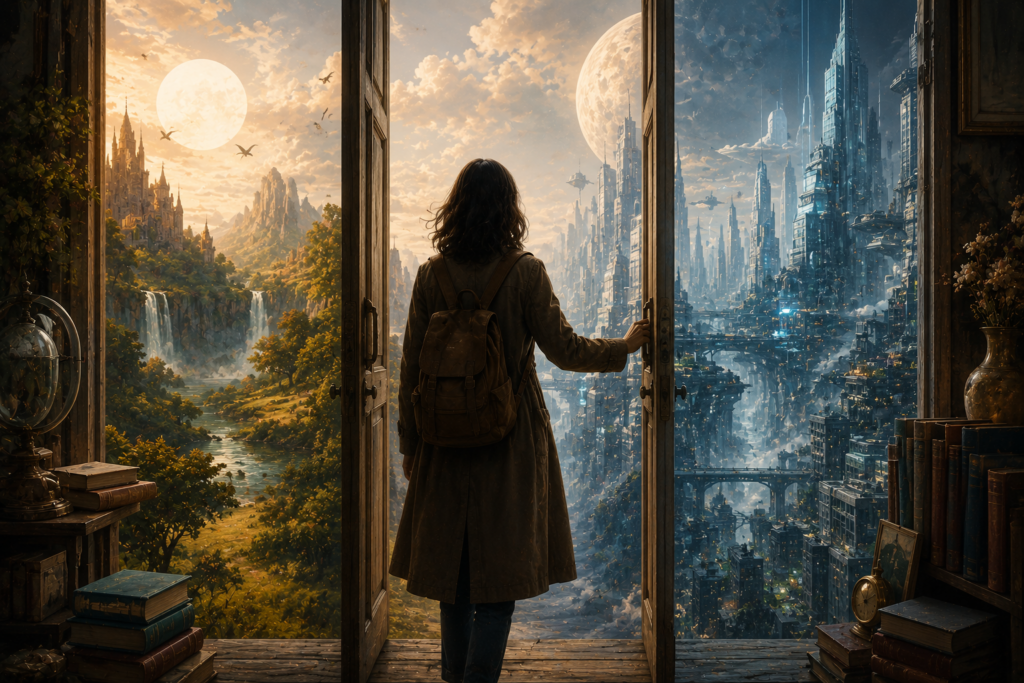
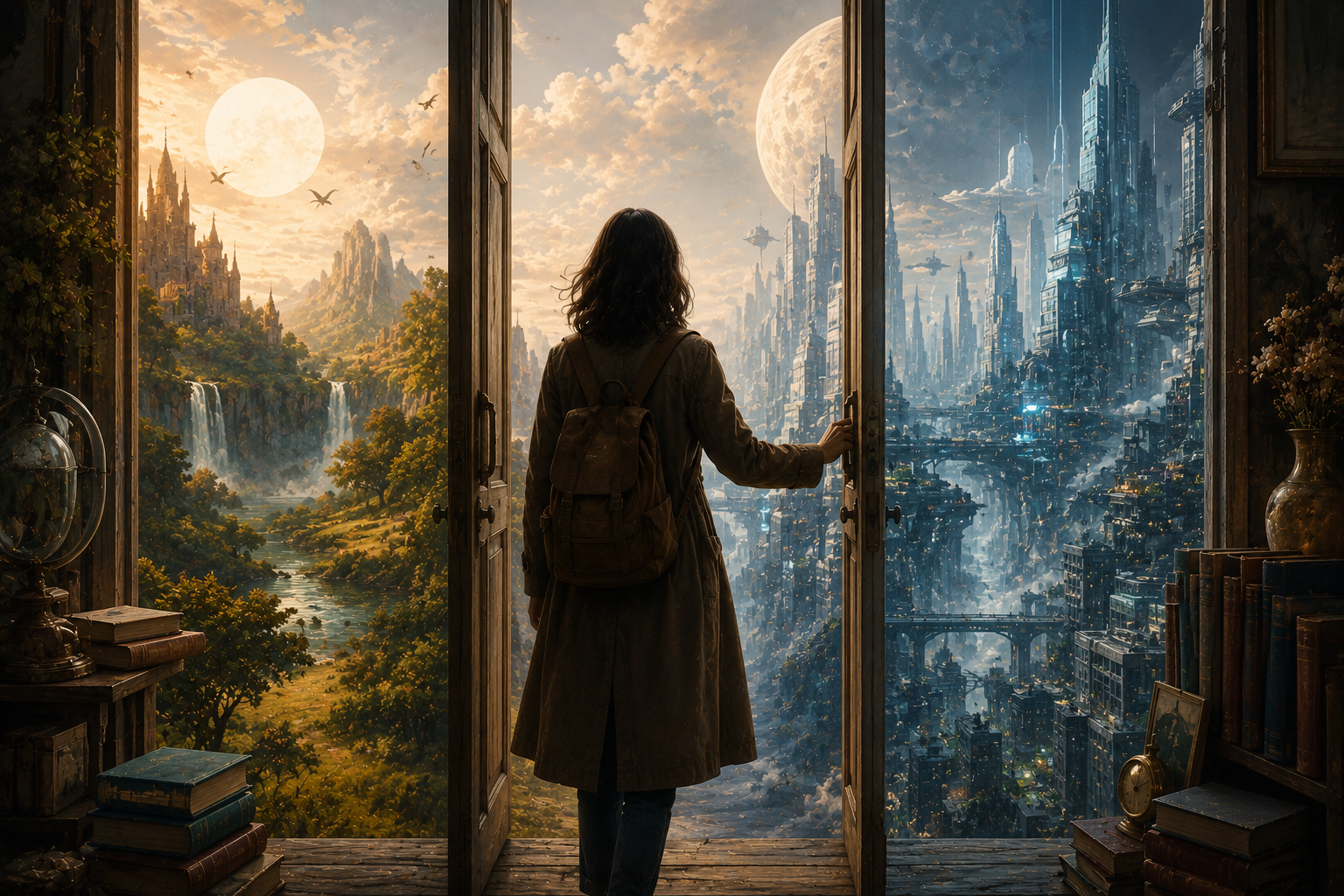
The Best Novels About Parallel Worlds do more than send characters into strange places. They help readers ask big questions about choice, identity, power, and home.

From Narnia to Wonderland, these stories make the impossible feel close. They also give students rich material for essays, class talks, and close reading.

In this Guide

  • Why parallel world novels still matter
  • Best novels about parallel worlds for students
  • Common symbols and themes
  • How tone and mood work in these books
  • Book suggestions to buy or borrow
  • FAQs
  • Key takeaway
Parallel Worlds

Why the Best Novels About Parallel Worlds Still Matter

Parallel worlds turn abstract ideas into places readers can enter.

In these novels, a wardrobe can open into a frozen kingdom. A rabbit hole can lead to a world where logic falls apart. A hidden city can sit right under the one we know.

For students, the Best Novels About Parallel Worlds are useful because they make theme easy to see. The “other world” often shows what the real world tries to hide.

These books also fit inside the larger tradition of fantasy. For more background, see Britannica’s short guide to fantasy as a literary genre.

Best Novels About Parallel Worlds for Students

These books are strong choices for high school, AP Literature, and college readers.

Alice’s Adventures in Wonderland by Lewis Carroll

Carroll’s novel sends Alice into a world where rules shift without warning. Wonderland is funny, but it can also feel tense.

The book works well for essays about nonsense, childhood, and authority. Alice keeps asking for order, but the world around her refuses to give it.

You can learn more about the novel’s background through Britannica’s page on Alice’s Adventures in Wonderland.

The Lion, the Witch and the Wardrobe by C. S. Lewis

Narnia is one of the most famous parallel worlds in children’s literature. The wardrobe is a simple object, but it becomes a doorway into danger and wonder.

This novel is often read as a story about courage and moral choice. The cold world of Narnia reflects a place trapped by fear.

The Golden Compass by Philip Pullman

Pullman’s world looks close to our own, but it has daemons, armored bears, and a deep fight over knowledge. The novel feels bold because its fantasy world has political force.

It is a good pick for students who want a more complex parallel world. It raises questions about truth, control, and what adults owe to children.

A Wrinkle in Time by Madeleine L’Engle

This novel blends science fiction with fantasy. Meg travels across space and enters places that feel like alternate versions of reality.

The book is useful for studying love, fear, and the pressure to conform. Its strange worlds help show Meg’s inner struggle.

Piranesi by Susanna Clarke

Piranesi lives in a vast House filled with halls, statues, and tides. The world feels calm at first, but its mystery grows darker.

This is one of the Best Novels About Parallel Worlds for older students. It rewards close reading and works well for college-level discussion.

What the Best Novels About Parallel Worlds Have in Common

The strongest parallel world stories use the second world for more than escape.

A good parallel world has rules. It may feel magical, but it still follows a pattern. Readers learn those rules as the main character does.

Most of these stories also use contrast. The real world may feel dull or harsh. The parallel world may feel bright, cruel, or full of secrets.

That contrast helps reveal character. When a hero crosses into another world, the author can test what that person values most.

Symbols and Themes in the Best Novels About Parallel Worlds

Parallel world novels often use simple objects with deep meaning.

Doors and portals are the most common symbols. A wardrobe, rabbit hole, or hidden gate marks the move from ordinary life into mystery.

Mirrors and doubles can suggest split identity. A character may meet a version of life that feels both strange and familiar.

Maps and paths often stand for choice. In many of the Best Novels About Parallel Worlds, the journey matters as much as the final answer.

The major themes are often identity and freedom. These books ask who we become when the normal world no longer controls us.

How the Best Novels About Parallel Worlds Shape Tone and Mood

Parallel worlds can change a story’s emotional feel in one scene.

Wonderland can seem playful, then suddenly unfair. Narnia can feel magical, then turn cold and dangerous. Piranesi’s House feels peaceful, but that peace hides loss.

This is where tone and mood matter. If you want a clear review of the difference, read our guide to tone and mood in literature.

When you read the Best Novels About Parallel Worlds, notice how the setting changes your feelings. That shift often points to the author’s deeper message.

Amazon Book Suggestions: Best Novels About Parallel Worlds to Buy or Borrow

If you want to build a small reading list, start with books that offer rich worlds and strong themes.

  • The Golden Compass by Philip Pullman
  • Piranesi by Susanna Clarke

You can search these titles on Amazon, check your school library, or borrow them from a local library. Both books are strong choices for students who want layered fantasy with serious ideas.

FAQ About the Best Novels About Parallel Worlds

What is a parallel world novel?

A parallel world novel features a second reality that exists beside, beneath, or beyond the normal world. Characters often cross into it through a portal, a secret path, or a strange event.

Why do authors use parallel worlds?

Authors use parallel worlds to explore real problems in a fresh way. A made-up world can reveal fear, injustice, hope, or hidden truth.

Are parallel world novels only fantasy?

No. Many are fantasy, but some mix science fiction, mystery, or literary fiction. The key idea is the presence of another reality.

Which parallel world novel is best for AP Literature?

Piranesi is a strong AP Literature choice because it has rich symbols, a complex setting, and deep questions about memory and identity.

What should students look for while reading?

Look for portals, rules, contrasts, and changes in mood. These details often reveal the story’s theme.

Conclusion: Why These Other Worlds Stay With Us

The Best Novels About Parallel Worlds stay with readers because they make us see our own world in a new light. They give us wonder, but they also ask hard questions.

For students, these books are more than fun escapes. They are powerful texts for studying theme, setting, symbol, and character growth.

Key Takeaway

Parallel worlds help fiction ask real questions. The stranger the world looks, the more it may reveal about our own.
Best Literary Time Travel and Memory: Books, Themes, and Symbols That Bend Time

Literary time travel

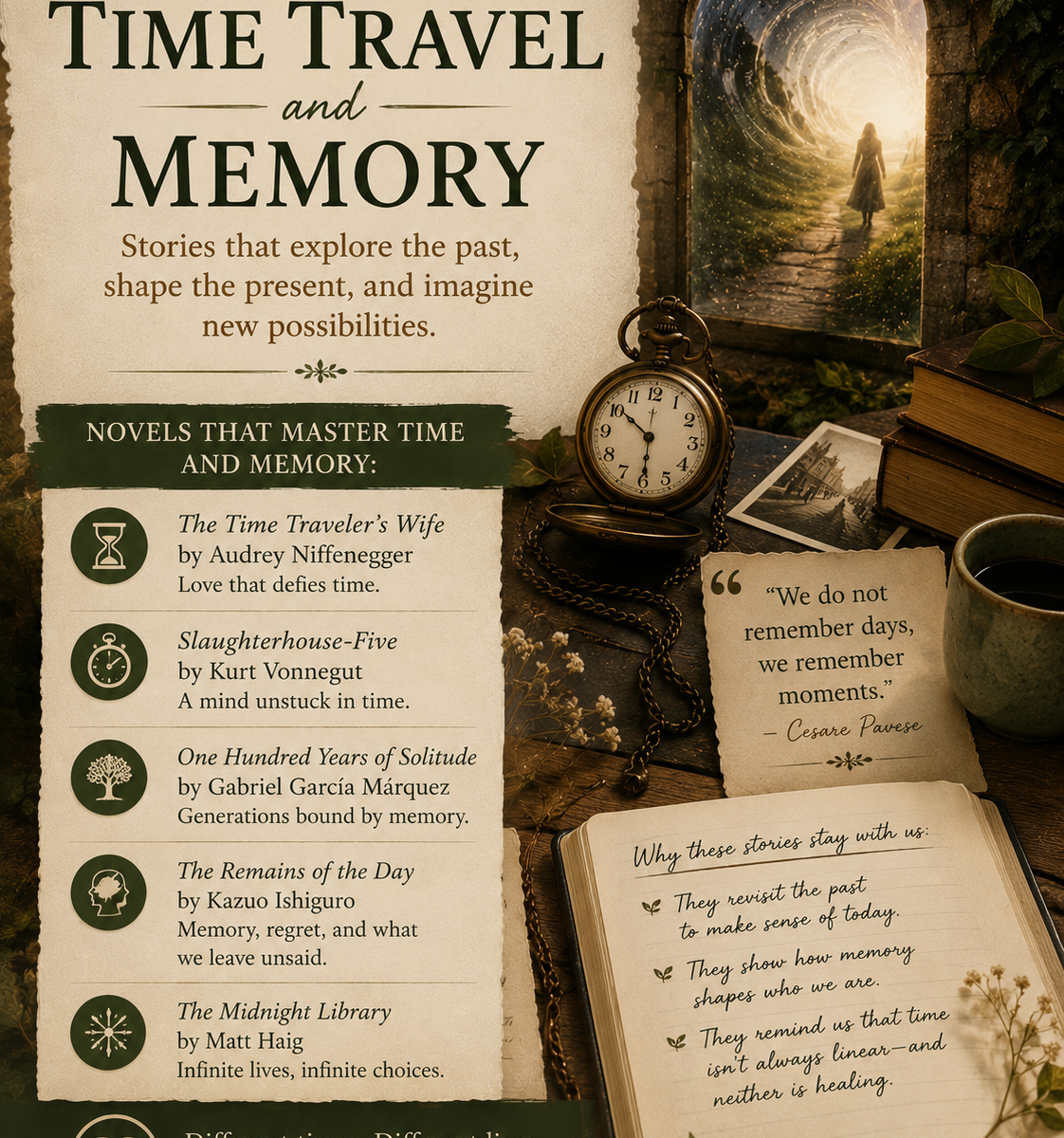
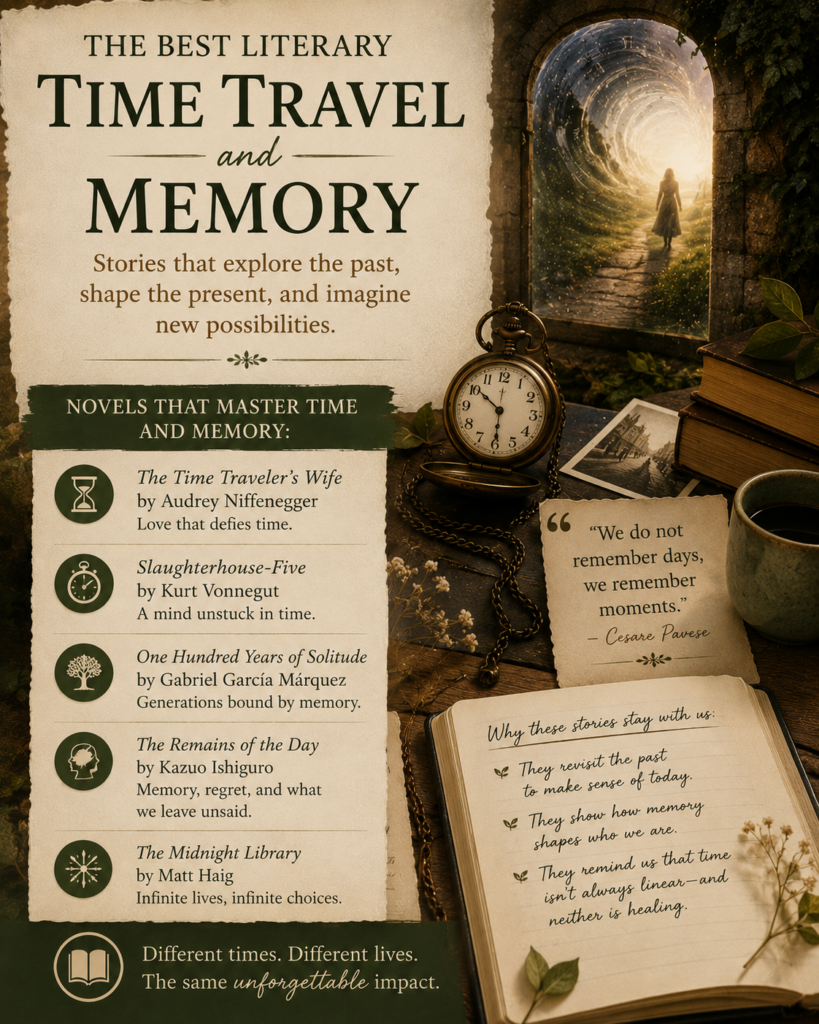
Best Literary Time Travel and Memory is a rich topic because books often treat time as more than a clock. In literature, time can reveal grief, guilt, love, trauma, and the deep need to understand the past.

From science fiction to modern novels, writers use time travel and memory to ask one big question: can people ever escape what happened before?

In this Guide

  • Why time travel and memory matter in literature
  • Best Literary Time Travel and Memory in famous books
  • Recommended books to read
  • Key themes and symbols
  • How students can analyze these stories
  • FAQs
  • Key takeaway
Literary time travel

Why Best Literary Time Travel and Memory Still Matters

Stories about time often feel strange, but their emotions are easy to understand.

Best Literary Time Travel and Memory matters because it shows how the past shapes the present. A character may travel through time, but the real journey is often inside the mind.

Memory can comfort a character. It can also trap them. In many books, the past returns because someone has not faced it yet.

This is why time travel stories are not only about machines or magic. They are also about regret, hope, and the wish to fix what cannot be fixed.

Best Literary Time Travel and Memory in Classic and Modern Books

Many famous books bend time to show how people live with pain, history, and desire.

In Slaughterhouse-Five by Kurt Vonnegut, Billy Pilgrim becomes “unstuck in time.” He moves between war, home, and alien spaces. The broken timeline mirrors the shock of trauma.

In Kindred by Octavia E. Butler, Dana travels from 1970s California to the era of slavery. The time travel is direct and frightening. It forces readers to see history as something alive, not distant.

In The Time Traveler’s Wife by Audrey Niffenegger, time travel affects love and family. The story asks whether love can survive when time itself feels unfair.

Best Literary Time Travel and Memory also appears in books without actual time machines. In Mrs Dalloway by Virginia Woolf, memory carries characters back into old choices and lost chances.

Recommended Books for Best Literary Time Travel and Memory

These books are strong picks for students who want clear examples of time, memory, and identity.

  • Kindred by Octavia E. Butler
  • Slaughterhouse-Five by Kurt Vonnegut
  • The Time Traveler’s Wife by Audrey Niffenegger

Kindred works well for class discussion because it connects time travel to race, power, and family history.

Slaughterhouse-Five is a key text for war literature. It uses a strange time structure to show how trauma changes memory.

The Time Traveler’s Wife gives the theme a personal focus. It shows how time can feel romantic, painful, and out of human control.

Memory as a Form of Time Travel

Not every story needs a time machine to move through time.

Memory is often the most common form of time travel in literature. A smell, place, photo, or sound can pull a character into the past.

In In Search of Lost Time by Marcel Proust, a small taste of cake brings back a flood of memory. The moment is famous because it shows how the past can return without warning.

In Beloved by Toni Morrison, memory is painful and hard to escape. The past becomes almost physical. It enters the home, the body, and the lives of the characters.

This is why Best Literary Time Travel and Memory fits both science fiction and literary fiction. Both forms ask how the past still touches the present.

Symbols in Best Literary Time Travel and Memory Stories

Writers often use simple objects to make time feel visible.

Clocks are the clearest symbol. They can show order, pressure, or fear. A broken clock may suggest that normal time no longer works.

Photographs also matter. They freeze one moment, but they can stir deep emotion. A photo may seem still, yet it can move a character back into loss or love.

Doors, roads, mirrors, and rivers often appear in stories about time. Each one can suggest a passage from one state of life to another.

Nature can also shape memory. A desert, forest, or lonely plain may hold the weight of the past. For more on place and meaning, read our guide to nature and isolation in Western writing.

Major Themes in Best Literary Time Travel and Memory

The best time travel stories use big ideas in personal ways.

Regret is one major theme. Characters often want to change a mistake, save a loved one, or choose a different path.

Trauma is another key theme. In many novels, time feels broken because the mind cannot leave a painful event behind.

Identity also matters. If memory shapes who we are, then a change in memory can change the self.

These themes make Best Literary Time Travel and Memory useful for AP Literature and college essays. The topic helps students connect plot structure to deeper meaning.

How Time Structure Shapes the Reader’s Experience

A story’s timeline can affect how readers feel.

A straight timeline feels steady. A broken timeline feels uncertain. When scenes jump between past and present, readers may feel the same confusion as the character.

Vonnegut uses this method in Slaughterhouse-Five. The jumps in time are not random. They show how war has damaged Billy’s sense of reality.

Woolf uses memory in a different way. In Mrs Dalloway, one day in London opens into many years of feeling and thought.

For background on memory as a human process, the Britannica overview of memory offers a helpful starting point.

Why Students Should Study Best Literary Time Travel and Memory

This topic helps students read beyond the surface.

When a book moves through time, ask why. The author may want readers to feel grief, suspense, shock, or longing.

Students can also look for patterns. What moments return? Which memories repeat? What does the character avoid?

Best Literary Time Travel and Memory gives students a strong way to discuss theme, structure, symbol, and character at once.

It also connects well to place. A setting can act like a memory bank, especially when nature reflects loss or silence. Our article on landscape and isolation in literature explores this idea in more depth.

Poetry, Time, and Memory

Poetry often treats time as brief, fragile, and emotional.

Many poems look back at childhood, lost love, or death. The speaker may not travel through time in a literal way, but memory creates the same effect.

T.S. Eliot’s poetry often explores time, history, and spiritual longing. You can learn more about Eliot through the Poetry Foundation’s T.S. Eliot page.

Poems are useful for this topic because they can turn one moment into a doorway. A single image can open years of memory.

How to Write About Best Literary Time Travel and Memory

A strong essay starts with the reason behind the time shift.

Do not only say that a story jumps in time. Explain what the jump reveals. Does it show trauma, love, fear, or guilt?

Use short quotes that show the pattern. Then connect those quotes to the character’s inner life.

A helpful thesis might say: “The broken timeline shows that the character cannot separate the present from the past.”

This keeps your essay focused on meaning, not just plot summary.

FAQs About Best Literary Time Travel and Memory

What is literary time travel?

Literary time travel means a story moves across different points in time. This can happen through science fiction, magic, dreams, or memory.

Is memory a form of time travel in literature?

Yes. Memory can move a character back into the past in an emotional way. It may feel as powerful as real time travel.

What book is best for studying time travel and memory?

Kindred by Octavia E. Butler is one of the best choices. It uses time travel to explore history, family, and power.

Why do authors use broken timelines?

Authors use broken timelines to show how people think and feel. This structure can reveal trauma, regret, or deep longing.

Can this topic help with AP Literature essays?

Yes. Best Literary Time Travel and Memory is useful because it connects structure, theme, and character change.

Key Takeaway

Best Literary Time Travel and Memory shows that the past is never fully gone. In literature, time can break, bend, and return because characters still carry what they have loved, lost, or feared.

The strongest stories about time are not only about where a character goes. They are about what the character finally understands.

error

Enjoy this article? Please spread the word :)

Follow by Email
BLUESKY
fb-share-icon
Reddit
LinkedIn
Share
RSS