

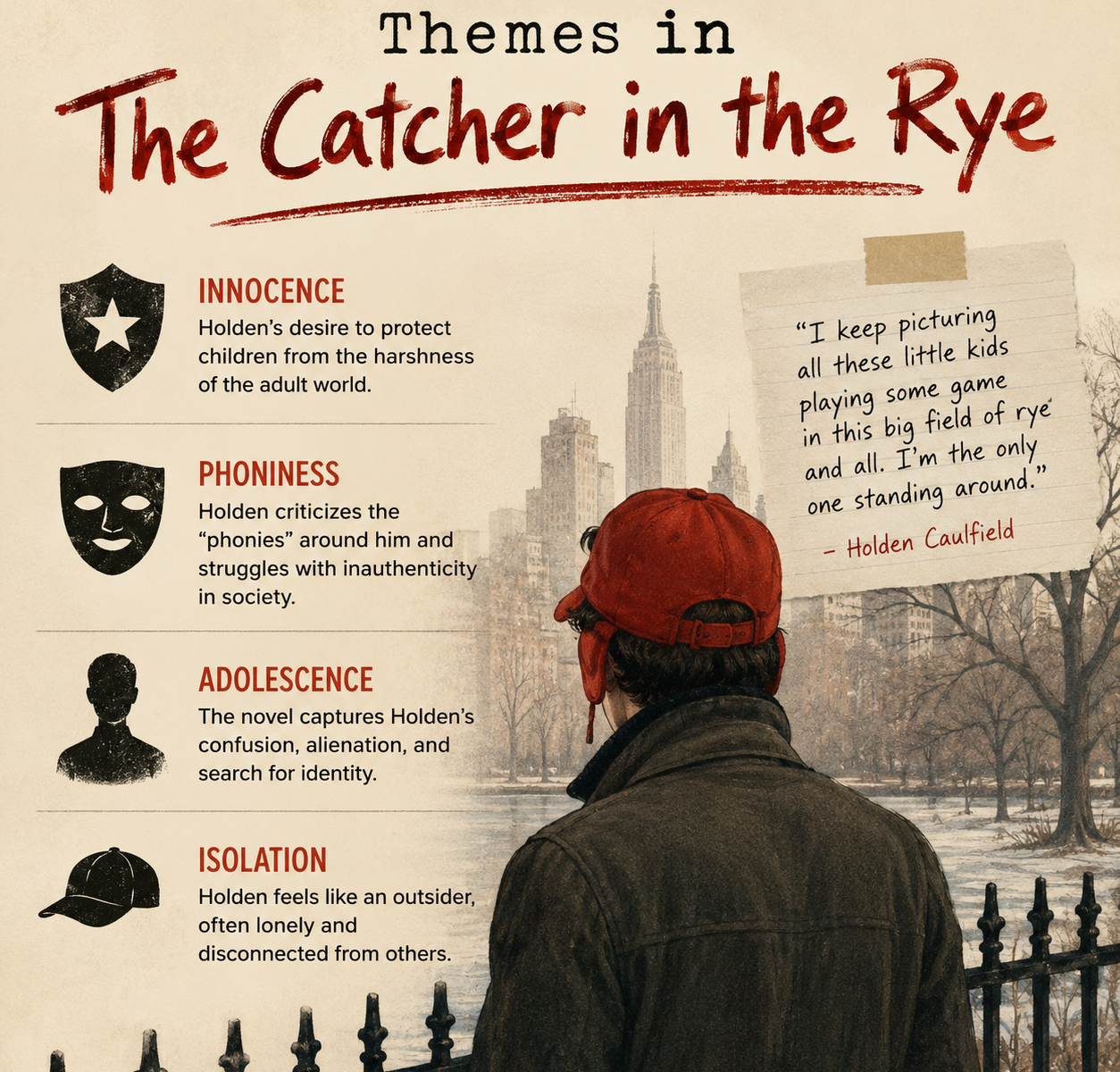
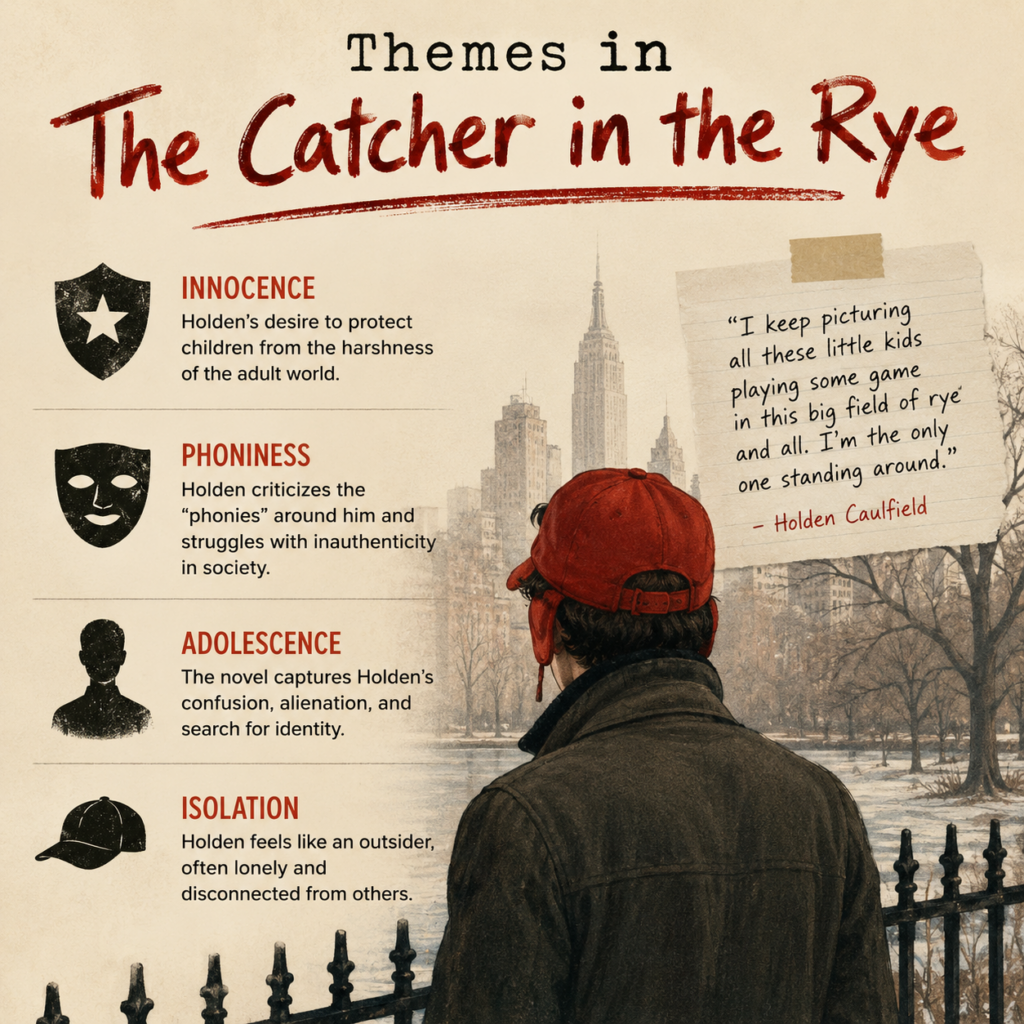
The themes in The Catcher in the Rye help readers see why Holden Caulfield feels so lost, angry, and afraid. His voice can sound casual, but the novel raises serious questions about pain, honesty, and what it means to grow up.
In this Guide
Use this guide to review the novel, plan essays, or prepare for class discussion.
- Why the themes matter
- Major ideas in the novel
- Important symbols
- Essay tips for students
- FAQ and key takeaway
Why the Themes in The Catcher in the Rye Matter
This novel is short, but its ideas are deep.
Studying the themes in The Catcher in the Rye helps you move past plot summary. Instead of only saying what Holden does, you can explain what his choices reveal.
Holden tells the story in his own voice. That matters because he often hides his real pain behind jokes, insults, and sharp opinions.
The main conflict is not just Holden against other people. It is also Holden against change, grief, and his fear of adult life.
Major Themes in The Catcher in the Rye
The novel returns to a few strong ideas again and again.
The major themes in The Catcher in the Rye include innocence, phoniness, isolation, grief, and identity. These ideas connect to Holden’s view of the world.
Holden wants people to be honest, but he also lies. He wants connection, but he pushes people away. That tension makes him feel real.
Like Scout in To Kill a Mockingbird, Holden sees adult life as confusing and unfair. Both characters learn that growing up means facing truth, even when truth hurts.
The Theme of Innocence and Protection
Holden wants to protect childhood because it feels safe to him.
One of the clearest themes in The Catcher in the Rye is the loss of innocence. Holden fears that children will be hurt by the adult world.
This is why the image of the “catcher in the rye” matters so much. Holden imagines himself saving children before they fall off a cliff.
The cliff can stand for adulthood, pain, or knowledge that cannot be undone. Holden does not want children to lose their purity.
His love for Phoebe shows this theme in a tender way. She is not perfect, but she reminds him of honesty and warmth.
The Theme of Phoniness
Holden uses the word “phony” to judge people, but the word also reveals his fear.
Holden calls many adults fake. He hates social rules, shallow success, and people who pretend to care.
At school, in hotels, and at parties, Holden feels trapped by manners that seem empty. He often thinks adults perform roles instead of showing real feeling.
Yet Holden is not always honest either. He lies to strangers, changes his story, and hides his feelings.
This makes the theme more complex. The novel does not say Holden is always right. It shows how hard honesty can be when a person feels wounded.
The Theme of Isolation and the Need for Connection
Holden often feels alone, even when he is around people.
Isolation is one of the most painful themes in The Catcher in the Rye. Holden wants someone to understand him, but he rarely lets people get close.
He calls old friends, visits teachers, and talks to strangers. Still, most of these moments fail because Holden feels judged or unsafe.
This pattern is common in literature. In Romeo and Juliet, the young lovers also feel cut off from the adult world around them.
Holden’s loneliness does not mean he hates people. It means he wants real care, but he does not know how to ask for it.
The Theme of Grief and Emotional Pain
Much of Holden’s behavior comes from loss.
Holden’s brother Allie has died, and that loss shapes the whole novel. Holden talks about Allie with love, but also with deep sadness.
He has not made peace with this grief. His anger, fear, and restless travel through New York can be read as signs of inner pain.
The red hunting hat also connects to this theme. It helps Holden feel separate, but it also gives him comfort.
If you want help reading objects like that, see our guide to finding symbolism in a story.
The Theme of Growing Up and Identity
Holden is caught between childhood and adulthood.
He does not want to be a child forever, but he fears the adult world. This conflict shapes his identity.
Holden rejects school, rules, and career talk. He thinks these things push people into fake lives.
At the same time, he cannot escape responsibility. By the end, he starts to see that he cannot control Phoebe’s life or protect every child.
The carousel scene is important here. Holden lets Phoebe reach for the gold ring, even though she might fall. That moment shows a small but real shift.
Key Symbols That Support the Themes
The novel’s symbols make its ideas easier to see.
The red hunting hat shows Holden’s wish to be different and protected. He wears it when he feels unsure or exposed.
The museum shows his desire for a world that does not change. The displays stay the same, unlike people.
The ducks in Central Park show Holden’s worry about survival. He wants to know where they go in winter because he also feels lost.
These symbols help explain the themes in The Catcher in the Rye without turning the novel into a simple lesson. For more support, read this clear guide on how symbols reveal meaning.
How to Write About Themes in The Catcher in the Rye
A strong essay needs a clear claim, not just a topic.
When you write about themes in The Catcher in the Rye, do not say, “This book is about growing up.” That is too broad.
Try a sharper claim: “Salinger shows that growing up requires accepting change, even when change feels dangerous.”
Then use scenes to prove it. The catcher fantasy, the museum, and the carousel can all support that idea.
For quick review before a quiz or essay, you may also want student literature study guide resources.
Helpful Books and Sources
Use outside sources to support your reading, but let the novel lead your ideas.
Books to search on Amazon or at your library:
- The Catcher in the Rye by J. D. Salinger
- Franny and Zooey by J. D. Salinger
For background, read Britannica’s overview of The Catcher in the Rye or its short page on J. D. Salinger.
FAQ: Themes in The Catcher in the Rye
Here are quick answers to common student questions.
What are the main themes in The Catcher in the Rye?
The main themes in The Catcher in the Rye are innocence, phoniness, isolation, grief, and growing up.
Why does Holden hate phoniness?
Holden hates phoniness because he sees it as a sign that adults hide truth. He also uses the word to protect himself from pain.
What does the Catcher in the Rye idea mean?
It shows Holden’s wish to protect children from harm, adulthood, and loss of innocence.
Is Holden a reliable narrator?
Not completely. He is honest about some feelings, but he also lies, exaggerates, and avoids painful truths.
Key Takeaway
The themes in The Catcher in the Rye show a teenager who wants truth, love, and safety in a world that feels false and unstable. The novel’s power comes from that conflict.


Get the Free Close Reading Worksheet Pack
Join my email list and receive the printable worksheet pack you can use with any novel or poem.
No spam. Just helpful guides for reading literature well.












