

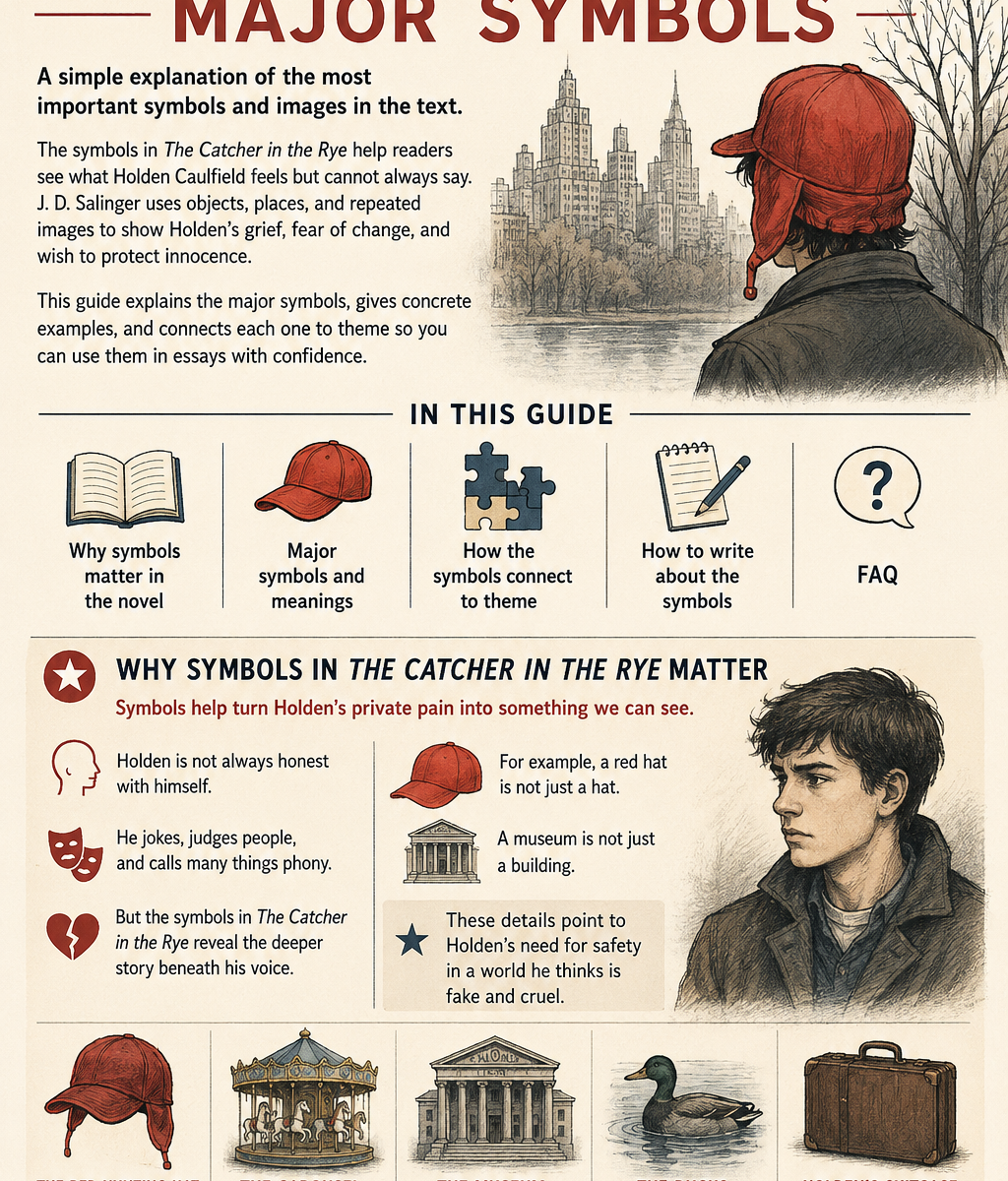
A simple explanation of the most important symbols and images in the text.
The symbols in The Catcher in the Rye help readers see what Holden Caulfield feels but cannot always say. J. D. Salinger uses objects, places, and repeated images to show Holden’s grief, fear of change, and wish to protect innocence.
This guide explains the major symbols, gives concrete examples, and connects each one to theme so you can use them in essays with confidence.
In this Guide
- Why symbols matter in the novel
- Major symbols and meanings
- How the symbols connect to theme
- How to write about the symbols
- FAQ
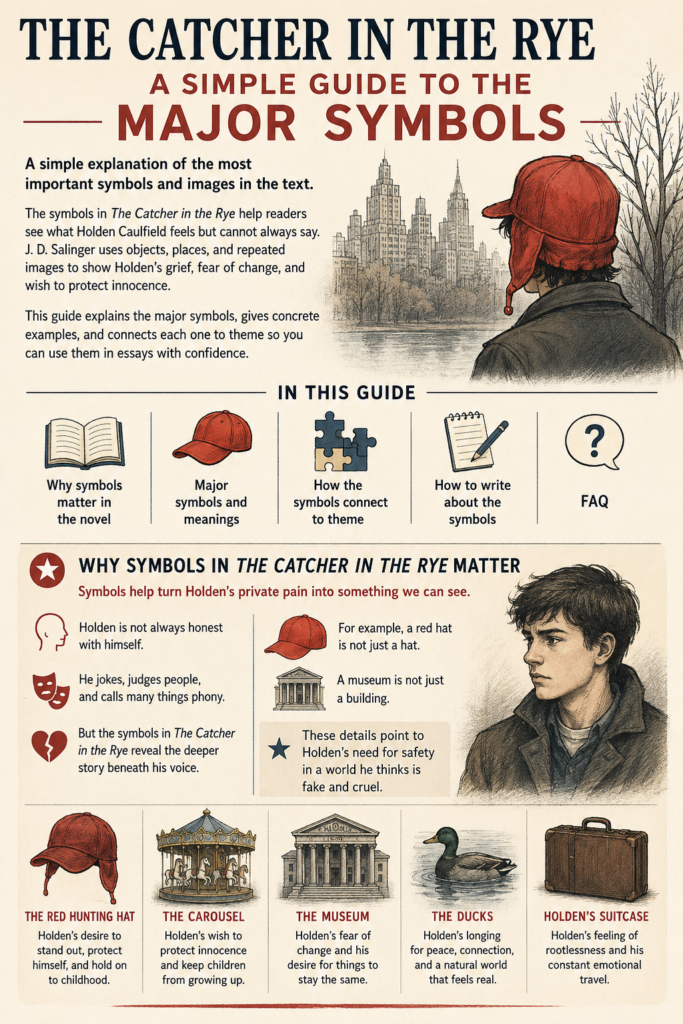
Why Symbols in The Catcher in the Rye Matter
Symbols help turn Holden’s private pain into something we can see.
Holden is not always honest with himself. He jokes, judges people, and calls many things phony. But the symbols in The Catcher in the Rye reveal the deeper story beneath his voice.
For example, a red hat is not just a hat. A museum is not just a building. These details point to Holden’s need for safety in a world he thinks is fake and cruel.
If you need a quick refresher on symbolism as a literary tool, see this guide on how to find symbolism in a story.
Major Symbols in The Catcher in the Rye
The novel’s most important symbols show Holden’s inner conflict.
The most famous symbols in The Catcher in the Rye include the red hunting hat, the ducks in Central Park, the Museum of Natural History, and the catcher in the rye image. Each one connects to a major theme in the book.
The Red Hunting Hat
Holden’s red hunting hat is one of the clearest symbols in the novel. He buys it in New York after losing the fencing team’s equipment, which already links the hat to failure and shame.
The hat makes Holden feel unique. It helps him stand apart from other people, even while he feels lonely.
The color red may also connect to Allie, Holden’s dead brother, who had red hair. Because of that, the hat becomes a quiet sign of memory and grief.
Theme connection: The hat shows Holden’s need for identity and protection. He wants to be different, but he also wants comfort.
The Ducks in Central Park
Holden keeps asking where the ducks go when the lagoon freezes. This question seems odd at first, but it matters a lot.
The ducks stand for survival during change. Holden wants to know if living things can disappear and still be safe somewhere else.
This connects to his fear after Allie’s death. If the world can change so fast, Holden wants proof that someone or something will take care of the vulnerable.
Theme connection: The ducks show Holden’s fear of loss and his search for reassurance.
The Museum of Natural History
Holden loves the museum because nothing changes there. The displays stay the same each time he visits.
That matters because Holden hates the way real life keeps moving. People grow up. Families change. Innocence fades.
The museum offers a frozen world. Holden knows this is not real life, but he still wants it.
Theme connection: The museum represents Holden’s desire to stop time and avoid adulthood.
The Catcher in the Rye Image
The title symbol comes from Holden’s dream of standing in a field of rye, catching children before they fall off a cliff. He imagines himself as a protector of innocence.
But Holden misunderstands the Robert Burns poem he hears. That mistake matters because his dream is beautiful, but it is also impossible.
Children will grow up. Holden cannot stop every fall. He must learn that care does not mean control.
Theme connection: The catcher image shows Holden’s wish to protect innocence and his fear of growing up.
How Symbols in The Catcher in the Rye Connect to Theme
Every strong symbol in the novel points back to Holden’s fear of change.
Many symbols in The Catcher in the Rye connect to the same core struggle. Holden wants the world to stay simple and safe, but the world will not do that for him.
The red hat offers protection. The museum offers stillness. The ducks offer hope that change does not mean death. The catcher image offers a fantasy where no child has to fall.
This is similar to symbols in other well-known novels. In The Great Gatsby, the green light points to a dream that Gatsby can never fully reach. In Lord of the Flies, the conch shows order that slowly breaks apart.
Salinger’s symbols work the same way. They take a large theme and place it inside a clear image.
Writing About Symbols in The Catcher in the Rye
A good symbolism paragraph explains both the object and the idea behind it.
When students write about symbols in The Catcher in the Rye, they often stop too early. It is not enough to say the red hunting hat means individuality. You also need to explain why Holden needs that feeling.
Try this pattern: name the symbol, describe where it appears, explain what it suggests, and connect it to theme.
For example, you might write that the Museum of Natural History symbolizes Holden’s wish for a world without change. Then you can link that idea to his grief over Allie and his fear of adulthood.
For more help, read our full guide on spotting symbolism in fiction. You can also review RapidReads Press literature study resources for essay practice and reading support.
Quick Reference: Symbol Meanings
Use this section as a fast study tool before a quiz or essay.
- Red hunting hat: protection, identity, grief, and the need to feel special.
- Ducks: change, survival, and Holden’s fear of being left behind.
- Museum: stillness, safety, and the wish to stop time.
- Catcher image: innocence, protection, and Holden’s impossible dream.
- Allie’s baseball glove: memory, love, and the pain of loss.
Allie’s Baseball Glove
Allie’s glove is a personal symbol of love and grief.
The glove belonged to Holden’s younger brother, Allie, who died of leukemia. Allie wrote poems on it so he could read them during baseball games.
This detail shows that Allie was thoughtful and creative. To Holden, the glove is not just a memory. It is proof that someone pure and good was taken from the world.
Theme connection: The glove shows how grief shapes Holden’s view of innocence.
Author and Context
Knowing a little background can help, but the text should still lead your ideas.
J. D. Salinger published The Catcher in the Rye in 1951. The novel became famous for its teen narrator, direct voice, and honest look at alienation.
You can read more about the novel’s history at Britannica’s overview of The Catcher in the Rye. For author background, see Britannica’s biography of J. D. Salinger.
Helpful Books to Read Next
These books can deepen your understanding of Salinger and coming-of-age fiction.
- The Catcher in the Rye by J. D. Salinger
- Nine Stories by J. D. Salinger
FAQ About Symbols in The Catcher in the Rye
What are the main symbols in The Catcher in the Rye?
The main symbols in The Catcher in the Rye are the red hunting hat, the ducks, the museum, the catcher image, and Allie’s baseball glove.
What does Holden’s red hunting hat symbolize?
It symbolizes protection, identity, and Holden’s grief. It helps him feel different, but it also shows how badly he wants comfort.
What do the ducks symbolize?
The ducks symbolize change and survival. Holden wants to know where they go because he fears loss and uncertainty.
Why is the Museum of Natural History important?
The museum matters because it never changes. Holden likes it because it gives him the stillness he cannot find in real life.
What does the catcher in the rye symbolize?
It symbolizes Holden’s dream of saving children from pain and adulthood. The image shows his kindness, but also his struggle to accept change.
Key Takeaway
The symbols in The Catcher in the Rye matter because they reveal Holden’s hidden fears. They show a teenager who wants to protect innocence, hold back change, and find safety after loss.


Get the Free Close Reading Worksheet Pack
Join my email list and receive the printable worksheet pack you can use with any novel or poem.
No spam. Just helpful guides for reading literature well.












