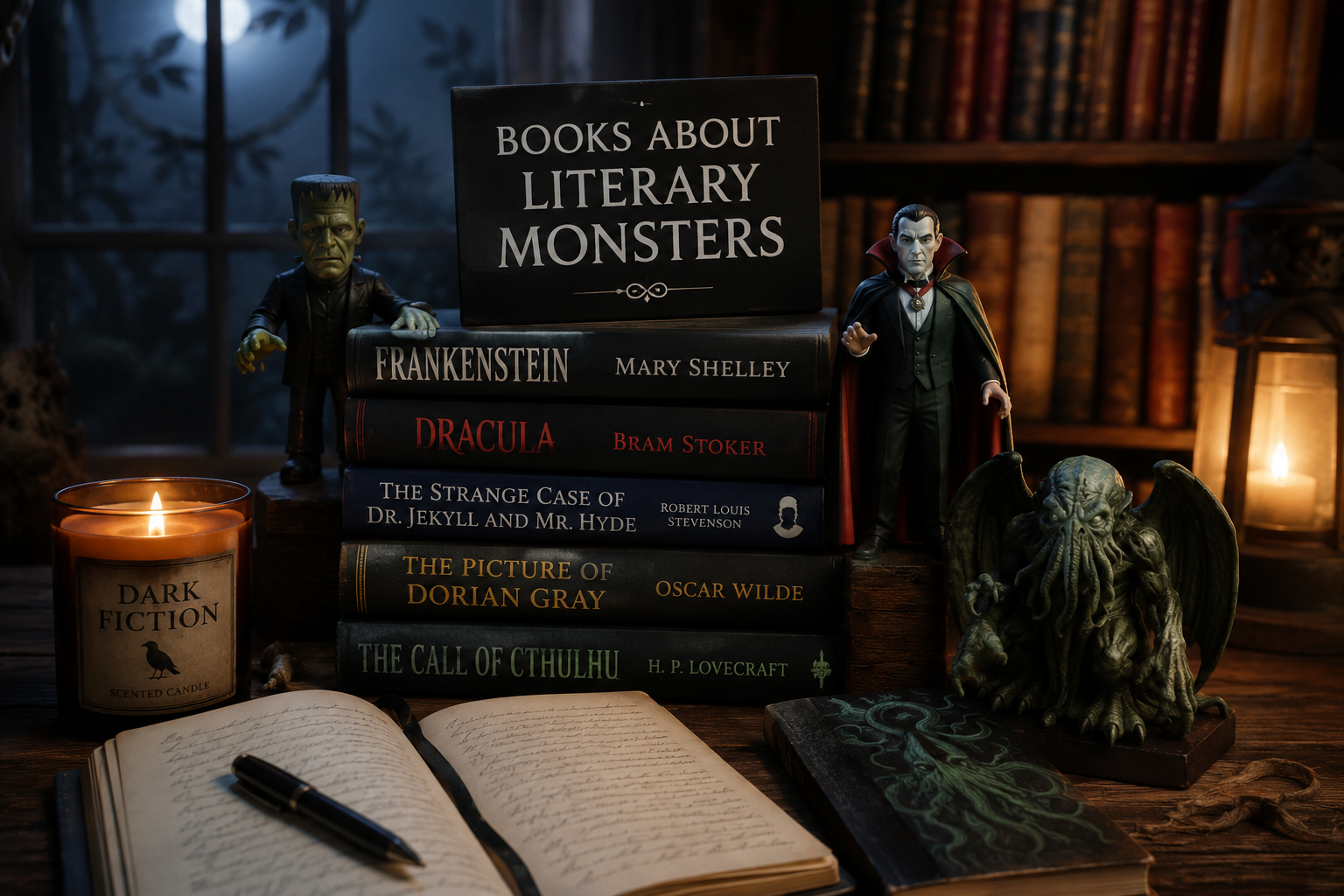
Books About Literary Monsters help us face fear, guilt, power, and loneliness through unforgettable creatures. These stories are not just scary. They ask deep questions about what makes someone human.
From Frankenstein to Dracula, literary monsters have shaped classrooms, film, and pop culture for generations.
In this Guide
What makes literary monsters so powerful
Classic monster books students should know
Recommended books to read next
Major themes and symbols
How to read monster stories in class
FAQs about literary monsters
Key takeaway
What Makes Books About Literary Monsters So Powerful?
Great monster stories turn fear into meaning.
Books About Literary Monsters often use creatures to show what people hide. A monster can stand for anger, shame, illness, greed, or social fear.
That is why these stories last. The creature may look strange, but the problem behind it often feels very human.
Mary Shelley’s creature in Frankenstein is a strong example. He is frightening, but he is also lonely. Readers begin to ask if the real monster is the creature or the society that rejects him.
This is what makes literary monsters different from simple horror villains. They do not only scare us. They make us think.
Classic Books About Literary Monsters Students Should Know
Many famous monster stories began as serious works of literature.
Books About Literary Monsters appear in many periods of literary history. Some come from ancient epics. Others come from Gothic novels or modern fiction.
Frankenstein by Mary Shelley is one of the most important examples. Published in 1818, it explores science, ambition, family, and the pain of rejection. You can learn more about the novel’s background through Britannica’s overview of Frankenstein.
Dracula by Bram Stoker gives readers a vampire who stands for fear of disease, desire, and the unknown. Count Dracula is not just a monster. He is a force that threatens the safe world of the characters.
The Strange Case of Dr. Jekyll and Mr. Hyde by Robert Louis Stevenson explores the monster inside the self. Mr. Hyde shows what can happen when hidden desires break free.
Beowulf also belongs in this conversation. Grendel is a monster, but he is not random. He reflects violence, exile, and the fear of a world outside human order.
Best Books About Literary Monsters to Read Next
These books are strong choices for students, book clubs, and curious readers.
If you want to build a shelf of Books About Literary Monsters, start with works that give the creature emotional weight. A good monster story should leave you with questions after the final page.
Here are a few useful titles to search for on Amazon or at your local library:
Frankenstein by Mary Shelley
Dracula by Bram Stoker
Grendel by John Gardner
Grendel is especially useful for students who know Beowulf. John Gardner retells the old story from the monster’s point of view. This shift makes readers question who gets called a monster and why.
For poetry lovers, monster themes can also appear in shorter works through images of death, isolation, or the unknown. If you want to practice close reading, this guide to New Criticism and Emily Dickinson shows how to focus on language, form, and meaning.
Themes in Books About Literary Monsters
Monster stories often reveal what a culture fears most.
One major theme is isolation. Frankenstein’s creature becomes violent after he is denied love and friendship. His pain grows because no one accepts him.
Another key theme is double identity. Dr. Jekyll and Mr. Hyde show that a person can have a public self and a hidden self. The monster becomes a symbol of what society asks people to repress.
Power is also central to many monster tales. Victor Frankenstein wants to control life itself. Dracula wants control over bodies, homes, and blood. These stories warn readers about power without care.
In Books About Literary Monsters, fear often points to a deeper conflict. The monster may stand for class anxiety, gender roles, race, science, death, or moral guilt.
Why Monsters Are Symbols, Not Just Creatures
A literary monster usually means more than it seems to mean.
A vampire may symbolize desire or corruption. A ghost may symbolize guilt. A beast may symbolize human violence.
This is why teachers often ask students to look beyond the plot. The question is not only, “What does the monster do?” The better question is, “What fear does the monster reveal?”
For example, Dracula enters homes and disrupts families. That makes him a symbol of invasion. He crosses borders, changes bodies, and breaks social rules.
Frankenstein’s creature has a different meaning. He shows the danger of creating life without love or duty. He also shows how cruelty can shape a person.
How to Read Books About Literary Monsters in Class
Strong close reading can turn a scary story into a rich literary study.
When you read Books About Literary Monsters, start with the creature’s first appearance. Notice how the author describes its body, voice, movement, and setting.
Then ask who tells the story. A monster may look different based on the narrator’s fear or bias. In Frankenstein, the creature speaks for himself, which changes how we judge him.
Pay close attention to repeated images. Blood, darkness, mirrors, scars, and doors often matter in monster fiction. These details can reveal the story’s deeper pattern.
Why Books About Literary Monsters Still Matter Today
Modern readers still need monster stories because fear has not gone away.
Our fears change over time, but the pattern remains. People still worry about technology, identity, illness, isolation, and power.
That is why Books About Literary Monsters still feel fresh. They let readers face hard ideas through story. A monster gives fear a shape, which makes it easier to examine.
These books also teach empathy. Sometimes the monster is dangerous. Sometimes the monster is wounded. The best stories force readers to hold both truths at once.
FAQs About Books About Literary Monsters
What are Books About Literary Monsters?
Books About Literary Monsters are works of fiction that use creatures, villains, or strange beings to explore deeper ideas. They often focus on fear, identity, guilt, or society.
Is Frankenstein’s creature a monster or a victim?
He is both. He commits violent acts, but he is also rejected and abandoned. That tension makes the novel powerful.
Why do teachers assign monster stories?
Teachers assign them because they are rich in symbols and themes. They help students study character, setting, narration, and social fear.
Are literary monsters always supernatural?
No. Some are human. Mr. Hyde, for example, is monstrous because he reveals the dark side of Dr. Jekyll.
What is the best monster book to start with?
Frankenstein is a strong starting point. It is famous, readable, and full of ideas that still matter.
Key Takeaway
Books About Literary Monsters endure because they make fear meaningful.
The best monster stories do more than shock us. They ask what society rejects, what people hide, and what it means to be human.
When you read these books, do not stop at the creature. Look at the world that created it. That is where the real story often begins.
A warm writing invitation about the first time clothing changed how you stood, moved, or saw yourself in the mirror.
You may still remember the weight of it: a borrowed jacket, a stiff uniform, a dress that felt too grown-up, a pair of shoes that made noise on the floor. Maybe you caught your reflection and paused. For one second, you were still yourself, but also someone new.
This flash memoir prompt first time wore something made you feel different is about more than fashion. It is about identity, courage, disguise, belonging, and the strange power of fabric to tell us who we are allowed to become.
The Prompt
Write about the first time you wore something that made you feel like a different version of yourself.
This prompt can unlock a clear and powerful memory because clothing is physical. You can describe how it felt on your skin, how it fit, how others looked at you, and what changed inside you when you put it on.
You do not have to write about a dramatic outfit. The memory might be small: a hand-me-down coat, a sports jersey, a graduation robe, makeup for the first time, a tie for a funeral, or a uniform for your first job. The meaning often lives in the small details.
Why This Memory Matters
Clothes can make us feel visible, hidden, older, braver, awkward, proud, or trapped. A simple shirt can carry a whole story.
Maybe the outfit helped you act like the person you wanted to become. Maybe it made you feel like you were pretending. Maybe someone else chose it for you, and the memory still holds anger or shame. Maybe you wore it because you needed to fit in, even if it did not feel like you.
This flash memoir prompt first time wore something made you feel like a different person can reveal a turning point. It asks: Who were you before you put it on? Who did you become after? Even if the change lasted only one afternoon, that moment may still matter.
For student writers, this is also a useful way to practice finding a theme in a personal story. If you want help thinking about deeper meaning, you might enjoy this guide on how to identify theme in literature. The same skill can help when you read your own memories closely.
How to Approach This Prompt
Begin with one physical detail. Do not start by explaining your whole life or telling the reader what the outfit meant. Start with the zipper that stuck, the tag scratching your neck, the sleeves hanging past your wrists, or the click of heels on tile.
Then narrow the memory to one scene. Where were you? A bedroom, school hallway, church bathroom, locker room, store dressing room, or front porch? Keep the camera close.
Write what you noticed before you explain what it meant. If people stared, describe that. If no one noticed, describe that too. Sometimes the private change matters more than the public reaction.
You might ask yourself these questions before you draft:
Who chose the clothing?
Did you want to wear it?
What did you think when you saw yourself?
How did your body move differently?
What did the outfit make possible?
If you are using this as classroom writing practice, you can also annotate your own draft the way you would annotate a story. Mark the sensory details, emotional shift, and strongest sentence. This simple guide to how to annotate literature can help you practice noticing what a piece of writing is doing.
Avoid trying to tell every clothing memory you have. Choose the one moment where something changed. Flash memoir works best when it feels small on the outside and large on the inside.
A Quick Example
The first time I wore my dad’s old leather jacket, I was sixteen and trying to look like I had somewhere to go. The jacket smelled like cold air, motor oil, and the peppermint gum he kept in his truck. It was too wide in the shoulders, so I pulled my hands into the sleeves and pretended that was the style. When I walked into school, nobody said anything. That disappointed me more than I wanted to admit. But in the bathroom mirror, under the buzzing light, I saw a version of myself who looked less afraid. I stood up straighter. I fixed my hair. For the rest of the day, I kept one hand in the pocket, holding onto the torn lining like proof.
Try It Yourself
Set a timer for ten minutes. Write the scene as if you are back in the room where you first put the item on. Let the mirror, the fabric, and your body lead the memory.
Do not worry about making the piece perfect. Your first draft only needs to find the moment. You can shape the meaning later.
If you get stuck, write one sentence that begins with, “When I saw myself, I thought…” Then keep going. This flash memoir prompt first time wore something made you see yourself differently is really an invitation to explore change, even if that change began with a button, a hem, or a pair of shoes.
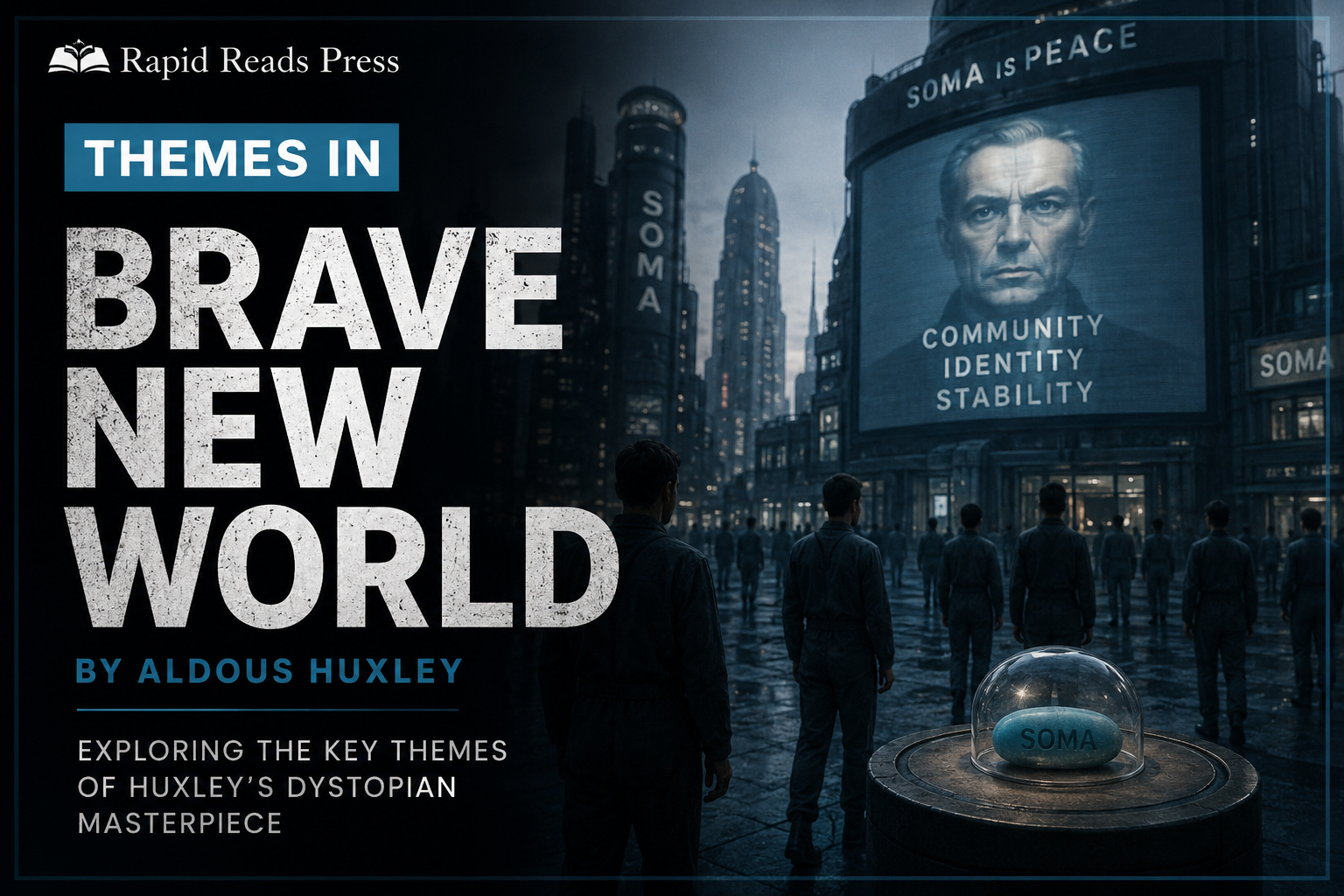
The themes in Brave New World help readers see why Aldous Huxley’s novel still feels sharp today. This guide breaks down the major ideas in the book so students can connect plot, character, and meaning without getting lost.
In this Guide
Use this as a quick map before you read or review.
Why the novel still matters
Social control and comfort
Pleasure and distraction
Identity and family
Science and technology
Freedom and truth
How to write about the novel
FAQ
Why themes in Brave New World Still Matter
Huxley’s world looks strange at first, but its fears are easy to recognize.
Brave New World was published in 1932, but many of its questions feel modern. What happens when comfort becomes more important than freedom? Can a society be peaceful and still deeply wrong?
Studying the themes in Brave New World helps students see that the novel is not only about the future. It is also about choices people make in any age.
For brief background on the novel and Huxley, Britannica offers a helpful overview of Brave New World.
Social Control and the themes in Brave New World
The World State controls people by making control feel normal.
In many dystopian stories, governments use fear. In Brave New World, the government often uses pleasure, routine, and comfort instead.
Citizens are trained from birth to accept their social class. They do not choose their work, values, or relationships in a free way. The state creates people to fit a system, then teaches them to love their place in it.
This is one of the key themes in Brave New World because it asks a hard question: if people do not know they are controlled, are they still trapped?
Students often compare this to George Orwell’s 1984. Orwell shows control through fear and punishment. Huxley shows control through comfort and desire.
Pleasure, Distraction, and the themes in Brave New World
In Huxley’s novel, happiness can become a tool of power.
The people in the World State are taught to avoid pain at all costs. They use soma, attend feelies, and repeat slogans that make deep thought seem useless.
Among the themes in Brave New World, this one is especially important for modern readers. Huxley suggests that nonstop pleasure can weaken the mind if it replaces thought, grief, love, and choice.
The novel does not say that happiness is bad. It warns that fake happiness can hide real loss.
Ray Bradbury’s Fahrenheit 451 explores a related fear. In that novel, entertainment keeps people from asking serious questions. Huxley’s world does the same, but in a smoother and more cheerful way.
Identity, Family, and the themes in Brave New World
The World State breaks identity down before people can build it for themselves.
In this society, family is treated as shameful. Words like “mother” and “father” make people uncomfortable. Children grow in bottles, not homes.
The themes in Brave New World become clearer when we notice what the society removes. It removes parents, privacy, lasting love, and personal history. Without these, people have little space to form a deep self.
Bernard Marx feels different from others, which makes him uneasy and proud. Helmholtz Watson wants language to mean more. John, raised outside the World State, believes in love, suffering, and moral choice.
Each character shows a different struggle with identity. None of them fits the system well.
Science, Technology, and the themes in Brave New World
The novel does not attack science itself. It attacks science without moral limits.
The World State uses technology to create people, shape behavior, and keep society stable. Babies are sorted before birth. Children are conditioned through repeated lessons. Adults are managed by drugs and pleasure.
One reason themes in Brave New World work so well is that Huxley does not make technology look evil by itself. The danger comes from how people use it.
This connects well to Mary Shelley’s Frankenstein. Both novels ask whether invention should move faster than responsibility.
In class essays, be careful not to say “technology is bad.” A stronger claim is this: Huxley warns that technology becomes dangerous when it serves control instead of human dignity.
Freedom, Truth, and the Cost of Happiness
Huxley asks whether comfort is worth the loss of truth.
Mustapha Mond, one of the World Controllers, understands the trade-off. He knows that art, religion, family, and deep truth have been sacrificed for social stability.
John cannot accept that bargain. He believes people need the freedom to suffer, choose, fail, and seek meaning. His famous demand for “the right to be unhappy” shows the deep conflict at the heart of the novel.
This conflict makes the themes in Brave New World more than simple warnings. The book asks readers to decide what makes life fully human.
Symbols That Support the Novel’s Themes
Many of Huxley’s symbols point back to control, identity, and lost freedom.
Soma is one of the clearest symbols in the novel. It stands for escape without growth. People take it when they feel upset, but it prevents them from facing pain in a real way.
Ford is another major symbol. The World State treats Henry Ford almost like a god because mass production shapes its values. People are made to be useful parts in a larger machine.
If you want a simple method for spotting symbols in this novel or any other text, see our guide on how to find symbolism in a story.
How to Write About themes in Brave New World
A strong essay connects a theme to specific choices Huxley makes.
Do not just name a theme. Show how it appears through setting, character, conflict, and symbol.
For example, instead of writing, “The book is about control,” try a sharper claim: “Huxley shows that control is most powerful when people mistake it for happiness.”
Then use evidence. You might discuss soma, conditioning, the caste system, or John’s conflict with Mustapha Mond.
These books pair well with Huxley’s novel for class discussion or essays.
1984 by George Orwell
Fahrenheit 451 by Ray Bradbury
You can search these titles through your school library, local library, or major booksellers such as Amazon. No special edition is required for most student reading.
FAQ About themes in Brave New World
Here are quick answers to common student questions.
What are the main themes in Brave New World?
The main themes include social control, false happiness, identity, technology, and freedom. Each theme shows what people lose when stability becomes the highest goal.
What is the most important theme in the novel?
The most important theme is the conflict between happiness and freedom. Huxley asks whether a painless life is worth living if people cannot choose truth.
Is Brave New World against science?
No. The novel warns against science used without ethics. Huxley’s concern is not invention, but control.
How does soma connect to the novel’s meaning?
Soma represents escape, comfort, and control. It keeps people calm, but it also keeps them from facing real emotions.
Key Takeaway
Brave New World warns that comfort can become dangerous when it replaces freedom, truth, and human connection. That is why the novel still matters, especially for students learning how literature questions the world around them.
It is a character who changes in an important way over the course of a story.
This guide explains the idea in simple terms, shows why it matters, and gives clear examples from books many students know.
In this Guide
What a dynamic character means
Why dynamic characters matter
Dynamic character examples
How to spot a dynamic character
Books to read for practice
FAQ
A Clear Definition
A dynamic character changes in a deep and meaningful way.
The change may involve beliefs, values, goals, or how the character sees the world. It is not just a new haircut, a new job, or a new location.
When students ask, What Is a Dynamic Character in Literature?, the simplest answer is this: a dynamic character learns, grows, falls apart, or becomes someone different because of the story’s events.
For example, Ebenezer Scrooge in A Christmas Carol begins as selfish and cold. By the end, he becomes generous and caring. His change is central to the story.
Why It Matters
Dynamic characters help readers see how conflict can shape a person.
A story feels more powerful when a character has to face hard choices. Those choices can reveal fear, pride, courage, guilt, or love.
What Is a Dynamic Character in Literature? It is often the answer to why a story feels meaningful. The plot may show what happens, but the character’s change shows why it matters.
In many novels, the main character’s growth connects to the theme. If a story is about forgiveness, the dynamic character may need to let go of anger. If a story is about identity, the character may need to understand who they truly are.
A dynamic character changes. A static character stays mostly the same.
A static character is not always boring or unimportant. Some static characters help highlight the growth of another character.
In Pride and Prejudice, Elizabeth Bennet is a dynamic character because she changes how she judges Darcy. She learns that her first opinion was not fully fair.
Mr. Collins, on the other hand, stays mostly the same. His lack of growth makes him a useful contrast to Elizabeth’s self-awareness.
So, What Is a Dynamic Character in Literature? Think of a character whose inner life shifts in a clear way from the beginning to the end.
Recognizable Examples
Many famous books use dynamic characters to carry the emotional weight of the story.
Ebenezer Scrooge in A Christmas Carol changes from greedy to generous. His journey shows that moral change is possible.
Elizabeth Bennet in Pride and Prejudice learns to question her own pride and quick judgments. Her growth makes the love story feel earned.
Harry Potter in the Harry Potter series grows from a lonely boy into a braver and more self-aware young man. His change happens across many books, not all at once.
Ask what the character wants at the start. Then ask what the character understands by the end.
A dynamic character often faces a conflict that forces a choice. That choice may expose a flaw, teach a lesson, or push the character toward change.
When thinking about What Is a Dynamic Character in Literature?, focus on inner change. A character may travel far, lose money, or gain power, but those events only matter if they change the character in a real way.
Here are helpful questions:
What does the character believe at the beginning?
What conflict challenges that belief?
What does the character understand at the end?
Does the change connect to the theme?
Common Mistakes Students Make
One common mistake is calling every main character dynamic.
A character can be important and still remain static. The key is not how much page time the character gets. The key is whether the character changes in a meaningful way.
Another mistake is confusing mood with growth. A character who feels sad in one chapter and happy in the next has not necessarily changed. A dynamic character has a deeper shift in values, beliefs, or self-understanding.
If you need a full approach, use this character analysis guide to connect traits, conflict, and theme.
Books That Help You Study Dynamic Characters
These books are useful if you want to practice spotting character change:
A Christmas Carol by Charles Dickens
Pride and Prejudice by Jane Austen
Both books make character growth easy to see, which helps if you are new to literary analysis.
FAQ: What Is a Dynamic Character in Literature?
What Is a Dynamic Character in Literature?
A dynamic character is a character who changes in an important internal way during a story. The change may affect beliefs, values, choices, or self-knowledge.
Does a dynamic character have to become a better person?
No. A dynamic character can improve, but they can also become worse. The main point is that they change in a meaningful way.
Can a minor character be dynamic?
Yes. A minor character can be dynamic if the story shows a clear inner change. Main characters are just more likely to get that kind of attention.
Is a dynamic character the same as a round character?
No. A round character is complex and feels realistic. A dynamic character changes. A character can be both, but the terms do not mean the same thing.
Key Takeaway
What Is a Dynamic Character in Literature? It is a character who changes in a meaningful way because of the story’s conflict.
When you read, track what a character believes at the start and what they understand at the end. That simple habit can lead to stronger essays and better literary analysis. 📚
The Most Disturbing Haunted Houses in literature do more than scare us. They trap grief, guilt, secrets, and fear inside their walls.
These houses feel alive because they reflect the minds of the people who enter them. That is why haunted house stories still matter in classrooms, book clubs, and late-night reading sessions. 👻
Why the Most Disturbing Haunted Houses Stay With Us
A great haunted house is scary because it feels personal.
The Most Disturbing Haunted Houses do not rely only on ghosts. They use silence, locked rooms, strange noises, and family history to create dread.
In many stories, the house becomes a mirror. It shows what characters fear most, even when they refuse to say it out loud.
This is why haunted houses work so well in Gothic fiction. If you want a helpful way to read symbols like rooms, doors, and shadows, try this guide on how to read literature like a scholar.
Most Disturbing Haunted Houses in Classic Literature
Classic literature gave us some of the most famous cursed homes ever written.
One of the Most Disturbing Haunted Houses is Hill House in Shirley Jackson’s The Haunting of Hill House. The house is not just haunted. It seems to choose its victim.
Eleanor arrives at Hill House lonely and unsure of herself. The house feeds on that weakness. By the end, it is hard to tell where Eleanor’s mind ends and the house begins.
Edgar Allan Poe’s The Fall of the House of Usher offers another chilling example. The Usher home is cracked, decaying, and linked to a family that seems doomed from the start.
Poe makes the house feel like a body. Its collapse feels like the end of a family line. You can learn more about Poe’s life and literary importance from the Poetry Foundation.
Henry James also gives readers a deeply uneasy house in The Turn of the Screw. Bly is a large country estate, but its size makes it feel unsafe. The governess does not know whom to trust, and the house seems full of hidden threats.
Modern Most Disturbing Haunted Houses Worth Reading
Modern haunted house stories often focus on trauma, memory, and identity.
Some Most Disturbing Haunted Houses are not ancient castles or ruined mansions. They can be family homes, rented rooms, or quiet places that look normal from the street.
Toni Morrison’s Beloved gives us 124, a house haunted by a painful past. The haunting is not just supernatural. It comes from slavery, loss, and the memories that refuse to fade.
In Daphne du Maurier’s Rebecca, Manderley is not a ghost house in the usual sense. Still, it is haunted by Rebecca’s presence. The new Mrs. de Winter feels judged by every room.
Silvia Moreno-Garcia’s Mexican Gothic offers a more recent example. High Place feels sick at its core. The house holds family control, greed, and decay inside its walls.
These homes prove that the Most Disturbing Haunted Houses do not need a sheet-covered ghost. They need pressure, fear, and secrets that will not stay buried.
What the Most Disturbing Haunted Houses Symbolize
Haunted houses often stand for problems people try to hide.
The Most Disturbing Haunted Houses are full of symbols. A locked door may point to shame. A broken window may suggest a damaged mind. A dark hallway may show fear of the unknown.
Many haunted houses also explore family guilt. In The Fall of the House of Usher, the house reflects a family that has turned inward for too long.
Other stories use the house to show isolation. Hill House traps Eleanor because she already feels cut off from the world. The building gives shape to her loneliness.
Some haunted houses reveal social violence. In Beloved, the haunting shows how history enters private life. The home is not safe because the past was never resolved.
When you read a haunted house story, ask what the house wants. Ask what it hides. Ask why the character stays.
Recommended Books About Disturbing Haunted Houses
These books are strong choices for students, Gothic fiction fans, and readers who want more than a quick scare.
The Haunting of Hill House by Shirley Jackson: A masterclass in fear, loneliness, and psychological horror.
Mexican Gothic by Silvia Moreno-Garcia: A rich modern Gothic novel about power, family secrets, and a house that feels infected.
You can search for these titles on Amazon, at your local library, or through your school library catalog.
How Students Can Read Haunted Houses Closely
A haunted house story rewards slow, careful reading.
To study the Most Disturbing Haunted Houses, pay attention to setting first. Notice how the author describes the air, the light, the doors, and the sounds.
Next, watch how the main character reacts to the house. Fear often tells us more about the character than the ghost does.
It also helps to track repeated details. If a room, stain, mirror, or staircase appears more than once, it probably matters.
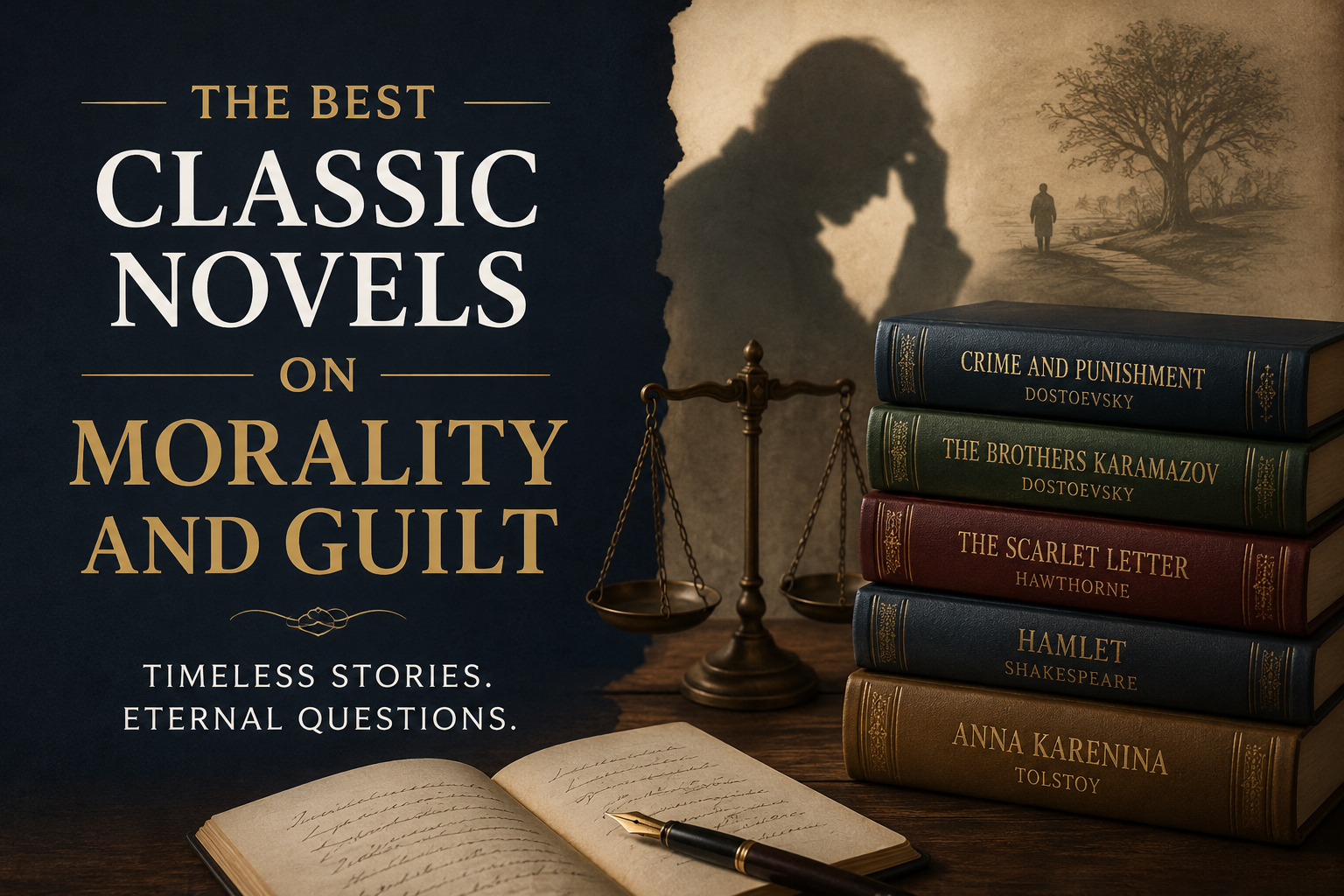
Best Classic Morality and Guilt stories ask a hard question: what happens when a person knows they have done wrong? These classics help students see how shame, choice, and conscience shape unforgettable characters.
From murder to betrayal, these books show that guilt is not just a feeling. It can become a force that changes a whole life.
In this Guide
Why morality and guilt matter in classic literature
Best Classic Morality and Guilt books to read first
Common symbols and themes
How to study these works
Recommended books
FAQs
Why Best Classic Morality and Guilt Stories Still Matter
The strongest classics make guilt feel personal.
Best Classic Morality and Guilt works still matter because they deal with choices that never go away. People still lie, hide secrets, harm others, and face the pain of regret.
These stories also help readers think about justice. Is punishment enough? Can a person change after doing wrong?
In many classics, guilt becomes a hidden judge. A character may escape the law, but they cannot escape their own mind.
Best Classic Morality and Guilt Books to Read First
Start with books where the moral conflict is clear and powerful.
A strong Best Classic Morality and Guilt reading list should include stories with deep inner conflict. These books are often taught in high school, AP Literature, and college because they reward close reading.
Crime and Punishment by Fyodor Dostoevsky
Raskolnikov commits murder and tries to prove he is above ordinary moral rules. His guilt slowly breaks down his pride.
This novel is one of the most important Best Classic Morality and Guilt texts because it turns a crime into a battle inside the soul. You can read more background at Britannica.
The Scarlet Letter by Nathaniel Hawthorne
Hester Prynne is publicly shamed for adultery, while another guilty character hides in silence. The novel asks whether public shame or private guilt hurts more.
Its famous red letter becomes one of the clearest symbols of sin, judgment, and identity in American literature.
Macbeth by William Shakespeare
Macbeth kills King Duncan to gain power. After that, guilt follows him through fear, visions, and violence.
Lady Macbeth also shows how guilt can turn inward. Her need to wash imagined blood from her hands is one of Shakespeare’s most famous images.
Symbols and Themes in Best Classic Morality and Guilt Literature
Symbols often show what characters cannot say out loud.
In Best Classic Morality and Guilt literature, symbols make inner pain visible. Blood, stains, locked rooms, and letters often stand for moral damage.
In Macbeth, blood shows guilt that cannot be washed away. In The Scarlet Letter, the letter A changes meaning as Hester changes.
One major theme is the split between public life and private truth. A character may look calm, but guilt grows beneath the surface.
Another key theme is confession. Many classics ask whether telling the truth can free a person, even if it brings punishment.
How to Study Best Classic Morality and Guilt Texts
Close reading helps you see how guilt works on the page.
When you read Best Classic Morality and Guilt texts, track the moments when a character tries to excuse their actions. Those moments often reveal the deepest moral conflict.
Pay attention to repeated images. If blood, darkness, illness, or silence appears more than once, the author is likely building meaning.
It also helps to mark key passages. If you want a simple method, use this guide on how to annotate literature while you read.
For poetry and shorter works, the same skills apply. The Poetry Foundation has helpful author pages and poem texts, including works that explore conscience and sin at Poetry Foundation.
Recommended Best Classic Morality and Guilt Books
These books are worth reading, buying, or borrowing for study.
These Best Classic Morality and Guilt picks are useful for essays because each one has strong symbols and clear moral questions.
Crime and Punishment by Fyodor Dostoevsky
The Scarlet Letter by Nathaniel Hawthorne
If you want one play, choose Macbeth by William Shakespeare. It is short, intense, and rich with guilt imagery.
Best Classic Morality and Guilt Questions for Class Discussion
Good questions turn reading into real debate.
A Best Classic Morality and Guilt discussion should move beyond plot. Ask what the text says about blame, truth, and change.
Is guilt useful if it leads to growth? Or does it only destroy the person who feels it?
You can also ask whether society judges fairly. In some classics, public punishment looks moral, but the reader sees hypocrisy behind it.
FAQ
What makes Best Classic Morality and Guilt books important?
They show how people deal with wrong choices. They also help readers think about justice, shame, and forgiveness.
Which classic is easiest to start with?
Macbeth is a good first choice. It is short, dramatic, and full of clear guilt symbols.
Why do so many classics focus on guilt?
Guilt creates strong conflict. It pushes characters to hide, confess, or fall apart.
How can I write an essay about morality and guilt?
Choose one character and track how guilt changes them. Then connect that change to symbols or repeated images.
Key Takeaway
Best Classic Morality and Guilt literature stays powerful because it studies the cost of human choices. These stories remind us that the hardest punishment often begins inside the mind.
A brief writing invitation for returning to the first secret that felt bigger than your hands, and finding the small scene where silence began to weigh something.
You might remember the moment by its temperature. A hot face. Cold fingers. A stomach that seemed to drop before anyone even asked a question.
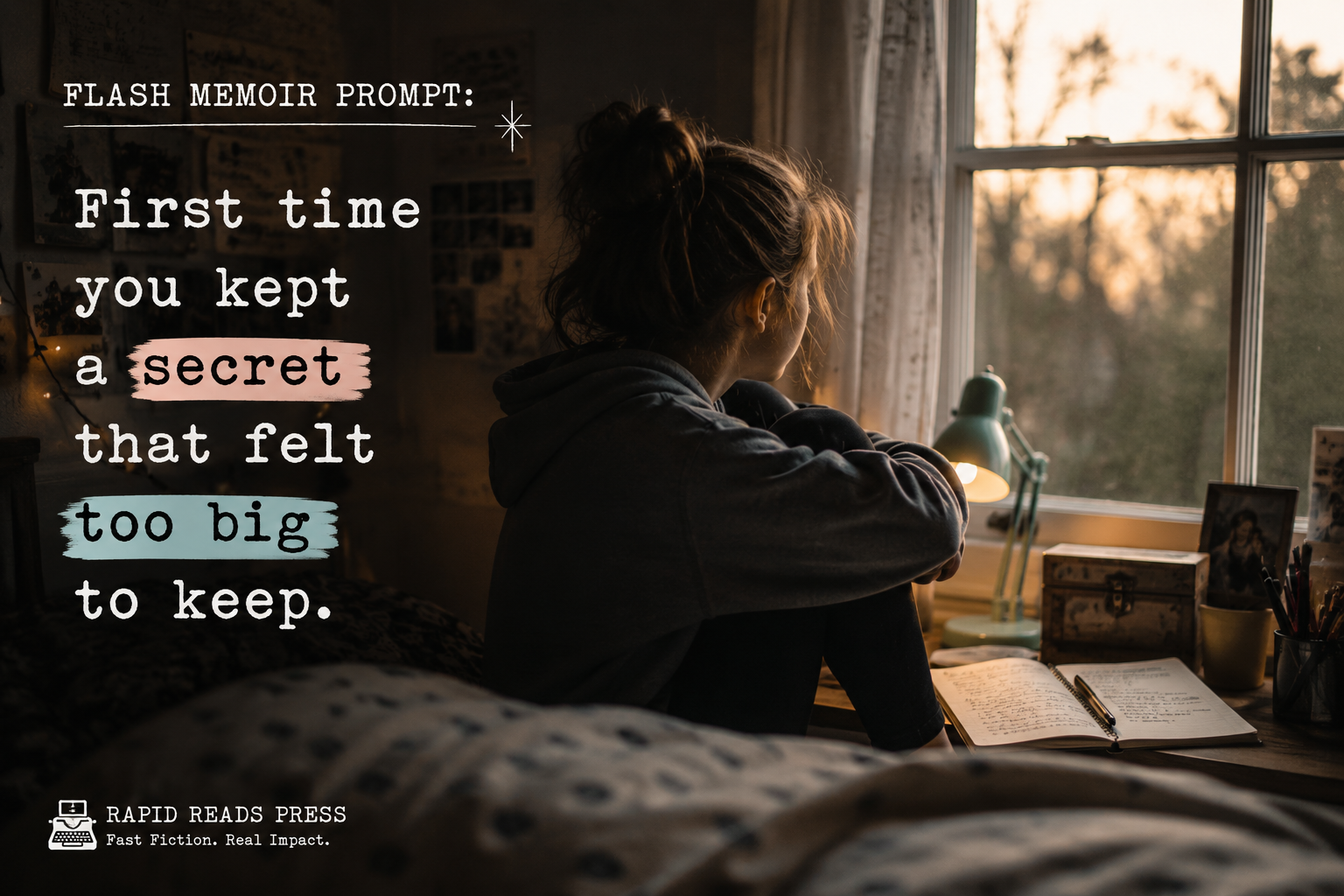
If you need a flash memoir prompt, first time kept secret felt too big for your own chest, begin with the moment you knew you would stay quiet. That moment may have lasted only a few seconds, but it can hold a whole story.
Secrets are strange in childhood and young adulthood. Sometimes they make you feel chosen. Sometimes they make you feel trapped. Sometimes you do not even know whether the secret belongs to you, but there you are, carrying it anyway.
The Prompt
Write about the first time you kept a secret that felt too big to keep.
This prompt can unlock a meaningful memory because it asks you to write about pressure. The secret itself matters, but the real story may be in what it did to your body, your voice, and your sense of right and wrong.
You do not need to reveal every detail if the memory still feels private. A flash memoir can work around the edges. You can write about the hallway, the dinner table, the unanswered phone call, or the way someone looked at you as if they knew.
For this flash memoir prompt first time kept secret felt heavy, try to focus on one clear scene instead of the whole history around it. The smaller the moment, the stronger the memory often becomes.
Why This Memory Matters
The first secret that felt too big often marks a change. Before it, you may have believed adults knew everything, friends always told the truth, or families said what needed to be said. After it, the world may have felt more complicated.
This kind of memory may uncover a story about loyalty. Maybe you kept a friend’s secret because you did not want to betray them. Maybe you held in something you had seen because speaking would have changed the room forever.
It may also uncover a story about fear. You might have worried someone would be angry, hurt, disappointed, or blamed. A secret can make a child feel powerful for a moment, then powerless for much longer.
In literature, secrets often push a story forward because they affect how people act when no one says the truth out loud. If you want to see how hidden truth and public judgment can shape a character, the Scarlet Letter study guide offers a clear example of secrecy at the center of a story.
In memoir, though, the point is not to turn your life into a lesson. The point is to notice what the secret changed. Did you become more careful? Did you start listening at doors? Did you learn that silence can feel loud?
How to Approach This Prompt
Start with a physical detail. Do not begin by explaining the whole situation. Begin with a hand on a doorknob, a folded note in a pocket, the smell of cafeteria pizza, or the sound of your own breathing while someone waited for your answer.
Then narrow the memory to one scene. Ask yourself: Where was I standing or sitting when I first understood this secret was mine to carry? Who else was there? What did I do with my face?
For this flash memoir prompt first time kept secret felt too big, try writing what you noticed before you write what it meant. Maybe you noticed your mother’s keys on the counter, your best friend’s red eyes, or the way your notebook paper tore when you erased too hard.
Let the meaning arrive later. Memory often works that way. First comes the small object. Then comes the feeling.
You may also want to think about the mood of the scene. Was it tense, quiet, weirdly normal, or almost funny because everyone was acting like nothing had happened? If you need help naming the feeling of a scene, this guide to tone vs. mood in literature can help you separate the narrator’s voice from the atmosphere around the memory.
Avoid trying to tell the entire secret from beginning to end. Flash memoir works best when it trusts one image. You can leave some things unsaid. In fact, a story about a secret may feel more honest when it does not explain everything.
A Quick Example
I was nine when I found the birthday present hidden behind the water heater. It was a blue bike with silver streamers curled like ribbon candy from the handlebars. My father saw me see it. For one second, we both froze in the basement light. Then he put one finger to his mouth and smiled, but his smile looked nervous, as if I had caught him doing something worse than being kind. At dinner, my mother asked why I was so quiet. I stared at my peas and said I was tired. The secret buzzed in me all week. By Saturday, when she rolled the bike into the yard, I had practiced surprise so many times that my real joy came out wrong.
Try It Yourself
Set a timer for ten minutes and write this sentence at the top of the page: “The first secret I remember keeping was…” Then move straight into a scene.
Do not worry yet about whether the secret was serious enough. If it felt big to you then, it belongs on the page. Childhood size and adult size are not the same, and memoir often lives in that difference.
If the memory feels tender, give yourself permission to write around it. Describe the room. Describe the weather. Describe what your hands did. You can decide later what to keep, change, or leave private.
This flash memoir prompt first time kept secret felt too big to keep is really an invitation to study the weight of silence. What did you carry? Why did you carry it? What did that younger version of you understand before they had the words?
Macbeth is full of short lines that carry huge meaning. This guide offers Macbeth quotes explained in clear language so you can connect famous passages to theme and character change. Each quote below shows what the words mean and how to use them in an essay.
In this Guide
Use this quick map to find the passages that fit your class notes or essay topic.
How to read important quotes
Ambition and temptation
Guilt and fear
Appearance and reality
Fate and choice
Essay tips and study tools
Macbeth quotes explained: how to read the play
A strong quote is not just a famous line. It is proof of how the play builds meaning.
Start with context. Ask who speaks and what has just happened. Then explain how the line reveals a conflict, fear, or desire.
Do not drop a quote into a paragraph and move on. Your job is to show why the words matter. If you need help with that skill, read our guide on how to write a literary analysis essay.
Macbeth quotes explained for ambition and temptation
Macbeth’s rise begins with a promise, but his choices turn that promise into a trap.
“Stars, hide your fires”
Macbeth says this after he starts to imagine himself as king. He wants the stars to hide their light because he knows his thoughts are dark.
This line shows **secret ambition**. Macbeth does not act yet, but his mind has already crossed a moral line.
“Vaulting ambition”
Macbeth admits that ambition is the main force pushing him toward murder. The image suggests a rider who leaps too far and falls.
This is useful for essays about self-destruction. Like Victor Frankenstein, Macbeth wants power before he has the wisdom to handle it.
These Macbeth quotes work well when your claim focuses on how desire can overpower conscience.
Macbeth quotes explained for guilt and fear
After the murder of Duncan, guilt does not fade. It grows until it shapes how Macbeth and Lady Macbeth see the world.
“Sleep no more!”
Macbeth hears this cry after he kills Duncan. Sleep usually means peace, but Macbeth has destroyed that peace for himself.
The line suggests that guilt becomes a punishment. No guard has caught Macbeth yet, but his mind is already attacking him.
“Out, damned spot!”
Lady Macbeth imagines blood on her hands. The spot is not real, but her guilt is.
Earlier, she seemed cold and strong. By this point, Shakespeare shows that denial cannot protect her forever.
For a comparison, think of Raskolnikov in Crime and Punishment. In both works, the crime happens once, but the guilt keeps returning.
Macbeth quotes explained for appearance and reality
Many characters in the play hide what they want. Shakespeare uses false faces, strange language, and broken trust to show that appearances can mislead.
“Fair is foul, and foul is fair”
The witches speak this line near the start of the play. It means that good and evil will seem mixed up.
The line prepares us for a world where truth is hard to read. Macbeth looks loyal, but he plans betrayal.
“False face must hide what the false heart doth know”
Macbeth says he must hide his plan behind a false expression. His face becomes a mask.
This quote is strong evidence for essays about deception. It shows that Macbeth understands the evil of his choice, yet he chooses to act anyway.
Macbeth quotes explained for fate and choice
The witches predict Macbeth’s future, but they do not force his hand. That tension makes the play feel tragic.
“If chance will have me king”
At first, Macbeth wonders if fate will make him king without action. This shows hesitation.
Soon, he stops waiting. His shift matters because tragedy often grows from a person’s own decisions.
“I am in blood”
Macbeth feels trapped by the violence he has caused. He thinks he has gone too far to turn back.
This line shows how one crime leads to another. Macbeth quotes explained in this way help students argue that fate may tempt him, but choice destroys him.
How to use Macbeth quotes in essays
Good quote analysis connects words on the page to a clear claim. Keep your explanation focused and direct.
When you use Macbeth quotes in an essay, follow a simple pattern:
Make a claim about the character or theme.
Give brief context for the quote.
Use a short quotation.
Explain the words that prove your point.
For example, you might write: Macbeth’s line “Stars, hide your fires” shows that he knows his ambition is morally wrong. He wants darkness to cover his thoughts, which proves that guilt begins before the murder.
Here are quick answers to common student questions about choosing and analyzing quotes.
What is the best Macbeth quote for ambition?
“Vaulting ambition” is one of the clearest choices. It shows that Macbeth understands the motive behind his crime.
What quote shows Macbeth’s guilt?
“Sleep no more!” is a strong guilt quote. It shows that Macbeth loses inner peace after killing Duncan.
What quote shows Lady Macbeth’s guilt?
“Out, damned spot!” shows her guilt in a vivid way. She imagines blood that cannot be washed away.
How many quotes should I use in a Macbeth essay?
Use enough to support your claim, not to fill space. Two well-explained quotes are often stronger than many rushed ones.
Key Takeaway
Macbeth quotes explained well do more than define old words. They show how ambition, guilt, and choice push Macbeth from brave soldier to tragic tyrant.
Not with explosions. Not with portals opening in the sky. Not with monsters or prophecies.
Instead, imagine waking up one ordinary morning and discovering that your voice no longer belongs to you.
That is the strange emotional territory magical realism loves to explore.
In magical realism, impossible things enter everyday life without fully breaking it. People still go to work. Coffee still brews. School buses still arrive. The world continues almost normally, except for one impossible detail that reveals something hidden underneath ordinary life.
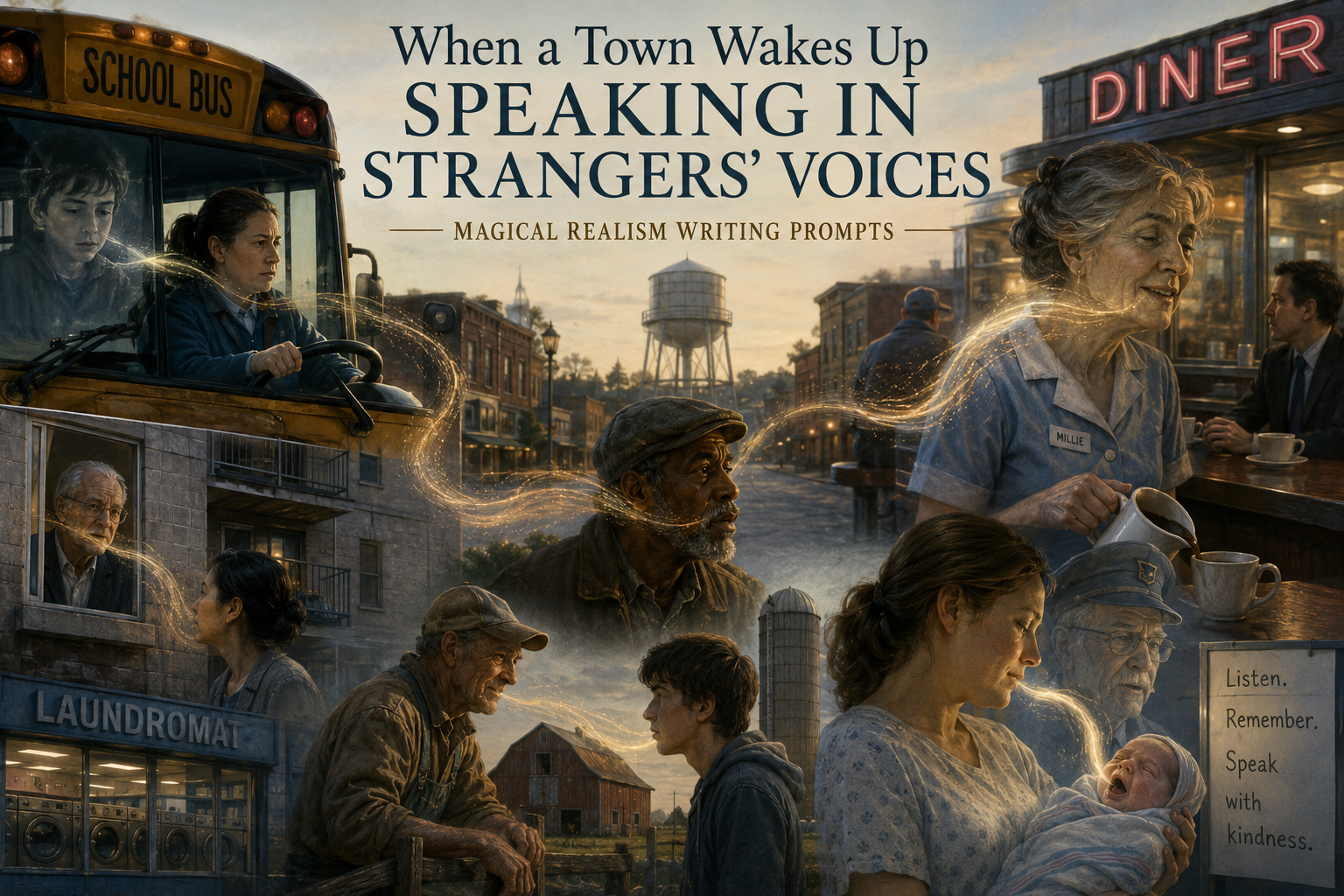
The following magical realism prompts explore a town where every person wakes up speaking in someone else’s voice.
Rather than focusing on spectacle or explanation, these prompts use magical realism to uncover grief, memory, resentment, tenderness, guilt, and longing. The magic itself is never fully explained because the emotional truth matters more than the mechanics.
In This Guide
What makes a writing prompt magical realism
Why borrowed voices work as magical realism
How to write emotional magical realism stories
Five magical realism prompt ideas
Tips for writing magical realism fiction
FAQ about magical realism prompts
What Makes a Prompt Magical Realism?
Magical realism blends the ordinary world with one impossible element that characters accept as part of reality.
A magical realism story does not usually pause to explain the magic. The impossible simply exists beside everyday life.
A woman may float while hanging laundry. A town may forget insomnia exists. A child may hear ghosts during dinner. Nobody reacts as though they have entered a fantasy novel. Instead, the strange becomes woven into ordinary routines.
That emotional contrast is what gives magical realism its power.
In these prompts, the magical element is simple: everyone wakes up speaking in someone else’s voice.
But the emotional consequences become enormous.
Why the “Borrowed Voices” Idea Works So Well
The idea of borrowed voices creates instant emotional tension because voices carry identity.
A voice contains memory, history, pain, affection, fear, and social power. Hearing the wrong voice come from your own mouth would immediately force you to think differently about yourself and other people.
These prompts capture this beautifully by placing the impossible inside ordinary spaces like school buses, apartment buildings, diners, farms, and hospitals.
That contrast is deeply connected to magical realism.
The world itself remains recognizable. Breakfast still happens. Laundry still spins. Nurses still check monitors. The magic does not stop life. It exposes hidden emotional truths already buried inside it.
Magical Realism Prompt #1: The School Bus Route
One morning, a school bus driver begins her route exactly as she has for twenty-two years. But when she calls out the children’s stops, she speaks in the voice of a boy who drowned in the quarry the previous summer. Soon every child discovers they are speaking in someone else’s voice too. Some hear dead relatives. Others hear estranged parents, former friends, or complete strangers.
This magical realism prompt works because the impossible enters a completely normal setting.
The children still ride to school.
The driver still keeps both hands on the wheel.
Nobody fully understands what is happening, but the routine of the morning continues anyway.
A strong story could focus on one child who suddenly speaks in the voice of an absent father. Does the child use that borrowed voice to comfort their grieving mother? Or to finally say the painful things nobody in the family has admitted aloud?
The magic becomes a way of exploring emotional inheritance and unfinished conversations.
Magical Realism Prompt #2: The Apartment Building Above the Laundromat
In a worn apartment building above a laundromat, residents wake up speaking in the voices of people they have avoided for years. A landlord suddenly hears himself speaking with the stutter he had as a child. A nurse answers her phone in the voice of a patient she could not save. A retired man speaks with the voice of an immigrant neighbor whose name he never bothered to learn.
This prompt captures one of the strongest qualities of magical realism: emotional confrontation through quiet impossibility.
Nobody runs from monsters.
Nobody tries to save the world.
Instead, people are forced into uncomfortable intimacy.
The laundromat still hums downstairs. People still fry onions for dinner. Someone still complains about parking. Yet every conversation becomes emotionally charged because each borrowed voice carries history with it.
A story built from this prompt could focus on loneliness, prejudice, guilt, or the fear of truly seeing another person.
Magical Realism Prompt #3: The Diner Breakfast Crowd
At the local diner, the breakfast crowd notices the voice exchange over coffee and pancakes. The mayor now speaks with the voice of the woman who cleans city offices at night. A football coach orders breakfast in the delicate voice of his estranged daughter. A widower hears his late wife’s laughter coming from the waitress pouring coffee.
This prompt feels especially suited to magical realism because diners already function as emotional crossroads.
Everybody passes through.
Everybody overhears things.
Everybody carries private grief into public space.
The impossible event does not destroy the diner’s routine. Orders continue. Bacon still hisses on the grill. The waitress still refills cups.
That restraint matters.
Magical realism often becomes more powerful when characters react with uneasy acceptance rather than dramatic panic.
A story here could center on the waitress, who suddenly becomes the accidental witness to the town’s hidden emotional life.
Magical Realism Prompt #4: The Dairy Farm
On a small dairy farm outside town, a father and son wake up speaking in each other’s voices after months of emotional distance. The father’s words come out wounded and impatient. The son’s sound exhausted and weathered beyond his years.
This prompt works beautifully because magical realism often reveals emotional truths that realistic dialogue alone cannot reach.
The pair still completes morning chores.
They mend fences.
They feed calves.
They listen to radio reports describing the strange phenomenon spreading across town.
But now every sentence carries emotional weight neither person can avoid.
The magical element forces both characters to hear themselves through someone else’s experience.
That emotional reversal creates powerful opportunities for stories about family conflict, masculinity, regret, and forgiveness.
Magical Realism Prompt #5: The Maternity Ward
In the maternity ward, newborn babies begin crying in the voices of elderly townspeople. One infant cries with the rasp of a retired mailman. Another sighs with the voice of a woman who has sat in the same church pew for fifty years. A premature baby speaks with the exact voice of a man who disappeared decades earlier.
This may be the most haunting magical realism prompt in the collection because it blends birth with memory.
The story suddenly asks difficult questions.
Can a community ever escape its past?
Do families inherit emotional wounds before language itself?
Can forgiveness survive across generations?
The hospital remains ordinary. Nurses still check monitors and change sheets. Yet the impossible transforms every newborn cry into a reminder that memory never fully disappears.
A deeply emotional story could follow a mother who hears her child cry in the voice of someone she has spent years trying to forgive.
How to Write Better Magical Realism Stories
Many writers make the mistake of treating magical realism like fantasy with less worldbuilding.
But magical realism usually depends more on emotional realism than magical systems.
When writing from these prompts, focus less on explaining why the voices changed and more on what the change reveals.
Pay attention to ordinary details.
The smell of coffee.
The sound of tires on wet pavement.
The awkward silence after someone speaks with the wrong voice.
Magical realism becomes convincing when the emotional world feels authentic enough that readers accept the impossible detail beside it.
It also helps to resist overexplaining the magic itself.
Avoid giving a scientific or supernatural explanation for the voice exchange.
That ambiguity allows the emotional meaning to stay at the center of the story.
Key Takeaway
The best magical realism prompts do not use magic for spectacle.
They use impossible moments to reveal ordinary emotional truths.
A town waking up with borrowed voices becomes a way of exploring grief, loneliness, resentment, memory, forgiveness, and connection. The magic matters less than the emotional honesty it uncovers.
That is what magical realism does best.
It makes invisible feelings briefly visible.
Or in this case, audible.
FAQ About Magical Realism Prompts
What is a magical realism prompt?
A magical realism prompt combines ordinary reality with one impossible element that characters mostly accept as normal. The goal is usually emotional or symbolic exploration rather than fantasy adventure.
How is magical realism different from fantasy?
Fantasy often builds entirely separate worlds with detailed magical systems. Magical realism usually takes place in recognizable everyday settings where one strange event quietly exists beside normal life.
Do magical realism stories need explanations for the magic?
Usually not. In many magical realism stories, the mystery remains unresolved because the emotional meaning matters more than the mechanics.
What themes work well in magical realism?
Grief, memory, identity, family conflict, love, guilt, loneliness, cultural inheritance, and social tension often work especially well because magical realism reveals hidden emotional truths.
Why are ordinary settings important in magical realism?
Ordinary settings create contrast. The impossible feels more emotionally powerful when it appears beside everyday routines like cooking breakfast, riding a bus, or working a normal shift.
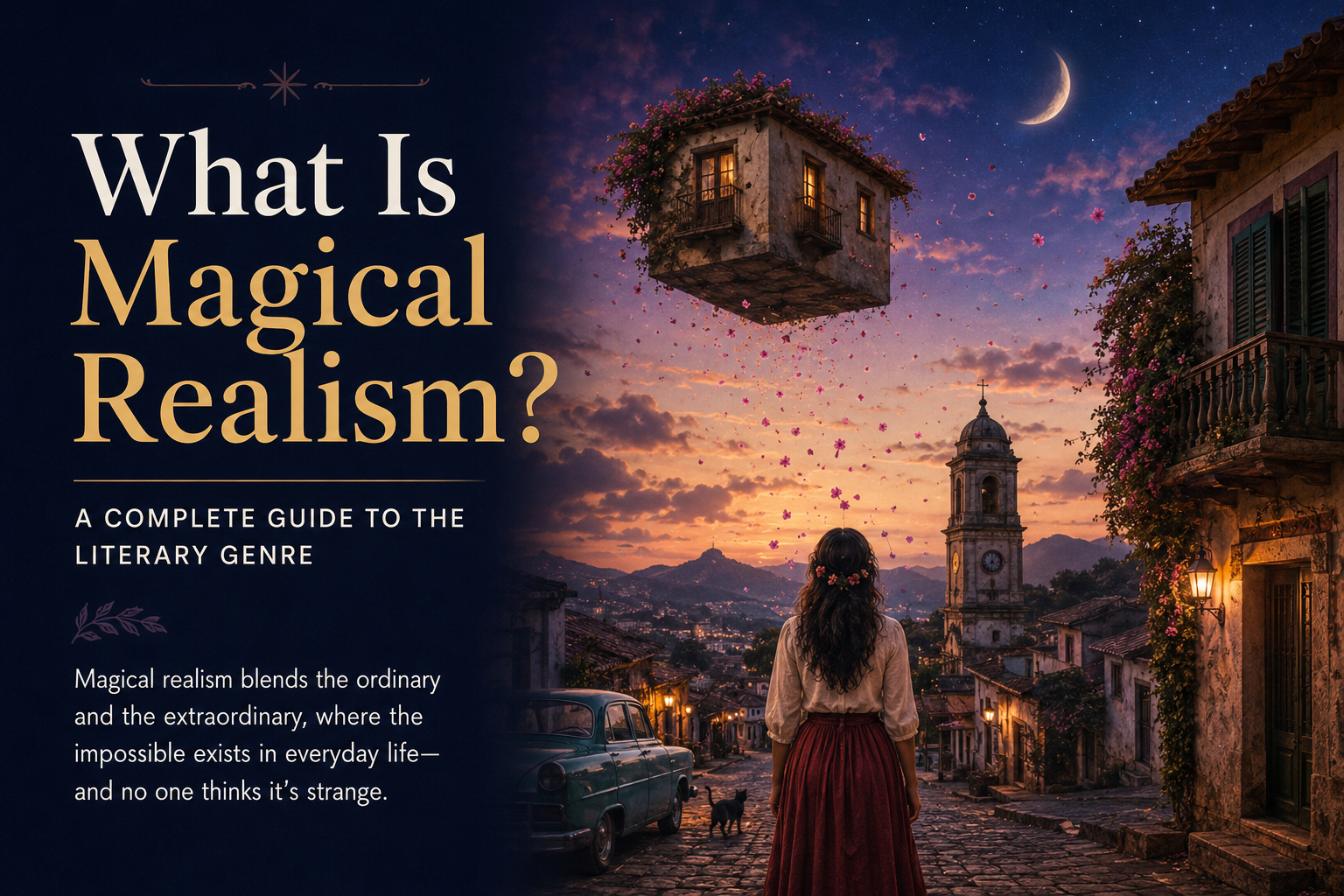
Magical realism is one of the most fascinating forms of fiction because it asks readers to accept the impossible as if it were ordinary. In a magical realism story, ghosts may sit at the dinner table, flowers may fall from the sky for days, or a woman may rise into heaven while hanging laundry. Yet nobody reacts with shock. The magical event is treated as part of everyday life.
This mixture of the ordinary and the extraordinary creates a reading experience that feels emotional, symbolic, dreamlike, and strangely believable all at once.
Magical realism appears in novels, short stories, films, and even television. It has influenced generations of writers across Latin America, Europe, Asia, Africa, and the United States. Readers often connect magical realism with writers like Gabriel García Márquez, Isabel Allende, Salman Rushdie, and Toni Morrison, though the style has grown far beyond those names.
Understanding magical realism can help readers analyze literature more deeply and help writers create stories that feel emotionally rich and imaginative without fully entering fantasy territory.
Key Takeaway
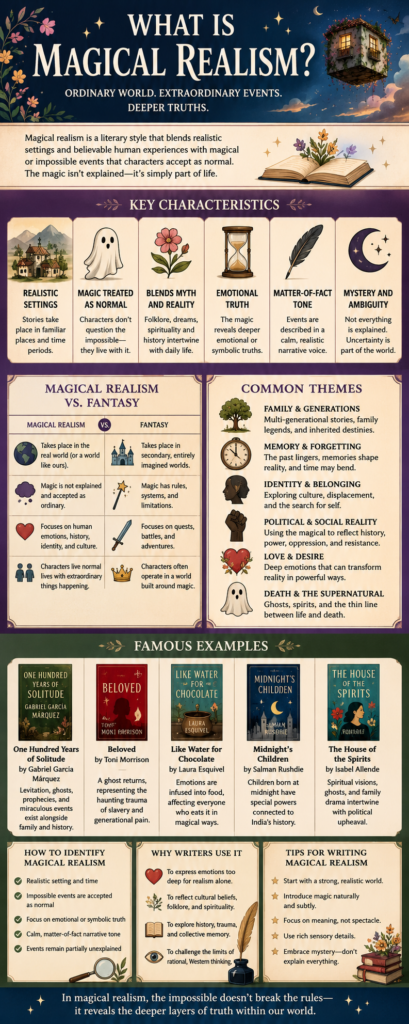
Magical realism is a literary style that blends realistic settings and believable human experiences with magical or impossible events that characters accept as normal. Unlike fantasy, magical realism does not build a separate world with special rules. Instead, it places the magical directly into ordinary life, often to explore memory, identity, history, trauma, family, culture, politics, or spirituality.
In This Guide
What magical realism means
The origins of magical realism
The defining characteristics of magical realism
How magical realism differs from fantasy
Why writers use magical realism
Common themes in magical realism
Famous magical realism books and authors
Examples of magical realism in literature
Symbolism and meaning in magical realism
How to identify magical realism in fiction
Tips for writing magical realism
Common misconceptions about magical realism
Frequently asked questions about magical realism
What Is Magical Realism?
Magical realism is a literary genre or style in which magical events appear within an otherwise realistic world. The setting usually resembles ordinary life. Characters work jobs, raise families, attend school, cook meals, and deal with grief, poverty, love, loneliness, or political conflict. Yet within this normal reality, impossible things occur naturally.
A dead relative may continue visiting family members for years.
A child may hear the thoughts of strangers.
A town may suffer insomnia so severe that people forget the names of objects.
Rain may last for years.
The key element is not simply that magic exists. The important detail is how the story treats the magic. Characters rarely question it. The narrator presents impossible events in the same calm tone used to describe daily life.
This creates a unique emotional atmosphere. The world feels realistic and unreal at the same time.
Magical realism often reflects the way memory, emotion, spirituality, folklore, and cultural belief systems shape human experience. It suggests that reality itself may be more mysterious than strict logic allows.
Magical realism often uses ordinary settings mixed with impossible events to reveal deeper truths about memory, identity, grief, history, or culture. Because of this, understanding how literary themes and symbols work can help readers recognize why magical realism feels emotionally powerful even when events seem unrealistic. If you are new to literary interpretation, this guide to literary themes can help you build a strong foundation before exploring the genre further.
The phrase “magical realism” first appeared in art criticism before becoming connected to literature.
German art critic Franz Roh used the term in 1925 to describe paintings that presented ordinary subjects with an eerie or mysterious quality. Later, literary critics began applying the term to fiction, especially works emerging from Latin America during the twentieth century.
Magical realism became strongly associated with Latin American literature during the literary boom of the 1960s and 1970s. Writers from this period combined political history, myth, religion, folklore, colonialism, and social struggle with impossible or dreamlike events.
One of the most influential works in the genre is One Hundred Years of Solitude by Gabriel García Márquez. The novel tells the story of the Buendía family across generations in the fictional town of Macondo. The story includes ghosts, prophecies, levitation, impossible weather, and miraculous events, yet the novel remains deeply grounded in human history and political conflict.
Other writers expanded magical realism into different cultural traditions. Isabel Allende explored family history and political violence. Salman Rushdie blended mythology, colonial history, and national identity. Toni Morrison used supernatural elements to examine slavery, trauma, and memory.
Today, magical realism exists worldwide and continues influencing contemporary fiction.
The Core Characteristics of Magical Realism
Although magical realism can appear in many forms, several characteristics commonly define the genre.
Realistic Settings
Most magical realism stories begin in a believable world. The setting resembles recognizable history or ordinary life.
The town may resemble a real village.
The family may experience realistic financial problems.
Political events may reflect actual historical conflicts.
The realism grounds the reader emotionally before magical elements appear.
This realistic foundation separates magical realism from high fantasy, where entirely invented worlds often dominate the story.
Ordinary Treatment of Magical Events
One of the clearest features of magical realism is the calm acceptance of impossible events.
Characters rarely scream in disbelief or demand scientific explanations.
Instead, the magical becomes part of everyday existence.
A grandmother may casually speak with spirits.
A child may float during emotional moments.
An entire village may accept prophetic dreams as ordinary truth.
The narrator also avoids dramatic explanation. The magical is presented with emotional seriousness and normality.
Blending Myth and Reality
Magical realism often mixes folklore, religion, superstition, oral storytelling, dreams, and mythology into daily life.
Stories may include:
ancestral spirits
curses
miracles
folk beliefs
prophetic visions
symbolic transformations
supernatural weather
impossible coincidences
These elements often reflect cultural traditions and collective memory.
Emotional or Symbolic Truth
Magical realism frequently values emotional truth more than scientific realism.
A magical event often symbolizes grief, trauma, love, guilt, memory, or social tension.
For example, a ghost may represent unresolved historical trauma rather than functioning simply as a horror element.
A magical event usually deepens emotional meaning instead of existing merely for spectacle.
One reason magical realism remains so memorable is that the magical elements usually function symbolically rather than randomly. A raining flower storm or a ghost at the dinner table often represents emotional truth rather than literal fantasy. Readers who want to study this more deeply may also find this guide to literary symbolism helpful.
A Matter-of-Fact Narrative Tone
The narration in magical realism usually sounds calm and controlled, even while describing impossible things.
This tone is essential.
If the narrator sounds shocked, frightened, or overly dramatic, the story begins moving closer to fantasy or horror.
The neutral tone encourages readers to accept the magical alongside the ordinary.
The Presence of Mystery
Magical realism rarely explains everything.
Readers may never learn why a miracle occurred or whether a supernatural event was objectively real.
The uncertainty becomes part of the reading experience.
The genre invites readers to live inside ambiguity rather than solving it.
How Magical Realism Differs from Fantasy
Many readers confuse magical realism with fantasy because both include impossible events. Yet the two genres operate very differently.
Fantasy Creates Separate Worlds
Fantasy often builds entirely new worlds with detailed systems, histories, species, or magical rules.
Examples include The Lord of the Rings by J. R. R. Tolkien or Harry Potter and the Sorcerer’s Stone by J. K. Rowling.
Magical realism usually stays inside the recognizable real world.
The town may resemble Colombia, India, the American South, or a modern city.
Magic appears inside ordinary reality instead of replacing it.
Fantasy Explains Magic
Fantasy often establishes clear magical systems.
Readers learn:
who can use magic
how magic works
what powers exist
what rules limit those powers
Magical realism rarely explains the impossible.
The magical simply exists.
Fantasy Centers Adventure
Fantasy stories often focus on quests, battles, kingdoms, prophecies, or heroic conflict.
Magical realism usually centers family life, memory, politics, identity, history, relationships, or emotional experience.
The magical supports deeper human themes rather than action-driven plots.
Characters React Differently
Fantasy characters often recognize magic as unusual or powerful.
Magical realism characters usually treat impossible events as ordinary.
This difference in reaction completely changes the atmosphere of the story.
Why Writers Use Magical Realism
Writers use magical realism because some human experiences feel larger than realism alone can express.
Grief can feel haunting.
Love can feel supernatural.
Memory can distort reality.
Political violence can feel surreal.
Trauma can make time feel broken.
Magical realism allows writers to express emotional and cultural truths that realistic fiction alone may struggle to capture.
Exploring Cultural Identity
Many magical realism writers use the genre to reflect cultures where folklore, spirituality, superstition, religion, and history remain deeply connected to daily life.
The magical elements often emerge naturally from collective cultural experience.
Addressing Historical Trauma
Magical realism frequently explores:
colonialism
slavery
dictatorship
war
displacement
generational trauma
The impossible may symbolize emotional wounds that history never fully resolves.
For example, haunting spirits may represent unresolved violence from the past.
Reflecting the Nature of Memory
Memory rarely behaves like strict realism.
People remember moments symbolically, emotionally, and imperfectly.
Magical realism captures this fluid quality of memory.
Time may loop.
The dead may feel present.
Objects may carry emotional power.
Reality may shift around emotional experience.
Challenging Western Rationalism
Some magical realism stories challenge the idea that only scientific or logical explanations matter.
The genre often leaves room for mystery, spirituality, intuition, dreams, and myth.
It suggests reality contains layers beyond strict rational explanation.
Common Themes in Magical Realism
Although magical realism stories vary widely, certain themes appear repeatedly.
Family and Generational History
Many magical realism stories follow families across decades or generations.
Family histories become intertwined with myth, memory, curses, or supernatural events.
Examples include:
inherited trauma
repeated names
family legends
ancestral ghosts
cyclical history
Memory and Forgetting
Characters often struggle with memory.
A town may literally forget language.
A character may carry memories physically.
The past may refuse to disappear.
Memory itself often becomes magical.
Identity and Belonging
Magical realism frequently explores cultural identity, immigration, race, gender, or national identity.
The magical may reflect feelings of displacement or divided identity.
Political Violence and Power
Many magical realism works critique governments, colonialism, dictatorship, or social inequality.
The magical allows writers to portray political realities in emotionally powerful ways.
Death and the Supernatural
Ghosts appear frequently in magical realism.
Unlike horror fiction, these ghosts are often emotional, symbolic, or familial rather than terrifying.
The boundary between life and death may feel thin and permeable.
Love and Desire
Love in magical realism often takes exaggerated or impossible forms.
Emotion may physically alter reality.
A character’s longing may shape weather, dreams, or time itself.
Famous Magical Realism Authors
Several authors helped define or expand magical realism.
Gabriel García Márquez
Perhaps the most famous magical realism writer, García Márquez transformed world literature with One Hundred Years of Solitude.
His fiction blends political history, myth, memory, and family drama with impossible events presented as normal life.
Isabel Allende
Known for The House of the Spirits, Allende combines family history, spirituality, politics, and emotional storytelling.
Her work often focuses on women, memory, and generational trauma.
Salman Rushdie
Rushdie’s Midnight’s Children uses magical realism to explore Indian history, colonialism, identity, and national transformation.
Toni Morrison
In Beloved, Morrison uses supernatural elements to confront slavery, memory, motherhood, and trauma.
The ghost in the novel carries emotional and historical significance.
Laura Esquivel
Like Water for Chocolate blends cooking, romance, family conflict, and magical emotional effects.
Food becomes emotionally transformative in supernatural ways.
Haruki Murakami
Murakami’s fiction often combines loneliness, dreams, alternate realities, and subtle supernatural experiences within modern life.
Examples of Magical Realism in Literature
One Hundred Years of Solitude
This novel includes levitation, prophetic manuscripts, ghosts, miraculous beauty, and impossible weather patterns.
Yet the emotional center remains deeply human.
The magical reflects the cycles of history, memory, and political violence.
Beloved
The dead child returning as a ghost represents unresolved trauma from slavery.
The supernatural element becomes inseparable from emotional truth.
Like Water for Chocolate
A character’s emotions transfer into food, affecting everyone who eats it.
Cooking becomes magical, emotional, and symbolic.
Midnight’s Children
Children born at midnight during India’s independence possess supernatural abilities.
The magical reflects national identity and political transformation.
The House of the Spirits
Spiritual visions, ghosts, and supernatural awareness blend with family history and political upheaval.
Magical Realism and Symbolism
Magical realism relies heavily on symbolism.
The magical event almost always means more than its literal surface.
A storm may symbolize grief.
A haunting may symbolize historical guilt.
A miraculous transformation may symbolize emotional awakening.
The magical becomes a language for emotional and social meaning.
This symbolic depth explains why magical realism appears frequently in literary fiction and academic analysis.
Readers are invited to interpret the impossible rather than simply observe it.
How to Identify Magical Realism in Fiction
Students often struggle to determine whether a story qualifies as magical realism.
Several questions can help.
Does the Story Take Place in a Mostly Realistic World?
If the setting resembles ordinary reality, magical realism becomes more likely.
If the story occurs in a fully invented kingdom with elaborate magical systems, it is probably fantasy.
Are Magical Events Treated as Normal?
This is one of the most important clues.
If characters calmly accept impossible events, the story may belong to magical realism.
Is the Focus Emotional or Symbolic?
Magical realism usually uses the impossible to explore deeper emotional or social truths.
The magic is meaningful rather than merely entertaining.
Does the Story Resist Full Explanation?
Magical realism often leaves mysteries unresolved.
Readers may never fully understand why impossible things happen.
Is the Tone Calm and Matter-of-Fact?
The narration often sounds emotionally controlled and realistic despite describing extraordinary events.
Common Misconceptions About Magical Realism
“Magical Realism Is Just Fantasy”
This is the biggest misunderstanding.
Fantasy creates alternative worlds and structured magical systems.
Magical realism places impossible events inside ordinary life without explanation.
“Anything Weird Counts as Magical Realism”
Surrealism, horror, fantasy, science fiction, and absurdism may all contain strange events, but they operate differently.
Magical realism specifically blends realistic life with accepted supernatural elements.
“Magical Realism Must Come From Latin America”
Latin American literature strongly shaped the genre, but magical realism now appears globally.
Writers from many cultures use magical realism to explore identity, history, and emotional experience.
“The Magic Exists Only for Entertainment”
In magical realism, supernatural events usually carry symbolic, emotional, historical, or political meaning.
The magic deepens the story’s themes.
How Magical Realism Affects Readers
Magical realism changes the way readers experience reality inside fiction.
The genre creates emotional openness.
Readers begin accepting mystery, ambiguity, and symbolic logic.
The impossible starts feeling emotionally believable.
This effect can feel deeply moving because magical realism mirrors the way humans actually experience life.
People already treat memory, grief, love, spirituality, dreams, and family stories as larger than logic alone.
Magical realism gives literary form to those experiences.
Tips for Writing Magical Realism
Writers interested in magical realism should focus less on spectacle and more on emotional atmosphere.
Begin With Reality
Start with believable settings, relationships, and emotional conflicts.
The realism creates grounding.
Introduce Magic Calmly
Do not overexplain supernatural events.
Present them naturally.
Treat the impossible with emotional seriousness rather than excitement.
Focus on Emotional Meaning
The magical element should reveal something emotionally true.
Ask what the supernatural symbolizes within the story.
Use Sensory Detail
Magical realism often feels vivid and physical.
Ground impossible events in concrete sensory description.
Leave Some Mystery
Avoid explaining every detail.
Ambiguity strengthens magical realism.
Draw From Folklore and Memory
Family stories, cultural traditions, dreams, myths, and personal memories can inspire powerful magical realism.
Magical Realism in Contemporary Fiction
Magical realism continues evolving in modern literature.
Contemporary writers use the genre to explore:
immigration
climate anxiety
race
gender
generational trauma
technology
displacement
political instability
Modern magical realism often blends literary fiction with speculative elements in subtle ways.
Many readers enjoy the genre because it feels emotionally honest while remaining imaginative.
Why Magical Realism Remains Popular
Magical realism remains powerful because reality itself often feels strange.
Human beings experience:
coincidence
intuition
dreams
grief
longing
memory
spiritual questions
emotional distortion
Strict realism cannot always capture these experiences fully.
Magical realism creates space for mystery while remaining emotionally grounded.
The genre reminds readers that reality contains both the visible and the invisible.
Where to Read More About Magical Realism
For readers who want to explore the genre more deeply, here are several sources that provide helpful background on magical realism and its literary traditions.
Writer’s Digest’s guide to magical realism gives writers a practical look at how magical realism works in storytelling, including common techniques and examples from contemporary fiction.
What is the difference between magical realism and fantasy?
Fantasy usually creates separate worlds with clear magical systems and rules. Magical realism places impossible events inside ordinary reality and treats them as normal parts of life.
Is magical realism a genre or a style?
Critics debate this question. Some describe magical realism as a genre, while others view it as a literary style or narrative mode that can appear across different genres.
Who invented magical realism?
The term first appeared in art criticism through Franz Roh, though many writers later shaped the literary form associated with magical realism.
Why is Gabriel García Márquez important to magical realism?
García Márquez helped popularize magical realism worldwide through works like One Hundred Years of Solitude, which became one of the most influential novels of the twentieth century.
Is magical realism always symbolic?
Most magical realism includes symbolic meaning, though interpretations vary. The magical often reflects emotional, political, cultural, or psychological truths.
Can magical realism include ghosts?
Yes. Ghosts appear frequently in magical realism, especially as symbols of memory, trauma, family history, or unresolved conflict.
Is magical realism always serious?
Not necessarily. Some magical realism includes humor, irony, romance, satire, or absurdity alongside deeper emotional themes.
What are common magical realism themes?
Common themes include family history, memory, trauma, political violence, identity, spirituality, love, death, and cultural tradition.
Is Beloved magical realism?
Yes. Many scholars consider Morrison’s novel an important example of magical realism because it blends realistic historical trauma with supernatural elements treated as emotionally real.
Can beginners write magical realism?
Yes, though the style requires emotional subtlety and restraint. Strong magical realism depends more on atmosphere, symbolism, and tone than elaborate magical systems.
Final Thoughts on Magical Realism
Magical realism continues to captivate readers because it reflects the strange emotional texture of human life. The genre allows stories to move beyond strict realism without abandoning emotional truth.
In magical realism, the impossible does not replace reality. It reveals deeper layers within it.
Ghosts become memory.
Miracles become grief.
Weather becomes emotion.
History becomes haunting.
The magical becomes another language for understanding what it means to be human.
For readers, magical realism offers stories that feel dreamlike yet deeply personal. For writers, it provides a way to explore truth through symbolism, mystery, and imagination without losing touch with ordinary life.
That balance between realism and wonder is what makes magical realism one of the most enduring and emotionally powerful forms of fiction.