

A warm, specific flash memoir prompt version family existed only public can help you explore the smile your family wore for neighbors, teachers, church friends, store clerks, or relatives, and what you noticed from inside that performance.
Maybe you remember standing in a grocery store while your parent laughed too loudly at a joke from someone they barely knew. Maybe everyone was dressed well for a school event, hair combed, shirts tucked, voices polite. Then you got in the car, and the air changed before anyone even closed the door.
Public families can look smooth from the outside. They can wave, pose, host, greet, and behave. But children often sense the gap between what is shown and what is true. That gap can hold a powerful memoir scene.

The Prompt
Write about the version of your family that existed only in public.
This flash memoir prompt version family existed only public asks you to focus on one memory where your family seemed different in front of others. You do not need to judge that version right away. Start by noticing it.
What did people see? What did they miss? Or what rules appeared the moment someone outside the family was watching? A prompt like this can unlock a memory because it asks about contrast. Memoir often comes alive when the outside story and the inside story do not match.
Why This Memory Matters
Every family has some kind of public face. For some, it is harmless. A parent becomes extra cheerful with guests. Siblings stop fighting when a grandparent walks in. Everyone sits straighter at a restaurant.
For other families, the public version can feel confusing or even painful. You may have known, even as a child, that people admired something that did not feel true at home. They saw kindness, order, humor, or faith. You saw the silence afterward, the tension in the hallway, or the way no one spoke once the front door shut.
This kind of memory matters because it may show you when you first learned to read people. You may have learned tone, timing, and body language before you had words for them. You may have learned how to act like everything was fine.
That does not mean the public version was fake in every way. Memoir does not have to flatten people into heroes or villains. A parent who performed happiness may also have wanted safety. A family that looked perfect may have been trying to survive embarrassment, money stress, grief, or fear.
If you enjoy thinking about how people act differently depending on the setting, you may also like this guide on how to analyze characters in literature. The same close attention you use with fictional characters can help you notice the people in your own memories with more care.


How to Approach This Prompt
Begin with one physical detail. Do not start with the whole history of your family. Start with the polished shoes, the matching holiday outfits, the casserole dish covered in foil, the forced smile, the hand on your shoulder that felt a little too firm.
Choose one scene where the public version appeared. A school open house. A wedding. A store aisle. A church lobby. A Little League game. A family photo session. The smaller the scene, the easier it will be to write with honesty.
Write what you noticed before you explain what it meant. For example, instead of starting with “My family pretended to be perfect,” begin with what happened in the room. Who spoke first? Who laughed? Or who went quiet? What did your body do?
You might ask yourself:
- Where were we, and who was watching?
- How did my family act differently than they did at home?
- What did I understand then, and what do I understand now?
- What small detail still feels bright in my memory?
Try to avoid telling the whole story at once. If the memory connects to years of family patterns, let one moment carry the weight. A single car ride home after a cheerful party can say more than a full summary of your childhood.
You can also treat the memory like a page you are marking up. Circle the strange details in your mind. Underline the line someone said too sweetly. If that approach helps, this post on how to annotate literature may give you a useful way to slow down and notice what matters.
A Quick Example
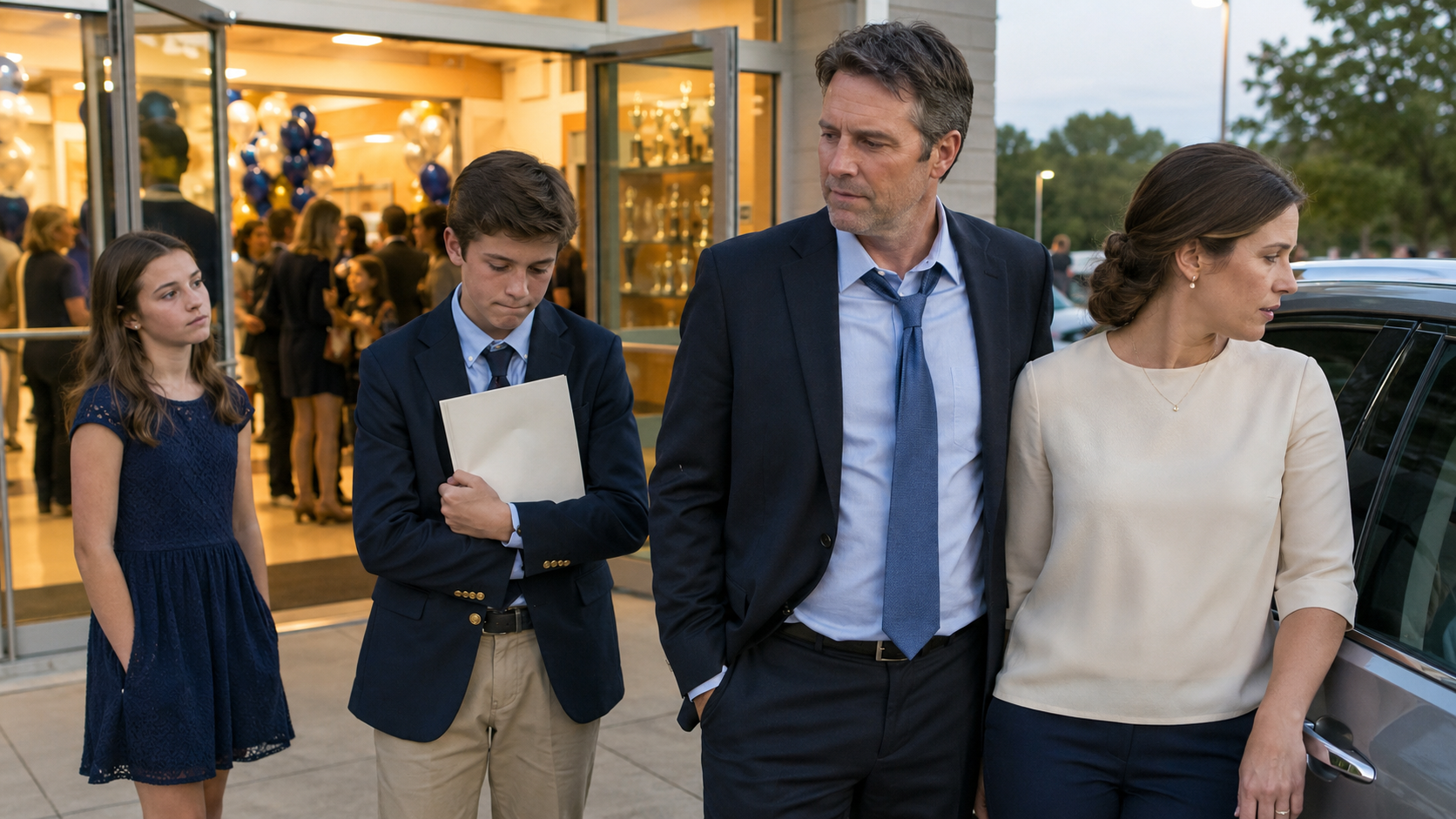
At my brother’s eighth-grade awards night, my father shook every teacher’s hand like he was running for office. He wore the blue tie my mother liked, and she kept touching his sleeve, smiling up at him as if they had been laughing together all evening. I stood beside the trophy case and watched them become a family other people recognized. My brother held his certificate against his chest. His grin looked real until we got to the parking lot. Then my father said, “Don’t get a big head,” and the certificate bent where my brother’s fingers tightened. No one spoke on the ride home. The blue tie rested loose against my father’s shirt, and my mother looked out the window like she had left herself back in the gym.
Try It Yourself
Set a timer for ten minutes and write one public scene. Keep your focus on what others could see and what you knew from the inside. Let the memory stay small.
If you feel stuck, write one sentence that begins with “In public, we were the kind of family that…” Then write the moment that proves it. Do not worry about making it neat. A flash memoir draft only needs one true image, one honest feeling, and enough detail to bring the scene back to life.
This flash memoir prompt version family existed only public may bring up humor, sadness, anger, tenderness, or a mix of all of those. Let the memory be complicated. Real families usually are.
Want More Flash Memoir Prompts?
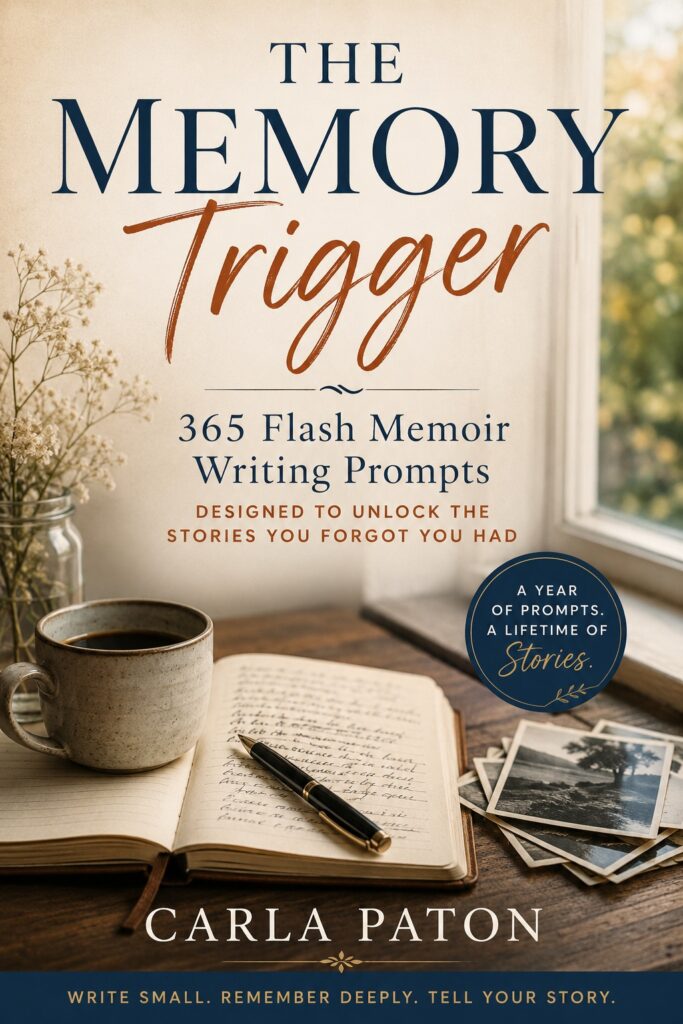
Explore all 365 prompts in The Memory Trigger: 365 Flash Memoir Writing Prompts. Use one prompt a day, or return to the ones that make you pause for longer than expected.


Get the Free Close Reading Worksheet Pack
Join my email list and receive the printable worksheet pack you can use with any novel or poem.
No spam. Just helpful guides for reading literature well.












