Flash Memoir Prompt: First Time You Were Left Alone Somewhere

flash memoir prompt first time left alone somewhere

A warm, focused writing invitation about the first time you felt truly alone and had to meet the moment by yourself.

flash memoir prompt first time left alone somewhere

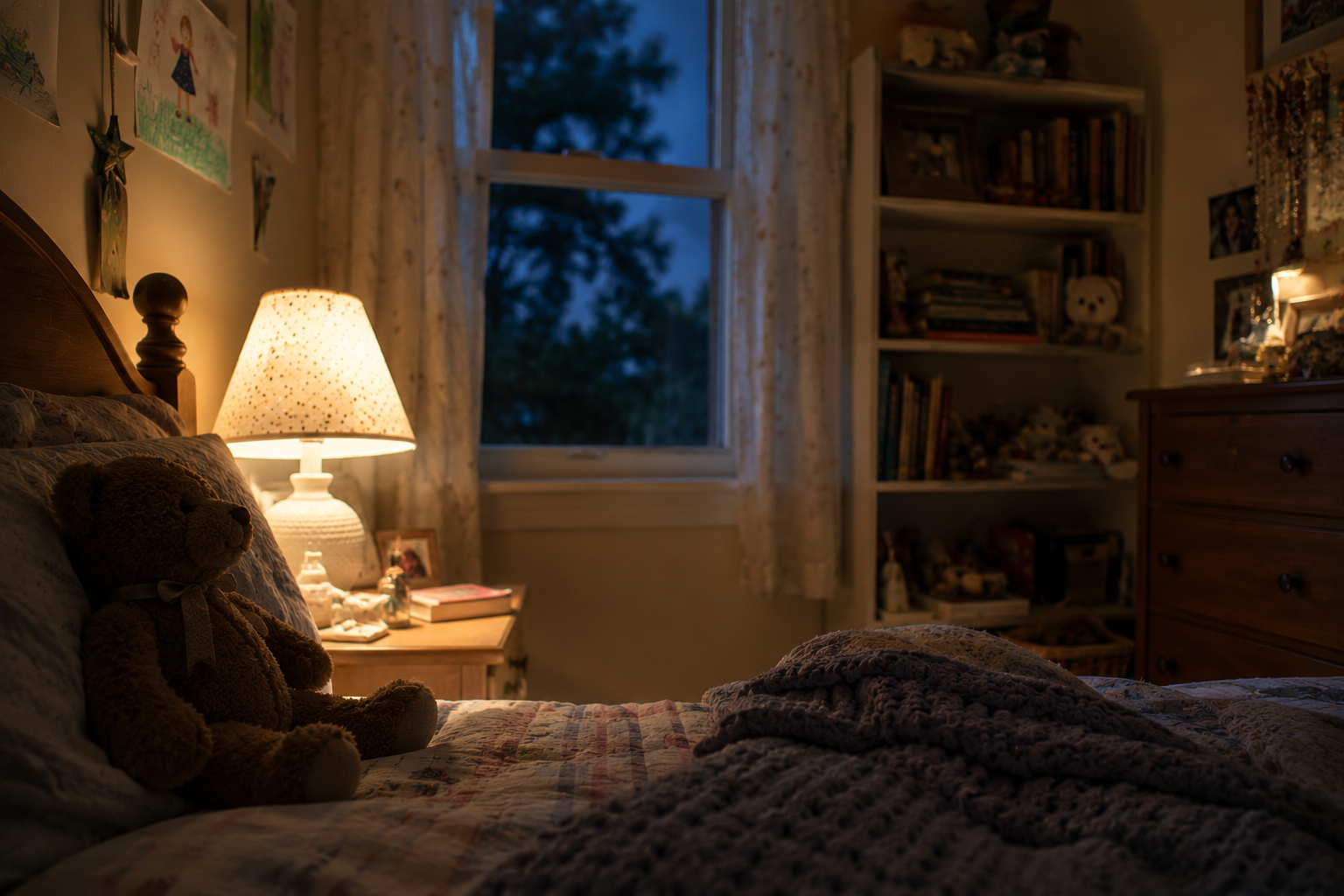
The door clicks shut. The car turns the corner. The house goes quiet in a way it never has before.

For a second, nothing has changed. The same couch is there. The same clock ticks. And the same cracked sidewalk stretches outside. Then your body understands before your mind does: no one is coming to handle this for you right now.

If you searched for a flash memoir prompt first time left alone somewhere, this one asks you to return to that sharp little moment when childhood, safety, independence, or fear shifted under your feet.

It might be a memory from a grocery store aisle, a school hallway after practice, a hospital waiting room, a train station, or your own kitchen. The place matters, but the feeling matters more.

The Prompt

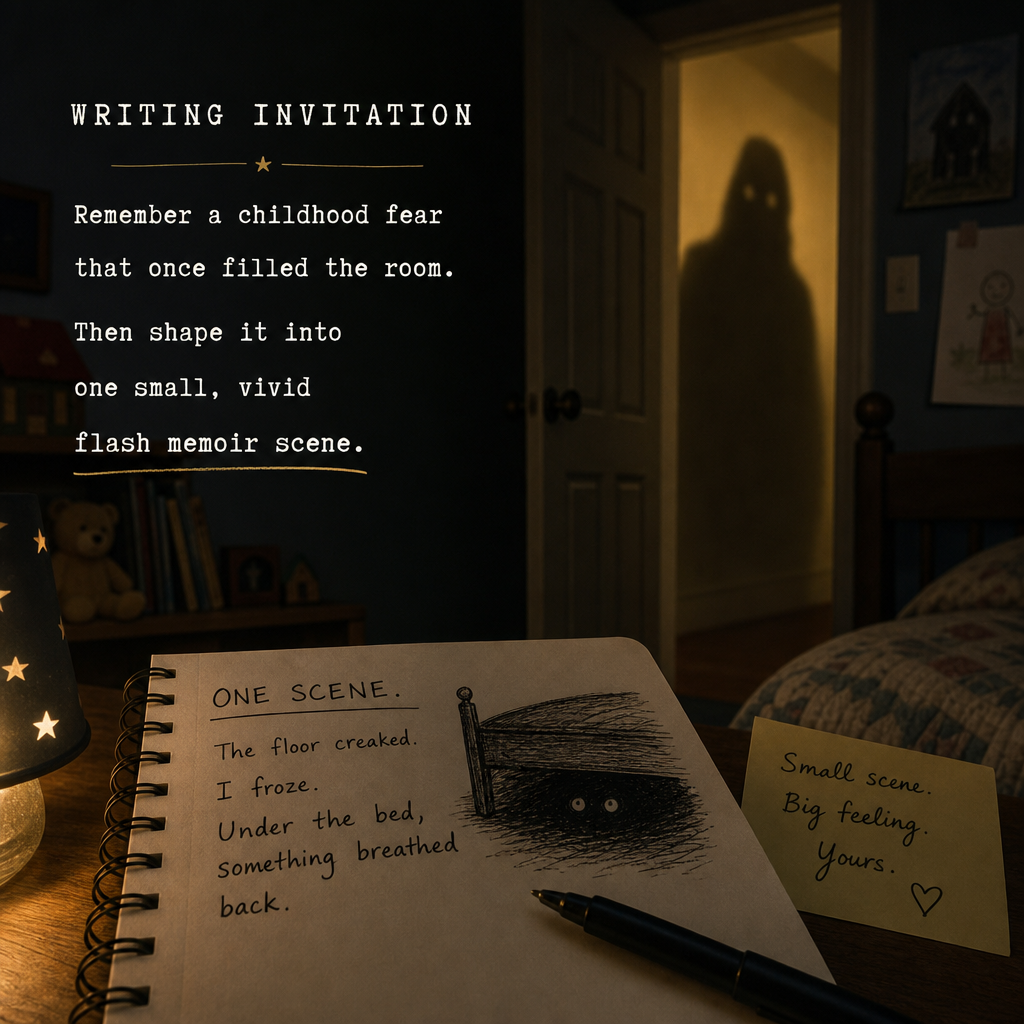
Write about the first time you were left alone somewhere and realized you were completely on your own.

This prompt can unlock a powerful memory because it focuses on a clear emotional turn. At first, you may have felt fine. Maybe even proud. Then something changed. The silence grew too large. The adults took too long. The familiar place started to feel strange.

Flash memoir works well when you choose one small scene instead of trying to explain your whole life. This prompt gives you a built-in scene: a person alone in a place, waiting to see what happens next.

Why This Memory Matters

The first time you were left alone may have been scary, exciting, unfair, or strangely calm. You may have discovered you were braver than you thought. You may have learned that certain kinds of freedom come with a cold edge.

This kind of memory often holds a hidden before and after. Before, someone else knew the plan. After, you had to make one.

Maybe you were left at a bus stop and had to ask a stranger for help. Maybe your parent ran into a store and did not come back as fast as promised. And maybe you were old enough to be trusted at home, but young enough to jump at every creak in the walls.

The meaning does not have to be dramatic. A strong memoir moment can come from a small realization: I know where the flashlight is. I can call the neighbor. I can sit still. And I can wait.

That is why this flash memoir prompt first time left alone somewhere can lead to a story about fear, but it can also lead to a story about competence. Or loneliness. Or pride that you did not know how to name at the time.

If you want to explore what your memory is really about after drafting, you might find it helpful to read this guide on how to identify theme in literature. Memoir has themes too, even when the story begins with a simple locked door or an empty room.

How to Approach This Prompt

Start with a physical detail. Do not begin by explaining how old you were or what the memory means now. Begin with the thing your body remembers.

Was the carpet rough under your knees? Was there gum stuck to the bottom of a plastic chair? Did the air smell like floor cleaner, wet wool, popcorn, sunscreen, or dust?

Choose one scene and stay inside it. If you were left alone at a mall, do not write the full story of your family, your whole childhood, and every store in the building. Write the bench outside the shoe store. Write the escalator. And write the moment you stopped pretending you were fine.

Let the facts arrive slowly. Readers do not need every detail at once. They need to feel what you noticed first.

You might begin with a sentence like:

“The kitchen sounded bigger after my mother left.”

Or:

“I counted the red floor tiles because I did not know what else to do.”

Or:

“At first, being alone in the car felt like a prize.”

After that, follow the next small action. Did you check the clock? Lock the door? Walk in circles? Try to act older than you felt?

If you get stuck, write the scene as if you are annotating your own memory. Notice the objects, the sounds, and the moment the mood changes. For more practice with close observation, this guide on how to annotate literature can help you train your eye to notice what carries meaning.

A Quick Example

My father left me in the laundromat with two baskets and a warning not to touch the candy machine. I was nine, old enough, he said, to watch the dryers spin while he ran next door for quarters. The room smelled like hot cotton and soap powder. At first I liked the job. I sat straight in the orange chair and looked serious, like the women folding towels. Then the dryer with our sheets stopped. My father did not come back. The quiet between machine hums got wider. A man came in and nodded at me. I nodded back, too fast. I put one hand on the basket handle and one hand in my pocket around the house key. That was the first time I understood that waiting could feel like work.

Try It Yourself

Set a timer for ten minutes and write one scene from this prompt. Keep your focus tight. Where were you? What did you hear? What did you do with your hands?

Do not worry about making the memory sound important. Let it be ordinary if it was ordinary. A child alone in a quiet house can hold as much tension as a child lost in a crowd.

When you finish, underline the sentence where the realization happens. It may be small, but it is probably the heart of the piece.

This flash memoir prompt first time left alone somewhere is a chance to write about the moment you began to understand your own presence. You were there. You noticed. And you got through it, one choice at a time.

Want More Flash Memoir Prompts?

If you enjoy short writing invitations that help you capture real memories in a few focused paragraphs, the full collection offers a year of daily practice.

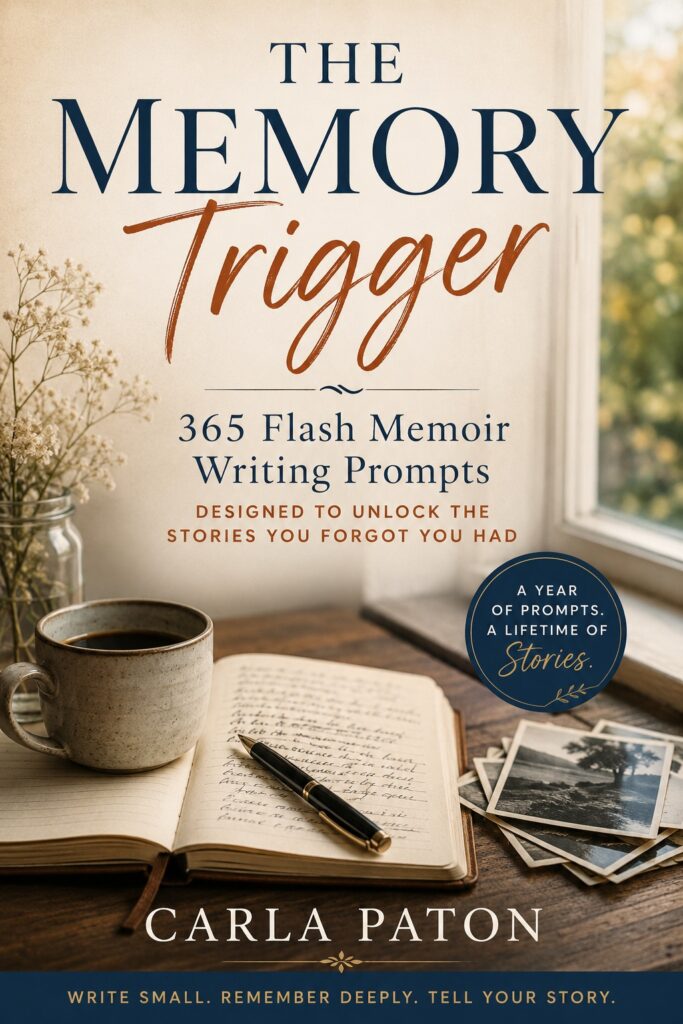
Explore all 365 prompts in The Memory Trigger: 365 Flash Memoir Writing Prompts.
 

flash memoir prompt

Romeo and Juliet Character Analysis: Key People, Motivations, and Conflicts

Romeo and Juliet character analysis

A practical breakdown of the main characters and how their choices shape the story.

Shakespeare’s tragedy works because each character wants something badly, then acts before the full truth is clear. This Romeo and Juliet character analysis breaks down the main characters, their motives, and the conflicts that push the play toward its tragic end.

This article contains affiliate links.

In this Guide

Romeo and Juliet character analysis

Romeo and Juliet Character Analysis: The Big Picture

The play is not only about young love. It is also about family pressure, pride, anger, and the cost of poor choices.

In a strong Romeo and Juliet character analysis, the key question is not just “Who is good?” or “Who is bad?” A better question is, “What does this person want, and what choice do they make because of it?”

Romeo wants love that feels total. Juliet wants control over her own life. Lord Capulet wants family honor. Tybalt wants respect through violence.

These wants crash into each other. That is why the plot feels fast, tense, and painful.

If you need a simple method for any character essay, this guide to analyzing characters in literature can help you build stronger claims.

Romeo and Juliet Character Analysis of Romeo Montague

Romeo is emotional, romantic, and quick to act. His heart often moves faster than his judgment.

At the start, Romeo feels crushed because Rosaline does not love him back. This matters because it shows how easily he turns love into an obsession.

When he meets Juliet, his feelings shift at once. This does not mean his love is fake. It does mean he trusts intense feeling more than careful thought.

Romeo’s main conflict is between desire and self-control. He wants peace with Tybalt after he marries Juliet, but he cannot control his rage after Mercutio dies.

That choice changes everything. Romeo kills Tybalt, gets banished, and loses the chance to build a future with Juliet in Verona.

For essays, Romeo is a strong example of a tragic character whose best traits create danger. His passion makes him loving, but it also makes him reckless.

Romeo and Juliet Character Analysis of Juliet Capulet

Juliet starts the play as an obedient daughter. By the end, she becomes one of Shakespeare’s boldest young characters.

A strong Romeo and Juliet character analysis should treat Juliet as more than Romeo’s love interest. She makes major choices and takes major risks.

Juliet’s main motive is freedom. She wants to love Romeo, but she also wants the right to choose her own future.

Her conflict grows when her parents order her to marry Paris. To them, the match seems smart. To Juliet, it feels like a prison.

Juliet is often more practical than Romeo. She asks serious questions about marriage, timing, and danger. Still, she is young, trapped, and short on safe advice.

Her choice to take Friar Lawrence’s potion shows courage. It also shows how few options she has in a world ruled by family power.

Romeo and Juliet Character Analysis of the Capulets and Montagues

The older generation keeps the feud alive, even when the young people pay the price.

The Capulets and Montagues are not fully explained, which makes their hatred feel even more pointless. Shakespeare shows the effect of the feud, not a clear reason for it.

Lord Capulet can seem caring when he first protects Juliet from an early marriage. Later, he turns harsh when she refuses Paris.

His motive is control. He wants Juliet to obey because her marriage affects his honor and social plans.

Lady Capulet is more distant. She follows the rules of her class and expects Juliet to accept them too.

The Montagues have less stage time, but they also live inside the feud. Their name makes Romeo an enemy before he has done anything to Juliet’s family.

Romeo and Juliet Character Analysis of Key Supporting Characters

The supporting characters shape the lovers’ choices. Some try to help, while others make conflict worse.

Mercutio

Mercutio is witty, loyal, and sharp-tongued. He mocks romantic love and often turns serious moments into jokes.

His death is a turning point. His curse, “A plague o’ both your houses,” points blame at both families.

Tybalt

Tybalt is proud and violent. He sees Romeo’s presence at the Capulet party as an insult that must be answered.

In a Romeo and Juliet character analysis, Tybalt often stands for the feud itself. He does not want peace because his identity depends on family honor.

Benvolio

Benvolio tries to keep the peace. His name even suggests goodwill.

He fails not because he is weak, but because the world around him rewards anger more than patience.

Friar Lawrence

Friar Lawrence wants peace between the families. He sees Romeo and Juliet’s marriage as a chance to end the feud.

His plan is risky. Like Romeo, he acts with hope before he has enough control over the outcome.

The Nurse

The Nurse loves Juliet and gives her comfort. She also helps Juliet meet Romeo in secret.

Yet the Nurse later tells Juliet to marry Paris. This feels like betrayal because Juliet needs moral support, not just practical advice.

Romeo and Juliet Character Analysis Through Major Conflicts

Character conflict drives the play. Each clash reveals what people value most.

Love versus hate is the clearest conflict. Romeo and Juliet love each other, but their families have taught them to hate each other’s names.

Youth versus age also matters. The young characters act from feeling, while the older characters act from custom and status.

Fate versus choice is harder to judge. The prologue calls the lovers “star-crossed,” but their choices still matter.

This is similar to other famous tragedies. In Macbeth, prophecy matters, but Macbeth’s choices cause the bloodshed. In Oedipus Rex, fate is powerful, but human pride makes the ending hurt more.

For helpful background on the play and Shakespeare’s time, see Britannica’s overview of Romeo and Juliet. You can also explore Shakespeare’s sonnets and language at the Poetry Foundation.

How to Use This Romeo and Juliet Character Analysis in Essays

A good essay claim should connect a character trait to a result. Do not stop at “Romeo is emotional.” Explain how that emotion changes the plot.

Try a sentence like this: Romeo’s passion helps him love Juliet deeply, but it also leads him to kill Tybalt before he thinks about the cost.

For Juliet, you might argue that her courage grows as her choices shrink. That kind of claim gives you room to discuss family pressure, marriage, and the potion plan.

Use short quotes and explain them. A quote should support your idea, not replace it.

If you want a step-by-step tool for class notes, try this character analysis practice guide. You can pair it with our character analysis strategy article for essay planning.

Helpful Books for Romeo and Juliet Study

These books can help with close reading, class discussion, and quote-based analysis.

FAQ – Romeo and Juliet Character Analysis

Who is the most important character in Romeo and Juliet?

Romeo and Juliet are both central. Romeo drives many public conflicts, while Juliet shows the deepest personal growth.

What is Romeo’s main flaw?

Romeo’s main flaw is impulsiveness. He acts from intense feeling before he thinks through the result.

What makes Juliet a strong character?

Juliet becomes strong because she makes hard choices under pressure. She challenges family rules and risks her life for her chosen love.

Why is Tybalt important?

Tybalt keeps the feud active. His anger turns Romeo’s secret marriage into a public disaster.

How should I write a Romeo and Juliet character analysis essay?

Pick one character, name a clear trait, and show how that trait affects the plot. Use quotes, then explain what each quote proves.

Key Takeaway

The best Romeo and Juliet character analysis shows how motives lead to choices, and how those choices turn love into tragedy. The play feels timeless because its characters act from feelings students still understand today.

Literature News: Activist Writing, Digital Storytelling, & Literary Spaces

Literature news roundup for May 5, 2026: recent developments in literature are pointing toward memory, activism, access, and the changing shape of storytelling. Today’s highlights include books built from family archives, a student-led literary space for underrepresented voices, new protest-minded nonfiction, and fresh attention to writers working across genres.

Family Archives Become a Path Through Silence

Electric Literature spotlighted seven books that use family records to uncover stories that were once hard, or even impossible, to tell. These works draw from photographs, poems, comics, letters, and other saved materials to examine what families pass down and what they leave unsaid.

The piece shows how personal artifacts can become more than background details. In the hands of skilled writers, they help reveal hidden histories, trauma, migration, identity, and memory.

This matters because many readers are drawn to books that feel intimate but also speak to larger social histories. It also reminds us that close reading is not only for fiction; it can help readers notice how documents, images, and fragments shape a powerful narrative.

Beyond the Page Builds a Space for Underrepresented Writers

At Indiana University Bloomington, Beyond the Page created a literary space focused on writers and readers who often feel left out of traditional academic and publishing circles. The group hosted public speaking events, literature discussions, and writing workshops during the semester.

The project’s title, “Different Realms,” reflects its goal of making room for many kinds of voices and experiences. Instead of treating literature as something distant or elite, the program invited students to see writing as a living community practice.

For readers, this is a reminder that literary culture grows strongest when more people can take part in it. Workshops and open conversations can help young writers build confidence, find mentors, and imagine themselves as part of the literary world.

Jewish Authors Turn Protest History into How-To Literature

The Times of Israel reported on a growing “mini-genre” of Jewish activism books that mix history, practical advice, and moral reflection. These new works arrive during a time of political division and protest fatigue, when many readers want guidance on how to act without burning out.

The books look back to older traditions of dissent and civic courage. Rather than simply telling readers what happened in the past, they ask how those lessons might help people respond to injustice now.

This trend matters because nonfiction is increasingly becoming a tool for public action, not just private learning. Readers interested in the theme of resistance will find that these books connect memory, ethics, and real-world choices.

Rabat Book Fair Debates the Future of Writing in the Digital Age

At the Rabat Book Fair, a major discussion explored how digital media is changing the line between journalism and literature. Writers, thinkers, and cultural leaders considered how online platforms, fast news cycles, and new reading habits are reshaping what stories look like.

The debate focused on a question many readers already feel: where does reporting end and literary storytelling begin? In the digital age, essays, long-form journalism, memoir, and criticism often overlap in style and purpose.

This matters because readers now meet literature in many forms, from printed novels to online essays and multimedia projects. The conversation suggests that literary value may depend less on format and more on voice, depth, and craft.

May Swenson Papers Bring a Poet’s Process into View

Washington University Libraries highlighted a new digital exhibit connected to the May Swenson Papers and the publication of The Key to Everything: May Swenson, A Writer’s Life by Margaret Brucia. The exhibit draws attention to manuscripts and archival materials that help illuminate Swenson’s creative life.

Swenson, an important American poet, left behind drafts and documents that show how carefully a writer shapes voice, image, and form. These materials help readers see the labor behind finished poems.

For anyone who loves poetry, archives like this are valuable because they make the writing process more visible. They also show why literary collections matter: they preserve not just final works, but the thinking and revision behind them.

Literature News – Closing Thoughts

These stories suggest that today’s literary world is looking both backward and forward. Writers are returning to archives, protest traditions, and manuscripts, while also testing new spaces for community and digital storytelling.

For readers, the trend is clear: literature is not standing still. It is becoming more open, more personal, and more connected to the urgent questions of public life.

Themes in Romeo and Juliet: An In-Depth Guide

themes in Romeo and Juliet

Shakespeare’s tragedy can feel fast, emotional, and hard to sort out at first. This guide explains the major themes in Romeo and Juliet so you can connect the plot to the bigger ideas in the play.

themes in Romeo and Juliet

In this Guide

  • Why theme matters in the play
  • Love and desire
  • Fate and timing
  • Family conflict
  • Youth and identity
  • Writing about theme

This article contains affiliate links.

What Makes the Themes in Romeo and Juliet So Important?

The play is not only about two teenagers who fall in love. It is about what happens when private feelings crash into public hate.

The themes in Romeo and Juliet help readers see why the ending feels both shocking and expected. Shakespeare shows a world where love is powerful, but it is not strong enough to escape anger, pride, and bad choices.

Need a quick refresher before you write? Read our guide on how to identify theme in literature.

Love as One of the Central Themes in Romeo and Juliet

Love in this play is intense, sudden, and dangerous. Romeo and Juliet do not fall in love slowly. They meet, speak, kiss, and decide that life without each other would feel empty.

Among all the themes in Romeo and Juliet, love may be the easiest to notice. Yet Shakespeare does not show love as simple or safe. Love gives the characters courage, but it also pushes them toward risk.

Romeo’s feelings for Rosaline seem dramatic but shallow. His love for Juliet feels deeper because it changes how he sees himself, his family, and his future.

This type of intense love also appears in works like Wuthering Heights by Emily Brontë, where passion can feel larger than reason. In both texts, love has beauty, but it also has a cost.

Fate and Timing in the Themes in Romeo and Juliet

The play asks a hard question: are Romeo and Juliet doomed, or do people make choices that lead to doom?

Fate is one of the most debated themes in Romeo and Juliet. The Prologue calls the lovers “star-cross’d,” which suggests their lives are shaped by forces beyond their control.

Bad timing appears again and again. Romeo meets Juliet right after his pain over Rosaline. The secret wedding happens too fast. Friar Lawrence’s letter never reaches Romeo.

Still, fate does not erase choice. Tybalt chooses violence, Romeo chooses revenge, and the adults choose to keep old hatred alive.

Family Conflict: One of the Harshest Themes in Romeo and Juliet

The feud between the Montagues and Capulets shapes the whole play. It turns ordinary places, such as streets and homes, into unsafe spaces.

Family loyalty should protect young people, but here it traps them. Romeo and Juliet cannot love openly because their names carry a history of hate.

This theme fits with other works about social conflict, such as West Side Story, which is based on Shakespeare’s play. Both stories show how group identity can crush personal desire.

Youth, Identity, and Rebellion

Romeo and Juliet are young, but Shakespeare does not treat them as silly. He shows how young people can see truths that adults refuse to face.

Juliet grows quickly across the play. At first, she listens to her parents. Soon, she makes bold choices about love, marriage, and death.

Romeo also tries to step outside his family role. He wants to stop being just a Montague, but the feud pulls him back into violence after Mercutio dies.

Language, Light, and Darkness

Shakespeare uses images of light and darkness to show how love changes the world for Romeo and Juliet.

Juliet is compared to the sun, stars, and bright light. These images make love feel rare and almost sacred.

Darkness is not always evil in the play. Night gives the lovers privacy. Daylight often brings danger, rules, and separation.

This contrast helps readers see one of the quieter themes in Romeo and Juliet: the same world can feel safe or cruel depending on who has power.

Death, Tragedy, and the Cost of Hate

The ending is tragic because the deaths feel avoidable. Many people could have stopped the disaster earlier, but they do not.

Mercutio and Tybalt die before Romeo and Juliet. Their deaths show that the feud harms more than the lovers.

By the final scene, the families understand the cost of hate too late. The peace they reach is real, but it is built on loss.

For background on the play, see Britannica’s overview of Romeo and Juliet. You can also explore the Poetry Foundation’s page on William Shakespeare.

How to Write About the Themes in Romeo and Juliet

A strong theme essay should make a clear claim about what Shakespeare suggests, not just name a topic.

For example, do not only write, “The play is about love.” A stronger claim would be, “Shakespeare presents love as powerful but fragile when society is ruled by hate.”

Use short quotes and explain them in your own words. A quote does not prove your point unless you connect it to the theme.

For more help with this skill, review our student-friendly theme guide.

Helpful Books to Search for on Amazon or at Your Library

These books can help if you want a stronger grasp of the play and Shakespeare’s world.

FAQ: Themes in Romeo and Juliet

These quick answers can help with homework, test review, or essay planning.

What are the main themes in Romeo and Juliet?

The main themes include love, fate, family conflict, youth, violence, and the cost of hate.

Is love shown as good or bad in the play?

Love is shown as powerful and sincere. It becomes tragic because the world around the lovers is hostile.

Does fate cause the tragedy?

Fate plays a major role, but human choices matter too. Shakespeare mixes bad luck with rash action.

Why is family conflict so important?

The feud makes Romeo and Juliet hide their love. It also teaches young people that violence is normal.

Key Takeaway

The key insight: Shakespeare uses Romeo and Juliet’s love story to show how hate can destroy what is most innocent and hopeful.

Book & Literature News: Pulitzer Buzz, Global Prizes, Climate Poetry, and Black Author Bestsellers

This roundup of recent developments in literature for May 2, 2026, brings together major prize talk, global book culture, poetry, festivals, and publishing visibility. Today’s focus is on the latest book and literature news, with stories that show how readers are discovering books across borders, genres, and communities.

Pulitzer Fiction Speculation Begins to Heat Up

Electric Literature is looking ahead to the 2026 Pulitzer Prize for Fiction with a list of possible contenders and details on how readers can follow the announcement live. The Pulitzer remains one of the most closely watched honors in American letters, often changing the reach of a novel overnight.

For readers, these predictions are more than awards chatter. They can point people toward ambitious fiction they may have missed during the year.

The discussion also reminds us that prize season shapes how books are remembered, reviewed, and taught. A strong contender often invites deeper literary analysis, especially when critics begin debating style, structure, and meaning.

Laurence Laluyaux Wins Major Honor for International Literature

Publishing Perspectives reports that Laurence Laluyaux of Rogers, Coleridge & White has won the 2026 Ottaway Award for the Promotion of International Literature. The award recognizes people who help bring writing from around the world to wider audiences.

Laluyaux’s work has been praised by major literary figures, including Nobel Prize winner László Krasznahorkai. That support highlights how much translators, agents, and advocates matter behind the scenes.

This story matters because international literature depends on more than great books. It also needs champions who connect authors, publishers, translators, and readers across languages.

Climate Change Takes Center Stage Through Poetry

The Conversation has gathered ten poems about climate change chosen by experts. The selections span more than two centuries and explore grief, fear, wonder, and hope.

This list shows that environmental writing is not only a modern concern. Poets have long used nature, weather, and landscape to think about human responsibility and loss.

For readers, the article offers a powerful entry point into eco-literature. It also shows how poetry can make large global issues feel personal and emotionally immediate.

Dublin Festival Highlights Essays, Poetry, and New Voices

The Irish Times has shared highlights from the International Literature Festival Dublin, including prize news, poetry recognition, and upcoming literary events. Among the items noted is a Trinity College Dublin student from Gaza winning a major essay prize.

The roundup also points toward poetry honors and history-focused programming in Ireland. Together, these events show how festivals can bring many kinds of writing into one public conversation.

For readers, festivals like Dublin’s are useful because they spotlight both established writers and emerging voices. They help books travel beyond shelves and into live debate, performance, and community.

theGrio and BLK Bestsellers Partner to Spotlight Black Authors

theGrio has announced a partnership with the BLK Bestsellers list, which is connected to the African American Literature Book Club. The project aims to highlight top-selling books by Black authors using both sales information and editorial attention.

This matters because bestseller lists can strongly influence what readers notice, buy, and discuss. A dedicated list can help correct gaps in visibility that have long affected publishing.

For book lovers, the partnership offers a clearer way to find popular and important books by Black writers. It also signals a broader push for more accurate measures of literary success.

What These Stories Tell Us

This week’s literature news points to a book world shaped by prizes, festivals, advocacy, and wider representation. Readers are not only looking for the next big winner; they are also looking for voices that cross borders, address urgent issues, and reflect more communities.

The strongest trend is visibility. Whether through the Pulitzer, international awards, climate poems, or Black bestseller lists, literature continues to grow when more readers can find the work that speaks to them.

Book & Literature News: Children’s Booker Judge, Festivals, Libraries, and Immigrant Storytelling

Here is a roundup of recent developments in literature for May 1, 2026. Today’s stories move from major prize judging and community festivals to library support, immigrant identity, and the moral power of fiction.

Photo by Hugo Breyer on Unsplash

Sanchita Basu De Sarkar Joins the Children’s Booker Prize Judging Panel

British-Indian bookseller Sanchita Basu De Sarkar has been named one of the adult judges for the 2027 Children’s Booker Prize. Her role highlights the growing importance of booksellers in shaping conversations about children’s literature. Booksellers often see firsthand what young readers choose, revisit, and recommend to others.

This matters because children’s prizes can help bring fresh voices to wider attention. A judge with deep experience in bookselling may help spotlight stories that connect with readers beyond classroom lists and bestseller tables.

Swindon Festival of Literature Opens with a Free Woodland Event

The Swindon Festival of Literature is preparing to begin with a free public celebration set in the woods. The event aims to make literature feel lively, open, and connected to the local community. By placing books and storytelling in a natural setting, the festival is also inviting people who may not usually attend formal literary events.

For readers, this shows how festivals can turn literature into a shared experience. Free events lower barriers and remind us that book culture is not only found in libraries, classrooms, or bookshops.

Thayer Memorial Library Receives Gift to Support Literary Collections

Thayer Memorial Library in Lancaster, MA has received an unrestricted gift from Rich Marcello, president of the Seven Bridge Writers’ Collaborative. The donation will support the library’s ongoing work with reading, writing, and literary culture. Because the gift is unrestricted, the library has flexibility in deciding how to use it where it is needed most.

That kind of support can make a real difference for readers and writers in a local community. Strong library collections help people discover new books, build better reading strategies, and stay connected to literary life close to home.

Hasan Dudar Reflects on Palestinian American Identity in Carryout

In a conversation with Electric Literature, author Hasan Dudar discusses his work Carryout and the experience of being Palestinian American in Toledo, Ohio. The piece explores the tension between feeling “othered” and finding a sense of belonging. Dudar reflects on immigrant life, cultural memory, and the pull of a homeland that remains emotionally present.

This story matters because literature often gives shape to experiences that are hard to explain in everyday speech. For readers, it offers a way to think about identity, family, and place without reducing them to simple labels.

A New Essay Looks at Truth, Falsity, and Moral Questions in Fiction

An essay from Word on Fire considers how fiction can draw readers into difficult questions about truth, falsehood, and moral judgment. The discussion centers on the idea that stories do more than entertain; they help readers test values and choices through imagined lives. Good fiction often works because it refuses easy answers.

For anyone interested in literary analysis, this is a useful reminder that stories can be both art and argument. The best novels and short stories often ask readers to think carefully about motive, consequence, and theme.

Taken together, these stories show literature moving across many spaces: prize panels, forests, libraries, essays, and immigrant communities. The current book world seems especially focused on access, identity, and the ways stories help readers make sense of complicated truths.

Literature News: Festivals, Literary Agents, Campus Cuts, and Global Honors

This roundup looks at the latest literature and book news as of April 30, 2026. From public book festivals to publishing power structures, today’s stories show how books keep shaping classrooms, communities, and the wider culture.

Literature to Life Plans Benefit Events in New York and Washington

Literature to Life is preparing spring benefit events in New York City and Washington, D.C. The gatherings will include live performances, refreshments, and time for supporters to connect around the group’s mission.

Money raised will help fund educational programs for students in both cities. That matters because Literature to Life uses performance to make books feel immediate and alive, especially for young readers who may not always see literature as accessible.

Programs like this also show how storytelling can move beyond the page. For students, seeing a book performed can build confidence with close reading by helping them notice voice, emotion, and meaning in a fresh way.

LitFest in the Dena Returns With a Focus on Community and Change

Pasadena’s LitFest in the Dena is returning with a two-day celebration of books, writers, readers, and social change. The festival continues its goal of lifting up literary voices while bringing the community together.

Events like this give local readers a chance to meet authors, discover new work, and hear conversations that connect books to real life. The focus on social change also reminds us that literature often does more than entertain.

For readers, a festival can be a doorway into books they might not have found on their own. It also helps emerging writers feel part of a larger creative world.

A New Look at the Power of Literary Agents

A Public Books essay is drawing attention to the role literary agents play in shaping what gets published. The piece points back to a major publishing trial in Washington, D.C., when industry questions moved from behind closed doors into public view.

The article explores how agents influence the journey from manuscript to bookstore shelf. That influence can affect which writers get attention, which books receive large deals, and which stories reach wide audiences.

This matters because readers often see the finished book but not the system that helped create it. Understanding that system can make us more aware of how taste, money, and access shape the literary world.

University of Montana Literature Cut Raises Liberal Arts Concerns

The University of Montana’s decision to end its literature master’s program has sparked concern among faculty and students. Some see the move as part of a larger question about the school’s commitment to the liberal arts.

The cut may also affect other programs that depend on graduate-level literature study. When advanced programs disappear, the impact can spread to teaching, research, and the intellectual life of a campus.

For readers and students, this story matters because universities help train future teachers, scholars, editors, and writers. Strong literature programs also support skills like interpretation, debate, and literary analysis, which reach far beyond English departments.

Laurence Laluyaux to Receive International Literature Honor

Laurence Laluyaux, head of RCW International at the RCW Literary Agency, will receive the 2026 Ottaway Award for the Promotion of International Literature. The award is set to be presented in New York City.

Laluyaux is being recognized for work that helps books travel across languages and borders. International publishing depends on people who connect writers, translators, editors, and readers in different countries.

This award matters because global literature gives readers access to stories they may never encounter otherwise. It also highlights the important behind-the-scenes work that brings translated and international books into the spotlight.

Taken together, these stories show a literary world that is active in many places at once: on stages, at festivals, inside universities, and across global publishing networks. They also suggest that readers are paying more attention to access, community, and the systems that decide which books reach us.

How to Read Emily Dickinson: A Beginner-Friendly Guide

how to read Emily Dickinson

A clear, step-by-step way to understand Dickinson’s poems—even if they feel confusing at first

Emily Dickinson can feel strange the first time you read her. The short lines, the dashes, the capital letters, and the deep ideas can make even simple poems feel hard to follow. But once you learn how to read Emily Dickinson, her poems become surprisingly clear, powerful, and even personal. This guide will walk you through a simple method you can use right away, with real examples from her most famous poems.

This article contains affilate links.

In this Guide

  • Why Emily Dickinson feels difficult
  • Step 1: Read the poem slowly
  • Step 2: Look at punctuation and dashes
  • Step 3: Identify the speaker and situation
  • Step 4: Find the central idea or theme
  • Step 5: Notice imagery and symbolism
  • Step 6: Paraphrase the poem
  • Step 7: Connect it to a bigger meaning
  • FAQs about reading Emily Dickinson
  • Key takeaway
how to read Emily Dickinson

Why Learning How to Read Emily Dickinson Matters

Emily Dickinson’s poetry looks simple, but it carries deep meaning in very small spaces.

When you learn how to read Emily Dickinson, you are learning how to slow down and notice details. Her poems often deal with death, hope, faith, and the inner life, which makes them widely taught in schools. For example, in “Hope is the thing with feathers,” she turns hope into a bird. That sounds simple, but the meaning grows as you read more closely.

If you already know how to use strategies like those in our guides on how to read literature like a scholar or how to analyze poetry step by step, this approach will feel familiar. Dickinson just asks you to apply those skills more carefully.

Step 1: Read the Poem Slowly

Take your time. Dickinson rewards slow reading.

When learning how to read Emily Dickinson, the biggest mistake is rushing. Her poems are short, so each word matters.

For example, in “Because I could not stop for Death,” the opening line seems calm:
“Because I could not stop for Death – He kindly stopped for me –”

At first, it sounds polite. But if you slow down, you notice something strange: Death is personified as a polite driver. That small detail changes the tone completely.

👉 If you need help building this habit, our guide on what is close reading in literature pairs perfectly with Dickinson.

Step 2: Pay Attention to Dashes and Punctuation

Dickinson’s punctuation is not random. It shapes meaning.

One of the keys to how to read Emily Dickinson is understanding her famous dashes. They often signal pauses, shifts in thought, or emotional tension.

In “I’m Nobody! Who are you?” she writes:
“How dreary – to be – Somebody!”

Those dashes slow the line down and emphasize the feeling. Without them, the line loses its rhythm and emotional weight.

Think of the dashes as moments to pause and reflect.

You can explore punctuation and tone more deeply in our post on tone vs mood in literature.

Step 3: Identify the Speaker and Situation

Who is speaking, and what is happening?

Dickinson rarely tells a full story. Instead, she drops you into a moment.

In “Because I could not stop for Death,” the speaker is already riding in a carriage with Death. We are not told how it started.

That means you have to ask:

  • Who is the speaker?
  • What is happening right now?
  • What is the emotional tone?

This step connects closely to our guide on how to analyze characters in literature, even though the “character” may be more symbolic than realistic.

Step 4: Find the Central Idea or Theme

Every Dickinson poem circles around a central idea.

When practicing how to read Emily Dickinson, try to summarize the poem in one sentence.

For example, “Hope is the thing with feathers” explores the idea that hope is constant and resilient, even in hardship.

Look at these lines:
“And never stops – at all –”

That simple phrase captures the theme. Hope continues no matter what.

If you want to go deeper, our post on how to identify theme in literature gives a helpful framework for this step.

Step 5: Notice Imagery and Symbolism

Dickinson uses simple images to express complex ideas.

A big part of how to read Emily Dickinson is recognizing symbolism.

In “Hope is the thing with feathers,” the bird represents hope. But it is not just any bird. It:

  • Sings
  • Endures storms
  • Never asks for anything

That tells us hope is persistent, self-sustaining, and quiet.

👉 See more in our guide on how to find symbolism in a story.

Step 6: Paraphrase the Poem in Your Own Words

Put the poem into plain language.

This is one of the most effective ways to master how to read Emily Dickinson.

Take a line like:
“The Carriage held but just Ourselves – And Immortality.”

A paraphrase might be:
The speaker is riding with Death, and the journey represents entering eternity.

When you rewrite the poem this way, it becomes clearer.

Our guide on how to write a literary analysis essay can help you turn this understanding into strong writing.

Step 7: Connect the Poem to a Bigger Meaning

Ask why the poem matters.

Dickinson’s poems often move from a small moment to a big idea about life.

In “Because I could not stop for Death,” the carriage ride becomes a reflection on the nature of mortality and eternity.

This is where interpretation happens. You move from understanding the poem to explaining its significance.

👉 For practice, you can pair this step with our literary devices list to identify how the meaning is created.

Recommended Books to Deepen Your Understanding

If you want to go further with how to read Emily Dickinson, these are excellent resources:

More resources:

  1. Poetry Foundation: https://www.poetryfoundation.org/poets/emily-dickinson
  2. Academy of American Poets (https://poets.org/)

FAQs About How to Read Emily Dickinson

Why is Emily Dickinson so hard to understand?

Her poems are compressed and leave out context. She expects readers to fill in the gaps.

What do the dashes mean?

They create pauses, emphasize ideas, and show shifts in thought or emotion.

Do Dickinson’s poems have one correct meaning?

No. Many poems allow for multiple interpretations, as long as they are supported by the text.

Where should beginners start?

Start with well-known poems like “Hope is the thing with feathers” and “Because I could not stop for Death.”

Key Takeaway

Learning how to read Emily Dickinson is about slowing down and noticing details. Her poems may look simple, but they reward careful reading. When you pay attention to punctuation, imagery, and theme, her work becomes clear and deeply meaningful.

Reading the Landscape: Nature and Isolation in Western Writing

nature and isolation in Western writing

How the American West shapes theme, character, and meaning in literature

The American West is more than a backdrop. In nature and isolation in Western writing, the land shapes how characters think, feel, and survive. Wide skies, long distances, and quiet towns create a kind of pressure that shows up in the writing itself. When you read Western literature, the land is never just scenery. It acts on people. It tests them. Sometimes, it often leaves them alone with themselves.

This guide will help you read the Western landscape as part of the story. You will see how nature creates isolation, how that isolation shapes character, and how both work together to build meaning.

This article contains affiliate links.

In This Guide

  • What makes the Western landscape different in literature
  • How isolation functions as a theme
  • Key examples from American writing
  • How to analyze landscape in any text
  • Quick reading prompts you can use right away
  • FAQ – Nature and isolation in Western writing

Across many regions, setting supports the story. In Western writing, setting often drives it.

The land is open and exposed. There are fewer boundaries, fewer crowds, and fewer places to hide. This creates a different kind of tension. Characters cannot rely on social structures in the same way they might in a city or a small, dense town. The result is a stronger focus on the individual.

Distance matters here. A long road or an empty field is not just visual detail. It suggests time, effort, and sometimes risk. When a character travels across that space, the journey becomes part of the meaning of the story.

Silence also plays a role. In Western landscapes, quiet is not peaceful in a simple sense. It can feel heavy. Sometimes it forces reflection. It can leave characters facing thoughts they would rather avoid.

Nature and Isolation in Western Writing: What Makes the Landscape Unique

Isolation in Western writing is rarely just about being alone. It often reveals something deeper about identity, fear, or belief.

Characters in these settings tend to face three kinds of isolation:

First, physical isolation. The land itself separates people. Homes are far apart. Help is not close. This creates a sense of vulnerability that shapes decisions.

Second, emotional isolation. Without constant interaction, characters may struggle to express what they feel. This can lead to restraint, distance, or quiet tension between people.

Third, existential isolation. The scale of the landscape can make a person feel small. This often leads to questions about purpose, meaning, and place in the world.

You can see this clearly in works like My Ántonia by Willa Cather, where the Nebraska prairie creates both freedom and loneliness, or in Blood Meridian by Cormac McCarthy, where the harsh land reflects a deeper moral emptiness.

Nature as a Force, Not a Backdrop

In Western writing, nature often acts on characters rather than sitting behind them.

Weather can shape the plot. A storm may delay travel or create danger. Heat can wear a character down. Cold can isolate them further. These are not small details. They influence what characters can do and how they feel.

The land can also mirror inner states. A dry, empty desert may reflect a sense of loss. A wide, open field may suggest possibility, but also uncertainty. Writers use these connections to deepen meaning without stating it directly.

This is especially clear in The Grapes of Wrath by John Steinbeck, where the Dust Bowl is both a real event and a symbol of hardship and displacement.

How Isolation Shapes Character

Characters in Western settings often develop in response to the land.

They may become self-reliant. With fewer resources and less support, they learn to solve problems on their own. This can create strength, but it can also lead to emotional distance.

They may become observant. In a quiet landscape, small details matter. A change in weather, a distant figure, or a shift in light can carry meaning. Characters learn to notice what others might miss.

They may struggle with connection. When people are spread out, relationships can feel fragile. This can lead to missed opportunities or unspoken feelings.

When you read, watch how a character changes over time. Ask how much of that change comes from the land itself. In Western writing, the answer is often more than you expect.

How to Analyze Landscape in Any Text

You can apply a simple method when reading Western literature or any text where setting matters.

Start by asking what the land looks like. Focus on specific details. Is it open or closed, harsh or gentle, quiet or active?

Then ask how the land affects the character’s choices. Does it limit them, push them, or shape their path?

Next, look for emotional connections. Does the landscape reflect what the character feels, or does it contrast with it?

Finally, connect the setting to theme. Ask what the landscape suggests about larger ideas like freedom, survival, loneliness, or hope.

This approach keeps your analysis grounded in the text while still reaching deeper meaning.

Quick Reading Prompts

Use these when you are working through a Western text:

  • What does the landscape make possible, and what does it take away?
  • How does distance affect the character’s decisions?
  • Where do you see silence or emptiness, and what do they mean?
  • How would the story change in a different setting?

These questions can turn a simple reading into a more thoughtful analysis.

Why This Matters for Literary Analysis

When you begin to read landscape as part of the story, texts open up in new ways. You start to see how meaning is built through more than dialogue or plot. The environment becomes part of the language of the work.

For students, this skill strengthens essays and close readings. For general readers, it deepens the experience of the story. It allows you to see how writers use place to explore what it means to be human.

Key Takeaway

In Western writing, the landscape is never neutral. It shapes isolation, defines character, and carries meaning. When you learn to read the land, you begin to understand the story at a deeper level.

If you want step-by-step support with literary analysis, you can use these tools:

Literary Analysis Essay Examples

Literary Analysis Essay Toolkit

FAQ: Nature and Isolation in Western Writing

Why is the landscape so important in Western writing?

In Western literature, the landscape shapes the story in direct ways. The size of the land, the distance between people, and the quiet all affect how characters think and act. The setting often creates pressure that drives decisions, conflict, and growth.

What does isolation mean in Western literature?

Isolation in Western writing goes beyond being alone. It can be physical, emotional, or even spiritual. Characters may be separated by distance, struggle to connect with others, or feel small in a vast world. This isolation often reveals deeper truths about identity and purpose.

How does nature influence character development?

Nature often forces characters to adapt. Harsh weather, long distances, and limited resources can make characters more independent, but also more distant from others. These conditions shape how they respond to conflict and how they relate to the world around them.

How can I analyze landscape in a literary essay?

Start by describing the setting clearly. Then connect it to character choices and emotional tone. Finally, explain how the landscape supports the theme. Focus on how the environment influences action and meaning, rather than treating it as background detail.

Is this approach useful outside of Western literature?

Yes. While it is especially clear in Western writing, this approach works in any text where setting matters. Learning to read landscape as part of the story will strengthen your analysis across many types of literature.

What are examples of books that show nature and isolation in the American West?

Works like My Ántonia by Willa Cather, The Grapes of Wrath by John Steinbeck, and Blood Meridian by Cormac McCarthy all explore how the Western landscape shapes human experience. Each text uses the land to reflect deeper emotional and thematic concerns.

New Criticism and the Poetry of Emily Dickinson

New Criticism Emily Dickinson

How Close Reading, Paradox, and Imagery Reveal Meaning in Dickinson’s Poetry

Literary theory gives us different lenses for interpreting literature. Each theory asks us to look at a text in a different way. Some theories focus on history. Some focus on the author. Others focus on culture or politics. New Criticism (also known as Formalism) is different because it tells us to focus only on the text itself.

When we read Emily Dickinson through New Criticism, we begin to notice how much meaning is hidden in her word choice, punctuation, rhyme, and imagery. Her poems are short, but they are very dense.

This makes them perfect for close reading and formal analysis. If you want to learn the basics of close reading first, read this guide: https://rapidreadspress.com/what-is-close-reading-in-literature/

This article contains affiliate links.

In this Guide

What New Criticism Is
Key Ideas of New Criticism
New Criticism Emily Dickinson Analysis
Example Passages and Analysis
How to Write a New Criticism Essay
Final Thoughts
FAQ

New Criticism Emily Dickinson
Image by Carla Paton

What Is New Criticism?


New Criticism Emily Dickinson begins with a simple idea: the meaning of a poem is inside the poem itself. We do not need the author’s biography. We do not need historical background. And, we do not need to know what the author intended.

Instead, we look closely at the words on the page. We pay attention to imagery, rhyme, paradox, irony, tone, and structure. New Critics believed that a poem is like a machine. Each part works together to create meaning.

If you want to learn how to mark up a poem as you read, you may find this helpful: https://rapidreadspress.com/how-to-annotate-literature/

Key Ideas of New Criticism

New Criticism Emily Dickinson analysis usually focuses on a few important ideas. The first is close reading, which means reading slowly and paying attention to every word.

The second is paradox, which is when a poem contains ideas that seem to contradict each other but are both true.

The third is irony, where the meaning is different from what we expect.

The fourth is tension, which is the conflict between different ideas in the poem.

The fifth is unity, which means that all parts of the poem work together to create a single meaning.

Dickinson’s poetry is full of paradox and tension, which is why New Criticism works so well with her poems.

If you need a refresher on literary devices like paradox and irony, see this list: https://rapidreadspress.com/literary-devices-list/

New Criticism Applied to Emily Dickinson

New Criticism Emily Dickinson analysis works well because Dickinson’s poems are very compact. She uses dashes, slant rhyme, and unusual capitalization. These are not random choices. New Critics would say that every punctuation mark matters. Every word matters. Every sound matters.

For example, in the poem “Because I could not stop for Death,” Death is described as kind and polite. This creates tension because death is normally frightening. The poem creates meaning through this contrast.

The slow rhythm of the poem also mirrors the slow carriage ride toward death. A New Critic would focus on how the rhythm, imagery, and tone all work together to create meaning.

Not on Dickinson’s life. Not on history. Only on the poem.

If you want to get better at poetry analysis, this guide will help: https://rapidreadspress.com/how-to-analyze-poetry-step-by-step/

Example Passages and Analysis

Let’s look at a short example from Emily Dickinson:

“Hope is the thing with feathers
That perches in the soul”

A New Criticism Emily Dickinson reading would focus on the metaphor of the bird. Hope is not described as an idea. It is described as a living creature. The word “perches” suggests that hope stays and does not leave easily. The image of feathers suggests something light and gentle.

The poem never clearly defines hope, but the metaphor helps us understand it emotionally. The poem also creates tension because hope sings during storms. This creates a contrast between suffering and comfort.

A New Critic would argue that the meaning of the poem comes from this contrast and from the extended metaphor.

If you want to learn how to turn an observation like this into an essay, read this: https://rapidreadspress.com/how-to-write-a-literary-analysis-essay/

How to Write a New Criticism Essay

If you are writing a New Criticism Emily Dickinson essay, focus only on the poem. Do not write about Dickinson’s biography. Do not write about history unless it appears in the poem itself.

Start with a thesis about how the poem creates meaning through literary devices. Then write body paragraphs about imagery, paradox, tone, and structure.

Always include short quotations from the poem as evidence. Then explain how the words create meaning.

If you need help writing a thesis, this guide will help: https://rapidreadspress.com/how-to-write-a-thesis-statement-for-a-literary-analysis-essay/

If you want to see full essay examples, you can also look here: https://rapidreadspress.com/product/literary-analysis-essay-examples/

Or if you want a full toolkit for literary analysis essays, see this: https://rapidreadspress.com/product/the-literary-analysis-essay-toolkit/

Final Thoughts

New Criticism Emily Dickinson analysis teaches us an important lesson. Great poems are carefully constructed. Every word matters. Every image matters. When we slow down and read carefully, we begin to see patterns, contrasts, and symbols that we did not notice at first.

Emily Dickinson’s poetry is perfect for this kind of reading because her poems are short but full of meaning. New Criticism helps us see how much meaning can fit into just a few lines of poetry. Once you learn this method, you will start to see poetry differently. You will start to see that poems are not just written. They are built.

Key Takeaway

New Criticism teaches us to focus on the text itself, and Emily Dickinson’s poetry shows us why this method works so well. Her poems create meaning through imagery, paradox, irony, and structure, and close reading helps us see how all the parts work together.

FAQ – New Criticism Emily Dickinson

What is New Criticism in simple terms?

New Criticism is a way of reading literature that focuses only on the text itself, not the author’s life or historical background.

Why is Emily Dickinson good for New Criticism?

Her poems are short, dense, and full of literary devices like paradox, symbolism, and irony, which makes them perfect for close reading.

What literary devices do New Critics look for?

They often look for paradox, irony, symbolism, imagery, tone, and structure.

Do New Critics care about the author’s life?

No. New Criticism focuses only on the text itself.

How do you write a New Criticism essay?

Focus on literary devices, include quotations, and explain how the words create meaning.