Flash Memoir Prompt: First Time You Realized Your Hometown Was Smaller Than You’d Thought

small hometown writing prompt

A brief writing invitation for capturing the moment your familiar town suddenly felt smaller, tighter, or more knowable than it had before.

Hometown flash memoir

The Prompt

Maybe it happened in a grocery store aisle, when your teacher knew your uncle’s bad leg and the checker remembered your mother’s brand of coffee. Maybe it happened after you left for a bigger place and came home to find the same three cars parked outside the diner. The flash memoir prompt first time realized hometown smaller asks you to return to one of those moments when the map in your mind changed size.

Write about the first time you realized your hometown was smaller than you’d thought.

This prompt works because it begins with a shift in perception. As children, we often think our hometown is the whole world. The streets feel endless. The school feels huge. The grown-ups seem separate from one another. Then one day, we notice the threads. Everyone knows everyone. News travels faster than we expected. A place that once felt wide starts to feel close, maybe even too close.

That change can carry humor, comfort, embarrassment, grief, or pride. You do not need a dramatic event. A small moment of recognition is enough.

Why This Memory Matters

The first time you realized your hometown was smaller than you’d thought may have been the first time you understood community. It may also have been the first time you understood limits.

Maybe you saw your principal at the pharmacy and felt shocked that he existed outside school. Maybe you learned that two families you thought were strangers had been arguing for twenty years. Perhaps your first job taught you that every customer already knew your last name, your parents, and what street you lived on.

These memories matter because they show how a place can hold you and hem you in at the same time. A small town can feel safe because someone always notices. It can also feel heavy because someone always notices.

Your story might uncover a quiet loss of innocence. It might show the moment you stopped seeing your hometown as a magical, endless place and started seeing it as a network of real people with histories, habits, and secrets.

It can also reveal who you were at that age. Were you proud to be known? Did you want to disappear? Did the smallness make you laugh? Or, did it make you want to leave?

For a flash memoir, the goal is not to explain your whole relationship with your hometown. The goal is to let one scene do the work. A parking lot, a church basement, a football game, or a waiting room can say more than a full biography if you choose the right detail. If you want to think more about how places and objects carry meaning, this guide on how to find symbolism in a story can help you notice what your memory is really holding.

How to Approach This Prompt

Begin with one physical detail from the moment. Do not start by explaining your town’s history. Start with the bell over the diner door, the smell of cut grass near the ball field, or the bulletin board at the post office with the same curled flyers from last month.

Then narrow the memory to one scene. The flash memoir prompt first time realized hometown smaller works best when you avoid trying to tell every hometown story at once. Choose the moment when the feeling arrived.

Ask yourself: Where was I standing? Who was there? What did someone say that made the town feel smaller? What did I notice before I understood what it meant?

That last question is important. In memoir, meaning often comes after the image. Let the reader see what you saw first. Maybe you noticed your father lower his voice when a certain man walked in. Perhaps you noticed your babysitter’s picture on the wall of the old high school. Maybe you noticed that the cashier knew your report card grade before you had told anyone.

Try writing the scene in real time. Hold off on the lesson for a few lines. Let the moment feel slightly awkward, funny, or strange before you explain it.

You can also pay attention to the edge of town. Many writers discover this memory through boundaries: the last streetlight, the county road, the water tower, the field behind the school. If landscape shaped your sense of home, you may enjoy this reflection on nature, isolation, and western writing, especially if your hometown felt both open and closed.

Keep the piece short. Aim for one page or less. A strong flash memoir often ends when the realization lands. You do not have to solve your feelings about the place. You only have to show the moment it changed size.

A Quick Example

I was twelve the first time I understood that Maple Ridge was not as big as I thought. I was in the hardware store with my dad, waiting by a wall of paint chips, when the owner asked if my math test had gone better on Friday. Wait, I had not told my dad about the first test, much less the second one. My ears burned. Dad looked down at me, half amused, half curious. The owner just kept sorting keys like he had asked about the weather. Outside, Main Street looked the same: two stoplights, the bank clock, the bakery window fogged with heat. But something had shifted. The town was no longer a place full of strangers. It was one big room, and somehow everybody had heard me drop my pencil.

Try It Yourself

Set a timer for ten minutes and write about the first time your hometown felt smaller than you had imagined. Use the flash memoir prompt first time realized hometown smaller as a doorway into one clear scene.

Do not worry about making the piece neat at first. Write the sound of a familiar name spoken by the wrong person. Write the face you recognized when you did not expect to. Or, write the moment you felt seen, trapped, loved, exposed, or amused.

When you revise, cut anything that explains too much too soon. Look for the detail that carries the emotion. It might be a street sign, a school hallway, a church potluck table, or a cashier who knew more than you wanted them to know.

If the memory feels tender, stay gentle with it. If it feels funny, let it be funny. Small-town stories often hold mixed feelings. That is what makes them worth writing.

Want More Flash Memoir Prompts?

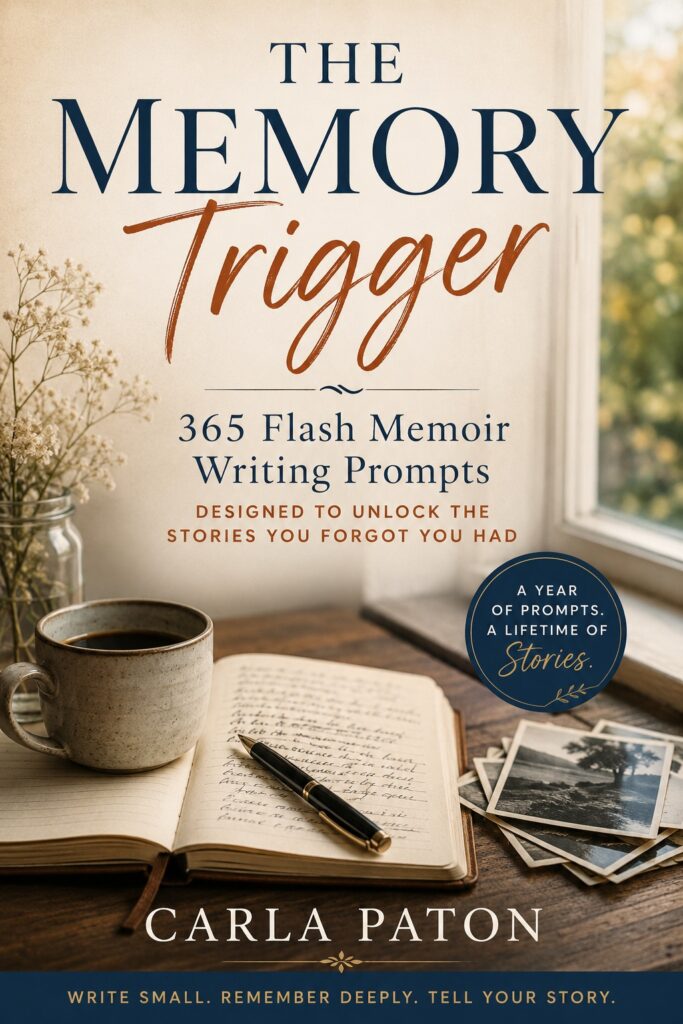
If you enjoyed this flash memoir prompt first time realized hometown smaller, keep collecting these small but revealing moments. Explore all 365 prompts in The Memory Trigger: 365 Flash Memoir Writing Prompts.

Themes in Hamlet: A Student-Friendly Guide

Rapid Reads Press

Understanding the themes in Hamlet helps you see why Shakespeare’s play still feels sharp, strange, and personal. The play explores revenge, death, truth, power, and family pressure through one young man’s crisis.

The themes in Hamlet can feel complex at first, but they connect to choices students still debate today. If you need help with the basics of theme, start with this guide on how to identify theme in literature.

In this Guide

Use this section as a quick map before you read the full guide.

  • Why the play’s themes still matter
  • Major ideas students should notice
  • Revenge and delay
  • Death and grief
  • Appearance versus reality
  • Madness and truth
  • Power and corruption
  • Women and limited choices
  • Essay tips and FAQ

Why the themes in Hamlet matter

Hamlet is more than a famous tragedy about a prince and a ghost.

The themes in Hamlet matter because they turn a revenge plot into a study of the human mind. Hamlet wants justice, but he also wants proof. He wants action, but he cannot escape thought.

That conflict makes the play useful for high school, AP Literature, and college essays. It gives you room to discuss character, symbol, structure, and meaning.

Shakespeare also makes the play feel unstable. People spy, lie, perform roles, and hide motives. Because of this, the audience must ask the same question Hamlet asks: What is true?

Major themes in Hamlet students should know

Most of the play’s big ideas overlap, so it helps to study them together.

Most themes in Hamlet grow from one central problem: a murder has broken the moral order of Denmark. King Hamlet is dead, Claudius has taken the throne, and Hamlet feels trapped inside a corrupt court.

The play asks hard questions. Is revenge justice? Can grief become dangerous? Can a person trust what they see? What happens when power depends on lies?

These questions do not have easy answers. That is one reason the play works so well for literary analysis.

Revenge and the Cost of Delay

Hamlet is a revenge tragedy, but Shakespeare makes revenge feel morally risky.

The ghost tells Hamlet that Claudius murdered King Hamlet. This command gives Hamlet a clear mission: punish the killer. Yet Hamlet does not act at once.

His delay is one of the most debated parts of the play. Some readers see him as weak. Others see him as careful because he fears sin, false evidence, or moral failure.

Revenge also spreads damage. Polonius dies, Ophelia suffers, Laertes seeks revenge, and the court falls apart. The play suggests that revenge may start as a search for justice, but it can become a force that destroys almost everyone near it.

This is different from a simple hero story. Hamlet does not win by taking revenge. He pays for it with his life.

Death, Grief, and the Fear of the Unknown

Death shapes the play from the first scene to the final stage image.

Hamlet begins in grief. His father has died, and his mother has married Claudius soon after. Hamlet feels that the world has become rotten because love, family, and loyalty seem false.

His grief turns into deep thought about death itself. In the famous soliloquy that begins with To be, or not to be, Hamlet asks whether life is worth the pain. He also fears what may come after death.

The graveyard scene makes this theme more physical. Hamlet holds Yorick’s skull and faces the fact that status, beauty, and power all end the same way.

You can compare this to Macbeth, where death also becomes part of a broken moral world. In both plays, ambition and violence make life feel unstable.

Appearance Versus Reality

In Hamlet, almost nothing is as simple as it first appears.

Characters perform roles. Claudius acts like a good king, but he hides murder. Hamlet acts mad, but his act may reveal truths others refuse to see. Polonius acts wise, but he often misunderstands the people around him.

This theme appears in the play-within-the-play, where actors perform a story like King Hamlet’s murder. Hamlet uses theater to expose reality. That choice shows one of Shakespeare’s boldest ideas: sometimes art can reveal the truth better than direct speech.

Students should watch words like seems, show, and play. They point to the gap between public image and private truth.

Madness, Performance, and Truth

Hamlet’s madness is one of the play’s most famous puzzles.

Hamlet says he will put on an antic disposition, which means he plans to act mad. This gives him freedom to speak in strange ways, insult people, and test Claudius.

Yet the play makes us wonder if the act becomes real. Hamlet’s grief, anger, and isolation put real pressure on his mind. His language can sound controlled one moment and wild the next.

Ophelia’s madness is different. She has less power and fewer choices. After her father’s death and Hamlet’s rejection, her mind breaks under the weight of loss.

This contrast matters. Hamlet’s madness gives him some control. Ophelia’s madness shows how little control she has.

Corruption, Power, and the Diseased State

Denmark is often described as sick, rotten, or infected.

One of the play’s most famous lines says that something is rotten in the state of Denmark. That image is not only about Claudius. It describes the whole court.

Claudius gains power through murder. After that, spying becomes normal. Polonius spies on Hamlet. Claudius and Polonius spy on Hamlet and Ophelia. Rosencrantz and Guildenstern spy on Hamlet for the king.

The court becomes a place where trust cannot survive. Private life turns into public strategy.

This theme helps explain why the ending is so violent. A corrupt state cannot heal itself because the people in power protect the lie that made them powerful.

Women, Control, and Limited Choices

Gertrude and Ophelia reveal how little freedom women have in the world of the play.

Gertrude is judged harshly by Hamlet for marrying Claudius. The play never gives her much space to explain her choice. This silence makes her hard to read.

Ophelia is controlled by her father, her brother, and the court. They tell her how to act toward Hamlet. She becomes part of a political plan, not a person with full freedom.

Her tragedy shows how power can crush someone who has no voice. In this way, the play asks us to notice not only what characters do, but what choices society allows them to make.

You might compare Ophelia to Antigone from Sophocles’ Antigone. Both young women face pressure from powerful men, but they respond in very different ways.

How the themes in Hamlet work together

The play’s ideas connect through Hamlet’s search for truth and justice.

The themes in Hamlet do not stand alone. Revenge connects to death because revenge leads to more death. Appearance connects to power because Claudius depends on a false image. Madness connects to truth because strange speech often reveals hidden facts.

This web of ideas gives the play its depth. A strong essay should not treat each theme as a separate box. It should show how one idea affects another.

For example, you could argue that Hamlet delays revenge because he lives in a world where appearance cannot be trusted. That claim links revenge, truth, and performance in one clear reading.

Symbols and Motifs That Support the Themes

Shakespeare uses repeated images to make the play’s ideas easier to see.

The ghost represents the past, guilt, and the demand for revenge. It forces Hamlet to face a crime that the court wants to hide.

Yorick’s skull represents death as the final truth. It strips away rank and pride.

Poison represents hidden corruption. Claudius uses poison to kill King Hamlet, and poison returns at the end as the court destroys itself.

Acting and theater represent the gap between surface and truth. Hamlet uses performance to uncover what normal speech cannot prove.

Essay Tips for Writing About Hamlet

A good theme essay makes a clear claim instead of naming a broad topic.

When you write about themes in Hamlet, avoid claims like death is a theme. That is true, but it is too simple.

Try a stronger claim: Shakespeare presents death as both a mystery and a certainty, which makes Hamlet fear action even when he knows revenge is expected.

Use short quotations and explain them closely. Do not let plot summary take over. Your teacher wants to see what the evidence means.

If you need a step-by-step method, review how theme works in literature before you draft your thesis.

Authoritative Resources for Hamlet Study

Reliable sources can help you check context, plot details, and background.

The Britannica overview of Hamlet gives a clear summary of the play and its place in literature.

The Folger Shakespeare Library Hamlet page offers trusted text resources and study support.

Suggested Books for Studying Hamlet

These editions and guides are useful for class reading, essay prep, and review.

  • Hamlet by William Shakespeare, Folger Shakespeare Library edition
  • Hamlet by William Shakespeare, Arden Shakespeare edition
  • Shakespeare: The Invention of the Human by Harold Bloom

FAQ About Hamlet Themes

Use these quick answers to review before a quiz, essay, or class discussion.

What are the main themes in Hamlet?

The main themes in Hamlet include revenge, death, appearance versus reality, madness, corruption, and moral uncertainty.

What is the most important theme in Hamlet?

Revenge is often the central theme because it drives the plot. Still, the play treats revenge as a moral problem, not a simple duty.

How does Hamlet show appearance versus reality?

Many characters hide their true motives. Claudius appears noble, Hamlet acts mad, and the court uses spying to uncover secrets.

Why is death such a major theme?

Death pushes Hamlet into grief, fear, and deep thought. The graveyard scene makes this theme clear and physical.

How can I write a strong essay about Hamlet?

Make a clear claim about what Shakespeare suggests through a theme. Then use short quotes and explain how they support your idea.

Key Takeaway

The best way to study Hamlet is to see how its ideas connect.

The play is not just about revenge. It is about what happens when grief, lies, power, and doubt trap a person who wants the truth.

Flash Memoir Prompt: First Time You Felt Genuinely Proud of Yourself

Rapid Reads Press

Maybe it happened in an empty kitchen, after everyone else had gone to bed: this flash memoir prompt first time felt genuinely proud asks you to return to the private moment when your own approval finally felt like enough.

The Prompt

Write about the first time you felt genuinely proud of yourself, with no one else around to see it.

This prompt works because pride is often tied to an audience. We remember the award, the applause, the grade, the compliment, or the person who finally noticed. But private pride is different. It does not need proof. It arrives quietly, sometimes in a bedroom, a bathroom mirror, a parked car, a school hallway, or at a desk covered in crumbs and paper.

A flash memoir prompt, the first time felt genuinely proud, can help you find a small scene with a large emotional center. The key is to look for the moment when you knew something had changed inside you, even if the rest of the world kept moving like nothing had happened.

Why This Memory Matters

The first time you felt proud of yourself may not look dramatic from the outside. Maybe you finished a hard assignment without help. Maybe you walked away from someone who kept hurting you. Maybe you saved money, fixed something, passed a test, apologized first, told the truth, or stayed calm when you wanted to fall apart.

What matters is the private nature of the moment. Since no one else was there to praise you, the pride had to come from somewhere deeper. That makes the memory powerful. It shows what you value when no one is watching.

This kind of memory can also reveal a theme in your life. You may notice a pattern around independence, courage, discipline, forgiveness, or survival. If you want help thinking about larger meaning in a personal story, this guide on how to identify theme in literature can also help you spot the theme inside your own writing.

Private pride can feel tender because it may be connected to a time when you wanted someone else to notice. Maybe no one did. Maybe that hurt. But the memory is still yours. In fact, the quietness may be what gives it its shape.

How to Approach This Prompt

Begin with one physical detail. Do not start by explaining your whole life or why the moment mattered. Start with what your body knew first.

Maybe your hands were shaking. Maybe your shirt was damp with sweat. Maybe there was a red pen mark on the page, a sink full of dishes, a bus ticket in your pocket, or a glow from a computer screen in a dark room.

Once you have that detail, narrow the memory to one scene. A flash memoir does not need the full backstory. You can hint at what came before, but try to stay close to the moment when pride arrived.

Ask yourself: Where was I? What had I just done? What did I notice in the room? Did I smile, cry, exhale, laugh, or sit very still?

Write what you noticed before you explain what it meant. This helps the reader feel the scene instead of being told how important it was. For example, “I folded the test and put it under my pillow” may say more than “I was proud because I had worked hard.”

After you draft, read your piece like a careful reader. Circle the strongest image. Underline the sentence where the emotion changes. If you enjoy close reading, the same habits used to annotate literature can help you revise your memoir with more care.

Above all, avoid trying to tell every related story at once. Stay with the first real moment. Let it breathe.

A Quick Example

I was sitting on the bathroom floor with my laptop balanced on a towel because the apartment was too loud everywhere else. The tile was cold through my pajama pants. I clicked submit on my college application at 12:17 a.m., then stared at the screen as if it might take the words back. No one knew I had finished it. My mother was asleep. My brother was playing music behind his door. I had written the essay in pieces before school, after work, and once in the laundry room while the dryer thumped beside me. When the confirmation email arrived, I pressed my hand over my mouth. I did not scream. I just sat there, smiling at the sink cabinet, feeling taller than I had all week.

Try It Yourself

Set a timer for ten minutes and write from the prompt without trying to make the memory sound impressive. The moment does not have to be noble or life-changing. It only has to be true.

If you get stuck, begin with this sentence: “No one saw me when I…” Then keep going. Let the sentence lead you into the room, the object, the sound, or the small action that held the feeling.

As you write, remember that pride does not always shout. Sometimes it shows up as relief. Sometimes it feels like a steady breath. Sometimes it is simply the moment you realize, “I did that.” That is enough for this flash memoir prompt first time felt genuinely proud.

Want More Flash Memoir Prompts?

If this prompt helped you uncover a quiet memory, keep gathering those small scenes. They often become the strongest pieces of memoir because they carry real emotional weight without needing to explain too much. Explore all 365 prompts in The Memory Trigger: 365 Flash Memoir Writing Prompts.

The Crucible Literary Analysis Essay: How to Write One

The Crucible literary analysis essay

Writing The Crucible literary analysis essay can feel hard because the play is both a courtroom drama and a warning about fear. This guide will help you build a clear thesis, choose strong evidence, and turn your ideas into a smart essay.

A focused The Crucible literary analysis essay should do more than retell the Salem witch trials. It should explain how Arthur Miller uses character, conflict, and language to reveal a deeper meaning.

The Crucible literary analysis essay

In this Guide

  • Why The Crucible works so well for analysis
  • The Crucible literary analysis essay: start with a real argument
  • Topic ideas that give you something to prove
  • Thesis statement examples
  • How to use evidence without plot summary
  • Helpful books and links
  • FAQ

Why The Crucible Still Works for Literary Analysis

Miller’s play gives students a rich way to study fear, power, guilt, and reputation.

The Crucible is set during the Salem witch trials, but it also speaks to Miller’s own time. He wrote it during the Red Scare, when many Americans feared communism and public accusation could destroy a life.

That double meaning gives you a lot to analyze. You can write about the events in Salem, but you can also explore why Miller wrote the play for a modern audience.

For helpful background, read Britannica’s overview of Arthur Miller. You can also review the real Salem witch trials to understand the history behind the drama.

The Crucible literary analysis essay: Start with a Real Argument

Your essay needs a claim that someone could debate.

A weak thesis says that fear is important in the play. That is true, but it is too broad. A stronger thesis explains what fear does and why it matters.

Your The Crucible literary analysis essay should answer a question like this: How does Miller show that fear can damage truth, justice, or personal identity?

Think of it like Macbeth. A weak essay might say Macbeth wants power. A stronger essay would argue that Shakespeare shows ambition as a force that destroys moral judgment.

The same rule applies here. Do not just name a theme. Make a claim about how that theme works.

If you need a full refresher on essay basics, this guide to how to write a literary analysis essay can help you review the core steps.

The Crucible Literary Analysis Essay Topic Ideas That Actually Work

The best topics give you a pattern to track across the play.

Here are useful directions for your essay:

  • Reputation and fear: Argue that characters protect their names even when truth is at risk.
  • Power and accusation: Explore how Abigail and the court use public fear to control others.
  • John Proctor’s moral growth: Show how Proctor moves from private guilt to public courage.
  • Religion and authority: Analyze how spiritual language becomes a tool of control.
  • Hysteria as a social force: Explain how fear spreads when people stop using reason.

Try to avoid topics that only describe the plot. For example, do not write only about what Abigail does. Write about how Miller uses Abigail to show the danger of unchecked power.

Sample Thesis Statements for The Crucible literary analysis essay

A strong thesis gives your essay direction before the first body paragraph begins.

A The Crucible literary analysis essay works best when the thesis names the theme and explains Miller’s message. Use these examples as models, not copy-and-paste answers.

In The Crucible, Arthur Miller shows that fear can destroy justice because a frightened society rewards accusation more than truth.

Through John Proctor’s conflict between guilt and honor, Miller argues that integrity becomes most meaningful when it costs something.

Miller presents Abigail Williams as more than a villain; he uses her rise to power to show how weak systems can reward lies.

In The Crucible, public reputation becomes a trap because characters fear shame more than moral failure.

Notice how each thesis makes a point. None of them simply says that the play has themes. Each one explains what Miller suggests about human behavior.

How to Structure Your The Crucible Literary Analysis Essay

A clear structure helps your reader follow your thinking.

Start with a short introduction. Give brief context, name the play and author, then end with your thesis.

Each body paragraph should focus on one idea. Begin with a topic sentence, then bring in one quoted detail or scene. Explain how that evidence proves your claim.

Your conclusion should not just repeat the thesis. Instead, show why your argument matters. By the end, The Crucible literary analysis essay should leave the reader with a sharper view of Miller’s warning.

If you want a faster way to plan your outline, thesis, quote notes, and commentary, check out The Literary Analysis Essay Toolkit. It is built to help students move from a blank page to a polished draft.

Use Evidence Without Retelling the Plot

Your teacher already knows what happens in the play.

Plot summary tells the reader that Proctor refuses to sign his confession. Analysis explains why that moment matters. It shows how the scene connects to identity, truth, and moral courage.

A helpful pattern is simple: make a claim, use evidence, and explain the meaning.

For example, you might discuss Proctor’s final choice. The evidence is his refusal to give the court a signed lie. The analysis should explain how Miller turns his name into a symbol of personal honor.

This is like writing about Hester Prynne in The Scarlet Letter. You would not only say she wears the scarlet letter. You would explain how the symbol changes meaning as the story develops.

Strong Evidence to Consider

Good evidence comes from major choices, repeated ideas, and key conflicts.

You may want to look closely at these parts of the play:

  • Proctor’s private guilt after his affair with Abigail
  • Abigail’s control over the other girls
  • Hale’s change from confidence to doubt
  • Elizabeth’s struggle with honesty and forgiveness
  • The court’s refusal to question its own power
  • Proctor’s final choice about his name

Do not use a quote just because it sounds famous. Pick evidence that helps prove your thesis.

When you write your commentary, ask: What does this moment reveal about the character? What does it suggest about society? How does it support Miller’s message?

Common Mistakes to Avoid

Most weak essays fail because they stay too general.

One common mistake is writing about the whole play at once. Choose a focused path. A paper about fear will be stronger if it studies one effect of fear, such as false confession or public shame.

Another mistake is treating characters like real people only. They do have emotions, but they are also literary tools. Ask why Miller shapes them this way.

Do not use modern slang or casual judgment. Instead of saying Abigail is just evil, explain how Miller uses her to expose fear, desire, and weak authority.

Books That Can Help

These books can support your reading and help you understand the play’s background.

  • The Crucible by Arthur Miller
  • Why I Wrote The Crucible by Arthur Miller
  • The Salem Witch Trials Reader edited by Frances Hill

You do not need to read every source before you write. Even a short background source can help you avoid shallow claims.

FAQ About The Crucible Literary Analysis Essay

These quick answers can help you plan with less stress.

What is the best topic for a The Crucible literary analysis essay?

A strong topic focuses on a theme with a clear argument. Reputation, fear, power, and integrity all work well.

Can I write about John Proctor?

Yes. Proctor is a strong choice if you focus on his moral conflict, not just his actions.

How many quotes should I use?

Use enough evidence to prove your point. For most school essays, one or two strong quotes per body paragraph is better than many weak ones.

Should I mention McCarthyism?

You can, if it supports your thesis. Keep the focus on the play unless your assignment asks for historical context.

Key Takeaway

A strong The Crucible literary analysis essay makes a clear claim about Miller’s message and proves it with focused evidence. Do not retell the play. Show how it works and why it still matters.

Flash Memoir Prompt: First Time You Were Given a Compliment that You Actually Believed

flash memoir prompt first time given compliment actually believed

A warm flash memoir prompt for remembering the first compliment that felt true, and the small moment when someone else’s words finally reached you.

There is a strange little pause that happens when a compliment lands. Maybe you were used to brushing praise away. Maybe you laughed, changed the subject, or said, “No, I’m not,” before the other person even finished speaking. Then one day, someone said something simple, and for once, you did not argue with it.

This flash memoir prompt, the first time you were given a compliment you actually believed, invites you to return to that exact moment. Not the long history of why compliments were hard to accept. Just the first time one slipped past your defenses and settled somewhere honest.

flash memoir prompt first time given compliment actually believed

The Prompt

Write about the first time you were given a compliment that you actually believed.

This prompt can unlock a meaningful memory because it is rarely just about the compliment. It is about who said it, how they said it, where you were standing, and why those words felt different from all the others.

Maybe the compliment came from a teacher who noticed your writing. Maybe it came from a coach, a grandparent, a friend, or someone you barely knew. Maybe it was not dramatic at all. Sometimes the words we believe are quiet ones, said in a hallway, at a kitchen table, or after a hard day when we had almost given up.

Why This Memory Matters

A believable compliment can mark a shift in how you see yourself. It might be the first time you felt talented, kind, brave, funny, capable, or worth noticing. That kind of memory has power because it shows a moment when your inner story changed.

This prompt may uncover a story about self-doubt. It may bring up a time when you wanted approval but did not know how to receive it. It may also reveal how much one thoughtful sentence can matter when it comes from the right person at the right time.

For student writers, this is a useful prompt because it keeps the memory focused. You do not have to explain your entire childhood or every reason you lacked confidence. You can build the scene around one compliment and let the reader understand the rest through detail.

If you are exploring broader meaning in your writing, you might find it helpful to think about the larger idea behind the scene. This is similar to how readers learn to identify theme in literature. A small moment can point toward a bigger truth without needing to announce it.

How to Approach This Prompt

Begin with the place where the compliment happened. Put yourself back in the room, the car, the classroom, the parking lot, or the store aisle. What were you holding? What could you hear? What did the light look like?

Then narrow the memory to one scene. Avoid trying to tell the whole story of your confidence or insecurity. Stay close to the moment when the words were said.

Write what you noticed before explaining what it meant. Maybe you noticed the person did not smile in a joking way. Maybe they looked you straight in the eye. Maybe their voice was ordinary, which made the compliment feel more real.

You might start with a physical detail, such as your hands under the desk, your shoes on the floor, or the heat in your face. A physical detail can make the emotion easier to write because it gives the memory something solid to stand on.

If you like to mark up memories before drafting, try borrowing a reading habit. Circle the words that carry feeling, underline the turning point, or make a note beside the moment that changed you. These simple moves are close to the skills used when you annotate literature, and they can help you notice what matters in your own story.

As you write, resist the urge to make the compliment sound perfect. Real compliments are often plain. “You’re good at this.” “That was brave.” “I trust you.” “You made the room feel lighter.” The truth of the memory does not need fancy language.

A Quick Example

I was sixteen, wiping down tables at the diner after the lunch rush. My shirt smelled like fryer oil, and my shoes stuck to the floor near the soda machine. Mrs. Alvarez, the owner, stood behind the counter counting change. I had just calmed down a customer who was angry about his order, though my hands shook the whole time. She looked up and said, “You keep your head when people lose theirs.” I waited for the joke or the correction. It did not come. She went back to counting quarters. I stood there with the wet rag in my hand, feeling taller than I had five minutes before. No one had ever called me calm. But that day, I believed her.

Try It Yourself

Set a timer for ten minutes and write the scene as clearly as you can. Do not worry about making it polished. Focus on the moment the compliment was spoken and what happened inside you right after.

If you get stuck, use this sentence starter: “I did not believe compliments back then, but when they said…” Let the memory continue from there.

This flash memoir prompt first time given compliment actually believed works best when you keep it small. One voice. One sentence. One shift. That is enough for a strong flash memoir piece.

Want More Flash Memoir Prompts?

If this prompt helped you remember a moment you had nearly forgotten, keep going. Explore all 365 prompts in The Memory Trigger: 365 Flash Memoir Writing Prompts.

Themes in The Crucible: A Student-Friendly Guide

Themes in The Crucible

The main themes in The Crucible help students see why Arthur Miller’s Salem drama still feels tense and modern. In this guide, we will look at fear, public shame, power, justice, and truth so you can discuss the play with more confidence.

Themes in The Crucible

In this Guide

Use this table of contents to find the idea you need.

  • Why the play’s themes matter
  • Fear and mass hysteria
  • Reputation and public shame
  • Power and corrupt authority
  • Justice and truth
  • Essay tips and study resources
  • FAQ

Why the themes in The Crucible Matter

Arthur Miller wrote about Salem, but he was also speaking to his own time.

The Crucible is set during the Salem witch trials of 1692. In that world, a rumor can ruin a life. A court can twist faith into a weapon. A person can lose everything by telling the truth.

The themes in The Crucible matter because the play asks a hard question: what happens when a society values fear more than honesty?

Miller wrote the play during the age of McCarthyism, when many Americans were accused of Communist ties with weak proof. You can read more about Miller’s life at Britannica, or learn about McCarthyism from the National Archives.

Themes in The Crucible: Fear and Mass Hysteria

Fear spreads faster than facts in Salem.

At the start of the play, the town is already tense. People worry about sin, reputation, and punishment. When the girls begin to accuse others of witchcraft, fear takes over the town.

Mass hysteria means a group panic becomes more powerful than reason. In Salem, people accept wild claims because they are scared. They fear the Devil, but they also fear being accused.

Abigail Williams uses this fear to gain control. Once the court believes her, she can point at almost anyone. Her words become more powerful than evidence.

These themes in The Crucible connect to George Orwell’s Animal Farm. In both works, fear helps leaders control a group. People stop asking questions because the cost feels too high.

Themes in The Crucible: Reputation and Public Shame

In Salem, a good name can matter more than a good heart.

Reputation is one of the most painful forces in the play. Many characters care deeply about how others see them. They know that one bad rumor can lead to court, prison, or death.

Reverend Parris fears damage to his position. He worries that trouble in his house will make him look weak. His first concern is not truth, but public image.

John Proctor also struggles with his reputation. He has sinned, and he feels deep guilt. Yet his main conflict is not only private guilt. He must decide whether to save his life with a lie or keep his name clean by telling the truth.

The themes in The Crucible become personal here. Miller shows that shame can trap people. Nathaniel Hawthorne’s The Scarlet Letter also studies public shame, but Miller makes shame feel like a public trial.

Power, Control, and Corrupt Authority

The play shows how power can become dangerous when no one can question it.

The court in Salem claims to serve God and justice. Yet it often acts with pride and fear. Judge Danforth refuses to admit the court may be wrong because that would weaken his authority.

This makes the court more dangerous. If the judges admit one mistake, the whole system starts to fall apart. So they protect the court, even when innocent people suffer.

Abigail’s power is different. She has no official office, but she learns how to use the court. Her false claims give her control over adults who once had power over her.

This theme is useful for AP Literature essays because it shows conflict between public power and private truth. The play asks whether authority deserves respect when it refuses proof.

Justice, Lies, and the Demand for Proof

The Crucible turns the court into a place where truth becomes hard to recognize.

A fair court should ask for proof. In Salem, the court often accepts fear as proof. It trusts dramatic words, screams, and visions that no one else can see.

This is why the play feels so tense. The accused cannot defend themselves in a normal way. If they deny witchcraft, the court may see the denial as more proof of guilt.

Mary Warren’s failed confession shows this problem. She tries to tell the truth, but pressure breaks her. The court’s mood matters more than her facts.

Miller does not suggest that justice is simple. He shows that a legal system can fail when leaders care more about control than evidence.

Truth, Integrity, and Personal Courage

The play’s deepest question is whether truth is worth suffering for.

John Proctor is not a perfect hero. That is part of why students often find him interesting. He has lied before, and he has hurt others. Still, he wants to become honest before the end.

His final choice is painful. If he signs a false confession, he may live. If he refuses, he will die. His decision shows that integrity can cost more than comfort.

Elizabeth Proctor helps us see this theme too. She admits her own limits and gives John space to choose. Her quiet strength matters because she does not force him to become a symbol.

This theme also appears in Sophocles’ Antigone. Antigone, like Proctor, faces a state that demands obedience. Both characters must choose between survival and moral truth.

How to Write About Themes in The Crucible

A strong essay connects a theme to a clear claim about the whole play.

When you write about themes in The Crucible, do not just name the idea. Explain what Miller says about that idea. For example, do not write, “Fear is a theme.” Write, “Miller shows that fear can destroy justice when people value safety over truth.”

That second sentence gives you an argument. It tells your reader what the play reveals about fear.

Use short quotations if your teacher allows them. Then explain how the words prove your claim. The best analysis spends more time on meaning than plot summary.

If you need help with structure, use our guide to writing a literary analysis essay. It can help you build a clear thesis and stronger body paragraphs.

Recommended Books for Deeper Study

These books can help you understand the play and its background.

  • The Crucible by Arthur Miller
  • Arthur Miller: His Life and Work by Martin Gottfried

FAQ: Themes in The Crucible

Here are quick answers to common student questions.

What are the main themes in The Crucible?

The main themes in The Crucible include fear, reputation, power, justice, and integrity. Each theme connects to the Salem trials and Miller’s view of panic in society.

What is the most important theme in the play?

Many students choose fear as the most important theme. Fear drives the accusations and makes people accept weak proof.

How does reputation affect John Proctor?

Proctor wants to protect his name, but he also wants to be honest. His final choice shows that integrity matters more to him than survival.

Why did Arthur Miller write about Salem?

Miller used Salem to comment on his own time. He saw links between the witch trials and anti-Communist fear in the 1950s.

How can I write a strong theme paragraph?

Start with a claim about what the play says. Use one clear example from the text, then explain how it supports your idea.

Key Takeaway

The strongest themes in The Crucible show how fear can twist truth, damage justice, and test a person’s character. Miller’s play lasts because those problems still feel real today.

Flash Memoir Prompt: First Time You Lied to Protect Someone Else

flash memoir prompt first time lied protect someone

A small lie told for someone else can leave a long echo, especially when you still remember the look on their face.

If you are looking for a flash memoir prompt about the first time you lied to protect someone, this one asks you to return to a moment when loyalty, fear, love, or pressure shaped what came out of your mouth. Maybe it happened in a kitchen, a classroom, a back seat, or a hallway where everything suddenly felt too quiet.

The lie may have been tiny. “She was with me.” “I broke it.” “He didn’t say that.” At the time, it may have felt fast and necessary. Later, it may have become more complicated.

flash memoir prompt first time lied protect someone

The Prompt

Write about the first time you lied to protect someone else.

This prompt can unlock a strong memory because it puts you inside a choice. You were not just telling a lie. You were deciding who needed protection, what truth might cost, and what kind of person you wanted to be in that moment.

A flash memoir does not need the whole history. It needs one clear scene. Focus on the first time you remember crossing that line for someone else. Let the reader feel the room, hear the question, and understand why the lie came so quickly.

Why This Memory Matters

The first protective lie often reveals a lot about your younger self. It can show who you loved, who scared you, or who you believed deserved saving. It can also show what you did not understand yet.

Maybe you lied for a sibling who had already been in trouble too many times. Maybe you covered for a friend because you knew their parents would overreact. Maybe you protected an adult, even though no child should have had to do that.

This kind of memory can carry more than guilt. It may carry tenderness. It may carry anger. It may carry pride. The emotional truth depends on the scene.

As you write, pay attention to the person you protected. What did they need from you? What did you think would happen if you told the truth? If you enjoy studying motives in fiction, the same skill can help here. Thinking about how to analyze characters in literature can remind you to notice desire, fear, and pressure in real life, too.

The point is not to judge your younger self too quickly. The point is to return to the moment with honesty. What did you know then? What do you know now?

How to Approach This Prompt

Begin with a physical detail instead of an explanation. Start with the sound of a door closing, the sweat under your collar, the chipped mug on the table, or the teacher’s shoes beside your desk.

Then narrow the memory to one scene. Do not begin with, “My brother and I had always been close.” Begin with the moment the question landed in the room.

For example, you might start with: “My mother held the broken lamp cord in her hand and asked whose idea it was.” That first line gives you a place, an object, and a problem.

After that, write what you noticed before you explain what it meant. What did the other person do? Did they look at you, look away, kick your foot, or go still? Small movements can carry the weight of the whole story.

Try not to tell the reader the lesson too soon. Let the scene do some of the work. If the memory has a larger meaning, it will rise from the details.

This flash memoir prompt, the first time you lied to protect someone, also invites you to think about the theme. Was the memory about loyalty? Fear? Family rules? Silence? If you want help naming the deeper idea in a piece of writing, this guide on how to identify theme in literature can help you look beneath the action without forcing a moral.

A Quick Example

The first time I lied to protect someone, I was nine, and my cousin had taken my aunt’s red lipstick from the bathroom drawer. She drew a crooked heart on the hallway mirror, then froze when we heard footsteps. My aunt asked who did it, and my cousin’s face folded in on itself before she even opened her mouth. I said, “I did.” The lipstick felt cold in my hand when my aunt made me clean the glass. My cousin stood behind her, silent, with one red smear on her thumb. I remember feeling proud for about ten seconds. Then I saw my aunt’s disappointment in the mirror, right beside my own face. I had saved my cousin from trouble, but I had stepped into a different kind of trouble, one that followed me longer.

Try It Yourself

Set a timer for ten minutes and write the scene as simply as you can. Start at the moment before the lie. End soon after it leaves your mouth.

You do not have to decide whether the lie was right or wrong before you begin. In fact, it may be better if you do not. Let the younger version of you act first. Let the older version watch closely.

If you get stuck, write the question someone asked you. Then write your answer. The space between those two lines is where the memoir lives.

This flash memoir prompt, the first time you lied to protect someone, works best when you keep the memory small and honest. You are not writing a courtroom defense. You are writing about a human moment when care and fear got tangled together.

Want More Flash Memoir Prompts?

If this prompt opened a memory you did not expect, keep going. Short prompts can help you find stories hiding in ordinary moments, especially the ones you have not thought about in years.

Explore all 365 prompts in The Memory Trigger: 365 Flash Memoir Writing Prompts.

The Memory Trigger

Symbols in 1984: What They Mean and Why They Matter

symbols in 1984

George Orwell uses strong images to show how a government can control thought, history, and fear. This guide explains the most important symbols in 1984 and connects each one to a major theme in the novel.

If you need a quick review of the basics, see our guide on how to find symbolism in a story.

In this Guide

  • What symbolism does in the novel
  • Big Brother and the telescreen
  • The paperweight, the prole woman, and the Golden Country
  • Room 101, rats, and fear
  • How to write about these symbols
  • FAQ and key takeaway

This article contains affiliate links.

symbols in 1984

What Symbols in 1984 Do

Orwell’s symbols make abstract ideas feel concrete and hard to ignore.

The main symbols in 1984 help readers see how total power works. Instead of only telling us that the Party is cruel, Orwell gives us objects and images that show fear, control, and lost freedom.

This is why symbolism matters in literature. A symbol can carry a larger meaning, like the green light in The Great Gatsby or the conch in Lord of the Flies.

In Orwell’s novel, symbols often show the gap between private life and public control. Winston wants truth and love, but the Party tries to own both.

Big Brother as One of the Key Symbols in 1984

Big Brother stands for the Party’s power and the fear that keeps people obedient.

The famous poster says, “Big Brother is watching you.” This image appears across the city and makes people feel watched even when no one may be there.

Big Brother may be a real person, or he may be a made-up figure. That uncertainty is part of the point. The Party does not need proof. It needs belief.

As one of the central symbols in 1984, Big Brother connects to the theme of surveillance. He also shows how a government can replace family, faith, and personal loyalty with loyalty to the state.

The Telescreen and Total Surveillance

The telescreen turns private space into public property.

Winston’s telescreen can send out Party messages, but it can also watch him. He cannot fully turn it off. Even his face and body can betray him.

This symbol matters because it makes control feel constant. The Party does not only punish crimes. It hunts for thoughts, doubts, and small signs of rebellion.

The telescreen also connects to the theme of self-censorship. Winston learns to hide his feelings because the world around him has no safe corner.

The Glass Paperweight and the Lost Past

The paperweight shows Winston’s desire to protect beauty, memory, and private life.

Winston buys the glass paperweight because it feels useless in the Party’s world. It is old, delicate, and connected to a time before constant control.

The piece of coral inside the glass seems sealed away from history. Winston imagines his room above Mr. Charrington’s shop in the same way. It feels like a small world where he and Julia can exist apart from the Party.

When the Thought Police smash the paperweight, the meaning becomes clear. The Party can break private dreams as easily as glass.

This is one of the most painful symbols in 1984 because it links memory to fragility. The past can matter deeply, but it can also be destroyed.

The Red-Armed Prole Woman

The prole woman symbolizes endurance and a hope that exists outside Party control.

Winston watches her as she hangs laundry and sings. She is not rich or powerful, but she seems alive in a way Party members are not.

Her body, voice, and daily work suggest strength. Winston starts to believe that the proles may hold the future because they have not been fully emptied by Party life.

This symbol connects to the theme of hope. Orwell does not make that hope simple, though. The proles have numbers, but they lack political awareness.

The Golden Country

The Golden Country represents freedom, natural life, and desire without fear.

Winston dreams of a place with grass, sunlight, and open space. It feels like the opposite of London, where rooms are watched and language is policed.

When Winston later meets Julia in the countryside, the setting echoes this dream. For a short time, nature seems to offer a space beyond Party control.

Yet the Golden Country is never fully safe. As with many symbols in 1984, it shows both hope and danger. Freedom exists in Winston’s mind, but the Party works to reach even there.

Room 101, Rats, and Fear

Room 101 symbolizes the final weapon of the Party: personal terror.

O’Brien tells Winston that everyone knows what waits in Room 101. It is the worst thing in the world for that person. For Winston, it is rats.

The rats are not just animals. They represent panic that cannot be argued with. Winston can resist pain for a time, but pure fear breaks the part of him that loves Julia.

This symbol connects to the theme of betrayal. The Party does not only want Winston to obey. It wants him to give up the person he loves most.

The Ministries and Party Slogans

The false names of the Ministries show how language can hide violence.

The Ministry of Love deals with torture. The Ministry of Truth spreads lies. These names are cruel because they force people to accept the opposite of reality.

The Party slogans work the same way. Their purpose is not clear thought. Their purpose is mental submission.

These are important symbols in 1984 because they connect language to power. If the Party can control words, it can weaken a person’s ability to resist.

Why Symbols in 1984 Matter for Themes

The novel’s symbols all point back to the same core question: who gets to control reality?

Big Brother and the telescreen show public control. The paperweight and Golden Country show private hope. Room 101 shows how fear can destroy even deep love.

Together, the symbols in 1984 reveal how the Party attacks the mind from every side. It changes history, watches behavior, twists language, and uses fear when all else fails.

For more background on the novel, you can read Britannica’s overview of Nineteen Eighty-four.

How to Write About Symbols in 1984

A strong paragraph should name the symbol, explain its meaning, and connect it to a theme.

Do not stop at saying that Big Brother is a symbol of control. Show how the poster, the watching eyes, and the repeated slogan make people police themselves.

You can use this simple sentence frame: In 1984, [symbol] represents [idea] because [specific detail], which helps Orwell develop the theme of [theme].

For more help with this skill, review our step-by-step post on finding symbols in fiction.

Books to Pair with 1984

These books pair well with Orwell’s novel because they also explore power, language, and freedom.

FAQ About Symbols in 1984

These quick answers can help with homework, essays, or class discussion.

What is the most important symbol in 1984?

Big Brother is often the most important symbol because he represents the Party’s total power and constant watchfulness.

What does the paperweight symbolize in 1984?

The paperweight symbolizes Winston’s love of the past and his hope for a private life outside Party control.

What do rats symbolize in 1984?

Rats symbolize Winston’s deepest fear. They also show how the Party uses terror to force betrayal.

Why does Orwell use so many symbols?

Orwell uses symbols to make political control feel personal. The images help readers see how power reaches into daily life.

Are the symbols in 1984 still relevant today?

Yes. Many readers still connect the novel’s symbols to debates about privacy, propaganda, and truth.

Key Takeaway

The most important symbols in 1984 show how the Party controls people through fear, false language, lost memory, and constant surveillance. Orwell’s images matter because they turn big political ideas into scenes we can feel.

Themes in 1984: A Student-Friendly Guide to Orwell’s Big Ideas

themes in 1984

George Orwell’s 1984 is more than a dark story about a future society. The themes in 1984 help students see how power can shape truth, language, fear, and private thought.

This guide breaks down the major ideas you should notice for class discussion, close reading, and essays.

This article contains affiliate links.

In this Guide

Use this guide as a quick map before you write or review.

  • Understanding the major ideas in the novel
  • Power and control
  • Language and thought
  • Truth and memory
  • Fear and loyalty
  • Individual freedom
  • Books to read next
  • FAQ
themes in 1984

Understanding the Themes in 1984

Orwell uses Winston’s world to ask a simple but scary question: what happens when a government controls not just actions, but minds?

A theme is a big idea a text explores. In 1984, Orwell does not give readers easy answers. He shows a world where people may obey because they are afraid, tired, watched, or unsure what is true.

To study the novel well, do more than name the theme. Ask how Orwell builds it through setting, conflict, symbols, and character choices. If you need help with that step, see our guide on how to analyze characters in literature.

Winston matters because he wants the truth, even when truth feels dangerous. His struggle turns the novel’s ideas into a human story.

Themes in 1984: Power and Control

These themes in 1984 show that power works best when people believe they have no safe place to resist.

The Party controls public life through laws, screens, slogans, and punishment. Yet its deeper goal is mental control. It wants citizens to accept whatever the Party says, even if it changes from day to day.

Big Brother is the face of this power. He may or may not exist as a real person, but that almost does not matter. His image makes people feel watched at all times.

The telescreens are a clear symbol of this control. They turn private rooms into public spaces. Winston cannot fully relax, even in his own home.

This theme connects to many dystopian works. In The Hunger Games by Suzanne Collins, public fear and public display help the Capitol stay in power. In 1984, the Party goes even deeper because it tries to own thought itself.

Themes in 1984: Language and Thought

Orwell shows that language is not just a tool for speech. It can shape what people are able to think.

Newspeak is one of the most important ideas in the novel. The Party creates it to shrink language over time. If words for rebellion, freedom, or justice vanish, people may find it harder to imagine those ideas.

This is why the Party cares so much about words. It knows that clear language can protect clear thought. Confused language can hide lies.

The themes in 1984 become most clear when we see how slogans twist meaning. Phrases like War is Peace and Freedom is Slavery are not meant to make sense. They train people to accept contradiction without protest.

Students can compare this to propaganda in Shakespeare’s Julius Caesar. Mark Antony uses public speech to move the crowd. Orwell’s Party uses speech to block thought before it begins.

Themes in 1984: Truth, Memory, and History

In Orwell’s world, truth is not treated as something to discover. It is treated as something the Party can edit.

Winston works at the Ministry of Truth, but the name is a lie. His job is to change old records so the Party always appears right. If a prediction fails, the record changes. If a person becomes an enemy, the record erases that person.

This attack on history is one of the novel’s strongest warnings. If people cannot trust records, memory, or facts, they become easier to control.

When students study themes in 1984, this one often leads to strong essays. You can focus on how Orwell links truth to freedom. If citizens lose the past, they lose the power to question the present.

For more background on Orwell’s life and political concerns, visit Britannica’s overview of George Orwell.

Fear, Surveillance, and Self-Censorship

The Party does not need to punish everyone. It only needs people to believe punishment is always possible.

Fear shapes daily life in 1984. Citizens fear the Thought Police, their neighbors, and even their children. This fear causes people to hide their real feelings.

That is why surveillance is so powerful. The telescreen may not catch every action, but it changes behavior. People learn to police themselves.

This idea feels modern because many readers know what it means to act differently when they feel watched. Orwell pushes that feeling to an extreme. He asks what happens when privacy no longer exists.

Individual Freedom and Private Identity

Winston’s rebellion starts small because even small private acts matter in this world.

At first, Winston does not lead a movement. He writes in a diary. He remembers. He loves Julia. These acts matter because the Party wants no inner life outside its control.

The diary is especially important. It gives Winston a place to speak honestly, even if no one else reads it. In a world built on falsehood, private truth becomes a form of resistance.

Julia’s rebellion is different from Winston’s. She cares less about history and more about personal pleasure. Their differences help readers see that freedom can mean more than one thing.

To build a stronger essay, compare how Winston and Julia respond to control. Our character analysis guide can help you connect their choices to the novel’s larger ideas.

Why the Themes in 1984 Still Matter

Orwell’s novel still speaks to readers because it studies problems that do not belong to one time period.

The novel asks readers to care about truth, language, privacy, and power. These ideas matter in governments, schools, media, and personal life.

The key lesson is not only that total power is dangerous. Orwell also shows that people must protect the habits that keep freedom alive. Those habits include honest speech, memory, questions, and private thought.

This is why 1984 often appears in high school, AP Literature, and college courses. It gives students a strong way to discuss politics, ethics, and human behavior through fiction.

Books to Read Next

These books pair well with Orwell’s novel because they also ask how society shapes freedom and truth.

For a wider look at dystopian fiction as a genre, see Britannica’s page on dystopia.

FAQ About Themes in 1984

Use these quick answers for review before a quiz, seminar, or essay.

What are the main themes in 1984?

The main themes in 1984 include power, language, truth, fear, surveillance, and individual freedom. Each theme shows how the Party controls people from the outside and the inside.

What is the most important theme in 1984?

Many students choose control of truth as the most important theme. If the Party can rewrite facts, citizens lose the ability to challenge power.

How does Newspeak support the novel’s themes?

Newspeak limits thought by limiting words. Orwell suggests that people need rich, clear language to think freely.

Why does Winston keep a diary?

The diary lets Winston claim a private voice. It is a small act of rebellion because the Party wants to control even personal thoughts.

Key Takeaway

The themes in 1984 show how freedom can disappear when power controls truth, language, and private life. Orwell’s warning is clear: a free mind needs facts, memory, and the courage to question authority.

Literature News Roundup: Pulitzer Risk-Taking, Lord of the Flies on TV, and Access Battles

literature news roundup

This literature news roundup for May 8, 2026, looks at recent developments in literature, from major prizes to debates over access to books. Today’s stories show how classic novels, experimental fiction, poetry, and community reading programs are all shaping the book world right now.

This article contains affiliate links.

literature news roundup

Lord of the Flies Heads to Television for the First Time

William Golding’s Lord of the Flies is getting its first television adaptation as a new miniseries. The news is striking because the novel, now a staple of classrooms and classic literature discussions, was once rejected many times before it found a publisher.

The story’s path from nearly unpublished manuscript to screen adaptation shows how unpredictable literary success can be. Readers who know the book for its dark look at power, fear, and group behavior may find the new version a fresh way to revisit its central conflict.

It also reminds us that adaptations can introduce older books to new audiences. For students and longtime readers alike, the miniseries may spark renewed interest in Golding’s harsh but powerful vision of human nature.

Daniel Kraus Wins Pulitzer for a One-Sentence War Novel

Daniel Kraus’s Angel Down has won a Pulitzer Prize, drawing attention for both its subject and its daring form. The novel is described as a punctuation-free war story written as a single sentence, a choice that turns style into part of the reading experience.

This kind of formal risk matters because it challenges what readers expect a novel to do. Instead of using a familiar structure, Kraus appears to use breathless momentum to mirror fear, chaos, and survival.

The Pulitzer recognition suggests that ambitious experiments in fiction still have a strong place in literary culture. For readers interested in literary analysis, Angel Down may become a fascinating example of how form and meaning work together.

Russian Officials Seize British Children’s Books

Russian customs officials have reportedly seized a shipment of British children’s books, labeling some of the material as “extremist literature.” The incident raises fresh concerns about censorship, especially when the books involved are meant for young readers.

Children’s literature often plays a major role in helping young people understand other cultures, emotions, and ideas. When books for children are blocked or restricted, it can limit curiosity and narrow the range of stories available to families and schools.

For readers, this story is a reminder that book access is not just a publishing issue. It is also tied to politics, education, and the freedom to encounter different viewpoints through reading.

Marianne Boruch Receives the Jackson Poetry Prize

Marianne Boruch has won the $100,000 Jackson Poetry Prize, an award honoring a poet with a strong and lasting body of work. Judges praised her attention to both the natural world and the inner life, pointing to the deeply human quality of her writing.

The award arrives at a time when many readers and writers are asking what art means in an age shaped by artificial intelligence. Boruch’s win highlights the value of careful observation, emotional depth, and the surprises that come from lived experience.

For readers who want to better understand poems like hers, learning how to approach poetry can make the form feel more open and rewarding. Prizes like this also help bring serious public attention to poets whose work may otherwise reach a smaller audience.

Bookmobiles Bring Reading Beyond Library Walls

Two recent stories show how bookmobiles continue to matter in communities where access to books is not always simple. In East Baton Rouge Parish, library buses and vans are bringing books and library services directly to people across the area.

Meanwhile, the Native women-led NDN Girls Book Club is working to raise funds for a permanent bookmobile. After earlier trips across Navajo and Hopi reservations and through Southeast Alaska, the group hopes to expand its reach across Indian Country.

These programs matter because they treat reading as something that should travel to meet people where they are. They also show that the future of books is not only digital or urban; it can be local, mobile, and built around trust.

Closing Thoughts

These stories point to a lively and sometimes tense moment in literature. Awards are honoring bold forms, classic books are finding new screens, and communities are fighting to keep reading accessible.

At the same time, censorship concerns show that the freedom to read remains uneven around the world. Together, this week’s developments suggest that books still carry real power—on the page, on screen, and in public life.