

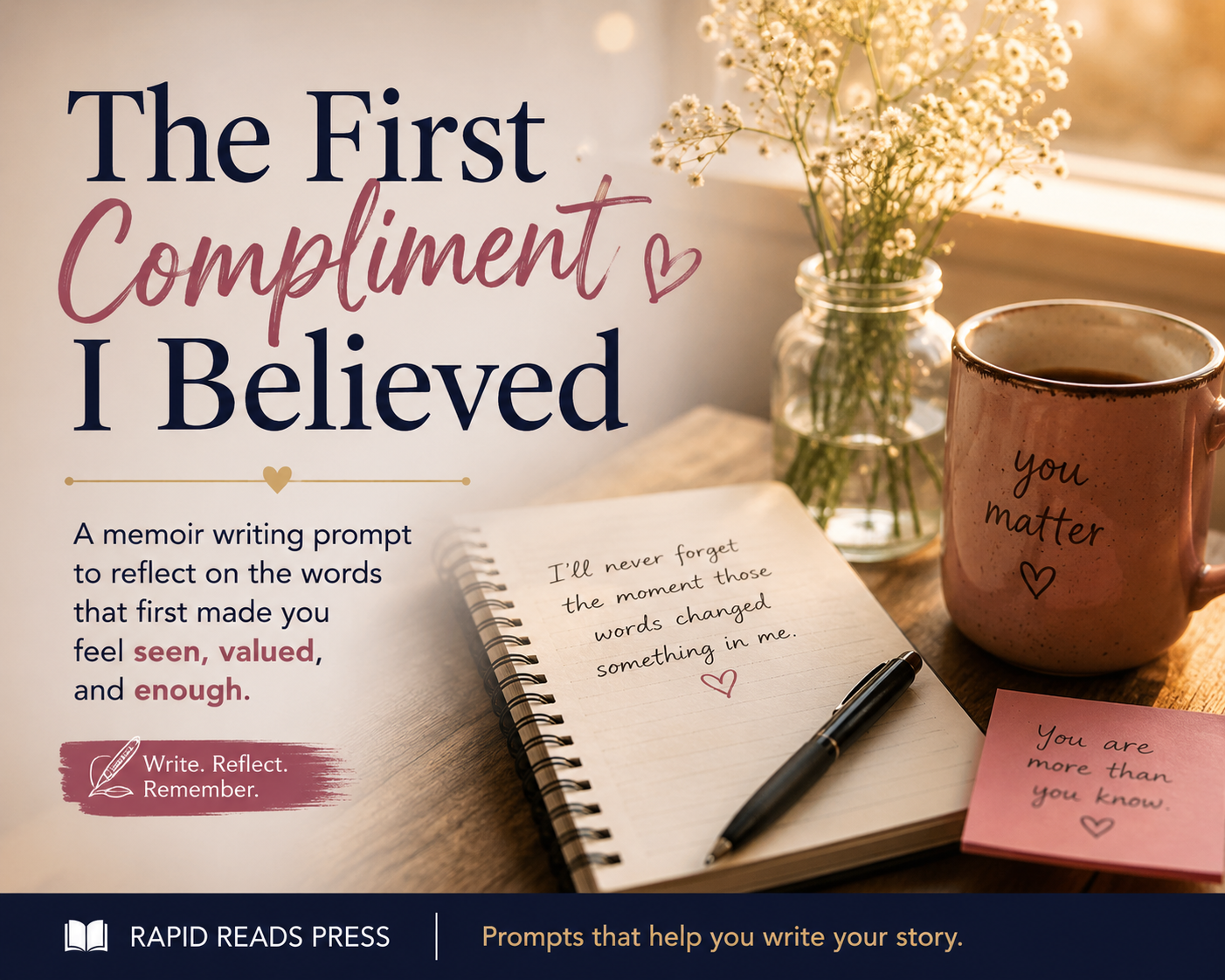
A warm flash memoir prompt for remembering the first compliment that felt true, and the small moment when someone else’s words finally reached you.
There is a strange little pause that happens when a compliment lands. Maybe you were used to brushing praise away. Maybe you laughed, changed the subject, or said, “No, I’m not,” before the other person even finished speaking. Then one day, someone said something simple, and for once, you did not argue with it.
This flash memoir prompt, the first time you were given a compliment you actually believed, invites you to return to that exact moment. Not the long history of why compliments were hard to accept. Just the first time one slipped past your defenses and settled somewhere honest.
The Prompt
Write about the first time you were given a compliment that you actually believed.
This prompt can unlock a meaningful memory because it is rarely just about the compliment. It is about who said it, how they said it, where you were standing, and why those words felt different from all the others.
Maybe the compliment came from a teacher who noticed your writing. Maybe it came from a coach, a grandparent, a friend, or someone you barely knew. Maybe it was not dramatic at all. Sometimes the words we believe are quiet ones, said in a hallway, at a kitchen table, or after a hard day when we had almost given up.
Why This Memory Matters
A believable compliment can mark a shift in how you see yourself. It might be the first time you felt talented, kind, brave, funny, capable, or worth noticing. That kind of memory has power because it shows a moment when your inner story changed.
This prompt may uncover a story about self-doubt. It may bring up a time when you wanted approval but did not know how to receive it. It may also reveal how much one thoughtful sentence can matter when it comes from the right person at the right time.
For student writers, this is a useful prompt because it keeps the memory focused. You do not have to explain your entire childhood or every reason you lacked confidence. You can build the scene around one compliment and let the reader understand the rest through detail.
If you are exploring broader meaning in your writing, you might find it helpful to think about the larger idea behind the scene. This is similar to how readers learn to identify theme in literature. A small moment can point toward a bigger truth without needing to announce it.
How to Approach This Prompt
Begin with the place where the compliment happened. Put yourself back in the room, the car, the classroom, the parking lot, or the store aisle. What were you holding? What could you hear? What did the light look like?
Then narrow the memory to one scene. Avoid trying to tell the whole story of your confidence or insecurity. Stay close to the moment when the words were said.
Write what you noticed before explaining what it meant. Maybe you noticed the person did not smile in a joking way. Maybe they looked you straight in the eye. Maybe their voice was ordinary, which made the compliment feel more real.
You might start with a physical detail, such as your hands under the desk, your shoes on the floor, or the heat in your face. A physical detail can make the emotion easier to write because it gives the memory something solid to stand on.
If you like to mark up memories before drafting, try borrowing a reading habit. Circle the words that carry feeling, underline the turning point, or make a note beside the moment that changed you. These simple moves are close to the skills used when you annotate literature, and they can help you notice what matters in your own story.
As you write, resist the urge to make the compliment sound perfect. Real compliments are often plain. “You’re good at this.” “That was brave.” “I trust you.” “You made the room feel lighter.” The truth of the memory does not need fancy language.
A Quick Example
I was sixteen, wiping down tables at the diner after the lunch rush. My shirt smelled like fryer oil, and my shoes stuck to the floor near the soda machine. Mrs. Alvarez, the owner, stood behind the counter counting change. I had just calmed down a customer who was angry about his order, though my hands shook the whole time. She looked up and said, “You keep your head when people lose theirs.” I waited for the joke or the correction. It did not come. She went back to counting quarters. I stood there with the wet rag in my hand, feeling taller than I had five minutes before. No one had ever called me calm. But that day, I believed her.
Try It Yourself
Set a timer for ten minutes and write the scene as clearly as you can. Do not worry about making it polished. Focus on the moment the compliment was spoken and what happened inside you right after.
If you get stuck, use this sentence starter: “I did not believe compliments back then, but when they said…” Let the memory continue from there.
This flash memoir prompt first time given compliment actually believed works best when you keep it small. One voice. One sentence. One shift. That is enough for a strong flash memoir piece.
Want More Flash Memoir Prompts?
If this prompt helped you remember a moment you had nearly forgotten, keep going. Explore all 365 prompts in The Memory Trigger: 365 Flash Memoir Writing Prompts.


Get the Free Close Reading Worksheet Pack
Join my email list and receive the printable worksheet pack you can use with any novel or poem.
No spam. Just helpful guides for reading literature well.












