Most Influential Redemption Arcs in Literature

Redemption arc

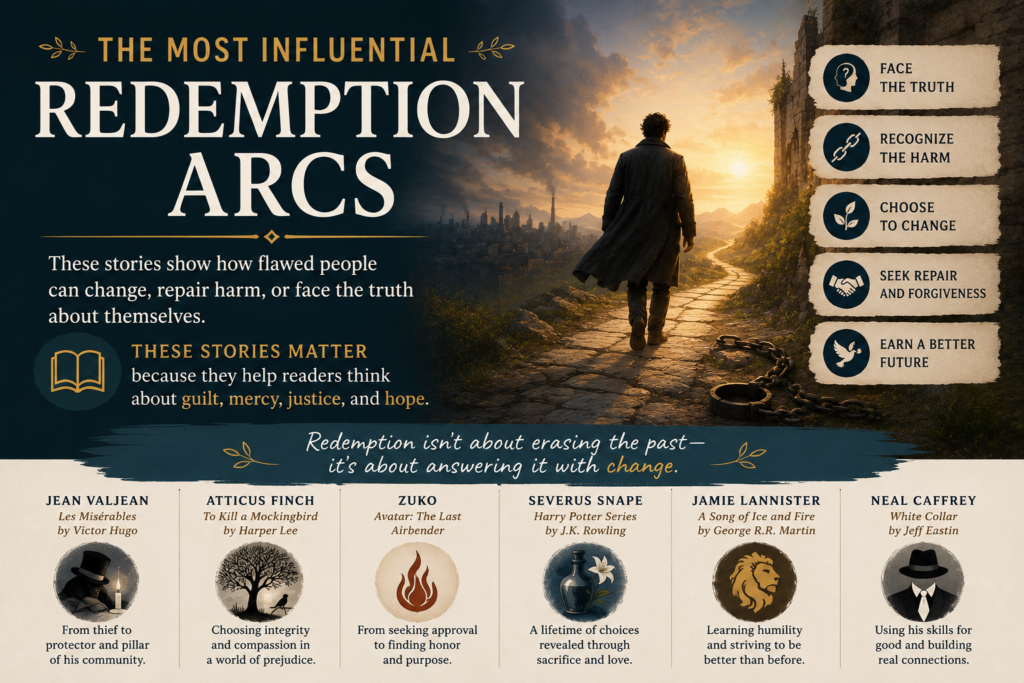
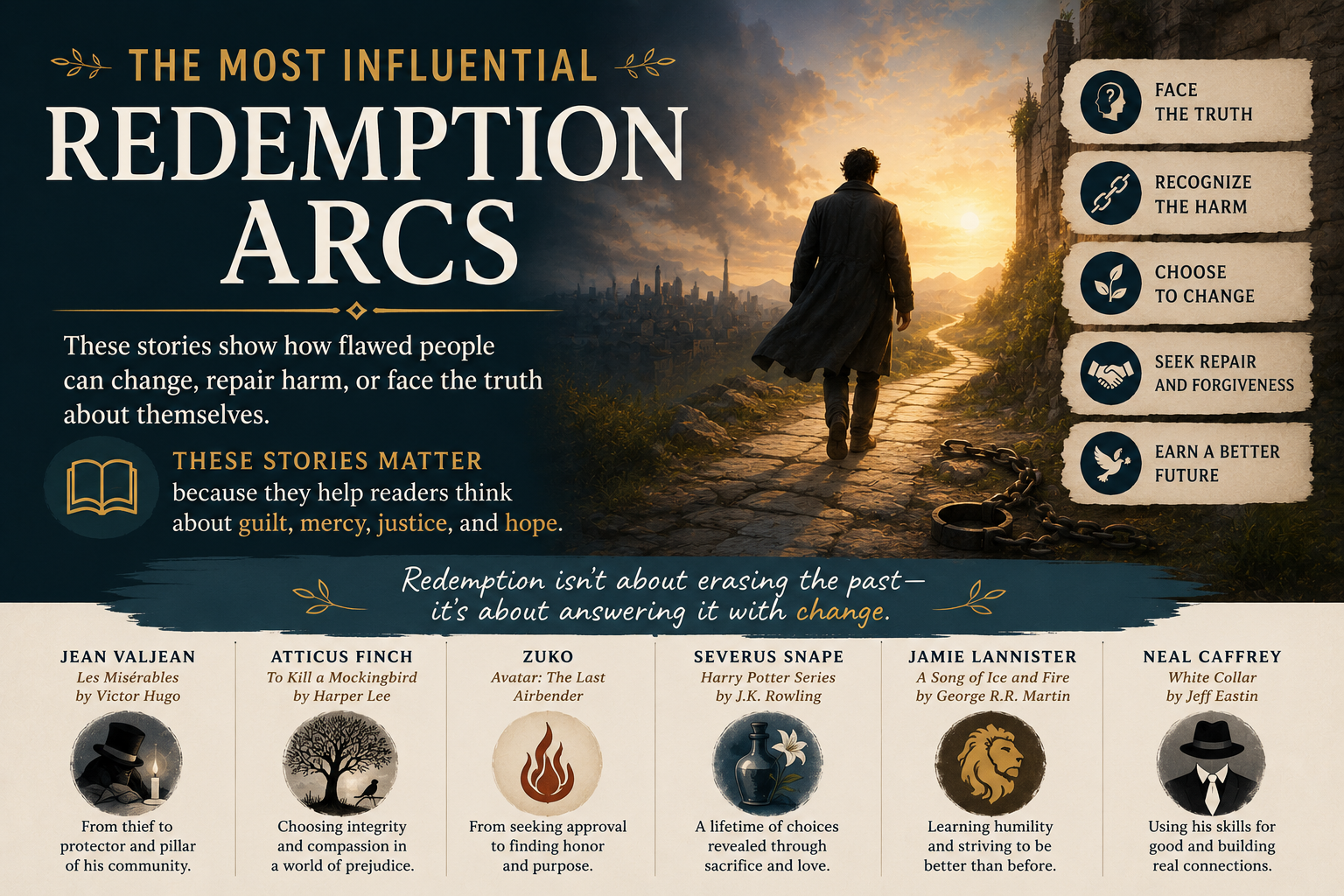
The Most Influential Redemption Arcs show how flawed people can change, repair harm, or face the truth about themselves. These stories matter because they help readers think about guilt, mercy, justice, and hope.

From old classics to modern novels, redemption arcs ask one hard question: can a person become better after doing wrong?

In this Guide

Redemption arc

Why the Most Influential Redemption Arcs Still Matter

Redemption arcs turn moral failure into a story of change.

The Most Influential Redemption Arcs do not excuse bad choices. They show what happens when a character sees the damage they caused and tries to change course.

This is why students often meet these arcs in English class. They give readers a clear way to study character growth, conflict, theme, and moral choice.

A strong redemption arc usually has a few key parts. The character causes harm, faces a crisis, feels the weight of guilt, and makes a choice that proves real change.

That final choice matters most. A character is not redeemed just because they feel sorry. They must act.

Most Influential Redemption Arcs in Classic Literature

Classic literature gives us some of the clearest examples of moral change.

These Most Influential Redemption Arcs have lasted because they feel honest. The characters do not become perfect overnight. Their change costs them something.

Ebenezer Scrooge in A Christmas Carol

Charles Dickens gives readers one of the most famous redemption stories ever written. Scrooge starts as cold, greedy, and cruel to the less fortunate.

After visits from the ghosts, he sees his past, present, and possible future. These visions force him to face the lonely life he has built.

Scrooge changes because he chooses kindness while he still has time. His redemption feels joyful, but it also comes from fear, shame, and self-knowledge.

For background on Dickens and his work, see Britannica’s overview of Charles Dickens.

Jean Valjean in Les Misérables

Victor Hugo’s Jean Valjean begins as a man marked by prison and poverty. After he steals silver from a bishop, the bishop protects him instead of turning him in.

That act of mercy changes Valjean’s life. He becomes a man who helps others, even when it puts him at risk.

Valjean’s arc shows that redemption is not one moment. It is a lifetime of hard choices.

Sydney Carton in A Tale of Two Cities

Sydney Carton starts as bitter and wasted. He sees himself as a failure with little purpose.

His final act changes how readers see him. By giving his life to save another man, he turns regret into sacrifice.

Carton’s redemption is tragic, but it is powerful. He cannot fix his whole past, yet he can give his life meaning.

Severus Snape in the Harry Potter Series

Snape is one of modern literature’s most debated redemption arcs. He is cruel, secretive, and often unfair.

Yet his hidden loyalty reveals a more complex person. His choices do not erase his harm, but they show a long struggle with guilt and love.

This is why Snape remains important in classroom and fan debates. His arc asks whether sacrifice can balance past cruelty.

Themes and Symbols in Redemption Arcs

Redemption stories often use symbols to show inner change.

Light and darkness appear often in redemption arcs. A character may move from shadow into light, which can show moral growth or new hope.

Journeys also matter. A road, a prison, or a return home can show that change takes effort. Jean Valjean’s movement through France reflects his search for grace and safety.

Names can carry meaning too. When a character takes a new name, it may show a new self. Valjean becomes Monsieur Madeleine, which points to his attempt to live beyond his prison past.

Time is another key symbol. In A Christmas Carol, the ghosts use time to teach Scrooge. The past brings regret, while the future offers warning.

If you want to sharpen your close reading of symbols, imagery, and word choice, try our guide on how to read Emily Dickinson. The same skills can help you study longer novels.

Modern Lessons from the Most Influential Redemption Arcs

Redemption arcs still shape how readers talk about justice and change.

The Most Influential Redemption Arcs are not simple “good guy” stories. They often ask if people deserve a second chance after real harm.

This question feels modern because people still debate it in schools, courts, families, and online spaces. Literature gives readers a safer place to think through the problem.

Some arcs stress forgiveness. Others focus on responsibility. The best ones do not make the answer too easy.

That is why redemption arcs work well in essays. You can ask what the character did wrong, what they learned, and whether their final choice truly repairs anything.

These books are strong choices for students who want deeper examples.

  • A Christmas Carol by Charles Dickens
  • Les Misérables by Victor Hugo

Both books show redemption in a clear but serious way. They also give students rich material for theme, character, and symbolism essays.

For shorter practice, pair a novel with poetry study. A poem can train you to notice small details that reveal change. Our post on reading Emily Dickinson is a useful place to start.

FAQs About the Most Influential Redemption Arcs

What are the Most Influential Redemption Arcs in literature?

The Most Influential Redemption Arcs often include Scrooge in A Christmas Carol, Jean Valjean in Les Misérables, and Sydney Carton in A Tale of Two Cities.

What makes a redemption arc believable?

A believable arc shows guilt, effort, and real change. The character must act in a way that proves they have learned from the past.

Is redemption the same as forgiveness?

No. A character may seek redemption without being fully forgiven. Forgiveness depends on others, while redemption depends on moral change.

Why do teachers assign books with redemption arcs?

These books help students study character growth, theme, and conflict. They also lead to strong essay topics about justice and mercy.

Key Takeaway

The Most Influential Redemption Arcs remind us that change is possible, but never cheap. Great literature shows that redemption requires truth, action, and the courage to become someone better.
Literary Devices: A Clear Student Guide with Examples

literary devices

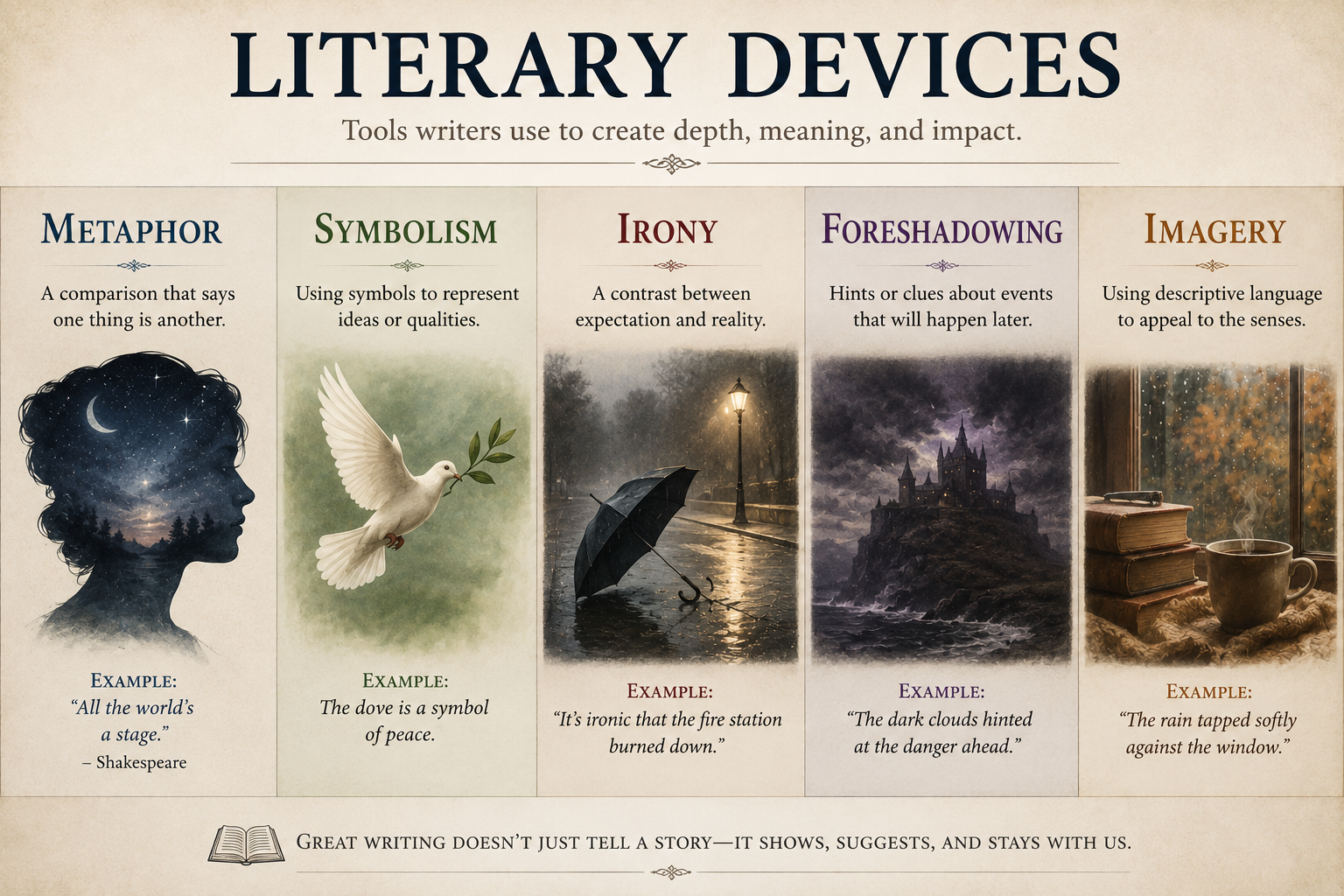
Literary devices help writers shape meaning, mood, and character. When you learn how they work, poems, novels, and plays become easier to understand.

This guide explains literary devices in plain language, with examples from books students often read in class.

This article contains affiliate links.

In this Guide

  • What literary devices are
  • Why they matter in literature
  • Common examples students should know
  • How to analyze them in essays
  • Helpful books and study links
  • FAQ
literary devices

What Are Literary Devices?

Literary devices are tools writers use to create meaning beyond the basic plot.

A writer may use a symbol, a repeated image, or a sharp contrast to guide how readers feel. These choices help turn a simple story into art.

For example, in The Great Gatsby, the green light is not just a light. It stands for Gatsby’s dream, his hope, and his distance from the life he wants.

Why Literary Devices Matter in Literature

They help you see how a text works, not just what happens in it.

Plot tells you the events. Literary devices show you why those events feel powerful.

In Romeo and Juliet, Romeo calls Juliet the sun. This metaphor shows how bright and life-giving she seems to him. It also reveals his intense, risky view of love.

Once you spot these choices, your essays become stronger. You can explain the author’s craft instead of only retelling the story.

Common Literary Devices Students Should Know

Start with the terms that appear most often in class texts and exams.

Metaphor

A metaphor compares two unlike things without using “like” or “as.” It helps readers see one idea in a fresh way.

When Shakespeare writes that Juliet is the sun, he gives Romeo’s love a bright and dramatic force.

Symbolism

A symbol is an object, place, or image that stands for a larger idea. Symbols often grow in meaning as the story moves on.

The conch in Lord of the Flies stands for order and shared rules. As the conch loses power, the boys lose control.

Irony

Irony creates a gap between what seems true and what is true. It can add humor, tension, or sadness.

In Oedipus Rex, Oedipus seeks the truth about a crime, but the truth points back to him. That irony makes the tragedy hit harder.

Foreshadowing

Foreshadowing hints at what may happen later. It builds tension and helps the ending feel earned.

In Of Mice and Men, early scenes prepare readers for the final choice George must make.

Imagery

Imagery uses sensory details to help readers picture a scene. It can appeal to sight, sound, touch, taste, or smell.

Poetry often relies on imagery. You can explore more terms in the Poetry Foundation glossary.

How to Analyze Literary Devices in an Essay

Good analysis connects the device to meaning.

Do not stop after naming the device. Explain what it does in the text.

A strong sentence might sound like this: “The green light in The Great Gatsby symbolizes Gatsby’s dream, but its distance shows that the dream may never become real.”

This sentence names the symbol, explains its meaning, and connects it to the novel’s larger theme.

For more help with close reading, see our guide to analyzing literature quotes. If you want a faster study plan, try our literature study guide bundle.

Quick Study Tips for Literary Devices

You do not need to memorize every term at once.

Choose a few key terms and practice with short passages. Ask: What stands out? What feeling does it create? How does it connect to theme?

When you mark a passage, look for repeated images or unusual word choices. Repetition often points to meaning.

For a broader view of literature as an art form, you can also read Britannica’s overview of literature.

Relevant Books to Read

These books can help students build confidence with analysis.

FAQ About Literary Devices

What are literary devices in simple terms?

They are writing tools that help authors create deeper meaning, emotion, or style.

What is the easiest device to spot?

Symbolism is often easy to find because it links a concrete object to a larger idea.

Are literary devices only used in poetry?

No. They appear in novels, plays, short stories, speeches, and songs.

How many should I discuss in an essay?

Focus on one or two strong examples. It is better to explain them well than to list many terms.

Key Takeaway

Literary devices help you move from summary to real analysis. When you ask how a writer creates meaning, you read with more skill and write with more confidence.

Flash Memoir Prompt: First Time You Heard a Word You Didn’t Know

Flash Memoir Prompt word

A brief invitation to write about the first important word you heard before you understood it, and the moment you realized language could change the air in a room.

The Prompt

Write about the first time you heard a word that you didn’t understand, but knew was important.

Maybe the word came from a parent’s phone call. Maybe it floated across a classroom, a hospital hallway, a church basement, or the back seat of a car. You did not know the definition yet, but you knew the word carried weight.

This flash memoir prompt, first time heard word didn’t make sense right away, but still mattered, asks you to return to that small moment of alertness. It is a prompt about language, but it is also about instinct. Before you had meaning, you had feeling.

Flash Memoir Prompt word

Why This Memory Matters

Children often understand tone before vocabulary. A word can feel cold, sharp, secret, or official long before anyone explains it.

Think about words like eviction, diagnosis, adoption, layoff, custody, immigrant, gifted, probation, cancer, scholarship, or divorce. The word itself may not have been aimed at you. Still, you may have felt everyone around it change.

This kind of memory can uncover the first time you sensed that adults had a hidden language. It can show when you learned that words were not just schoolwork or spelling tests. Some words opened doors. Some closed them. Some made people whisper.

You do not need to write a dramatic history. In fact, this prompt works best when you stay close to one scene. The memory may be as small as your mother lowering her voice, your teacher writing a word on the board, or your grandfather folding a letter twice before putting it away.

If you enjoy thinking closely about language, you might also like this guide on how to understand Shakespearean language. Different words can feel strange at first, but the feeling they create can still reach us.

How to Approach This Flash Memoir Prompt

Begin with the place where you heard the word. Do not start with a dictionary definition. Start with the room.

What did the floor feel like under your feet? Was there food on the table? Was a television on? Did someone stop talking when you walked in?

Then write the word exactly as you remember hearing it. Let it stand on the page for a moment. You can even write a sentence like, “I did not know what foreclosure meant, but I knew it was not a word anyone wanted in our kitchen.”

Try to write what you noticed before you explain what it meant. This keeps the memory alive. If you rush into the lesson, the scene may begin to feel flat.

You might ask yourself:

  • Who said the word?
  • Who reacted to it?
  • What did you understand without being told?
  • When did you finally learn what the word meant?

Keep the memory narrow. You are not writing your whole life story. You are writing one flash of awareness.

If it helps, treat the word like a clue in a book. Mark the gestures, pauses, and sounds around it the way you might annotate a piece of literature. The meaning often lives in the details around the word, not only in the word itself.

This is why the flash memoir prompt first time heard word didn’t need to be understood fully can lead to such honest writing. It lets you write from the younger version of yourself, the version who listened hard and guessed from the room.

A Quick Example

The first time I heard the word “deposition,” I was sitting under the dining room table, tying knots in the fringe of the rug. My father was on the phone, and my mother kept looking at me like she had forgotten I could hear. “They want a deposition,” he said. I pictured something being deposited, like coins at the bank drive-through. But his voice was too tight for money. My mother pressed her fingers against her lips. The ice in her glass cracked. No one told me to leave, which made me feel even more like I should stay still. Years later, I learned what the word meant. That night, all I knew was that it had entered our house before the bad news did.

Try It Yourself

Set a timer for ten minutes. Write the scene where you first heard the word. Do not worry about spelling the whole memory perfectly. Just follow the sound of the word and the way people changed around it.

If you get stuck, write this sentence and continue from there: “I did not know what the word meant, but I knew from the way they said it that something had shifted.”

You may discover that the word was not the center of the memory. The real story may be in a glance, a silence, a hand on a doorknob, or the way someone tried to act normal.

That is enough for flash memoir. One word. One room. One younger version of you trying to understand.

Want More Flash Memoir Prompts?

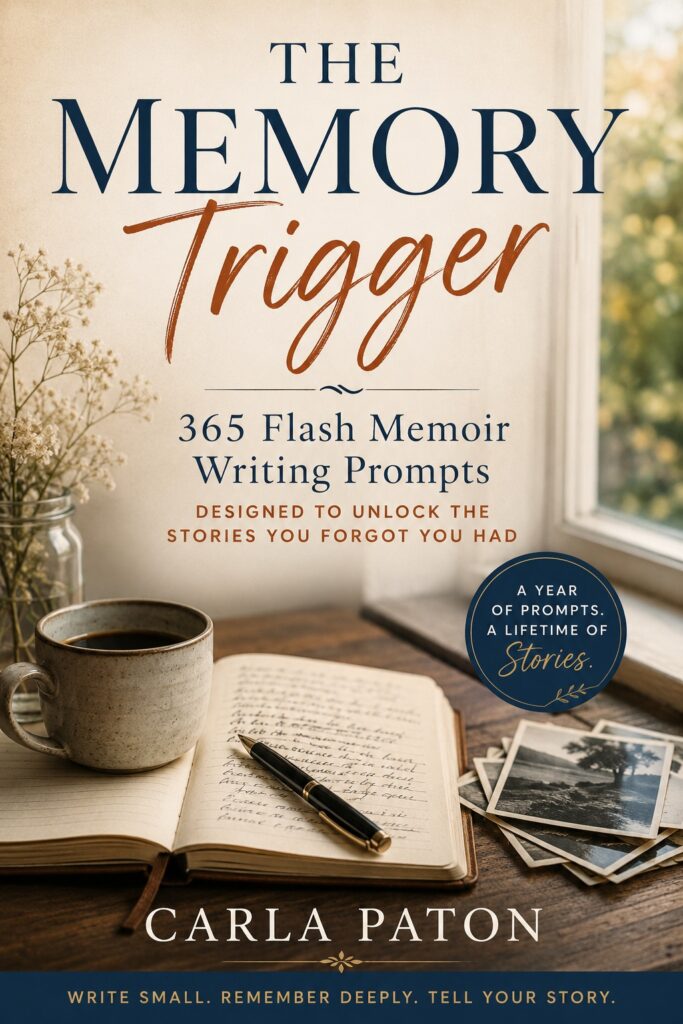
Explore all 365 prompts in The Memory Trigger: 365 Flash Memoir Writing Prompts.

The Memory Trigger

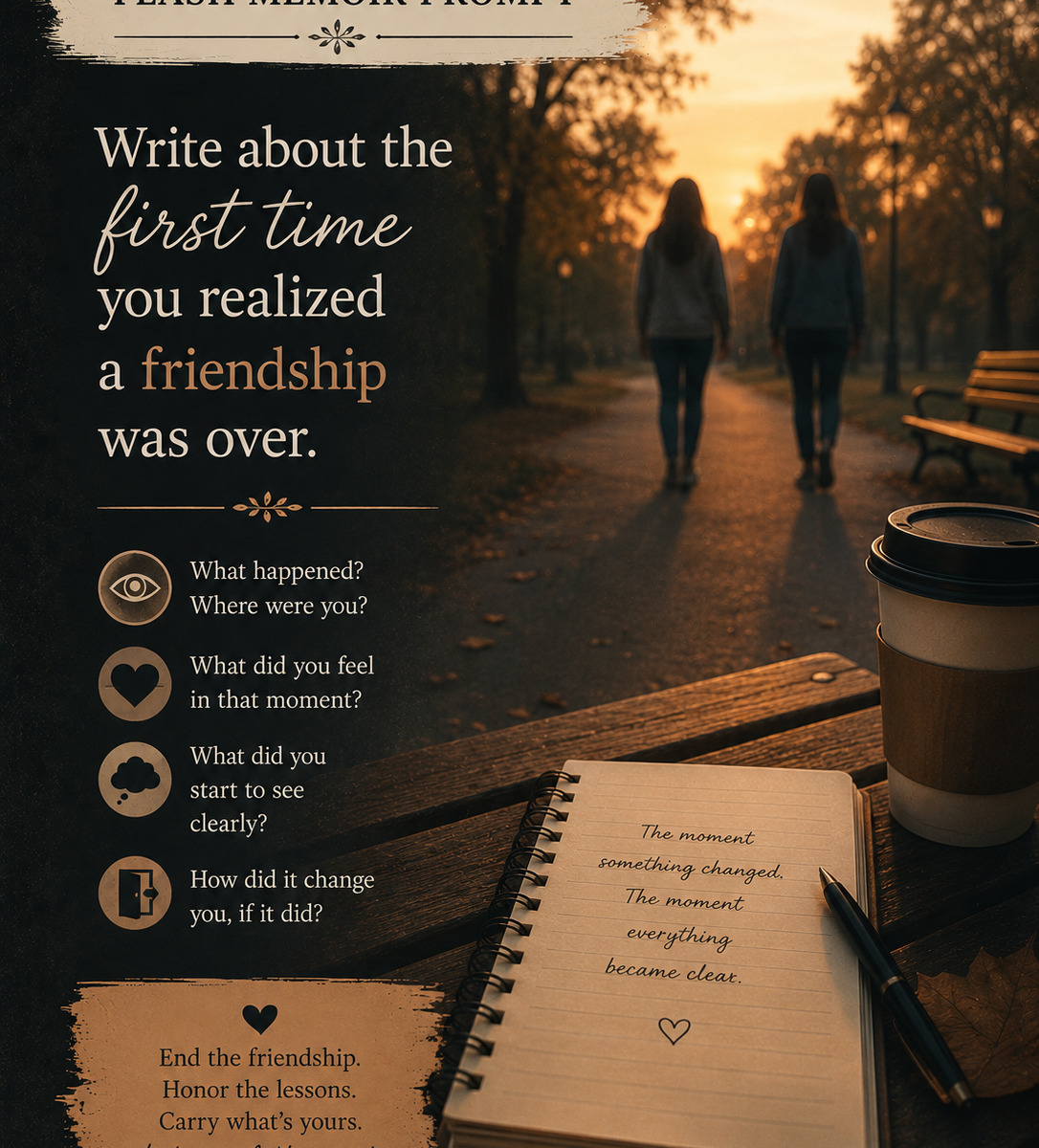
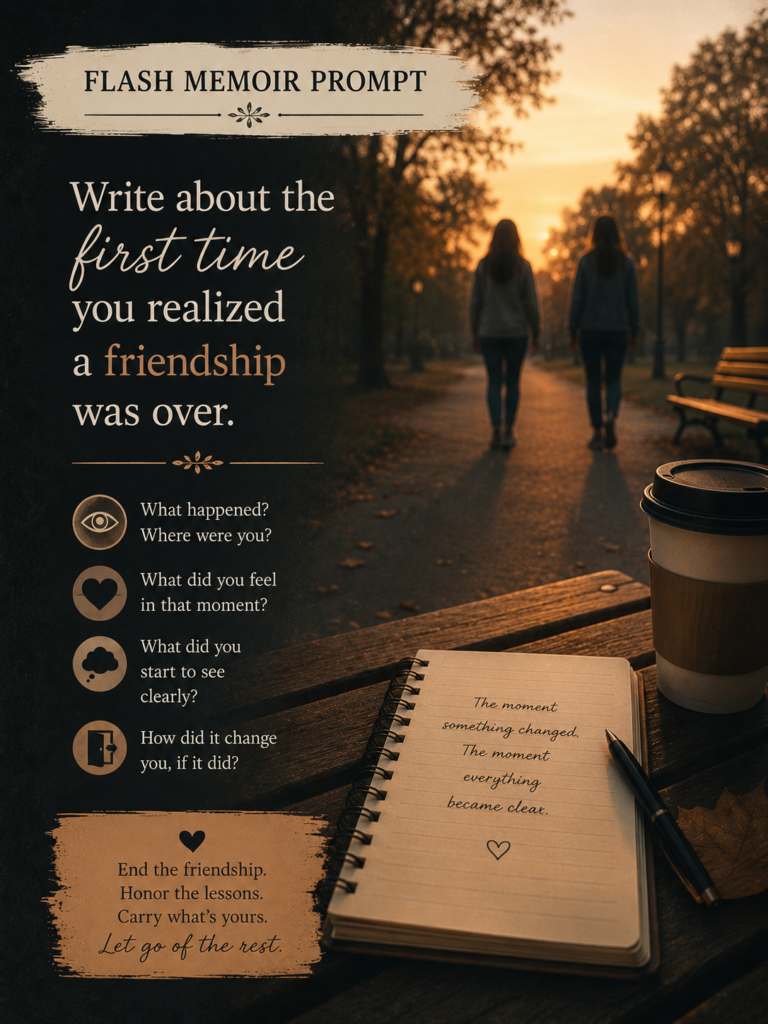
Flash Memoir Prompt: First Time You Realized a Friendship Was Over

flash memoir prompt friendship

A focused flash memoir prompt about the quiet, painful moment when you understood a friendship had ended before anyone said goodbye.

You may remember the moment as a small shift. A seat left empty beside you. A text that sounded polite instead of familiar. A laugh you were no longer part of. The strange thing about losing a friendship is that it often happens before the final conversation, if there ever is one.

This flash memoir prompt first time realized friendship already over asks you to notice that in-between space. The friendship may have looked normal from the outside, but inside you knew something had changed. That is a powerful place to write from because it holds confusion, loyalty, embarrassment, grief, and maybe relief.

flash memoir prompt friendship

The Prompt

Write about the first time you realized a friendship was already over, even though no one had said so.

This prompt can unlock a meaningful memory because it does not ask for the whole history of the friendship. It asks for one moment of recognition. Maybe you were sitting across from someone you used to tell everything to and could not think of one honest thing to say. Maybe you saw them with new friends and felt less jealous than you expected. Maybe you noticed you had stopped saving funny stories for them.

The best flash memoir pieces often begin with a tiny moment that carries a larger truth. This one invites you to write about silence, distance, and the quiet way people sometimes leave each other.

Why This Memory Matters

A friendship ending can feel harder to explain than a breakup. There may be no clear fight, no final line, and no one to blame. That can make the memory slippery. You know it mattered, but you may not know where to begin.

This is where the prompt helps. It asks you to focus on the first time you realized the friendship was already over. That moment has shape. It may have a room, a season, a smell, a sound. It may have a sentence that landed wrong or a pause that lasted too long.

Writing about this kind of memory can reveal who you were then. Maybe you were trying hard to act normal. Maybe you were angry and refused to admit you were hurt. Maybe you kept making excuses for the other person because admitting the truth felt too final.

The story does not need to prove who was right. It does not need to solve the friendship. It only needs to show the moment when your body knew before your words did.

If you are a student or a newer writer, this kind of prompt can also help you build stronger scenes. When you study people in stories, you look for what they say and what they avoid saying. The same skill matters in memoir. This guide on how to analyze characters in literature can help you think about memory with the same close attention.

How to Approach This Prompt

Begin with a physical detail. Do not start by explaining the entire friendship. Start with the cafeteria table, the bus window, the phone screen, the birthday party, the hallway, or the sound of their voice when it no longer sounded like home.

Choose one scene. Keep the memory narrow. If you try to tell how you met, how close you became, what changed, and where you are now, the piece may grow too large. Flash memoir works best when the writer trusts one clear moment.

Write what you noticed before you explain what it meant. For example, instead of starting with “I knew we were no longer friends,” you might begin with, “She saved a chair for someone else and did not look up when I walked in.” That kind of detail lets the reader feel the shift with you.

You can also pay attention to what you did next. Did you pretend not to care? Did you make a joke? Did you leave early? Did you sit there and act like nothing had happened? Your reaction may reveal the emotional truth of the memory.

If you want to sharpen your scene, try marking the details that feel alive on the page. Notice the lines where the tension rises or where the silence says more than speech. This simple practice is close to how to annotate literature, except this time the text is your own life.

For this flash memoir prompt first time realized friendship already over, you do not have to write with blame. You can write with honesty. Let the memory be as mixed as it was.

A Quick Example

At lunch, Maya sat at the far end of the table with her new choir friends. She saw me come in. I know she did because her eyes moved over my face, quick as a camera flash, before she looked back down at her tray. There was one open chair beside her, but her backpack was on it. I stood there with my milk carton getting cold in my hand and waited for her to move it. She did not. Someone at the table said something, and Maya laughed in that high, bright way she used when she wanted people to like her. I walked to another table before anyone could notice I had been waiting. That was the first time I understood we were not in a fight. We were already finished.

Try It Yourself

Set a timer for ten minutes and write the scene without stopping. Begin with the first physical detail you remember. Let the place do some of the work. The chipped table, the message bubble, the empty seat, or the closed bedroom door can carry more feeling than a long explanation.

If the memory still hurts, write it gently. You do not have to name every reason the friendship ended. You can stay with the moment when you realized the truth and let that be enough for today.

This flash memoir prompt first time realized friendship already over is really about recognition. It asks you to recall the instant when pretending became harder than knowing. That instant may be small, but it can hold a whole story.

Want More Flash Memoir Prompts?

Explore all 365 prompts in The Memory Trigger: 365 Flash Memoir Writing Prompts. It is a helpful resource when you want short, focused writing invitations that lead to real memories.

The Memory Trigger

Flash Memoir Prompt: First Time You Were in a Hospital

flash memoir prompt hospital

The first hospital memory may come back through a smell, a waiting room chair, or the quiet moment when someone tried to look brave for you.

The Prompt

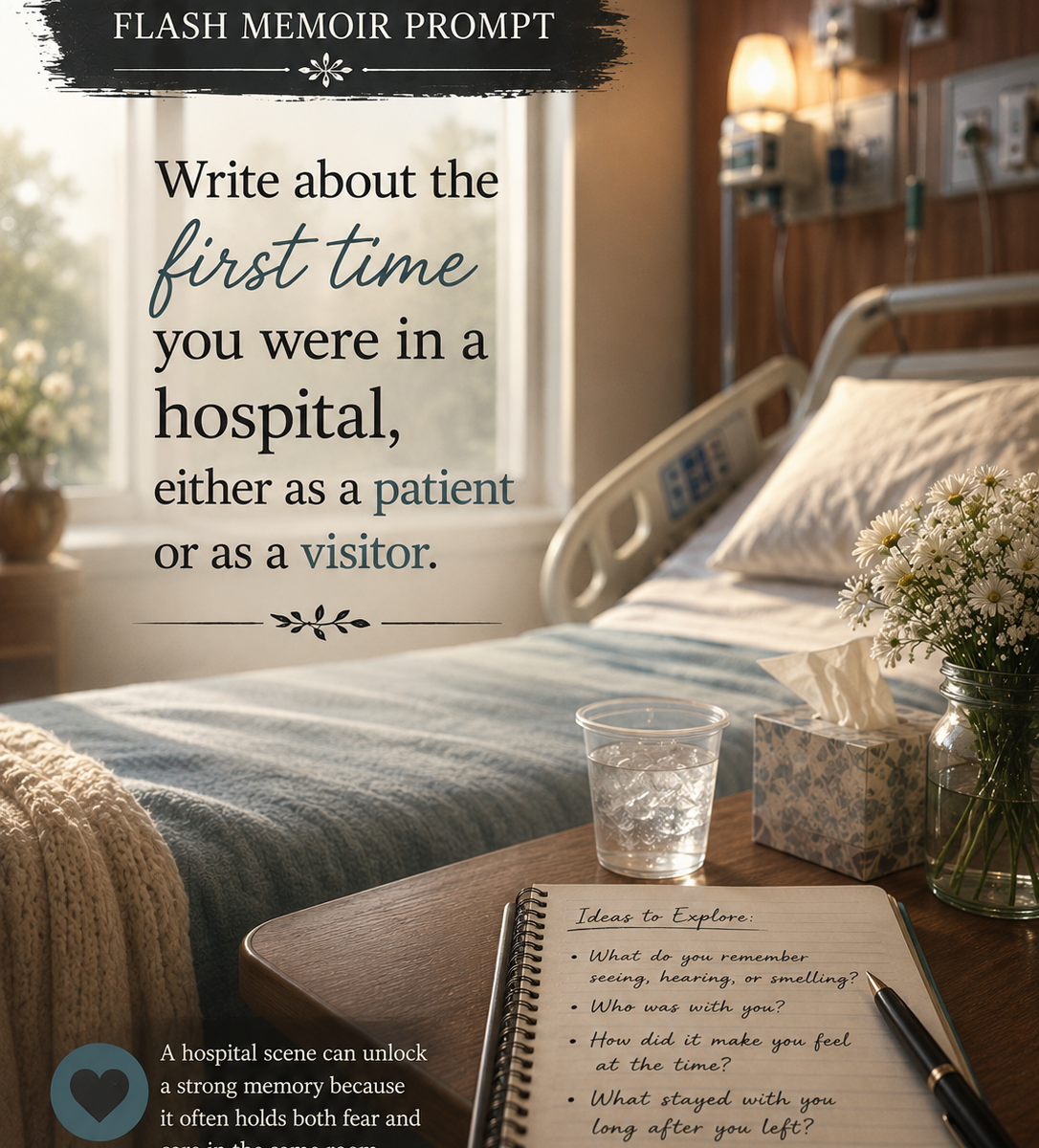
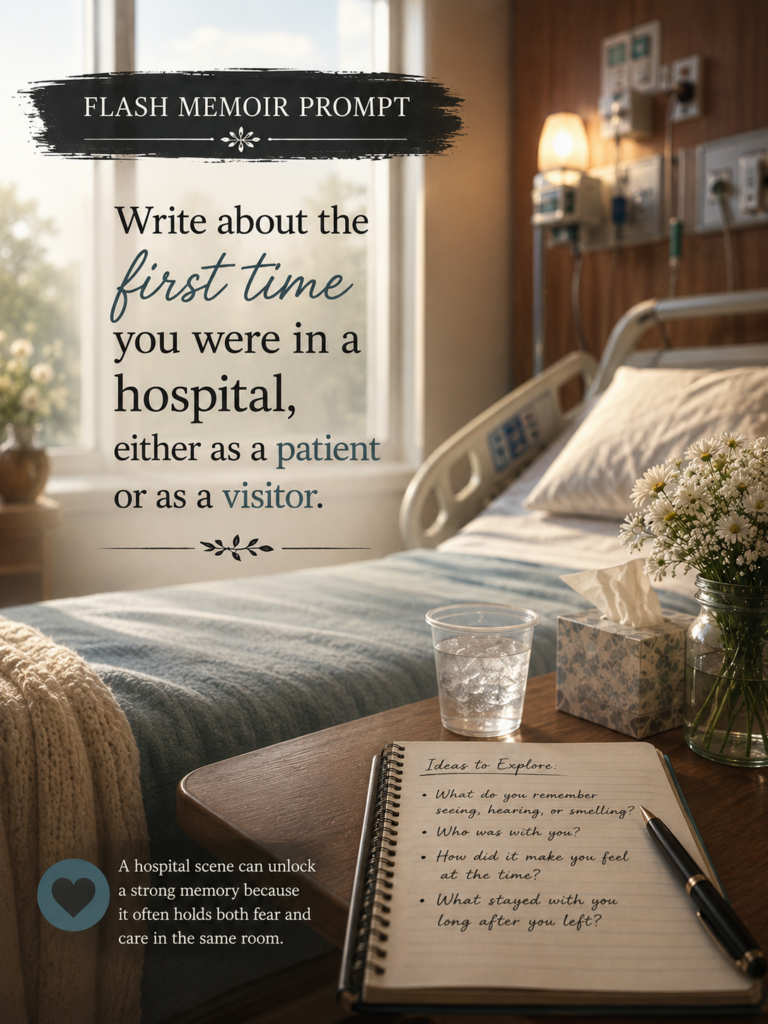
Write about the first time you were in a hospital, either as a patient or as a visitor.

This flash memoir prompt: first time in the hospital, either as a patient or a visitor, asks you to return to a place most people remember with unusual clarity. Hospitals have their own world. The lights are too bright. The floors shine. People speak softly, even when nothing quiet is happening.

Your memory may be serious, scary, confusing, or even strangely ordinary. Maybe you were a child with a broken arm. Maybe you visited a grandparent and noticed the cup of melting ice beside the bed. Maybe you were too young to understand what was wrong, but old enough to understand the adults were worried.

A hospital scene can unlock a strong memory because it often holds both fear and care in the same room.

flash memoir prompt hospital

Why This Memory Matters

The first time you enter a hospital, you may notice how different life feels there. Time slows down. People wait. Nurses appear and disappear. A vending machine can seem louder than it should. A small kindness can stay with you for years.

This kind of memory matters because it often shows you meeting vulnerability for the first time. That vulnerability may have been your own. It may have belonged to someone you loved. Either way, the scene can reveal what you thought safety meant at that age.

If you were the patient, you might write about the moment before treatment, when you were told to sit still or be brave. If you were a visitor, you might write about walking into a room and not knowing what to say. Both versions count. A flash memoir does not need a dramatic ending. It needs one honest scene.

You can also explore the tone and mood of the memory. Was the room tense, calm, lonely, hopeful, or oddly funny? The feeling in the room may be more important than the medical reason you were there.

How to Approach This Prompt

Begin with a physical detail. Do not start by explaining the whole hospital visit. Start with the bracelet on your wrist, the squeak of shoes in the hallway, the paper cup of water, or the stiff chair where you waited.

Then narrow the memory to one scene. You might choose the moment you first saw the hospital bed. You might focus on the ride in the elevator. You might write about sitting beside someone and watching their hand move under the blanket.

Try to write what you noticed before you write what it meant. Memoir becomes stronger when readers can stand inside the memory with you. Instead of saying, “I was scared,” show the way you counted ceiling tiles or kept asking the same question.

If the memory feels big, give yourself limits. Write about ten minutes, not the whole day. Write about one room, not the whole building. Write about one person’s voice, not every conversation.

You can treat your memory the way you might treat a short text in class. Look closely at small details, underline what matters in your mind, and ask why it stayed with you. If that kind of close looking helps, this guide on how to annotate literature can also give you a useful way to study your own memory.

For this flash memoir prompt first time hospital either patient, the goal is not to give a medical report. The goal is to capture the human part of the scene.

A Quick Example

I was seven the first time I went to a hospital. My brother had fallen from the monkey bars, and my mother drove with one hand on the wheel and the other pressed against his knee, as if holding him together. In the waiting room, I sat under a poster of a smiling tooth, though we were not there for teeth. My brother stopped crying after a while, which scared me more than the crying. A nurse gave me a grape lollipop from a drawer, even though I was not the patient. I remember holding it in my lap, unopened, while my mother signed forms. It felt wrong to eat something sweet while everyone else looked so serious.

Try It Yourself

Set a timer for ten minutes and write about your first hospital memory. Choose one moment and stay there. Let the smells, sounds, and small gestures lead you.

If you cannot remember exact words, write the feeling of the words. If you cannot remember every person in the room, write the one face you do remember. Flash memoir allows you to work with fragments, as long as you stay honest about what you know.

You might begin with one of these openings: “The first thing I noticed was…” or “No one told me why the room felt so quiet.” You can also start with the object your younger self could not stop looking at.

When you finish, read the piece once and ask what changed inside the scene. Did you understand something new? Did someone comfort you? Did you realize adults could be afraid too? That small shift may be the heart of the memoir.

Want More Flash Memoir Prompts?

If you want to keep building a steady memoir practice, use one small prompt at a time. Explore all 365 prompts in The Memory Trigger: 365 Flash Memoir Writing Prompts.

The Memory Trigger

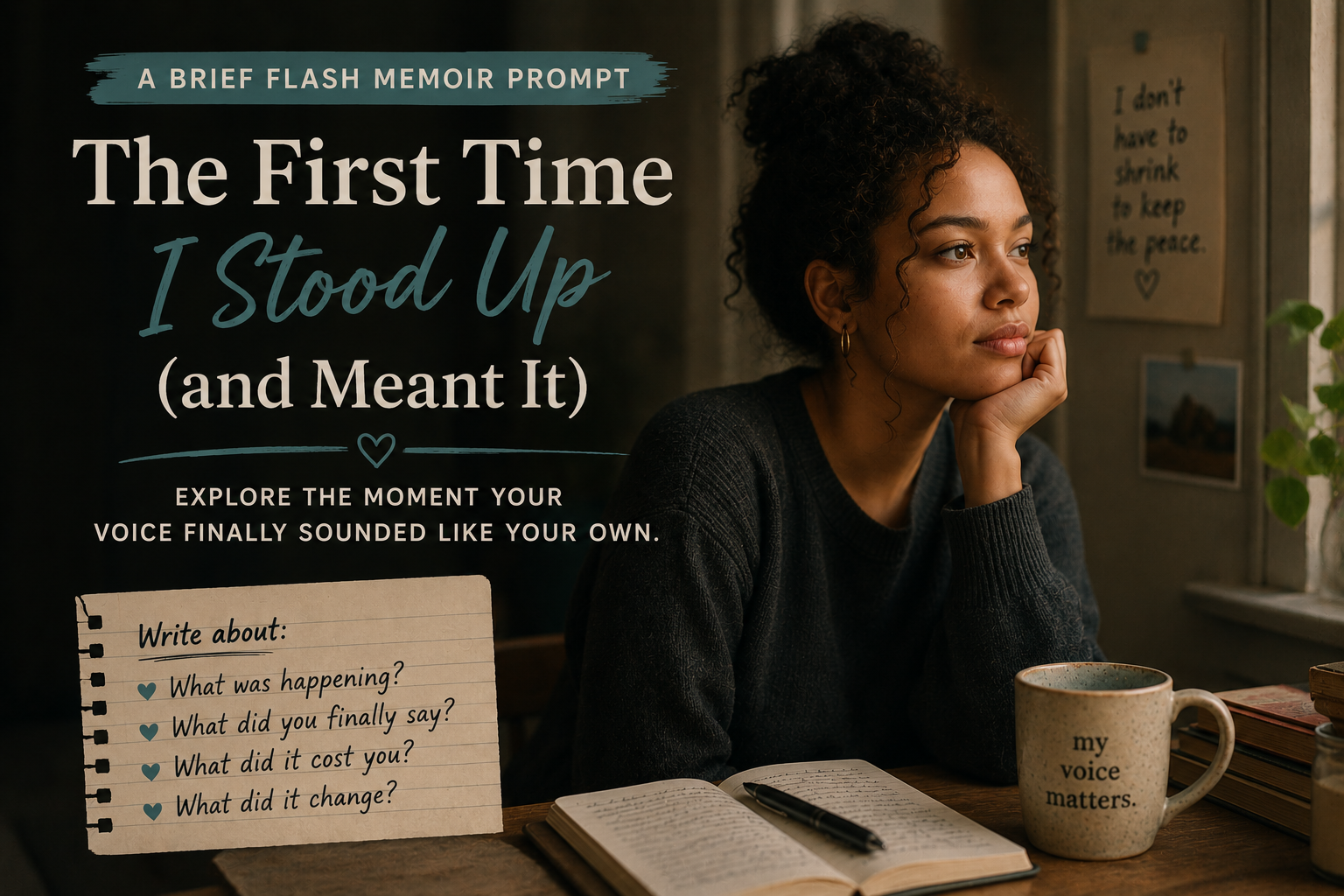
Flash Memoir Prompt: First Time You Stood Up for Yourself and Meant It

Flash Memoir Prompt First time

A brief flash memoir prompt first time stood up meant for exploring the moment your voice finally sounded like your own.

Your hand may have shaken. Your face may have gone hot. Maybe your words came out too loud, or too quiet, or in a rush you barely recognized. But something changed in that moment. You stopped trying to keep the peace at any cost. You stopped swallowing the sentence that had been sitting in your throat for years.

This kind of memory is rarely neat. It might have happened in a classroom, a kitchen, a workplace, a car, or a crowded hallway. The first time you stood up for yourself and meant it may not have looked brave to anyone else. But inside, it may have felt like a door opening.

Flash Memoir Prompt First time

The Prompt

Write about the first time you stood up for yourself and meant it.

This flash memoir prompt first time stood up meant invites you to return to one focused moment when you chose your own dignity. It does not ask you to prove you were right. It asks you to remember what it felt like to stop hiding your honest thought.

A prompt like this can unlock a memory because it has tension built into it. There is usually a before and an after. Before, you may have stayed quiet, laughed something off, or told yourself it did not matter. After, even if things were awkward, you knew you had crossed a line in yourself.

Why This Memory Matters

Standing up for yourself can look dramatic, but it can also be very small. It might be one sentence: “Don’t talk to me that way.” It might be refusing to apologize for something you did not do. It might be saying no when everyone expected you to say yes.

These moments matter because they often show a hidden part of your growth. The memory may reveal what you were taught about being “nice,” “easy,” “respectful,” or “difficult.” It may show the first time you questioned those lessons.

For some writers, this prompt leads to a proud memory. For others, it brings up regret, anger, or grief. Maybe you wish someone had stood up for you sooner. Maybe you wish your younger self had known that self-respect was allowed.

If you are trying to understand the deeper meaning of this memory, it can help to think the way a reader thinks about story. What changed? What belief was challenged? What pattern broke? If you enjoy looking for meaning in stories, you may find this guide on how to identify theme in literature useful for reading your own memory with more attention.

Your flash memoir does not need a perfect lesson at the end. In fact, it may be stronger if you let the moment stay a little unresolved. Real courage often feels messy while it is happening.

How to Approach This Prompt

Begin with the body, not the explanation.

What did your body do right before you spoke? Did your throat tighten? Did your palms sweat? Did you look at the floor, the person’s shoes, the edge of a table? A physical detail can pull the reader into the scene faster than a long backstory.

Try to narrow the memory to one scene. Do not start with every reason you finally reached that point. Instead, begin close to the moment. A strong opening might sound like, “I was holding a paper cup of coffee when she said it again,” or “The classroom went quiet after I pushed my chair back.”

Write what you noticed before you explain what it meant. The color of the room, the scrape of a chair, the smell of rain on your jacket, or the sound of your own voice may carry more power than a summary.

You can always add context later. For the first draft, stay inside the scene. Let the reader feel the pressure before the words come out.

If you like to mark up drafts or study the shape of a scene, you might also use simple notes in the margins after you write. Circle the strongest detail. Underline the sentence where the emotional shift happens. This is similar to the close reading process described in how to annotate literature, except this time the text is your own life.

For this flash memoir prompt first time stood up meant, your goal is not to make yourself sound fearless. Your goal is to be honest about the fear and the choice you made anyway.

A Quick Example

I was seventeen, standing behind the counter at the bakery, dusted in flour up to my elbows. My manager had just blamed me for an order I had never taken. Usually I would have nodded, apologized, and cried later in the walk-in freezer where no one could see me. That day, I looked at the pink box in his hand and said, “No. I didn’t write that ticket.” My voice cracked on “no,” which annoyed me, but I kept my eyes on him. The other cashier stopped tying ribbon. For a second, the whole shop seemed to pause, even the oven timer. He frowned, checked the stack of slips, and found the right one. He did not apologize. Still, I felt taller for the rest of my shift.

Try It Yourself

Set a timer for ten minutes and write the scene as directly as you can. Start with where you were and what your body noticed. Then let the words arrive when they arrived in real life.

If the memory feels big, choose one small part of it. You might write only the moment before you spoke, or only what happened right after. A flash memoir does not need to cover the whole history of the relationship or conflict.

Use this flash memoir prompt first time stood up meant as a way to listen for your own turning point. Maybe the scene was loud. Maybe it was quiet. Either way, give the moment space on the page.

Want More Flash Memoir Prompts?

If this prompt opened up a memory, keep going. Short prompts can help you build a steady writing habit without pressure to finish a full essay right away. Explore all 365 prompts in The Memory Trigger: 365 Flash Memoir Writing Prompts.

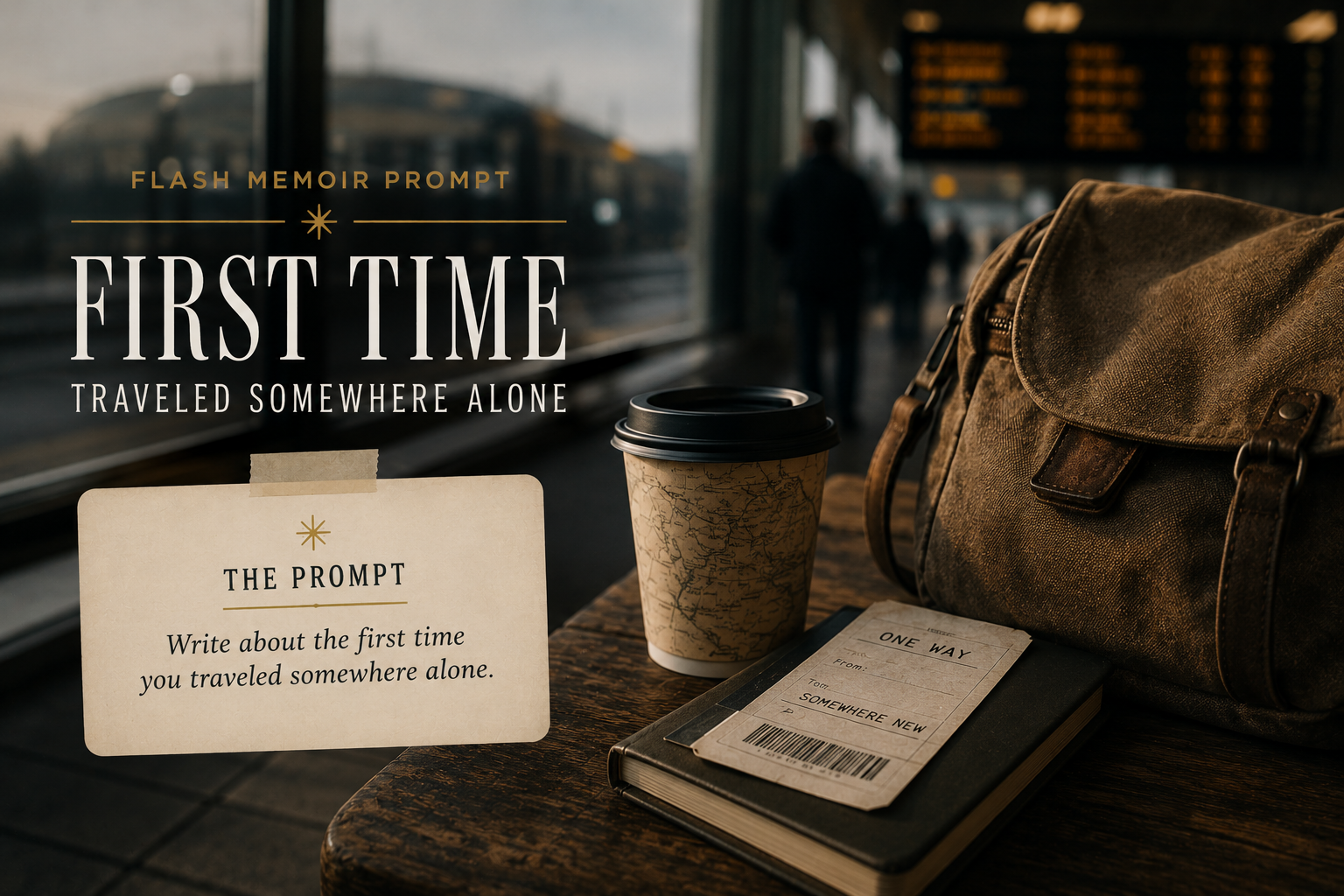
Flash Memoir Prompt: First Time You Traveled Somewhere Alone

Flash memoir prompt alone

A brief, honest writing invitation for remembering the first time you traveled somewhere alone through one clear scene, a few sensory details, and the feeling that followed you. Maybe you can still picture it: your hand on a ticket, your bag feeling heavier than it should, your eyes moving from sign to sign while you tried to look like someone who knew exactly where to go. This flash memoir prompt first time traveled somewhere alone is less about the trip itself and more about the quiet shift that happened when no one else was there to decide the next step.

Flash memoir prompt alone

The Prompt

Write about the first time you traveled somewhere alone.

This prompt can unlock a memory because solo travel often makes ordinary moments feel sharp. A bus station bathroom, a delayed flight, a motel key, a wrong turn, or the first meal alone can hold more meaning than the destination.

When you write from this flash memoir prompt first time traveled somewhere alone, you do not need to cover every mile. You only need to return to the moment when you realized you were responsible for yourself in a new way.

Why This Memory Matters

The first time you travel alone can reveal a version of you that had been waiting for space. Maybe you felt proud. Maybe you felt scared. Maybe you felt both within the same five minutes.

That tension is useful for memoir. A strong flash memoir often lives inside mixed feelings. You might remember acting brave while secretly checking your phone every few minutes. You might remember missing home, then surprising yourself by enjoying the silence.

This kind of memory can also show a change in identity. Before the trip, you may have been someone’s child, roommate, student, partner, or friend. During the trip, you had to become the person who read the schedule, guarded the wallet, asked for help, and chose what to do next.

If you are studying memoir as part of a class, this prompt can also help you practice finding meaning without forcing a moral. Like learning how to identify theme in literature, memoir asks you to notice what a moment keeps pointing toward. Freedom. Fear. Trust. Loneliness. Independence.

The best part is that the memory does not have to be dramatic. You do not need a missed train or a life-changing disaster. Sometimes the most powerful part is sitting alone with a paper cup of coffee and realizing no one knows where you are.

How to Approach This Prompt

Begin with one physical detail from the trip. Choose something you can still see, hear, smell, or touch. It might be the vinyl seat on a bus, the stale air of an airport gate, the pull of a backpack strap, or the blue glow of a phone map at night.

Let that detail lead you into one scene. Do not try to tell the whole story of the trip. A flash memoir works best when it narrows the lens. Pick the moment before departure, the moment you arrived, or the moment you first felt truly alone.

Write what you noticed before you explain what it meant. For example, instead of starting with “I learned to be independent,” start with the vending machine humming beside you while you counted your change. Let readers feel the scene first.

You can also ask yourself one simple question: What did I pretend not to feel? Many first solo trips involve a small performance. You may have pretended to be calm, older, tougher, or more prepared than you were. That gap between outside and inside can become the heart of the piece.

If you like to mark up readings or mentor texts before writing your own, try the same habit with your memory. Notice the details that repeat or stand out, the way you might when you annotate literature. Circle the small moments in your mind and choose the one with the most charge.

For this flash memoir prompt first time traveled somewhere alone, avoid ending too neatly. You do not have to prove that you became fearless. It may be more honest to say you were still afraid, but you kept walking anyway.

A Quick Example

The first time I traveled alone, I took a train to visit my cousin in Chicago. I was seventeen and had memorized the schedule like it was a speech I had to give. At the station, I bought a bottle of orange juice even though I was not thirsty, just so I could look busy. My mother had waved from the parking lot until I turned away first. On the train, I sat by the window and kept my ticket in my sweatshirt pocket, touching it every few minutes to make sure it was still there. When the conductor passed, he barely looked at me. That almost disappointed me. I had expected the world to notice I was doing something brave. Instead, it kept moving, which made me feel both smaller and freer.

Try It Yourself

Set a timer for ten minutes and return to one scene from your first solo trip. Start with where your body was: standing in line, sitting by a window, walking through a station, or waiting near a curb.

Then write toward the feeling you did not fully understand at the time. Were you nervous, proud, lonely, excited, embarrassed, or relieved? Let the emotion stay a little messy. Real memories usually are.

If you get stuck, describe what you carried. A suitcase, a backpack, a purse, a phone charger, a snack, or a folded address can reveal what you thought you needed. It can also reveal what you could not prepare for.

This prompt is not asking for a travel essay. It is asking for a flash of memory. One place. One version of you. One moment when being alone changed the way you heard your own thoughts.

Want More Flash Memoir Prompts?

Explore all 365 prompts in The Memory Trigger: 365 Flash Memoir Writing Prompts. It is designed to help you find small, true stories from everyday life and turn them into focused pieces of memoir.

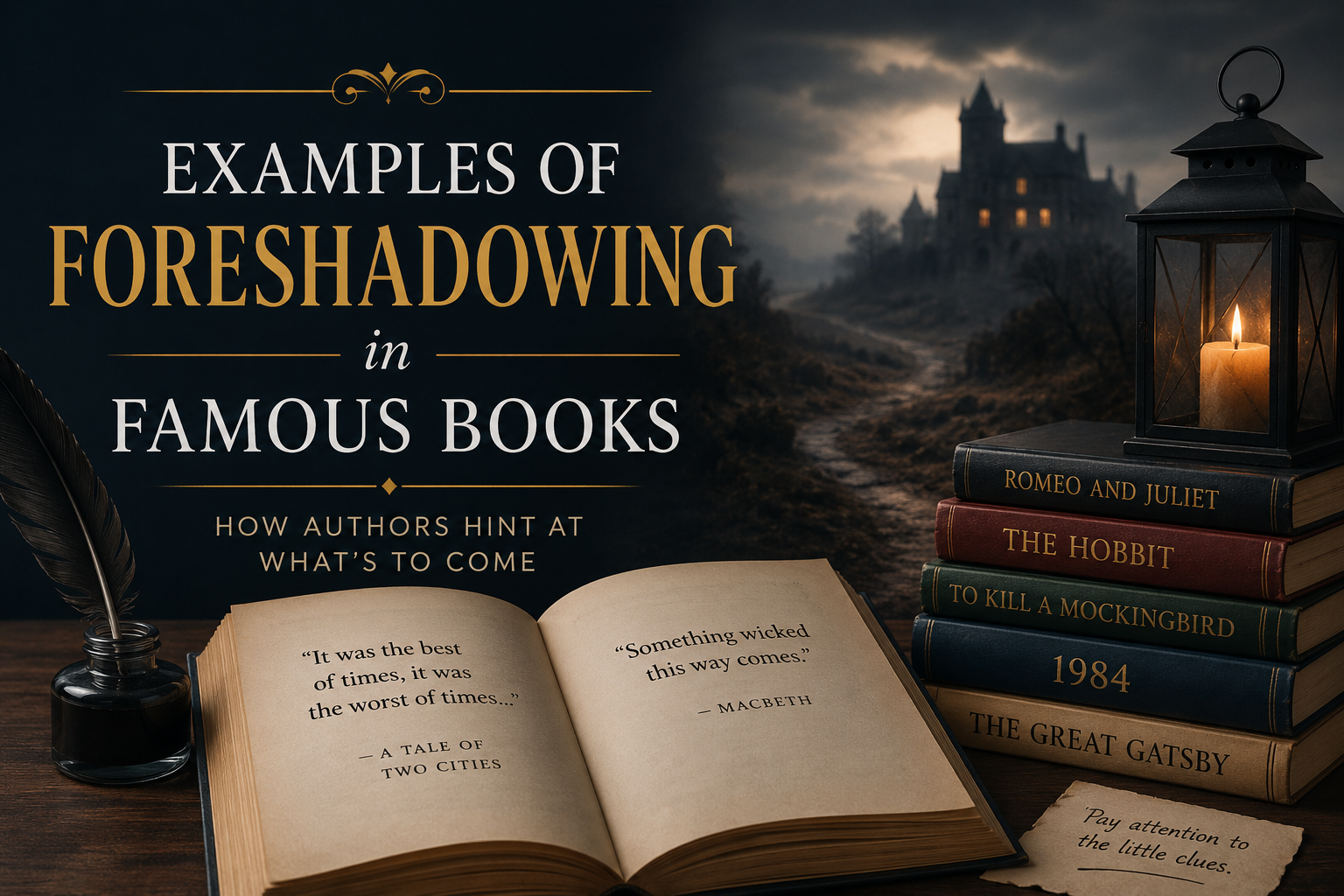
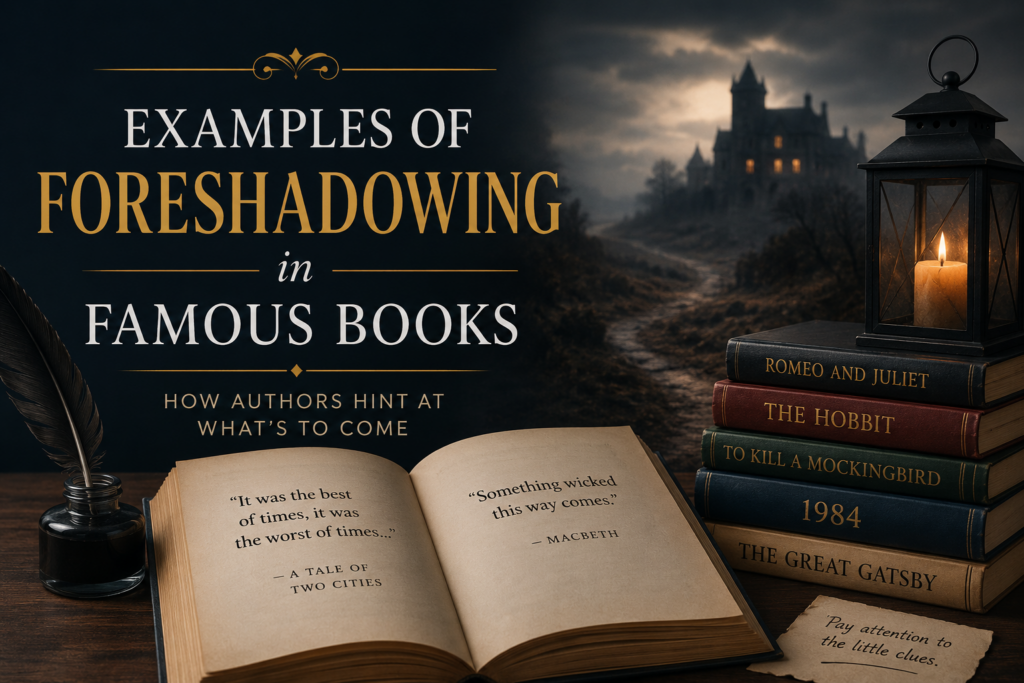
Examples of Foreshadowing in Famous Books: Clear Literary Examples for Students

Foreshadowing Examples

Examples of Foreshadowing in Famous Books can help students see how authors prepare readers for key events before they happen.

Foreshadowing is a clue, hint, image, or line of dialogue that points toward a future moment in the story. Once you know how to spot it, major plot turns often feel less random and more carefully planned.

In this Guide

  • What foreshadowing means
  • Examples of Foreshadowing in Famous Books
  • How each example works
  • How to write about foreshadowing in an essay
  • Books to read for more practice
  • FAQ
Foreshadowing Examples

What Is Foreshadowing?

Foreshadowing gives readers a clue about what may happen later.

It can appear through a warning, a symbol, a dream, a strange detail, or a character’s fear. The clue may be clear right away, or it may only make sense after the ending.

Writers use foreshadowing to build suspense. They also use it to make a story feel complete, since the ending often grows from details planted earlier.

Examples of Foreshadowing in Famous Books: Romeo and Juliet

Shakespeare gives away the tragic ending before the play truly starts.

In Romeo and Juliet, the Prologue calls the lovers “star-crossed” and says they will take their own lives. This is direct foreshadowing because the audience learns that Romeo and Juliet will die.

This does not ruin the play. Instead, it creates dread. Readers watch each happy moment with the knowledge that disaster is ahead.

Romeo also senses danger before he goes to the Capulet party. He says he fears “some consequence yet hanging in the stars.” This line hints that the party will start a chain of events he cannot control.

In an essay, you could argue that Shakespeare uses foreshadowing to make fate feel powerful. The characters make choices, but the early warnings make their deaths seem almost written in the stars.

For background on the play, you can read Britannica’s overview of Romeo and Juliet.

Examples of Foreshadowing in Famous Books: Of Mice and Men

John Steinbeck uses small deaths to prepare us for a much larger one.

In Of Mice and Men, Lennie kills soft animals by accident because he does not know his own strength. Early in the novel, he carries a dead mouse in his pocket. Later, he kills his puppy.

These moments foreshadow the death of Curley’s wife. Lennie does not mean to hurt her, but the earlier scenes show that his strength can turn harmless contact into tragedy.

Candy’s old dog also foreshadows the ending. Carlson shoots the dog because he sees it as weak and useless. Candy later says he should have shot the dog himself.

That moment points toward George’s final choice. George kills Lennie himself rather than let a violent mob do it.

Students can write about how Steinbeck uses foreshadowing to make the ending feel painful but not sudden. The clues show that Lennie’s fate has been building from the start.

Examples of Foreshadowing in Famous Books: Macbeth

The witches in Macbeth turn prophecy into a warning.

At the start of the play, the witches tell Macbeth he will become king. Their words foreshadow his rise to power, but they also lead him toward murder.

Later, the witches give Macbeth new predictions. They say he should beware Macduff, that no one “of woman born” can harm him, and that he is safe until Birnam Wood moves to Dunsinane.

Macbeth thinks these clues mean he cannot lose. In the end, each prophecy comes true in a tricky way. Macduff was born by a surgical birth, and soldiers carry branches from Birnam Wood as they march.

This is one of the best examples of foreshadowing in famous books because the clues are both clear and misleading. Shakespeare lets the audience hear the warnings, but Macbeth misreads them.

In an essay, focus on how the prophecies reveal Macbeth’s flaw. He hears what he wants to hear, which helps cause his fall.

Examples of Foreshadowing in Famous Books: The Great Gatsby

F. Scott Fitzgerald fills The Great Gatsby with signs of coming loss.

Early in the novel, Gatsby reaches toward the green light across the bay. The light stands for Daisy and the future he wants. It also foreshadows that his dream will stay out of reach.

Cars also foreshadow danger. The novel shows careless driving more than once, including a car crash after one of Gatsby’s parties. These moments prepare readers for Myrtle’s death by car later in the story.

Nick’s first chapter also looks back with sadness. He says Gatsby turned out “all right” in the end, but he also hints that Gatsby was destroyed by what preyed on him.

That early tone tells readers not to expect a simple love story. It points toward tragedy before the plot reaches it.

When you discuss this in an essay, connect foreshadowing to the novel’s critique of the American Dream. Gatsby’s future looks bright from a distance, but the early clues show that the dream is fragile.

Examples of Foreshadowing in Famous Books: Lord of the Flies

William Golding uses fear and violence to hint at the boys’ collapse.

In Lord of the Flies, the boys worry about a “beast” on the island. At first, the beast seems like a real creature. Over time, it becomes clear that the true danger comes from the boys themselves.

This fear foreshadows the violence that follows. The boys’ terror gives them an excuse to act cruelly.

Piggy’s glasses also foreshadow the loss of order. At first, the glasses help start fires, which can lead to rescue. When they break, it shows that reason and safety have begun to fail.

The falling rock that kills Piggy also has early hints. The boys play near rocks and use them as tools of power. By the time the rock strikes Piggy, the island has turned fully savage.

This is one of the darker Examples of Foreshadowing in Famous Books because the clues show a moral fall, not just a plot event.

Examples of Foreshadowing in Famous Books: Harry Potter and the Sorcerer’s Stone

J.K. Rowling uses foreshadowing to hide answers in plain sight.

In Harry Potter and the Sorcerer’s Stone, Harry believes Snape is the main threat. Many clues seem to support this idea. Snape acts cold, follows Harry, and seems connected to the mystery.

Yet other clues point to Quirrell. He is nervous, often overlooked, and linked to strange moments that do not seem important at first.

The Mirror of Erised also foreshadows the final scene. It shows deep desire, not truth. Later, Harry can get the Stone because he wants to find it, not use it.

This example helps students see that foreshadowing can work with red herrings. A red herring points readers in the wrong direction, while real clues still sit nearby.

In an essay, you could write that Rowling uses foreshadowing to reward careful readers. The ending feels surprising, but the earlier details make it fair.

Examples of Foreshadowing in Famous Books: To Kill a Mockingbird

Harper Lee uses early danger to prepare us for the final attack.

In To Kill a Mockingbird, Bob Ewell threatens Atticus after the trial. This warning foreshadows his later attack on Jem and Scout.

The children also fear Boo Radley for much of the novel. They imagine him as a monster, but this fear prepares a reversal. In the end, Boo becomes their protector.

Scout’s ham costume also matters. It seems funny at first, but it helps save her during the attack because the costume blocks the knife.

These clues show how Lee mixes danger with childhood misunderstanding. The children do not fully see the threat, but readers can sense it.

This is one of the most useful Examples of Foreshadowing in Famous Books for essays about innocence. The clues show that Scout’s world is less safe than she thinks.

How to Discuss Examples of Foreshadowing in Famous Books in an Essay

A strong essay does more than point out a clue. It explains why the clue matters.

Start by naming the moment that hints at the future. Then explain the later event it prepares. After that, connect both moments to a theme.

Here is a simple sentence frame:

The author uses [early clue] to foreshadow [later event], which reveals [theme or character truth].

For example:

Steinbeck uses Lennie’s dead mouse to foreshadow the death of Curley’s wife, which reveals that Lennie’s innocence cannot protect him from the harm his strength causes.

You can also compare two clues. In Macbeth, the witches’ prophecies foreshadow Macbeth’s rise and his fall. This shows how ambition can twist a warning into false confidence.

When you write about Examples of Foreshadowing in Famous Books, avoid saying only, “This creates suspense.” That is true, but it is not enough.

Ask what the foreshadowing reveals about fate, power, guilt, fear, or desire. That deeper point will make your essay stronger.

Why Authors Use Foreshadowing

Foreshadowing helps a story feel planned instead of random.

It also builds tension. Readers may not know exactly what will happen, but they sense that something important is coming.

Some authors use clear warnings, like the Prologue in Romeo and Juliet. Others use symbols, like Gatsby’s green light.

Foreshadowing can also reveal character. Macbeth hears warnings but trusts his pride. Gatsby sees the green light but cannot accept that the past is gone.

To study more tools that work with foreshadowing, visit this guide to common literary devices.

Books to Read for More Examples of Foreshadowing in Famous Books

These books are useful if you want more practice spotting foreshadowing.

  • Of Mice and Men by John Steinbeck
  • The Great Gatsby by F. Scott Fitzgerald
  • Lord of the Flies by William Golding

Each one uses early clues that become more important by the end. They are also common in high school and college literature classes.

Quick Practice: Find the Foreshadowing

Try this with any novel or play you read.

Look for a strange detail that gets extra attention. Ask if it returns later in a bigger way.

Watch for warnings, dreams, symbols, and repeated images. These often point toward a future conflict.

You can also mark moments where a character says something that feels larger than the scene. In literature, casual lines often carry hidden weight.

FAQ: Examples of Foreshadowing in Famous Books

What is a simple definition of foreshadowing?

Foreshadowing is a hint about something that will happen later in a story.

What is one clear example of foreshadowing?

In Romeo and Juliet, the Prologue says the lovers will die. This directly foreshadows the tragic ending.

Can foreshadowing be a symbol?

Yes. Gatsby’s green light is a symbol that also foreshadows his unreachable dream.

How do I write about foreshadowing in an essay?

Name the clue, explain the later event, and connect both to a theme or character flaw.

Is foreshadowing always obvious?

No. Some clues are easy to spot, while others only make sense after you finish the story.

Key Takeaway

Examples of Foreshadowing in Famous Books show that great endings rarely come from nowhere.

Authors plant clues early, then let those clues grow into conflict, tragedy, or surprise. When students notice those clues, they can write sharper essays and read with more confidence. 📚

Flash Memoir Prompt: First Time You Saw Someone You Loved Cry

flash memoir prompt cry

A tender writing invitation about the first time you saw someone you loved cry, told through one small scene, one clear detail, and one honest feeling.

The room changes when someone you love cries for the first time in front of you. Maybe the person was a parent at the kitchen sink, a friend in the passenger seat, a grandparent in a hospital chair, or a sibling trying to stay quiet behind a closed door.

You may remember the sound before you remember the words. A shaky breath. A tissue pulled from a sleeve. The way you suddenly did not know where to put your hands.

This flash memoir prompt first time saw someone loved cry asks you to write about that moment before it turns into a full life story. Stay close to the scene. Let the memory reveal what it wants to reveal.

flash memoir prompt cry

The Prompt

Write about the first time you saw someone you loved cry.

This prompt can unlock a memory because it often marks a shift. Before that moment, you may have seen that person as strong, in charge, funny, distant, or unbreakable. Then, all at once, you saw something more human.

You do not have to explain the whole relationship. You do not have to know every reason behind the tears. A strong flash memoir can begin with what you noticed: the bent head, the red eyes, the silence after someone left the room.

Why This Memory Matters

The first time you saw someone you loved cry may have changed the way you understood them. It may have been the day you realized adults could feel lost. It may have been the first time you saw grief up close. It may have been a small, private moment that never made sense until years later.

These memories matter because they often hold two stories at once. There is the story of what happened in the room, and there is the story of what changed inside you.

Maybe you felt scared. Maybe you felt protective. Maybe you felt embarrassed because you did not know what to say. Those reactions belong in the piece. Memoir is not about making yourself look perfect. It is about telling the truth of how a moment felt from the inside.

If you are a student or a close reader of stories, this kind of prompt can also help you understand character moments in literature. When a character cries, shuts down, or hides pain, the scene often reveals more than a long explanation. You can explore that idea further in this guide on how to analyze characters in literature.

How to Approach This Prompt

Begin with one physical detail. Do not start with the whole backstory. Start with the thing your mind still holds.

Maybe it is your mother’s mascara on a napkin. Maybe it is your father sitting in the driveway after a funeral, the car still running. Maybe it is your best friend laughing too hard before the tears came.

Once you have that detail, narrow the memory to one scene. Where were you? What time of day was it? What could you hear? What did you do with your body? Did you move closer, freeze, leave, hand them something, or pretend not to notice?

Try to write what you noticed before you explain what it meant. For example, instead of opening with “That was when I learned my grandmother was lonely,” you might begin with her spoon resting untouched beside a bowl of soup. The meaning can arrive later.

It may help to give yourself a frame like this:

I saw the tears when _____. I was _____. The room smelled like _____. I wanted to _____. I understood later that _____.

You can change those lines as you write. They are only a doorway.

If you like to mark up your own drafts, try circling the strongest sensory detail after you finish. Then underline the sentence where the emotion feels most true. This is similar to the close-reading habit described in how to annotate literature, except the text is your own life.

A Quick Example

The first time I saw my older brother cry, he was sitting on the back steps with a basketball between his knees. It was almost dark, and the porch light kept flickering like it could not decide whether to help. He had just found out he did not make the varsity team. I expected him to be angry. He was always angry first. Instead, he kept rubbing his thumb over the cracked orange leather of the ball. His face was turned away, but I could see one tear fall onto his wrist. I stood in the doorway with two cans of soda, suddenly unsure if I was allowed to see him like that. I set one can beside him and said nothing. Years later, I think that was the kindest thing I knew how to do.

Try It Yourself

Set a timer for ten minutes and write the scene as plainly as you can. Do not worry about making it beautiful at first. Let the room, the person, and your younger self appear on the page.

If the memory feels heavy, write slowly. You can stop at any point. You can also write around the moment instead of straight through it. Describe the hallway, the weather, the plate on the table, or the shoes by the door.

A flash memoir prompt about the first time you saw someone you loved cry does not need a dramatic ending. Often, the strongest ending is small: what you did next, what you could not say, or what you understand now.

Want More Flash Memoir Prompts?

Explore all 365 prompts in The Memory Trigger: 365 Flash Memoir Writing Prompts. Use them one at a time when you want a short, focused way to return to real memories and shape them into honest pieces of writing.

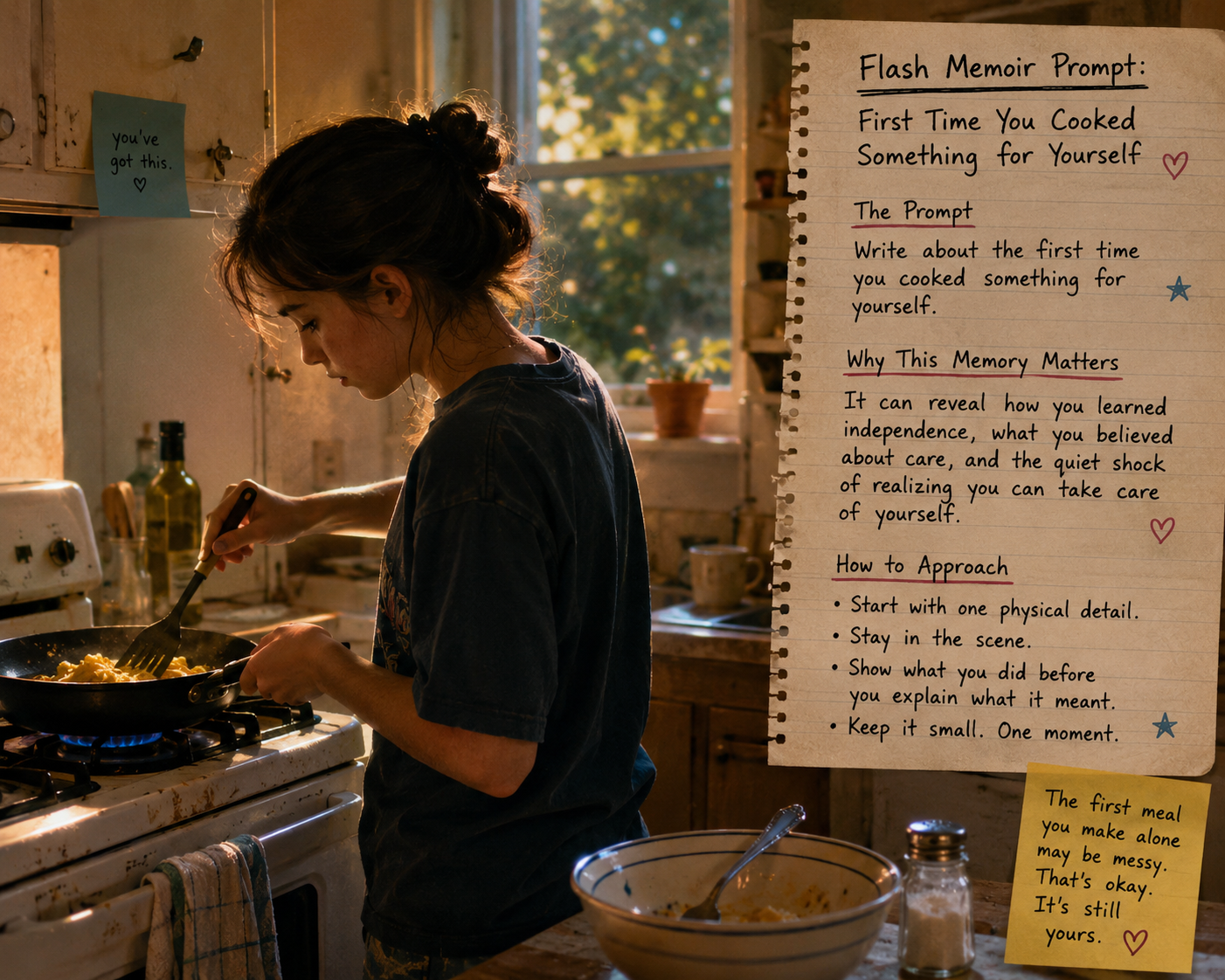
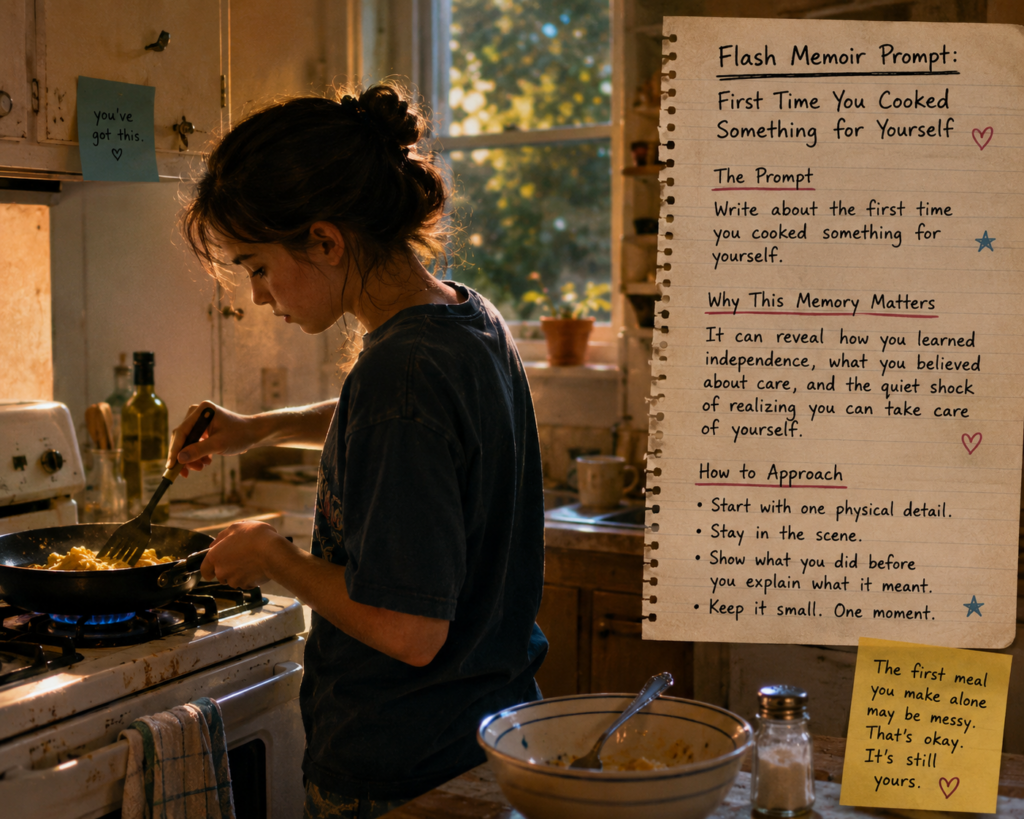
Flash Memoir Prompt: First Time You Cooked Something for Yourself

flash memoir prompt

That first meal you made alone may have tasted strange, smoky, or better than expected, but it probably carried a small charge of independence. This flash memoir prompt about the first time you cooked something invites you to return to one simple kitchen moment and notice what changed inside you.

flash memoir prompt

The Prompt

Write about the first time you cooked something for yourself.

At first, this may seem like a small memory. Maybe you made scrambled eggs before school. Maybe you heated soup in a dented pot. Maybe you burned toast and called it dinner anyway.

But food memories often hold more than food. They hold hunger, need, pride, loneliness, freedom, and the quiet shock of realizing you can take care of yourself in some small way. A flash memoir prompt first time cooked something gives you a clear scene to enter, which helps you avoid trying to explain your whole life at once.

Stay with the moment. The pan. The smell. The mistake. The bite you took when nobody else was watching.

Why This Memory Matters

The first time you cooked for yourself may have marked a shift you did not understand at the time. You may have been a child trying to prove you were grown. You may have been a college student with an empty fridge and a cheap saucepan. You may have been newly alone, feeding yourself because no one else was there to do it.

This memory can reveal how you learned independence. It can also reveal what you believed about care. Did cooking feel like freedom? Did it feel like proof that you had been left to figure things out too soon? Did it feel funny, clumsy, or proud?

You do not need a dramatic scene for this prompt to work. A burned grilled cheese can carry a whole story. So can a bowl of instant noodles eaten at a quiet table. The meaning often hides in the ordinary detail.

If you are a student, this kind of writing can also help you practice finding meaning in a scene. The same skill appears when you identify theme in literature: you notice what happens, then ask what deeper truth it points toward.

How to Approach This Prompt

Begin with one physical detail. Do not start by explaining your age, your family, or the whole situation. Start with the thing you remember most clearly.

Maybe it was the sound of oil popping in the pan. Maybe it was the sticky handle of a wooden spoon. Maybe it was the way the microwave light made the kitchen look yellow at night.

Once you have that detail, narrow the memory to one scene. Keep yourself in the kitchen or wherever you cooked. Let the reader see what you did with your hands. Let them hear the cupboard door, the timer, the scrape of a fork on a plate.

Try to write what you noticed before you explain what it meant. For example, instead of starting with “That was the day I became independent,” you might write, “I stood on a chair to reach the skillet and hoped my mother would not hear it hit the stove.” That sentence gives the reader a scene. The meaning can arrive later.

If you like marking up stories for important details, you can use a similar habit in your own draft. After you write, reread and underline the strongest images. This guide on how to annotate literature can help you think about what to notice on the page, even when the page is your own memory.

For this flash memoir prompt first time cooked something, avoid trying to tell every meal that came after. You are not writing your full history with food. You are writing one moment when you met yourself in a new way.

A Quick Example

I was eleven when I made my first egg. My father was asleep on the couch, one arm over his eyes, and the house had that late-afternoon heat that made everyone quiet. I pulled the small pan from the lower cabinet and cracked the egg too hard. Half the shell fell in. I picked it out with my fingers, proud and disgusted at the same time. The butter browned before I knew what to do, so the egg came out with crisp edges and a soft middle. I ate it standing at the counter with too much salt. Nobody clapped. Nobody asked if I was hungry. But when I washed the plate, I remember thinking, I did that. It was a small thought, but it stayed.

Try It Yourself

Set a timer for ten minutes and write the scene without stopping. Begin with the kitchen, the tool, or the first thing that went wrong. Let the memory stay small.

If you get stuck, write this sentence and keep going: “The first thing I remember is…” Then name the object in your hand or the smell in the room.

You do not have to make the memory neat. You do not have to turn it into a lesson. Just tell the truth of what it felt like to feed yourself that first time, whether it felt happy, lonely, awkward, or brave.

When you finish, read your piece once and look for the sentence that feels most alive. That sentence may be the heart of the memoir.

Want More Flash Memoir Prompts?

If this flash memoir prompt first time cooked something helped you find a clear memory, keep going with short, focused writing sessions. Explore all 365 prompts in The Memory Trigger: 365 Flash Memoir Writing Prompts.

error

Enjoy this article? Please spread the word :)

Follow by Email
BLUESKY
fb-share-icon
Reddit
LinkedIn
Share
RSS