

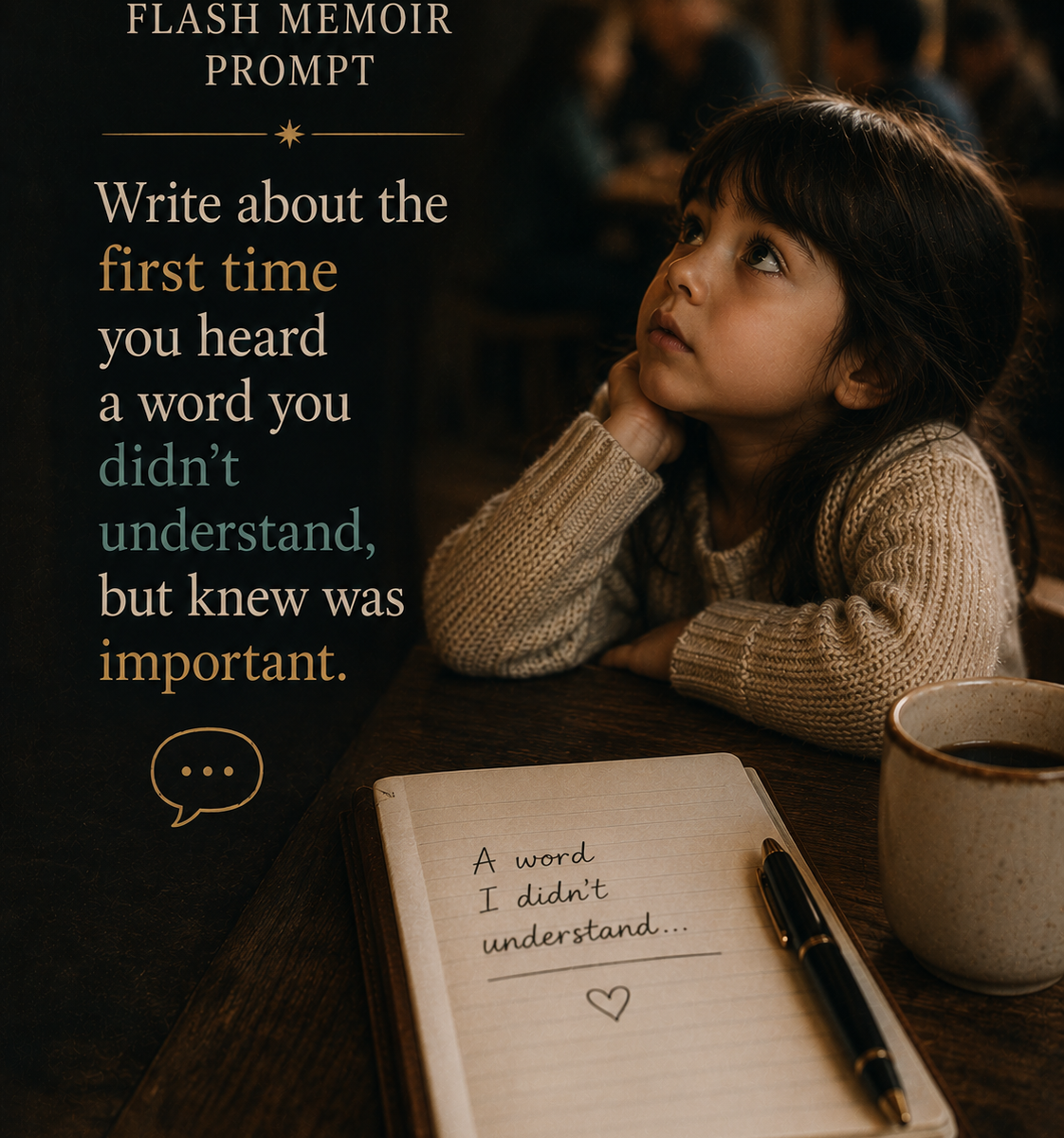
A brief invitation to write about the first important word you heard before you understood it, and the moment you realized language could change the air in a room.
The Prompt
Write about the first time you heard a word that you didn’t understand, but knew was important.
Maybe the word came from a parent’s phone call. Maybe it floated across a classroom, a hospital hallway, a church basement, or the back seat of a car. You did not know the definition yet, but you knew the word carried weight.
This flash memoir prompt, first time heard word didn’t make sense right away, but still mattered, asks you to return to that small moment of alertness. It is a prompt about language, but it is also about instinct. Before you had meaning, you had feeling.
Why This Memory Matters
Children often understand tone before vocabulary. A word can feel cold, sharp, secret, or official long before anyone explains it.
Think about words like eviction, diagnosis, adoption, layoff, custody, immigrant, gifted, probation, cancer, scholarship, or divorce. The word itself may not have been aimed at you. Still, you may have felt everyone around it change.
This kind of memory can uncover the first time you sensed that adults had a hidden language. It can show when you learned that words were not just schoolwork or spelling tests. Some words opened doors. Some closed them. Some made people whisper.
You do not need to write a dramatic history. In fact, this prompt works best when you stay close to one scene. The memory may be as small as your mother lowering her voice, your teacher writing a word on the board, or your grandfather folding a letter twice before putting it away.
If you enjoy thinking closely about language, you might also like this guide on how to understand Shakespearean language. Different words can feel strange at first, but the feeling they create can still reach us.
How to Approach This Flash Memoir Prompt
Begin with the place where you heard the word. Do not start with a dictionary definition. Start with the room.
What did the floor feel like under your feet? Was there food on the table? Was a television on? Did someone stop talking when you walked in?
Then write the word exactly as you remember hearing it. Let it stand on the page for a moment. You can even write a sentence like, “I did not know what foreclosure meant, but I knew it was not a word anyone wanted in our kitchen.”
Try to write what you noticed before you explain what it meant. This keeps the memory alive. If you rush into the lesson, the scene may begin to feel flat.
You might ask yourself:
- Who said the word?
- Who reacted to it?
- What did you understand without being told?
- When did you finally learn what the word meant?
Keep the memory narrow. You are not writing your whole life story. You are writing one flash of awareness.
If it helps, treat the word like a clue in a book. Mark the gestures, pauses, and sounds around it the way you might annotate a piece of literature. The meaning often lives in the details around the word, not only in the word itself.
This is why the flash memoir prompt first time heard word didn’t need to be understood fully can lead to such honest writing. It lets you write from the younger version of yourself, the version who listened hard and guessed from the room.
A Quick Example
The first time I heard the word “deposition,” I was sitting under the dining room table, tying knots in the fringe of the rug. My father was on the phone, and my mother kept looking at me like she had forgotten I could hear. “They want a deposition,” he said. I pictured something being deposited, like coins at the bank drive-through. But his voice was too tight for money. My mother pressed her fingers against her lips. The ice in her glass cracked. No one told me to leave, which made me feel even more like I should stay still. Years later, I learned what the word meant. That night, all I knew was that it had entered our house before the bad news did.
Try It Yourself
Set a timer for ten minutes. Write the scene where you first heard the word. Do not worry about spelling the whole memory perfectly. Just follow the sound of the word and the way people changed around it.
If you get stuck, write this sentence and continue from there: “I did not know what the word meant, but I knew from the way they said it that something had shifted.”
You may discover that the word was not the center of the memory. The real story may be in a glance, a silence, a hand on a doorknob, or the way someone tried to act normal.
That is enough for flash memoir. One word. One room. One younger version of you trying to understand.
Want More Flash Memoir Prompts?
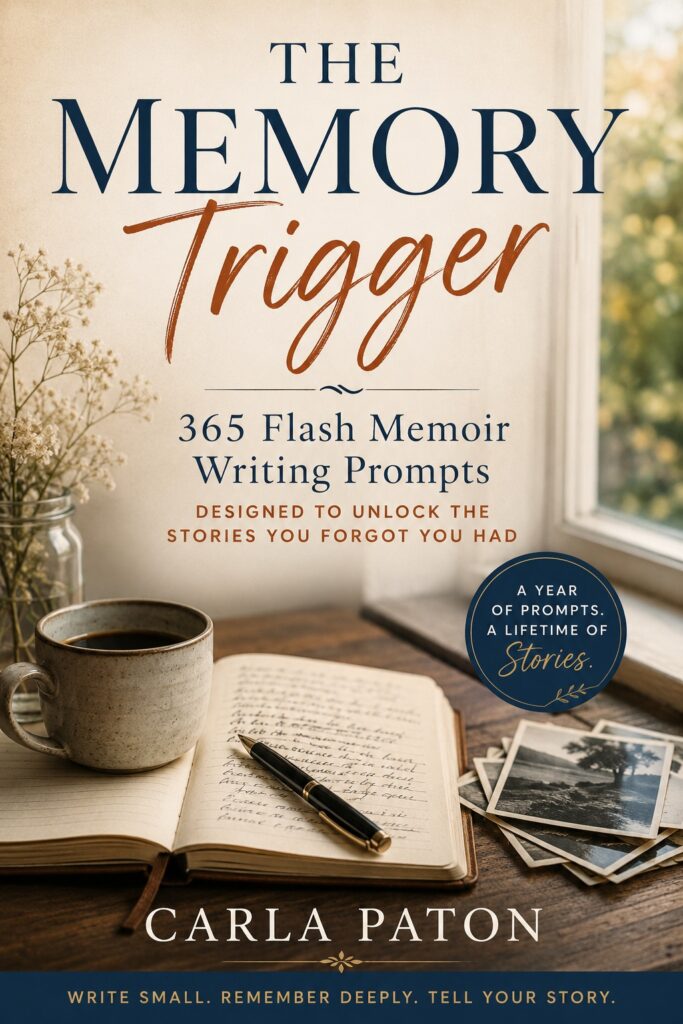
Explore all 365 prompts in The Memory Trigger: 365 Flash Memoir Writing Prompts.


Get the Free Close Reading Worksheet Pack
Join my email list and receive the printable worksheet pack you can use with any novel or poem.
No spam. Just helpful guides for reading literature well.












