

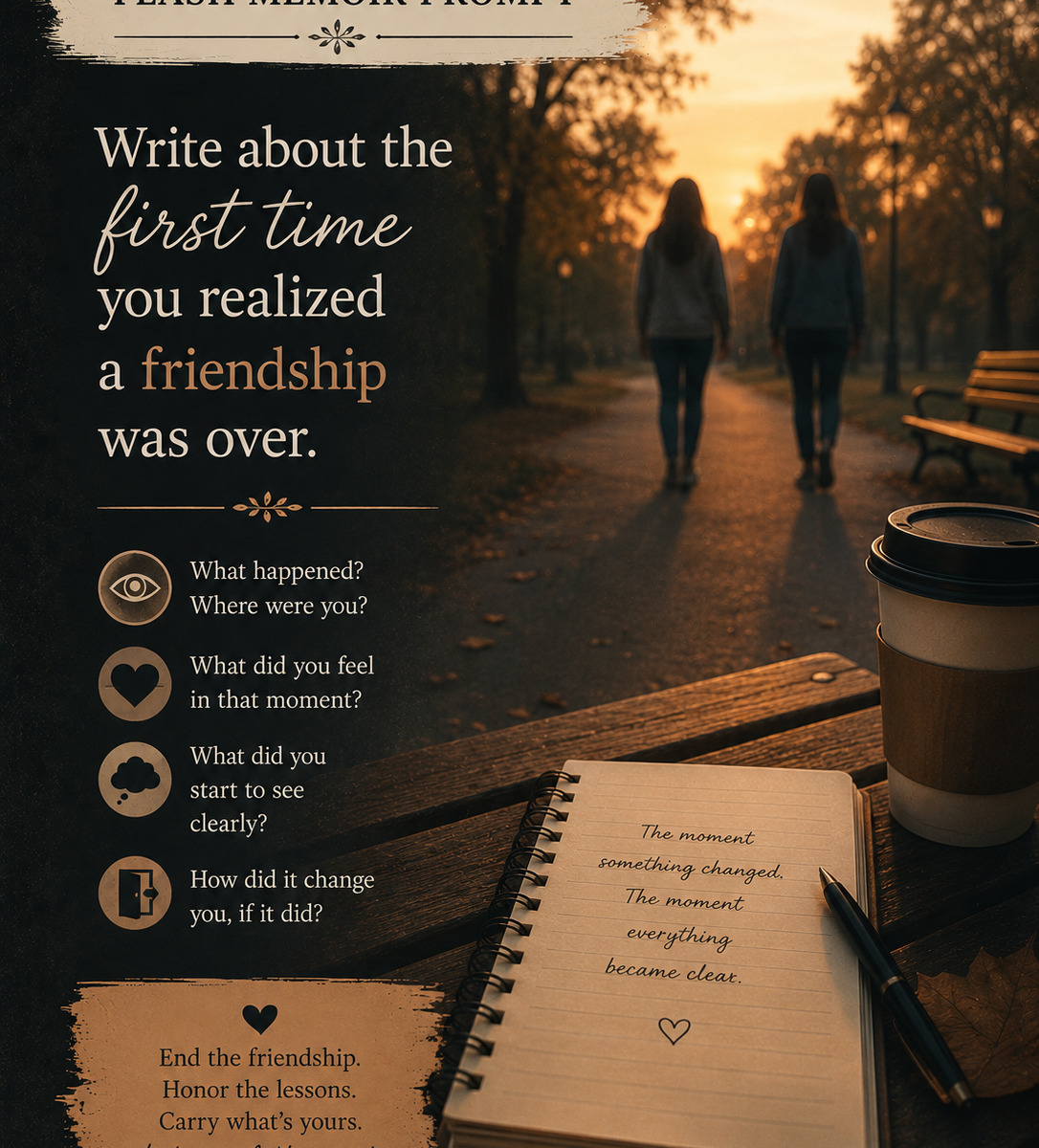
A focused flash memoir prompt about the quiet, painful moment when you understood a friendship had ended before anyone said goodbye.
You may remember the moment as a small shift. A seat left empty beside you. A text that sounded polite instead of familiar. A laugh you were no longer part of. The strange thing about losing a friendship is that it often happens before the final conversation, if there ever is one.
This flash memoir prompt first time realized friendship already over asks you to notice that in-between space. The friendship may have looked normal from the outside, but inside you knew something had changed. That is a powerful place to write from because it holds confusion, loyalty, embarrassment, grief, and maybe relief.
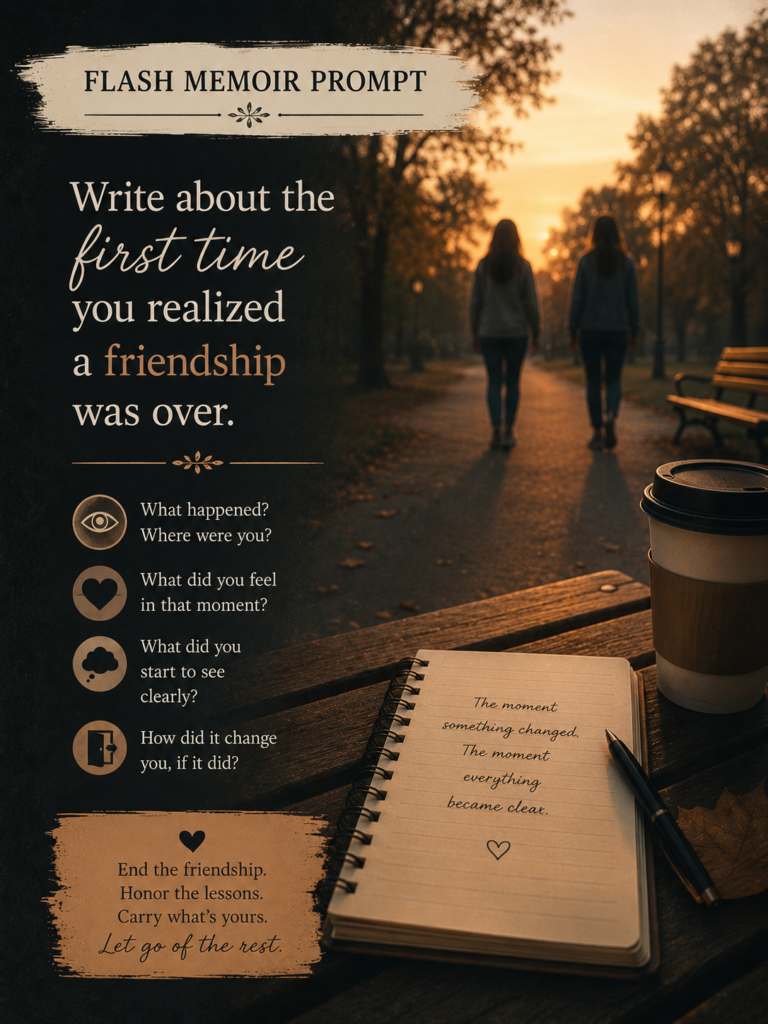
The Prompt
Write about the first time you realized a friendship was already over, even though no one had said so.
This prompt can unlock a meaningful memory because it does not ask for the whole history of the friendship. It asks for one moment of recognition. Maybe you were sitting across from someone you used to tell everything to and could not think of one honest thing to say. Maybe you saw them with new friends and felt less jealous than you expected. Maybe you noticed you had stopped saving funny stories for them.
The best flash memoir pieces often begin with a tiny moment that carries a larger truth. This one invites you to write about silence, distance, and the quiet way people sometimes leave each other.
Why This Memory Matters
A friendship ending can feel harder to explain than a breakup. There may be no clear fight, no final line, and no one to blame. That can make the memory slippery. You know it mattered, but you may not know where to begin.
This is where the prompt helps. It asks you to focus on the first time you realized the friendship was already over. That moment has shape. It may have a room, a season, a smell, a sound. It may have a sentence that landed wrong or a pause that lasted too long.
Writing about this kind of memory can reveal who you were then. Maybe you were trying hard to act normal. Maybe you were angry and refused to admit you were hurt. Maybe you kept making excuses for the other person because admitting the truth felt too final.
The story does not need to prove who was right. It does not need to solve the friendship. It only needs to show the moment when your body knew before your words did.
If you are a student or a newer writer, this kind of prompt can also help you build stronger scenes. When you study people in stories, you look for what they say and what they avoid saying. The same skill matters in memoir. This guide on how to analyze characters in literature can help you think about memory with the same close attention.
How to Approach This Prompt
Begin with a physical detail. Do not start by explaining the entire friendship. Start with the cafeteria table, the bus window, the phone screen, the birthday party, the hallway, or the sound of their voice when it no longer sounded like home.
Choose one scene. Keep the memory narrow. If you try to tell how you met, how close you became, what changed, and where you are now, the piece may grow too large. Flash memoir works best when the writer trusts one clear moment.
Write what you noticed before you explain what it meant. For example, instead of starting with “I knew we were no longer friends,” you might begin with, “She saved a chair for someone else and did not look up when I walked in.” That kind of detail lets the reader feel the shift with you.
You can also pay attention to what you did next. Did you pretend not to care? Did you make a joke? Did you leave early? Did you sit there and act like nothing had happened? Your reaction may reveal the emotional truth of the memory.
If you want to sharpen your scene, try marking the details that feel alive on the page. Notice the lines where the tension rises or where the silence says more than speech. This simple practice is close to how to annotate literature, except this time the text is your own life.
For this flash memoir prompt first time realized friendship already over, you do not have to write with blame. You can write with honesty. Let the memory be as mixed as it was.
A Quick Example
At lunch, Maya sat at the far end of the table with her new choir friends. She saw me come in. I know she did because her eyes moved over my face, quick as a camera flash, before she looked back down at her tray. There was one open chair beside her, but her backpack was on it. I stood there with my milk carton getting cold in my hand and waited for her to move it. She did not. Someone at the table said something, and Maya laughed in that high, bright way she used when she wanted people to like her. I walked to another table before anyone could notice I had been waiting. That was the first time I understood we were not in a fight. We were already finished.
Try It Yourself
Set a timer for ten minutes and write the scene without stopping. Begin with the first physical detail you remember. Let the place do some of the work. The chipped table, the message bubble, the empty seat, or the closed bedroom door can carry more feeling than a long explanation.
If the memory still hurts, write it gently. You do not have to name every reason the friendship ended. You can stay with the moment when you realized the truth and let that be enough for today.
This flash memoir prompt first time realized friendship already over is really about recognition. It asks you to recall the instant when pretending became harder than knowing. That instant may be small, but it can hold a whole story.
Want More Flash Memoir Prompts?
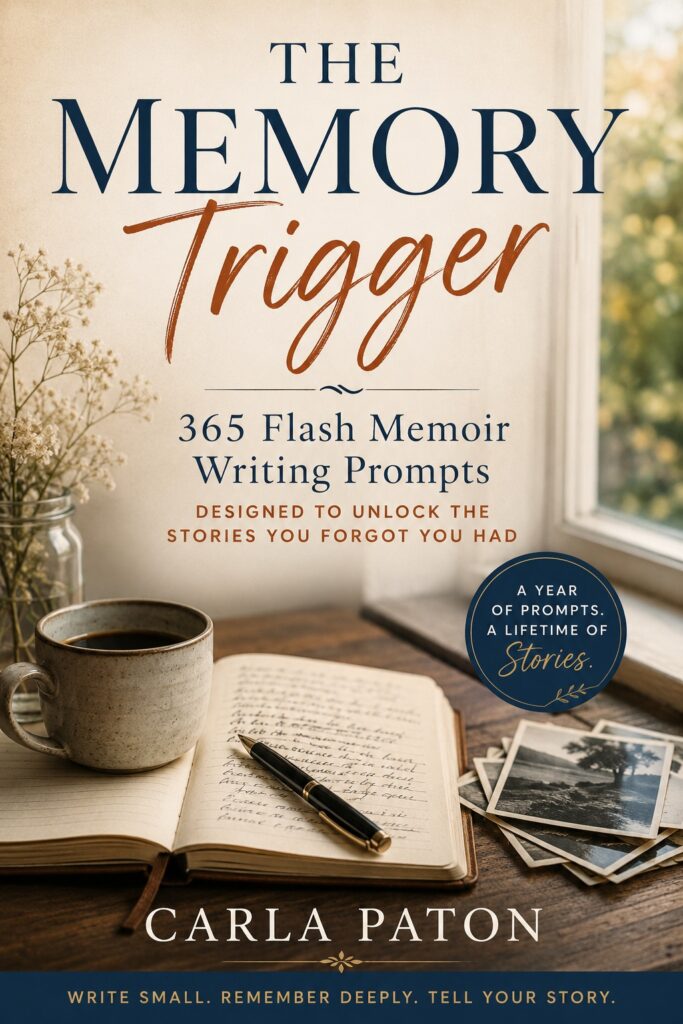
Explore all 365 prompts in The Memory Trigger: 365 Flash Memoir Writing Prompts. It is a helpful resource when you want short, focused writing invitations that lead to real memories.


Get the Free Close Reading Worksheet Pack
Join my email list and receive the printable worksheet pack you can use with any novel or poem.
No spam. Just helpful guides for reading literature well.












