Themes in The Alchemist: A Student-Friendly Guide

The Alchemist themes

Paulo Coelho’s The Alchemist seems simple at first, but it carries big ideas about purpose, faith, and choice. This guide explains the major themes in The Alchemist so students can read the novel with more confidence.

The Alchemist themes

In this Guide

Use this guide as a quick map for class notes, essays, and test prep.

  • Why the novel’s themes matter
  • Personal Legend and purpose
  • Fear, risk, and growth
  • Omens and faith
  • Love and freedom
  • Symbols, conflicts, and essay tips
  • FAQ and key takeaway

Why the Themes in The Alchemist Matter

Coelho uses a simple quest story to ask a serious question: what does it mean to follow your purpose?

Santiago begins as a shepherd who knows his routine. He likes his sheep, but his dream of treasure pulls him beyond the life he already understands.

The themes in The Alchemist matter because Santiago changes through each choice he makes. Like Odysseus in The Odyssey, he learns about himself through travel, loss, and temptation.

For students, the key is to connect theme to character. If you want help with that skill, read this guide on how to analyze characters in literature.

For quick review before class, you can also use our student theme study sheets to organize quotes and ideas.

Themes in The Alchemist: Personal Legend and Purpose

The novel’s central idea is that each person has a purpose worth seeking.

Santiago’s Personal Legend is his true calling. At first, he thinks it is only about finding treasure near the pyramids. Soon, the journey becomes about courage, faith, and self-knowledge.

Coelho suggests that people often know what they want when they are young. Over time, fear and comfort can bury that desire.

The crystal merchant makes this clear. He dreams of visiting Mecca, but he never goes. He would rather keep the dream safe than risk failure.

Of all the themes in The Alchemist, Personal Legend is the easiest to use in an essay. You can argue that Coelho sees purpose as something active, not just a wish.

Themes in The Alchemist: Fear as the Main Obstacle

Fear is often the force that blocks Santiago from growth.

Santiago fears losing his sheep. Later, he fears being robbed, failing in the desert, and losing Fatima. Each fear asks him to choose between safety and trust.

The novel does not say fear is fake. Santiago faces real danger. Coelho’s point is that fear becomes harmful when it controls every choice.

This idea works well beside Shakespeare’s Macbeth. In Macbeth, fear turns ambition into violence. In The Alchemist, fear tempts Santiago to stop before he becomes who he is meant to be.

Themes in The Alchemist: Omens, Faith, and the Universe

The novel treats the world as connected, but it also asks readers to pay attention.

Omens guide Santiago through his path. The old king tells him to notice signs. The stones Urim and Thummim help him when he feels lost.

The desert becomes a place where silence has meaning. Santiago learns that wisdom can come from nature, not only from books or teachers.

These themes in The Alchemist show Coelho’s belief that life speaks to people who listen. The message is not that every event is magic. It is that purpose requires attention.

Themes in The Alchemist: Love Without Possession

Love in the novel does not ask Santiago to give up his dream.

Fatima loves Santiago, but she does not try to trap him. She believes true love supports a person’s Personal Legend.

This view of love is very different from many tragic romances. In Romeo and Juliet, love rushes toward disaster. In The Alchemist, love should make a person stronger and freer.

Students should notice that Fatima is important to Santiago’s growth, but she is not the final prize. Coelho keeps the focus on Santiago’s purpose.

Spirituality and the Language of the World

Coelho blends faith, nature, and mystery into one spiritual vision.

The novel uses the phrase the Language of the World to describe a deep connection between all things. Santiago learns that the desert, wind, and sun have meaning beyond their surface.

This spiritual theme is broad. It does not belong to only one religion. Instead, Coelho points toward a shared wisdom that links people to the world around them.

For background on the author’s life and global reach, see Britannica’s profile of Paulo Coelho.

Major Conflicts That Reveal Theme

Theme becomes clearer when you track the conflicts Santiago faces.

The clearest conflict is Santiago against his own doubt. He wants treasure, but he keeps meeting reasons to stop.

Another conflict appears between society’s idea of success and an inner calling. Santiago’s father wants a practical life for him. The crystal merchant chooses stable business over a sacred trip.

There is also a conflict between knowledge and action. The Englishman reads many books, but Santiago learns by experience. Coelho seems to value both, but he gives the greater lesson to the person willing to act.

How the Themes in The Alchemist Connect to Symbols

Symbols help turn the novel’s ideas into images students can explain.

The sheep suggest comfort and habit. Santiago cares for them, but they also show the limits of a life based only on routine.

The desert shows hardship. It tests Santiago because it is empty, dangerous, and quiet.

The treasure points to truth. Santiago searches far away, only to learn that meaning also waits near home.

When you write about symbols, do not just name them. Explain how each one supports a theme.

How Students Can Write About Themes

Strong theme writing uses evidence, not just summary.

A weak claim says, The theme is dreams. A stronger claim says Coelho shows that dreams become meaningful only when a person accepts risk.

Try a thesis like this: In The Alchemist, Coelho shows that a person finds purpose by leaving comfort and learning to trust signs along the way.

That claim gives you room to discuss Santiago, the crystal merchant, omens, and the ending. It also keeps the focus on meaning instead of plot recap.

These books pair well with The Alchemist because they also explore purpose, wisdom, and the search for meaning.

  • Siddhartha by Hermann Hesse
  • The Little Prince by Antoine de Saint-Exupery

FAQ: Themes in The Alchemist

What are the main themes in The Alchemist?

The main themes include purpose, fear, love, faith, and the search for meaning. Santiago’s journey connects all of these ideas.

What is Santiago’s Personal Legend?

His Personal Legend is his true purpose. It begins as a dream of treasure, but it becomes a path toward self-knowledge.

Is The Alchemist a religious novel?

It has a spiritual message, but it is not tied to only one faith. Coelho uses broad ideas about destiny, creation, and trust.

Why does Santiago need to travel?

Travel forces Santiago to face fear and leave comfort behind. Without the journey, he would not understand the treasure or himself.

What is the most important symbol in the novel?

The treasure is one of the most important symbols. It represents both Santiago’s goal and the wisdom he gains on the way.

Key Takeaway

The strongest themes in The Alchemist show that purpose asks for courage, not perfect certainty. Santiago finds treasure only after he learns who he is.


Flash Memoir Prompt: Toy or Object from Childhood that You Loved in a Way that Felt Almost Serious

memoir prompt toy

A small childhood object can hold a surprisingly serious kind of love, and this flash memoir prompt about a toy or object from childhood you loved in a way that felt almost serious invites you to return to one focused memory, one sensory detail, and one emotional truth.

Maybe it was a stuffed animal you slept with long after you were “too old.” Maybe it was a plastic horse, a cracked action figure, a music box, a blanket, a toy truck with one missing wheel, or a rock you truly believed had chosen you. Whatever it was, you did not love it casually. You gave it a job. You trusted it. You may have protected it like it had a life of its own.

That is the heart of this flash memoir prompt toy object childhood loved way. It asks you to remember the time before you had adult words for attachment, comfort, loneliness, imagination, or loyalty. You only had the object. You only had how it felt in your hand.

memoir prompt toy

The Prompt

Write about a toy or object from childhood that you loved in a way that felt almost serious.

This prompt can unlock a strong memory because children often pour large feelings into small things. A toy can become a friend. A blanket can become safety. A keychain, shell, doll, or baseball card can become proof that the world is still in order.

You do not need to explain your whole childhood. In fact, this prompt works best when you stay close to one scene. Choose one moment when your love for the object showed itself clearly. Maybe you hid it from a sibling. Maybe you panicked when it went missing. Maybe you packed it first for a trip. Maybe you whispered something to it that you would not say to anyone else.

Why This Memory Matters

Objects in memoir often work like symbols, even when we do not plan them that way. A teddy bear is never just a teddy bear if it helped you survive the dark. A toy sword is never only plastic if it made you feel brave. If you want to think more about how objects carry meaning in stories, this guide on how to find symbolism in a story can help you notice the deeper layers without forcing them.

This kind of memory matters because it shows who you were before you knew how to hide your feelings. Children are often very direct in their loves. They name things. They repair things with tape. They tuck things into backpacks for protection. They believe an object can miss them back.

As an adult, you may feel tempted to laugh at that younger self. Try not to rush there. The seriousness is the point. What did that object do for you? Did it make you feel less alone? Did it give shape to your imagination? Did it help you feel steady during a time that felt uncertain?

A strong flash memoir response does not need a dramatic plot. It needs attention. The story may be as small as the moment you found your beloved toy under the bed after thinking it was gone forever. If the feeling was real, the memory is worth writing.

How to Approach This Prompt

Begin with the object itself. Do not start by explaining why it mattered. Start with what it looked like.

Was the fur matted? Was the paint chipped? Did it smell like dust, soap, crayons, or your old bedroom? Did it fit in your palm, or did you have to drag it by one arm? Physical detail gives the reader a doorway into the memory.

Then narrow the memory to one scene. Avoid trying to tell the whole story of every toy you ever loved. Choose one object and one moment. For example, write about the day you brought it to school in your coat pocket, or the night you could not sleep until someone found it.

Let the younger version of you act first. Show what you did before telling us what it meant. Maybe you lined the toy up beside your dinner plate. Maybe you cried when someone joked about throwing it away. Maybe you washed it carefully in the bathroom sink and felt guilty for getting it wet.

The Flash Memoirist
previous arrow
next arrow

If you are teaching this prompt to students, you might also ask them to mark sensory details in their own drafts. This simple practice is close to the skill used when students annotate literature: notice what stands out, circle the charged detail, and ask why it matters.

One helpful opening sentence is: “I knew I loved it too much when…” That line moves you straight into a moment of action. It also lets the seriousness of the love appear naturally.

A Quick Example

I knew I loved the blue marble too much when I refused to trade it for five stickers and a grape soda. It was not even the prettiest marble in my shoebox. It had a cloudy spot inside, like a tiny storm had been trapped there. I kept it in the front pocket of my jeans and rubbed it with my thumb when adults talked too loudly in the kitchen. Once, my brother took it and rolled it under the couch. I screamed so hard my throat hurt. My mother found it covered in dust and placed it in my palm without a word. I closed my fingers around it and felt my whole body calm down, as if the world had clicked back into place.

Try It Yourself

Set a timer for ten minutes and write about one childhood toy or object you loved with real seriousness. Stay with one scene. Let the object be seen, touched, lost, found, protected, or carried.

If you get stuck, write about your hands. What did they do with the object? Did they clutch it, hide it, clean it, fix it, or pass it to someone else with great caution? Hands often remember what the mind tries to skip.

Do not worry about making the memory sound important. Let it be small. Let it be a little funny if it was funny. Let it be tender if it still feels tender. The goal of this flash memoir prompt toy object childhood loved way is to honor how real that attachment felt at the time.

When you finish, read your draft once and underline the sentence that feels most alive. That sentence may point to the real center of the memory.

Want More Flash Memoir Prompts?

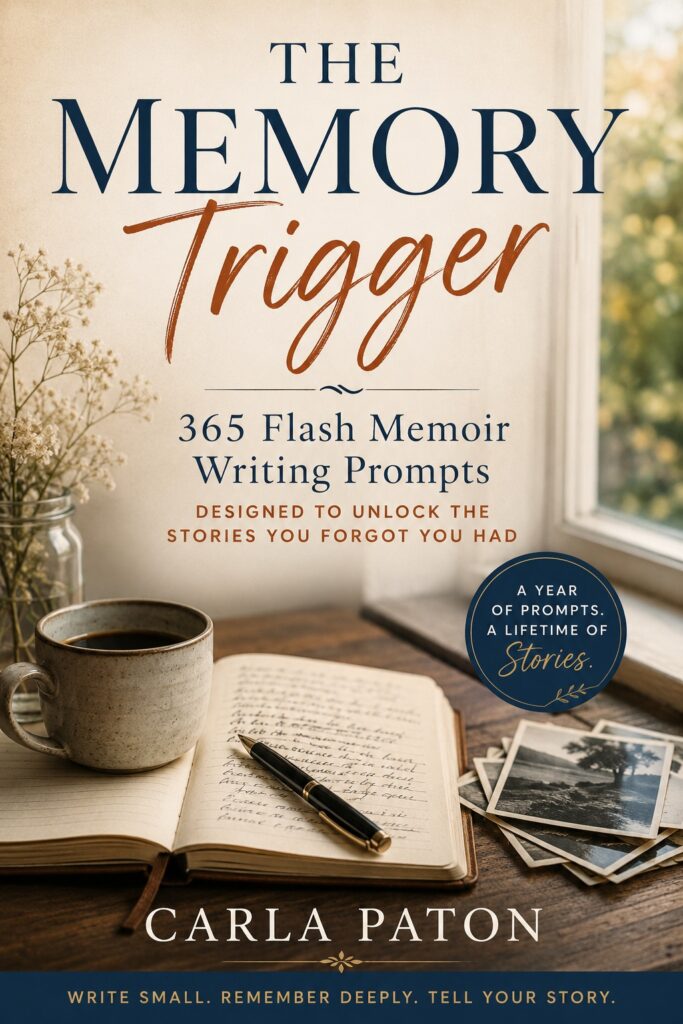
If this prompt opened a door, keep going. Short memoir practice can help you collect the small scenes that shaped you, one memory at a time. Explore all 365 prompts in The Memory Trigger: 365 Flash Memoir Writing Prompts.

The Memory Trigger

The Handmaid’s Tale character analysis: Key People and Conflicts

Handmaid’s Tale character analysis

A practical breakdown of the main characters and how their choices shape the story.

The Handmaid’s Tale character analysis is easier when you study each person’s choices and fears. Margaret Atwood shows how people act under pressure, and those actions shape the novel’s deepest conflicts.

This guide is useful for class posts, essays, and quote-based analysis.

In this Guide

  • Why character analysis matters in the novel
  • Offred’s role and inner conflict
  • Serena Joy’s power and pain
  • The Commander’s control
  • Moira and Ofglen as forms of resistance
  • Nick’s mystery and risk
  • How to use this analysis in essays
  • Books to read next
  • FAQ
Handmaid’s Tale character analysis

Why The Handmaid’s Tale character analysis matters

Characters in this novel reveal how Gilead controls the body, the mind, and even memory.

A strong The Handmaid’s Tale character analysis looks past plot summary. It asks why a person obeys, rebels, stays silent, or takes a risk.

Gilead is built on fear. Because of that, small choices can carry huge meaning. A glance, a hidden word, or a secret meeting can become an act of power.

If you want a step-by-step method, this guide on how to analyze characters in literature can help you build stronger claims.

The Handmaid’s Tale character analysis: Offred

Offred is the center of the novel, but she is not a simple hero.

Offred’s main conflict is between survival and resistance. She wants to live, but she also wants to remember who she was before Gilead took her name, family, and freedom.

Her real name is hidden from the reader. That choice matters. It shows how Gilead tries to erase identity, but it also keeps part of Offred private and protected.

Offred’s memory is one of her strongest tools. She remembers her mother, Luke, her daughter, and Moira. These memories hurt her, but they also prove that Gilead has not fully owned her mind.

Like Winston Smith in George Orwell’s 1984, Offred lives under a system that watches and punishes. Yet Offred’s voice feels more personal and uncertain. She does not always know what is safe, or what she truly believes.

In a The Handmaid’s Tale character analysis, Offred works best as a study of quiet resistance. She may not lead a public revolt, but she keeps a self alive inside a system made to destroy it.

Serena Joy: Power, loss, and bitterness

Serena Joy shows how a person can support a system that later traps her.

Before Gilead, Serena helped promote ideas that pushed women out of public life. After Gilead takes power, she lives inside the limits she helped create.

That irony makes her one of the novel’s most painful characters. She has status in the Commander’s home, but she lacks real freedom. She can command Offred in some ways, yet she cannot control her own future.

Serena’s treatment of Offred is often cruel. Still, Atwood does not make her flat. Her anger comes from power, but also from grief and shame.

A useful The Handmaid’s Tale character analysis of Serena should avoid calling her only a villain. She is part victim and part oppressor, which makes her moral position hard to ignore.

The Handmaid’s Tale character analysis: The Commander

The Commander represents the calm face of a brutal system.

He has power, comfort, and choice. Offred does not. That difference drives the tension in their secret meetings.

The Commander breaks rules by inviting Offred to play Scrabble and read banned material. At first, this may seem human. Yet his kindness is not equal. He controls the space, the risk, and the reward.

His need to feel liked makes him dangerous in a quiet way. He wants Offred to see him as different from Gilead, even though he benefits from it.

In The Handmaid’s Tale character analysis, the Commander is important because he shows how power can hide behind politeness. He does not need to shout to harm others.

From Idea to Novel Blueprint

Moira and Ofglen: Resistance in different forms

Moira and Ofglen help readers see that resistance is not only one thing.

Moira is bold, direct, and sharp. She refuses to accept Gilead’s rules, and her escape from the Red Center makes her a symbol of courage for Offred.

Yet Moira’s later life at Jezebel’s complicates that image. She is alive, but she seems worn down. This does not make her weak. It shows how hard it is to stay brave in a system built to crush people.

Ofglen’s resistance is more secret. She appears careful and quiet, but she is part of Mayday. Her courage depends on trust, code, and risk.

Moira resists with open defiance. Ofglen resists through hidden action. Together, they help readers see the cost of rebellion.

Nick: Trust, doubt, and emotional conflict

Nick is one of the hardest characters to judge because the reader knows him through Offred’s limited view.

He may be part of the Eyes, the secret police of Gilead. He may also help Offred escape. Atwood lets that doubt stay alive.

Nick matters because he gives Offred a sense of desire and comfort. Their relationship is risky, but it also reminds her that she is more than her assigned role.

Still, Nick’s mystery should not be ignored. In an essay, you can argue that he represents both hope and danger. Offred wants to trust him, but Gilead makes trust unsafe.

How conflicts shape the characters

The novel’s strongest conflicts are moral, personal, and political.

Offred faces the conflict between safety and truth. Serena faces the conflict between status and suffering. The Commander faces the gap between what he says and what he does.

These conflicts make the novel feel real. People do not always act with clear courage. Many adapt, excuse themselves, or choose silence.

This is where The Handmaid’s Tale character analysis becomes powerful. It helps you explain how Atwood links private fear to public control.

For background on the novel and its place in modern literature, see this Britannica overview of The Handmaid’s Tale.

How to use this The Handmaid’s Tale character analysis in essays

Good essays do not just name traits. They prove how a character changes the meaning of the story.

Start with a clear claim. For example, you might argue that Offred’s memories are a form of resistance because they protect her identity.

Then choose a short quote that shows the idea. Explain the words closely. Do not let the quote speak for itself.

You can also compare characters. Serena and Offred are both trapped by Gilead, but they do not hold the same power. That difference can lead to a strong paragraph about guilt and survival.

If you want more context, these books pair well with The Handmaid’s Tale character analysis.

  • The Testaments by Margaret Atwood
  • 1984 by George Orwell

Both books explore power and fear. They also help students compare how dystopian worlds shape character choices.

FAQ

These quick answers can help with study notes and class prep.

Who is the most important character in The Handmaid’s Tale?

Offred is the most important character because readers see Gilead through her memories, fears, and choices.

Is Serena Joy a villain?

Serena is an oppressor, but she is also trapped by the system she supported. That mix makes her complex.

What is Offred’s main motivation?

Offred wants to survive and hold on to her identity. She also longs for love, safety, and her lost family.

Why is Nick hard to analyze?

Nick is hard to read because his loyalty is unclear. Offred trusts him, but the novel keeps his role uncertain.

What is the best focus for The Handmaid’s Tale character analysis?

Focus on how power changes each person’s choices. That approach leads to stronger essay claims.

Key Takeaway

The Handmaid’s Tale character analysis shows that Atwood’s characters are shaped by fear, power, and the need to survive. Their choices reveal how Gilead controls people, but also how the self can resist in quiet ways.

The Odyssey Explained Before You See the Movie

The Odyssey

Before you see a new movie adaptation of The Odyssey, it helps to know why this ancient story has lasted for nearly three thousand years. Homer’s epic is not just a tale about a hero trying to get home. It is a story about war, temptation, loyalty, pride, suffering, and the difficult return to ordinary life after extraordinary violence. At its heart, The Odyssey asks a simple but powerful question: what does it take to come home changed, and still be recognized as yourself?

The Odyssey

How The Odyssey Begins After the Trojan War

The Odyssey begins after the events of the Trojan War, a legendary conflict between the Greeks and the city of Troy. Odysseus, king of Ithaca, was one of the Greek leaders who fought in that war and played a major role in its ending. He is often credited with the idea of the Trojan Horse, the clever trick that allowed the Greeks to enter Troy and win after ten long years of fighting.

But the story does not begin with triumph. Instead, it begins with delay, loss, and exhaustion. The war is over, but Odysseus has not returned home. While other warriors have either reached their kingdoms or met terrible fates, Odysseus remains missing, trapped in a long and dangerous journey across the sea.

This is important because The Odyssey is not really about winning a war. It is about what happens after victory, when a soldier must face the consequences of his choices and find his way back to family, identity, and peace. The epic begins in a world where the battlefield is behind Odysseus, but his greatest test is still ahead.

Who Odysseus Is and Why His Journey Matters

Odysseus is not the strongest Greek hero, nor the most perfect. His defining trait is intelligence. He is known for his cunning, his ability to improvise, and his talent for surviving impossible situations. He can lie, disguise himself, persuade enemies, and think his way out of danger when brute force would fail.

That cleverness makes him fascinating, but it also gets him into trouble. Odysseus is proud, sometimes reckless, and often unable to resist proving how smart or important he is. One of the key tensions in the story is whether his intelligence will save him or whether his ego will keep creating new disasters.

His journey matters because it turns the idea of heroism inside out. Instead of focusing only on glory, The Odyssey focuses on endurance. Odysseus must survive storms, monsters, divine anger, temptation, grief, and loneliness. His goal is not to conquer a kingdom, but to return to the one he already has.

The Gods, Monsters, and Trials on His Route

The world of The Odyssey is filled with gods who interfere constantly in human lives. Athena, goddess of wisdom, often supports Odysseus because she admires his intelligence and courage. Poseidon, god of the sea, becomes his great enemy, especially after Odysseus blinds Poseidon’s son, the Cyclops Polyphemus.

Many of the famous episodes in the story involve strange lands and supernatural threats. Odysseus encounters the Lotus-Eaters, whose fruit makes men forget their desire to go home. He faces the Cyclops, escapes the witch-goddess Circe, travels to the underworld, hears the deadly song of the Sirens, and must navigate between the sea monsters Scylla and Charybdis.

These trials are not just random adventures. Each one tests a different part of Odysseus and his crew: discipline, memory, loyalty, courage, restraint, and judgment. In a movie adaptation, these episodes may become spectacular action sequences, but their deeper meaning lies in how each temptation pulls Odysseus further from—or closer to—home.

What Penelope and Ithaca Add to the Story

While Odysseus struggles across the sea, his wife Penelope waits in Ithaca. She is surrounded by suitors who believe Odysseus is dead and pressure her to marry one of them. These men invade the palace, consume the household’s wealth, and threaten the future of Odysseus’ family and kingdom.

Penelope is one of the most important figures in the story because she mirrors Odysseus in intelligence and patience. She delays the suitors through clever tricks, including weaving and unweaving a burial shroud to postpone choosing a new husband. Like Odysseus, she survives through strategy rather than force.

Ithaca gives the epic its emotional center. Without Penelope, their son Telemachus, and the threatened household, Odysseus’ journey would be just a series of adventures. The home he is trying to reach is not merely a place on a map. It represents love, order, memory, kingship, and the possibility of becoming whole again.

Key Themes to Watch for in the Adaptation

One major theme to watch for is the meaning of homecoming. The Odyssey is the great ancient story of “nostos,” or return. But coming home is not simple. Odysseus must prove who he is, confront what has changed, and reclaim his place without losing the hard-won wisdom of his journey.

Another important theme is the danger of pride. Odysseus survives because he is clever, but he suffers because he cannot always control his need for recognition. The story repeatedly asks whether greatness requires humility, and whether a hero can learn to master himself as well as his enemies.

Loyalty is also central. Penelope’s loyalty, Telemachus’ growth, the faithfulness of certain servants, and the failures of Odysseus’ crew all shape the story’s emotional stakes. As you watch the adaptation, pay attention not only to the monsters and gods, but to who remains faithful when hope seems lost.

The Odyssey endures because it combines adventure with deep human questions. It has monsters, magic, storms, and divine battles, but its true power comes from the longing to return home after being changed by hardship. Before seeing the movie, remember that Odysseus’ voyage is both physical and spiritual. He is sailing toward Ithaca, but he is also trying to rediscover who he is, what he owes to the people who love him, and whether he can finally become worthy of the home he has spent so long trying to reach.

The Odyssey Movie vs. Homer’s Epic: What Did Christopher Nolan Change? Spoiler Alert!

The Odyssey Movie
The Odyssey Movie

Christopher Nolan’s The Odyssey brings Homer’s ancient story to the screen as a vast IMAX adventure. Matt Damon plays Odysseus, the king of Ithaca who struggles to return home after the Trojan War. The film includes the Cyclops, Circe, Calypso, the Sirens, Penelope, Telemachus, and many of the characters audiences expect to see.

Yet Nolan does not simply illustrate Homer’s poem.

The central difference in The Odyssey movie vs. Homer’s epic involves the kind of hero at the story’s center. Homer presents Odysseus as a brilliant, deceptive, and morally difficult survivor. Nolan turns him into a war-weary man who questions whether he deserves to return home.

The movie preserves the journey, but it changes what the journey means.

Spoiler warning: This article discusses major events and the ending of Christopher Nolan’s 2026 film.

Is Christopher Nolan’s The Odyssey Faithful to Homer?

Nolan’s film remains faithful to the broad outline of the epic. Odysseus leaves Troy and spends years trying to reach Ithaca. He loses his men, confronts monsters, encounters powerful women, and eventually returns to a household threatened by Penelope’s suitors.

The movie also preserves many of the poem’s central themes. Homecoming, loyalty, hospitality, identity, pride, and recognition still shape the story.

However, adaptation requires selection. Homer’s poem contains 24 books, a large cast, several embedded stories, and an unusual structure. Nolan compresses events, removes characters, and changes motivations to create a more unified film.

The result is not a literal translation of the poem. It is a modern interpretation of it.

Nolan Makes Odysseus More Remorseful

The largest change concerns Odysseus himself.

Homer introduces a hero known for his many turns. Odysseus changes his manner, identity, and story whenever circumstances require it. He lies easily and often. Some lies protect him, while others seem to reveal how much he enjoys controlling a story.

His cleverness allows him to survive.

Nolan reduces this playful trickster quality. His Odysseus still possesses intelligence and military skill, but guilt weighs heavily on him. The destruction of Troy has left him troubled by the human cost of his own strategies.

The film treats the Trojan Horse as more than a clever victory. It becomes the source of Odysseus’s moral injury. His success helped the Greeks destroy a city, but that success also leaves him questioning the kind of man he has become.

This change gives the movie a more modern concern with war trauma and personal responsibility. Homer asks how a complicated man can recover his home and identity. Nolan asks whether a man responsible for terrible violence can return home unchanged.

The Trojan Horse Becomes a Major Part of the Story

Homer’s Odyssey does not show the fall of Troy as a continuous action sequence. Characters remember and retell events from the war, including the story of the wooden horse.

Nolan places the Trojan Horse near the beginning of the film and gives the fall of Troy a much larger role. This allows viewers to witness the event that haunts Odysseus throughout his journey.

The film also introduces Sinon, played by Elliot Page. Sinon comes primarily from Virgil’s Aeneid, not Homer’s Odyssey. In the later Roman epic, Sinon helps convince the Trojans to bring the wooden horse inside their city.

By adding Sinon, Nolan combines material from different parts of the classical tradition. Sinon also becomes a reminder of the ordinary soldiers used and forgotten by powerful leaders.

The change connects the spectacular opening of the movie to its deeper question: What does a victorious commander owe the people who suffered because of his plans?

The Movie Reduces the Direct Role of the Gods

The gods appear throughout Homer’s epic.

Athena disguises herself, guides Telemachus, assists Odysseus, and helps restore order in Ithaca. Poseidon’s anger keeps Odysseus from reaching home. Zeus makes decisions that shape the journey, while Hermes provides direct assistance during the encounters with Calypso and Circe.

Nolan’s world feels more human and less openly controlled by Olympus. Athena remains present, but much of the poem’s direct divine intervention disappears. Zeus, Poseidon, and Hermes do not repeatedly enter scenes to explain or alter events.

This change affects the question of responsibility.

In Homer, the gods influence human lives according to their loyalties and desires. People still make choices, but divine favor can determine whether those choices succeed.

In the film, Odysseus cannot blame every loss on a hostile god. His decisions carry more of the moral burden.

Students comparing the two versions should pay close attention to this difference. Removing direct intervention does not merely make the movie more realistic. It changes the relationship between fate and free will.

The Cyclops Scene Changes Odysseus’s Famous Mistake

The encounter with Polyphemus is one of the best-known episodes in the poem.

Homer’s Odysseus tells the Cyclops that his name is “Nobody.” After Odysseus blinds him, Polyphemus cries out that Nobody is hurting him. The other Cyclopes assume that he does not need help.

The plan works, but Odysseus cannot resist claiming credit. Once safely aboard his ship, he reveals his real name. Polyphemus then calls upon his father, Poseidon, to punish Odysseus.

This moment captures the contradiction within Homer’s hero. His cleverness saves him, but his pride creates a new disaster.

Nolan removes much of the verbal exchange, including the famous “Nobody” trick. His Odysseus also avoids the boast that causes so much harm in the poem.

The movie keeps the horror of the Cyclops but reduces the episode’s focus on language and pride. This choice supports Nolan’s more remorseful hero, though it removes one of Homer’s clearest examples of Odysseus defeating himself.

Calypso Changes from Captor to Caregiver

In Homer’s poem, Calypso keeps Odysseus on her island for seven years. She wants him to remain with her and offers him immortality. Odysseus longs for Ithaca despite the comfort and beauty surrounding him.

The movie presents Calypso differently.

Nolan’s Calypso gives Odysseus lotus flowers that dull his memories. The lotus originally belongs to another episode in Homer’s poem, where the Lotus-Eaters cause Odysseus’s men to forget their desire for home.

By combining Calypso with the lotus, Nolan turns her island into a place of emotional escape. Forgetfulness temporarily protects Odysseus from his memories of war.

Calypso therefore seems less like a jealous captor and more like a caretaker offering relief. When Odysseus remembers home, she allows him to leave.

The change fits the movie’s interest in memory and trauma. It also reduces some of the troubling power and sexual imbalance found in Homer’s version.

Circe Exposes Greed Instead of Seducing Odysseus

Homer’s Circe transforms Odysseus’s men into pigs. Hermes gives Odysseus the protection he needs to resist her magic. Odysseus then becomes Circe’s lover and remains on her island for a year.

The film keeps the transformation but changes its meaning.

Nolan’s Circe turns the men into pigs to expose the greed already within them. The punishment becomes a visible sign of their behavior rather than simply an act of enchantment. Her relationship with Odysseus also loses much of the poem’s sexual element.

This version supports the film’s broader concern with appetite. The men consume food without restraint, the suitors consume Odysseus’s household, and war consumes human lives.

Circe’s magic reveals what uncontrolled desire can make of a person.

The Phaeacians and Homer’s Storytelling Frame Disappear

Homer does not present most of Odysseus’s adventures as they happen.

Odysseus tells the Phaeacians about the Cyclops, Circe, the Sirens, and other dangers after those events have already occurred. This structure turns Odysseus into the narrator of his own legend.

That matters because Odysseus is an accomplished storyteller and liar. Readers must consider how he shapes his account and presents himself to his hosts.

Nolan removes the Phaeacian frame and shows the adventures more directly. This makes the movie easier to follow, but it also removes an important layer of uncertainty.

Homer asks readers to listen to a survivor tell his own story. Nolan asks viewers to witness the survivor’s experiences.

Some Women Gain New Motivations but Lose Mythic Power

Nolan has said that he wanted viewers to see the people behind the poem’s female icons. Helen, for example, carries visible and emotional consequences from the Trojan War. Penelope remains central to the questions of loyalty, memory, and home.

Other changes are more complicated.

Athena loses much of the direct power she exercises in Homer. Calypso becomes more of a sympathetic listener, while Circe’s role is shortened and separated from her year-long relationship with Odysseus.

These choices make the women more psychologically modern in some scenes, but they can also reduce their narrative power. Critics have already disagreed about whether Nolan deepens these characters or makes them secondary to Odysseus’s guilt.

This tension gives students a useful comparison topic: Does making a mythological woman more realistic necessarily make her more complex?

The Movie Changes the Meaning of the Ending

Homer’s poem does not end immediately after Odysseus kills the suitors and reunites with Penelope.

The families of the dead suitors threaten further violence. Athena, acting with Zeus’s approval, brings the conflict to an end. Divine intervention restores peace to Ithaca.

Nolan gives the story a different conclusion.

At the end of the film, Odysseus sails west with Penelope. He does not leave in search of more glory or wealth. He intends to honor the men who died under his command.

Homer closes with order restored. Nolan closes with a debt that still needs to be paid.

That difference reveals the movie’s central purpose. Nolan is less interested in whether Odysseus can reclaim his throne than in whether he can accept responsibility for the cost of his return.

What Is the Biggest Difference Between the Movie and the Poem?

The greatest difference in The Odyssey movie vs. Homer’s epic is the moral direction of Odysseus’s journey.

Homer’s hero must survive long enough to recover his name, household, marriage, and authority. His flaws complicate his heroism, but the poem does not require him to reject the values of his warrior culture.

Nolan’s hero must confront the damage created by those same values. His journey home becomes a reckoning with war, leadership, and guilt.

The film therefore changes the epic from a story of recovery into a story of attempted redemption.

That change may disappoint viewers who want Homer’s unpredictable trickster in full. It may also help modern audiences see why this ancient journey still speaks to questions about power and responsibility.

Frequently Asked Questions

Does The Odyssey movie follow Homer’s book?

The movie follows the epic’s central journey and includes many famous characters and episodes. It changes some motivations, removes the Phaeacian storytelling frame, reduces direct divine intervention, and gives Odysseus a stronger sense of remorse.

Did Homer write about the Trojan Horse?

The Trojan Horse is mentioned and remembered in Homeric poetry, but The Odyssey does not present the fall of Troy as the extended opening action shown in Nolan’s film. The character Sinon comes from Virgil’s Aeneid rather than The Odyssey.

Why are the gods less visible in Nolan’s movie?

Reducing the gods’ direct involvement places more responsibility on Odysseus and other human characters. Events feel less like divine punishment and more like consequences of human choices.

Is Nolan’s Odysseus different from Homer’s Odysseus?

Yes. Homer’s Odysseus is a clever trickster who lies, adapts, and sometimes creates trouble through pride. Nolan’s Odysseus is more openly troubled by war and concerned with making amends.

Should I read The Odyssey after watching the movie?

Yes. The film provides the scale and excitement of the journey, while the poem offers a more complicated hero, a larger role for the gods, and a layered storytelling structure that no single movie can reproduce.

Key Takeaway

Christopher Nolan’s The Odyssey does more than place Homer’s monsters on an IMAX screen. It reshapes the ancient epic around guilt and responsibility. Homer’s Odysseus fights to recover his former life. Nolan’s Odysseus must decide what kind of life he can build after everything he has done.

Both versions ask whether a person can truly return home. They offer very different answers.

Flash Memoir Prompt: Walk or Ride to School that You Took So Many Times You Stopped Seeing It

memoir prompt school

A warm, specific writing invitation for remembering the walk or ride to school you repeated so often that the details became invisible.

There is a strange feeling that comes from realizing you can still picture an old route to school better than you can picture what you ate yesterday. The cracked sidewalk. The bus seat with the split vinyl. The corner where you waited in the cold and pretended you were not nervous about the day ahead.

The phrase flash memoir prompt walk ride school took so many times sounds plain, but it can open a surprisingly vivid memory. A route you stopped noticing may hold the exact shape of who you were then.

memoir prompt school

The Prompt: Walk or Ride to School

Write about the walk or ride to school that you took so many times you stopped seeing it.

This prompt works because repeated places often hide strong memories. You may think there is nothing to write about because the route was ordinary. That is the point. Ordinary paths collect small fears, private hopes, daily weather, old friendships, and quiet changes.

You do not need to remember every street or every stop. Choose one morning. Choose one turn. Choose one window view. Let the memory begin there.

Why This Memory Matters

A school route is rarely just a route. It is a line between home and the version of yourself you had to become in public.

Maybe you walked alone and counted cracks in the pavement. Maybe you rode with a sibling who ignored you until you both got near the school doors. Maybe you sat on the bus behind kids who seemed older, louder, and sure of themselves.

The path to school can show what you carried before the day even began. A backpack. A lunch. A secret. A test you did not study for. A hope that someone would save you a seat.

This kind of memory may also show change without saying, “Everything changed.” One year you may have skipped down the block. Another year you may have walked slower because you did not want to arrive. The same road can hold two very different versions of you.

That is why this flash memoir prompt walk ride school took so many times can lead to more than nostalgia. It can help you notice how repetition shaped your inner life.

The Flash Memoirist
previous arrow
next arrow

How to Approach This Prompt

Start with one physical detail. Do not begin with a big life lesson. Begin with the sound of the bus brakes, the smell of wet leaves, the weight of your backpack strap cutting into one shoulder, or the way your shoes scraped the same patch of gravel each morning.

Once you have that detail, keep the memory small. Pick one scene from one day. You might write about waiting at the same corner in the rain, sitting next to someone you liked, or passing a house where a dog barked every morning.

Try to write what you noticed before you explain what it meant. This is close to the skill of close reading in literature, except the text is your own memory. Look carefully before you interpret.

If you get stuck, draw the route on a scrap of paper. Mark the place where something always happened. Mark the place where you felt your mood shift. You may find that one corner, stop sign, bus seat, or hallway entrance gives you the beginning you need.

You can also treat your memory almost like a page you are studying. Circle the details that repeat. Underline the moment that still feels alive. If that process helps, you may enjoy these ideas on how to annotate literature, since the same habits can help you notice patterns in your own story.

Avoid trying to tell your whole school life at once. You are writing flash memoir, so the power comes from focus. One morning can suggest an entire year. One bus ride can reveal a friendship. One walk can show loneliness without naming it too soon.

A Quick Example

Every morning in seventh grade, I walked past the blue house with the broken birdbath. I barely looked at it then. I was usually busy pulling my sleeves over my hands and rehearsing what I would say if Hannah asked why I had not called her back. The sidewalk dipped in front of that house, and after rain, a puddle formed there. I always stepped over it with my left foot first. I remember that more clearly than any class from that year. One cold morning, I saw my reflection in the puddle, warped by oil and sky, and thought I looked like someone trying to disappear. Then the crossing guard waved me on, and I kept walking.

Try It Yourself

Set a timer for ten minutes and write the route as if you are traveling it again. Begin with your feet, your seat, your hands, or the view from the window.

Do not worry if the first sentences feel boring. Stay with the scene. Often, the feeling arrives after the detail. The memory may start with a sidewalk and end with a truth about fear, freedom, friendship, or growing up.

If this flash memoir prompt walk ride school took so many times brings up more than one memory, choose the one with the clearest image. The chipped curb. The bus smell. The frozen breath at the stop. Let that image carry the piece.

You are not writing to prove that the route was special. You are writing to see what was there all along.

Want More Flash Memoir Prompts?

Explore all 365 prompts in The Memory Trigger: 365 Flash Memoir Writing Prompts.

The Memory Trigger

Themes in The Handmaid’s Tale: A Student-Friendly Guide

The Handmaid’s Tale Themes

Margaret Atwood’s novel can feel intense at first, but its main ideas are clear once you know what to track. The themes in The Handmaid’s Tale focus on power, gender, language, faith, memory, and resistance. This guide explains those ideas in a student-friendly way for class discussion and essays.

In This Guide

Use this section to find the ideas you need fast.

  • Why the themes matter
  • Major themes in the novel
  • Key conflicts and examples
  • Links to literary study
  • FAQ for students
The Handmaid’s Tale Themes

Why the themes in The Handmaid’s Tale matter

Atwood’s novel is not only about one imagined society. It asks what can happen when fear, law, and religion join to control people.

Studying the themes in The Handmaid’s Tale helps you see the novel as more than a dark future story. It becomes a warning about rights, language, memory, and choice.

Gilead works because it changes normal life one rule at a time. That slow change is part of the horror. It shows how people can lose freedom before they fully understand what is gone.

If you need help with theme as a concept, this guide on how to identify theme in literature is a useful place to start.

Major themes in The Handmaid’s Tale

The novel’s biggest ideas connect to one central question: who gets power over another person’s life?

The major themes in The Handmaid’s Tale often overlap. Power affects gender. Language shapes truth. Memory helps people resist.

That is why the novel works so well for essays. You can focus on one theme, then show how it links to symbols, setting, and character choices.

Power and control over the body

Gilead controls people by controlling their bodies first.

Offred’s body is treated as property of the state. Her value in Gilead depends on whether she can have a child.

This theme is one of the most disturbing parts of the novel. Gilead removes private choice and turns the body into a political tool.

Students should notice how the law, clothing, public rituals, and names all support this control. The red dress is not just clothing. It is a sign of rank, shame, and forced purpose.

A helpful comparison is George Orwell’s 1984. In that novel, the state controls thought and speech. In Atwood’s novel, the state also controls birth, sex, and family.

Gender, patriarchy, and forced roles

The novel shows a society built on strict gender roles.

Women in Gilead are sorted into fixed groups, such as Wives, Marthas, Aunts, and Handmaids. Each group has a job, a uniform, and a limit.

This theme shows how patriarchy can turn people against one another. Some women gain small amounts of power by helping the system.

Aunt Lydia is important here. She teaches Handmaids to accept their role. Her lessons show how oppression can sound like care when it comes from someone with authority.

Men also live inside rules, but they still hold the main power. The Commanders create laws that benefit them while hiding those benefits behind moral language.

Language, silence, and truth

Words matter in Gilead because words can either hide truth or reveal it.

Gilead changes language to control thought. Terms like Handmaid and Ceremony make violence sound official and clean.

Offred’s real name is taken from her. Even the name Offred means she belongs to Fred. This loss shows how language can erase identity.

Silence is also part of the theme. People cannot speak freely, so they must read small signs. A look, a phrase, or a hidden message can carry great risk.

The phrase Nolite te bastardes carborundorum gives Offred a secret link to the past. It reminds her that someone before her resisted, even in a small way.

From Idea to Novel Blueprint

Faith, fear, and political abuse

Atwood does not attack faith itself. She shows what happens when faith is used as a weapon.

Gilead uses selected Bible stories to defend its laws. Leaders take sacred language and twist it to serve power.

This theme is important because it shows how public belief can become public control. People may obey out of fear, not true faith.

The ceremonies in the novel feel cold and staged. They use religious language, but they lack mercy. That contrast helps readers see the gap between belief and abuse.

For background on the novel’s place in modern literature, Britannica offers a helpful overview of The Handmaid’s Tale.

Memory, identity, and hope

Offred survives by remembering who she was before Gilead.

Her memories of her mother, Luke, and her child help her hold onto a self that Gilead tries to erase. These memories are painful, but they also keep her human.

Memory works like a quiet form of resistance. It proves that Gilead is not the only possible world.

This is why flashbacks matter so much. They show the old world with its flaws, but they also show freedom that once felt normal.

In many novels, memory helps characters resist pressure from the outside world. In Beloved by Toni Morrison, memory is also painful, but it is tied to truth and survival.

Resistance and survival

Resistance in the novel is often small, hidden, and risky.

Offred does not lead a public revolt. Most of her resistance comes through memory, desire, secret words, and private judgment.

This makes the theme more realistic. In a violent state, survival itself can become an act of refusal.

Characters resist in different ways. Moira fights more openly, while Offred resists in quieter ways. Both forms matter because each shows a refusal to fully accept Gilead’s story.

The novel asks a hard question: is staying alive enough? It does not give a simple answer, which is one reason it works well in AP Literature and college classes.

How themes in The Handmaid’s Tale connect to literary study

Strong theme analysis must connect ideas to specific choices in the text.

AP essays on the themes in The Handmaid’s Tale should not just name big ideas. They should show how Atwood builds those ideas through setting, point of view, symbols, and tone.

For example, Offred’s first-person narration matters because readers only know what she knows. Her limited view creates fear and uncertainty.

The setting also matters. Gilead is both strange and familiar. That mix makes the warning feel close to real life.

For extra essay support, you can pair this guide with a one-page theme organizer to track quotes and patterns as you read.

Essay ideas about the themes in The Handmaid’s Tale

Good essay topics focus on conflict, not just a broad idea.

Instead of writing only about control, ask how Gilead uses control to change identity. Instead of writing only about gender, ask how women are forced to take part in their own oppression.

Here are a few strong angles:

  • How Gilead uses language to make violence seem normal
  • How memory protects Offred’s identity
  • How clothing turns the body into a public symbol
  • How fear shapes obedience in Gilead
  • How small acts of resistance matter in a cruel system

When you write, use short quoted details. Then explain why each detail matters. Theme should grow out of proof, not float above it.

If you want related books to search for on Amazon or borrow from your library, these titles pair well with Atwood’s novel.

  • 1984 by George Orwell
  • A Room of One’s Own by Virginia Woolf

These books help students think about power, language, gender, and freedom from different angles.

FAQ: themes in The Handmaid’s Tale

These quick answers can help with review before a quiz, class talk, or essay draft.

What are the main themes in The Handmaid’s Tale?

The main themes in The Handmaid’s Tale include control, gender roles, language, faith, memory, and resistance.

What is the most important theme in the novel?

Control is often the central theme because it shapes every part of Gilead. It controls bodies, words, families, and even memory.

How does Offred show resistance?

Offred resists by remembering her past, judging Gilead in her mind, seeking secret human connection, and refusing to fully accept the role forced on her.

Is The Handmaid’s Tale a warning?

Yes. The novel warns readers about how fear and extreme power can weaken rights when people stop questioning authority.

Key Takeaway

When you study themes in The Handmaid’s Tale, focus on how Gilead turns private life into public control. The novel’s deepest message is that freedom depends on memory, language, and the courage to notice what power tries to hide.

Flash Memoir Prompt: Photograph from Your Childhood and What It Doesn’t Show

Flash Memoir Prompt photograph

A focused flash memoir prompt about a childhood photograph, the scene it captured, and the quieter truth left outside the frame.

You pull a photo from a shoebox or scroll past one on your phone, and for a second you remember the room around it. The scratchy sweater. The forced smile. The adult voice saying, “Hold still.” Everyone in the picture looks fine, maybe even happy, but you know the photo is only telling part of the story.

If you came here looking for a flash memoir prompt photograph childhood what doesn’t show, this one invites you to look past the frame. A childhood photograph can be sweet, funny, or painful. It can also be incomplete. What matters is not just what the camera caught, but what your memory still carries.

Flash Memoir Prompt photograph

The Prompt

Write about a photograph from your childhood and what it doesn’t show.

This prompt works because photographs often look simple. A birthday cake. A school picture. A family picnic. A child on a porch step. But memory adds another layer. You may remember the argument before the photo, the silence after it, or the thing you were too young to name at the time.

The photograph gives you a concrete place to begin. You do not have to explain your whole childhood. You only have to enter one image and ask what lives outside its edges.

Why This Memory Matters

Childhood photos can be tricky. They can make the past look neater than it was. A picture may show matching pajamas, a clean kitchen, or a bright summer day. It may not show the worry in the house, the loneliness you carried, or the small joy nobody else noticed.

This kind of writing can uncover the gap between appearance and experience. That gap is often where memoir becomes honest.

You might choose a photo where you look happy but remember feeling left out. You might write about a goofy snapshot that does not show how hard your parent worked to make that day happen. Or you might notice the person missing from the picture and realize that absence shaped the whole memory.

A flash memoir prompt photograph childhood what doesn’t show is not asking you to accuse the photo of lying. It is asking you to listen to what the photo cannot say. That can lead to a softer, more layered memory.

How to Approach This Prompt

Begin with one physical detail in the photograph. Choose something small enough to hold in your mind. It could be your shoes, a paper party hat, a chipped table, or the way your hand rests on someone’s shoulder.

Describe what you see before you explain what it means. Let the reader stand in front of the image with you. If you want more practice with this kind of careful observation, the same habits used to annotate literature can help you mark details in your own memories.

Then narrow the memory to one scene. You do not need to cover the whole year, the whole family story, or every feeling connected to the photo. Stay close to the moment around the picture.

Ask yourself: What happened just before this photo? What was I aware of then? What do I understand now that I did not understand as a child?

Try to avoid rushing toward the lesson. Memoir feels stronger when the meaning rises out of the scene. Write the sweater first. Write the smell of the room. Or write the way your cheeks hurt from smiling. Then let the truth arrive.

You can also treat the photo like a text. Look at the edges, the background, and what seems missing. This is similar to close reading in literature, except the “page” is your own life.

The Flash Memoirist
previous arrow
next arrow

A Quick Example

In the photo, I am seven and sitting on the hood of my father’s blue truck. My knees are dusty, and I am wearing a yellow shirt with a cartoon sun on it. I look proud, like the truck belongs to me. What the photo does not show is my mother standing behind my uncle, telling my father we had to leave soon because the baby was crying. It does not show that I had been waiting all afternoon for him to take me fishing. He never said no. He just kept talking to the men in the driveway. In the photo, I am smiling because he finally looked at me. I thought the camera meant the promise was still alive.

Try It Yourself

Find a childhood photograph, or choose one you can remember clearly. Spend a minute looking at it without writing. Notice the clothes, the posture, the background, and the expression on your face.

Then write for ten minutes. Start with the words, “In the photo…” After a few sentences, shift to, “What it doesn’t show…” Let the second sentence open the hidden part of the memory.

You do not have to make the piece dramatic. A quiet truth is enough. Maybe the photo does not show how cold the room was. Maybe it does not show how loved you felt. Or maybe it does not show that you wanted to be somewhere else.

This flash memoir prompt photograph childhood what doesn’t show is useful because it gives you a frame, then asks you to step beyond it. Stay with one image. Trust one detail. Let the memory speak in its own size.

Want More Flash Memoir Prompts?

Explore all 365 prompts in The Memory Trigger: 365 Flash Memoir Writing Prompts.

The Memory Trigger

Literary Theory in Plato’s Republic Book Ten

Plato's Republic

Plato’s Republic Book Ten is one of the foundational texts in the history of literary theory. After spending much of the dialogue building an account of justice, education, and the ideal city, Plato returns in the final book to poetry with renewed suspicion. His criticism is not merely a dislike of art, nor a simple argument for censorship. It is a philosophical challenge to the power of representation, emotion, and imitation in shaping human character.

Plato's Republic

In Book Ten, Socrates argues that poetry, especially tragic and epic poetry, stands at a dangerous distance from truth. Poets imitate appearances rather than realities, and they often stir the irrational parts of the soul. Yet the force of Plato’s argument also reveals how seriously he takes literature. Poetry matters precisely because it is powerful: it educates, seduces, consoles, and forms the imagination of a culture.

Why Book Ten Reopens the Quarrel with Poetry

Plato had already criticized poetry earlier in the Republic, especially in Books Two and Three, where Socrates argues that the stories told to children must be carefully supervised. Myths that portray gods as deceptive, violent, or morally unstable are rejected because they give young citizens bad models to imitate. By Book Ten, however, the issue returns on a deeper philosophical level.

The reopening of the quarrel suggests that poetry is not merely a political problem but an epistemological and psychological one. Socrates is no longer concerned only with whether poems contain morally questionable stories. He asks what kind of “truth” poetry offers, what kind of mental habits it encourages, and whether it helps the soul become just.

This renewed attack also comes after Plato has developed his theory of the Forms, his account of the tripartite soul, and his vision of the just city. Book Ten therefore judges poetry from the standpoint of the entire philosophical argument. Poetry is measured against truth, reason, and justice, and it is found wanting unless it can defend itself in philosophical terms.

Mimesis and Its Distance from Philosophic Truth

The central concept in Plato’s literary theory in Book Ten is mimesis, usually translated as imitation or representation. Socrates explains imitation through the example of a bed. There is the Form of the bed, made by the divine craftsman; the physical bed, made by the carpenter; and the painted bed, made by the artist. The painter imitates the appearance of the bed, not its essence.

This hierarchy places poetry and painting three removes from truth. The poet does not possess knowledge of the realities he describes. Instead, he produces images of virtue, courage, grief, war, leadership, and divine action. These images may be convincing, but their power lies in appearance rather than understanding.

For Plato, this distance matters because philosophy seeks knowledge of what is real and unchanging. Poetry, by contrast, often remains on the surface of things. It reproduces how events seem to ordinary perception, not how they are understood by reason. In this sense, poetry can become a rival to philosophy, offering the feeling of wisdom without the discipline of knowledge.

The Poet as Maker of Images, Not Knowledge

Socrates famously argues that poets speak about many subjects without truly knowing them. Homer, for example, writes about warfare, politics, medicine, education, and the gods. Yet Socrates asks whether Homer actually founded cities, trained armies, cured diseases, or produced a stable body of knowledge. The implication is that the poet appears wise because he can imitate the language of wisdom.

This does not mean that poets have no talent. Plato recognizes their extraordinary skill in rhythm, style, characterization, and emotional effect. The problem is that poetic skill can be mistaken for expertise. A poet may represent a general, a statesman, or a grieving hero in ways that persuade an audience, even though the poet does not truly know the arts of generalship, statesmanship, or moral self-command.

In literary-theoretical terms, Plato separates aesthetic power from truth-value. A poem may be beautiful and moving while still being epistemically unreliable. This is one of the earliest and most influential claims about the difference between representation and knowledge. It asks readers to consider whether literature teaches truth or merely simulates it.

Emotion, Imitation, and the Divided Soul

Book Ten also connects poetry to Plato’s psychology. The soul, as described earlier in the Republic, has rational, spirited, and appetitive parts. Justice in the individual means that reason governs, spirit supports reason, and appetite remains properly ordered. Poetry becomes dangerous when it strengthens the non-rational parts of the soul at the expense of reason.

Tragedy is Plato’s main concern because it encourages audiences to indulge emotions such as grief, pity, fear, and anger. In ordinary life, a person may try to restrain excessive lamentation and behave with dignity. But in the theater, the same person may enjoy watching a hero weep, rage, or collapse in sorrow. Plato worries that this enjoyment trains the soul to admire emotional excess.

The danger is imitation in the moral sense. Audiences do not merely observe poetic characters; they inwardly participate in them. By sympathizing with uncontrolled passion, they may become less capable of self-rule. Poetry thus affects character not by argument but by habituation, shaping what people take pleasure in and what they consider noble or humanly admirable.

Censorship, Education, and the Just City

Plato’s critique of poetry is inseparable from his theory of education. In the just city, education is not simply the transfer of information; it is the formation of desire, judgment, and character. Stories, songs, and dramatic models influence the young before they are able to reason fully. For that reason, Socrates insists that the city must regulate its cultural materials.

This is often described as censorship, and in a modern context it can seem authoritarian. Plato’s position rests on the belief that culture shapes the soul and that a city cannot be indifferent to the moral patterns repeated in its art. If poetry glorifies injustice, emotional disorder, or false views of the divine, then it damages the ethical foundations of civic life.

At the same time, Plato’s censorship is not merely political control for its own sake. It follows from his larger claim that art has formative power. The question he raises remains alive in literary theory and cultural criticism: do stories simply entertain us, or do they educate our desires? Plato’s answer is clear: they educate us, whether we notice it or not.

Can Poetry Return Under Philosophical Terms?

Despite the severity of Book Ten, Plato does not absolutely deny that poetry could have value. Socrates leaves open the possibility that poetry may return from exile if it can offer a defense of itself. This invitation is important. Poetry is not rejected because it is poetry, but because it has not shown that it serves truth and the good.

A philosophically acceptable poetry would need to align beauty with wisdom. It would not merely flatter the emotions or imitate appearances. Instead, it would help the soul love order, virtue, and truth. Such poetry would educate rather than corrupt, harmonizing pleasure with reason rather than setting them against each other.

This possibility has shaped later debates about literature for centuries. Aristotle’s Poetics, for example, can be read partly as a response to Plato, defending tragedy as a serious form of understanding rather than emotional disorder. Later critics, theologians, moralists, and aestheticians have continued to ask whether literature is dangerous illusion, moral education, imaginative truth, or some combination of all three.

Plato’s Republic Book Ten offers one of the earliest systematic theories of literature, and it remains provocative because it treats poetry as a force with real consequences. Plato challenges the assumption that beauty, emotional intensity, or cultural prestige are enough to justify art. He asks whether poetry knows what it represents, whether it strengthens or weakens reason, and whether it helps create just souls and just communities.

The lasting importance of Book Ten lies not only in its hostility to poetry but in the seriousness of its questions. Plato understands that literature forms human beings by shaping imagination, sympathy, and desire. Even readers who reject his conclusions must confront his central insight: art is never trivial when it has the power to teach us what to love, fear, admire, and become.

Best Classic Hero’s Journey Stories: Timeless Books Every Student Should Know

Hero's Journey

The best classic hero’s journey stories show how ordinary people face fear, leave home, and return changed. These stories help students understand character growth, theme, and the deep patterns that shape literature.

In this Guide

  • What the hero’s journey means
  • Why these stories still matter
  • Best classic hero’s journey stories to read
  • Symbols and themes to watch for
  • Recommended books
  • Helpful links for deeper study
  • FAQs
Hero's Journey

What Makes the Best Classic Hero’s Journey Stories Work?

A strong hero’s journey begins with change.

The hero starts in a familiar world. Then a problem, call, or crisis pushes that person into a harder place. This pattern often includes a guide, a test, a low point, and a return.

The best classic hero’s journey stories do more than follow a plot map. They show how a character becomes wiser through pain, choice, and courage.

Joseph Campbell helped make this pattern famous in his study of myth. You can read more about his work through Britannica’s overview of Joseph Campbell.

Why the Best Classic Hero’s Journey Stories Still Matter

These stories last because they feel personal.

Students may not fight monsters or sail through storms, but they know what fear feels like. They know what it means to leave comfort behind, make a hard choice, or grow up before they feel ready.

The best classic hero’s journey stories give shape to those moments. They turn struggle into meaning.

That is why teachers often use them in high school, AP Literature, and college classes. The structure helps readers track plot, but it also opens the door to deeper character study.

If you want to go deeper with this kind of reading, use this guide on how to analyze characters in literature.

Best Classic Hero’s Journey Stories to Read First

Start with stories that show the pattern clearly.

The Odyssey by Homer

The Odyssey is one of the most famous hero’s journey stories in world literature. Odysseus leaves home for war, faces monsters and temptations, then fights to return to his family.

His journey is not only about travel. It is about pride, loyalty, and the cost of survival.

For background, see Britannica’s entry on The Odyssey.

The Hobbit by J.R.R. Tolkien

Bilbo Baggins begins as a quiet, comfort-loving hobbit. He wants peace, food, and his safe home.

Once he joins the quest, he meets danger and discovers courage. His return matters because he no longer sees himself in the same way.

Jane Eyre by Charlotte Brontë

Jane Eyre may not look like a typical adventure story, but it follows a powerful inner journey. And Jane leaves cruel homes, faces moral tests, and claims her own voice.

Her heroism is not based on battle. It is based on self-respect.

Beowulf

Beowulf gives readers a warrior hero who fights monsters and seeks honor. The battles with Grendel and the dragon reveal both strength and limits.

This story also asks a hard question. What does glory cost?

These are some of the best classic hero’s journey stories because each one links action to inner change.

Symbols and Themes in the Best Classic Hero’s Journey Stories

Symbols make the journey feel larger than one character.

Roads often stand for growth. Seas often suggest danger or the unknown. Monsters can show fear, greed, pride, or violence.

In the best classic hero’s journey stories, the outside conflict often mirrors an inside conflict. Odysseus fights strange creatures, but he also fights his own pride. Jane faces harsh people, but she also fights for her self-worth.

Common themes include courage, identity, home, sacrifice, and wisdom. These themes help readers see why the journey matters.

When you study these works, ask one key question. How is the hero different at the end?

From Idea to Novel Blueprint

How to Read the Best Classic Hero’s Journey Stories for Class

Focus on change, not just adventure.

Track the hero’s first state. Notice what the character wants, fears, and misunderstands. Then compare that to the final chapter or scene.

The best classic hero’s journey stories reward close reading. Small choices often reveal big themes.

You can also look at mentors and enemies. A mentor may teach the hero what matters. An enemy may expose the hero’s weakness.

For essays, connect plot events to character growth. This makes your analysis stronger and less like a summary.

These books are useful for students who want classic examples and strong discussion material.

  • The Odyssey by Homer
  • The Hobbit by J.R.R. Tolkien
  • Jane Eyre by Charlotte Brontë

Each book shows a different kind of hero. One crosses the sea, one leaves a quiet home, and one fights for moral freedom.

What Students Can Learn from the Best Classic Hero’s Journey Stories

These stories teach readers how growth works.

A hero does not become strong in one simple moment. The journey is full of fear, loss, and doubt.

That is what makes the best classic hero’s journey stories so useful in literature classes. They show that change takes effort, and that wisdom often comes after failure.

They also help students compare different cultures and time periods. Ancient epics, Victorian novels, and modern fantasy can all share the same deep pattern.

FAQs About the Best Classic Hero’s Journey Stories

What is a hero’s journey story?

A hero’s journey story follows a character who leaves a familiar world, faces tests, changes in a deep way, and returns with new knowledge.

Why is The Odyssey a hero’s journey?

Odysseus leaves home, faces trials, receives help, suffers loss, and returns changed. That makes The Odyssey one of the best classic hero’s journey stories.

Can a hero’s journey be emotional instead of physical?

Yes. A character may not travel far, but still face fear, moral pressure, or inner conflict. Jane Eyre is a strong example.

How do I write about the hero’s journey in an essay?

Start with the hero’s change. Then use key scenes to show how conflict, symbols, and choices shape that change.

Key Takeaway

The best classic hero’s journey stories last because they turn struggle into growth. They remind readers that the hardest path often leads to the clearest truth.

Conclusion

The hero’s journey is more than a plot pattern. It is a way to understand how people face fear, make choices, and become new versions of themselves.

From The Odyssey to Jane Eyre, the best classic hero’s journey stories help students see why literature still matters. They show that every great journey begins with a call, but its real power comes from change.

error

Enjoy this article? Please spread the word :)

Follow by Email
BLUESKY
fb-share-icon
Reddit
LinkedIn
Share
RSS