Examples of Foreshadowing in Famous Books: Clear Literary Examples for Students

Foreshadowing Examples

Examples of Foreshadowing in Famous Books can help students see how authors prepare readers for key events before they happen.

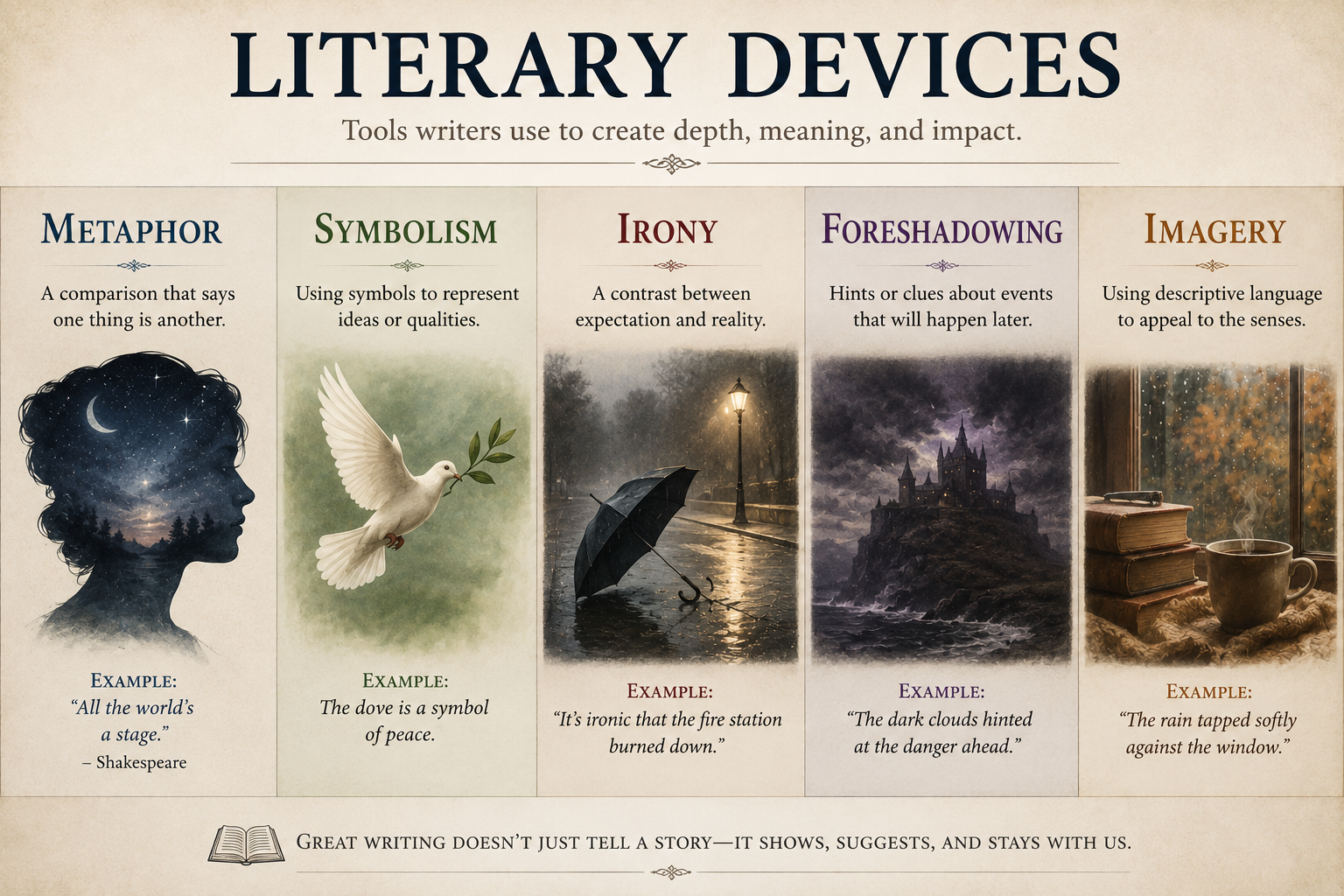
Foreshadowing is a clue, hint, image, or line of dialogue that points toward a future moment in the story. Once you know how to spot it, major plot turns often feel less random and more carefully planned.

In this Guide

  • What foreshadowing means
  • Examples of Foreshadowing in Famous Books
  • How each example works
  • How to write about foreshadowing in an essay
  • Books to read for more practice
  • FAQ
Foreshadowing Examples

What Is Foreshadowing?

Foreshadowing gives readers a clue about what may happen later.

It can appear through a warning, a symbol, a dream, a strange detail, or a character’s fear. The clue may be clear right away, or it may only make sense after the ending.

Writers use foreshadowing to build suspense. They also use it to make a story feel complete, since the ending often grows from details planted earlier.

Examples of Foreshadowing in Famous Books: Romeo and Juliet

Shakespeare gives away the tragic ending before the play truly starts.

In Romeo and Juliet, the Prologue calls the lovers “star-crossed” and says they will take their own lives. This is direct foreshadowing because the audience learns that Romeo and Juliet will die.

This does not ruin the play. Instead, it creates dread. Readers watch each happy moment with the knowledge that disaster is ahead.

Romeo also senses danger before he goes to the Capulet party. He says he fears “some consequence yet hanging in the stars.” This line hints that the party will start a chain of events he cannot control.

In an essay, you could argue that Shakespeare uses foreshadowing to make fate feel powerful. The characters make choices, but the early warnings make their deaths seem almost written in the stars.

For background on the play, you can read Britannica’s overview of Romeo and Juliet.

Examples of Foreshadowing in Famous Books: Of Mice and Men

John Steinbeck uses small deaths to prepare us for a much larger one.

In Of Mice and Men, Lennie kills soft animals by accident because he does not know his own strength. Early in the novel, he carries a dead mouse in his pocket. Later, he kills his puppy.

These moments foreshadow the death of Curley’s wife. Lennie does not mean to hurt her, but the earlier scenes show that his strength can turn harmless contact into tragedy.

Candy’s old dog also foreshadows the ending. Carlson shoots the dog because he sees it as weak and useless. Candy later says he should have shot the dog himself.

That moment points toward George’s final choice. George kills Lennie himself rather than let a violent mob do it.

Students can write about how Steinbeck uses foreshadowing to make the ending feel painful but not sudden. The clues show that Lennie’s fate has been building from the start.

Examples of Foreshadowing in Famous Books: Macbeth

The witches in Macbeth turn prophecy into a warning.

At the start of the play, the witches tell Macbeth he will become king. Their words foreshadow his rise to power, but they also lead him toward murder.

Later, the witches give Macbeth new predictions. They say he should beware Macduff, that no one “of woman born” can harm him, and that he is safe until Birnam Wood moves to Dunsinane.

Macbeth thinks these clues mean he cannot lose. In the end, each prophecy comes true in a tricky way. Macduff was born by a surgical birth, and soldiers carry branches from Birnam Wood as they march.

This is one of the best examples of foreshadowing in famous books because the clues are both clear and misleading. Shakespeare lets the audience hear the warnings, but Macbeth misreads them.

In an essay, focus on how the prophecies reveal Macbeth’s flaw. He hears what he wants to hear, which helps cause his fall.

Examples of Foreshadowing in Famous Books: The Great Gatsby

F. Scott Fitzgerald fills The Great Gatsby with signs of coming loss.

Early in the novel, Gatsby reaches toward the green light across the bay. The light stands for Daisy and the future he wants. It also foreshadows that his dream will stay out of reach.

Cars also foreshadow danger. The novel shows careless driving more than once, including a car crash after one of Gatsby’s parties. These moments prepare readers for Myrtle’s death by car later in the story.

Nick’s first chapter also looks back with sadness. He says Gatsby turned out “all right” in the end, but he also hints that Gatsby was destroyed by what preyed on him.

That early tone tells readers not to expect a simple love story. It points toward tragedy before the plot reaches it.

When you discuss this in an essay, connect foreshadowing to the novel’s critique of the American Dream. Gatsby’s future looks bright from a distance, but the early clues show that the dream is fragile.

Examples of Foreshadowing in Famous Books: Lord of the Flies

William Golding uses fear and violence to hint at the boys’ collapse.

In Lord of the Flies, the boys worry about a “beast” on the island. At first, the beast seems like a real creature. Over time, it becomes clear that the true danger comes from the boys themselves.

This fear foreshadows the violence that follows. The boys’ terror gives them an excuse to act cruelly.

Piggy’s glasses also foreshadow the loss of order. At first, the glasses help start fires, which can lead to rescue. When they break, it shows that reason and safety have begun to fail.

The falling rock that kills Piggy also has early hints. The boys play near rocks and use them as tools of power. By the time the rock strikes Piggy, the island has turned fully savage.

This is one of the darker Examples of Foreshadowing in Famous Books because the clues show a moral fall, not just a plot event.

Examples of Foreshadowing in Famous Books: Harry Potter and the Sorcerer’s Stone

J.K. Rowling uses foreshadowing to hide answers in plain sight.

In Harry Potter and the Sorcerer’s Stone, Harry believes Snape is the main threat. Many clues seem to support this idea. Snape acts cold, follows Harry, and seems connected to the mystery.

Yet other clues point to Quirrell. He is nervous, often overlooked, and linked to strange moments that do not seem important at first.

The Mirror of Erised also foreshadows the final scene. It shows deep desire, not truth. Later, Harry can get the Stone because he wants to find it, not use it.

This example helps students see that foreshadowing can work with red herrings. A red herring points readers in the wrong direction, while real clues still sit nearby.

In an essay, you could write that Rowling uses foreshadowing to reward careful readers. The ending feels surprising, but the earlier details make it fair.

Examples of Foreshadowing in Famous Books: To Kill a Mockingbird

Harper Lee uses early danger to prepare us for the final attack.

In To Kill a Mockingbird, Bob Ewell threatens Atticus after the trial. This warning foreshadows his later attack on Jem and Scout.

The children also fear Boo Radley for much of the novel. They imagine him as a monster, but this fear prepares a reversal. In the end, Boo becomes their protector.

Scout’s ham costume also matters. It seems funny at first, but it helps save her during the attack because the costume blocks the knife.

These clues show how Lee mixes danger with childhood misunderstanding. The children do not fully see the threat, but readers can sense it.

This is one of the most useful Examples of Foreshadowing in Famous Books for essays about innocence. The clues show that Scout’s world is less safe than she thinks.

How to Discuss Examples of Foreshadowing in Famous Books in an Essay

A strong essay does more than point out a clue. It explains why the clue matters.

Start by naming the moment that hints at the future. Then explain the later event it prepares. After that, connect both moments to a theme.

Here is a simple sentence frame:

The author uses [early clue] to foreshadow [later event], which reveals [theme or character truth].

For example:

Steinbeck uses Lennie’s dead mouse to foreshadow the death of Curley’s wife, which reveals that Lennie’s innocence cannot protect him from the harm his strength causes.

You can also compare two clues. In Macbeth, the witches’ prophecies foreshadow Macbeth’s rise and his fall. This shows how ambition can twist a warning into false confidence.

When you write about Examples of Foreshadowing in Famous Books, avoid saying only, “This creates suspense.” That is true, but it is not enough.

Ask what the foreshadowing reveals about fate, power, guilt, fear, or desire. That deeper point will make your essay stronger.

Why Authors Use Foreshadowing

Foreshadowing helps a story feel planned instead of random.

It also builds tension. Readers may not know exactly what will happen, but they sense that something important is coming.

Some authors use clear warnings, like the Prologue in Romeo and Juliet. Others use symbols, like Gatsby’s green light.

Foreshadowing can also reveal character. Macbeth hears warnings but trusts his pride. Gatsby sees the green light but cannot accept that the past is gone.

To study more tools that work with foreshadowing, visit this guide to common literary devices.

Books to Read for More Examples of Foreshadowing in Famous Books

These books are useful if you want more practice spotting foreshadowing.

  • Of Mice and Men by John Steinbeck
  • The Great Gatsby by F. Scott Fitzgerald
  • Lord of the Flies by William Golding

Each one uses early clues that become more important by the end. They are also common in high school and college literature classes.

Quick Practice: Find the Foreshadowing

Try this with any novel or play you read.

Look for a strange detail that gets extra attention. Ask if it returns later in a bigger way.

Watch for warnings, dreams, symbols, and repeated images. These often point toward a future conflict.

You can also mark moments where a character says something that feels larger than the scene. In literature, casual lines often carry hidden weight.

FAQ: Examples of Foreshadowing in Famous Books

What is a simple definition of foreshadowing?

Foreshadowing is a hint about something that will happen later in a story.

What is one clear example of foreshadowing?

In Romeo and Juliet, the Prologue says the lovers will die. This directly foreshadows the tragic ending.

Can foreshadowing be a symbol?

Yes. Gatsby’s green light is a symbol that also foreshadows his unreachable dream.

How do I write about foreshadowing in an essay?

Name the clue, explain the later event, and connect both to a theme or character flaw.

Is foreshadowing always obvious?

No. Some clues are easy to spot, while others only make sense after you finish the story.

Key Takeaway

Examples of Foreshadowing in Famous Books show that great endings rarely come from nowhere.

Authors plant clues early, then let those clues grow into conflict, tragedy, or surprise. When students notice those clues, they can write sharper essays and read with more confidence. 📚

Flash Memoir Prompt: First Time You Saw Someone You Loved Cry

flash memoir prompt cry

A tender writing invitation about the first time you saw someone you loved cry, told through one small scene, one clear detail, and one honest feeling.

The room changes when someone you love cries for the first time in front of you. Maybe the person was a parent at the kitchen sink, a friend in the passenger seat, a grandparent in a hospital chair, or a sibling trying to stay quiet behind a closed door.

You may remember the sound before you remember the words. A shaky breath. A tissue pulled from a sleeve. The way you suddenly did not know where to put your hands.

This flash memoir prompt first time saw someone loved cry asks you to write about that moment before it turns into a full life story. Stay close to the scene. Let the memory reveal what it wants to reveal.

flash memoir prompt cry

The Prompt

Write about the first time you saw someone you loved cry.

This prompt can unlock a memory because it often marks a shift. Before that moment, you may have seen that person as strong, in charge, funny, distant, or unbreakable. Then, all at once, you saw something more human.

You do not have to explain the whole relationship. You do not have to know every reason behind the tears. A strong flash memoir can begin with what you noticed: the bent head, the red eyes, the silence after someone left the room.

Why This Memory Matters

The first time you saw someone you loved cry may have changed the way you understood them. It may have been the day you realized adults could feel lost. It may have been the first time you saw grief up close. It may have been a small, private moment that never made sense until years later.

These memories matter because they often hold two stories at once. There is the story of what happened in the room, and there is the story of what changed inside you.

Maybe you felt scared. Maybe you felt protective. Maybe you felt embarrassed because you did not know what to say. Those reactions belong in the piece. Memoir is not about making yourself look perfect. It is about telling the truth of how a moment felt from the inside.

If you are a student or a close reader of stories, this kind of prompt can also help you understand character moments in literature. When a character cries, shuts down, or hides pain, the scene often reveals more than a long explanation. You can explore that idea further in this guide on how to analyze characters in literature.

How to Approach This Prompt

Begin with one physical detail. Do not start with the whole backstory. Start with the thing your mind still holds.

Maybe it is your mother’s mascara on a napkin. Maybe it is your father sitting in the driveway after a funeral, the car still running. Maybe it is your best friend laughing too hard before the tears came.

Once you have that detail, narrow the memory to one scene. Where were you? What time of day was it? What could you hear? What did you do with your body? Did you move closer, freeze, leave, hand them something, or pretend not to notice?

Try to write what you noticed before you explain what it meant. For example, instead of opening with “That was when I learned my grandmother was lonely,” you might begin with her spoon resting untouched beside a bowl of soup. The meaning can arrive later.

It may help to give yourself a frame like this:

I saw the tears when _____. I was _____. The room smelled like _____. I wanted to _____. I understood later that _____.

You can change those lines as you write. They are only a doorway.

If you like to mark up your own drafts, try circling the strongest sensory detail after you finish. Then underline the sentence where the emotion feels most true. This is similar to the close-reading habit described in how to annotate literature, except the text is your own life.

A Quick Example

The first time I saw my older brother cry, he was sitting on the back steps with a basketball between his knees. It was almost dark, and the porch light kept flickering like it could not decide whether to help. He had just found out he did not make the varsity team. I expected him to be angry. He was always angry first. Instead, he kept rubbing his thumb over the cracked orange leather of the ball. His face was turned away, but I could see one tear fall onto his wrist. I stood in the doorway with two cans of soda, suddenly unsure if I was allowed to see him like that. I set one can beside him and said nothing. Years later, I think that was the kindest thing I knew how to do.

Try It Yourself

Set a timer for ten minutes and write the scene as plainly as you can. Do not worry about making it beautiful at first. Let the room, the person, and your younger self appear on the page.

If the memory feels heavy, write slowly. You can stop at any point. You can also write around the moment instead of straight through it. Describe the hallway, the weather, the plate on the table, or the shoes by the door.

A flash memoir prompt about the first time you saw someone you loved cry does not need a dramatic ending. Often, the strongest ending is small: what you did next, what you could not say, or what you understand now.

Want More Flash Memoir Prompts?

Explore all 365 prompts in The Memory Trigger: 365 Flash Memoir Writing Prompts. Use them one at a time when you want a short, focused way to return to real memories and shape them into honest pieces of writing.

What Is Foreshadowing in Literature?

Foreshadowing in Literature

What Is Foreshadowing in Literature? It is a clue that hints at what may happen later in a story. Writers use it to build suspense, shape mood, and help readers notice that every detail can matter.

In this Guide

  • What foreshadowing means
  • Why writers use it
  • Common types of foreshadowing
  • Famous examples from literature
  • How to spot it as you read
  • Book suggestions
  • FAQ
Foreshadowing in Literature

What Is Foreshadowing in Literature? A Simple Definition

Foreshadowing is a hint that points toward a future event in a story.

So, What Is Foreshadowing in Literature? In simple terms, it is when an author plants a clue early so something later feels planned, not random.

Foreshadowing can be clear or subtle. A character may make a warning, a storm may signal danger, or an object may appear before it becomes important.

This device helps readers feel curious. It also rewards close reading because small details may gain meaning later.

If you want to study more tools like this, visit our literary devices list.

What Is Foreshadowing in Literature? Why It Matters

Foreshadowing gives a story shape and purpose.

What Is Foreshadowing in Literature? It is not just a “hint.” It is a way for writers to guide our expectations.

When used well, foreshadowing makes an ending feel earned. Readers may think, “I should have seen that coming,” which can make the story more powerful.

It also creates suspense. If a novel opens with a strange noise in the dark, we expect that noise to matter later.

Foreshadowing can also reveal theme. In many tragedies, early warnings show that fate, pride, or fear may lead to disaster.

What Is Foreshadowing in Literature? Common Types to Know

Foreshadowing can appear in more than one form.

Direct foreshadowing gives a clear warning. A character might say, “Nothing good will come from this.” That line tells readers to expect trouble.

Indirect foreshadowing is more hidden. A broken mirror, a dark dream, or a strange silence may hint at future conflict.

Symbolic foreshadowing uses images or objects. For example, a dying plant might suggest a failing relationship.

So, What Is Foreshadowing in Literature? It is any early clue that prepares readers for what comes next, even if they do not notice it right away.

Famous Examples of Foreshadowing

Well-known stories often use foreshadowing to build tension and meaning.

In Romeo and Juliet by William Shakespeare, Romeo has dark feelings about going to the Capulet party. His fear hints at the tragedy that follows.

In Of Mice and Men by John Steinbeck, the death of Candy’s dog foreshadows the later death of Lennie. Both scenes deal with mercy, weakness, and painful choices.

In Harry Potter and the Sorcerer’s Stone by J.K. Rowling, small details about Harry’s scar and Voldemort hint at a much larger conflict.

In The Lottery by Shirley Jackson, the nervous mood and strange village ritual foreshadow the shocking ending. The story shows how ordinary details can hide danger.

For more on literary terms and reading context, you can explore Britannica’s entry on foreshadowing.

How Foreshadowing Is Different from a Spoiler

A spoiler tells you what will happen. Foreshadowing only hints at it.

This difference matters. A spoiler removes surprise, but foreshadowing creates interest.

Good foreshadowing does not give away the whole plot. It gives just enough detail to make readers wonder.

When readers look back, the clue makes sense. That is why foreshadowing can make a story feel carefully built.

How to Spot Foreshadowing While You Read

Look for details that seem unusual, repeated, or too specific to ignore.

If a writer spends time on an object, warning, dream, or odd line of dialogue, mark it. Ask, “Why did the author include this?”

Pay close attention to first chapters. Many writers place key clues near the start of a story.

Also watch for changes in mood. A sudden shift from calm to tense may signal that something important is coming.

To connect foreshadowing with other story tools, review this guide to literary devices.

Books That Help You Study Foreshadowing

These books are useful if you want strong examples of foreshadowing in action:

  • Romeo and Juliet by William Shakespeare
  • Of Mice and Men by John Steinbeck
  • Harry Potter and the Sorcerer’s Stone by J.K. Rowling

FAQ: What Is Foreshadowing in Literature?

What Is Foreshadowing in Literature?

Foreshadowing is a clue that hints at a future event in a story. It helps readers expect that something important may happen later.

Why do authors use foreshadowing?

Authors use foreshadowing to build suspense, prepare readers, and make the ending feel connected to the rest of the story.

Is foreshadowing always obvious?

No. Some foreshadowing is clear, but some is hidden. Readers may only notice it after they finish the story.

What is an easy example of foreshadowing?

If a character says, “I have a bad feeling about this,” that line may foreshadow danger or conflict later.

Can foreshadowing be a symbol?

Yes. A symbol, such as a storm or broken object, can foreshadow a future event or emotional change.

Key Takeaway

What Is Foreshadowing in Literature? It is a clue that points ahead. When you read, circle strange details and ask how they might matter later. That simple habit can make your analysis much stronger.

Of Mice and Men Literary Analysis Essay: How to Write a Strong One

Mice and Men

Writing an Of Mice and Men literary analysis essay can feel tough because the book is short but full of meaning. This guide will help you move from topic idea to thesis, then from evidence to a clear final draft.

You will learn how to build an argument about Steinbeck’s novel without just retelling the plot.

Mice and Men

In this Guide

Use this guide as a quick map before you write.

  • What a literary analysis essay should do
  • How to choose a strong focus
  • Thesis statement examples
  • Topic ideas for Of Mice and Men
  • Evidence suggestions from the novel
  • Helpful books and sources
  • FAQ and final takeaway

Start Your Of Mice and Men Literary Analysis Essay with a Clear Purpose

A strong essay should explain how a text creates meaning, not just what happens in the story.

In Of Mice and Men, John Steinbeck tells a simple story about George and Lennie, two workers who hope for a better life. Your job is to look deeper. Ask how Steinbeck uses character, setting, symbols, conflict, or tone to shape the reader’s view.

A plot summary says, ‘George and Lennie want a farm.’ A literary analysis says, ‘Steinbeck uses the dream of the farm to show how hope can both comfort and mislead people who live with little power.’

If you need a wider overview of essay structure, read our guide to writing a literary analysis essay. It pairs well with this Of Mice and Men literary analysis essay plan.

Choose a Focus for Your Of Mice and Men Literary Analysis Essay

Your essay becomes stronger when it studies one clear idea instead of many broad themes.

Many students start with a theme like loneliness or the American Dream. That is a good start, but it is not enough yet. You need an angle that shows what Steinbeck says about that theme.

For example, ‘loneliness’ is too broad. A sharper focus would be: ‘Steinbeck shows that loneliness can make people both cruel and desperate for connection.’

This focus keeps your Of Mice and Men literary analysis essay from drift. It also helps each body paragraph serve one main claim.

Think of how this works in other well-known books. In The Great Gatsby, a student should not just write about wealth. A stronger essay asks how wealth changes how people treat others.

Build a Thesis for an Of Mice and Men Literary Analysis Essay

Your thesis is the main argument your whole essay must prove.

A good thesis names the text, gives a clear claim, and points to how the author creates meaning. It should not sound like a fact from the plot.

Weak thesis: In Of Mice and Men, George and Lennie have a dream.

Stronger thesis: In Of Mice and Men, Steinbeck uses George and Lennie’s dream of owning land to show how hope can help people survive hardship, even when that hope is fragile.

Here are more thesis statement examples you can adapt:

  • Theme thesis: Steinbeck presents loneliness as a force that damages people’s sense of worth and pushes them to seek control over others.
  • Character thesis: Through George’s care for Lennie, Steinbeck shows that love can become a heavy moral burden in an unfair world.
  • Symbol thesis: The rabbits in Of Mice and Men symbolize Lennie’s dream of safety, but they also reveal how far that dream is from reality.
  • Setting thesis: Steinbeck uses the ranch as a harsh social world where workers compete for status because they lack real security.

Your Of Mice and Men literary analysis essay will feel much more focused if every paragraph connects back to one of these kinds of claims.

If thesis writing slows you down, the Literary Analysis Essay Toolkit gives you thesis frames, paragraph planners, and revision checklists made for student essays.

Use Evidence in Your Of Mice and Men Literary Analysis Essay

Good evidence does not speak for itself, so you must explain how it supports your claim.

Choose short quotes or moments that reveal a pattern. You do not need the longest quote. You need the most useful one.

For a theme essay on loneliness, you might study Crooks’s room and his talk with Lennie. Crooks lives apart from the other men, and his bitterness grows from that forced isolation.

For an essay on dreams, you might use the repeated description of the farm. The dream returns at key moments, which shows how much George and Lennie need it.

For an essay on power, you might study Curley’s behavior or the way the ranch workers treat Candy after his dog grows old. These scenes reveal a world where weakness can make a person unsafe.

Use this simple pattern in each body paragraph:

  • Make a clear point.
  • Use a short quote or scene.
  • Explain the meaning in your own words.
  • Connect it back to the thesis.

This pattern works for an Of Mice and Men literary analysis essay, but it also works for novels like To Kill a Mockingbird or Lord of the Flies.

Of Mice and Men Literary Analysis Essay Topic Ideas

The best topic gives you room to argue, not just describe.

Here are strong topic angles for your essay:

  • How Steinbeck uses the dream of the farm to explore hope and defeat
  • How loneliness shapes Crooks, Candy, or Curley’s wife
  • How George’s final choice creates a moral conflict for the reader
  • How animals in the novel reveal ideas about care, weakness, or control
  • How the ranch setting reflects life during the Great Depression
  • How Steinbeck presents friendship as both rare and costly

Once you pick a topic, turn it into a question. For example: ‘How does Steinbeck use Candy’s dog to prepare the reader for the ending?’ Your answer can become your thesis.

This step will help your Of Mice and Men literary analysis essay sound more original and less like a report.

Plan Body Paragraphs Before You Draft

A simple plan can save you from a messy essay.

Each body paragraph should cover one part of your thesis. If your thesis is about hope, loneliness, or moral choice, each paragraph should show a different piece of that idea.

Here is a sample plan for a thesis about the dream of the farm:

  • Body paragraph 1: The farm gives George and Lennie comfort in a hard world.
  • Body paragraph 2: The dream attracts others because many characters feel trapped.
  • Body paragraph 3: The collapse of the dream shows the limits of hope in an unfair society.

Be careful with your topic sentences. Do not start every paragraph with plot. Start with an idea.

Plot-based: Lennie talks about rabbits again.

Analysis-based: Lennie’s repeated focus on rabbits shows his need for a safe future he can understand.

For more help with paragraph shape, our literary analysis essay guide breaks down claims, evidence, and commentary in a clear way.

Add Context Without Letting It Take Over

Context can help, but the novel must stay at the center of your essay.

Of Mice and Men connects to the Great Depression, migrant labor, and the struggle for economic security. These facts can support your analysis, but they should not replace close reading.

A useful sentence might say: ‘The ranch reflects the unstable lives of workers during the Great Depression, which makes George and Lennie’s dream feel urgent.’

For quick background, you can use Britannica’s biography of John Steinbeck. You can also read the Nobel Prize profile on Steinbeck for a short view of his literary importance.

Helpful Books to Consider

These books can help you understand Steinbeck’s world and style.

If you shop on Amazon or use your school library, look for these titles:

  • Of Mice and Men by John Steinbeck
  • The Grapes of Wrath by John Steinbeck
  • Steinbeck: A Life in Letters edited by Elaine Steinbeck and Robert Wallsten

The first title is the main text. The other books can help you see Steinbeck’s wider concerns with work, poverty, and human dignity.

Common Mistakes to Avoid in an Of Mice and Men Literary Analysis Essay

Small choices can weaken your essay even when your idea is strong.

Do not write a full plot summary. Your teacher already knows the story. Focus on what Steinbeck does and why it matters.

Do not use quotes without commentary. After each quote, explain the word choice, symbol, contrast, or character action that supports your claim.

Do not make your thesis too broad. A claim like ‘Steinbeck shows life is hard’ is true, but it is not specific enough for a strong essay.

Do not ignore the ending. Even if your essay is not only about the final scene, the ending often changes how readers understand earlier dreams and choices.

FAQ: Of Mice and Men Literary Analysis Essay

Here are quick answers to common student questions.

What is a good thesis for an Of Mice and Men literary analysis essay?

A good thesis makes a clear claim about how Steinbeck creates meaning. For example: ‘Steinbeck uses George and Lennie’s dream to show how hope can comfort people who live with fear and uncertainty.’

What themes can I write about?

You can write about loneliness, dreams, friendship, power, mercy, or social inequality. Pick one theme and make a specific claim about it.

How many quotes should I use?

Use enough quotes to prove your points, but do not overload the essay. One strong quote or scene per body paragraph often works well.

Should I include historical context?

Yes, but keep it brief. Use context only when it helps explain the novel’s setting, conflict, or characters.

Can I write about George’s final choice?

Yes. That topic works well because it lets you analyze love, responsibility, and moral conflict in one focused argument.

Key Takeaway

A strong ending should remind you what matters most.

A strong Of Mice and Men literary analysis essay does not just explain the story. It proves how Steinbeck uses character, symbol, and setting to reveal hard truths about hope and human need.

Start with one focused claim, support it with careful evidence, and explain each quote with your own clear thinking. That is the heart of literary analysis. ✍️

Hamlet Summary and Analysis for Students

Rapid Reads Press

Shakespeare’s Hamlet can feel complex at first, but the story becomes clearer when you track the choices behind each scene. This Hamlet summary and analysis gives students a simple path through the plot, major conflicts, structure, and meaning.

In this Guide

Use these sections to find the part of the play you need most.

  • Quick overview
  • Act-by-act plot guide
  • Main characters
  • Key conflicts
  • Themes and symbols
  • Study tips
  • FAQ

Hamlet Summary and Analysis: Quick Overview

Hamlet is a revenge tragedy about grief, doubt, and the danger of delay.

The play takes place in Denmark. Prince Hamlet returns home after his father, King Hamlet, dies. His mother, Gertrude, has quickly married Claudius, the dead king’s brother.

Hamlet soon meets the ghost of his father. The ghost says Claudius murdered him and tells Hamlet to seek revenge.

This news traps Hamlet between action and thought. He wants justice, but he also wants proof. That inner struggle drives the whole play.

Hamlet Summary and Analysis by Act

Each act moves Hamlet closer to a final choice he cannot avoid.

A useful Hamlet summary and analysis often starts with the ghost because it gives the play its central problem. Hamlet must decide if the ghost tells the truth or if it tempts him toward sin.

Act 1

The guards at Elsinore Castle see a ghost that looks like the dead king. Hamlet later meets it, and the ghost claims Claudius poured poison into his ear.

Hamlet swears to remember his father. He also says he may act strange so he can watch others without clear blame.

Act 2

Claudius and Gertrude worry about Hamlet’s behavior. They ask Rosencrantz and Guildenstern, Hamlet’s old friends, to spy on him.

Polonius thinks Hamlet has gone mad because Ophelia rejected him. Hamlet, though, seems more aware than others know.

A group of actors arrives. Hamlet plans to use a play to test Claudius’s guilt.

Act 3

Hamlet gives his famous “To be, or not to be” speech. He weighs life, death, pain, and fear.

The court watches the play Hamlet has arranged. When the actors show a murder like the one described by the ghost, Claudius reacts with guilt.

Later, Hamlet visits Gertrude. He kills Polonius by mistake, thinking Claudius hides behind a curtain.

Act 4

Claudius sends Hamlet to England with secret orders for his death. Hamlet escapes and returns to Denmark.

Ophelia loses her grip on reason after her father dies. She later drowns, and her death deepens the tragedy.

Laertes comes home angry and ready to avenge Polonius. Claudius uses that anger to plan Hamlet’s death.

Act 5

Hamlet returns wiser but still marked by loss. In the graveyard, he sees the skull of Yorick and faces the truth that all people die.

The final duel begins between Hamlet and Laertes. Poisoned weapons and a poisoned cup lead to the deaths of Gertrude, Laertes, Claudius, and Hamlet.

Main Characters and Their Roles

The characters in Hamlet often reveal truth through what they hide.

  • Hamlet: The prince of Denmark. He is thoughtful, angry, and trapped by doubt.
  • Claudius: Hamlet’s uncle and the new king. He is clever, guilty, and hungry for power.
  • Gertrude: Hamlet’s mother. Her quick marriage makes Hamlet feel betrayed.
  • Ophelia: Polonius’s daughter. She is caught between family duty and love for Hamlet.
  • Polonius: A court adviser who loves control but often misreads people.
  • Laertes: Ophelia’s brother. He acts fast, which makes him a sharp contrast to Hamlet.

Hamlet Summary and Analysis of Key Conflicts

The play’s conflicts come from revenge, mistrust, and moral fear.

This Hamlet summary and analysis should make one point clear: Hamlet does not delay because he is lazy. He delays because every choice seems dangerous.

Hamlet vs. Claudius is the main outer conflict: Hamlet wants to expose and punish Claudius, but Claudius controls the court.

Hamlet vs. himself is the deeper conflict. He wants action, yet he fears error, sin, and the unknown after death.

Hamlet vs. the court shows how power creates false behavior. Almost everyone watches someone else, which makes honesty rare.

Themes and Symbols in Hamlet

Shakespeare builds meaning through repeated images, hard choices, and sharp contrasts.

Revenge is the most obvious theme. Hamlet, Laertes, and Fortinbras all want to answer a father’s death, but each man responds in a different way.

Madness is harder to judge. Hamlet may act mad by choice, but Ophelia’s pain seems real and tragic.

Death shadows the whole play. The graveyard scene forces Hamlet to see that kings, fools, and princes all end the same way.

Poison works as both a plot device and a symbol. Claudius poisons the old king, but lies also poison the life of Denmark.

If you want to dig into these details, try close reading in literature. It helps you notice how words, images, and patterns shape meaning.

Structure and Soliloquies

The shape of the play lets us hear Hamlet’s private mind while the public world falls apart.

Hamlet follows the pattern of a revenge tragedy, but Shakespeare makes the form more complex. Instead of rushing toward revenge, Hamlet tests, thinks, and doubts.

The soliloquies are key because Hamlet speaks alone to the audience. These speeches show the gap between what he feels inside and what he shows at court.

The play within the play is also important. Hamlet uses art to reveal truth, much like a detective uses evidence.

Why This Hamlet Summary and Analysis Matters for Students

Hamlet still matters because it asks questions students know well.

Use this Hamlet summary and analysis to see that the play is not only about revenge. It is also about grief, trust, family pressure, and the fear of making the wrong choice.

Like Macbeth, the play shows how ambition can destroy a nation. Unlike Macbeth, Hamlet knows too much and acts too late.

That difference makes Hamlet feel modern. He is not a simple hero. He is a person who thinks deeply and suffers because of it.

How to Study Hamlet Without Getting Lost

Read for choices, not just events.

Before each scene, ask what Hamlet wants and what blocks him. This keeps the plot clear.

Mark moments when characters spy, lie, or perform a role. These patterns help you write stronger essays.

If you want a simple companion for class notes, try this student literature study guide as you review scenes and quotes.

Recommended Books for Deeper Study

These books can help if you want more context after the play.

You can look for these on Amazon or at a library.

  • Hamlet by William Shakespeare, edited by Ann Thompson and Neil Taylor
  • Shakespeare: The World as Stage by Bill Bryson

Further Reading

These trusted sources give more background on Shakespeare and the play.

FAQ

Here are quick answers to common student questions about the play.

What is the main point of a Hamlet summary and analysis?

A Hamlet summary and analysis explains the plot and shows how Shakespeare uses conflict, language, and character choices to create meaning.

Why does Hamlet delay his revenge?

Hamlet delays because he wants proof and fears the moral cost of murder. His mind keeps testing every action.

Is Hamlet really mad?

The play leaves this partly open. Hamlet says he will act strange, but his grief and anger may also push him close to real madness.

What is the main theme of Hamlet?

One main theme is the struggle between thought and action. The play asks what happens when a person knows the truth but cannot act with peace.

Key Takeaway

The best Hamlet summary and analysis shows that the play is more than a revenge story. It is a study of grief, doubt, and the heavy cost of truth.

Themes in Hamlet: A Student-Friendly Guide

Rapid Reads Press

Understanding the themes in Hamlet helps you see why Shakespeare’s play still feels sharp, strange, and personal. The play explores revenge, death, truth, power, and family pressure through one young man’s crisis.

The themes in Hamlet can feel complex at first, but they connect to choices students still debate today. If you need help with the basics of theme, start with this guide on how to identify theme in literature.

In this Guide

Use this section as a quick map before you read the full guide.

  • Why the play’s themes still matter
  • Major ideas students should notice
  • Revenge and delay
  • Death and grief
  • Appearance versus reality
  • Madness and truth
  • Power and corruption
  • Women and limited choices
  • Essay tips and FAQ

Why the themes in Hamlet matter

Hamlet is more than a famous tragedy about a prince and a ghost.

The themes in Hamlet matter because they turn a revenge plot into a study of the human mind. Hamlet wants justice, but he also wants proof. He wants action, but he cannot escape thought.

That conflict makes the play useful for high school, AP Literature, and college essays. It gives you room to discuss character, symbol, structure, and meaning.

Shakespeare also makes the play feel unstable. People spy, lie, perform roles, and hide motives. Because of this, the audience must ask the same question Hamlet asks: What is true?

Major themes in Hamlet students should know

Most of the play’s big ideas overlap, so it helps to study them together.

Most themes in Hamlet grow from one central problem: a murder has broken the moral order of Denmark. King Hamlet is dead, Claudius has taken the throne, and Hamlet feels trapped inside a corrupt court.

The play asks hard questions. Is revenge justice? Can grief become dangerous? Can a person trust what they see? What happens when power depends on lies?

These questions do not have easy answers. That is one reason the play works so well for literary analysis.

Revenge and the Cost of Delay

Hamlet is a revenge tragedy, but Shakespeare makes revenge feel morally risky.

The ghost tells Hamlet that Claudius murdered King Hamlet. This command gives Hamlet a clear mission: punish the killer. Yet Hamlet does not act at once.

His delay is one of the most debated parts of the play. Some readers see him as weak. Others see him as careful because he fears sin, false evidence, or moral failure.

Revenge also spreads damage. Polonius dies, Ophelia suffers, Laertes seeks revenge, and the court falls apart. The play suggests that revenge may start as a search for justice, but it can become a force that destroys almost everyone near it.

This is different from a simple hero story. Hamlet does not win by taking revenge. He pays for it with his life.

Death, Grief, and the Fear of the Unknown

Death shapes the play from the first scene to the final stage image.

Hamlet begins in grief. His father has died, and his mother has married Claudius soon after. Hamlet feels that the world has become rotten because love, family, and loyalty seem false.

His grief turns into deep thought about death itself. In the famous soliloquy that begins with To be, or not to be, Hamlet asks whether life is worth the pain. He also fears what may come after death.

The graveyard scene makes this theme more physical. Hamlet holds Yorick’s skull and faces the fact that status, beauty, and power all end the same way.

You can compare this to Macbeth, where death also becomes part of a broken moral world. In both plays, ambition and violence make life feel unstable.

Appearance Versus Reality

In Hamlet, almost nothing is as simple as it first appears.

Characters perform roles. Claudius acts like a good king, but he hides murder. Hamlet acts mad, but his act may reveal truths others refuse to see. Polonius acts wise, but he often misunderstands the people around him.

This theme appears in the play-within-the-play, where actors perform a story like King Hamlet’s murder. Hamlet uses theater to expose reality. That choice shows one of Shakespeare’s boldest ideas: sometimes art can reveal the truth better than direct speech.

Students should watch words like seems, show, and play. They point to the gap between public image and private truth.

Madness, Performance, and Truth

Hamlet’s madness is one of the play’s most famous puzzles.

Hamlet says he will put on an antic disposition, which means he plans to act mad. This gives him freedom to speak in strange ways, insult people, and test Claudius.

Yet the play makes us wonder if the act becomes real. Hamlet’s grief, anger, and isolation put real pressure on his mind. His language can sound controlled one moment and wild the next.

Ophelia’s madness is different. She has less power and fewer choices. After her father’s death and Hamlet’s rejection, her mind breaks under the weight of loss.

This contrast matters. Hamlet’s madness gives him some control. Ophelia’s madness shows how little control she has.

Corruption, Power, and the Diseased State

Denmark is often described as sick, rotten, or infected.

One of the play’s most famous lines says that something is rotten in the state of Denmark. That image is not only about Claudius. It describes the whole court.

Claudius gains power through murder. After that, spying becomes normal. Polonius spies on Hamlet. Claudius and Polonius spy on Hamlet and Ophelia. Rosencrantz and Guildenstern spy on Hamlet for the king.

The court becomes a place where trust cannot survive. Private life turns into public strategy.

This theme helps explain why the ending is so violent. A corrupt state cannot heal itself because the people in power protect the lie that made them powerful.

Women, Control, and Limited Choices

Gertrude and Ophelia reveal how little freedom women have in the world of the play.

Gertrude is judged harshly by Hamlet for marrying Claudius. The play never gives her much space to explain her choice. This silence makes her hard to read.

Ophelia is controlled by her father, her brother, and the court. They tell her how to act toward Hamlet. She becomes part of a political plan, not a person with full freedom.

Her tragedy shows how power can crush someone who has no voice. In this way, the play asks us to notice not only what characters do, but what choices society allows them to make.

You might compare Ophelia to Antigone from Sophocles’ Antigone. Both young women face pressure from powerful men, but they respond in very different ways.

How the themes in Hamlet work together

The play’s ideas connect through Hamlet’s search for truth and justice.

The themes in Hamlet do not stand alone. Revenge connects to death because revenge leads to more death. Appearance connects to power because Claudius depends on a false image. Madness connects to truth because strange speech often reveals hidden facts.

This web of ideas gives the play its depth. A strong essay should not treat each theme as a separate box. It should show how one idea affects another.

For example, you could argue that Hamlet delays revenge because he lives in a world where appearance cannot be trusted. That claim links revenge, truth, and performance in one clear reading.

Symbols and Motifs That Support the Themes

Shakespeare uses repeated images to make the play’s ideas easier to see.

The ghost represents the past, guilt, and the demand for revenge. It forces Hamlet to face a crime that the court wants to hide.

Yorick’s skull represents death as the final truth. It strips away rank and pride.

Poison represents hidden corruption. Claudius uses poison to kill King Hamlet, and poison returns at the end as the court destroys itself.

Acting and theater represent the gap between surface and truth. Hamlet uses performance to uncover what normal speech cannot prove.

Essay Tips for Writing About Hamlet

A good theme essay makes a clear claim instead of naming a broad topic.

When you write about themes in Hamlet, avoid claims like death is a theme. That is true, but it is too simple.

Try a stronger claim: Shakespeare presents death as both a mystery and a certainty, which makes Hamlet fear action even when he knows revenge is expected.

Use short quotations and explain them closely. Do not let plot summary take over. Your teacher wants to see what the evidence means.

If you need a step-by-step method, review how theme works in literature before you draft your thesis.

Authoritative Resources for Hamlet Study

Reliable sources can help you check context, plot details, and background.

The Britannica overview of Hamlet gives a clear summary of the play and its place in literature.

The Folger Shakespeare Library Hamlet page offers trusted text resources and study support.

Suggested Books for Studying Hamlet

These editions and guides are useful for class reading, essay prep, and review.

  • Hamlet by William Shakespeare, Folger Shakespeare Library edition
  • Hamlet by William Shakespeare, Arden Shakespeare edition
  • Shakespeare: The Invention of the Human by Harold Bloom

FAQ About Hamlet Themes

Use these quick answers to review before a quiz, essay, or class discussion.

What are the main themes in Hamlet?

The main themes in Hamlet include revenge, death, appearance versus reality, madness, corruption, and moral uncertainty.

What is the most important theme in Hamlet?

Revenge is often the central theme because it drives the plot. Still, the play treats revenge as a moral problem, not a simple duty.

How does Hamlet show appearance versus reality?

Many characters hide their true motives. Claudius appears noble, Hamlet acts mad, and the court uses spying to uncover secrets.

Why is death such a major theme?

Death pushes Hamlet into grief, fear, and deep thought. The graveyard scene makes this theme clear and physical.

How can I write a strong essay about Hamlet?

Make a clear claim about what Shakespeare suggests through a theme. Then use short quotes and explain how they support your idea.

Key Takeaway

The best way to study Hamlet is to see how its ideas connect.

The play is not just about revenge. It is about what happens when grief, lies, power, and doubt trap a person who wants the truth.

Flash Memoir Prompt: First Time You Felt Genuinely Proud of Yourself

Rapid Reads Press

Maybe it happened in an empty kitchen, after everyone else had gone to bed: this flash memoir prompt first time felt genuinely proud asks you to return to the private moment when your own approval finally felt like enough.

The Prompt

Write about the first time you felt genuinely proud of yourself, with no one else around to see it.

This prompt works because pride is often tied to an audience. We remember the award, the applause, the grade, the compliment, or the person who finally noticed. But private pride is different. It does not need proof. It arrives quietly, sometimes in a bedroom, a bathroom mirror, a parked car, a school hallway, or at a desk covered in crumbs and paper.

A flash memoir prompt, the first time felt genuinely proud, can help you find a small scene with a large emotional center. The key is to look for the moment when you knew something had changed inside you, even if the rest of the world kept moving like nothing had happened.

Why This Memory Matters

The first time you felt proud of yourself may not look dramatic from the outside. Maybe you finished a hard assignment without help. Maybe you walked away from someone who kept hurting you. Maybe you saved money, fixed something, passed a test, apologized first, told the truth, or stayed calm when you wanted to fall apart.

What matters is the private nature of the moment. Since no one else was there to praise you, the pride had to come from somewhere deeper. That makes the memory powerful. It shows what you value when no one is watching.

This kind of memory can also reveal a theme in your life. You may notice a pattern around independence, courage, discipline, forgiveness, or survival. If you want help thinking about larger meaning in a personal story, this guide on how to identify theme in literature can also help you spot the theme inside your own writing.

Private pride can feel tender because it may be connected to a time when you wanted someone else to notice. Maybe no one did. Maybe that hurt. But the memory is still yours. In fact, the quietness may be what gives it its shape.

How to Approach This Prompt

Begin with one physical detail. Do not start by explaining your whole life or why the moment mattered. Start with what your body knew first.

Maybe your hands were shaking. Maybe your shirt was damp with sweat. Maybe there was a red pen mark on the page, a sink full of dishes, a bus ticket in your pocket, or a glow from a computer screen in a dark room.

Once you have that detail, narrow the memory to one scene. A flash memoir does not need the full backstory. You can hint at what came before, but try to stay close to the moment when pride arrived.

Ask yourself: Where was I? What had I just done? What did I notice in the room? Did I smile, cry, exhale, laugh, or sit very still?

Write what you noticed before you explain what it meant. This helps the reader feel the scene instead of being told how important it was. For example, “I folded the test and put it under my pillow” may say more than “I was proud because I had worked hard.”

After you draft, read your piece like a careful reader. Circle the strongest image. Underline the sentence where the emotion changes. If you enjoy close reading, the same habits used to annotate literature can help you revise your memoir with more care.

Above all, avoid trying to tell every related story at once. Stay with the first real moment. Let it breathe.

A Quick Example

I was sitting on the bathroom floor with my laptop balanced on a towel because the apartment was too loud everywhere else. The tile was cold through my pajama pants. I clicked submit on my college application at 12:17 a.m., then stared at the screen as if it might take the words back. No one knew I had finished it. My mother was asleep. My brother was playing music behind his door. I had written the essay in pieces before school, after work, and once in the laundry room while the dryer thumped beside me. When the confirmation email arrived, I pressed my hand over my mouth. I did not scream. I just sat there, smiling at the sink cabinet, feeling taller than I had all week.

Try It Yourself

Set a timer for ten minutes and write from the prompt without trying to make the memory sound impressive. The moment does not have to be noble or life-changing. It only has to be true.

If you get stuck, begin with this sentence: “No one saw me when I…” Then keep going. Let the sentence lead you into the room, the object, the sound, or the small action that held the feeling.

As you write, remember that pride does not always shout. Sometimes it shows up as relief. Sometimes it feels like a steady breath. Sometimes it is simply the moment you realize, “I did that.” That is enough for this flash memoir prompt first time felt genuinely proud.

Want More Flash Memoir Prompts?

If this prompt helped you uncover a quiet memory, keep gathering those small scenes. They often become the strongest pieces of memoir because they carry real emotional weight without needing to explain too much. Explore all 365 prompts in The Memory Trigger: 365 Flash Memoir Writing Prompts.

Flash Memoir Prompt: First Time You Were Given a Compliment that You Actually Believed

flash memoir prompt first time given compliment actually believed

A warm flash memoir prompt for remembering the first compliment that felt true, and the small moment when someone else’s words finally reached you.

There is a strange little pause that happens when a compliment lands. Maybe you were used to brushing praise away. Maybe you laughed, changed the subject, or said, “No, I’m not,” before the other person even finished speaking. Then one day, someone said something simple, and for once, you did not argue with it.

This flash memoir prompt, the first time you were given a compliment you actually believed, invites you to return to that exact moment. Not the long history of why compliments were hard to accept. Just the first time one slipped past your defenses and settled somewhere honest.

flash memoir prompt first time given compliment actually believed

The Prompt

Write about the first time you were given a compliment that you actually believed.

This prompt can unlock a meaningful memory because it is rarely just about the compliment. It is about who said it, how they said it, where you were standing, and why those words felt different from all the others.

Maybe the compliment came from a teacher who noticed your writing. Maybe it came from a coach, a grandparent, a friend, or someone you barely knew. Maybe it was not dramatic at all. Sometimes the words we believe are quiet ones, said in a hallway, at a kitchen table, or after a hard day when we had almost given up.

Why This Memory Matters

A believable compliment can mark a shift in how you see yourself. It might be the first time you felt talented, kind, brave, funny, capable, or worth noticing. That kind of memory has power because it shows a moment when your inner story changed.

This prompt may uncover a story about self-doubt. It may bring up a time when you wanted approval but did not know how to receive it. It may also reveal how much one thoughtful sentence can matter when it comes from the right person at the right time.

For student writers, this is a useful prompt because it keeps the memory focused. You do not have to explain your entire childhood or every reason you lacked confidence. You can build the scene around one compliment and let the reader understand the rest through detail.

If you are exploring broader meaning in your writing, you might find it helpful to think about the larger idea behind the scene. This is similar to how readers learn to identify theme in literature. A small moment can point toward a bigger truth without needing to announce it.

How to Approach This Prompt

Begin with the place where the compliment happened. Put yourself back in the room, the car, the classroom, the parking lot, or the store aisle. What were you holding? What could you hear? What did the light look like?

Then narrow the memory to one scene. Avoid trying to tell the whole story of your confidence or insecurity. Stay close to the moment when the words were said.

Write what you noticed before explaining what it meant. Maybe you noticed the person did not smile in a joking way. Maybe they looked you straight in the eye. Maybe their voice was ordinary, which made the compliment feel more real.

You might start with a physical detail, such as your hands under the desk, your shoes on the floor, or the heat in your face. A physical detail can make the emotion easier to write because it gives the memory something solid to stand on.

If you like to mark up memories before drafting, try borrowing a reading habit. Circle the words that carry feeling, underline the turning point, or make a note beside the moment that changed you. These simple moves are close to the skills used when you annotate literature, and they can help you notice what matters in your own story.

As you write, resist the urge to make the compliment sound perfect. Real compliments are often plain. “You’re good at this.” “That was brave.” “I trust you.” “You made the room feel lighter.” The truth of the memory does not need fancy language.

A Quick Example

I was sixteen, wiping down tables at the diner after the lunch rush. My shirt smelled like fryer oil, and my shoes stuck to the floor near the soda machine. Mrs. Alvarez, the owner, stood behind the counter counting change. I had just calmed down a customer who was angry about his order, though my hands shook the whole time. She looked up and said, “You keep your head when people lose theirs.” I waited for the joke or the correction. It did not come. She went back to counting quarters. I stood there with the wet rag in my hand, feeling taller than I had five minutes before. No one had ever called me calm. But that day, I believed her.

Try It Yourself

Set a timer for ten minutes and write the scene as clearly as you can. Do not worry about making it polished. Focus on the moment the compliment was spoken and what happened inside you right after.

If you get stuck, use this sentence starter: “I did not believe compliments back then, but when they said…” Let the memory continue from there.

This flash memoir prompt first time given compliment actually believed works best when you keep it small. One voice. One sentence. One shift. That is enough for a strong flash memoir piece.

Want More Flash Memoir Prompts?

If this prompt helped you remember a moment you had nearly forgotten, keep going. Explore all 365 prompts in The Memory Trigger: 365 Flash Memoir Writing Prompts.

Themes in 1984: A Student-Friendly Guide to Orwell’s Big Ideas

themes in 1984

George Orwell’s 1984 is more than a dark story about a future society. The themes in 1984 help students see how power can shape truth, language, fear, and private thought.

This guide breaks down the major ideas you should notice for class discussion, close reading, and essays.

This article contains affiliate links.

In this Guide

Use this guide as a quick map before you write or review.

  • Understanding the major ideas in the novel
  • Power and control
  • Language and thought
  • Truth and memory
  • Fear and loyalty
  • Individual freedom
  • Books to read next
  • FAQ
themes in 1984

Understanding the Themes in 1984

Orwell uses Winston’s world to ask a simple but scary question: what happens when a government controls not just actions, but minds?

A theme is a big idea a text explores. In 1984, Orwell does not give readers easy answers. He shows a world where people may obey because they are afraid, tired, watched, or unsure what is true.

To study the novel well, do more than name the theme. Ask how Orwell builds it through setting, conflict, symbols, and character choices. If you need help with that step, see our guide on how to analyze characters in literature.

Winston matters because he wants the truth, even when truth feels dangerous. His struggle turns the novel’s ideas into a human story.

Themes in 1984: Power and Control

These themes in 1984 show that power works best when people believe they have no safe place to resist.

The Party controls public life through laws, screens, slogans, and punishment. Yet its deeper goal is mental control. It wants citizens to accept whatever the Party says, even if it changes from day to day.

Big Brother is the face of this power. He may or may not exist as a real person, but that almost does not matter. His image makes people feel watched at all times.

The telescreens are a clear symbol of this control. They turn private rooms into public spaces. Winston cannot fully relax, even in his own home.

This theme connects to many dystopian works. In The Hunger Games by Suzanne Collins, public fear and public display help the Capitol stay in power. In 1984, the Party goes even deeper because it tries to own thought itself.

Themes in 1984: Language and Thought

Orwell shows that language is not just a tool for speech. It can shape what people are able to think.

Newspeak is one of the most important ideas in the novel. The Party creates it to shrink language over time. If words for rebellion, freedom, or justice vanish, people may find it harder to imagine those ideas.

This is why the Party cares so much about words. It knows that clear language can protect clear thought. Confused language can hide lies.

The themes in 1984 become most clear when we see how slogans twist meaning. Phrases like War is Peace and Freedom is Slavery are not meant to make sense. They train people to accept contradiction without protest.

Students can compare this to propaganda in Shakespeare’s Julius Caesar. Mark Antony uses public speech to move the crowd. Orwell’s Party uses speech to block thought before it begins.

Themes in 1984: Truth, Memory, and History

In Orwell’s world, truth is not treated as something to discover. It is treated as something the Party can edit.

Winston works at the Ministry of Truth, but the name is a lie. His job is to change old records so the Party always appears right. If a prediction fails, the record changes. If a person becomes an enemy, the record erases that person.

This attack on history is one of the novel’s strongest warnings. If people cannot trust records, memory, or facts, they become easier to control.

When students study themes in 1984, this one often leads to strong essays. You can focus on how Orwell links truth to freedom. If citizens lose the past, they lose the power to question the present.

For more background on Orwell’s life and political concerns, visit Britannica’s overview of George Orwell.

Fear, Surveillance, and Self-Censorship

The Party does not need to punish everyone. It only needs people to believe punishment is always possible.

Fear shapes daily life in 1984. Citizens fear the Thought Police, their neighbors, and even their children. This fear causes people to hide their real feelings.

That is why surveillance is so powerful. The telescreen may not catch every action, but it changes behavior. People learn to police themselves.

This idea feels modern because many readers know what it means to act differently when they feel watched. Orwell pushes that feeling to an extreme. He asks what happens when privacy no longer exists.

Individual Freedom and Private Identity

Winston’s rebellion starts small because even small private acts matter in this world.

At first, Winston does not lead a movement. He writes in a diary. He remembers. He loves Julia. These acts matter because the Party wants no inner life outside its control.

The diary is especially important. It gives Winston a place to speak honestly, even if no one else reads it. In a world built on falsehood, private truth becomes a form of resistance.

Julia’s rebellion is different from Winston’s. She cares less about history and more about personal pleasure. Their differences help readers see that freedom can mean more than one thing.

To build a stronger essay, compare how Winston and Julia respond to control. Our character analysis guide can help you connect their choices to the novel’s larger ideas.

Why the Themes in 1984 Still Matter

Orwell’s novel still speaks to readers because it studies problems that do not belong to one time period.

The novel asks readers to care about truth, language, privacy, and power. These ideas matter in governments, schools, media, and personal life.

The key lesson is not only that total power is dangerous. Orwell also shows that people must protect the habits that keep freedom alive. Those habits include honest speech, memory, questions, and private thought.

This is why 1984 often appears in high school, AP Literature, and college courses. It gives students a strong way to discuss politics, ethics, and human behavior through fiction.

Books to Read Next

These books pair well with Orwell’s novel because they also ask how society shapes freedom and truth.

For a wider look at dystopian fiction as a genre, see Britannica’s page on dystopia.

FAQ About Themes in 1984

Use these quick answers for review before a quiz, seminar, or essay.

What are the main themes in 1984?

The main themes in 1984 include power, language, truth, fear, surveillance, and individual freedom. Each theme shows how the Party controls people from the outside and the inside.

What is the most important theme in 1984?

Many students choose control of truth as the most important theme. If the Party can rewrite facts, citizens lose the ability to challenge power.

How does Newspeak support the novel’s themes?

Newspeak limits thought by limiting words. Orwell suggests that people need rich, clear language to think freely.

Why does Winston keep a diary?

The diary lets Winston claim a private voice. It is a small act of rebellion because the Party wants to control even personal thoughts.

Key Takeaway

The themes in 1984 show how freedom can disappear when power controls truth, language, and private life. Orwell’s warning is clear: a free mind needs facts, memory, and the courage to question authority.

Romeo and Juliet Character Analysis: Key People, Motivations, and Conflicts

Romeo and Juliet character analysis

A practical breakdown of the main characters and how their choices shape the story.

Shakespeare’s tragedy works because each character wants something badly, then acts before the full truth is clear. This Romeo and Juliet character analysis breaks down the main characters, their motives, and the conflicts that push the play toward its tragic end.

This article contains affiliate links.

In this Guide

Romeo and Juliet character analysis

Romeo and Juliet Character Analysis: The Big Picture

The play is not only about young love. It is also about family pressure, pride, anger, and the cost of poor choices.

In a strong Romeo and Juliet character analysis, the key question is not just “Who is good?” or “Who is bad?” A better question is, “What does this person want, and what choice do they make because of it?”

Romeo wants love that feels total. Juliet wants control over her own life. Lord Capulet wants family honor. Tybalt wants respect through violence.

These wants crash into each other. That is why the plot feels fast, tense, and painful.

If you need a simple method for any character essay, this guide to analyzing characters in literature can help you build stronger claims.

Romeo and Juliet Character Analysis of Romeo Montague

Romeo is emotional, romantic, and quick to act. His heart often moves faster than his judgment.

At the start, Romeo feels crushed because Rosaline does not love him back. This matters because it shows how easily he turns love into an obsession.

When he meets Juliet, his feelings shift at once. This does not mean his love is fake. It does mean he trusts intense feeling more than careful thought.

Romeo’s main conflict is between desire and self-control. He wants peace with Tybalt after he marries Juliet, but he cannot control his rage after Mercutio dies.

That choice changes everything. Romeo kills Tybalt, gets banished, and loses the chance to build a future with Juliet in Verona.

For essays, Romeo is a strong example of a tragic character whose best traits create danger. His passion makes him loving, but it also makes him reckless.

Romeo and Juliet Character Analysis of Juliet Capulet

Juliet starts the play as an obedient daughter. By the end, she becomes one of Shakespeare’s boldest young characters.

A strong Romeo and Juliet character analysis should treat Juliet as more than Romeo’s love interest. She makes major choices and takes major risks.

Juliet’s main motive is freedom. She wants to love Romeo, but she also wants the right to choose her own future.

Her conflict grows when her parents order her to marry Paris. To them, the match seems smart. To Juliet, it feels like a prison.

Juliet is often more practical than Romeo. She asks serious questions about marriage, timing, and danger. Still, she is young, trapped, and short on safe advice.

Her choice to take Friar Lawrence’s potion shows courage. It also shows how few options she has in a world ruled by family power.

Romeo and Juliet Character Analysis of the Capulets and Montagues

The older generation keeps the feud alive, even when the young people pay the price.

The Capulets and Montagues are not fully explained, which makes their hatred feel even more pointless. Shakespeare shows the effect of the feud, not a clear reason for it.

Lord Capulet can seem caring when he first protects Juliet from an early marriage. Later, he turns harsh when she refuses Paris.

His motive is control. He wants Juliet to obey because her marriage affects his honor and social plans.

Lady Capulet is more distant. She follows the rules of her class and expects Juliet to accept them too.

The Montagues have less stage time, but they also live inside the feud. Their name makes Romeo an enemy before he has done anything to Juliet’s family.

Romeo and Juliet Character Analysis of Key Supporting Characters

The supporting characters shape the lovers’ choices. Some try to help, while others make conflict worse.

Mercutio

Mercutio is witty, loyal, and sharp-tongued. He mocks romantic love and often turns serious moments into jokes.

His death is a turning point. His curse, “A plague o’ both your houses,” points blame at both families.

Tybalt

Tybalt is proud and violent. He sees Romeo’s presence at the Capulet party as an insult that must be answered.

In a Romeo and Juliet character analysis, Tybalt often stands for the feud itself. He does not want peace because his identity depends on family honor.

Benvolio

Benvolio tries to keep the peace. His name even suggests goodwill.

He fails not because he is weak, but because the world around him rewards anger more than patience.

Friar Lawrence

Friar Lawrence wants peace between the families. He sees Romeo and Juliet’s marriage as a chance to end the feud.

His plan is risky. Like Romeo, he acts with hope before he has enough control over the outcome.

The Nurse

The Nurse loves Juliet and gives her comfort. She also helps Juliet meet Romeo in secret.

Yet the Nurse later tells Juliet to marry Paris. This feels like betrayal because Juliet needs moral support, not just practical advice.

Romeo and Juliet Character Analysis Through Major Conflicts

Character conflict drives the play. Each clash reveals what people value most.

Love versus hate is the clearest conflict. Romeo and Juliet love each other, but their families have taught them to hate each other’s names.

Youth versus age also matters. The young characters act from feeling, while the older characters act from custom and status.

Fate versus choice is harder to judge. The prologue calls the lovers “star-crossed,” but their choices still matter.

This is similar to other famous tragedies. In Macbeth, prophecy matters, but Macbeth’s choices cause the bloodshed. In Oedipus Rex, fate is powerful, but human pride makes the ending hurt more.

For helpful background on the play and Shakespeare’s time, see Britannica’s overview of Romeo and Juliet. You can also explore Shakespeare’s sonnets and language at the Poetry Foundation.

How to Use This Romeo and Juliet Character Analysis in Essays

A good essay claim should connect a character trait to a result. Do not stop at “Romeo is emotional.” Explain how that emotion changes the plot.

Try a sentence like this: Romeo’s passion helps him love Juliet deeply, but it also leads him to kill Tybalt before he thinks about the cost.

For Juliet, you might argue that her courage grows as her choices shrink. That kind of claim gives you room to discuss family pressure, marriage, and the potion plan.

Use short quotes and explain them. A quote should support your idea, not replace it.

If you want a step-by-step tool for class notes, try this character analysis practice guide. You can pair it with our character analysis strategy article for essay planning.

Helpful Books for Romeo and Juliet Study

These books can help with close reading, class discussion, and quote-based analysis.

FAQ – Romeo and Juliet Character Analysis

Who is the most important character in Romeo and Juliet?

Romeo and Juliet are both central. Romeo drives many public conflicts, while Juliet shows the deepest personal growth.

What is Romeo’s main flaw?

Romeo’s main flaw is impulsiveness. He acts from intense feeling before he thinks through the result.

What makes Juliet a strong character?

Juliet becomes strong because she makes hard choices under pressure. She challenges family rules and risks her life for her chosen love.

Why is Tybalt important?

Tybalt keeps the feud active. His anger turns Romeo’s secret marriage into a public disaster.

How should I write a Romeo and Juliet character analysis essay?

Pick one character, name a clear trait, and show how that trait affects the plot. Use quotes, then explain what each quote proves.

Key Takeaway

The best Romeo and Juliet character analysis shows how motives lead to choices, and how those choices turn love into tragedy. The play feels timeless because its characters act from feelings students still understand today.