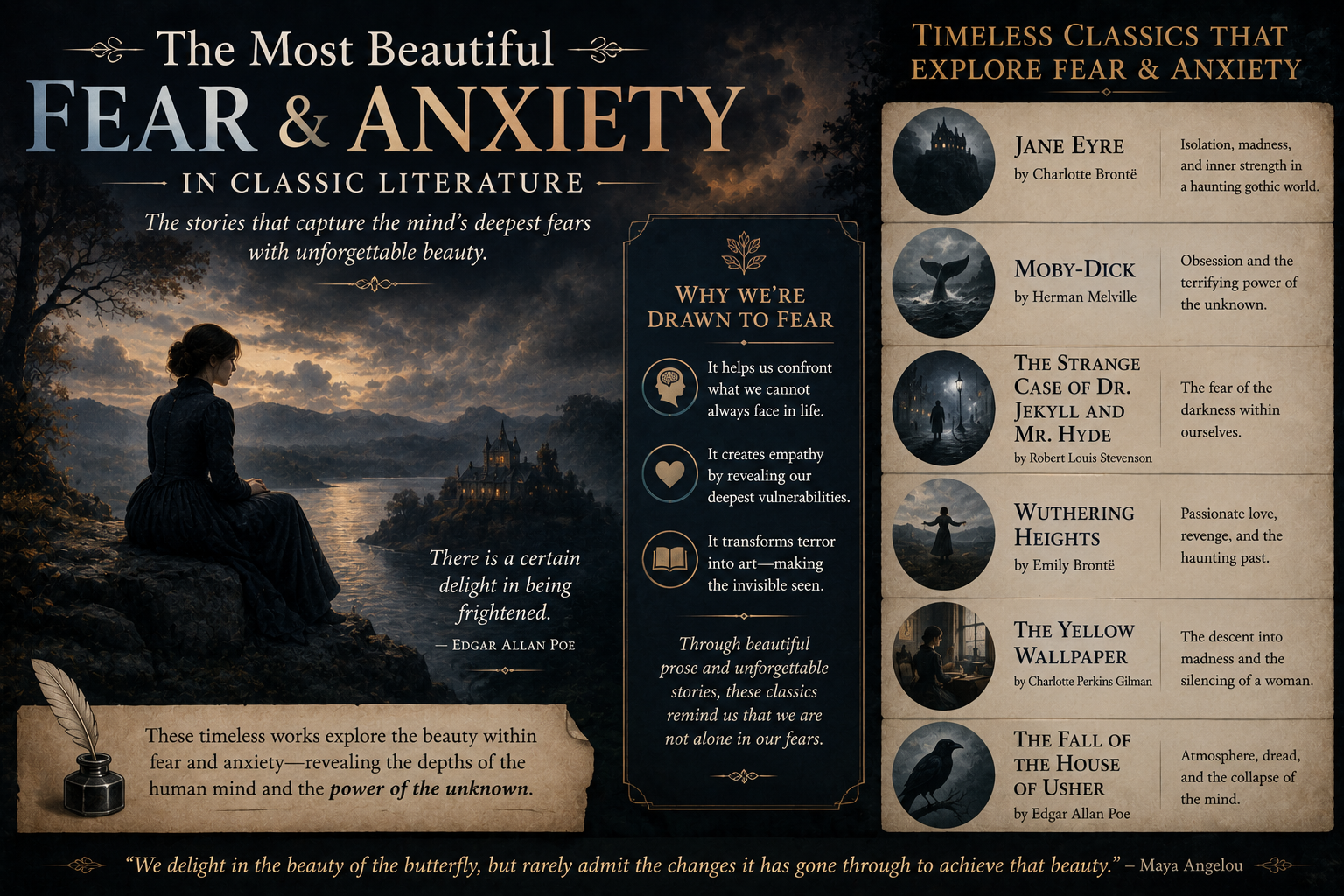
Most Beautiful Fear and Anxiety in Literature: Why Dark Feelings Can Move Us

Beautiful Fear and Anxiety

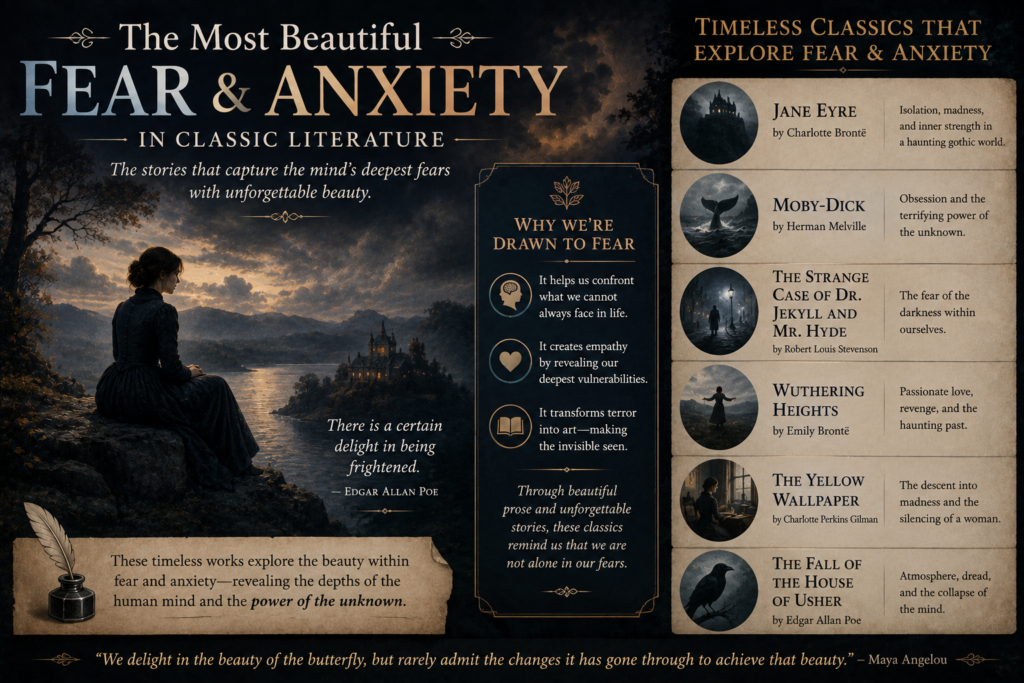
Some stories frighten us, yet they also feel strangely lovely. Most Beautiful Fear and Anxiety explores how literature turns dread into art, meaning, and deep emotion.

From Gothic novels to modern poetry, writers often use fear to show what humans hide, want, and lose. These works remind us that beauty can live inside unease.

In this Guide

Beautiful Fear and Anxiety

What Does Most Beautiful Fear and Anxiety Mean in Literature?

Fear in literature is not always just about terror.

Most Beautiful Fear and Anxiety describes moments when fear becomes meaningful, poetic, or even moving. A scene may feel dark, but it can also reveal truth.

Think of a lonely house, a storm at night, or a speaker who cannot calm their mind. These images may scare us, but they also create mood and mystery.

Writers use this feeling to show how fragile people can be. The fear matters because it points to love, loss, guilt, or change.

Why Most Beautiful Fear and Anxiety Pulls Readers In

Readers often enjoy safe fear because it lets them face hard feelings from a distance.

Most Beautiful Fear and Anxiety gives readers a way to explore dread without real danger. A book can hold fear in a shaped, careful form.

This is why Gothic fiction, tragic poetry, and strange short stories still matter. They help us sit with emotions that daily life may push away.

In class, this topic can also lead to strong literary analysis. Students can ask why a writer makes fear sound musical, why a setting feels alive, or why silence feels so heavy.

Famous Examples of Most Beautiful Fear and Anxiety

Many well-known works turn dread into art.

Edgar Allan Poe often creates beauty from unstable minds. In “The Tell-Tale Heart,” the narrator’s fear grows through sound, rhythm, and repetition.

Mary Shelley’s Frankenstein uses fear to ask what people owe to what they create. The novel feels haunted, but its sadness is just as strong as its horror.

Emily Dickinson also turns inner fear into sharp, strange beauty. Her poems about death, doubt, and the mind can feel quiet yet intense. For a close look at how form shapes meaning, read our guide to New Criticism and Emily Dickinson.

Charlotte Brontë’s Jane Eyre uses hidden rooms, strange laughter, and moral fear. The suspense matters because Jane must decide who she is and what she deserves.

Symbols and Themes Behind Most Beautiful Fear and Anxiety

Symbols help fear feel larger than one scary event.

In literature, darkness often suggests the unknown. It may point to death, secrecy, or a truth the character does not want to face.

Storms can show inner conflict. When a character feels torn inside, the weather may reflect that struggle.

Houses are also powerful symbols. A locked room, a cracked wall, or an empty hallway can show memory, guilt, or fear of the self.

Most Beautiful Fear and Anxiety often appears through these themes:

  • Isolation: A character feels cut off from others.
  • The unknown: A mystery grows because answers stay hidden.
  • Inner conflict: A person fears their own thoughts or desires.
  • Mortality: Death shapes the mood, even when it stays offstage.

These themes make fear more than a plot device. They connect fear to human life.

Recommended Books for Most Beautiful Fear and Anxiety

These books are strong choices for students, book clubs, or anyone who likes beautiful dark literature.

  • Frankenstein by Mary Shelley
  • The Haunting of Hill House by Shirley Jackson

Frankenstein works well for questions about creation, loneliness, and responsibility. Its fear comes from science, but its pain comes from rejection.

The Haunting of Hill House is a masterclass in mood. Shirley Jackson makes the house feel like a mind under pressure.

For more background on Gothic literature, Britannica’s overview of the Gothic novel is a helpful place to start.

How to Read Most Beautiful Fear and Anxiety in a Text

Slow down when a scene feels tense or strange.

Ask what makes the fear beautiful. Is it the language? The image? The rhythm of a sentence?

Watch for repeated words and patterns. Repetition can make anxiety feel trapped, like a thought that will not stop.

Notice the setting. A room, road, or landscape may reflect a character’s mind.

Pay attention to sound. Poe, Dickinson, and many other writers use rhythm to make fear feel alive. The Poetry Foundation’s Emily Dickinson page is useful for exploring how short poems can carry deep unease.

If you study poetry, our article on reading Emily Dickinson through New Criticism can help you focus on word choice, form, and structure.

Why Most Beautiful Fear and Anxiety Matters in Literary Culture

Dark literature gives readers language for feelings that are hard to name.

Most Beautiful Fear and Anxiety matters because it shows that fear is not only ugly or weak. It can be honest. It can be human.

Students often meet this idea in Gothic fiction, Romantic poetry, and modern novels. These works invite readers to think about the self, the unknown, and the limits of reason.

That is why this topic stays popular. It speaks to readers who know that life can feel both frightening and beautiful at once.

FAQs About Most Beautiful Fear and Anxiety

What is Most Beautiful Fear and Anxiety in literature?

It is the way literature turns fear or unease into something meaningful, artistic, or emotionally powerful.

Why do writers make fear seem beautiful?

Writers do this to show hidden truths about the mind, death, love, or guilt. Beauty can make fear feel deeper.

What books show this idea well?

Frankenstein by Mary Shelley and The Haunting of Hill House by Shirley Jackson are strong examples.

Is this idea only found in horror?

No. You can find it in poetry, tragedy, Gothic fiction, and many literary novels.

How can students write about it in an essay?

Focus on symbols, tone, setting, and word choice. Then explain how those details turn fear into meaning.

Key Takeaway

Most Beautiful Fear and Anxiety shows how literature can turn dread into insight. The best dark writing does more than scare us. It helps us understand what it means to be human.
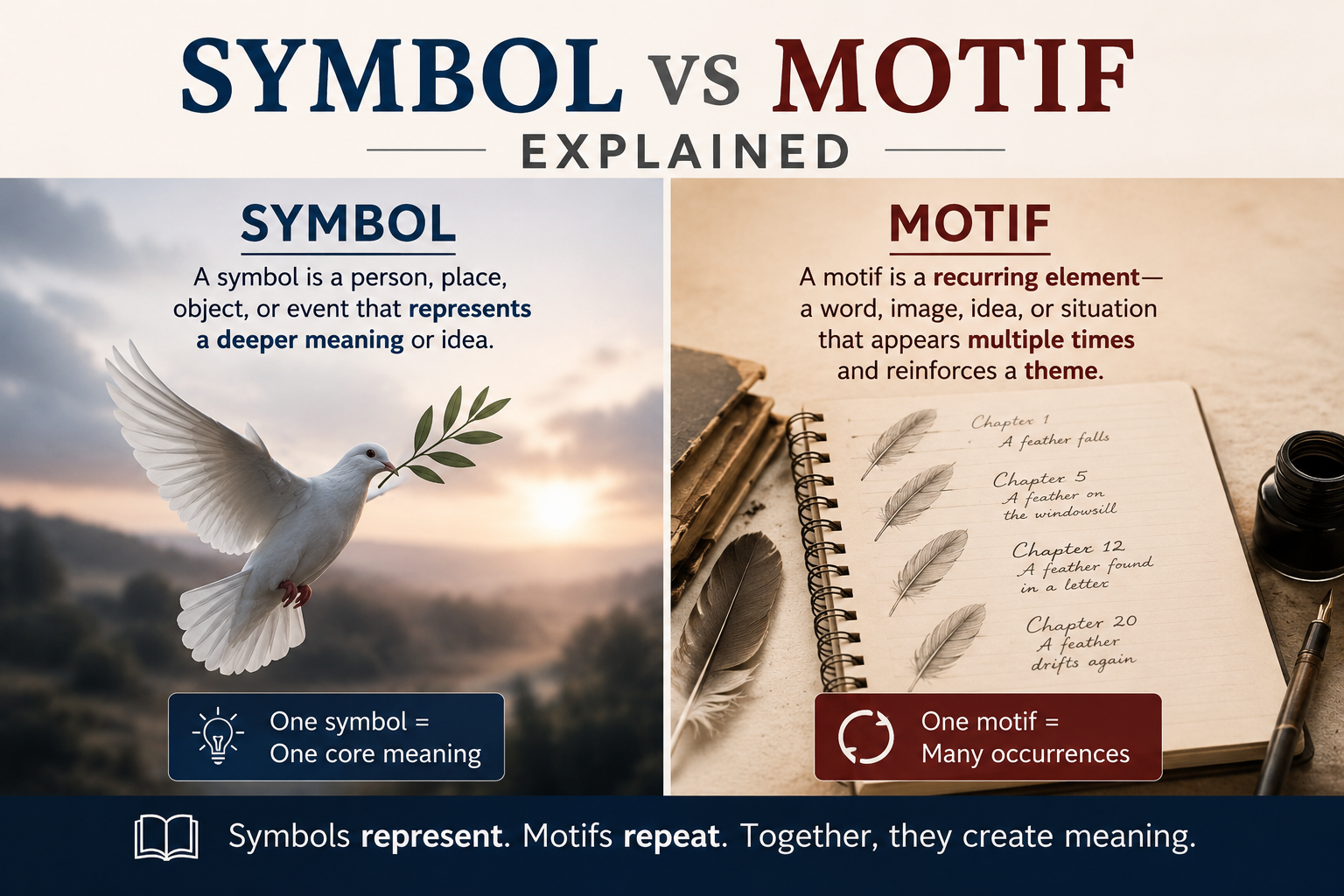
Symbol vs Motif Explained: A Clear Guide for Literature Students

symbol vs motif
symbol vs motif

Symbol vs Motif Explained is a topic that can confuse even strong readers. Both symbols and motifs add deeper meaning to a story, but they work in different ways.

Once you know the difference, literary analysis gets much easier. You can point to better evidence and explain why an author repeats certain images, objects, or ideas.

In this Guide

Use this guide to move from basic definitions to stronger literary analysis.

What Is a Symbol?

A symbol is something in a story that stands for a larger idea.

A symbol can be an object, place, person, color, animal, or action. It has a literal role in the story, but it also points to a deeper meaning.

For example, in The Great Gatsby, the green light at the end of Daisy’s dock is a symbol. It is a real light, but it also stands for Gatsby’s dream, hope, and desire for a future he may never reach.

In Lord of the Flies, the conch shell is a symbol of order and shared rules. When the conch loses power, the boys’ society falls apart.

If you want more help with this part, read our guide on how to find symbolism in a story.

What Is a Motif?

A motif is a repeated element that helps build a theme.

A motif can be a repeated image, phrase, object, situation, sound, or idea. The key word is repeated. A motif shows up more than once and gains meaning over time.

In Macbeth, blood is a major motif. It appears after murder, during guilt, and in moments of fear. Each return of blood reminds us of violence and moral damage.

In To Kill a Mockingbird, mockingbirds form a motif linked to innocence. The idea returns through Tom Robinson, Boo Radley, and the lesson that it is wrong to harm those who do no harm.

Symbol vs Motif Explained: The Main Difference

The simplest difference is this: a symbol means something, while a motif repeats something.

Symbol vs Motif Explained comes down to function. A symbol is often one meaningful thing. A motif is a pattern that appears across the text.

A symbol can appear only once and still matter. A motif must return often enough for readers to notice a pattern.

Think of it this way: the green light in The Great Gatsby is a symbol. The repeated focus on wealth, parties, cars, and status creates motifs tied to the American Dream and social class.

A symbol can also become part of a motif. If the same symbol appears again and again, it may help form a larger pattern.

Symbol vs Motif Explained Through Literature Examples

Examples make the difference easier to see.

In Romeo and Juliet, light and dark images appear often. Romeo calls Juliet the sun, and the lovers often meet at night. This repeated contrast is a motif because it appears across the play.

The poison near the end of the play works more like a symbol. It stands for the deadly results of hate, secrecy, and rash choices.

In The Scarlet Letter, the letter “A” is a symbol. It stands for shame at first, but its meaning shifts as Hester changes in the eyes of her community.

The repeated focus on public judgment, hidden sin, and watching eyes creates motifs. These patterns help develop the novel’s themes about guilt and social control.

Symbol vs Motif Explained works best when you ask two questions: What does this thing mean? Does it repeat across the text?

How to Use Symbol vs Motif Explained in Literary Analysis

Good analysis does more than name a symbol or motif.

When you write about a symbol, explain its literal role first. Then explain the deeper idea it suggests.

For example: In The Great Gatsby, the green light is a real dock light, but it also represents Gatsby’s dream of winning Daisy and remaking the past.

When you write about a motif, track the pattern. Show where it appears and explain how its meaning grows.

For example: In Macbeth, the blood motif begins with battle and bravery, then shifts toward murder, guilt, and fear.

If you are writing an essay, connect the symbol or motif to a theme. A theme is the larger message about life, society, or human nature.

Here is a simple sentence frame you can use:

The repeated image of blood in Macbeth forms a motif that reveals how guilt follows violent ambition.

This is where Symbol vs Motif Explained becomes useful. It helps you move from “I noticed this” to “I understand why it matters.”

Common Mistakes to Avoid

Many students mix up symbols, motifs, and themes.

A symbol is not the same as a theme. A symbol points to a deeper idea, but the theme is the message the story builds.

A motif is not just “anything that appears.” It needs to repeat in a meaningful way.

Do not call every object a symbol. Sometimes a chair is just a chair. Look for clues like strong description, repeated focus, character reaction, or placement at a key moment.

You can also use our guide to spot symbolism in fiction if you need a clearer method.

Helpful Books for Studying Symbols and Motifs

These books can help you practice close reading and literary analysis.

  • How to Read Literature Like a Professor by Thomas C. Foster
  • The Great Gatsby by F. Scott Fitzgerald

How to Read Literature Like a Professor is useful for learning common patterns in fiction. The Great Gatsby is a strong choice because it has clear symbols, motifs, and themes.

Useful External Resources

Trusted literature sites can help you review key terms.

The Poetry Foundation glossary is a helpful place to check literary terms. You can also explore Britannica’s overview of literature for broader context.

FAQ: Symbol vs Motif Explained

Here are quick answers to common student questions.

What is the easiest way to tell a symbol from a motif?

A symbol stands for a deeper idea. A motif is a repeated pattern that helps build a theme.

Can a symbol also be a motif?

Yes. If a symbol appears again and again, it can become part of a motif.

Is a motif the same as a theme?

No. A motif is a repeated element. A theme is the larger message the author develops.

Why does this difference matter in essays?

It helps you write more precise analysis. You can explain whether an author uses one powerful image or a repeated pattern.

Key Takeaway

Symbol vs Motif Explained is really about meaning and pattern. A symbol points to a deeper idea, while a motif repeats to build a larger theme.

Symbols in The Catcher in the Rye: Meanings, Themes, and Why They Matter

Catcher in the Rye symbols

A simple explanation of the most important symbols and images in the text.

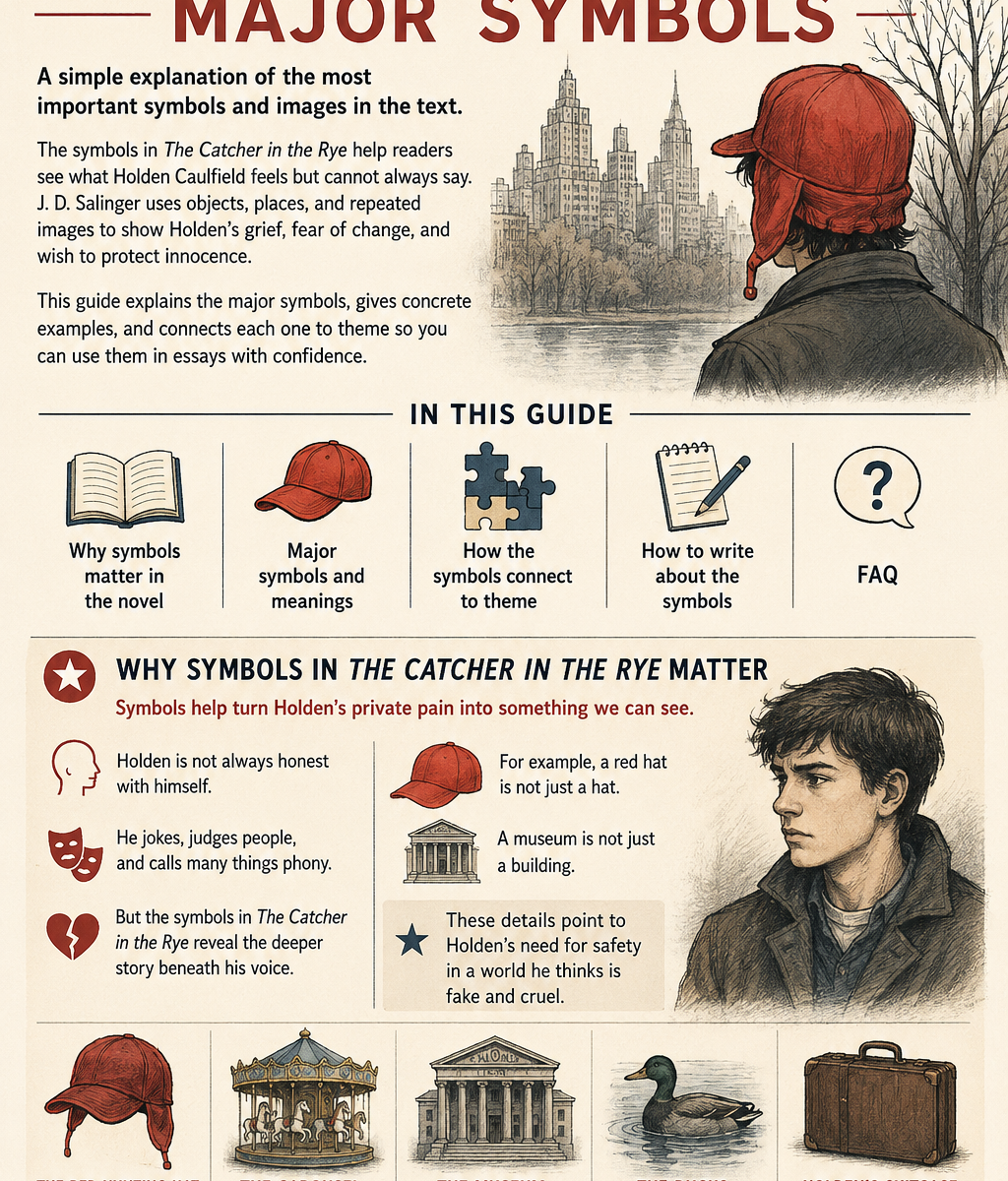
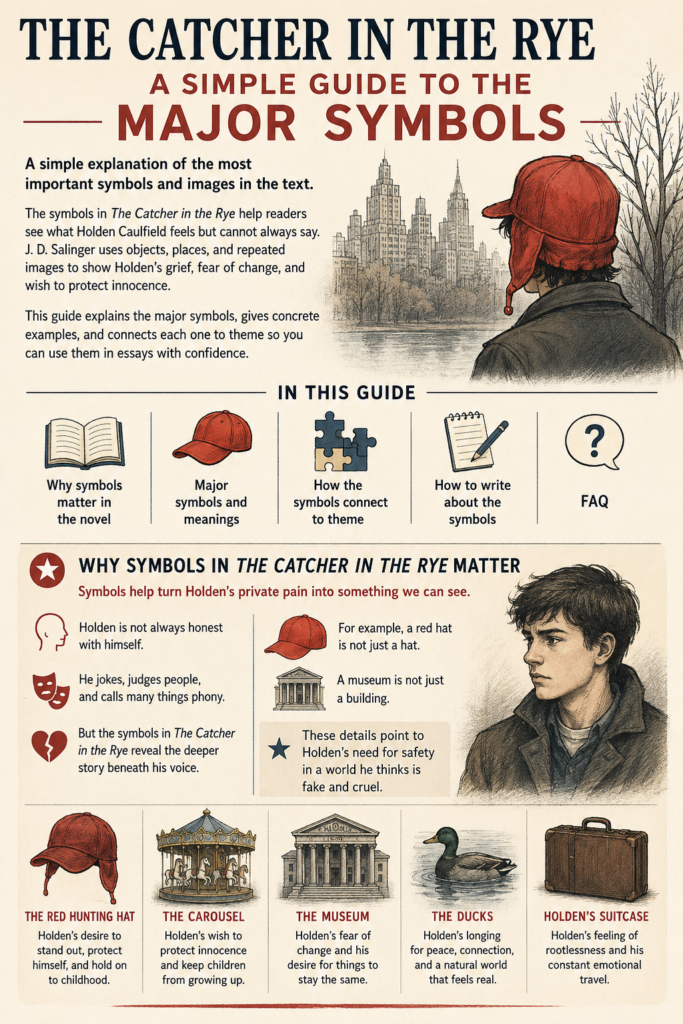
The symbols in The Catcher in the Rye help readers see what Holden Caulfield feels but cannot always say. J. D. Salinger uses objects, places, and repeated images to show Holden’s grief, fear of change, and wish to protect innocence.

This guide explains the major symbols, gives concrete examples, and connects each one to theme so you can use them in essays with confidence.

In this Guide

Catcher in the Rye symbols

Why Symbols in The Catcher in the Rye Matter

Symbols help turn Holden’s private pain into something we can see.

Holden is not always honest with himself. He jokes, judges people, and calls many things phony. But the symbols in The Catcher in the Rye reveal the deeper story beneath his voice.

For example, a red hat is not just a hat. A museum is not just a building. These details point to Holden’s need for safety in a world he thinks is fake and cruel.

If you need a quick refresher on symbolism as a literary tool, see this guide on how to find symbolism in a story.

Major Symbols in The Catcher in the Rye

The novel’s most important symbols show Holden’s inner conflict.

The most famous symbols in The Catcher in the Rye include the red hunting hat, the ducks in Central Park, the Museum of Natural History, and the catcher in the rye image. Each one connects to a major theme in the book.

The Red Hunting Hat

Holden’s red hunting hat is one of the clearest symbols in the novel. He buys it in New York after losing the fencing team’s equipment, which already links the hat to failure and shame.

The hat makes Holden feel unique. It helps him stand apart from other people, even while he feels lonely.

The color red may also connect to Allie, Holden’s dead brother, who had red hair. Because of that, the hat becomes a quiet sign of memory and grief.

Theme connection: The hat shows Holden’s need for identity and protection. He wants to be different, but he also wants comfort.

The Ducks in Central Park

Holden keeps asking where the ducks go when the lagoon freezes. This question seems odd at first, but it matters a lot.

The ducks stand for survival during change. Holden wants to know if living things can disappear and still be safe somewhere else.

This connects to his fear after Allie’s death. If the world can change so fast, Holden wants proof that someone or something will take care of the vulnerable.

Theme connection: The ducks show Holden’s fear of loss and his search for reassurance.

The Museum of Natural History

Holden loves the museum because nothing changes there. The displays stay the same each time he visits.

That matters because Holden hates the way real life keeps moving. People grow up. Families change. Innocence fades.

The museum offers a frozen world. Holden knows this is not real life, but he still wants it.

Theme connection: The museum represents Holden’s desire to stop time and avoid adulthood.

The Catcher in the Rye Image

The title symbol comes from Holden’s dream of standing in a field of rye, catching children before they fall off a cliff. He imagines himself as a protector of innocence.

But Holden misunderstands the Robert Burns poem he hears. That mistake matters because his dream is beautiful, but it is also impossible.

Children will grow up. Holden cannot stop every fall. He must learn that care does not mean control.

Theme connection: The catcher image shows Holden’s wish to protect innocence and his fear of growing up.

How Symbols in The Catcher in the Rye Connect to Theme

Every strong symbol in the novel points back to Holden’s fear of change.

Many symbols in The Catcher in the Rye connect to the same core struggle. Holden wants the world to stay simple and safe, but the world will not do that for him.

The red hat offers protection. The museum offers stillness. The ducks offer hope that change does not mean death. The catcher image offers a fantasy where no child has to fall.

This is similar to symbols in other well-known novels. In The Great Gatsby, the green light points to a dream that Gatsby can never fully reach. In Lord of the Flies, the conch shows order that slowly breaks apart.

Salinger’s symbols work the same way. They take a large theme and place it inside a clear image.

Writing About Symbols in The Catcher in the Rye

A good symbolism paragraph explains both the object and the idea behind it.

When students write about symbols in The Catcher in the Rye, they often stop too early. It is not enough to say the red hunting hat means individuality. You also need to explain why Holden needs that feeling.

Try this pattern: name the symbol, describe where it appears, explain what it suggests, and connect it to theme.

For example, you might write that the Museum of Natural History symbolizes Holden’s wish for a world without change. Then you can link that idea to his grief over Allie and his fear of adulthood.

For more help, read our full guide on spotting symbolism in fiction. You can also review RapidReads Press literature study resources for essay practice and reading support.

Quick Reference: Symbol Meanings

Use this section as a fast study tool before a quiz or essay.

  • Red hunting hat: protection, identity, grief, and the need to feel special.
  • Ducks: change, survival, and Holden’s fear of being left behind.
  • Museum: stillness, safety, and the wish to stop time.
  • Catcher image: innocence, protection, and Holden’s impossible dream.
  • Allie’s baseball glove: memory, love, and the pain of loss.

Allie’s Baseball Glove

Allie’s glove is a personal symbol of love and grief.

The glove belonged to Holden’s younger brother, Allie, who died of leukemia. Allie wrote poems on it so he could read them during baseball games.

This detail shows that Allie was thoughtful and creative. To Holden, the glove is not just a memory. It is proof that someone pure and good was taken from the world.

Theme connection: The glove shows how grief shapes Holden’s view of innocence.

Author and Context

Knowing a little background can help, but the text should still lead your ideas.

J. D. Salinger published The Catcher in the Rye in 1951. The novel became famous for its teen narrator, direct voice, and honest look at alienation.

You can read more about the novel’s history at Britannica’s overview of The Catcher in the Rye. For author background, see Britannica’s biography of J. D. Salinger.

Helpful Books to Read Next

These books can deepen your understanding of Salinger and coming-of-age fiction.

  • The Catcher in the Rye by J. D. Salinger
  • Nine Stories by J. D. Salinger

FAQ About Symbols in The Catcher in the Rye

What are the main symbols in The Catcher in the Rye?

The main symbols in The Catcher in the Rye are the red hunting hat, the ducks, the museum, the catcher image, and Allie’s baseball glove.

What does Holden’s red hunting hat symbolize?

It symbolizes protection, identity, and Holden’s grief. It helps him feel different, but it also shows how badly he wants comfort.

What do the ducks symbolize?

The ducks symbolize change and survival. Holden wants to know where they go because he fears loss and uncertainty.

Why is the Museum of Natural History important?

The museum matters because it never changes. Holden likes it because it gives him the stillness he cannot find in real life.

What does the catcher in the rye symbolize?

It symbolizes Holden’s dream of saving children from pain and adulthood. The image shows his kindness, but also his struggle to accept change.

Key Takeaway

The symbols in The Catcher in the Rye matter because they reveal Holden’s hidden fears. They show a teenager who wants to protect innocence, hold back change, and find safety after loss.

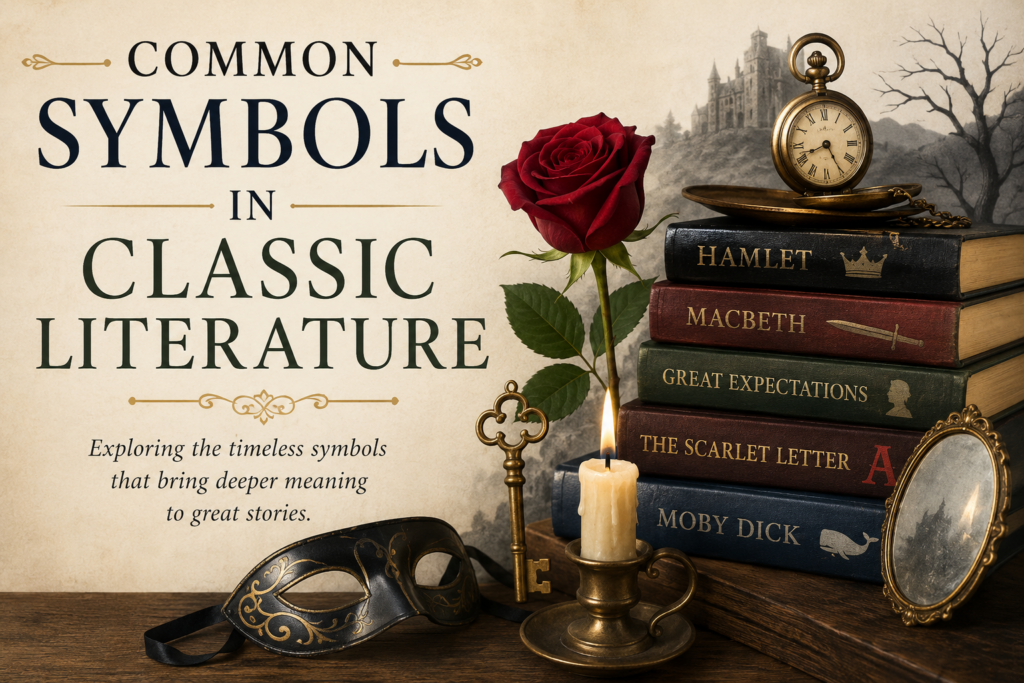
Common Symbols in Classic Literature

literature symbols
literature symbols

Common Symbols in Classic Literature: A Student-Friendly Guide

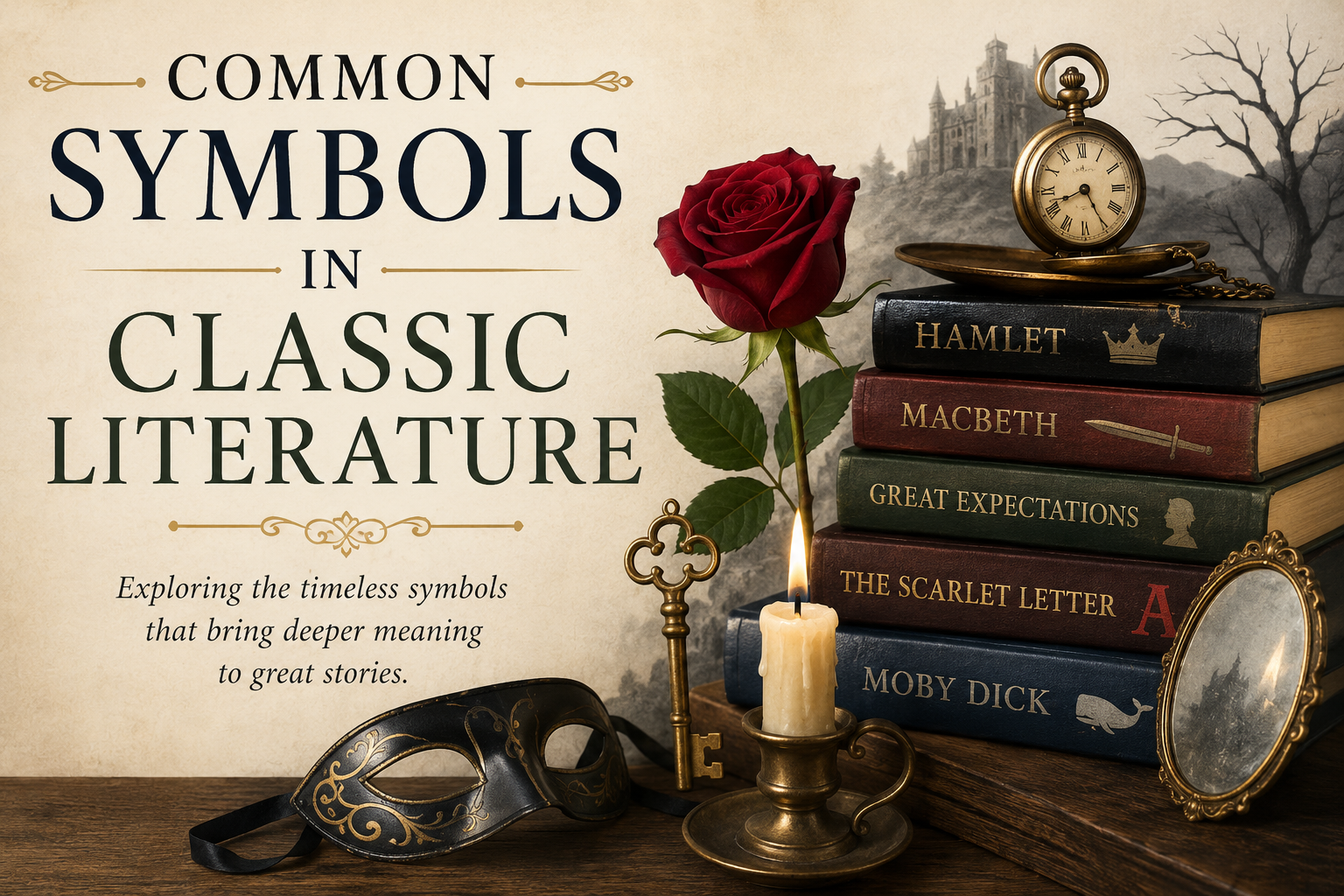
Common Symbols in Classic Literature can help you see deeper meaning in novels, plays, and poems. When you know what certain objects, colors, or places often suggest, you can read with more confidence and write stronger essays.

This guide explains key symbols, gives clear literary examples, and shows how to use them without overthinking every detail.

In this Guide

  • Why symbols matter in classic literature
  • Common symbols and what they often mean
  • Examples from famous books
  • How to analyze symbols in essays
  • Books that help you practice
  • FAQ and key takeaway

Why Common Symbols in Classic Literature Matter

Symbols help writers say more with less.

A symbol is something that stands for more than itself. It can be an object, place, color, animal, or action that points to a bigger idea.

For students, Common Symbols in Classic Literature are useful because they often connect to major themes. A river may suggest change. A locked room may suggest secrets. A storm may suggest conflict or fear.

Symbols do not always mean the same thing in every book. Context matters. Still, knowing common patterns gives you a strong place to start.

Common Symbols in Classic Literature: Light and Darkness

Light and darkness often show knowledge, truth, danger, or moral conflict.

Light often points to truth, hope, or understanding. Darkness often points to fear, confusion, or hidden evil.

In Frankenstein by Mary Shelley, light can suggest knowledge and discovery. Victor Frankenstein wants to “bring light” to science, but his search leads to pain and guilt.

In Heart of Darkness by Joseph Conrad, darkness is not just a setting. It raises questions about cruelty, power, and what people hide inside themselves.

When you see light or darkness in a classic text, ask what the character understands at that moment. Also ask what the writer may be hiding from the reader.

Common Symbols in Classic Literature: Colors

Colors can carry emotional and social meaning.

Red often suggests passion, sin, blood, or shame. White can suggest purity, innocence, emptiness, or coldness. Green often points to hope, envy, nature, or desire.

In The Scarlet Letter by Nathaniel Hawthorne, the red letter “A” is one of the most famous symbols in American literature. It marks Hester Prynne’s shame, but it also becomes a sign of strength.

In The Great Gatsby by F. Scott Fitzgerald, the green light at the end of Daisy’s dock stands for Gatsby’s dream. It also shows how that dream stays just out of reach.

Colors are among the most important Common Symbols in Classic Literature because they can appear many times across a story. Track when a color appears and how the mood changes around it.

Common Symbols in Classic Literature: Nature

Nature often reflects a character’s inner life.

Writers use weather, seasons, gardens, and wild places to show emotion or change. Spring may suggest youth or rebirth. Winter may suggest death, loss, or loneliness.

In Wuthering Heights by Emily Brontë, the wild moors reflect the fierce emotions of the characters. The setting feels harsh, open, and hard to control.

In King Lear by William Shakespeare, the storm shows Lear’s mental collapse. The weather outside mirrors the chaos inside him.

When you study Common Symbols in Classic Literature, pay close attention to setting. A landscape may reveal more than a character says out loud.

Common Symbols in Classic Literature: Animals

Animals often reveal power, fear, guilt, or instinct.

A snake may suggest danger or betrayal. A bird may suggest freedom or a trapped soul. A dog may suggest loyalty, but it can also show violence, depending on the story.

In Macbeth, Shakespeare uses animal images to show disorder and fear. After Duncan’s murder, nature seems broken, which suggests that Macbeth’s crime has damaged the moral order.

In Lord of the Flies by William Golding, the “beast” becomes a symbol of the boys’ fear. It also points to the violence inside human nature.

Animal symbols work best when you connect them to a theme. Do not stop at “the bird means freedom.” Ask who wants freedom and what blocks it.

Common Symbols in Classic Literature: Objects

Objects can carry a story’s biggest ideas.

A letter, ring, mirror, or weapon can gain meaning as the story moves on. The object may start as a normal item, then become tied to guilt, love, power, or memory.

In The Lord of the Rings by J.R.R. Tolkien, the ring stands for power and temptation. It shows how even good people can change when power takes hold.

In Jane Eyre by Charlotte Brontë, the locked room and hidden spaces at Thornfield Hall suggest secrets, fear, and social limits.

Common Symbols in Classic Literature often gain meaning through repetition. If an object appears at key moments, the author likely wants you to notice it.

Common Symbols in Classic Literature: Journeys and Roads

A journey often shows growth, escape, or a search for truth.

Roads and travel can show a character’s movement from innocence to experience. A physical trip may also reflect an inner change.

In The Odyssey by Homer, Odysseus’s journey is about more than getting home. It tests his pride, loyalty, and wisdom.

In The Adventures of Huckleberry Finn by Mark Twain, the river becomes a path toward freedom. Yet it also shows the moral problems of the society around Huck and Jim.

Journey symbols are useful in essays because they often connect to character growth. Ask what the character learns before and after the journey.

How to Analyze Common Symbols in Classic Literature

A symbol should connect to the whole story, not just one scene.

Start with the basic meaning. What is the object, color, place, or action? Then ask how it changes as the story goes on.

Look for repetition. If a symbol appears more than once, note when it appears and who is present. This can reveal a pattern.

Connect the symbol to a theme. A green light is not important only because it is green. It matters because it connects to dreams, wealth, and longing.

If you want a deeper step-by-step method, read this guide on how to find symbolism in a story.

How to Use Symbols in Literature Essays

Strong symbol analysis stays close to the text.

Do not write that a symbol “obviously” means one thing. Instead, prove your idea with evidence from the story.

A simple essay sentence might look like this:

In The Great Gatsby, the green light symbolizes Gatsby’s dream of a perfect future with Daisy, but its distance shows that the dream is impossible to fully reach.

This works because it names the symbol, explains the meaning, and links it to a theme.

For AP Literature or college essays, you should also explain how the symbol affects the reader. Does it create hope? Does it create doubt? Does it make the ending feel tragic?

Best Books for Studying Common Symbols in Classic Literature

These books give students strong practice with symbolism.

  • The Great Gatsby by F. Scott Fitzgerald
  • The Scarlet Letter by Nathaniel Hawthorne
  • Lord of the Flies by William Golding

Each book uses symbols in a clear way, which makes them helpful for essays and class discussion. They are also common choices in high school and college literature courses.

You can also explore trusted resources like the Poetry Foundation’s definition of symbol and Britannica’s overview of Symbolism for more background.

Quick Study Tips for Symbolism

A few simple habits can make symbol analysis much easier.

Mark repeated objects, colors, and places as you read. Write a short note each time one appears.

Ask what changes near the symbol. Does the mood shift? Does a character act in a new way?

Do not force a meaning. Some details are just details. A symbol matters when the story gives it weight.

When in doubt, return to theme. The best symbol analysis explains how one detail supports the bigger message of the work.

FAQ About Common Symbols in Classic Literature

What are the most common symbols in classic literature?

Some of the most common symbols are light, darkness, colors, nature, animals, objects, and journeys. Their meaning depends on the story’s context.

How do I know if something is a symbol?

Look for repetition, strong description, or a link to a major theme. If the author keeps drawing attention to it, it may be symbolic.

Can one symbol have more than one meaning?

Yes. A strong symbol can hold more than one idea. For example, the scarlet letter in Hawthorne’s novel suggests shame, strength, and identity.

Why do teachers ask students to find symbols?

Symbols help students understand theme, character, and conflict. They also lead to stronger literary analysis.

Should I memorize Common Symbols in Classic Literature?

You can learn common patterns, but do not rely on memorization alone. Always use the text to support your interpretation.

Key Takeaway

Common Symbols in Classic Literature are tools for deeper reading, not secret codes with fixed answers. Notice patterns, connect them to theme, and use evidence from the text to explain your ideas clearly.

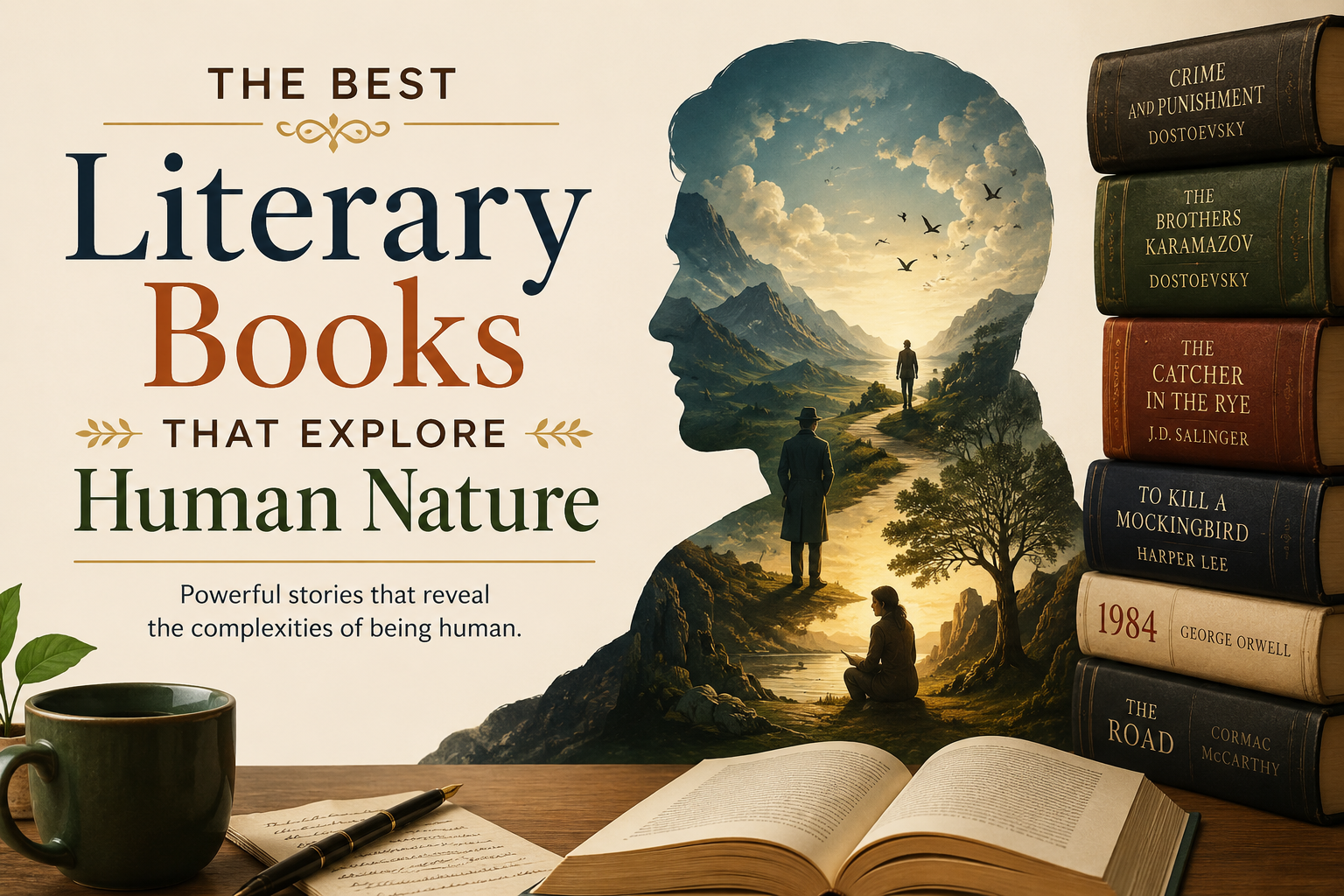
Best Literary Human Nature: Books That Show Who We Really Are

Best human nature books

Great stories help us see the truth about people, even when that truth feels hard to face. Best Literary Human Nature looks at books that explore fear, pride, love, guilt, and moral choice.

These works matter because they ask a simple question: what do people do when life tests them?

In this Guide

  • What Best Literary Human Nature means
  • Why human nature matters in literature
  • Best Literary Human Nature books to read
  • Symbols and themes that reveal character
  • How students can write about human nature
  • FAQs
  • Key takeaway

What Best Literary Human Nature Means

Stories about human nature show what people want, fear, hide, and choose.

The phrase Best Literary Human Nature may sound broad, but the idea is clear. It points to books that reveal how people act under pressure.

Some characters try to do the right thing. Others choose power, comfort, or revenge. Literature lets us watch those choices from a safe distance.

That is why these books stay with us. They do not just tell us what happened. They show us why people behave the way they do.

Why Best Literary Human Nature Stories Still Matter

The best books feel alive because their characters feel real.

Best Literary Human Nature stories matter because readers can see parts of themselves in the characters. A reader may not rule a kingdom like Macbeth, but they may know what ambition feels like.

In William Shakespeare’s Macbeth, ambition grows into violence. Macbeth wants power so badly that he loses his peace, his honor, and his sense of self.

In Mary Shelley’s Frankenstein, Victor wants glory through science. His mistake is not just that he creates life. His deeper failure is that he refuses to care for what he has made.

These stories ask us to think about responsibility. They also ask if people are born flawed or shaped by the choices around them.

Best Literary Human Nature Books to Read

These books are strong choices for students because they are rich, readable, and full of moral conflict.

The Best Literary Human Nature books often focus on a character who faces a hard test. That test may come from society, family, power, or guilt.

To Kill a Mockingbird by Harper Lee

This novel explores justice, fear, and moral courage. Atticus Finch shows that doing the right thing can cost a person comfort and safety.

Scout learns that people are more complex than they first appear. The book asks readers to look past rumor and prejudice.

Lord of the Flies by William Golding

This novel places schoolboys on an island without adult rules. At first, they try to build order. Soon, fear and power begin to take over.

Golding suggests that cruelty can grow when people lose limits. The story is often used in classrooms because it raises sharp questions about civilization and human nature.

Other strong examples

Students may also study The Great Gatsby by F. Scott Fitzgerald or Hamlet by William Shakespeare. Both works show how desire can twist a person’s view of truth.

For helpful background on the idea of human nature, readers can explore Britannica’s overview of human nature.

Best Literary Human Nature Themes Students Should Know

Themes help readers move from “what happened” to “what the story means.”

When students study Best Literary Human Nature, they often notice the same big ideas across different books. These ideas repeat because people face the same inner battles in many times and places.

Ambition and its cost

Ambition can help a character grow. It can also lead to ruin.

Macbeth is the classic example. His desire for power destroys his loyalty and peace of mind.

Goodness under pressure

Many novels ask if a person can stay good when the world is unfair. To Kill a Mockingbird explores this through Atticus, Scout, and the trial of Tom Robinson.

The book does not pretend goodness is easy. It shows that moral courage often feels lonely.

Fear and group behavior

Lord of the Flies shows how fear can spread through a group. The boys begin to follow the loudest voices, not the wisest ones.

This theme matters because people often act differently in a crowd. Literature helps us question that shift.

Symbols That Reveal Human Nature

Symbols give stories deeper meaning without heavy explanation.

In Best Literary Human Nature works, symbols often show what characters cannot say out loud. A symbol may reveal guilt, innocence, power, or loss.

In Lord of the Flies, the conch shell stands for order and shared rules. When the shell loses power, the boys lose their grip on peace.

In Frankenstein, light often connects to knowledge. Yet Shelley shows that knowledge without care can become dangerous.

In The Great Gatsby, the green light stands for Gatsby’s dream. It also shows how desire can trap a person in the past.

Poetry can do this too. The Poetry Foundation’s page on Robert Frost is useful for readers who want to see how poems explore choice and regret.

How to Write About Best Literary Human Nature in an Essay

A strong essay does not just name a theme. It explains how the author builds that theme through character, conflict, and symbol.

If you write about Best Literary Human Nature, start with a clear claim. Do not say, “This book shows human nature.” Say what the book argues about human nature.

For example, an essay on Macbeth could argue that unchecked ambition destroys moral judgment. An essay on Lord of the Flies could argue that fear weakens social order.

Your thesis should be specific, arguable, and tied to the text. If you need help, use this guide on how to write a thesis statement for a literary analysis essay.

After that, choose scenes that prove your point. Focus on what characters say, what they hide, and how they change.

Recommended Books for Best Literary Human Nature Readers

These books are often easy to find and useful for class discussions.

To Kill a Mockingbird by Harper Lee is a strong choice for readers who want a story about justice and moral growth.

Lord of the Flies by William Golding is ideal for readers who want a darker look at fear, power, and group behavior.

Both books work well for essays because they offer clear conflicts and strong symbols. They also give students many ways to discuss Best Literary Human Nature without forcing one simple answer.

Common Mistakes When Reading Human Nature in Literature

It is easy to make human nature sound too simple.

One common mistake is to call a character “good” or “bad” and stop there. Most great books avoid simple labels.

Another mistake is to ignore the setting. A character’s world shapes their choices. Social pressure, fear, and unfair rules often push characters toward action.

A better approach is to ask why a character makes a choice. Then ask what the author wants readers to learn from that choice.

FAQs About Best Literary Human Nature

What does Best Literary Human Nature mean?

Best Literary Human Nature refers to books and stories that reveal how people think, choose, and change. These works often focus on moral conflict.

What is a good book about human nature for students?

To Kill a Mockingbird is a strong choice. It deals with justice, courage, and the way people judge others.

Why do teachers assign books about human nature?

Teachers assign these books because they help students think deeply about character and theme. They also connect literature to real life.

Is human nature a theme?

Human nature is a broad idea, not a theme by itself. A stronger theme would say something specific, such as “fear can make people give up their values.”

How can I find symbols related to human nature?

Look for objects, images, or repeated details that connect to a character’s inner life. Then ask how the symbol changes as the story moves forward.

Key Takeaway

Best Literary Human Nature stories matter because they show people at their most honest moments. They help readers see how fear, desire, guilt, and hope shape human choice.

The strongest literature does not give easy answers. It gives us characters who feel real, choices that matter, and questions we keep asking long after the final page. 📚

Best Classic Moon Symbolism in Literature: Meaning, Themes, and Books to Read

Moon symbolism

The Best Classic Moon Symbolism in literature often points to mystery, change, hidden truth, and emotion. Writers use the moon because it feels familiar, but it also feels strange and powerful.

From Gothic novels to Romantic poems, the moon can light up secrets that characters try to hide. It can also show fear, love, madness, or hope in a quiet way.

Moon symbolism

In this Guide

  • What moon symbolism means in classic literature
  • How Gothic writers use the moon
  • Moon symbolism in poetry
  • Famous examples from novels and plays
  • Common moon themes
  • Books to read for moon symbolism
  • FAQs about moon symbolism

What Is Best Classic Moon Symbolism?

The moon often acts like a mirror for a character’s inner life.

In classic literature, the moon is rarely just part of the setting. It can show that a scene is strange, emotional, secret, or unsafe.

The Best Classic Moon Symbolism works because the moon changes shape. It grows, fades, disappears, and returns. That makes it a strong symbol for change, time, memory, and unstable feelings.

The moon also rules the night. Since night often hides what daylight reveals, moonlight can create tension. It lets readers see a little, but not everything.

For more help with symbols in fiction, read our guide on how to find symbolism in a story.

Best Classic Moon Symbolism in Gothic Literature

Gothic writers use the moon to make fear feel beautiful and dangerous.

In Gothic literature, moonlight often falls on castles, graveyards, windows, and wild landscapes. It gives scenes a dreamlike look, but it can also make them feel unsafe.

In Dracula by Bram Stoker, the night world matters. The moon helps build a mood of danger because Dracula’s power grows after dark. Moonlit scenes remind readers that evil can move quietly when people feel most helpless.

In Frankenstein by Mary Shelley, moonlight often appears during lonely or fearful moments. Victor sees the world through guilt and dread, so the moon can feel cold instead of calm.

This is why the Best Classic Moon Symbolism in Gothic fiction often connects to fear, isolation, and the unknown. The moon does not comfort the characters. It watches them.

Best Classic Moon Symbolism in Romantic and Victorian Poetry

Poets often turn the moon into a symbol of longing, beauty, and deep thought.

Romantic poets loved nature because they saw it as a path to feeling and imagination. The moon gave them a perfect image for quiet sadness, wonder, and spiritual mystery.

Percy Bysshe Shelley’s poem To the Moon presents the moon as tired and wandering. It feels almost human. You can read the poem at the Poetry Foundation.

Emily Dickinson also uses the moon in striking ways. In poems like “The Moon was but a Chin of Gold,” the moon becomes strange, almost like a face in the sky. Her moon is not simple or soft. It feels alive and hard to explain.

The Best Classic Moon Symbolism in poetry often depends on mood. A moon can feel romantic in one poem and lonely in another. The symbol changes with the speaker’s mind.

Famous Examples of Moon Symbolism in Classic Literature

Many famous works use the moon to show love, secrecy, or a shift in power.

In Shakespeare’s A Midsummer Night’s Dream, the moon is tied to romance, magic, and confusion. Lovers meet in the woods at night, where moonlight helps create a world that feels playful but unstable.

In Nathaniel Hawthorne’s The Scarlet Letter, moonlight matters during scenes of guilt and hidden truth. The night does not fully hide sin. Instead, the moon gives just enough light to make secrets feel visible.

In Jane Eyre by Charlotte Brontë, the moon often has a guiding role. Jane sometimes sees it as calm and almost motherly. It can reflect her need for safety, love, and moral direction.

These examples show why moon symbolism stays popular in classrooms. It helps readers track a character’s fear, desire, or private struggle without a long speech.

Best Classic Moon Symbolism and Common Themes

The moon can carry many meanings, but a few themes appear again and again.

Change is one of the most common meanings. Because the moon has phases, it often points to growth, decline, or a coming shift.

Mystery is another key theme. Moonlight reveals shapes but not details. That makes it perfect for scenes where characters do not fully understand what they face.

Madness also appears in older literature and folklore. The word “lunatic” comes from an old belief that the moon could affect the mind. You can learn more about the moon’s cultural history through Britannica’s overview of the Moon.

Love is a softer meaning. Moonlit scenes can feel private and emotional, which is why writers often place lovers under the moon.

The Best Classic Moon Symbolism does not have one fixed meaning. The scene, character, and genre all shape what the moon suggests.

How to Spot Best Classic Moon Symbolism in a Story

Look at what happens when the moon appears.

Ask what the moon changes in the scene. Does it make the setting feel peaceful, eerie, romantic, or tense?

Notice who sees the moon. A lonely character may read the moon as cold. A hopeful character may see it as beautiful.

Pay attention to light and shadow. Moonlight often sits between darkness and full truth. That makes it useful when a story deals with secrets.

If you want a simple method, use this symbolism reading guide to practice with any poem, novel, or short story.

Recommended Books for Studying Best Classic Moon Symbolism

These books are strong choices for students who want clear examples of moon imagery and symbolism.

  • Dracula by Bram Stoker
  • Jane Eyre by Charlotte Brontë
  • The Poems of Emily Dickinson by Emily Dickinson

Dracula is useful if you want to study moonlight, fear, and Gothic mood. The night scenes show how setting can shape terror.

Jane Eyre gives a different kind of moon symbol. The moon often feels moral, emotional, and personal.

Emily Dickinson’s poetry is a great choice for close reading. Her moon images are short, strange, and rich with meaning.

FAQs About Moon Symbolism in Literature

What does the moon usually symbolize in literature?

The moon often symbolizes mystery, change, emotion, secrecy, or the hidden self. Its meaning depends on the scene and the character.

Why do Gothic writers use the moon so often?

Gothic writers use the moon because it creates fear and beauty at the same time. Moonlight makes a scene visible but still unclear.

Is moon symbolism always romantic?

No. The moon can suggest romance, but it can also suggest danger, madness, loneliness, or guilt.

How can I analyze moon symbolism for school?

Start with the mood of the scene. Then ask what the moon reveals, what it hides, and how the character reacts to it.

Key Takeaway: Best Classic Moon Symbolism Still Matters

The Best Classic Moon Symbolism works because the moon feels both close and mysterious. It lights the dark without removing the dark completely.

That is why writers keep returning to it. The moon can show love, fear, change, and secret truth in one quiet image.

When you see the moon in a classic text, pause for a moment. It may be telling you what the characters cannot say out loud.

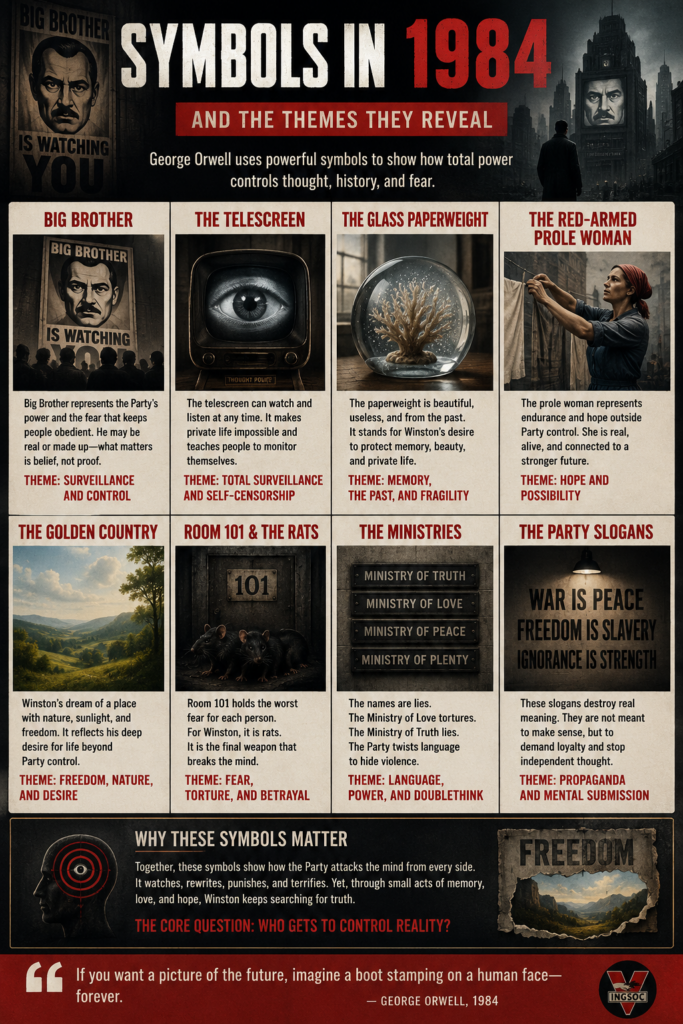
Symbols in 1984: What They Mean and Why They Matter

symbols in 1984

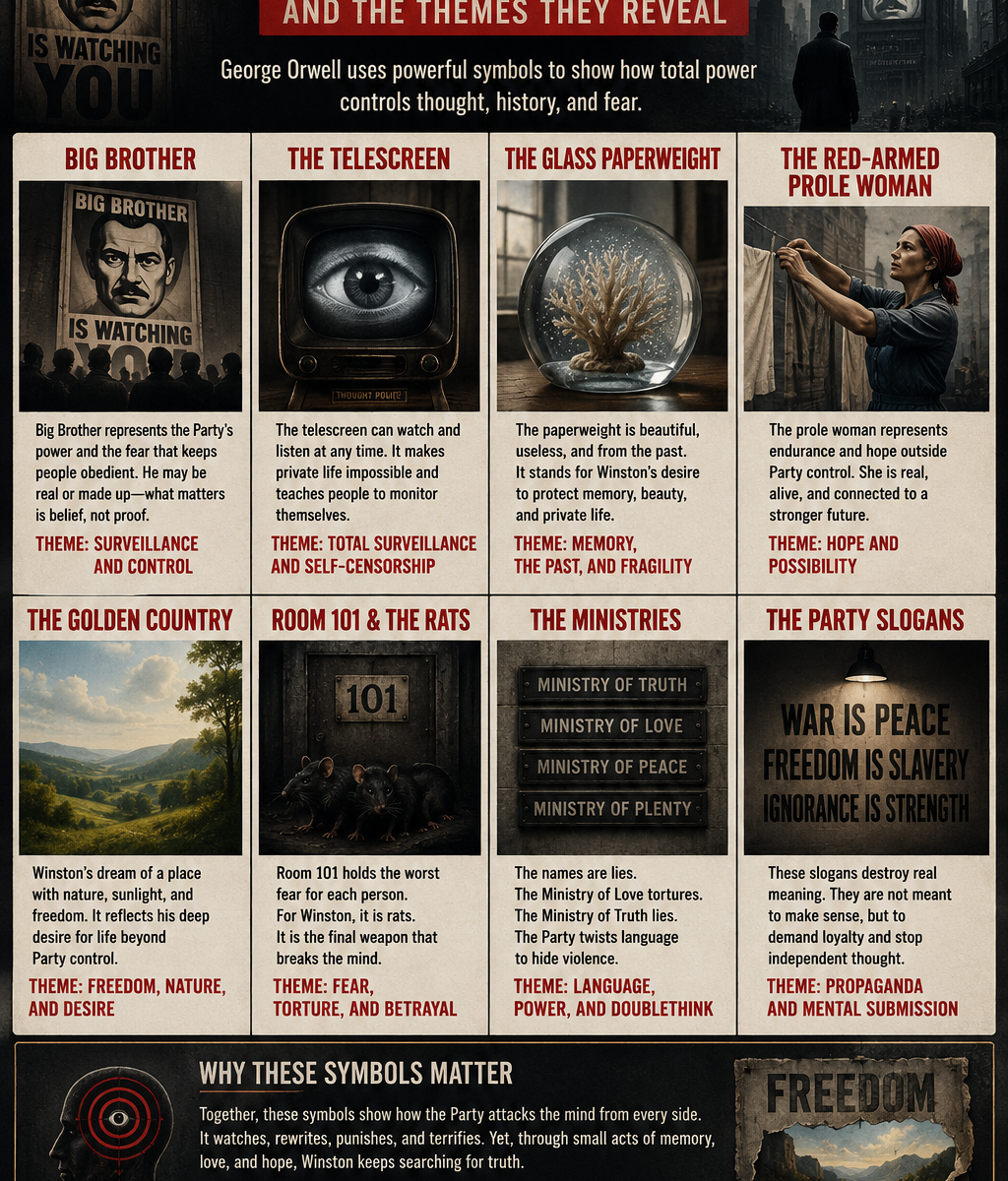
George Orwell uses strong images to show how a government can control thought, history, and fear. This guide explains the most important symbols in 1984 and connects each one to a major theme in the novel.

If you need a quick review of the basics, see our guide on how to find symbolism in a story.

In this Guide

  • What symbolism does in the novel
  • Big Brother and the telescreen
  • The paperweight, the prole woman, and the Golden Country
  • Room 101, rats, and fear
  • How to write about these symbols
  • FAQ and key takeaway

This article contains affiliate links.

symbols in 1984

What Symbols in 1984 Do

Orwell’s symbols make abstract ideas feel concrete and hard to ignore.

The main symbols in 1984 help readers see how total power works. Instead of only telling us that the Party is cruel, Orwell gives us objects and images that show fear, control, and lost freedom.

This is why symbolism matters in literature. A symbol can carry a larger meaning, like the green light in The Great Gatsby or the conch in Lord of the Flies.

In Orwell’s novel, symbols often show the gap between private life and public control. Winston wants truth and love, but the Party tries to own both.

Big Brother as One of the Key Symbols in 1984

Big Brother stands for the Party’s power and the fear that keeps people obedient.

The famous poster says, “Big Brother is watching you.” This image appears across the city and makes people feel watched even when no one may be there.

Big Brother may be a real person, or he may be a made-up figure. That uncertainty is part of the point. The Party does not need proof. It needs belief.

As one of the central symbols in 1984, Big Brother connects to the theme of surveillance. He also shows how a government can replace family, faith, and personal loyalty with loyalty to the state.

The Telescreen and Total Surveillance

The telescreen turns private space into public property.

Winston’s telescreen can send out Party messages, but it can also watch him. He cannot fully turn it off. Even his face and body can betray him.

This symbol matters because it makes control feel constant. The Party does not only punish crimes. It hunts for thoughts, doubts, and small signs of rebellion.

The telescreen also connects to the theme of self-censorship. Winston learns to hide his feelings because the world around him has no safe corner.

The Glass Paperweight and the Lost Past

The paperweight shows Winston’s desire to protect beauty, memory, and private life.

Winston buys the glass paperweight because it feels useless in the Party’s world. It is old, delicate, and connected to a time before constant control.

The piece of coral inside the glass seems sealed away from history. Winston imagines his room above Mr. Charrington’s shop in the same way. It feels like a small world where he and Julia can exist apart from the Party.

When the Thought Police smash the paperweight, the meaning becomes clear. The Party can break private dreams as easily as glass.

This is one of the most painful symbols in 1984 because it links memory to fragility. The past can matter deeply, but it can also be destroyed.

The Red-Armed Prole Woman

The prole woman symbolizes endurance and a hope that exists outside Party control.

Winston watches her as she hangs laundry and sings. She is not rich or powerful, but she seems alive in a way Party members are not.

Her body, voice, and daily work suggest strength. Winston starts to believe that the proles may hold the future because they have not been fully emptied by Party life.

This symbol connects to the theme of hope. Orwell does not make that hope simple, though. The proles have numbers, but they lack political awareness.

The Golden Country

The Golden Country represents freedom, natural life, and desire without fear.

Winston dreams of a place with grass, sunlight, and open space. It feels like the opposite of London, where rooms are watched and language is policed.

When Winston later meets Julia in the countryside, the setting echoes this dream. For a short time, nature seems to offer a space beyond Party control.

Yet the Golden Country is never fully safe. As with many symbols in 1984, it shows both hope and danger. Freedom exists in Winston’s mind, but the Party works to reach even there.

Room 101, Rats, and Fear

Room 101 symbolizes the final weapon of the Party: personal terror.

O’Brien tells Winston that everyone knows what waits in Room 101. It is the worst thing in the world for that person. For Winston, it is rats.

The rats are not just animals. They represent panic that cannot be argued with. Winston can resist pain for a time, but pure fear breaks the part of him that loves Julia.

This symbol connects to the theme of betrayal. The Party does not only want Winston to obey. It wants him to give up the person he loves most.

The Ministries and Party Slogans

The false names of the Ministries show how language can hide violence.

The Ministry of Love deals with torture. The Ministry of Truth spreads lies. These names are cruel because they force people to accept the opposite of reality.

The Party slogans work the same way. Their purpose is not clear thought. Their purpose is mental submission.

These are important symbols in 1984 because they connect language to power. If the Party can control words, it can weaken a person’s ability to resist.

Why Symbols in 1984 Matter for Themes

The novel’s symbols all point back to the same core question: who gets to control reality?

Big Brother and the telescreen show public control. The paperweight and Golden Country show private hope. Room 101 shows how fear can destroy even deep love.

Together, the symbols in 1984 reveal how the Party attacks the mind from every side. It changes history, watches behavior, twists language, and uses fear when all else fails.

For more background on the novel, you can read Britannica’s overview of Nineteen Eighty-four.

How to Write About Symbols in 1984

A strong paragraph should name the symbol, explain its meaning, and connect it to a theme.

Do not stop at saying that Big Brother is a symbol of control. Show how the poster, the watching eyes, and the repeated slogan make people police themselves.

You can use this simple sentence frame: In 1984, [symbol] represents [idea] because [specific detail], which helps Orwell develop the theme of [theme].

For more help with this skill, review our step-by-step post on finding symbols in fiction.

Books to Pair with 1984

These books pair well with Orwell’s novel because they also explore power, language, and freedom.

FAQ About Symbols in 1984

These quick answers can help with homework, essays, or class discussion.

What is the most important symbol in 1984?

Big Brother is often the most important symbol because he represents the Party’s total power and constant watchfulness.

What does the paperweight symbolize in 1984?

The paperweight symbolizes Winston’s love of the past and his hope for a private life outside Party control.

What do rats symbolize in 1984?

Rats symbolize Winston’s deepest fear. They also show how the Party uses terror to force betrayal.

Why does Orwell use so many symbols?

Orwell uses symbols to make political control feel personal. The images help readers see how power reaches into daily life.

Are the symbols in 1984 still relevant today?

Yes. Many readers still connect the novel’s symbols to debates about privacy, propaganda, and truth.

Key Takeaway

The most important symbols in 1984 show how the Party controls people through fear, false language, lost memory, and constant surveillance. Orwell’s images matter because they turn big political ideas into scenes we can feel.

Count Dracula as a Symbol of Fear and Corruption in Dracula

Count Dracula as a symbol of fear and corruption

Count Dracula is one of the most famous villains in literature, yet his role goes far beyond a simple monster. In Dracula, he represents something deeper and more unsettling. He stands as a symbol of fear, moral decay, and the spread of corruption within society.

When readers look closely at his actions, his influence, and his presence in the novel, they begin to see that Dracula is not just a character. He is a force that threatens both the body and the soul.

This article contains affiliate links.

In this Guide 📚

  • What Dracula represents in the novel
  • How fear shapes his character
  • How corruption spreads through his victims
  • Why Dracula’s power goes beyond physical danger
  • What his defeat reveals about the novel’s message
Count Dracula as a symbol of fear and corruption
Image by Carla Paton

Count Dracula as a Symbol of Fear and Corruption

Dracula is more than a villain. He represents a deeper threat that spreads through fear and moral decay.

At the beginning of the novel, Count Dracula appears calm, polite, and even refined. Jonathan Harker meets a nobleman who speaks with care and shows control. Yet something feels wrong from the start. His strange habits and silent movements create unease long before his true nature is revealed.

This early tension matters because it shows that fear does not always appear in obvious ways. Dracula does not rely on loud violence at first. He creates fear through mystery and uncertainty. Readers feel this same unease as Harker slowly realizes he is trapped in the castle.

📌 Key Insight: Fear in Dracula begins with the unknown, not with open danger.

Count Dracula as a symbol of fear and corruption
Image by Carla Paton

How Dracula Represents Fear

Dracula’s power comes from his ability to appear, disappear, and remain unseen.

As the novel moves forward, Dracula’s supernatural abilities deepen this fear. He can change form, travel through darkness, and strike without warning. These traits make him difficult to fight because he cannot be understood in normal terms.

The characters struggle not just against a physical enemy, but against something they cannot fully explain. This sense of helplessness increases the tension of the story. Fear grows stronger when people feel they have no control.

Dracula’s presence also creates fear in the minds of his victims. He invades their thoughts and weakens their sense of self. This makes his threat feel personal and psychological, not just physical.

💬 “Fear grows strongest when it cannot be clearly seen or understood.”

Count Dracula as a symbol of fear and corruption
Image by Carla Paton

How Dracula Symbolizes Corruption

Dracula does not only harm his victims—he changes them.

One of the clearest examples of corruption appears in Lucy Westenra. She begins as kind and gentle, yet after Dracula’s attacks, she transforms into something dangerous. Her change shows how Dracula spreads his influence like a disease.

This transformation is not just about becoming a vampire. It represents the loss of innocence and moral stability. Lucy becomes a version of herself that reflects Dracula’s influence rather than her own character.

Mina Harker’s experience deepens this idea. Even though she is strong and intelligent, Dracula forms a connection with her that threatens her mind and identity. This shows that no one is fully safe from corruption, even those with strong character.

📌 Key Insight: Corruption in Dracula spreads quietly, often before anyone realizes it is happening.

Dracula’s Power Over Others

Dracula seeks control, not just survival.

Dracula does not act randomly. He plans carefully and moves with purpose. His journey from Transylvania to England shows his desire to expand his reach. He wants to spread his influence into new places and create more victims.

This ambition makes him more than a monster. He becomes a symbol of invading corruption that moves through society. His goal is not only to exist, but to multiply his power through others.

The group led by Van Helsing must work together to stop him. Their unity stands in contrast to Dracula’s isolation and control. This contrast highlights the difference between community and corruption.

💬 “Where Dracula divides and dominates, the others unite and resist.”

What Dracula’s Defeat Reveals

The ending of the novel shows that fear and corruption can be overcome.

Dracula’s defeat does not come from one person alone. It requires trust, courage, and shared purpose. Each character plays a role in stopping him, which suggests that evil cannot be defeated in isolation.

The novel presents a clear message. Fear may spread quickly, and corruption may take root, but they are not unstoppable. When people stand together with conviction, they can resist even the darkest forces.

This ending gives the story its lasting meaning. Dracula may be powerful, but he is not invincible.

Count Dracula as a symbol of fear and corruption
Image by Carla Paton

Why This Symbol Still Matters Today

Dracula remains powerful because his meaning goes beyond the story.

Readers still connect with Dracula because he represents fears that feel real. The fear of losing control, the fear of hidden danger, and the fear of moral decline all appear in modern life as well.

His character reminds us that the greatest threats are often the ones that spread quietly. They do not always appear as clear enemies. Instead, they work beneath the surface, shaping thoughts and actions over time.

Key Takeaway ✨

Count Dracula represents both fear and corruption, showing how evil can spread through secrecy, influence, and control—but also how it can be defeated through courage and unity.

FAQ – Count Dracula as a symbol of fear and corruption

Why is Dracula considered a symbol instead of just a villain?

Because his actions represent larger ideas like fear, moral decay, and loss of control rather than simple physical danger.

How does Dracula create fear in the novel?

He uses mystery, unpredictability, and psychological control, which makes him difficult to understand and resist.

What does Lucy’s transformation represent?

It shows how corruption spreads and how innocence can be lost through Dracula’s influence.

Why is Mina important to the symbolism?

She shows that even strong individuals can be affected, which makes Dracula’s threat more serious.

What is the main message of Dracula?

That fear and corruption are powerful, but they can be overcome through unity and moral strength.

Want to Go Deeper? 📖

If you want a full breakdown of Dracula with themes, characters, and analysis, check out the full guide here:
👉 https://rapidreadspress.com/product/dracula-study-guide/

Dracula Study guide

If you want to learn how to write essays like this step by step:
👉 https://rapidreadspress.com/product/literary-analysis-essay-examples/ (includes this analysis)

Lastly, for background on the novel’s publication and literary importance, Britannica provides a helpful overview of Dracula.

How to Find Symbolism in a Story

how to find symbolism in a story

A Practical Guide to Recognizing Hidden Meaning in Literature

Many stories contain objects, images, or actions that seem ordinary at first but gradually reveal deeper meaning. Learning how to find symbolism in a story helps readers recognize these subtle patterns.

Symbolism is one of the ways authors communicate ideas without stating them directly. A setting, an object, or even a repeated action may represent a larger idea about life, identity, or human relationships.

When readers learn how to find symbolism in a story, literature begins to feel richer and more layered. Instead of seeing only the plot, readers start noticing how authors use details to express deeper themes.

If you’re new to careful literary reading, you may want to begin with:

👉 https://rapidreadspress.com/how-to-read-literature-like-a-scholar/

That guide explains the reading habits that help uncover symbolism.

⭐ Key Takeaway

Symbolism often appears through repetition and context. When an image, object, or action appears several times in a story, it may represent a larger idea the author wants readers to notice.

📚 In This Guide

In this article you’ll learn:

  • How to find symbolism in a story step by step
  • What symbolism is and why authors use it
  • How repetition helps reveal symbolic meaning
  • A practical example from Wuthering Heights (affiliate link)
  • How symbolism connects to theme and literary analysis
how to find symbolism in a story
Image by Carla Paton

What Is Symbolism in Literature?

Learning how to find symbolism in a story begins with understanding what symbolism means.

A symbol is something concrete that represents a larger idea.

For example:

  • a storm may symbolize emotional conflict
  • light may symbolize knowledge or hope
  • winter may symbolize isolation or reflection

Symbols rarely appear in isolation. Authors usually develop symbolism through patterns across the story.

📌 Symbols rarely announce themselves directly. Readers discover them through patterns in the text.

Step 1: Look for Repetition

One of the most effective ways to practice how to find symbolism in a story is to look for repeated details.

Authors often repeat certain objects, images, or settings.

Examples include:

  • recurring landscapes
  • repeated objects
  • frequently mentioned colors
  • particular weather patterns

When something appears several times, it may have symbolic meaning.

Tracking these patterns becomes easier when readers annotate the text.

👉 https://rapidreadspress.com/how-to-annotate-literature/

Step 2: Pay Attention to Context

Context helps reveal why a symbol matters.

Ask questions like:

  • When does the object appear?
  • Which characters interact with it?
  • What emotions surround the moment?

Sometimes the same object may symbolize different ideas depending on how it appears in the story.

Understanding context is a key step in how to find symbolism in a story.

Step 3: Connect Symbols to Larger Ideas

Once you notice patterns, the next step in how to find symbolism in a story is interpretation.

Ask yourself:

  • What idea might this object represent?
  • Does it connect to the characters’ struggles?
  • Does it reinforce a theme in the story?

Symbols often reinforce the story’s central themes.

If you want to explore how theme develops, you may enjoy:

👉 https://rapidreadspress.com/how-to-identify-theme-in-literature/

Example: Symbolism in Wuthering Heights

Emily Brontë’s Wuthering Heights (affiliate link) offers a strong example of how to find symbolism in a story.

Throughout the novel, the wild moorland landscape appears repeatedly.

The moors are often described as harsh, stormy, and unpredictable.

At first, these descriptions may seem like simple background setting. However, a closer reading suggests something deeper.

The turbulent landscape mirrors the intense emotions of characters such as Heathcliff and Catherine.

The stormy weather and isolated setting symbolize the novel’s themes of passion, conflict, and emotional instability.

By observing how the landscape repeatedly reflects the characters’ emotional world, readers begin to uncover the story’s symbolic meaning.

📌 A symbol often becomes visible when readers connect physical details to emotional patterns in the story.

Many of the patterns readers notice while studying literature come from techniques known as literary devices. If you’re new to these techniques, this guide explains 32 literary devices with examples from classic literature.

How Symbolism Supports Literary Analysis

Recognizing symbolism is an important part of literary interpretation.

When readers identify symbols, they can begin explaining how those symbols contribute to the story’s themes.

For example, a literary essay might explore:

  • how weather imagery reinforces emotional conflict
  • how symbolic objects reflect character development
  • how recurring settings express thematic ideas

If you’re interested in turning observations like these into essays, see:

👉 https://rapidreadspress.com/how-to-write-a-literary-analysis-essay/

You may also find this external guide helpful:

Purdue Online Writing Lab – Writing About Literature

https://owl.purdue.edu/owl/subject_specific_writing/writing_in_literature/index.html

📚 Books That Help Readers Understand Symbolism

These books offer helpful introductions to literary interpretation (affiliate links).

How to Read Literature Like a Professor — Thomas C. Foster

A widely used guide explaining recurring literary patterns and symbols.

How to Read Poetry Like a Professor — Thomas C. Foster

An accessible introduction to symbolism and imagery in poetry.

How to Read a Book — Mortimer Adler & Charles Van Doren

A classic guide to active reading and thoughtful interpretation.

Conclusion: Symbols Reward Careful Readers

Learning how to find symbolism in a story does not require guessing the author’s hidden message. Instead, it involves observing patterns and asking thoughtful questions about what those patterns suggest.

As readers pay closer attention to objects, images, and repeated details, literature begins to reveal deeper layers of meaning.

With practice, symbolism becomes one of the most rewarding aspects of reading.

FAQ — How to Find Symbolism in a Story

What is symbolism in literature?

Symbolism occurs when an object, image, or action represents a larger idea within a story.

How can I tell if something is a symbol?

Look for repetition, emotional significance, and connections to the story’s themes.

Can a symbol have more than one meaning?

Yes. Symbols often carry multiple interpretations depending on context.

Why do authors use symbolism?

Symbolism allows authors to communicate ideas indirectly and add depth to their stories.

error

Enjoy this article? Please spread the word :)

Follow by Email
BLUESKY
fb-share-icon
Reddit
LinkedIn
Share
RSS