

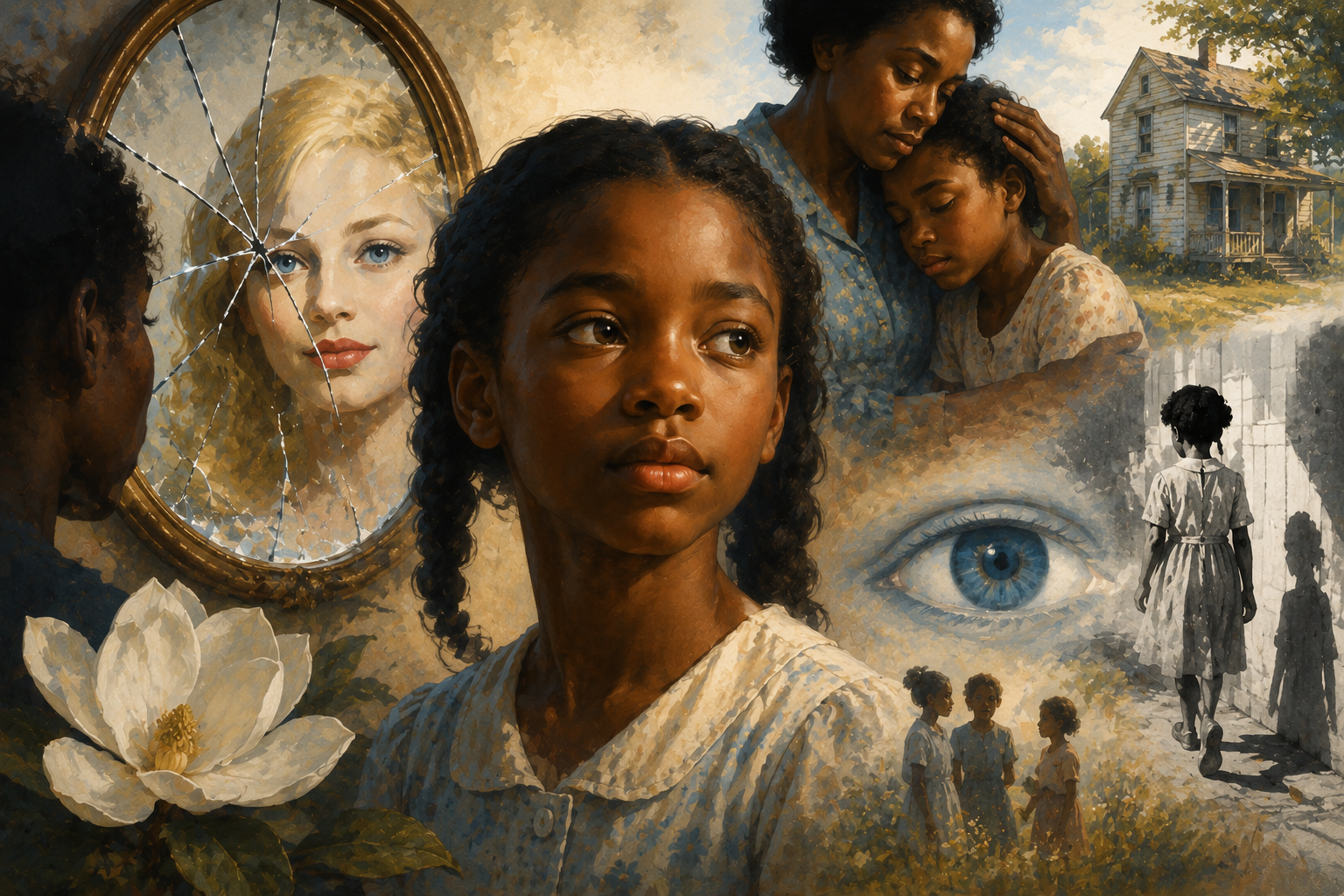
A clear guide to the major ideas, conflicts, and meanings students should notice in The Bluest Eye.
Toni Morrison’s The Bluest Eye is a short novel that explores deep conflicts over beauty, race, family, and pain. This guide explains the themes in The Bluest Eye in clear language so you can read with more confidence and write stronger essays.
In this Guide
- Why the novel’s themes matter
- Beauty standards and self-worth
- Racism and internalized shame
- Family, neglect, and the need for love
- Innocence, trauma, and loss
- Voice, sight, and storytelling
- Essay tips and related books
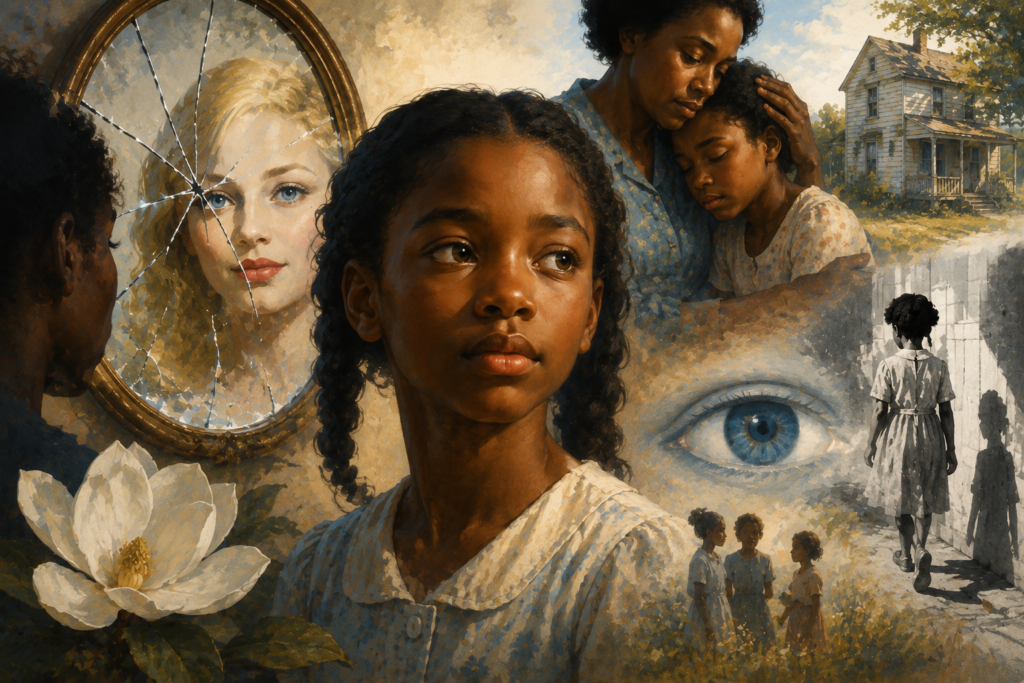
Why Themes in The Bluest Eye Matter
Morrison uses theme to show how a whole society can harm one child.
The Bluest Eye follows Pecola Breedlove, a Black girl who believes blue eyes would make her beautiful and loved. Her wish is painful because it comes from the world around her, not from a simple personal dream.
The novel asks readers to notice who gets valued and who gets ignored. It also asks how children learn shame before they even understand where it came from.
Themes in The Bluest Eye: Beauty Standards and Self-Worth
The novel’s most famous theme is the danger of narrow beauty ideals.
Pecola believes blue eyes would fix her life. To her, blue eyes mean beauty, safety, and love. Morrison shows how cruel this belief is because Pecola has learned to see herself through white beauty standards.
Claudia offers a strong contrast. As a child, she does not understand why white dolls are treated as beautiful. Her anger toward those dolls shows resistance, even if she cannot fully explain it yet.
This is one of the central themes in The Bluest Eye because it connects personal pain to public culture. Beauty is not shown as harmless. It becomes a system that teaches some children to hate themselves.
A helpful comparison is The Great Gatsby. Gatsby also chases an image that society has taught him to value. In Morrison’s novel, though, the cost falls on a vulnerable child, which makes the theme even more tragic.
Themes in The Bluest Eye: Racism and Internalized Shame
Morrison shows that racism can become a voice inside a person’s mind.
Racism in the novel is not only shown through open cruelty. It also appears in the way characters judge beauty, class, home life, and skin tone. Some characters repeat the same values that have hurt them.
Geraldine is one example. She tries to separate herself from people she sees as poor or dirty. Her treatment of Pecola shows how shame can move from one person to another.
When students discuss themes in The Bluest Eye, this point matters: Morrison does not blame Pecola for her suffering. The novel points to a larger culture that teaches false ideas about worth.
For more background on Morrison’s life and career, see Britannica’s biography of Toni Morrison.
Family, Neglect, and the Need for Love
The novel shows how family can be shaped by wounds that began long before the child was born.
Pecola’s home is not a safe place. Her parents, Pauline and Cholly, carry their own pain. Morrison gives their backstories so readers can see how damage repeats across time.
This does not excuse the harm Pecola faces. It helps explain how broken systems can break families. Morrison wants readers to see the roots of violence, not just its result.
Pauline finds comfort in movies and in the white family she works for. Cholly is shaped by abandonment, humiliation, and rage. Pecola is left with the weight of their failures.
If you need help linking a character’s choices to a larger meaning, use this guide to character analysis.
Innocence, Trauma, and Loss
Morrison shows how children pay for adult failure.
Pecola is a child, but the world treats her with little care. She faces poverty, racism, bullying, and abuse. Her innocence is not protected.
The novel is painful because Morrison does not let readers look away. Pecola’s breakdown is tied to the fact that no one with power saves her.
This theme also appears in To Kill a Mockingbird, where children slowly learn that the adult world is unfair. In The Bluest Eye, the lesson is harsher because Pecola has far less protection.
Voice, Sight, and Storytelling
The way the story is told is part of its meaning.
Blue eyes are not only about beauty. They also stand for being seen. Pecola wants eyes that she thinks will change how others look at her.
Claudia’s voice helps the reader understand what Pecola cannot fully say. She looks back on the past and tries to make sense of what happened. Her narration gives Pecola a witness, even though it cannot undo the harm.
The broken Dick and Jane primer also matters. Its neat picture of family life does not match Pecola’s world. As the text breaks apart, the false promise of the perfect home breaks apart too.
You can also read Morrison’s Nobel Prize profile at NobelPrize.org for more context on her work.
How to Write About Themes in The Bluest Eye
A strong essay should connect theme to character, symbol, and structure.
Strong essays about themes in The Bluest Eye do more than name big ideas. They show how Morrison builds those ideas through scenes, images, and voices.
Start with a claim that can be argued. For example, you might argue that Morrison presents beauty standards as a form of violence because they teach Pecola to reject herself.
Then use focused evidence. Pecola’s wish for blue eyes, Claudia’s reaction to dolls, and Pauline’s love of movie images can all support that claim.
Keep the meaning clear. Do not just say that blue eyes are a symbol. Explain what they reveal about power, identity, and the need to be loved.
For extra practice, pair your notes with our printable theme and evidence organizer.
Books to Search on Amazon or at Your Library
If you want to study similar ideas, these books can help you build context:
- Sula by Toni Morrison
- Their Eyes Were Watching God by Zora Neale Hurston
- The Color Purple by Alice Walker
These works also explore identity, community, and the pressure placed on women and girls.
FAQ About Themes in The Bluest Eye
What are the main themes in The Bluest Eye?
The main themes in The Bluest Eye include beauty standards, racism, family harm, trauma, and the need to be seen with love.
Why does Pecola want blue eyes?
Pecola believes blue eyes will make her beautiful and accepted. Her wish shows how deeply society has taught her to reject herself.
Is beauty the most important theme in the novel?
Beauty is one of the most important themes, but it connects to racism, class, and family pain. Morrison makes these ideas work together.
How can I write a thesis about the novel?
Choose one clear idea and link it to evidence. A good thesis should explain what Morrison reveals about society, not just what happens to Pecola.
Key Takeaway
The strongest themes in The Bluest Eye show how society can teach shame and how dangerous that shame becomes when no one protects the vulnerable.


Get the Free Close Reading Worksheet Pack
Join my email list and receive the printable worksheet pack you can use with any novel or poem.
No spam. Just helpful guides for reading literature well.












