

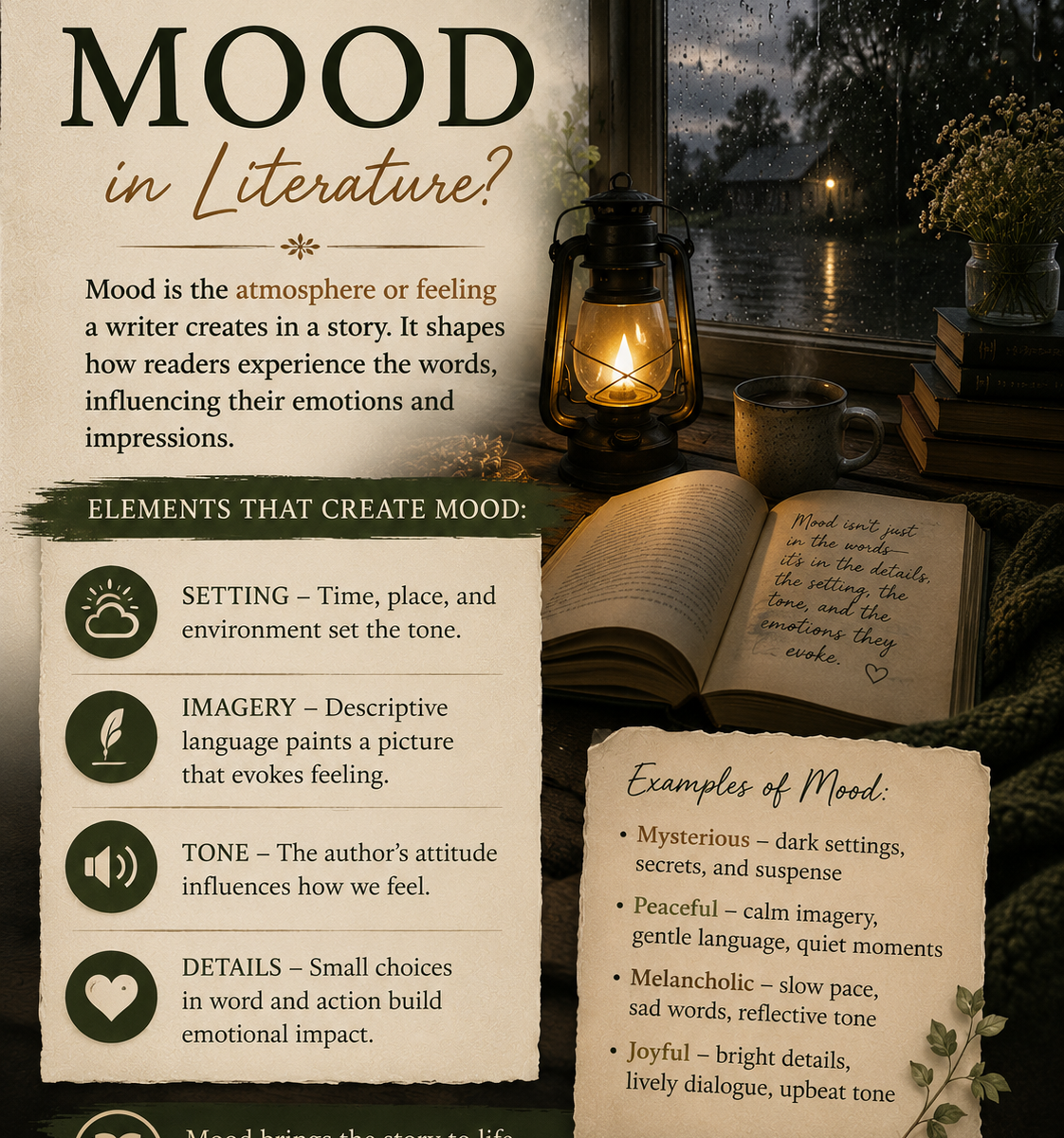
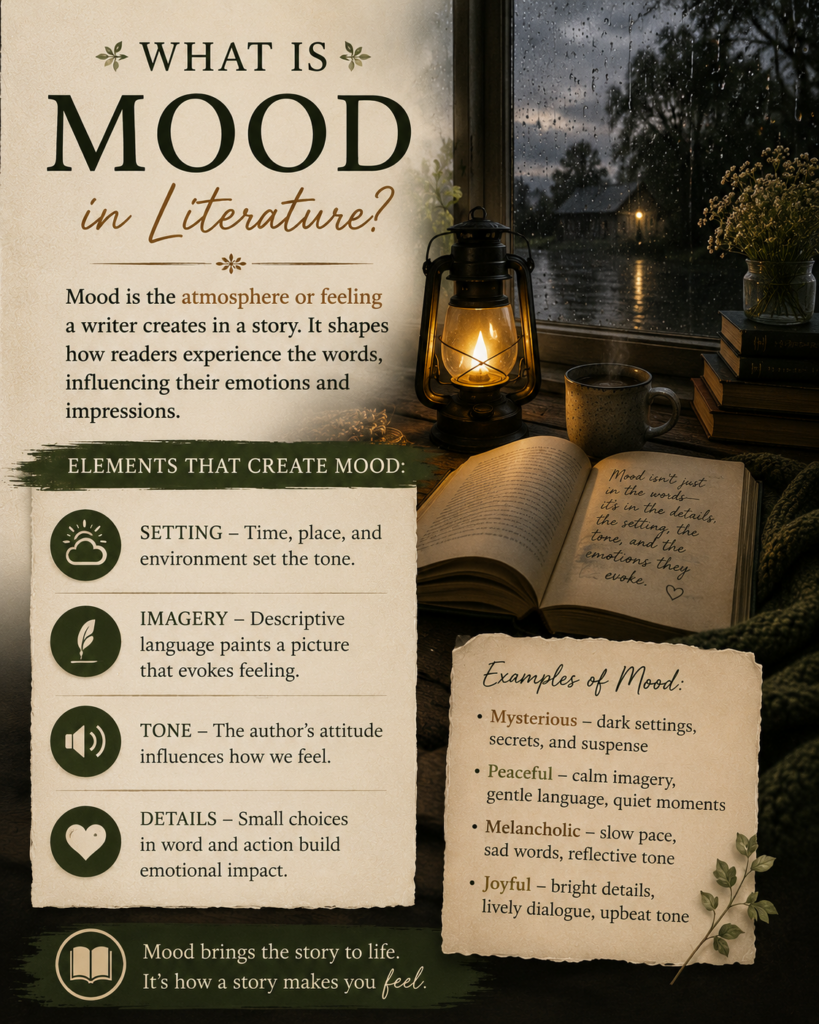
What Is Mood in Literature? It is the feeling a story or poem creates for the reader. Mood can make a scene feel scary, peaceful, tense, hopeful, or sad.
Writers build mood through setting, word choice, imagery, and details. Once you know how mood works, you can read literature with more confidence.
In this Guide
- What mood means in literature
- Why mood matters
- Examples from famous books
- How to find mood while reading
- Books that teach mood well
- FAQ
What Is Mood in Literature? A Simple Definition
Mood is the emotional atmosphere of a text.
When students ask What Is Mood in Literature?, the simplest answer is this: mood is how the writing makes you feel. It is not always one emotion. A story can shift from calm to fearful, or from hopeful to tragic.
For example, a dark forest at night may create a mood of fear. A warm kitchen with fresh bread may create comfort. The mood comes from the details the writer chooses.
Mood is different from tone. Tone is the writer’s attitude toward the subject. Mood is the feeling created in the reader. If you want a deeper comparison, read this guide on tone vs. mood in literature.
What Is Mood in Literature? Why It Matters
Mood helps readers feel the meaning of a text, not just understand it.
A strong answer to What Is Mood in Literature? should explain why mood matters. Mood shapes the way we react to characters, events, and themes.
In a ghost story, mood can make a simple hallway feel dangerous. In a love poem, mood can make a short moment feel full of longing. Mood guides the reader’s emotional response.
Mood also supports theme. If a story has a lonely mood, it may explore isolation. If a poem has a peaceful mood, it may suggest acceptance or healing.
What Is Mood in Literature? Examples from Famous Texts
Examples make mood easier to see.
In Edgar Allan Poe’s “The Tell-Tale Heart,” the mood is tense and disturbed. The narrator’s panic, the repeated sound of the heartbeat, and the dark setting all create fear.
In To Kill a Mockingbird by Harper Lee, some scenes have a warm and curious mood, especially when Scout describes childhood in Maycomb. Other scenes feel tense because the novel deals with racism and injustice.
In Romeo and Juliet by William Shakespeare, the mood often shifts. The balcony scene feels romantic and hopeful. Later scenes feel tragic as conflict grows.
In Robert Frost’s poem “Stopping by Woods on a Snowy Evening,” the mood is quiet and thoughtful. The snowy setting and soft rhythm create calm, but there is also a hint of sadness.
You can explore more poems and author pages through the Poetry Foundation, which is a helpful source for poetry study.
What Is Mood in Literature? How to Spot It
Look for the choices that shape your feelings as you read.
If you still wonder What Is Mood in Literature?, pause during a scene and ask, “What feeling is this passage giving me?” Then look for proof in the text.
Start with the setting. A storm, a locked room, or an empty street can create unease. A sunny field or a busy home can create warmth.
Next, study word choice. Words like “shattered,” “cold,” and “silent” may create a bleak mood. Words like “golden,” “soft,” and “bright” may create a gentle mood.
Pay attention to imagery too. Imagery uses sensory details, such as sight, sound, touch, smell, and taste. These details help the reader feel present in the scene.
Common Mood Words in Literature
Knowing mood words can help you write stronger answers in class.
Here are useful mood words you may see in literature:
- Joyful
- Gloomy
- Suspenseful
- Peaceful
- Lonely
- Angry
- Mysterious
- Hopeful
Try to choose the most exact word. “Sad” may work, but “grief-stricken” or “lonely” may fit better if the text supports it.
Mood vs. Tone: A Quick Reminder
Tone and mood are related, but they are not the same thing.
Mood is the feeling created for the reader. Tone is the author’s or speaker’s attitude. A narrator may have a bitter tone, while the mood for the reader may feel uneasy.
For a fuller breakdown with examples, visit this guide to tone and mood differences.
Books That Teach Mood Well
These works are useful if you want to practice finding mood.
- The Tell-Tale Heart and Other Writings by Edgar Allan Poe
- To Kill a Mockingbird by Harper Lee
Both books use setting, imagery, and tension in clear ways. They are strong choices for students who want to study mood in action.
Practical Reading Tip for Analyzing Mood
Use a simple question to guide your notes.
When you read a scene, write one mood word in the margin. Then underline two details that create that mood. This helps you move from feeling to evidence.
For example, if you write “tense,” look for details like short sentences, dark images, or nervous actions. Your analysis will be much stronger when you connect the mood to specific words from the text.
FAQ: What Is Mood in Literature?
What Is Mood in Literature? Short answer
Mood is the feeling or atmosphere a text creates for the reader. It can be scary, calm, sad, hopeful, or tense.
How is mood different from tone?
Mood is what the reader feels. Tone is the writer’s or speaker’s attitude toward the subject.
What creates mood in a story?
Setting, word choice, imagery, pacing, and character actions can all help create mood.
Can the mood change in one story?
Yes. Many stories shift mood as events change. A scene may begin peaceful and turn frightening.
Why do teachers ask about mood?
Teachers ask about mood because it helps students connect emotion, language, and meaning in a text.
Key Takeaway
What Is Mood in Literature? Mood is the feeling a text creates in the reader. To analyze it well, name the feeling, find the details that create it, and explain how those details shape the meaning.


Get the Free Close Reading Worksheet Pack
Join my email list and receive the printable worksheet pack you can use with any novel or poem.
No spam. Just helpful guides for reading literature well.












