

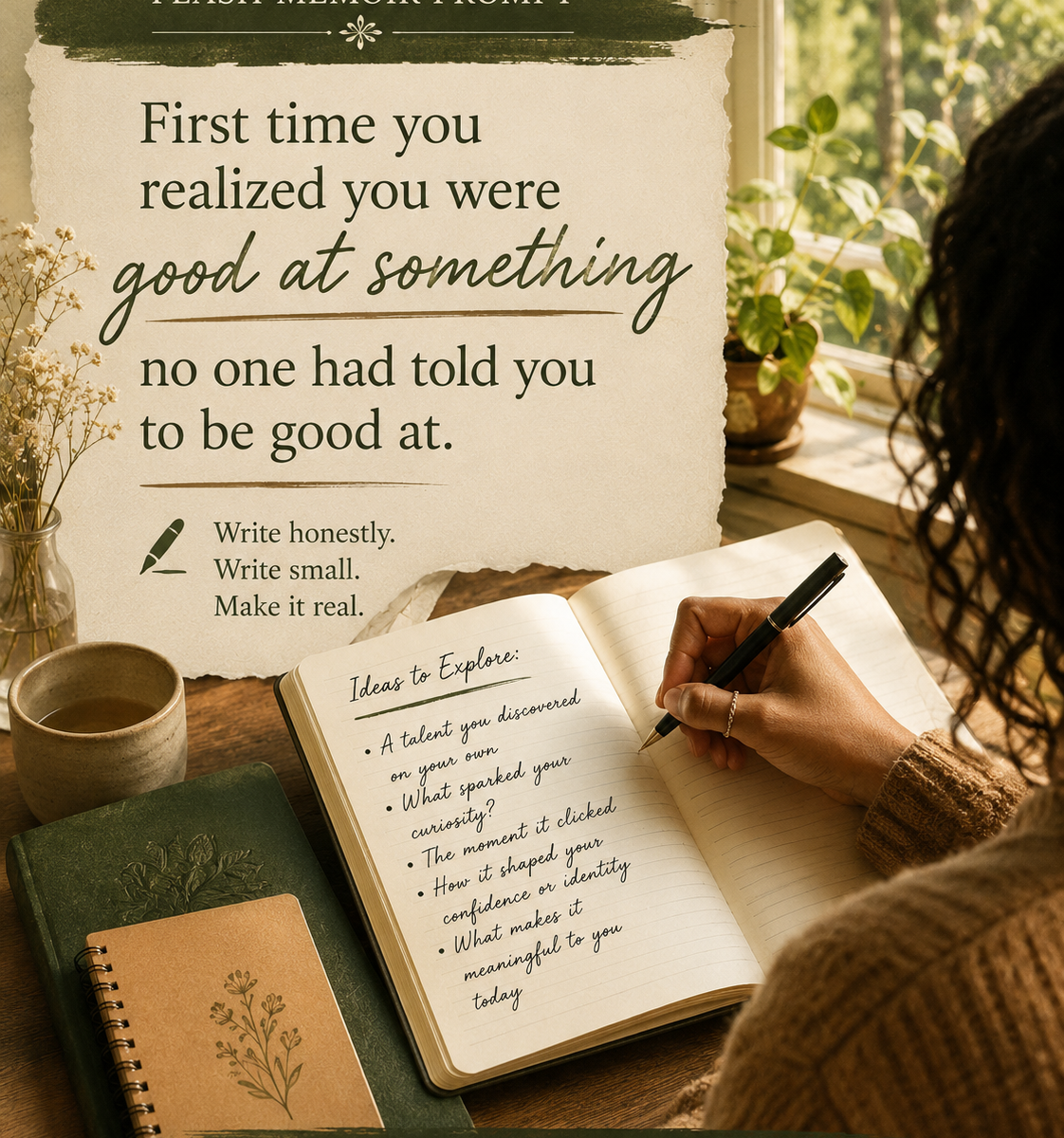
A brief writing invitation for remembering the first time your private talent stepped into the light, even before anyone gave it a name.
Maybe it happened in the corner of a classroom, while everyone else was trying to finish the real assignment. You were doodling in the margin, fixing a broken toy, making a younger sibling laugh, or solving a problem faster than the adults expected. Then came that small shock: wait, I can do this.
This flash memoir prompt, the first time you realized you were good at something no one had told you to value, is about that quiet moment of self-recognition. It may not come with applause. It may not even come with a compliment. Sometimes the first person to notice your gift is you.
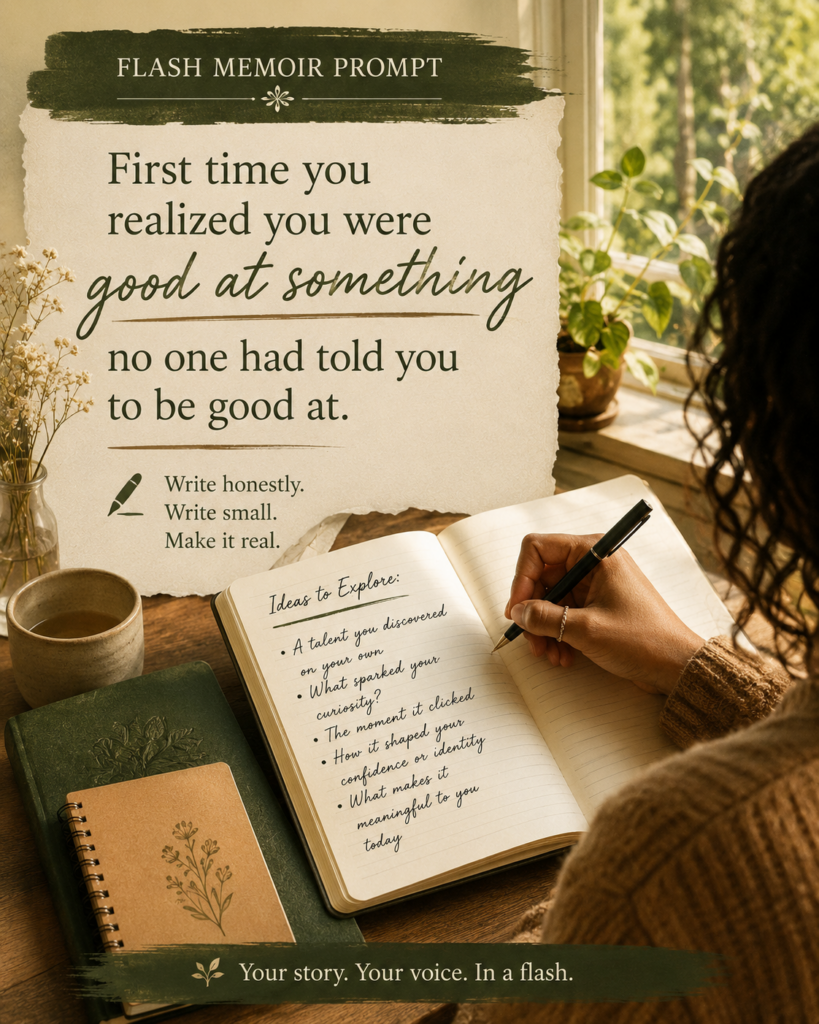
The Prompt
Write about the first time you realized you were good at something no one had told you to be good at.
This prompt can unlock a meaningful memory because it asks you to look for a talent before it became part of your identity. Before the award, the grade, the job, the label, or the expectation, there may have been one ordinary scene where you surprised yourself.
The memory might be small. You folded paper into something beautiful. You calmed a nervous friend. You heard the rhythm in a sentence. You spotted the flaw in a plan. You understood an animal, a machine, a recipe, a song, or a person before anyone explained it to you.
That is enough for a flash memoir. The point is not to prove that you became excellent. The point is to return to the first spark.
Why This Memory Matters
Many of us remember what we were told to be good at. Get good grades. Be polite. Win the game. Sit still. Speak clearly. Follow the rules. Those skills often come with pressure attached.
But the abilities we discover on our own can feel different. They may feel freer. They may also feel confusing, especially if no one around us knows how to respond.
This flash memoir prompt first time realized good at memory may uncover a story about hidden confidence. It may bring back the first clue that you had a way of seeing the world that belonged to you. That clue might have changed how you moved through a room, even if only for a minute.
There can also be tenderness in this kind of story. Maybe you were good at making peace because your house was tense. Maybe you were good at reading faces because you had to be. Maybe you were good at making people laugh because silence felt too heavy.
A memoir scene does not have to turn every talent into a victory. Sometimes the gift came with a cost. Sometimes you felt proud and embarrassed at the same time. That mix is where the real story often lives.
If you are writing this for a class or personal project, it may help to think about theme. A memory like this often points to a larger idea about identity, attention, or courage. If you want help naming that larger idea, this guide on how to identify theme in literature can also help you think about theme in your own life writing.
How to Approach This Prompt
Begin with one physical detail from the scene. Do not start by announcing the lesson. Start with the thing your hands touched, the sound in the room, or the face of the person nearby.
For example, you might begin with the smell of sawdust in a garage, the squeak of sneakers on a gym floor, the blue ink on your fingers, or the weight of a baby cousin in your lap. A clear detail can pull the whole memory closer.
Next, narrow the memory to one scene. You are not writing your full life story. You are writing the moment when you noticed something about yourself.
Ask yourself: Where was I? What was I doing? Who was there? What happened right before I realized I was good at it?
Then write what you noticed before you explain what it meant. If you were good at drawing, show the pencil moving. If you were good at fixing things, show the stuck part loosening. If you were good at comforting people, show the person’s breathing change.
Try to avoid turning the piece into a resume. You do not need to tell us every later success. A flash memoir works best when it trusts one moment to carry the weight.
You can also reread your draft like you would study a short text. Mark the strongest image, the emotional turn, and the sentence where the meaning becomes clear. This simple habit is close to how to annotate literature, and it can make your own writing sharper.
A Quick Example
I was nine, sitting under the card table at my aunt’s house, because the adults had taken every chair. My cousin Leo was crying over a spaceship model with one wing snapped clean off. No one wanted to deal with it. I picked up the tiny gray piece and turned it in my fingers until I saw how the broken edge matched the gluey scar on the ship. I asked for tape, then a toothpick, then held the wing still until my arm hurt. When Leo stopped crying, he looked at the ship like I had saved a real one from crashing. I remember feeling heat rise in my face. I had not known I could fix things. I had only known I hated seeing broken things stay broken.
Try It Yourself
Set a timer for ten minutes and write from the prompt without trying to sound impressive. Let the memory arrive in plain language.
If you get stuck, begin with this sentence: “The first clue was…” Then name one object from the scene. Follow that object into the memory.
As you write, stay close to the child, teen, or younger version of yourself who lived the moment. What did they believe was happening? What did they feel in their body? Did they feel proud, shy, startled, or suddenly older?
This flash memoir prompt first time realized good at something no one had assigned you can help you find a quieter kind of origin story. It is the story of a talent before it had a title.
Want More Flash Memoir Prompts?
If this prompt opened a memory you did not expect, keep following that thread. Short prompts can lead to honest scenes, especially when you give yourself permission to write one small truth at a time. Explore all 365 prompts in The Memory Trigger: 365 Flash Memoir Writing Prompts.


Get the Free Close Reading Worksheet Pack
Join my email list and receive the printable worksheet pack you can use with any novel or poem.
No spam. Just helpful guides for reading literature well.












