

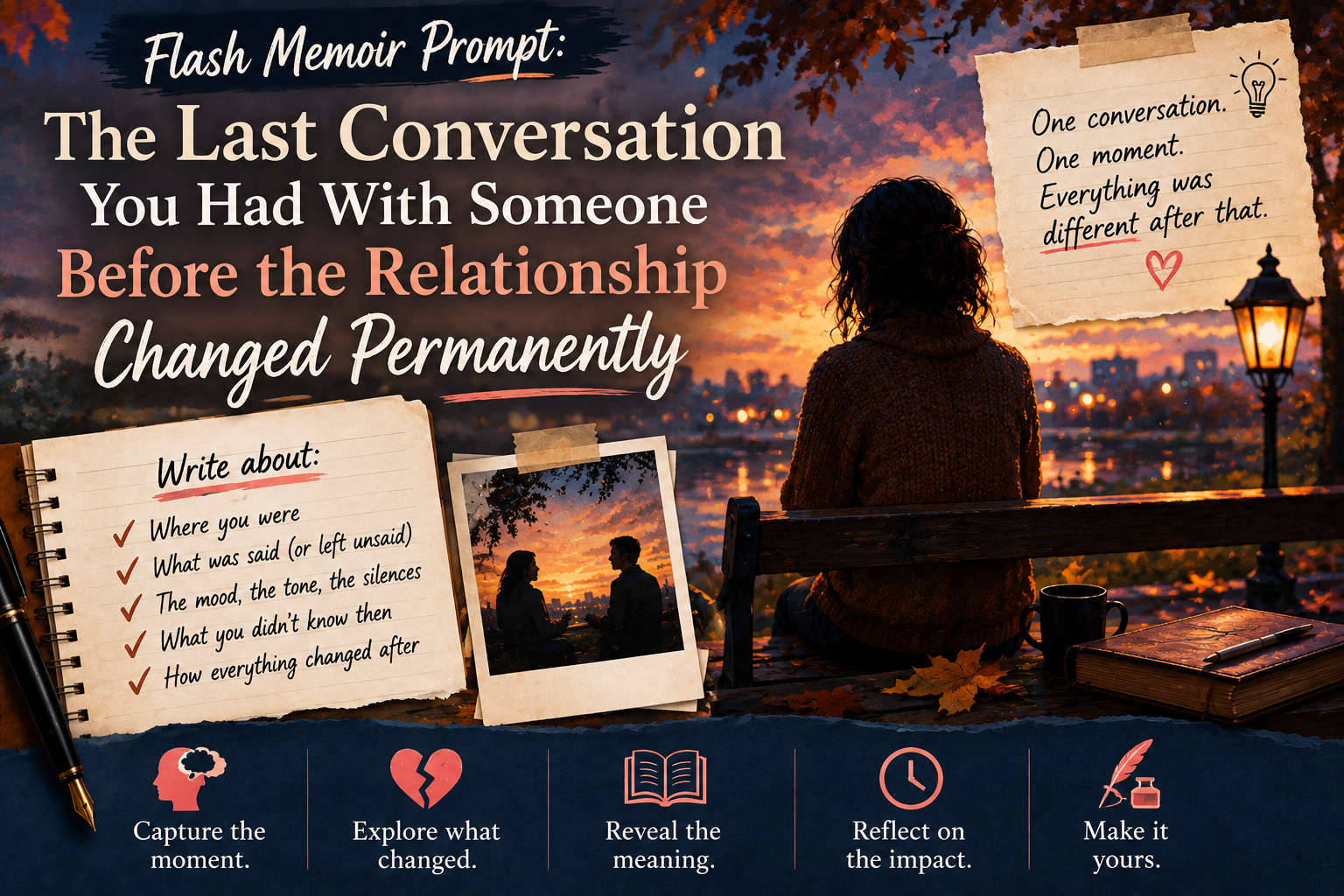
A focused writing invitation for returning to the last conversation before a relationship shifted, using one scene, one sensory detail, and one honest feeling.
The last conversation does not always announce itself. It may happen beside a car with the engine running, over a sink full of dishes, or through a phone pressed too hard against your ear. At the time, you may think you are just talking. Later, you realize that was the doorway.
This flash memoir prompt last conversation someone before relationship changed asks you to look closely at a moment that may still feel unfinished. You do not have to explain the whole relationship. You only need to return to the scene where something quietly turned.
The Prompt
Write about the last conversation you had with someone before the relationship changed permanently.
This prompt can unlock a powerful memory because it focuses on a small, exact moment. A relationship can change through a breakup, a death, a move, an argument, a betrayal, a confession, or even a gentle drifting apart. But the last conversation often holds clues you did not understand until much later.
You might remember what they said. You might remember what they avoided saying. You might remember the weather, the room, the smell of coffee, the way they would not look at you. In flash memoir, those details matter because they carry feeling without needing a long explanation.
Why This Memory Matters
A last conversation can reveal the gap between what you knew then and what you know now. That gap is often where memoir begins.
Maybe the conversation seemed ordinary, even boring. You talked about groceries, homework, bus times, or a plan for next weekend. Then something happened that made the conversation final. The plainness of it may be what hurts most.
Or maybe you sensed the change before it happened. You heard a strange pause. You noticed a new coldness. You felt yourself trying to keep the conversation light because the truth felt too close. Writing about that moment can help you name what your body understood before your mind did.
This kind of story does not need a dramatic speech. In fact, it may work better without one. The power may live in a half-finished sentence, a joke that fell flat, or a goodbye that sounded normal at the time.
If you enjoy looking closely at how people reveal themselves through speech and action, you might also like this guide on how to analyze characters in literature. Memoir uses real people, of course, but the same careful attention to gestures, choices, and silence can help your writing feel alive.
How to Approach This Prompt
Begin with a physical detail. Do not start by naming the lesson or explaining the full history. Start with the chair you sat in, the cracked phone screen, the smell of rain, or the way the person held a cup with both hands.
Then narrow the memory to one scene. Keep the camera close. Where were you? What time of day was it? Who spoke first? What was the first sentence you remember?
For this flash memoir prompt last conversation someone before relationship changed, try writing what you noticed before you write what it meant. Let the reader stand with you in that room or on that sidewalk. Let the meaning rise slowly from the details.
You do not need to tell the whole story of the relationship. You do not need to explain every fight, every good year, or every reason things changed. Flash memoir works through pressure. One small scene can hold the weight of a much larger story.
If you feel stuck, write the conversation as dialogue first. Do not worry if you cannot remember every word. Capture the shape of it. What did the person sound like? Were they rushed, tired, careful, cheerful, distant?
After that, add one sentence from the present-day you. This can show what you understand now. For example: “I did not know then that he was saying goodbye.” Or, “I thought we were arguing about the party, but we were really arguing about trust.”
You may find it helpful to mark the details that feel charged, almost the way you would annotate literature. Circle the image, line, or gesture that seems to hold the memory’s deepest feeling. That may be the center of your piece.
A Quick Example
My sister called while I was folding towels on the couch. I remember the blue one in my lap, still warm from the dryer. She asked if I had a minute, but her voice had that careful brightness she used when she was trying not to cry. We talked about our mother’s test results, though neither of us said the word we were both thinking. She told me she had bought soup. I told her to get the good crackers, the ones Mom liked. Before we hung up, she said, “We’ll figure it out tomorrow.” I said, “Of course.” After that night, every conversation in our family belonged to before or after. I still think about the towels, how I kept folding them after the call because my hands did not know what else to do.
Try It Yourself
Set a timer for ten minutes and write the last conversation as one scene. Stay close to the moment. Let the room, the voice, and the silence do some of the work.
If the memory feels tender, write slowly. You can change names. You can leave out anything you are not ready to face. The goal is not to punish yourself with the past. The goal is to notice what the moment still carries.
Use this flash memoir prompt last conversation someone before relationship as a way to explore change without having to explain everything. One honest paragraph may be enough for today.
Want More Flash Memoir Prompts?
If this prompt opened a memory you did not expect, keep going. A daily prompt can help you build a steady writing habit one small scene at a time. Explore all 365 prompts in The Memory Trigger: 365 Flash Memoir Writing Prompts.


Get the Free Close Reading Worksheet Pack
Join my email list and receive the printable worksheet pack you can use with any novel or poem.
No spam. Just helpful guides for reading literature well.












