

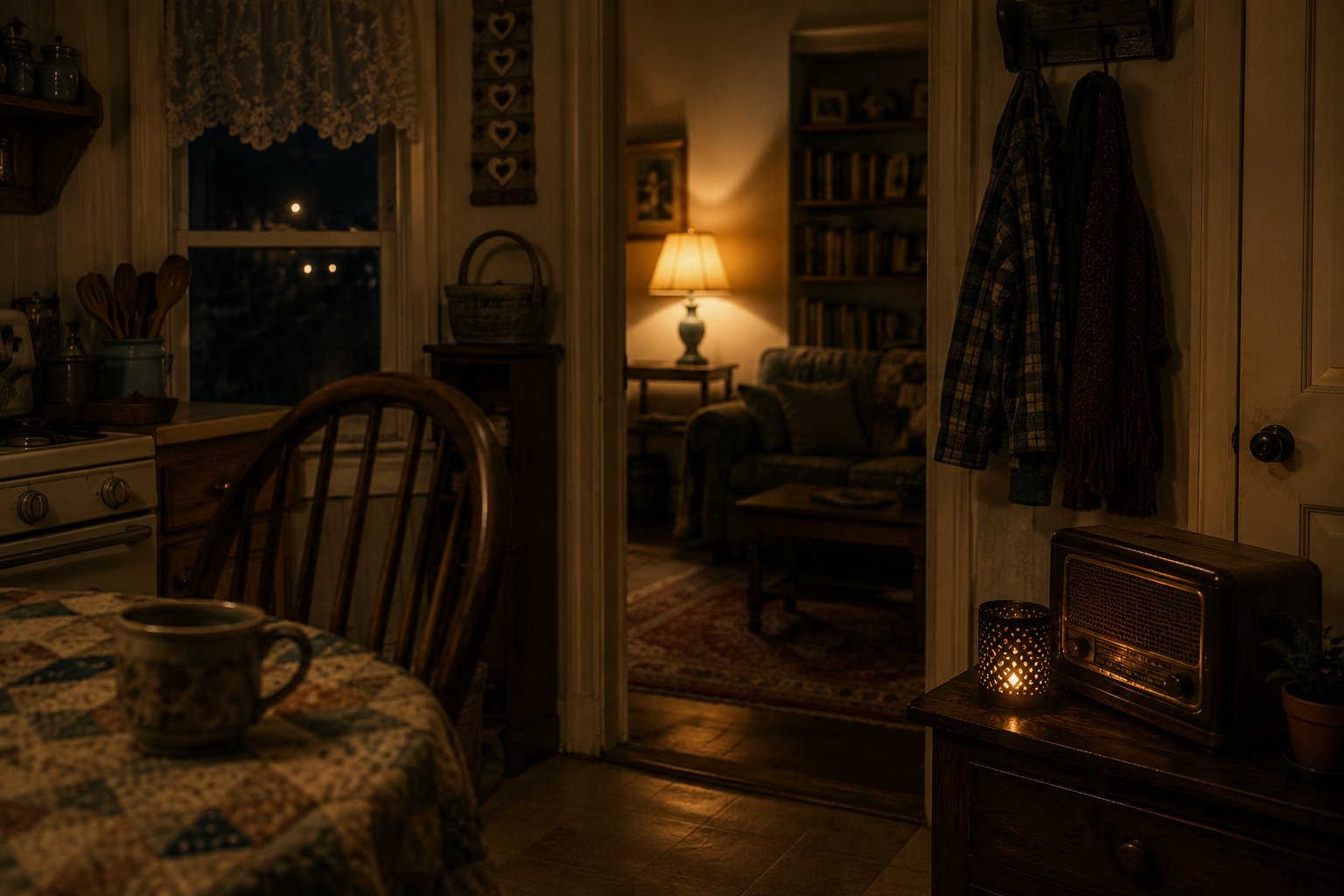
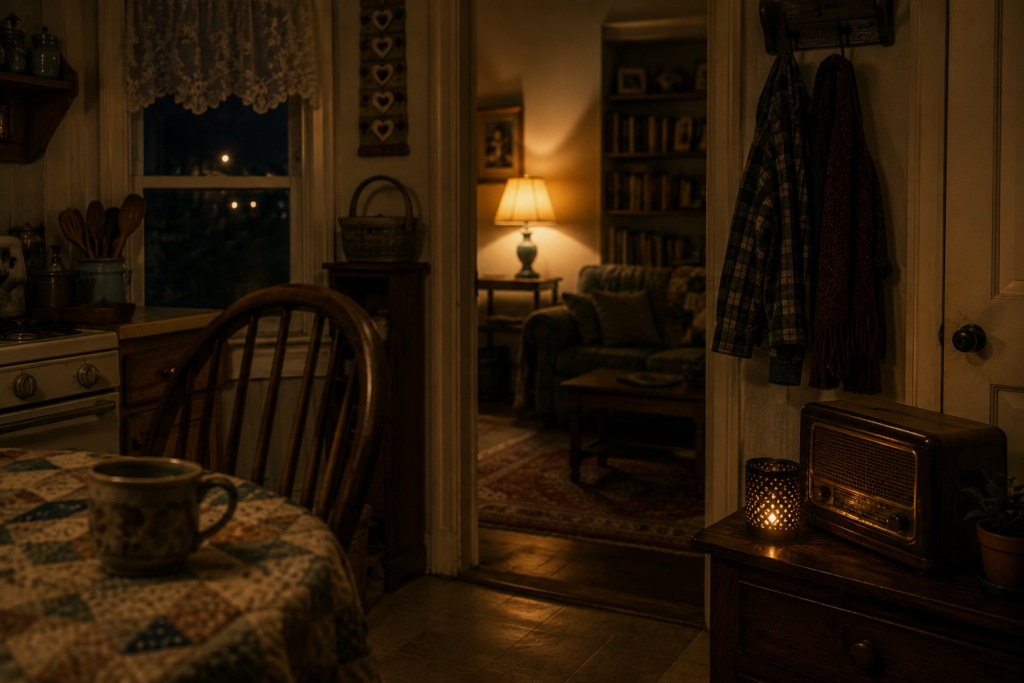
A short writing invitation for the moment you lay awake as a child, listening to your childhood home speak in the dark. Maybe it was the refrigerator clicking on, the pipes knocking, a screen door tapping in the wind, or a floorboard that seemed to sigh after everyone else had gone to bed. This flash memoir prompt sound childhood home made at night asks you to return to that quiet hour when the house felt almost alive, and you were small enough to believe it was telling you something.
The Prompt
Write about the sound your childhood home made at night.
This prompt works because sound can carry memory in a direct way. You may not remember every piece of furniture in a room, but you might remember the furnace rumble under the floor. You might remember your parents talking in low voices down the hall. You might remember rain on a metal roof, a dog turning in its sleep, or the sharp pop of old wood in winter.
The sound does not have to be dramatic. In fact, the quieter it is, the more powerful it may become. A flash memoir prompt about the sound your childhood home made at night can unlock a memory of fear, comfort, loneliness, safety, or curiosity.
Why This Memory Matters
Night changes a childhood home. During the day, a house is busy. People move through it. Lights are on. Doors open and close. At night, the same home can feel larger, stranger, and more honest.
The sound you choose may reveal what you felt as a child but could not name yet. A humming air conditioner might remind you of summer sleepovers on the living room floor. A parent’s footsteps might bring back the relief of knowing someone was still awake. A rattling window might connect to the first time you felt truly afraid.
Sound can also become a symbol in memoir. The click of a hallway light could stand for protection. The scrape of a chair could stand for tension. If you want to think more about how ordinary details can carry deeper meaning, this guide on how to find symbolism in a story can help you notice what a detail might be doing beneath the surface.
But do not rush to explain the sound. Let it exist first. Let the reader hear it before you tell them what it meant.
How to Approach This Prompt
Begin with the sound itself. Do not start with a full history of your family, your address, or the layout of the house. Start with the noise in the dark.
Try writing one simple sentence: “At night, my childhood home sounded like…” Then fill in the sentence with something physical. Was it a buzz, a thump, a groan, a whistle, a drip, or a whisper? Be specific, even if the sound seems small.
Next, narrow the memory to one scene. Choose one night, one room, and one version of yourself. Maybe you are eight years old in bed with your blanket pulled to your chin. Maybe you are twelve, awake after an argument in the kitchen. Maybe you are six, listening to rain while your sibling breathes beside you.
Write what you noticed before you explain what it meant. For example, describe the blue light from an alarm clock, the smell of dust on the heater, or the way the ceiling looked in the dark. These details help the reader enter the room with you.
If you get stuck, treat your memory like a passage you are studying closely. Circle the details in your mind. Ask what repeats. Ask what feels louder than it should. Skills used to annotate literature can also help you read your own memory with care.
Avoid trying to tell your whole childhood at once. This is flash memoir. You are not writing the entire story of the house. You are writing one sound, one night, and one feeling that has stayed with you.


A Quick Example
At night, our house made a clicking sound in the walls. My father said it was only the heat, metal shrinking after the furnace shut off, but I did not believe him. I lay in the top bunk and counted the clicks as if they were footsteps. Three near the bathroom. Two behind my head. One long knock from the kitchen. My sister slept through everything, her mouth open, one arm hanging over the rail. I wanted to call for my mother, but I also wanted to prove I was brave. Years later, I can still hear that sound and feel the cold air above my blanket. It was the first place I practiced being alone without letting anyone know I was scared.
Try It Yourself
Set a timer for ten minutes and write without correcting yourself. Use this flash memoir prompt sound childhood home made at night as a way to enter one room from your past.
Let the memory stay small. You do not need a perfect ending. You only need to follow the sound until it leads you to a moment that feels true.
If several sounds come back at once, choose the one that gives you the strongest feeling in your body. The sound that makes your shoulders tense, your chest soften, or your throat tighten is probably the one with the story inside it.
Want More Flash Memoir Prompts?
If this prompt opened a door, keep going. Small memories often lead to honest writing because they do not ask you to explain your whole life at once. Explore all 365 prompts in The Memory Trigger: 365 Flash Memoir Writing Prompts.


Get the Free Close Reading Worksheet Pack
Join my email list and receive the printable worksheet pack you can use with any novel or poem.
No spam. Just helpful guides for reading literature well.












