


A fork pauses over mashed potatoes, someone asks for salt, and the quiet in the room feels louder than anything anyone has said.
This flash memoir prompt, silence at family meal everyone tried to ignore, invites you to return to a small moment where the real story sat between the words. You do not need to explain the entire family history. You only need to notice what the silence did to the room.

The Prompt
Write about the silence at a family meal that everyone pretended wasn’t there.
This prompt can open a powerful memory because family meals often carry more than food. They hold habits, old jokes, assigned seats, small tensions, and the careful ways people avoid certain truths.
A silence at the table may have lasted only a few seconds, but it may still live clearly in your mind. Maybe someone had just come home. Maybe someone was missing. Maybe a question had been asked that no one wanted to answer.
The point is not to accuse anyone or solve the past in one page. The point is to write the moment as you remember it, with enough detail that the reader can feel the room shift.
Why This Memory Matters
Silence can say a lot in memoir. It can show fear, grief, loyalty, anger, or love that has no easy language. At a family meal, silence becomes even more noticeable because meals are supposed to be ordinary. People pass bread, scrape plates, pour drinks, and pretend everything is fine.
That contrast is what makes this prompt useful. A normal setting can reveal an emotional truth. The wallpaper, the smell of dinner, or the sound of a chair can carry more weight than a long explanation.
This kind of memory may uncover a story about protection. Adults may have been trying to keep children from knowing too much. Or children may have known far more than anyone realized. It may also reveal a family rule, such as who was allowed to speak, who made jokes to break tension, or who always changed the subject.
If you want to think more deeply about how people act under pressure, you might find it helpful to read about how to analyze characters in literature. Memoir is not fiction, but paying attention to action, silence, and motive can help you write real people with care.
A flash memoir prompt silence at family meal everyone avoided can also help you write about what was unsaid without turning the piece into a lecture. The scene itself can do much of the work.


How to Approach This Prompt
Begin with one physical detail from the table. Choose something small and concrete. It might be a napkin folded into a tight square, a glass sweating onto the wood, or a serving spoon left untouched in the casserole.
From there, stay inside one scene. Do not try to explain every argument, illness, divorce, secret, or disappointment behind the silence. Let the reader sit with you at that meal first.
Write what you noticed before you write what it meant. Maybe your brother chewed too loudly. Maybe your mother kept cutting food into smaller pieces. Maybe your grandfather stared at the TV in the next room, even though it was off.
After you have the scene on the page, you can add one short reflection. Ask yourself: What did I understand then? What do I understand now? The gap between those answers often becomes the heart of the memoir.
If you like to mark images, repeated words, or emotional shifts before drafting, this guide on how to annotate literature can also work as a simple tool for your own memories. You can underline sensory details in a rough draft and notice what keeps pulling your attention.
Keep the piece short. Flash memoir works best when it trusts one sharp moment. A meal can suggest a whole family story without naming every chapter.
A Quick Example
The roast was too dry, but nobody said so. My father sawed at it with the good knife, the one my mother only used when company came, though there was no company that night. My sister kicked my ankle under the table and looked toward the empty chair by the window. Grandma’s chair. Her blue sweater still hung on the back as if she had stepped away to answer the phone. My mother asked if anyone wanted more carrots. We all shook our heads. The clock over the stove clicked so loudly I thought it might fall. I was twelve, old enough to know she was gone, young enough to think saying her name might make everyone break.
Try It Yourself
Give yourself ten quiet minutes with this prompt. Picture the table first. Where were you sitting? Who was closest to you? What object do you remember most clearly?
Then write the silence as if it were a person in the room. Did it sit between two people? Did it press down on the plates? Did it make someone move faster or slower?
You do not have to make the memory neat. You can leave questions on the page. In fact, the best flash memoir pieces often leave room for the reader to feel what could not be said.
Use this flash memoir prompt silence at family meal everyone ignored as a way to practice honesty without forcing a conclusion. One scene, one table, one silence. That is enough to begin.
Want More Flash Memoir Prompts?
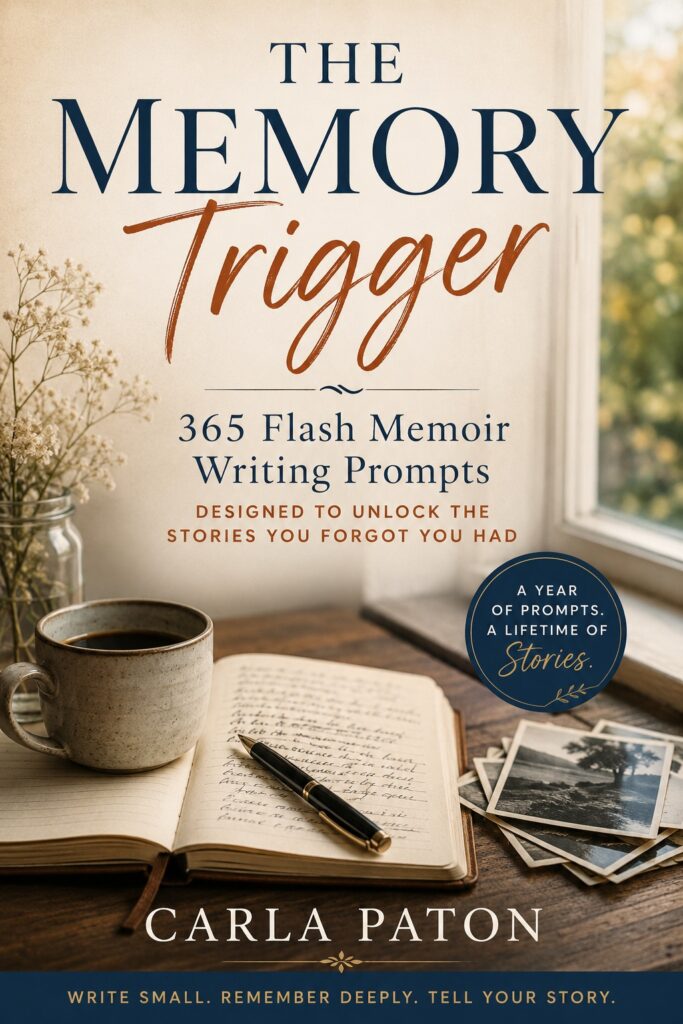
If this prompt helped you find a memory you had not written before, keep going. Explore all 365 prompts in The Memory Trigger: 365 Flash Memoir Writing Prompts.


Get the Free Close Reading Worksheet Pack
Join my email list and receive the printable worksheet pack you can use with any novel or poem.
No spam. Just helpful guides for reading literature well.












