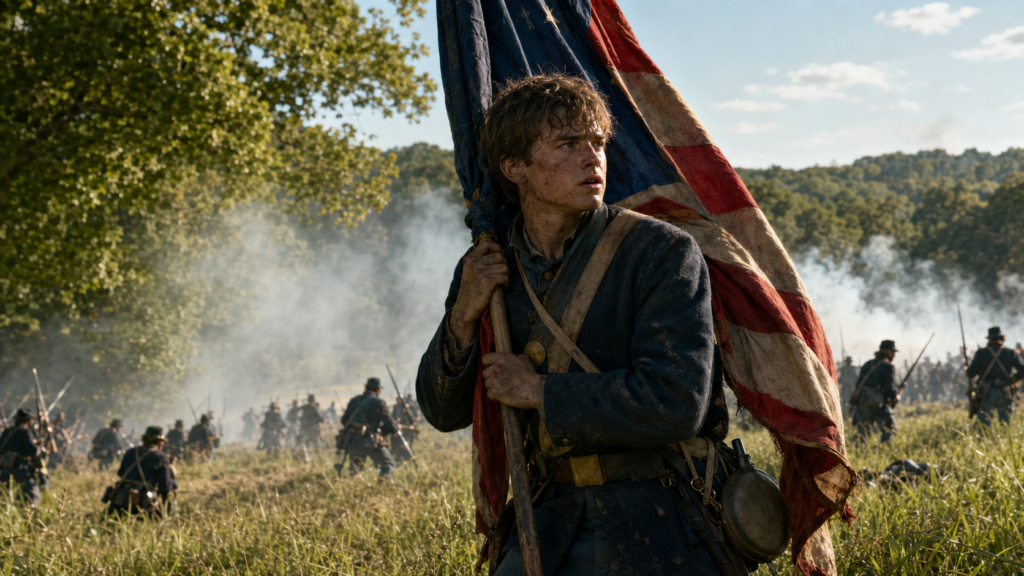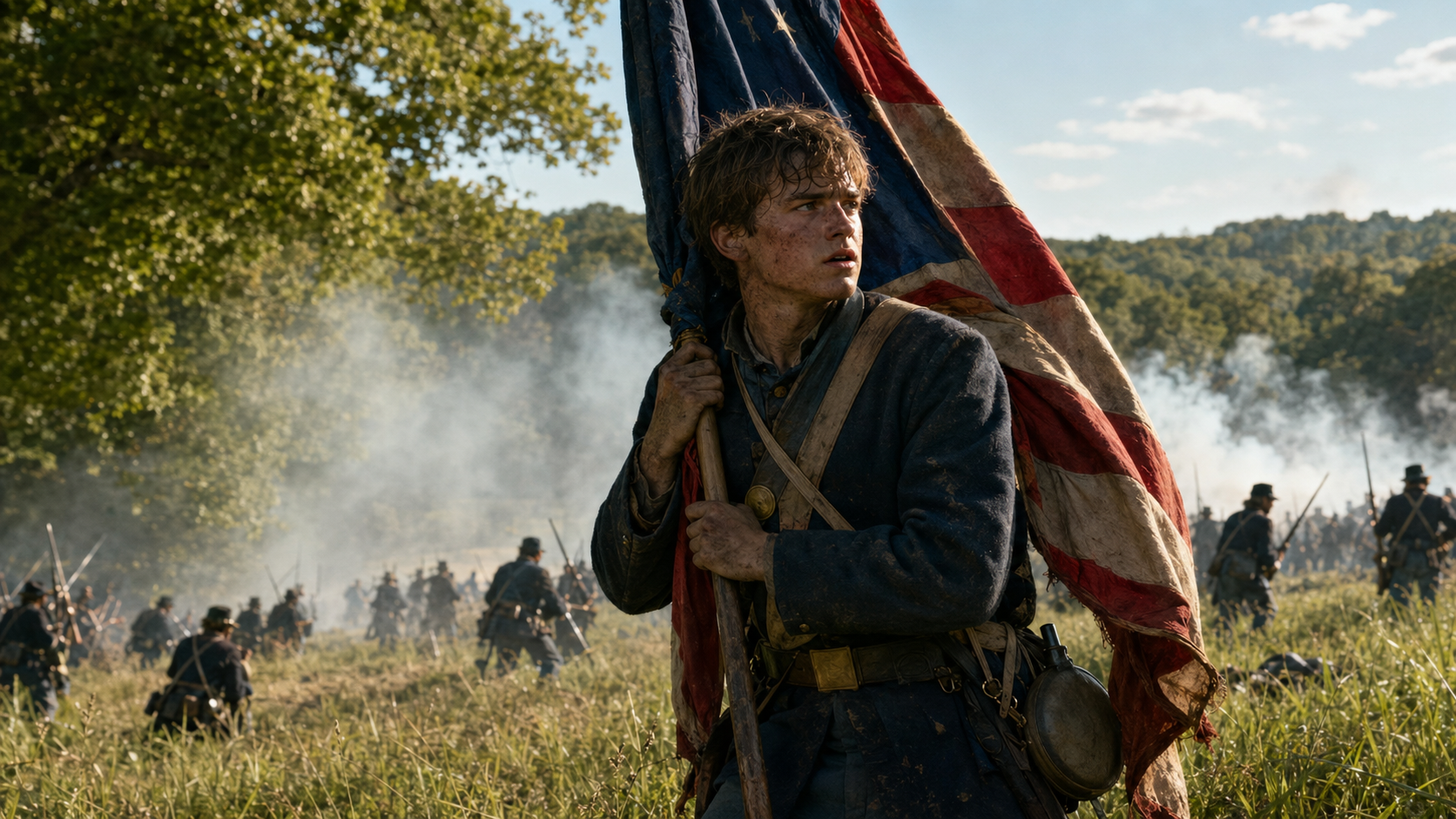
Themes in The Red Badge of Courage

red badge of courage themes

Stephen Crane’s short novel may look like a simple war story, but it is really about fear and what it costs to grow up. The themes in The Red Badge of Courage help students see why Henry Fleming’s private thoughts matter as much as the battle scenes.

This guide explains the major ideas in the novel in clear terms, with examples you can use for class discussion or essays.

In this Guide

Use this quick map to find the parts you need most.

  • Why the novel’s themes matter
  • Major themes students should know
  • Symbols that support the themes
  • How Crane develops meaning
  • Essay tips for students
  • Books to read next
  • FAQ and key takeaway
red badge of courage themes

Why the themes in The Red Badge of Courage matter

Crane turns one soldier’s panic into a study of human nature.

The themes in The Red Badge of Courage matter because the novel is not only about the Civil War. It is about how a young person faces fear, lies to himself, and tries to become someone better.

Henry Fleming wants glory before he understands battle. He dreams of being seen as brave, but his first real test exposes how weak that dream can be.

This makes the book useful for students because Henry’s conflict feels familiar. Like Macbeth, he struggles with the gap between how he sees himself and what his actions show.

Major themes in The Red Badge of Courage

The biggest ideas in the novel grow from Henry’s fear of battle.

Courage and cowardice

Courage and cowardice are central to Henry’s story. At first, Henry thinks courage means looking heroic in front of others.

When he runs from battle, he feels deep shame. He then tries to explain his fear away, instead of facing the truth.

Crane shows that courage is not a simple label. A brave act can follow a cowardly one, which makes Henry feel more human than heroic.

The reality of war

The novel strips away romantic ideas about war. Battle is not shown as clean or noble.

Henry sees fear, pain, and confusion. Soldiers often act without full knowledge of what is happening around them.

Crane’s view of war fits his realistic style. For more background on the author, you can read Britannica’s overview of Stephen Crane.

Identity and self-image

Henry spends much of the novel watching himself in his own mind. He imagines how others might judge him.

This theme shows how pride can shape behavior. Henry wants to be the kind of man songs and stories praise, but real life does not match that dream.

Students can connect this to many coming-of-age stories. A character must learn that identity is built through choices, not fantasy.

Nature’s indifference

Crane often presents nature as calm while people suffer. The world does not stop to comfort Henry.

At one point, Henry sees a squirrel run from danger and decides his own flight was natural. The moment is revealing because he uses nature to excuse himself.

The theme is not that nature is cruel. The stronger point is that nature does not care about human pride.

Youth and growth

Henry begins the novel as a boy who wants proof that he is brave. By the end, he has gained a hard kind of knowledge.

His growth is not perfect. Still, he starts to look at himself with more honesty.

This makes the novel a sharp coming-of-age story. Henry’s change comes through fear, not through an easy lesson.

Symbols that support the novel’s themes

Crane uses objects and images to make the novel’s ideas easier to see.

The red badge is the most famous symbol in the novel. Henry sees a wound as proof of courage, which shows how badly he wants visible honor.

The tattered soldier also carries meaning. His suffering forces Henry to face the cost of war, even when Henry wants to avoid guilt.

The flag becomes a symbol of duty and public honor. When Henry fights for it, the moment suggests he has moved beyond pure self-image.

If symbols feel hard to track, this guide to how to find symbolism in a story can help you connect objects to deeper meaning.

How Crane develops themes in The Red Badge of Courage

Crane builds meaning through Henry’s thoughts, sharp images, and ironic moments.

One key method is limited point of view. Readers stay close to Henry, so we feel his fear even when his thinking is flawed.

Crane also uses contrast. Henry’s private panic clashes with the public language of glory.

This is why the themes in The Red Badge of Courage feel tense. The novel keeps asking whether bravery is real if it depends on how others see you.

You can also read the public domain text through Project Gutenberg’s edition of The Red Badge of Courage if you need to check a passage.

How to write about themes in The Red Badge of Courage

A strong essay should connect a theme to Henry’s choices.

When you write about themes in The Red Badge of Courage, do not just name a topic like courage. Explain what Crane says about courage.

Weak claim: The novel is about bravery.

Stronger theme claim: Crane shows that bravery is unstable because fear and pride can exist inside the same person.

For an essay, choose one theme and use a scene that proves it. Henry’s flight from battle, his false pride over a wound, or his later action with the flag can each support a clear argument.

For more help, pair this guide with our student literature study resources before a quiz or essay.

Other books to consider

These books can help students compare war, fear, and moral growth across literature.

  • The Red Badge of Courage by Stephen Crane
  • All Quiet on the Western Front by Erich Maria Remarque

Both works show war as more than action. They ask what conflict does to the mind.

FAQ: themes in The Red Badge of Courage

These short answers can help with review before class.

What are the main themes in The Red Badge of Courage?

The main themes in The Red Badge of Courage include courage, fear, self-image, and the harsh truth of war.

Is Henry Fleming really brave?

Henry becomes braver, but Crane does not make him a perfect hero. His courage grows after fear and shame.

What does the red badge mean?

The red badge means a wound. For Henry, it also means public proof that he has faced danger.

Why is nature important in the novel?

Nature shows that the world is indifferent to human glory. This makes Henry’s pride seem smaller.

Key Takeaway

Crane’s novel is powerful because it treats fear as part of being human.

The themes in The Red Badge of Courage show that courage is not the absence of fear. It is the hard choice to keep moving after fear has exposed the truth.
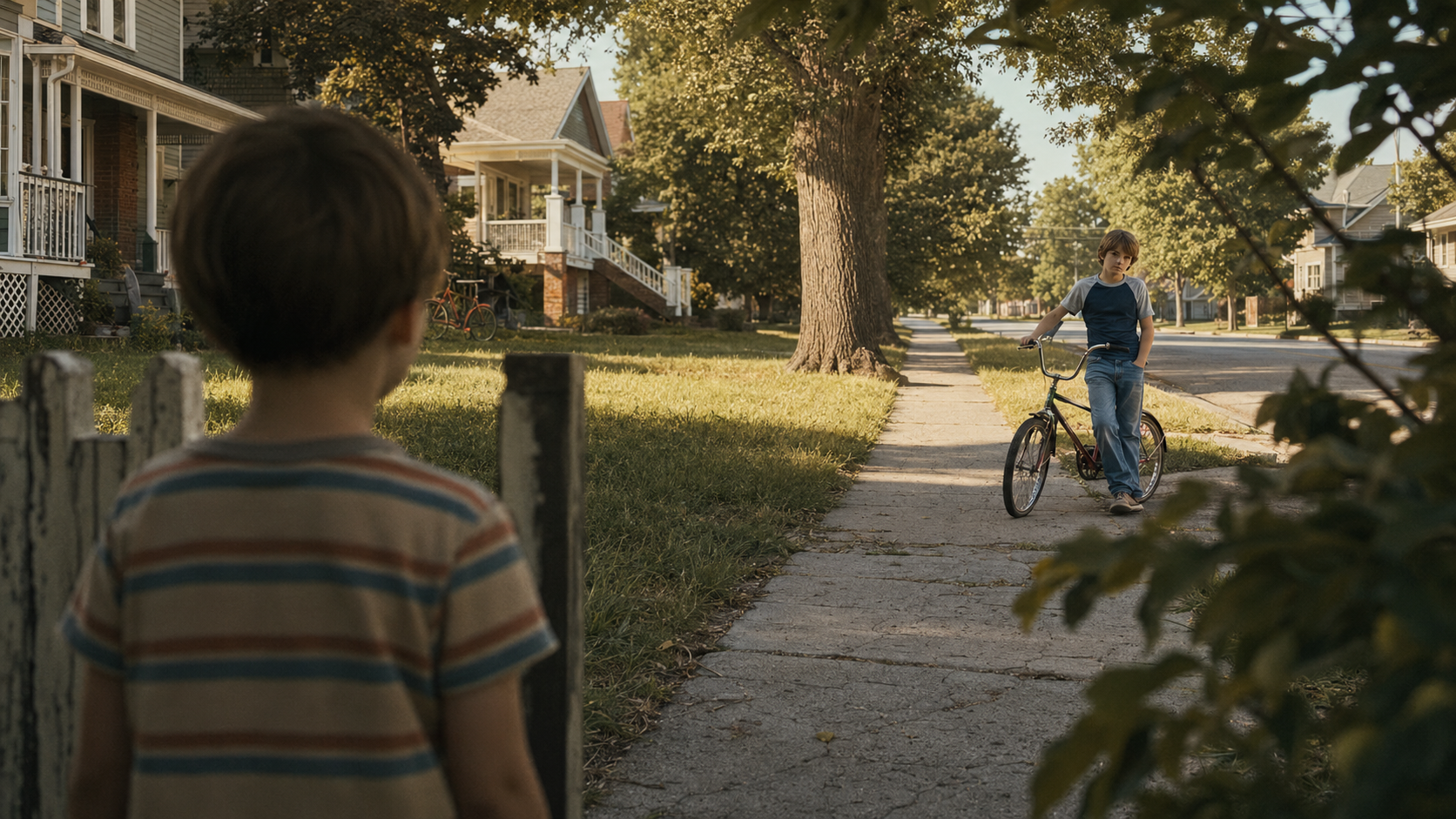
Flash Memoir Prompt: Child in Your Neighborhood Who Scared You a Little

flash memoir prompt child

A child who scared you a little can stay in your memory for strange reasons: the way they stared too long, dared people to do risky things, or seemed to know rules you had not learned yet. This flash memoir prompt about a child in your neighborhood who scared you a little invites you to return to one small moment and notice what fear felt like before you had words for it.

Maybe the child was older and loud. Maybe they were younger but unpredictable. Maybe they lived on the corner, rode a bike too fast, threw rocks at signs, or told stories that made your stomach tighten. Childhood fear was often confusing because it mixed with curiosity. You might have wanted to avoid that child and impress them at the same time.

flash memoir prompt child

The Prompt

Write about the child in your neighborhood who scared you a little.

This prompt works because it does not ask for a whole childhood history. It asks for one person and one feeling. That focus can open a memory you have not visited in years.

A flash memoir prompt child neighborhood who scared little may sound simple, but it can reveal a lot about power, friendship, class, family rules, and the invisible borders children create. The scary child may not have been truly dangerous. Or maybe they were. What matters is that your younger self felt something sharp around them.

Why This Memory Matters

Neighborhoods have social maps that adults often miss. Children know which yard to cross, which porch to avoid, which alley feels safe, and which house makes everyone lower their voice.

The child who scared you a little may have stood at the edge of that map. They may have represented risk. They may have had more freedom than you did, less supervision, a rougher home life, or a talent for making other kids feel small.

This kind of memory can uncover the first time you noticed fear as a social feeling. You were not afraid of a monster under the bed. You were afraid of another person your own size, or close to it. That can be unsettling to write about.

It can also be revealing. Maybe you now understand that the child was lonely, neglected, or acting tough to survive. Maybe you still feel the old fear in your body, even if your adult mind has softened toward them. Memoir gives you room for both truths.

Try not to rush toward a lesson. Let the memory be strange if it was strange. Let the child remain partly unknown. A good flash memoir does not need to solve every question. It only needs to make the moment feel alive again.

How to Approach This Prompt

Begin with one physical detail. Do not start with an explanation like, “He was the scary kid on our block.” Start with the thing your younger self noticed first.

Maybe it was a scabbed knee, a buzz cut, a chipped front tooth, a pocketknife, a laugh that came out too loud, or a bike with no brakes. One detail can bring the whole memory back.

Then narrow the scene. Choose one afternoon, one walk home, one game in the street, or one moment when that child appeared and changed the air. Avoid trying to tell everything they ever did. Flash memoir works best when it stays close to one scene.

Write what you noticed before you explain what it meant. If the child stood under the streetlight and watched you, describe that first. If they dared you to climb a fence, show the fence, your hands, and the sound of their voice. Meaning can arrive later.

You might also pay attention to setting. Childhood fear often attaches itself to places. A cracked sidewalk, a weedy lot, a chain-link fence, or a corner store can carry emotional weight. If you want to explore how objects and places can hold meaning, you may enjoy this guide on how to find symbolism in a story.

As you write, stay fair to your younger self and to the child you remember. You do not have to make anyone a villain. You also do not have to excuse what frightened you. Your job is to tell the truth of the scene as honestly as you can.

The Flash Memoirist
previous arrow
next arrow

A Quick Example

Marcus lived two houses down and always had something in his hand: a stick, a rock, a broken yellow Wiffle ball bat. He was only a year older than me, but he seemed grown in a way I did not understand. One July afternoon, I was drawing hopscotch squares in the driveway when he rolled up on his bike and stopped without putting a foot down. “You missed a number,” he said. I looked at the chalk and saw that he was right. I had skipped seven. He smiled like he had caught me stealing. Then he rode through the squares, smearing them with his front tire. I remember feeling hot behind my ears, too scared to yell, too proud to cry until I got inside.

Try It Yourself

Set a timer for ten minutes and write one scene about the child in your neighborhood who scared you a little. Stay close to the moment. Let your younger self lead.

If you get stuck, answer a few simple questions on the page. Where were you? What did the child look like that day? What did they say or do? What did your body feel before you fully understood why?

You can revise later. For now, aim for honesty over polish. A flash memoir prompt child neighborhood who scared little can become powerful because it catches a feeling before it turns neat. The memory may be awkward, funny, bitter, or surprisingly tender.

When you finish, read it once and mark the sentence that feels most alive. If you like that kind of close attention, this guide on how to annotate literature can also help you notice patterns in your own writing.

Want More Flash Memoir Prompts?

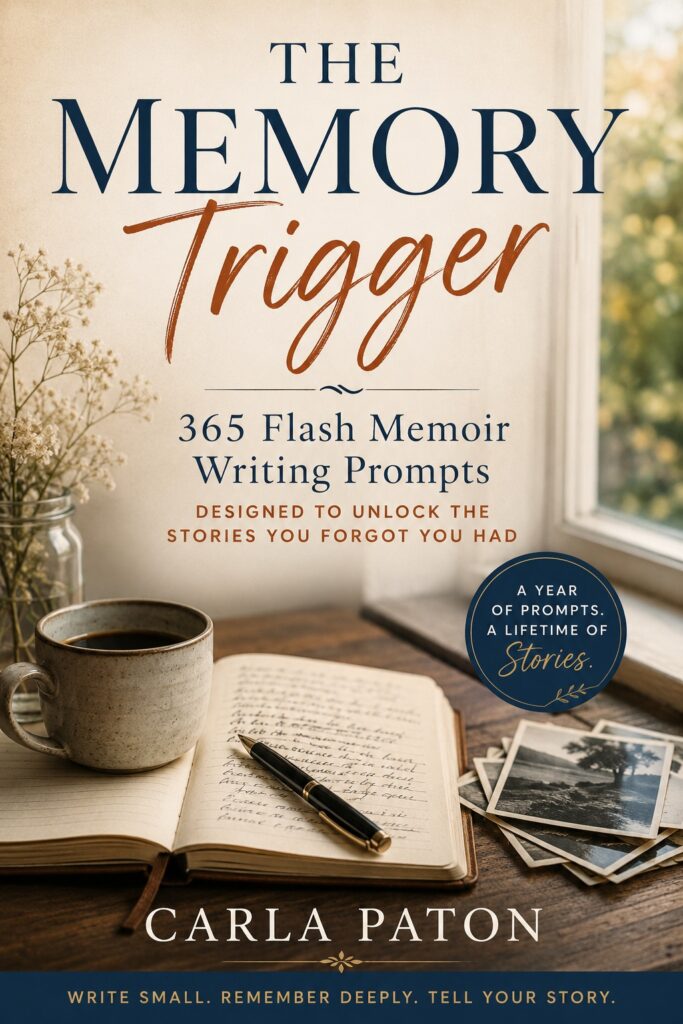
If this prompt brought back a face, a street, or a feeling you had forgotten, keep going. Small memories often lead to the clearest writing. Explore all 365 prompts in The Memory Trigger: 365 Flash Memoir Writing Prompts.

The Memory Trigger

Flash Memoir Prompt: Childhood Chore that You Hated and Can Now Barely Remember the Details

flash memoir prompt chores

The hated chore may have faded, but the feeling remains: the bucket handle cutting into your fingers, the sigh you tried to hide, the slow clock of a Saturday you thought would never belong to you. This flash memoir prompt, childhood chore hated can now barely remember, invites you to chase that half-gone memory and see what emotion is still sitting inside it.

flash memoir prompt chores

The Prompt

Write about a childhood chore that you hated and can now barely remember the details of.

This prompt works because memory is often uneven. You may not remember the exact day, the season, or how many times you had to do the chore. But you might remember the smell of dishwater, the scrape of a rake, or the way your parent said your name when you tried to disappear.

A flash memoir does not need the whole history of your childhood responsibilities. It needs one moment that feels alive. This flash memoir prompt childhood chore hated can now be fuzzy on purpose. The missing parts are part of the story.

Why This Memory Matters

Childhood chores were rarely just about the chore. They could be about fairness, power, boredom, pride, money, family rules, or wanting to be somewhere else.

Maybe you hated folding towels because your sibling got the easier job. Maybe you had to weed a garden while your friends rode bikes past the house. Maybe washing dishes made you feel trapped in the kitchen while adults talked in the next room.

Now, years later, you may barely remember what brand of soap you used or how long the job took. Still, the emotional shape may remain. You knew what it felt like to be small and annoyed. You knew how long ten minutes could feel when you were not the one in charge.

This kind of memory can reveal how your younger self understood work. Did you connect chores with punishment? Did you feel useful? Did you feel unseen? A small task can open a larger question without turning the piece into a long explanation.

For students practicing close observation, this is also a gentle way to build the same skill used in reading. When you notice one object, one tone of voice, or one repeated image, you are doing the kind of careful thinking found in how to annotate literature, only the text is your own life.

The Flash Memoirist
previous arrow
next arrow

How to Approach This Prompt

Begin with your body, not your opinion. Before you write “I hated mowing the lawn” or “I hated cleaning the bathroom,” write the physical detail that proves it.

What did your hands touch? What did the chore smell like? What sound made you want to quit before you even started?

You might begin with the broom bristles bent to one side, a sponge gone gray, a pile of socks that never seemed to match, or the damp knees of your jeans after scrubbing a floor. Let the object pull you into the scene.

Then narrow the memory. Do not try to write every time you did this chore. Choose one afternoon, one kitchen, one patch of yard, one sink full of dishes.

If the details are missing, say so. “I don’t remember whether it was summer or fall” can be a strong memoir sentence. It tells the reader that the memory is honest. You are not inventing a perfect movie. You are following what remains.

Try writing what you noticed before you explain what it meant. Let the reader stand beside you for a moment. Let them see the chore through your younger eyes. Meaning can arrive later, quietly.

If you want to shape the piece after drafting, look at one short paragraph and ask what it is really about. Is it about laziness, or is it about wanting freedom? Is it about a chore, or is it about being trusted with work too early? For more practice with shaping ideas from evidence, these literary analysis essay examples can help you see how small details support a larger point.

A Quick Example

I hated emptying the dishwasher, though I can’t remember if it was actually hard. I remember the bottom rack rolling crooked, one wheel always jumping the track. I remember the steam smell when I opened it too soon and the little pools of water sitting on the bottoms of upside-down mugs. My job was to put everything away before dinner, but I would drag it out, carrying two forks at a time like I had been assigned some great injustice. My mother would say, “It takes longer to complain than to do it,” which made me complain silently instead. I don’t remember the plates we owned. I remember the cupboard door sticking and the feeling that everyone else in the house was free.

Try It Yourself

Set a timer for ten minutes and write one scene from the chore. Stay close to the object in front of you. A broom. A laundry basket. A wet rag. A trash can at the end of a driveway.

If the memory breaks apart, keep going. Write the fragments. “I remember the basement stairs.” “I remember dust.” “I remember being mad before anyone asked me to start.” Those pieces may be enough.

This flash memoir prompt childhood chore hated can now barely remember is less about proving what happened and more about catching the emotional truth. Let the chore be small. Let the feeling be clear.

Want More Flash Memoir Prompts?

If you enjoyed this kind of small, focused memory work, explore all 365 prompts in The Memory Trigger: 365 Flash Memoir Writing Prompts. Each prompt is designed to help you enter one moment, notice what remains, and turn it into a short piece of memoir.

The Memory Trigger

For Whom the Bell Tolls Character Analysis: Key People, Motivations, and Conflicts

For Whom the Bell Tolls character analysis

For Whom the Bell Tolls is a war novel, but its power comes from people under pressure. This For Whom the Bell Tolls character analysis explains the main characters, their motives, and the conflicts that shape their choices.

Use it for discussion posts, essays, and quote-based analysis.

In this Guide

Here is what this guide covers.

  • Robert Jordan and duty
  • Maria and trauma
  • Pilar and moral force
  • Pablo and fear
  • How to write about character conflict
  • FAQ and book suggestions

For Whom the Bell Tolls character analysis: Robert Jordan

Robert Jordan is the novel’s main point of view, but he is not a simple hero.

Jordan is an American volunteer who fights for the Republican side in the Spanish Civil War. His job is clear: help blow up a bridge to support a military attack.

His deeper conflict is harder. He believes in the cause, yet he keeps question marks in his mind. He knows war can turn ideals into orders, and orders can cost lives.

A strong For Whom the Bell Tolls character analysis should focus on Jordan’s split between **duty and doubt**. He wants to do the right thing, but he also sees the pain his mission will bring.

Jordan is like Hamlet in one key way. Both men think deeply before they act. The difference is that Jordan must act fast, even when the world feels morally unclear.

His love for Maria changes him. It does not make him weak. It reminds him that the war is not only about politics. It is also about human lives that can be broken in a single day.

For Whom the Bell Tolls character analysis: Maria

Maria shows how war harms the body, the mind, and the future.

Maria has survived terrible violence before the novel begins. Hemingway does not treat her pain as a small detail. Her trauma shapes how she sees safety, love, and trust.

In a For Whom the Bell Tolls character analysis, Maria should not be reduced to a love interest. She helps reveal Jordan’s softer side, but she also carries her own history.

Maria wants a life beyond fear. Her bond with Jordan gives her hope, but the novel never lets readers forget how fragile that hope is.

Her character links private pain to public war. Like many characters in world literature, she shows that history is not abstract. It enters homes, families, and bodies.

For Whom the Bell Tolls character analysis: Pilar

Pilar is one of the strongest moral and emotional forces in the novel.

Pilar leads through courage, memory, and sharp judgment. She is not the official leader, yet many people listen when she speaks.

A useful For Whom the Bell Tolls character analysis should note that Pilar often sees people more clearly than they see themselves. She understands Pablo’s fear. She sees Jordan’s seriousness. She protects Maria with fierce care.

Pilar’s stories also matter. Through her memories, readers see the violence that came before the bridge mission. She makes the past feel present.

She may remind readers of characters like the Nurse in Romeo and Juliet, but Pilar has more political weight. She is earthy, bold, and deeply aware of death.

For Whom the Bell Tolls character analysis: Pablo

Pablo is not just a coward. He is a warning about what fear can do to a person.

Pablo once fought with force and purpose. By the time Jordan arrives, he has grown tired, suspicious, and afraid of losing what little safety he has left.

This is why a For Whom the Bell Tolls character analysis should treat Pablo as conflicted, not flat. He fears the mission because he knows it may destroy the group.

His choices create tension inside the camp. The enemy is outside, but danger also comes from mistrust within the group.

Pablo’s changes show how war wears people down. Courage is not permanent in this novel. It must be chosen again, and some people cannot keep choosing it.

Anselmo, Agustin, and the Guerrilla Band

The smaller characters help Hemingway show different ways people respond to war.

Anselmo is old, loyal, and troubled by killing. He believes the mission matters, but he still feels the moral weight of taking life.

Agustin is harsh in speech, yet he is brave and loyal. His rough language hides a deep commitment to the group.

The guerrilla band works like a pressure chamber. Every fear, hope, and grudge grows stronger because the bridge mission leaves no room for escape.

Main Conflicts That Shape the Characters

The novel’s conflicts are personal as much as political.

The clearest conflict is the war itself. The Republican and Fascist forces fight for Spain’s future, but Hemingway keeps the focus close to the people who must carry out orders.

Jordan faces a conflict between mission and love. If he follows orders, he may lose Maria and the life he imagines with her.

Pablo faces fear against loyalty. Pilar faces memory against action. Maria faces trauma against hope.

These conflicts make the characters feel real. They are not symbols first. They are people who must choose while time runs out.

How to Use This For Whom the Bell Tolls character analysis in an Essay

Good character writing starts with motive, conflict, and change.

For an essay, choose one character and ask what that person wants. Then ask what blocks that desire.

For Robert Jordan, you might argue that his heroism comes from clear action despite moral doubt. For Maria, you might argue that her hope is an act of survival.

When you write about Pilar, focus on her power as a witness. She remembers violence and helps others face what they would rather avoid.

If you want a simple method, read our guide on how to analyze characters in literature. It pairs well with this novel because Hemingway builds character through action, silence, and pressure.

You can also use a student study guide to organize quotes, page notes, and short claims before you draft.

Helpful Background for Students

A little context can make the character conflicts easier to understand.

For Whom the Bell Tolls is tied to the Spanish Civil War, a conflict that shaped Europe before World War II. For a reliable overview, see Britannica’s Spanish Civil War entry.

To learn more about Hemingway’s life and style, visit Britannica’s Ernest Hemingway biography.

For writing help, you may also want to review this character analysis guide before you build your thesis.

Recommended Books

These books can help you compare war, courage, and moral choice across literature.

  • For Whom the Bell Tolls by Ernest Hemingway
  • A Farewell to Arms by Ernest Hemingway
  • All Quiet on the Western Front by Erich Maria Remarque

FAQ: For Whom the Bell Tolls character analysis

These quick answers can help with class prep and essay planning.

Who is the main character in For Whom the Bell Tolls?

Robert Jordan is the main character. He is an American volunteer who must help destroy a bridge during the Spanish Civil War.

What motivates Robert Jordan?

Jordan is motivated by duty to the Republican cause. He is also moved by love, honor, and a need to act with purpose.

Why is Pilar important?

Pilar gives the novel moral weight. She protects Maria, challenges Pablo, and remembers the violence that shaped the group.

Is Pablo a villain?

Pablo is more complex than a simple villain. Fear drives many of his worst choices, but he still has moments of loyalty.

What is the main character conflict?

The main conflict is between duty and human cost. The bridge mission matters, but it threatens the people who must carry it out.

Key Takeaway

A strong For Whom the Bell Tolls character analysis shows that Hemingway’s characters are shaped by pressure. Their choices matter because love, fear, memory, and duty all collide in one dangerous mission.

Flash Memoir Prompt: Moment a Holiday Stopped Feeling Magical

flash memoir prompt holiday

A flash memoir prompt about the quiet moment a holiday stopped feeling magical, and what that change taught you about growing up, noticing more, or seeing the people around you differently.

The room may have looked the same as always. Same lights. Same food. Same songs playing too early in the morning. But something inside you had shifted. Maybe you noticed the tired look on a parent’s face. Maybe you learned who really bought the gifts. Maybe the family joke stopped feeling funny. The holiday was still happening, but the spell had cracked.

Today’s flash memoir prompt, moment holiday stopped feeling magical, asks you to write about that small break in wonder. It does not have to be dramatic. Often, the most powerful memory is the one where nothing huge happens on the outside, but everything feels different afterward.

flash memoir prompt holiday

The Prompt

Write about the moment a holiday stopped feeling magical.

This prompt can unlock a meaningful memory because holidays often carry more emotion than an ordinary day. We expect them to feel bright, safe, generous, or full of tradition. When they do not, we remember the gap between what we hoped for and what actually happened.

You might write about a winter holiday, a birthday, Halloween, Thanksgiving, Eid, Diwali, Easter, Lunar New Year, or any day your family treated as special. The holiday itself is less important than the moment your understanding changed.

For a student writer, this is also a useful way to practice close attention. If you want help noticing small details in a text or memory, you might enjoy this guide on what close reading means in literature. Memoir often works the same way. You look closely at one moment until it begins to reveal more.

Why This Memory Matters

A holiday can lose its magic for many reasons. You may have grown old enough to understand money, grief, stress, divorce, illness, or family tension. You may have realized an adult was pretending to be cheerful. You may have seen that a tradition was being kept alive by one exhausted person.

This kind of memory matters because it often marks a turning point. It is a before-and-after moment. Before, you may have believed the day simply happened. After, you may have understood that people worked to create it. Or you may have learned that joy and sadness can sit at the same table.

The story does not need a neat lesson. In fact, it may feel more honest if you resist wrapping it up too quickly. The goal is not to prove that growing up is sad or that holidays are fake. The goal is to show the exact moment when your view changed.

Maybe the magic did not vanish all at once. Maybe it faded when you saw the wrapping paper hidden in the closet. Maybe it changed when your grandfather’s chair sat empty. Maybe it ended when someone argued in the kitchen while the candles burned low in the dining room.

Whatever the memory is, let it stay human. A flash memoir prompt moment holiday stopped feeling magical can hold disappointment, tenderness, humor, or confusion. You do not need to pick one emotion before you write.

The Flash Memoirist
previous arrow
next arrow

How to Approach This Prompt

Begin with one physical detail. Choose something small enough to touch, smell, hear, or see. A melted candle. A grocery receipt. A half-deflated balloon. A plastic tablecloth. A plate left untouched.

Then place yourself back inside one scene. Try not to explain the whole holiday from morning to night. Choose the moment when the feeling changed. If you are writing about Christmas, for example, you do not need to describe every gift. You might focus on the second you saw your mother asleep on the couch before the guests arrived.

Write what you noticed before you explain what it meant. This helps the reader feel the shift with you. Instead of starting with, “That was the year I realized holidays were stressful,” start with the red marks on your father’s hands from carrying boxes, or the way your aunt kept checking the oven like it had personally betrayed her.

If you are working from memory, you can also annotate your own scene. Jot down the objects, sounds, and expressions that stand out. Readers who practice how to annotate literature often learn to notice patterns and emotional clues. You can use the same skill with your own life.

Keep the piece short. Flash memoir works best when it trusts one moment to carry the weight. You can always write the larger story later. For now, let the memory stay focused and sharp.

A Quick Example

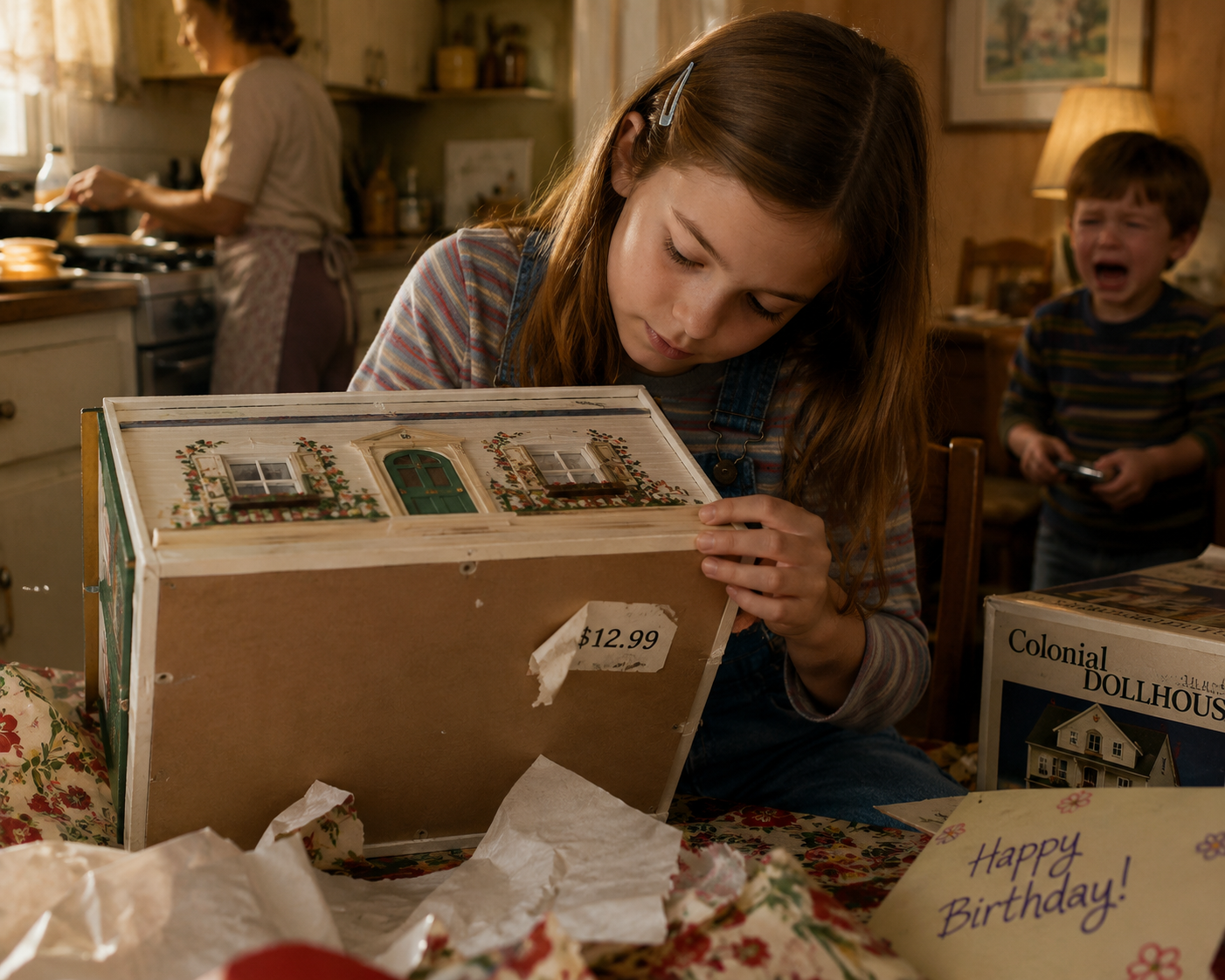
I was nine when I saw the price tag. It was stuck to the bottom of the dollhouse, folded under one corner where the sticker had not peeled off cleanly. My mom was in the kitchen making pancakes shaped like uneven circles, and my little brother was yelling because his batteries were missing. I turned the dollhouse over to look at the tiny painted door, and there it was: $12.99 in black ink. I remember feeling foolish first, then strangely protective. I did not tell my brother. I did not ask my mom. I just set the dollhouse upright again and said thank you louder than I meant to. The room still smelled like syrup, but the magic had moved somewhere else.

Try It Yourself

Set a timer for ten minutes and write the scene without stopping. Start with an object from the holiday. Let that object lead you into the room, the people, and the feeling you had when the day changed.

If you get stuck, ask yourself one simple question: What did I understand afterward that I did not understand before?

You do not have to make the memory sound wise. You only have to make it specific. Show the lights still blinking, the food still warm, the music still playing, and the quiet realization that something no longer felt the same.

This flash memoir prompt moment holiday stopped feeling magical is especially strong because many readers know that feeling. They may not have lived your exact memory, but they understand the ache of seeing behind the curtain.

Want More Flash Memoir Prompts?

If this prompt opened a memory you want to keep exploring, give yourself more small doors into the past. Explore all 365 prompts in The Memory Trigger: 365 Flash Memoir Writing Prompts.

The Memory Trigger

Themes in For Whom the Bell Tolls

For Whom the Bell Tolls themes

Ernest Hemingway’s novel can feel simple at first, but its ideas run deep. This guide explains the major themes in For Whom the Bell Tolls so students can track the book’s conflicts, symbols, and meaning with more confidence.

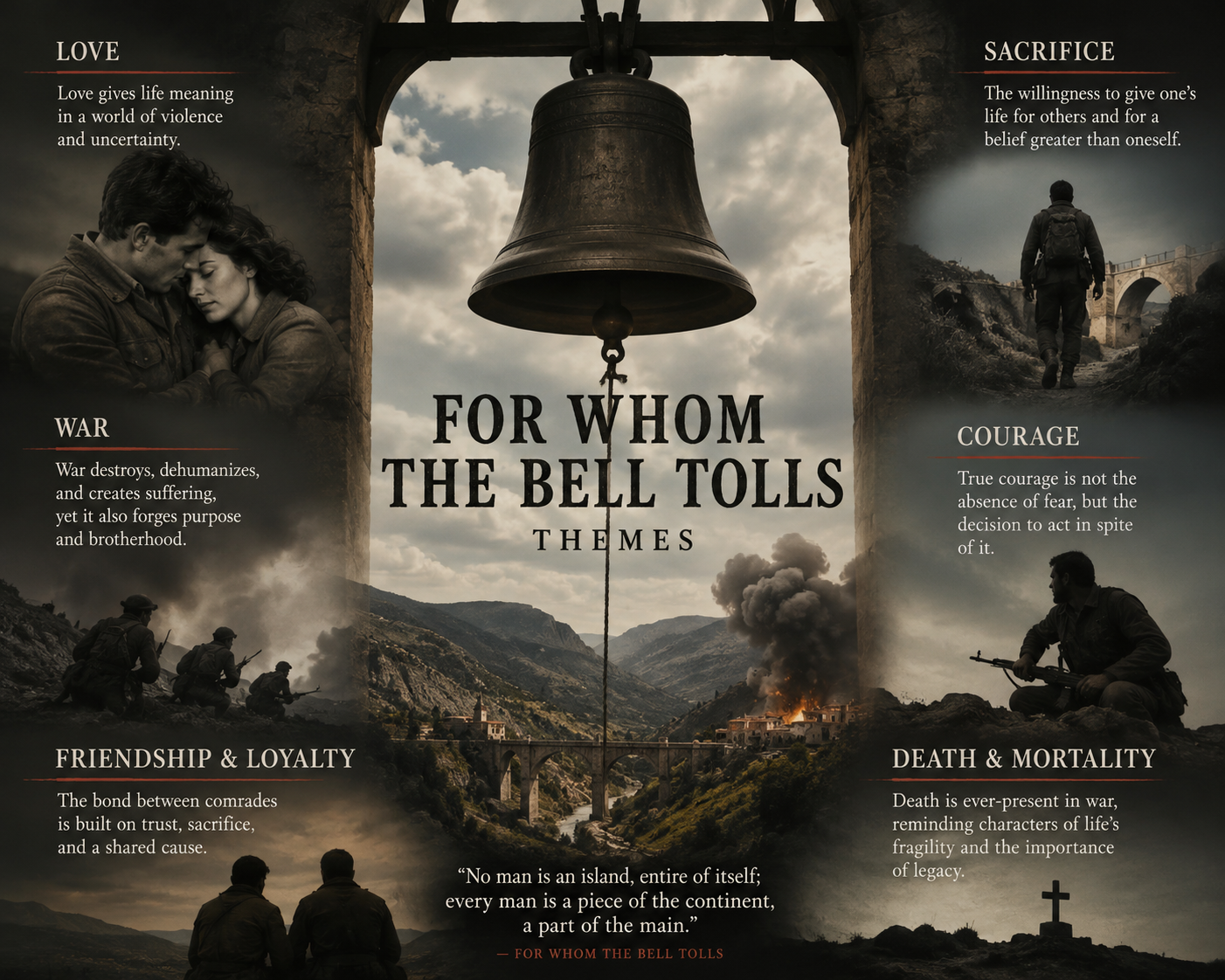
The novel follows Robert Jordan during the Spanish Civil War, but it is not only a war story. It asks what people owe to others, what love can mean under pressure, and how a person faces death.

In this Guide

  • Why the novel’s themes matter
  • Duty, sacrifice, and loyalty
  • Love during war
  • Death and courage
  • Politics, violence, and belief
  • How to write about the themes
  • FAQ
For Whom the Bell Tolls themes

Why the themes in For Whom the Bell Tolls matter

Hemingway uses war to test ideas that matter far beyond the battlefield.

The themes in For Whom the Bell Tolls help readers see the novel as more than a mission story. Robert Jordan must blow up a bridge, but the real conflict is moral. He must decide what his life is worth and what another person’s life is worth.

The title comes from a famous meditation by John Donne. Donne argues that no person is truly alone. You can read more about Donne’s work at the Poetry Foundation.

That idea shapes the whole novel. One death affects everyone. One choice can change a group. One act of courage can cost everything.

Themes in For Whom the Bell Tolls: duty and sacrifice

Duty is one of the strongest forces in the novel, but Hemingway never makes it simple.

Robert Jordan believes in the Republican cause, yet he also knows that war can turn people into tools. His orders matter, but so do the lives of the guerrilla fighters who help him.

This theme raises a hard question: When is sacrifice noble, and when is it wasteful?

Students often compare this to Antigone by Sophocles. Antigone follows a duty to family and the gods, even when the state punishes her. Robert Jordan faces a similar pressure between public duty and private feeling.

The themes in For Whom the Bell Tolls show that sacrifice has value only when it stays tied to human care. Hemingway does not praise blind obedience. He asks readers to judge the cost.

Love as a force against fear

Love gives the novel warmth, but it does not erase danger.

Robert Jordan’s relationship with Maria develops in a world shaped by violence. Their love is fast, intense, and fragile. It offers hope, yet it also makes death feel more painful.

Hemingway presents love as a form of resistance. War tries to reduce people to soldiers, victims, or enemies. Love reminds them that they are still human.

This is one reason the themes in For Whom the Bell Tolls can feel so personal. The love story is not a break from the war plot. It helps define what Jordan is fighting to protect.

For a student essay, it helps to connect love to character choices. If you want help with that skill, see our guide on how to analyze characters in literature.

Death, courage, and the value of one moment

Death is always near in the novel, so courage becomes a daily choice.

Robert Jordan thinks about death often. Other characters do too. Some fear it, some accept it, and some try to hide from it through anger or pride.

Hemingway does not show courage as the absence of fear. Courage means acting with fear still present. That idea is common in war literature, but Hemingway gives it a quiet style.

The themes in For Whom the Bell Tolls ask students to notice small moments of bravery. A character may show courage through action, silence, loyalty, or mercy.

This theme connects to Hemingway’s famous style. His sentences often stay plain, but the feelings under them are strong. The result is a tone that feels controlled, even when the scene is painful.

Politics, belief, and moral confusion

The Spanish Civil War gives the novel its setting, but Hemingway avoids easy heroes and villains.

Robert Jordan supports the Republican side against fascism. Still, the novel shows violence and cruelty among people on his own side too. That choice makes the story more honest and harder to simplify.

Readers can learn more about the historical background from Britannica’s overview of the Spanish Civil War.

The themes in For Whom the Bell Tolls include political belief, but Hemingway focuses on what belief does to people. A cause can inspire courage. It can also excuse terrible acts.

Pablo is a strong example. He once fought bravely, but fear and loss have changed him. Pilar, by contrast, often sees danger clearly and still acts with strength.

Community and human connection

The novel’s title points to one of its deepest ideas: no life exists alone.

Robert Jordan enters the guerrilla group as an outsider. Over time, he becomes tied to them through trust, tension, and shared risk. His mission depends on people he did not know before.

This theme matters because Hemingway shows war as both isolating and communal. People face death alone, but their choices affect others.

The themes in For Whom the Bell Tolls make the reader ask who counts as “us.” Jordan’s answer grows wider as the novel moves forward.

How setting shapes the themes in For Whom the Bell Tolls

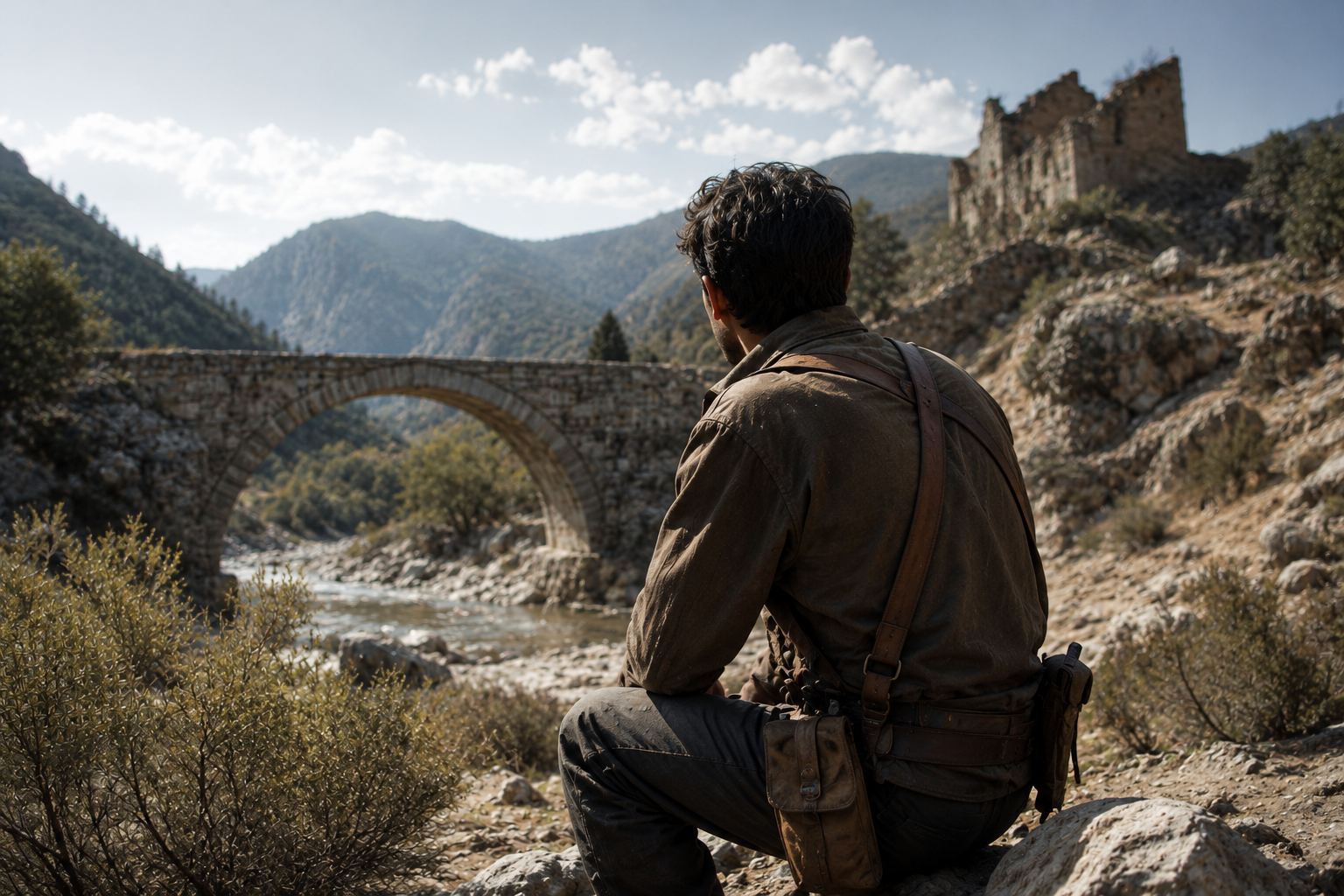
The mountains are not just a backdrop. They shape the mood and meaning of the novel.

The cold, rough landscape makes the characters seem cut off from the rest of the world. At the same time, it creates a tight space where every choice matters.

The bridge is the key symbol. It is a military target, but it also stands for connection and separation. To destroy it is to help one side, but the act also leads to loss.

When you study the themes in For Whom the Bell Tolls, pay close attention to setting. Hemingway often lets place carry meaning without direct explanation.

Symbols students should notice

Hemingway’s symbols are usually clear, but they gain power through context.

The bell in the title suggests shared grief and shared fate. The bridge suggests duty, danger, and the cost of action. The mountains suggest isolation and pressure.

Maria’s cut hair also matters. It shows the physical mark of trauma, but it does not define her whole identity. Hemingway lets her become more than what happened to her.

These symbols support the themes in For Whom the Bell Tolls without turning the novel into a puzzle. They help give shape to ideas the characters may not fully say.

How to write about themes in For Whom the Bell Tolls

A strong theme paragraph should start with a clear claim, not a broad summary.

For example, instead of saying, “The book is about war,” you could write: “Hemingway presents war as a test of human connection, because Robert Jordan must balance his mission with his care for others.”

Then use a specific scene. Discuss Robert Jordan’s choices, Pilar’s stories, Pablo’s fear, or Maria’s hope. Link the scene back to the larger meaning.

If you need a simple study aid, our literature theme guide resources can help you organize quotes and claims before you draft.

The best essays on the themes in For Whom the Bell Tolls do not try to cover everything. Choose one main idea and trace how Hemingway develops it.

Relevant books for further reading

If you want more context, these books pair well with Hemingway’s novel:

  • Homage to Catalonia by George Orwell
  • A Farewell to Arms by Ernest Hemingway

Both books deal with war, memory, and the pressure of history on private life.

FAQ: themes in For Whom the Bell Tolls

What are the main themes in For Whom the Bell Tolls?

The main themes include duty, sacrifice, love, death, courage, political belief, and human connection.

Why is the title important?

The title suggests that every death affects the whole human community. It comes from John Donne’s idea that no person is truly separate from others.

Is For Whom the Bell Tolls anti-war?

It is not a simple anti-war novel, but it shows war as costly, painful, and morally complex. Hemingway respects courage while showing the damage war causes.

How does Maria connect to the novel’s themes?

Maria represents survival, love, and the effort to reclaim life after trauma. Her bond with Robert Jordan adds emotional weight to his choices.

What is a good thesis about the novel’s themes?

A strong thesis could argue that Hemingway presents sacrifice as meaningful only when it grows from love, shared duty, and respect for human life.

Key Takeaway

The themes in For Whom the Bell Tolls center on a clear but painful truth: one person’s life is tied to many others. Hemingway’s novel asks students to see courage not as glory, but as human care under pressure.

Flash Memoir Prompt: Place Outside Your Home Where You Felt Most Like Yourself as a Child

flash memoir prompt outside

A warm, specific flash memoir prompt place outside home where felt most like yourself can lead you back to a library corner, ball field, creek bank, classroom, porch step, or any childhood place where you could breathe a little easier and be fully yourself.

Maybe you were the kid who became quiet at the public library because the shelves made silence feel safe. Maybe you were loud only on the playground, where your feet knew what to do before your mouth did. Maybe there was a path behind a neighbor’s garage, a church basement, a grandparent’s garden, or a corner store where you felt oddly seen.

This prompt asks you to look beyond your childhood bedroom or kitchen table and notice the place that seemed to understand you. The memory does not have to be dramatic. In fact, the smallest places often carry the most truth.

flash memoir prompt outside

The Prompt

Write about a place outside your home where you felt most like yourself as a child.

This flash memoir prompt place outside home where felt most true can unlock a memory because places hold more than scenery. They hold habits, sounds, permissions, and secret versions of who we were. A certain sidewalk or swing set may remind you of the child who felt brave, funny, peaceful, curious, or free.

When you write from place, you do not have to explain your whole childhood. You can begin with one bench, one doorway, one patch of grass, or one smell. Let the place do some of the storytelling for you.

Why This Memory Matters

Children often learn who they are by noticing where they relax. A place outside your home may have given you something you could not name at the time. Space. Attention. Distance. Adventure. A way to test out a hidden part of yourself.

That is why this prompt can uncover more than a description of a location. It may reveal what you needed as a child. It may show where you felt less watched, less corrected, or less alone. It may also show where you practiced becoming the person you would later recognize.

For one writer, the place might be a school art room that smelled like tempera paint and wet paper towels. For another, it might be the outfield during Little League, where nothing was expected except standing under the sky. Someone else might remember a bus stop where they shared jokes with a friend before the day became complicated.

Place can also work like a symbol. The creek is not just a creek if it gave you courage. The library is not just a library if it taught you that quiet could be powerful. If you enjoy thinking about how objects and places carry extra meaning, this guide on how to find symbolism in a story can help you notice those layers in your own memories too.

The Flash Memoirist
previous arrow
next arrow

How to Approach This Prompt

Start with one physical detail. Do not begin by explaining why the place mattered. Begin with the chain-link fence, the dust on the baseball diamond, the cold metal of the library door handle, or the smell of chlorine at the city pool.

Then narrow the memory to one scene. Choose one afternoon, one visit, one walk, or one moment when you felt especially yourself there. This keeps the piece sharp and gives the reader something to stand inside.

You might ask yourself: Where was I sitting or standing? Who was nearby? What did I notice before I understood what it meant? What could I do in that place that I could not do somewhere else?

Try to write the scene before naming the feeling. Instead of starting with “I felt free,” show the child version of you running ahead, taking off your shoes, speaking louder than usual, or staying quiet without fear. Let the emotion rise from the action.

A strong flash memoir does not need a full life lesson. It needs a focused memory and one emotional turn. You can end with what you understand now, but keep that ending brief. Trust the image you have built.

A Quick Example

The back corner of the town library had two beanbag chairs, both flattened in the middle like old pancakes. I always chose the blue one because it faced the mystery shelf and the window. On Saturdays, my mother left me there while she looked for cookbooks. I liked the way nobody asked me to smile or answer quickly. The librarian’s cart squeaked past, and the heater clicked under the window. I would read the same paragraph three times if I wanted. I would press my finger to a word I did not know and feel no shame. At home, I was the youngest and always catching up. In that corner, with my knees tucked under my chin, I felt older than I was. I felt private. I felt like the quiet in me finally had a room.

Try It Yourself

Set a timer for ten minutes and write about one place outside your home where you felt most like yourself as a child. Keep the memory small. One path. One table. One patch of shade. One moment you can still see.

If you get stuck, write this sentence and keep going: “I felt most like myself there because nobody expected me to…” You can change the sentence later. For now, let it open the door.

As you draft, return to the senses. What did the air feel like? What did the place sound like before anyone spoke? What object did your child-self touch, carry, climb, kick, or hide behind? Those details can lead you closer to the emotional truth than a neat explanation will.

This flash memoir prompt place outside home where felt most yourself is especially useful when you want to write gently but still reach something real. You do not have to force the memory to become profound. Just show us the place and the child who belonged there.

Want More Flash Memoir Prompts?

If this prompt brought back a place you had not thought about in years, keep following that trail. Childhood memories often return through doors, sidewalks, rooms, fields, and corners we once knew by heart. Explore all 365 prompts in The Memory Trigger: 365 Flash Memoir Writing Prompts.

The Memory Trigger

The Sun Also Rises Quotes Explained

Sun Also Rises

Hemingway’s novel can feel simple at first, but its best lines carry deep pain, irony, and doubt. This guide to The Sun Also Rises quotes explained will help students read key passages with more confidence and use them in essays.

In this Guide

  • Why Hemingway’s style matters
  • Quotes about Jake Barnes and hidden pain
  • Quotes about Brett Ashley and love
  • Quotes about travel, money, and escape
  • How to use quotes in essays
  • Book suggestions and FAQ
Sun Also Rises

The Sun Also Rises Quotes Explained: Why Hemingway’s Style Matters

Hemingway often says less so the reader can feel more.

One reason students search for The Sun Also Rises quotes explained is because the novel hides emotion under plain speech. Characters drink, travel, joke, and argue, but much of their pain stays below the surface.

This is sometimes linked to Hemingway’s iceberg theory. The visible words are only part of the meaning. The silence, gaps, and actions reveal the rest.

A good example is the famous ending: “Isn’t it pretty to think so?” Jake does not give a long speech about loss. He gives one sad, sharp line.

That short sentence shows the gap between fantasy and truth. Brett imagines a life she and Jake might have shared. Jake knows that dream cannot last.

You can read more about Hemingway’s life and style through Britannica’s Ernest Hemingway overview.

Quotes About Jake Barnes and Hidden Pain

Jake’s voice is calm, but his pain shapes the whole novel.

Jake Barnes narrates with control. He rarely asks readers to pity him. Yet his war wound, his love for Brett, and his sense of loss affect almost every scene.

One key line is: “You can’t get away from yourself by moving from one place to another.”

This quote matters because many characters try to escape through travel. Paris, Pamplona, cafes, hotels, and bars all become places to hide. But the self follows them.

For Jake, physical movement does not heal emotional damage. The line also helps explain the Lost Generation, people shaped by World War I who struggle to find meaning after it.

Strong The Sun Also Rises quotes explained in essays should connect the words to a bigger theme. Here, the theme is escape that fails.

The Sun Also Rises Quotes Explained: Brett, Love, and Limits

Brett is charming, wounded, and trapped by what she wants.

Lady Brett Ashley is often read as free and modern. She chooses lovers, moves through public spaces with ease, and refuses old rules for women.

Yet Brett is not simply carefree. Her choices often hurt others, and they also seem to hurt her. She wants love, but she does not trust peace.

Her line to Jake, “We could have had such a damned good time together,” is one of the novel’s most painful moments.

The line sounds casual at first. But it points to a life that almost existed. Brett and Jake love each other, but war has changed what their love can become.

Jake’s answer, “Isn’t it pretty to think so?” turns hope into irony. He will not pretend that longing is the same as reality.

This pair of lines works well in an essay about romantic illusion. Like Gatsby’s dream of Daisy in The Great Gatsby, Brett and Jake’s dream depends on a past that cannot return.

Quotes About Money, Travel, and Escape

The novel’s parties and trips often hide emptiness.

Hemingway fills the book with movement. Characters shift from Paris to Spain. They eat, drink, watch bullfights, and talk late into the night.

But movement does not always mean growth. That is why The Sun Also Rises quotes explained often focus on escape. The characters seek new places, but they carry old wounds.

Jake says, “Everything is on such a clear financial basis in France.”

The line sounds dry and funny. It also shows how money shapes social life. Bills, debts, and payments sit under the surface of friendship and pleasure.

Another important line is: “Nobody ever lives their life all the way up except bull-fighters.”

This quote helps explain why bullfighting matters in the novel. The bullfighter seems to live with purpose, skill, and courage. The tourists, by contrast, often seem restless and unsure.

Hemingway does not present bullfighting as a simple symbol. It becomes a test of control, honor, and grace under pressure.

The Sun Also Rises Quotes Explained for Literary Analysis Essays

The best essay quotes do more than prove that you read the book.

When you use The Sun Also Rises quotes explained in an essay, start with a clear claim. Do not drop a quote into a paragraph and hope it speaks for itself.

Try this pattern: make a point, introduce the quote, explain the words, then connect it back to your thesis.

For example, an essay might argue that Jake uses irony to protect himself from pain. The ending line, “Isn’t it pretty to think so?” supports that claim because it turns heartbreak into a cool, controlled remark.

A good The Sun Also Rises quotes explained paragraph should answer one question: what does this line reveal that plain plot summary cannot?

If you need help shaping that kind of paragraph, see our guide on how to write a literary analysis essay.

How to Use Quotes Without Just Summarizing Plot

Quote analysis works best when you slow down and study word choice.

Many students write, “This quote shows Jake is sad.” That may be true, but it is too general.

A stronger answer explains how the words create that sadness. Does the line sound bitter? Does it avoid emotion? Does it turn pain into a joke?

Take the sentence, “It is awfully easy to be hard-boiled about everything in the daytime, but at night it is another thing.”

The phrase hard-boiled suggests toughness. But the second half of the line breaks that toughness apart. Night becomes the time when fear and grief return.

This kind of close reading helps students move from summary to analysis. It also makes The Sun Also Rises quotes explained feel useful rather than memorized.

For extra practice, you can pair your notes with our student literature study resources.

More Memorable Quotes and What They Suggest

Some short lines can open large parts of the novel.

“I mistrust all frank and simple people.” This line reveals Jake’s guarded view of the world. It also fits the novel’s mood, where honesty often feels mixed with performance.

“I did not care what it was all about. All I wanted to know was how to live in it.” This quote points to the novel’s moral problem. Jake may not find clear answers, but he seeks a code for how to live.

“The road to hell is paved with unbought stuffed dogs.” This strange comic line shows Hemingway’s dry humor. It also reminds readers that absurd details can sit beside deep pain.

These quotes are short, but they give students a way into major ideas: mistrust, survival, and the odd shape of modern life.

Books That Pair Well with The Sun Also Rises

These books can help students compare themes, style, and historical context.

  • A Farewell to Arms by Ernest Hemingway
  • The Great Gatsby by F. Scott Fitzgerald
  • Mrs. Dalloway by Virginia Woolf

For background on modernism, the Poetry Foundation’s page on modernism gives a clear starting point.

FAQ: The Sun Also Rises Quotes Explained

What is the most famous quote from The Sun Also Rises?

One of the most famous lines is “Isn’t it pretty to think so?” It closes the novel and shows Jake’s mix of love, sadness, and realism.

What themes do the best quotes show?

The best quotes often show lost faith, failed escape, war trauma, love, and moral control. They reveal what the characters do not say directly.

Can I use short quotes in a school essay?

Yes. Use only the words you need, then explain them closely. Your analysis should take more space than the quote itself.

Why is Jake’s narration so important?

Jake controls what readers see and feel. His plain style hides pain, which makes his short comments powerful.

How many quotes should I use in one paragraph?

Usually one strong quote is enough. Focus on deep explanation instead of stacking many lines together.

Key Takeaway

The Sun Also Rises quotes explained can help students see the novel’s hidden depth. Hemingway’s short lines carry loss, irony, and a hard search for meaning after war.

Flash Memoir Prompt: Moment when You Were Given More Freedom Than You Expected

flash memoir prompt freedom

A brief writing invitation for remembering the day someone loosened the rules, handed you room to choose, and let you discover what freedom felt like in your own body.

Maybe it was the first time your parents let you walk home alone. Maybe a teacher said, “Choose your own topic,” and meant it. Maybe a boss trusted you with a decision before you felt ready. That sudden space can feel exciting, but it can also feel strange, like standing in a room where the walls have quietly moved back.

This flash memoir prompt moment given more freedom than you expected asks you to return to one small scene when someone trusted you, stepped aside, or stopped controlling the outcome.

flash memoir prompt freedom

The Prompt

Write about a moment when you were given more freedom than you expected.

This prompt can unlock a memory that still carries energy. Freedom is not always loud. Sometimes it arrives as a key, a later curfew, a blank page, a new job, a borrowed car, or a simple sentence: “You decide.”

What makes this kind of memory powerful is the mix of feelings. You may have felt proud and scared at the same time. You may have wanted the freedom, then felt the weight of it once it was yours.

Why This Memory Matters

Unexpected freedom often marks a change in how others see us. Someone realizes we are older, stronger, smarter, or more capable than before. Sometimes we realize it at the same moment.

A memory like this may uncover a turning point. It could show the first time you were trusted with responsibility. It could reveal the first time you noticed the difference between permission and independence.

It may also show something quieter. Maybe the freedom was too much. Maybe you made a mistake. Maybe you missed the old rules even while you celebrated their absence. That tension is good material for memoir.

When you write this scene, try not to force a neat lesson onto it. Let the memory stay human. The truth may be simple: you were given space, and you had to decide what kind of person you would be inside it.

The Flash Memoirist
previous arrow
next arrow

How to Approach This Prompt

Begin with the moment the freedom was given. Do not start with your whole childhood, your family history, or every rule you ever lived under. Start with one scene.

What did the person say? Where were you standing? What object made the freedom feel real? A set of keys, a permission slip, a bus pass, a bedroom door, or a computer login can pull the reader into the memory faster than explanation.

Write what you noticed before you explain what it meant. If your mother handed you the car keys, describe the weight of them in your palm. If your teacher let you choose your own book, describe the shelves, the quiet room, or the title you reached for first.

This is also a good time to pay attention the way you would when you practice close reading in literature. Look carefully at the small details in your own life. A pause, a glance, or a nervous joke can reveal more than a long summary.

If you feel stuck, write one sentence that begins with, “I thought they were going to say no, but…” Then keep going. That sentence naturally creates movement, since it shows the gap between what you expected and what happened.

You can also mark up your draft later, almost like you would annotate a passage. Circle the strongest image. Underline the sentence where your feelings shift. Then revise around that moment.

A Quick Example

My dad tossed me the grocery list and said, “You drive.” I thought he meant around the block, maybe to the stop sign and back. But he climbed into the passenger seat and buckled himself in like this was normal. The keys felt sharp in my hand. I adjusted the mirror three times, though it was already fine. At the first red light, he did not remind me to brake. He just looked out the window at the gas station sign. I remember feeling taller than I was, and also like a little kid pretending. When we got home, the milk had tipped over in the trunk. He laughed before I could apologize. That laugh made the freedom feel real.

Try It Yourself

Set a timer for ten minutes and write the scene without stopping. Stay close to the moment when the freedom was offered. Let the memory unfold through action, sound, and body language.

You do not need to explain your entire relationship with the person who gave you that freedom. You only need to show enough for the reader to feel the surprise of it.

If the memory feels small, trust it anyway. A small freedom can carry a large meaning. The first walk alone, the first choice, the first time no one corrected you can become a clear and moving flash memoir.

Use this flash memoir prompt moment given more freedom than you expected as a way to ask: What did I do with that space? Did I step into it, test it, fear it, waste it, or grow into it slowly?

Want More Flash Memoir Prompts?

If you enjoyed this prompt, keep building your practice one focused memory at a time. Explore all 365 prompts in The Memory Trigger: 365 Flash Memoir Writing Prompts.

The Memory Trigger

Themes in The Sun Also Rises: A Student-Friendly Guide

Lost Generation

Students often find Hemingway’s novel simple on the surface but complex underneath. This guide explains the themes in The Sun Also Rises so you can see how the characters, setting, and style work together.

By the end, you will have clearer ideas for class discussion, essays, and AP Literature style analysis.

In this Guide

Lost Generation

Why the themes in The Sun Also Rises matter

The novel’s major ideas grow from what the characters cannot say directly.

Ernest Hemingway writes with a spare style. His characters drink, travel, joke, and argue, but their deepest pain often stays hidden.

That is why the themes in The Sun Also Rises can feel quiet at first. The meaning sits beneath the scene, not always in the dialogue.

If you need help with the difference between topic and theme, start with this guide on how to identify theme in literature. It can help you turn a broad topic like “love” into a full theme statement.

The Lost Generation and postwar emptiness

Hemingway shows a world where old beliefs no longer feel strong enough.

One of the central themes in The Sun Also Rises is the damage left by World War I. Jake Barnes and his friends live after the war, but they do not seem healed.

They move from Paris to Spain, fill their days with meals and drinks, and avoid silence. Their lives seem full, yet the mood often feels hollow.

This is why the novel is often linked to the Lost Generation. These people survived a world crisis, but they lost trust in older ideas about honor, love, and purpose.

For helpful background on Hemingway’s life and era, see Britannica’s biography of Ernest Hemingway.

Love, desire, and emotional wounds

Love in this novel is real, but it is rarely simple or healing.

Jake loves Brett, and Brett cares for Jake. Still, their relationship cannot become the life they want.

Jake’s war wound makes their love painful in a very direct way. It also stands for a wider emotional wound that the whole group carries.

Brett is often desired by men around her, but attention does not bring peace. She has freedom, yet she also feels trapped by need and regret.

These themes in The Sun Also Rises show love as something that exposes pain rather than solves it. Hemingway does not treat romance as an easy cure.

A useful comparison is F. Scott Fitzgerald’s The Great Gatsby. Gatsby also believes desire can rebuild a broken life, but the novel proves that longing can twist reality.

Masculinity, pride, and insecurity

The men in the novel often act tough because they feel weak inside.

Masculinity is one of the most important themes in The Sun Also Rises. Jake, Robert Cohn, Mike Campbell, and Pedro Romero all show different versions of masculine identity.

Jake is calm and observant, but his injury shapes how he sees himself. Cohn uses boxing and fantasy to defend his pride.

Mike uses insults to hide shame. Romero, the bullfighter, seems controlled and graceful, which makes him powerful in Brett’s eyes.

Hemingway does not offer one simple answer about what it means to be a man. He shows how pride can protect a person, but it can also break them.

Escape through travel, drink, and pleasure

The characters keep moving because stillness would force them to face themselves.

The novel moves from Paris nightlife to the festival in Pamplona. The settings are lively, but they also reveal the characters’ need to escape.

Alcohol is everywhere in the novel. It helps the characters bond, but it also makes jealousy and cruelty worse.

Travel works in a similar way. Changing places gives the group brief relief, but it does not fix their deeper loneliness.

This is one reason the themes in The Sun Also Rises still feel modern. Many people know what it is like to stay busy in order to avoid grief.

Values, codes, and self-control

Hemingway respects people who follow a code, even when life feels broken.

Jake often seems strongest when he keeps control of himself. He suffers, but he does not explain every feeling.

Romero also follows a code through bullfighting. He has discipline, focus, and style under pressure.

The bullring becomes more than a sport setting. It shows a world where courage and order still seem possible.

These themes in The Sun Also Rises connect to Hemingway’s wider idea of grace under pressure. The world may be chaotic, but a person can still choose how to act.

For another view of literary modernism and its broken forms, browse the Poetry Foundation’s overview of modernism.

Nature, peace, and the need for order

The fishing trip offers a rare break from the noise of the social world.

When Jake and Bill go fishing, the tone changes. The air feels cleaner, and the pace slows.

This section matters because it shows what Jake lacks in Paris and Pamplona. Nature gives him a temporary sense of peace.

The trip does not erase his pain. Still, it gives the reader a glimpse of balance.

What makes the themes in The Sun Also Rises powerful is this contrast. The novel places noisy public life beside quiet private need.

How to write about themes in The Sun Also Rises

A strong theme statement should say what the novel argues, not just name a topic.

Do not write, “The theme is love.” That is too broad.

Try a full claim instead: “Hemingway shows that love can remain powerful even when trauma makes happiness impossible.”

For an essay, choose one theme and trace it across several scenes. You might focus on Jake and Brett, the fishing trip, or the bullfights.

AP Literature students should link theme to craft. Notice Hemingway’s short sentences, indirect dialogue, and repeated scenes of social escape.

For extra practice, use this theme analysis method before you draft your essay. You can also pair it with our student-friendly literature study resource for quick review.

Helpful books for deeper study

These books can help you place Hemingway’s novel in a wider literary context.

  • The Sun Also Rises by Ernest Hemingway
  • A Moveable Feast by Ernest Hemingway
  • The Great Gatsby by F. Scott Fitzgerald

FAQ: themes in The Sun Also Rises

What are the main themes in The Sun Also Rises?

The main themes in The Sun Also Rises include postwar emptiness, wounded love, insecure masculinity, escape, and the search for personal values.

Why is the Lost Generation important in the novel?

The Lost Generation helps explain the characters’ aimless lives. They survived the war era, but they struggle to believe in old ideals.

Is Brett Ashley a symbol?

Brett can be read as a symbol of modern freedom and modern pain. She resists old rules, yet she still feels trapped by desire and loss.

What does bullfighting represent?

Bullfighting represents control, courage, and ritual. It gives the novel a sharp contrast to the messy behavior of Jake’s social group.

How should I start an essay on this novel?

Start with one clear theme claim. Then choose scenes that show how Hemingway builds that idea through action, setting, and style.

Key takeaway

The best way to understand the themes in The Sun Also Rises is to look beneath the surface. Hemingway’s characters may sound casual, but their choices reveal a deep struggle to live with loss.

error

Enjoy this article? Please spread the word :)

Follow by Email
BLUESKY
fb-share-icon
Reddit
LinkedIn
Share
RSS