


The hated chore may have faded, but the feeling remains: the bucket handle cutting into your fingers, the sigh you tried to hide, the slow clock of a Saturday you thought would never belong to you. This flash memoir prompt, childhood chore hated can now barely remember, invites you to chase that half-gone memory and see what emotion is still sitting inside it.

The Prompt
Write about a childhood chore that you hated and can now barely remember the details of.
This prompt works because memory is often uneven. You may not remember the exact day, the season, or how many times you had to do the chore. But you might remember the smell of dishwater, the scrape of a rake, or the way your parent said your name when you tried to disappear.
A flash memoir does not need the whole history of your childhood responsibilities. It needs one moment that feels alive. This flash memoir prompt childhood chore hated can now be fuzzy on purpose. The missing parts are part of the story.
Why This Memory Matters
Childhood chores were rarely just about the chore. They could be about fairness, power, boredom, pride, money, family rules, or wanting to be somewhere else.
Maybe you hated folding towels because your sibling got the easier job. Maybe you had to weed a garden while your friends rode bikes past the house. Maybe washing dishes made you feel trapped in the kitchen while adults talked in the next room.
Now, years later, you may barely remember what brand of soap you used or how long the job took. Still, the emotional shape may remain. You knew what it felt like to be small and annoyed. You knew how long ten minutes could feel when you were not the one in charge.
This kind of memory can reveal how your younger self understood work. Did you connect chores with punishment? Did you feel useful? Did you feel unseen? A small task can open a larger question without turning the piece into a long explanation.
For students practicing close observation, this is also a gentle way to build the same skill used in reading. When you notice one object, one tone of voice, or one repeated image, you are doing the kind of careful thinking found in how to annotate literature, only the text is your own life.


How to Approach This Prompt
Begin with your body, not your opinion. Before you write “I hated mowing the lawn” or “I hated cleaning the bathroom,” write the physical detail that proves it.
What did your hands touch? What did the chore smell like? What sound made you want to quit before you even started?
You might begin with the broom bristles bent to one side, a sponge gone gray, a pile of socks that never seemed to match, or the damp knees of your jeans after scrubbing a floor. Let the object pull you into the scene.
Then narrow the memory. Do not try to write every time you did this chore. Choose one afternoon, one kitchen, one patch of yard, one sink full of dishes.
If the details are missing, say so. “I don’t remember whether it was summer or fall” can be a strong memoir sentence. It tells the reader that the memory is honest. You are not inventing a perfect movie. You are following what remains.
Try writing what you noticed before you explain what it meant. Let the reader stand beside you for a moment. Let them see the chore through your younger eyes. Meaning can arrive later, quietly.
If you want to shape the piece after drafting, look at one short paragraph and ask what it is really about. Is it about laziness, or is it about wanting freedom? Is it about a chore, or is it about being trusted with work too early? For more practice with shaping ideas from evidence, these literary analysis essay examples can help you see how small details support a larger point.
A Quick Example
I hated emptying the dishwasher, though I can’t remember if it was actually hard. I remember the bottom rack rolling crooked, one wheel always jumping the track. I remember the steam smell when I opened it too soon and the little pools of water sitting on the bottoms of upside-down mugs. My job was to put everything away before dinner, but I would drag it out, carrying two forks at a time like I had been assigned some great injustice. My mother would say, “It takes longer to complain than to do it,” which made me complain silently instead. I don’t remember the plates we owned. I remember the cupboard door sticking and the feeling that everyone else in the house was free.
Try It Yourself
Set a timer for ten minutes and write one scene from the chore. Stay close to the object in front of you. A broom. A laundry basket. A wet rag. A trash can at the end of a driveway.
If the memory breaks apart, keep going. Write the fragments. “I remember the basement stairs.” “I remember dust.” “I remember being mad before anyone asked me to start.” Those pieces may be enough.
This flash memoir prompt childhood chore hated can now barely remember is less about proving what happened and more about catching the emotional truth. Let the chore be small. Let the feeling be clear.
Want More Flash Memoir Prompts?
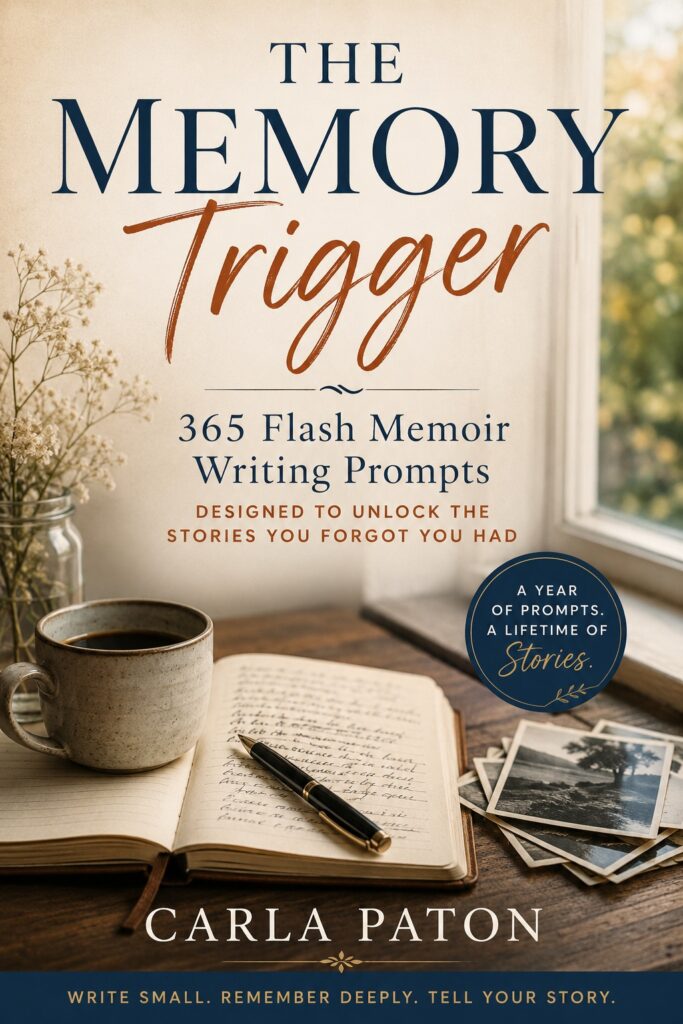
If you enjoyed this kind of small, focused memory work, explore all 365 prompts in The Memory Trigger: 365 Flash Memoir Writing Prompts. Each prompt is designed to help you enter one moment, notice what remains, and turn it into a short piece of memoir.


Get the Free Close Reading Worksheet Pack
Join my email list and receive the printable worksheet pack you can use with any novel or poem.
No spam. Just helpful guides for reading literature well.












