

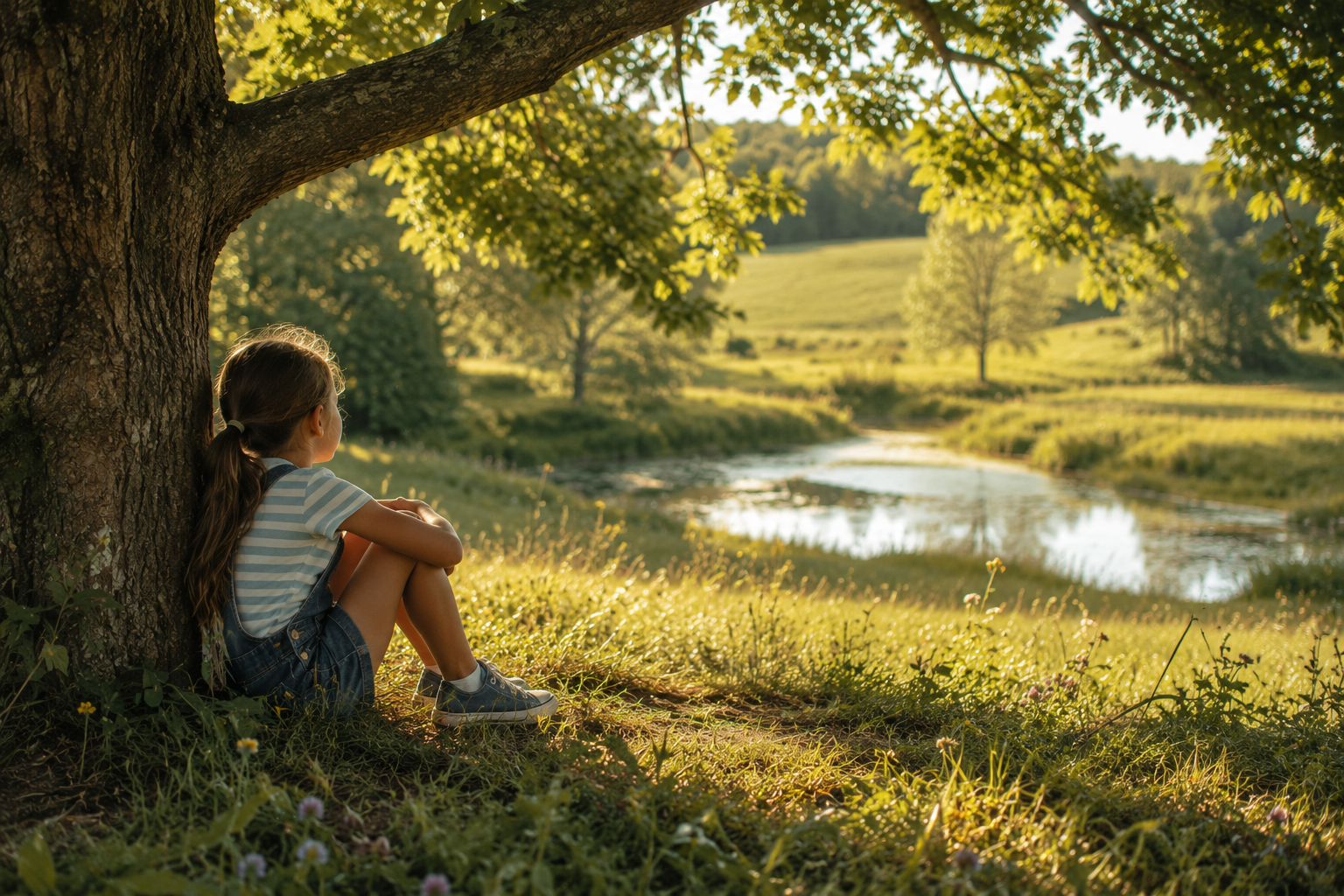
A warm, specific flash memoir prompt place outside home where felt most like yourself can lead you back to a library corner, ball field, creek bank, classroom, porch step, or any childhood place where you could breathe a little easier and be fully yourself.
Maybe you were the kid who became quiet at the public library because the shelves made silence feel safe. Maybe you were loud only on the playground, where your feet knew what to do before your mouth did. Maybe there was a path behind a neighbor’s garage, a church basement, a grandparent’s garden, or a corner store where you felt oddly seen.
This prompt asks you to look beyond your childhood bedroom or kitchen table and notice the place that seemed to understand you. The memory does not have to be dramatic. In fact, the smallest places often carry the most truth.
The Prompt
Write about a place outside your home where you felt most like yourself as a child.
This flash memoir prompt place outside home where felt most true can unlock a memory because places hold more than scenery. They hold habits, sounds, permissions, and secret versions of who we were. A certain sidewalk or swing set may remind you of the child who felt brave, funny, peaceful, curious, or free.
When you write from place, you do not have to explain your whole childhood. You can begin with one bench, one doorway, one patch of grass, or one smell. Let the place do some of the storytelling for you.
Why This Memory Matters
Children often learn who they are by noticing where they relax. A place outside your home may have given you something you could not name at the time. Space. Attention. Distance. Adventure. A way to test out a hidden part of yourself.
That is why this prompt can uncover more than a description of a location. It may reveal what you needed as a child. It may show where you felt less watched, less corrected, or less alone. It may also show where you practiced becoming the person you would later recognize.
For one writer, the place might be a school art room that smelled like tempera paint and wet paper towels. For another, it might be the outfield during Little League, where nothing was expected except standing under the sky. Someone else might remember a bus stop where they shared jokes with a friend before the day became complicated.
Place can also work like a symbol. The creek is not just a creek if it gave you courage. The library is not just a library if it taught you that quiet could be powerful. If you enjoy thinking about how objects and places carry extra meaning, this guide on how to find symbolism in a story can help you notice those layers in your own memories too.


How to Approach This Prompt
Start with one physical detail. Do not begin by explaining why the place mattered. Begin with the chain-link fence, the dust on the baseball diamond, the cold metal of the library door handle, or the smell of chlorine at the city pool.
Then narrow the memory to one scene. Choose one afternoon, one visit, one walk, or one moment when you felt especially yourself there. This keeps the piece sharp and gives the reader something to stand inside.
You might ask yourself: Where was I sitting or standing? Who was nearby? What did I notice before I understood what it meant? What could I do in that place that I could not do somewhere else?
Try to write the scene before naming the feeling. Instead of starting with “I felt free,” show the child version of you running ahead, taking off your shoes, speaking louder than usual, or staying quiet without fear. Let the emotion rise from the action.
A strong flash memoir does not need a full life lesson. It needs a focused memory and one emotional turn. You can end with what you understand now, but keep that ending brief. Trust the image you have built.
A Quick Example
The back corner of the town library had two beanbag chairs, both flattened in the middle like old pancakes. I always chose the blue one because it faced the mystery shelf and the window. On Saturdays, my mother left me there while she looked for cookbooks. I liked the way nobody asked me to smile or answer quickly. The librarian’s cart squeaked past, and the heater clicked under the window. I would read the same paragraph three times if I wanted. I would press my finger to a word I did not know and feel no shame. At home, I was the youngest and always catching up. In that corner, with my knees tucked under my chin, I felt older than I was. I felt private. I felt like the quiet in me finally had a room.
Try It Yourself
Set a timer for ten minutes and write about one place outside your home where you felt most like yourself as a child. Keep the memory small. One path. One table. One patch of shade. One moment you can still see.
If you get stuck, write this sentence and keep going: “I felt most like myself there because nobody expected me to…” You can change the sentence later. For now, let it open the door.
As you draft, return to the senses. What did the air feel like? What did the place sound like before anyone spoke? What object did your child-self touch, carry, climb, kick, or hide behind? Those details can lead you closer to the emotional truth than a neat explanation will.
This flash memoir prompt place outside home where felt most yourself is especially useful when you want to write gently but still reach something real. You do not have to force the memory to become profound. Just show us the place and the child who belonged there.
Want More Flash Memoir Prompts?
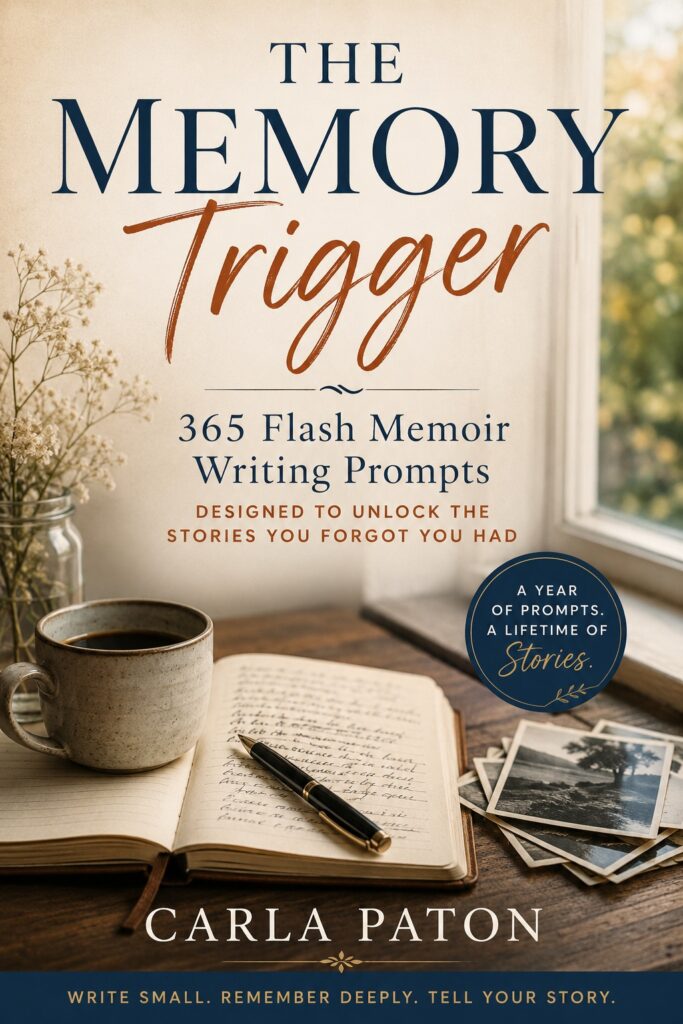
If this prompt brought back a place you had not thought about in years, keep following that trail. Childhood memories often return through doors, sidewalks, rooms, fields, and corners we once knew by heart. Explore all 365 prompts in The Memory Trigger: 365 Flash Memoir Writing Prompts.


Get the Free Close Reading Worksheet Pack
Join my email list and receive the printable worksheet pack you can use with any novel or poem.
No spam. Just helpful guides for reading literature well.












