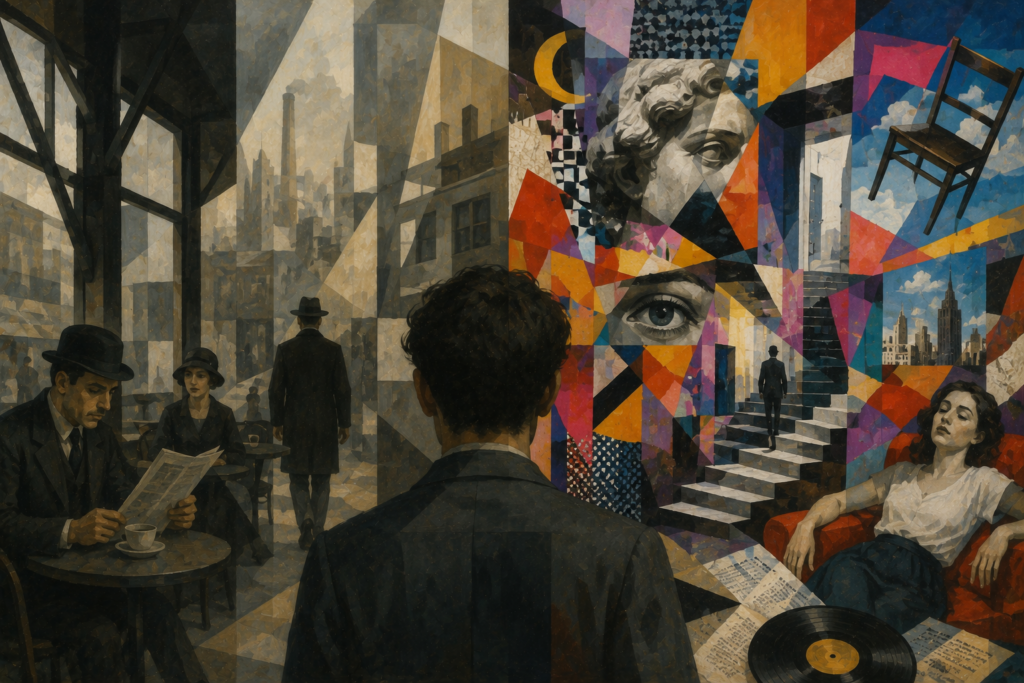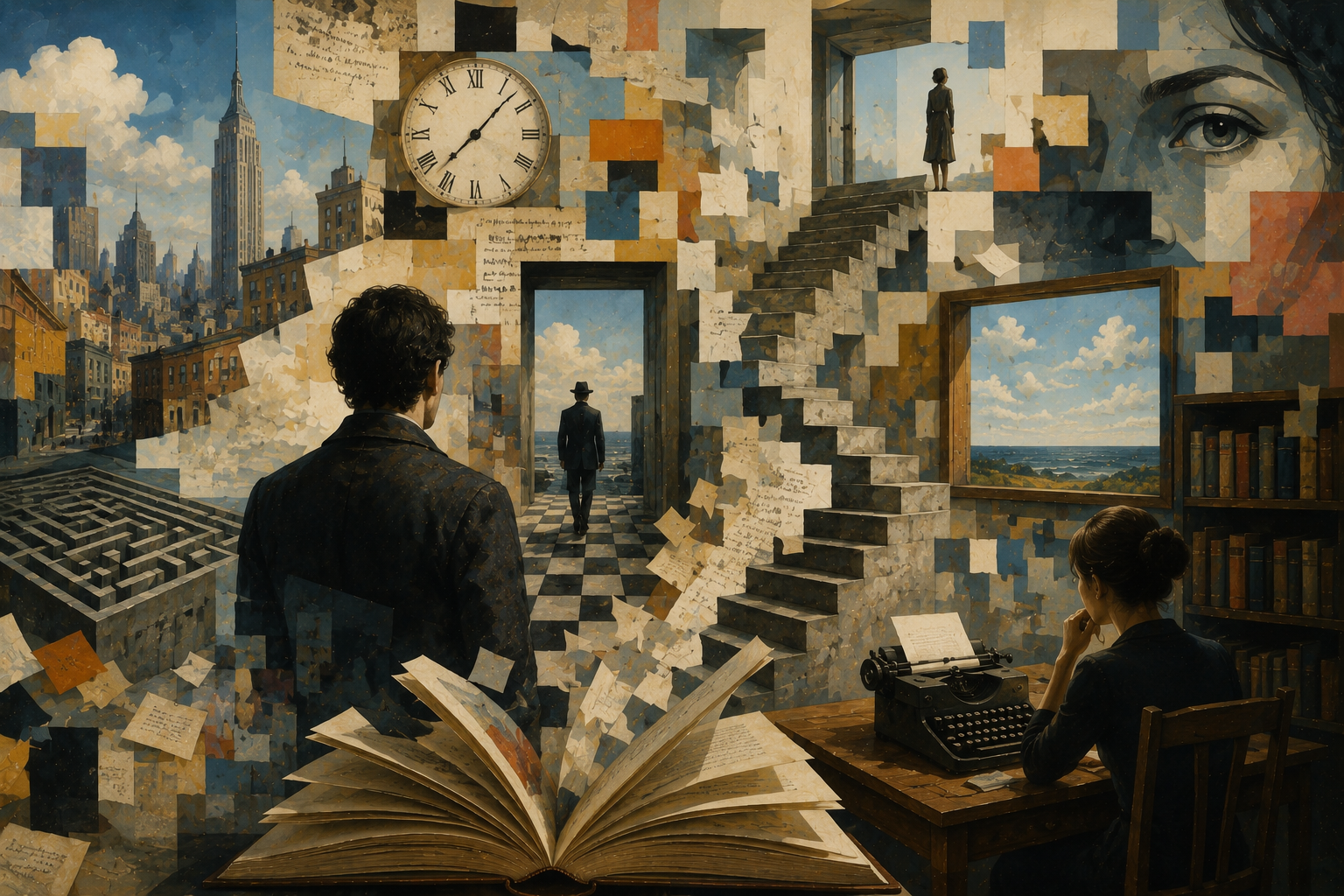
Common Postmodern Literary Techniques

Postmodern Techniques

Postmodern books can feel strange at first, but their patterns are easier to spot once you know what to look for. This guide explains Common Postmodern Literary Techniques with clear examples, so students can read these texts with more confidence.

These techniques often challenge truth, order, identity, and the idea that stories must follow normal rules.

In this Guide

  • What postmodern literature tries to do
  • Common techniques students should know
  • Examples from famous books
  • How to spot these techniques while reading
  • Why writers use them
  • Recommended books
  • FAQ
Postmodern Techniques

What Postmodern Literature Tries to Do

Postmodern literature questions the rules that many older stories follow.

Traditional novels often try to create a believable world. They may have a clear plot, stable characters, and a firm ending. Postmodern works often break those expectations.

Instead of giving one clear meaning, a postmodern text may offer many meanings. It may even make readers wonder if meaning can ever be fixed.

This is why Common Postmodern Literary Techniques can seem confusing at first. They are meant to make you pause and ask, “Who is telling the truth?” or “Why is this story built this way?”

For a wider background on the movement, Britannica’s overview of postmodernism is a useful place to start.

Common Postmodern Literary Techniques Students Should Know

These are the tools many postmodern writers use to disrupt normal storytelling.

Metafiction is one of the most important Common Postmodern Literary Techniques. It happens when a story calls attention to itself as a story.

For example, in Italo Calvino’s If on a winter’s night a traveler, the reader becomes part of the book. The novel keeps reminding you that you are reading a novel.

Fragmentation means the story appears in broken parts. The plot may jump between scenes, voices, or time periods.

Kurt Vonnegut’s Slaughterhouse-Five uses this technique. Billy Pilgrim’s life does not unfold in a straight line, which reflects trauma and confusion.

Intertextuality means one text refers to another text. A postmodern novel may borrow from older books, myths, pop culture, or history.

Jean Rhys’s Wide Sargasso Sea responds to Jane Eyre. It gives a new voice to Bertha Mason, a character who was pushed to the side in Charlotte Brontë’s novel.

Unreliable narration happens when the narrator cannot fully be trusted. The narrator may lie, misunderstand events, or leave out key facts.

Vladimir Nabokov’s Pale Fire uses an unreliable commentator who takes over the text. The result is funny, strange, and deeply uncertain.

Common Postmodern Literary Techniques in Famous Books

Seeing these techniques in real books makes them much easier to understand.

In Slaughterhouse-Five, Vonnegut uses time jumps, dark humor, and a broken structure. These Common Postmodern Literary Techniques help show how war damages memory and identity.

In The Things They Carried by Tim O’Brien, the line between truth and fiction becomes blurry. O’Brien tells readers that some stories may not be factual, yet they may still feel emotionally true.

In Rosencrantz and Guildenstern Are Dead by Tom Stoppard, minor characters from Hamlet become the focus. The play uses absurd humor and literary borrowing to question fate, free will, and meaning.

In The French Lieutenant’s Woman by John Fowles, the narrator breaks into the story and gives more than one possible ending. This reminds readers that novels are shaped by choices.

These examples show how Common Postmodern Literary Techniques can make a book feel playful, serious, strange, or all of those at once.

image-slider-with-thumbnail1.jpeg
PlayPause
previous arrow
next arrow
image-slider-with-thumbnail1.jpeg
image-slider-with-thumbnail3.jpeg
image-slider-with-thumbnail4.jpeg
ChatGPT Image Jun 27, 2026, 06_33_13 PM
ChatGPT Image Jun 27, 2026, 06_36_37 PM
ChatGPT Image Jun 27, 2026, 06_38_39 PM
ChatGPT Image Jun 27, 2026, 06_31_22 PM
image-slider-with-thumbnail7.jpeg
ChatGPT Image Jun 27, 2026, 06_29_43 PM
ChatGPT Image Jun 27, 2026, 06_27_44 PM
image-slider-with-thumbnail6.jpeg
ChatGPT Image Jun 27, 2026, 06_15_07 PM
image-slider-with-thumbnail5.jpeg
ChatGPT Image Jun 27, 2026, 06_22_43 PM
ChatGPT Image Jun 27, 2026, 06_25_37 PM
ChatGPT Image Jun 27, 2026, 06_19_43 PM
ChatGPT Image Jun 27, 2026, 06_12_00 PM
ChatGPT Image Jun 27, 2026, 06_08_50 PM
ChatGPT Image Jun 26, 2026, 04_54_23 PM
ChatGPT Image Jun 27, 2026, 05_53_51 PM
ChatGPT Image Jun 28, 2026, 08_35_55 AM
previous arrow
next arrow

How to Spot Common Postmodern Literary Techniques While Reading

You do not need to understand everything at once. Start by noticing what feels unusual.
Ask whether the story has a clear order. If time feels broken or scenes seem out of place, the writer may use fragmentation.

Ask whether the narrator seems honest. If the narrator contradicts facts or pushes a strange version of events, you may have an unreliable narrator.

Ask whether the book refers to other works. If it echoes Shakespeare, fairy tales, myths, or popular culture, it may use intertextuality.

Ask whether the text talks about its own form. If a narrator comments on chapters, endings, authors, or readers, that is often metafiction.

If you want a stronger method for close reading, this guide on how to read literature like a scholar can help you build better habits.

Why Writers Use Common Postmodern Literary Techniques

Postmodern writers often use these tools to challenge easy answers.

Many postmodern works were shaped by war, mass media, political distrust, and rapid cultural change. Writers began to question whether old forms could still explain modern life.

That is why Common Postmodern Literary Techniques often deal with doubt. They ask whether history is reliable, whether identity is stable, and whether language can fully capture truth.

These techniques also invite readers to take an active role. You are not just following a plot. You are piecing together meaning.

This can feel hard, but it can also make the reading experience more exciting. A postmodern text often treats the reader like a co-creator.

Common Postmodern Literary Techniques and Theme

Technique and theme often work together in postmodern literature.

If a novel has a broken structure, that structure may reflect a broken world. If a narrator lies, the book may explore the limits of truth.

For example, The Things They Carried does not just use blurred truth as a trick. It uses that technique to show how memory and trauma affect storytelling.

Wide Sargasso Sea uses intertextuality to question who gets to tell a story. By rewriting part of Jane Eyre, Rhys challenges power, race, and gender in the older novel.

When you study Common Postmodern Literary Techniques, do not stop at naming them. Ask what they reveal about the book’s larger message.

Practical Takeaways for Students

Postmodern texts reward patience and careful reading.

When you read, mark moments that feel strange. A confusing scene may be the key to the whole work.

Keep track of shifts in time, voice, and structure. These details often show where the author wants your attention.

For essays, connect the technique to meaning. Do not only write, “The novel uses metafiction.” Explain how metafiction shapes the reader’s view of truth, control, or identity.

If you use Common Postmodern Literary Techniques as a study lens, difficult books become less random and more purposeful.

These books offer strong examples of postmodern style and structure.

  • Slaughterhouse-Five by Kurt Vonnegut
  • If on a winter’s night a traveler by Italo Calvino

For poetry and literary terms, the Poetry Foundation glossary is also helpful for students.

FAQ About Common Postmodern Literary Techniques

What are Common Postmodern Literary Techniques?

They are methods writers use to challenge normal storytelling. Examples include metafiction, fragmentation, intertextuality, and unreliable narration.

Why is postmodern literature hard to read?

It often avoids clear answers. The plot may feel broken, and the narrator may not be trustworthy.

Is postmodern literature always confusing?

No. Some works are playful and funny. Others are difficult because they ask readers to question truth, history, and identity.

How do I write about postmodern techniques in an essay?

Name the technique, give a clear example, and explain its effect. Focus on how the technique supports the theme.

Key Takeaway

Common Postmodern Literary Techniques help writers question truth, structure, and meaning. Once you learn to spot them, postmodern literature becomes less confusing and much more rewarding.

Flash Memoir Prompt: Last Time You Were in a Car with Someone for a Long Drive

Flash Memoir Prompt car

A long drive has a way of making quiet feel louder. Maybe you were riding beside someone you love, someone you barely understood, or someone you were about to say goodbye to. The road kept going, the cup holders rattled, the radio filled the spaces neither of you knew how to fill. This flash memoir prompt last time car someone long asks you to return to one of those rides and notice what was really happening beneath the mile markers.

Flash Memoir Prompt car

The Prompt

Write about the last time you were in a car with someone for a long drive.

This prompt works because a car is a small room in motion. You sit close to another person, yet the windshield gives both of you somewhere else to look. That mix of closeness and distance can unlock a memory with real emotional weight.

You do not need to remember every part of the trip. You only need one clear moment. Maybe it was a gas station stop, a conversation after dark, a fast-food bag passed across the console, or the silence after someone said something honest.

Why This Memory Matters

Long drives often happen during turning points. People drive to airports, colleges, hospitals, funerals, vacations, new homes, old neighborhoods, and places they are not sure they want to reach.

Because of that, this memory may hold more than the drive itself. It may reveal a relationship. Who talked? Who avoided talking? Who chose the music? Who kept checking the map? Who looked tired, brave, annoyed, or happy in a way you did not understand at the time?

A car memory can also show how people are together when they are stuck in the same space. Some families become funnier on the road. Some couples become tense. Some friends tell the truth only when their eyes are on the highway instead of each other.

This is why the flash memoir prompt last time car someone long can lead to a strong piece of writing. It gives you a built-in setting, a second character, and a moving background. You can let the road carry the story while you focus on one emotional shift.

If you want to deepen the meaning of a small object from the drive, such as a dashboard light, a paper map, or a cracked phone charger, you might enjoy this guide on how to find symbolism in a story. Memoir often uses everyday objects to carry quiet meaning.

How to Approach This Prompt

Begin with one physical detail from the car. Do not start by explaining the whole relationship. Start with the sound of the blinker, the smell of fries, the fog on the windows, the heat from the vents, or the way the seat belt pressed against your shoulder.

Then narrow the memory to one scene. A long drive may have lasted hours, but your flash memoir should not try to cover every mile. Choose the moment that still catches in your mind.

You might begin with a sentence like, “The last time we drove that far together, he kept one hand on the wheel and one hand wrapped around a gas station coffee.” That kind of line gives the reader a place to stand.

After that, write what you noticed before you explain what it meant. Let the reader hear the tires on rough pavement. Let them see the other person’s face in the green glow of the dashboard. Meaning feels stronger when it grows out of detail.

Try to resist the urge to summarize the entire history between you and the person in the car. A few hints are enough. The way someone skips a song, refuses directions, or offers you the last piece of gum can say a lot.

If you are a student using this as a short memoir assignment, think of the drive as a scene in a story. A clear scene has a place, a moment, and a feeling that changes. For more help shaping ideas into writing, these literary analysis essay examples can help you see how small details support a larger point.

image-slider-with-thumbnail1.jpeg
PlayPause
previous arrow
next arrow
image-slider-with-thumbnail1.jpeg
image-slider-with-thumbnail3.jpeg
image-slider-with-thumbnail4.jpeg
ChatGPT Image Jun 27, 2026, 06_33_13 PM
ChatGPT Image Jun 27, 2026, 06_36_37 PM
ChatGPT Image Jun 27, 2026, 06_38_39 PM
ChatGPT Image Jun 27, 2026, 06_31_22 PM
image-slider-with-thumbnail7.jpeg
ChatGPT Image Jun 27, 2026, 06_29_43 PM
ChatGPT Image Jun 27, 2026, 06_27_44 PM
image-slider-with-thumbnail6.jpeg
ChatGPT Image Jun 27, 2026, 06_15_07 PM
image-slider-with-thumbnail5.jpeg
ChatGPT Image Jun 27, 2026, 06_22_43 PM
ChatGPT Image Jun 27, 2026, 06_25_37 PM
ChatGPT Image Jun 27, 2026, 06_19_43 PM
ChatGPT Image Jun 27, 2026, 06_12_00 PM
ChatGPT Image Jun 27, 2026, 06_08_50 PM
ChatGPT Image Jun 26, 2026, 04_54_23 PM
ChatGPT Image Jun 27, 2026, 05_53_51 PM
ChatGPT Image Jun 28, 2026, 08_35_55 AM
previous arrow
next arrow

A Quick Example

The last long drive I took with my sister was to move her into her first apartment. Her car was packed so tightly that I had to keep a lamp balanced between my knees. For the first hour, we argued about the playlist. Then we got quiet. She kept checking the rearview mirror, even though nothing was behind us but highway and pine trees. At a rest stop, she bought two coffees and handed me the one with less sugar because she still remembered how I liked it. I wanted to say I would miss her, but I made a joke about her bad parking instead. She laughed, and for a second she looked younger than twenty-two. Then we got back in the car and kept driving.

Try It Yourself

Set a timer for ten minutes and write about the last time you were in a car with someone for a long drive. Start inside the car. Keep the focus tight. Let the road, the weather, the music, and the other person’s small movements help you remember.

If you get stuck, answer one simple question: what did you notice that you did not say out loud? That answer may be the center of the piece.

You can write this as a tender memory, a funny one, or a tense one. The goal is not to make the drive sound dramatic. The goal is to tell the truth of that ride as clearly as you can.

Want More Flash Memoir Prompts?

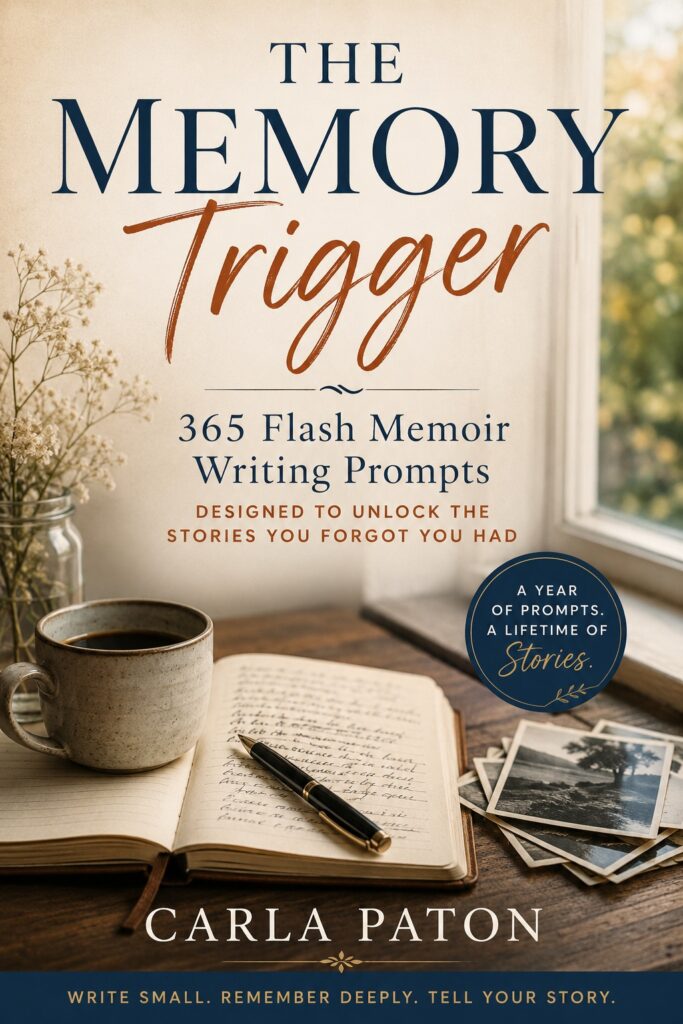
If this flash memoir prompt last time car someone long helped you find a memory, keep going. One focused prompt a day can build a steady writing habit without asking you to write a whole life story at once. Explore all 365 prompts in The Memory Trigger: 365 Flash Memoir Writing Prompts.
The Memory Trigger

Themes in Native Son: A Student-Friendly Guide

Native Son themes

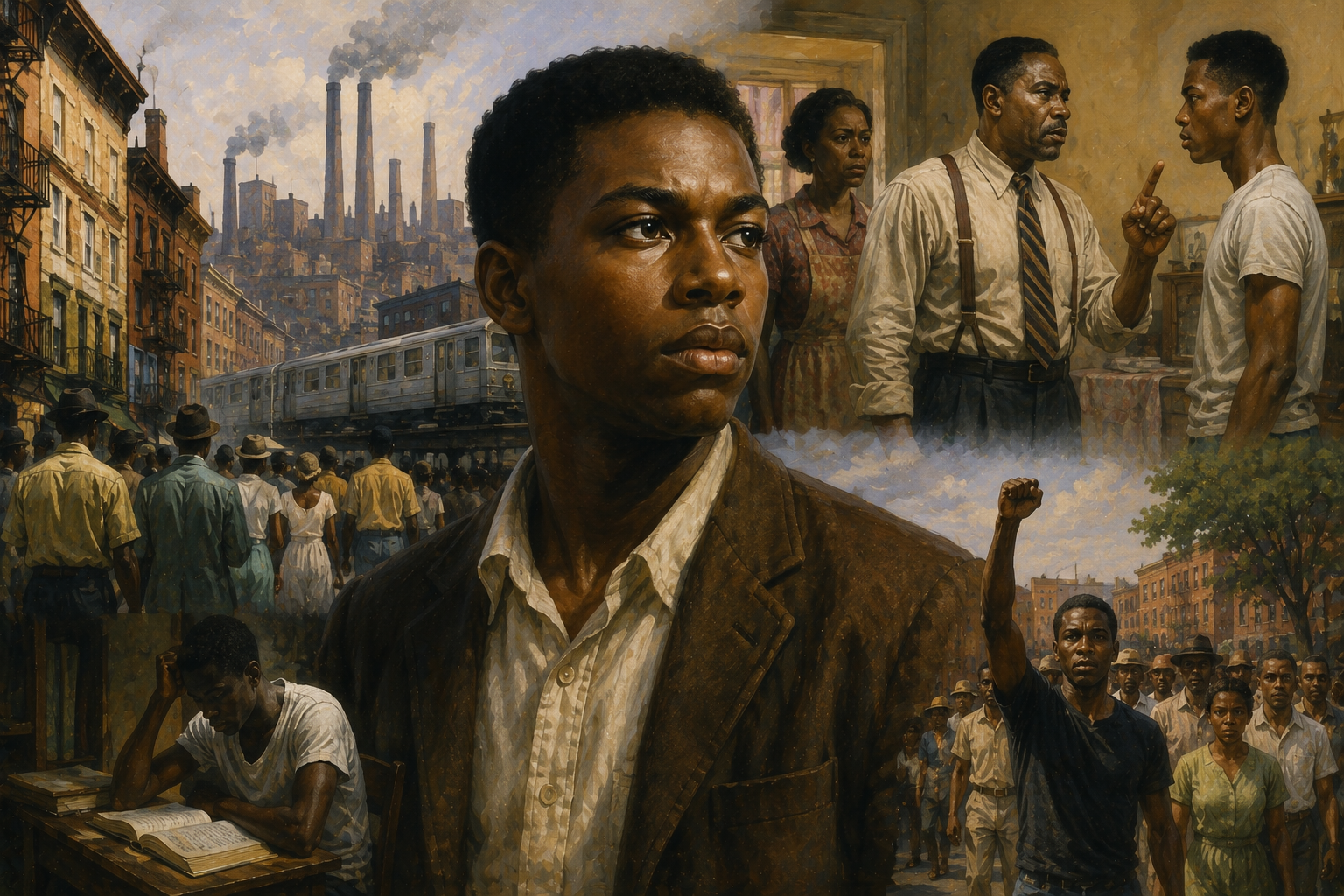
Native Son by Richard Wright is a powerful novel about fear, racism, pressure, and the search for identity. This guide explains the major themes in Native Son in clear language, so students can build stronger class notes and essays.

This post discusses major plot events, so expect spoilers.

In this Guide

Native Son themes

Why Themes in Native Son Matter

The novel is not just about one crime.

When students study themes in Native Son, they should look at the whole world Bigger Thomas lives in. Wright shows a society that limits Bigger before he makes any choice of his own.

The novel asks hard questions. How does fear shape a person? What happens when a society treats someone as less than human? Can a person be fully blamed for choices made under extreme pressure?

These questions make the book useful for AP Literature and college classes. The novel connects private action with public systems, which is one reason it still feels urgent.

Themes in Native Son: Fear and Survival

Fear drives much of Bigger’s behavior.

One of the central themes in Native Son is fear as a survival instinct. Bigger often feels watched, judged, and trapped. He does not move through Chicago with ease. He moves through it with dread.

His fear is not simple nervousness. It comes from racism, poverty, and the threat of violence. Bigger expects danger because the world has taught him to expect it.

This helps explain why he often acts quickly and badly. The novel does not excuse his actions, but it asks readers to see the pressure behind them.

A useful comparison is Franz Kafka’s The Trial, where the main character also faces a system that feels huge and hard to understand. In both works, fear grows because the forces around the character seem too large to fight.

Themes in Native Son: Race, Power, and Social Control

Wright shows racism as a system, not just a personal feeling.

Race is one of the most important themes in Native Son because it shapes where Bigger lives, where he can work, and how others see him. The novel shows racism through housing, jobs, police power, and public opinion.

The Daltons appear polite, but they still profit from the unfair housing system that traps Black families in overcrowded areas. This detail matters because Wright does not present racism only as open hatred.

He also shows the harm caused by people who believe they are kind but do not question their own power. Mrs. Dalton gives money to charity, yet her family’s wealth connects to the same system that hurts Bigger’s family.

This is why the themes in Native Son are complex. The novel suggests that racism can hide inside comfort, wealth, and good manners.

For historical background, students may find Britannica’s overview of Richard Wright helpful.

image-slider-with-thumbnail1.jpeg
PlayPause
previous arrow
next arrow
image-slider-with-thumbnail1.jpeg
image-slider-with-thumbnail3.jpeg
image-slider-with-thumbnail4.jpeg
ChatGPT Image Jun 27, 2026, 06_33_13 PM
ChatGPT Image Jun 27, 2026, 06_36_37 PM
ChatGPT Image Jun 27, 2026, 06_38_39 PM
ChatGPT Image Jun 27, 2026, 06_31_22 PM
image-slider-with-thumbnail7.jpeg
ChatGPT Image Jun 27, 2026, 06_29_43 PM
ChatGPT Image Jun 27, 2026, 06_27_44 PM
image-slider-with-thumbnail6.jpeg
ChatGPT Image Jun 27, 2026, 06_15_07 PM
image-slider-with-thumbnail5.jpeg
ChatGPT Image Jun 27, 2026, 06_22_43 PM
ChatGPT Image Jun 27, 2026, 06_25_37 PM
ChatGPT Image Jun 27, 2026, 06_19_43 PM
ChatGPT Image Jun 27, 2026, 06_12_00 PM
ChatGPT Image Jun 27, 2026, 06_08_50 PM
ChatGPT Image Jun 26, 2026, 04_54_23 PM
ChatGPT Image Jun 27, 2026, 05_53_51 PM
ChatGPT Image Jun 28, 2026, 08_35_55 AM
previous arrow
next arrow

Themes in Native Son: Violence and Moral Pressure

Violence in the novel is both personal and social.

Violence is one of the most disturbing themes in Native Son. Bigger commits terrible acts, and the novel never makes those acts easy to accept.

At the same time, Wright shows a world already full of violence. There is police violence, mob violence, and the quieter violence of poverty. Bigger’s actions happen inside that larger pattern.

This creates moral tension. Readers must face Bigger’s guilt while also seeing the forces that shape him. That tension is part of what makes the novel hard and important.

In To Kill a Mockingbird, racism also shapes the legal system and public judgment. Wright’s novel is darker, though, because it keeps readers close to a character who both suffers harm and causes harm.

Blindness and the Limits of Understanding

Many characters cannot truly see one another.

Blindness works as a symbol in the novel. Mrs. Dalton is physically blind, but many other characters are morally or socially blind.

Some white characters cannot see Bigger as a full person. They see an idea, a fear, or a project. Even the people who claim to help him often fail to understand his life.

Bigger also struggles to see himself clearly. He has been surrounded by images that tell him he is dangerous, unwanted, or powerless. Over time, those images shape how he thinks and acts.

The themes in Native Son often connect here. Fear, race, violence, and identity all depend on who gets seen and who gets ignored.

Identity, Shame, and Self-Image

Bigger’s sense of self is shaped by the world around him.

Bigger does not begin the novel with a strong, free identity. He feels shame about his poverty and anger about his lack of choices. He also fears being seen as weak.

Wright shows how painful it can be when a person has no safe way to define himself. Bigger often performs toughness because he does not know how else to protect his pride.

This is one reason the novel works well in literary analysis. Bigger is not a flat symbol. He is frightening, hurt, angry, and human.

Ralph Ellison’s Invisible Man also explores identity under racism. That novel asks what happens when society refuses to see a Black man clearly. Wright asks a related question in a harsher way.

Fate, Choice, and the City

The setting makes Bigger’s choices feel narrow.

Chicago is more than a background. The city is built with boundaries that Bigger feels every day. He knows which spaces seem open to him and which ones do not.

This creates one of the key conflicts in the novel: fate versus choice. Bigger chooses, but his choices happen inside a world that has already limited him.

Good essays on themes in Native Son should avoid saying Bigger has no responsibility. They should also avoid saying he is fully free. Wright wants readers to sit inside that uncomfortable middle space.

That middle space is where the novel becomes most powerful. It asks whether justice can exist in a society built on unequal power.

How to Write About Themes in Native Son

A strong essay should connect theme to character, setting, and conflict.

If your teacher asks for an essay on themes in Native Son, start with a clear claim. Do not just write, Racism is a theme. Say what the novel argues about racism.

For example, you might argue that Wright presents racism as a force that shapes both public systems and private fear. That claim gives you room to discuss housing, the Dalton family, and Bigger’s reactions.

Use short quotes and explain them. A quote should not stand alone. Show how the words reveal fear, pressure, or a limit placed on Bigger.

If you need help building a thesis or organizing body paragraphs, use this guide on how to write a literary analysis essay.

For quick review before class, you can also check our Native Son theme study notes.

Books to Read Next

These books can deepen your understanding of Wright’s ideas.

If your class uses Amazon, a school store, or a library database, search for these titles:

  • Native Son by Richard Wright
  • Black Boy by Richard Wright

Black Boy is useful because it helps students understand Wright’s life and the social world that shaped his writing.

FAQ About Themes in Native Son

Here are short answers to common student questions.

What are the main themes in Native Son?

The main themes include fear, racism, violence, identity, blindness, and social pressure. The novel shows how these forces shape Bigger’s life.

Is fear the most important theme in Native Son?

Fear is one of the most important themes because it drives many of Bigger’s choices. It also shows how racism affects the mind, not just the body.

Does Native Son excuse Bigger’s crimes?

No. The novel shows his guilt, but it also asks readers to study the world that helped create his fear and rage.

Why is blindness important in the novel?

Blindness shows how characters fail to see the truth about one another. It also points to the limits of sympathy without real understanding.

How should I write a thesis about the novel?

Make a claim about what Wright says through the theme. Then connect that claim to scenes, symbols, and character choices.

Key Takeaway

The themes in Native Son show how fear and racism can shape a life before one choice is ever made.

Wright’s novel is difficult because it refuses easy answers. For students, that difficulty is the point: the book asks you to think about guilt, power, and humanity at the same time.

Most Disturbing Atmospheric Fiction: Books That Haunt the Mind

Disturbing Atmospheric Fiction

Most Disturbing Atmospheric Fiction does more than scare you. It builds a world so tense, strange, or heavy that you feel trapped inside it.

These stories use setting, mood, silence, and fear to create lasting unease. They are not always full of monsters, but they often feel more frightening because of what stays hidden.

In this Guide

  • What makes atmospheric fiction disturbing
  • Best examples of Most Disturbing Atmospheric Fiction
  • Common symbols and themes
  • How students can read these stories closely
  • Recommended books
  • FAQs
Disturbing Atmospheric Fiction

What Makes Most Disturbing Atmospheric Fiction So Powerful?

The mood is the monster.

Most Disturbing Atmospheric Fiction depends on dread. It often makes the reader feel that something is wrong long before anything terrible happens.

The setting matters a lot. A decaying house, a foggy road, a silent town, or a locked room can feel alive. These places seem to watch the characters.

The fear often comes from uncertainty. The reader may not know if a threat is real, imagined, or both. That doubt keeps the story tense.

This kind of fiction is common in Gothic literature, horror, Southern Gothic, and psychological fiction. You can learn more about the Gothic tradition through Britannica’s overview of the Gothic novel.

Best Examples of Most Disturbing Atmospheric Fiction

These works create fear through place, tone, and hidden pressure.

Shirley Jackson’s The Haunting of Hill House is one of the best examples of Most Disturbing Atmospheric Fiction. Hill House feels wrong from the first page. Its walls, doors, and rooms seem to shape the minds of the people inside.

Edgar Allan Poe’s stories also fit this tradition. In “The Fall of the House of Usher,” the house reflects the broken state of the family. The building feels sick, and that sickness spreads through the story.

Charlotte Perkins Gilman’s “The Yellow Wallpaper” uses one room to create deep unease. The wallpaper becomes a symbol of control, fear, and mental collapse. The story feels quiet at first, but the pressure grows fast.

William Faulkner’s “A Rose for Emily” creates dread through a closed house and a town full of whispers. The story shows how silence can hide horror for years.

Toni Morrison’s Beloved also uses atmosphere in a powerful way. The haunted house is tied to memory and trauma. The ghost is frightening, but the history behind it is even more painful.

image-slider-with-thumbnail1.jpeg
PlayPause
previous arrow
next arrow
image-slider-with-thumbnail1.jpeg
image-slider-with-thumbnail3.jpeg
image-slider-with-thumbnail4.jpeg
ChatGPT Image Jun 27, 2026, 06_33_13 PM
ChatGPT Image Jun 27, 2026, 06_36_37 PM
ChatGPT Image Jun 27, 2026, 06_38_39 PM
ChatGPT Image Jun 27, 2026, 06_31_22 PM
image-slider-with-thumbnail7.jpeg
ChatGPT Image Jun 27, 2026, 06_29_43 PM
ChatGPT Image Jun 27, 2026, 06_27_44 PM
image-slider-with-thumbnail6.jpeg
ChatGPT Image Jun 27, 2026, 06_15_07 PM
image-slider-with-thumbnail5.jpeg
ChatGPT Image Jun 27, 2026, 06_22_43 PM
ChatGPT Image Jun 27, 2026, 06_25_37 PM
ChatGPT Image Jun 27, 2026, 06_19_43 PM
ChatGPT Image Jun 27, 2026, 06_12_00 PM
ChatGPT Image Jun 27, 2026, 06_08_50 PM
ChatGPT Image Jun 26, 2026, 04_54_23 PM
ChatGPT Image Jun 27, 2026, 05_53_51 PM
ChatGPT Image Jun 28, 2026, 08_35_55 AM
previous arrow
next arrow

Why Most Disturbing Atmospheric Fiction Often Feels Real

The scariest stories often feel close to daily life.

Most Disturbing Atmospheric Fiction works because it uses normal places in strange ways. A bedroom, hallway, garden, or family home can become unsafe.

This makes the fear personal. Readers may not believe in ghosts, but they understand isolation. They understand shame, grief, and the fear of being watched.

The best atmospheric stories do not explain everything. They leave space for the reader to feel doubt. That space can be more unsettling than a clear answer.

Symbols and Themes in Most Disturbing Atmospheric Fiction

Symbols turn ordinary objects into signs of danger.

In Most Disturbing Atmospheric Fiction, houses often symbolize the mind. A cracked wall may point to hidden pain. A locked room may suggest a secret no one wants to face.

Weather is another common symbol. Fog can hide the truth. Storms can show fear, anger, or chaos. Darkness often points to what characters refuse to see.

Mirrors can show divided identity. Portraits can suggest guilt or a trapped past. Repeated sounds, such as knocking or footsteps, can make a scene feel haunted even when no ghost appears.

Common themes include isolation, memory, madness, and control. These themes help explain why the mood feels so heavy.

Poetry can use this kind of atmosphere too. Emily Dickinson often creates strange, tense spaces in short poems about death and the mind. If you want help with her style, read how to read Emily Dickinson with more confidence.

How to Read Most Disturbing Atmospheric Fiction for Class

Look at how the story makes you feel, then ask why.

When you read Most Disturbing Atmospheric Fiction, pay close attention to setting. Ask what details repeat. Notice if a place seems safe at first, then starts to feel strange.

Track word choice. Words tied to rot, silence, cold, or darkness can shape the mood. A writer may repeat these words to build pressure.

Watch the narrator. Many disturbing stories use narrators who may not understand what is happening. Some may lie to themselves. Some may leave out key facts.

Ask this simple question: What does the atmosphere reveal that the plot does not say directly?

This question can help with essays about Poe, Jackson, Gilman, Morrison, and other writers who use mood as a major force.

These books are strong choices for readers who like slow dread and rich mood.

  • The Haunting of Hill House by Shirley Jackson
  • Beloved by Toni Morrison

Both books show how a place can hold fear. They also show how the past can feel alive in the present.

If you enjoy classic eerie writing, Edgar Allan Poe is also worth exploring. The Poetry Foundation’s page on Edgar Allan Poe gives useful background on his life and work.

Why Most Disturbing Atmospheric Fiction Matters in Literature

These stories help readers face what people often hide.

Most Disturbing Atmospheric Fiction is not only about fear. It often explores grief, social pressure, family secrets, and trauma.

The disturbing mood gives shape to emotions that are hard to name. A haunted house may stand for guilt. A strange room may stand for a trapped life.

That is why these stories stay with us. They do not just shock the reader. They create a feeling that lingers after the final page.

FAQ About Most Disturbing Atmospheric Fiction

What is Most Disturbing Atmospheric Fiction?

Most Disturbing Atmospheric Fiction is fiction that creates fear or unease through mood, setting, and tone. It often feels slow, tense, and deeply unsettling.

Is atmospheric fiction the same as horror?

Not always. Some atmospheric fiction is horror, but some is literary fiction, Gothic fiction, or psychological fiction. The key is the heavy mood.

Why do authors use houses so often in these stories?

Houses can symbolize the mind, family history, or hidden secrets. When a house feels unsafe, the reader feels that no place is truly secure.

What should students focus on when studying this genre?

Students should focus on setting, repeated images, narrator reliability, and tone. These details often reveal the story’s deeper meaning.

Can poetry be atmospheric and disturbing?

Yes. Poems can create dread through image, rhythm, and silence. Dickinson and Poe are strong examples of writers who use mood in powerful ways.

Key Takeaway

Most Disturbing Atmospheric Fiction haunts readers because it makes fear feel close, quiet, and hard to escape.

The best stories in this style do not rely only on sudden scares. They build a world where every room, object, and silence seems to mean something.

For students, this genre is a rich path into symbolism, theme, and close reading. For any reader, it proves that the most frightening place in fiction is often the mind itself.

What Is Postmodern Literature?

what is postmodern literature

What Is Postmodern Literature? It is a style of writing that questions truth, plays with form, and reminds readers that stories are built by authors.

If that sounds strange, that is the point. Postmodern books often feel playful, confusing, funny, or even broken on purpose.

In this Guide

  • What postmodern literature means
  • Why it matters
  • Common features to notice
  • Famous examples
  • Books to read next
  • FAQ and key takeaway
what is postmodern literature

What Is Postmodern Literature? A Simple Definition

Postmodern literature is fiction that challenges the usual rules of storytelling.

In a traditional novel, the plot often moves in a clear order. The narrator may seem trustworthy. The story may try to show one clear meaning.

Postmodern literature does not always work that way. It may jump around in time, break the fourth wall, mix fact with fiction, or make the reader question what is real.

So, What Is Postmodern Literature? At its core, it is literature that asks, “Can we really trust stories, language, or even our own view of the world?”

What Is Postmodern Literature? Why It Matters

Postmodern literature matters because it reflects a world that often feels uncertain.

After wars, mass media, political conflict, and rapid technology shifts, many writers began to doubt simple answers. They wanted fiction to show confusion rather than hide it.

This style helps readers think harder about truth. It asks who gets to tell a story and whose voice has been left out.

For students, What Is Postmodern Literature? is more than a definition. It is a way to read books that seem strange at first but have deep meaning under the surface.

Common Features of Postmodern Literature

Postmodern books often call attention to the fact that they are books.

One common feature is metafiction. This happens when a story talks about itself as a story. A narrator might speak to the reader or point out that the plot is made up.

Another feature is a broken timeline. The story may move back and forth instead of following one straight path.

Postmodern writers also love irony. They may treat serious topics with dark humor or mix high culture with pop culture.

You may also see many voices in one book. This can make the reader work harder, but it can also show how truth changes from person to person.

image-slider-with-thumbnail1.jpeg
PlayPause
previous arrow
next arrow
image-slider-with-thumbnail1.jpeg
image-slider-with-thumbnail3.jpeg
image-slider-with-thumbnail4.jpeg
ChatGPT Image Jun 27, 2026, 06_33_13 PM
ChatGPT Image Jun 27, 2026, 06_36_37 PM
ChatGPT Image Jun 27, 2026, 06_38_39 PM
ChatGPT Image Jun 27, 2026, 06_31_22 PM
image-slider-with-thumbnail7.jpeg
ChatGPT Image Jun 27, 2026, 06_29_43 PM
ChatGPT Image Jun 27, 2026, 06_27_44 PM
image-slider-with-thumbnail6.jpeg
ChatGPT Image Jun 27, 2026, 06_15_07 PM
image-slider-with-thumbnail5.jpeg
ChatGPT Image Jun 27, 2026, 06_22_43 PM
ChatGPT Image Jun 27, 2026, 06_25_37 PM
ChatGPT Image Jun 27, 2026, 06_19_43 PM
ChatGPT Image Jun 27, 2026, 06_12_00 PM
ChatGPT Image Jun 27, 2026, 06_08_50 PM
ChatGPT Image Jun 26, 2026, 04_54_23 PM
ChatGPT Image Jun 27, 2026, 05_53_51 PM
ChatGPT Image Jun 28, 2026, 08_35_55 AM
previous arrow
next arrow

What Is Postmodern Literature? Examples You May Recognize

The best way to understand postmodern literature is to see it in action.

Slaughterhouse-Five by Kurt Vonnegut is a famous example. The novel moves through time in a strange way as Billy Pilgrim becomes “unstuck in time.” It uses science fiction to talk about war and trauma.

The Crying of Lot 49 by Thomas Pynchon is another key text. It follows a woman who may have found a secret system, or may just be seeing patterns that are not there.

Pale Fire by Vladimir Nabokov is built around a poem and a strange commentary. The form itself becomes part of the mystery.

House of Leaves by Mark Z. Danielewski uses unusual page layouts and layered stories. The physical book becomes part of the reading experience.

Each of these books helps answer the question What Is Postmodern Literature? by showing how writers can bend form to create meaning.

Postmodern Literature vs. Modern Literature

Modern literature and postmodern literature are related, but they are not the same.

Modern literature often shows characters who feel lost in a changing world. Writers such as James Joyce and Virginia Woolf used new forms to explore the mind.

Postmodern literature goes a step further. It questions whether a story can ever show a full truth at all.

A modernist novel may search for meaning in chaos. A postmodern novel may ask if meaning is something we create as we read.

Why Postmodern Literature Can Feel Confusing

If postmodern literature feels hard, you are not alone.

These books often refuse to explain everything. They may leave gaps, contradictions, or unanswered questions.

That does not mean you are reading them wrong. In many cases, the confusion is part of the design.

When students ask, What Is Postmodern Literature?, one helpful answer is this: it is literature that makes you notice how you read.

If you want a stronger method for close reading, try this guide on how to read literature like a scholar.

Helpful Books to Read

If you want to explore postmodern literature, start with books that are famous but still readable.

  • Slaughterhouse-Five by Kurt Vonnegut
  • The Crying of Lot 49 by Thomas Pynchon

For background, you can also read Britannica’s overview of postmodernism. The Poetry Foundation is also useful for learning how modern and postmodern styles affect poetry.

Practical Tip for Reading Postmodern Literature

Do not try to solve the whole book at once.
Instead, track one pattern. Notice repeated images, odd structure, narrator problems, or moments when the book talks about storytelling.

Ask this simple question as you read: Why did the author choose this strange form?

That question can help you turn confusion into analysis. It also connects well with scholarly reading habits.

FAQ: What Is Postmodern Literature?

What Is Postmodern Literature in simple terms?

Postmodern literature is writing that questions truth, breaks normal story rules, and makes readers think about how stories are made.

What is the main goal of postmodern literature?

Its main goal is often to challenge easy answers. It asks readers to think about truth, power, language, and point of view.

Is postmodern literature always confusing?

No, but it can be. Many postmodern books use confusion on purpose to show how messy life and truth can feel.

What is a good first postmodern novel?

Slaughterhouse-Five by Kurt Vonnegut is a strong starting point because it is short, powerful, and easier to follow than many postmodern novels.

Key Takeaway

What Is Postmodern Literature? It is literature that questions the rules of stories and asks readers to think harder about truth. If a book feels strange, start by asking what that strange form helps the author reveal.

Flash Memoir Prompt: Language or Way of Speaking that You’ve Lost

flash memoir prompt speaking

A small writing invitation about the language, accent, slang, prayer, or family way of speaking that once felt natural to you, and what it means to notice it fading from your mouth.

The Prompt

You hear an old phrase in a grocery store aisle and turn your head before you know why. Maybe it was the way your grandmother said your name, the soft dropped endings of your hometown, a childhood language you understood before you could spell it, or the private slang you shared with a friend you no longer call.

This flash memoir prompt language way speaking you’ve lost asks you to write about one voice pattern that used to belong to you. The prompt is simple: Write about a language or way of speaking that you’ve lost.

This can unlock a memory because speech is tied to belonging. We often change how we talk without making a formal decision. We adapt at school. We smooth out an accent at work. We stop using family words after someone dies. We forget a language one ordinary day at a time.

flash memoir prompt speaking

Why This Memory Matters

A lost way of speaking can carry a whole life inside it. It may remind you of a kitchen, a neighborhood, a classroom, a church basement, a lunch table, or a country you left before you were old enough to understand leaving.

This prompt is not only about language in the formal sense. You might write about baby talk in your family, the sports phrases your father used, the dramatic vocabulary of your teenage friends, or the careful “professional” voice you learned to use because your real voice felt too risky.

Sometimes the memory is tender. You miss the sound of yourself before you learned to edit every sentence. Sometimes it is funny. You remember pronouncing a word wrong for years and defending it with full confidence. Sometimes it hurts. You may remember being corrected, teased, or told that your home language sounded wrong.

That is why this flash memoir prompt about language or a way of speaking you’ve lost can be so powerful. It lets you write about identity without forcing you to explain your whole identity. You can begin with one phrase. One mispronounced word. One sentence you no longer say.

If your memory involves older forms of English, accents, or unfamiliar phrasing, you may enjoy this guide on how to understand Shakespearean language. It is a useful reminder that language always carries history, rhythm, and context.

How to Approach This Prompt

Begin with a sound. Do not start by explaining your entire family background or why the language disappeared. Start with the exact phrase if you remember it. Write it the way it sounded to you.

Maybe it was “Come here, baby,” stretched into three warm syllables. Maybe it was a prayer in another language. Maybe it was your old neighborhood’s way of saying “you all,” “youse,” or “fixing to.” Maybe it was the secret code you and your sibling used from the back seat of the car.

Once you have the sound, narrow the memory to one scene. Put yourself in a real place. What room were you in? What could you smell? Who was speaking? Were you proud, embarrassed, bored, comforted, or trying to hide?

Write what you noticed before you explain what it meant. For example, you might describe your mother’s hands folding towels while she speaks, or the way your classmates laughed when you said a word from home. Let the meaning arrive through the scene.

Avoid trying to tell the whole story at once. You do not need to cover every move, every family member, or every reason your speech changed. Flash memoir works best when the piece feels small enough to hold. One lost word can suggest the shape of a whole childhood.
If you like marking up memories as you draft, the same skills used to annotate literature can help here. Circle repeated words, underline sensory details, and notice where the emotion becomes strongest.

image-slider-with-thumbnail1.jpeg
PlayPause
previous arrow
next arrow
image-slider-with-thumbnail1.jpeg
image-slider-with-thumbnail3.jpeg
image-slider-with-thumbnail4.jpeg
ChatGPT Image Jun 27, 2026, 06_33_13 PM
ChatGPT Image Jun 27, 2026, 06_36_37 PM
ChatGPT Image Jun 27, 2026, 06_38_39 PM
ChatGPT Image Jun 27, 2026, 06_31_22 PM
image-slider-with-thumbnail7.jpeg
ChatGPT Image Jun 27, 2026, 06_29_43 PM
ChatGPT Image Jun 27, 2026, 06_27_44 PM
image-slider-with-thumbnail6.jpeg
ChatGPT Image Jun 27, 2026, 06_15_07 PM
image-slider-with-thumbnail5.jpeg
ChatGPT Image Jun 27, 2026, 06_22_43 PM
ChatGPT Image Jun 27, 2026, 06_25_37 PM
ChatGPT Image Jun 27, 2026, 06_19_43 PM
ChatGPT Image Jun 27, 2026, 06_12_00 PM
ChatGPT Image Jun 27, 2026, 06_08_50 PM
ChatGPT Image Jun 26, 2026, 04_54_23 PM
ChatGPT Image Jun 27, 2026, 05_53_51 PM
ChatGPT Image Jun 28, 2026, 08_35_55 AM
previous arrow
next arrow

A Quick Example

For years, I called the remote control “the clicker,” the way my grandfather did. In his house, everything had a better name than its real one. The refrigerator was the icebox. The couch was the davenport. Supper was never dinner, even if we ate it at seven. I stopped saying those words after college because people smiled when I used them, like I had brought an old suitcase into a glass office. Last week, my son asked where the remote was, and without thinking I said, “Check under the davenport.” He blinked at me. I laughed, but it caught in my throat. For one second, my grandfather was alive again, sitting in his chair, patting his shirt pocket for a butterscotch candy.

Try It Yourself

Set a timer for ten minutes and write the phrase, word, accent, rhythm, or voice you have lost at the top of the page. Do not worry if you spell it “wrong.” Write it how it sounded.

Then place the word inside a scene. Let someone say it. Let your younger self react. Stay close to the moment before you step back and reflect.

If the memory feels complicated, that is okay. You can write with affection and discomfort on the same page. You can miss a voice you once tried to escape. You can be grateful for who you became while still grieving the sound of who you were.

This flash memoir prompt language way speaking you’ve lost is an invitation to listen closely. Somewhere in your memory, an old voice may still be waiting to be heard.

Want More Flash Memoir Prompts?

If you want a steady writing practice, keep gathering small memories like this one. Explore all 365 prompts in The Memory Trigger: 365 Flash Memoir Writing Prompts.

The Memory Trigger

The Color Purple Character Analysis: Key People, Motivations, and Conflicts

Color Purple

This The Color Purple character analysis breaks down the major people in Alice Walker’s novel and shows how their choices shape the story. It is built for students who need clear notes for discussion posts and essays.

At its heart, The Color Purple is about voice, power, love, and survival. Each character helps Celie see herself in a new way.

In this Guide

Use this quick map to find the character points you need.

  • The Color Purple character analysis and why choices matter
  • Celie’s growth from silence to self-worth
  • Shug Avery’s role in freedom and love
  • Sofia, Harpo, Mister, and Nettie
  • Major conflicts and essay ideas
  • FAQ for students
Color Purple

The Color Purple character analysis: why choices matter

Walker builds character through letters, action, and emotional change. The novel does not just tell us who people are. It shows how pain, love, and courage change them.

A strong The Color Purple character analysis should ask what each person wants and what blocks that desire. Celie wants safety and love. Shug wants freedom. Sofia wants respect. Mister wants control, then later seeks a way to face his guilt.

This method is useful in many books. In Jane Eyre, Jane grows by learning her own worth. Celie follows a different path, but both characters move from fear toward self-respect.

The Color Purple character analysis: Celie

Celie is the emotional center of the novel. Her journey moves from silence to voice.

At the start, Celie has almost no power. She suffers abuse, loses her children, and enters a marriage where she is treated as property. Her letters become a private place where she can speak when no one else will listen.

Celie’s first motivation is survival. She tries to stay safe by obeying others. This does not mean she is weak. It means she has learned how dangerous the world can be.

Her conflict is both external and internal. Mister controls her home life, while fear controls her sense of self. Over time, Shug helps Celie see that she has a body, a voice, and a right to joy.

For any The Color Purple character analysis, Celie’s change is the main proof of the novel’s message. She does not become powerful in one sudden moment. She builds power through love, work, truth, and self-respect.

image-slider-with-thumbnail1.jpeg
PlayPause
previous arrow
next arrow
image-slider-with-thumbnail1.jpeg
image-slider-with-thumbnail3.jpeg
image-slider-with-thumbnail4.jpeg
ChatGPT Image Jun 27, 2026, 06_33_13 PM
ChatGPT Image Jun 27, 2026, 06_36_37 PM
ChatGPT Image Jun 27, 2026, 06_38_39 PM
ChatGPT Image Jun 27, 2026, 06_31_22 PM
image-slider-with-thumbnail7.jpeg
ChatGPT Image Jun 27, 2026, 06_29_43 PM
ChatGPT Image Jun 27, 2026, 06_27_44 PM
image-slider-with-thumbnail6.jpeg
ChatGPT Image Jun 27, 2026, 06_15_07 PM
image-slider-with-thumbnail5.jpeg
ChatGPT Image Jun 27, 2026, 06_22_43 PM
ChatGPT Image Jun 27, 2026, 06_25_37 PM
ChatGPT Image Jun 27, 2026, 06_19_43 PM
ChatGPT Image Jun 27, 2026, 06_12_00 PM
ChatGPT Image Jun 27, 2026, 06_08_50 PM
ChatGPT Image Jun 26, 2026, 04_54_23 PM
ChatGPT Image Jun 27, 2026, 05_53_51 PM
ChatGPT Image Jun 28, 2026, 08_35_55 AM
previous arrow
next arrow

Shug Avery: freedom, desire, and emotional power

Shug brings color and risk into Celie’s life. She is not perfect, but she helps Celie imagine a wider world.

Shug’s main motivation is freedom. She wants to love on her own terms and live outside strict rules about gender and respectability. People judge her, yet she refuses to shrink.

In The Color Purple character analysis, Shug often works as a catalyst. A catalyst is a character who sparks change in someone else. Shug shows Celie affection, helps her discover the truth about Nettie’s letters, and teaches her that God can be felt in beauty and life.

Shug’s conflict comes from her wish to be free and her fear of deep attachment. She loves Celie, but she also leaves. That makes her human instead of simple.

Sofia and Harpo: power inside marriage

Sofia and Harpo show how gender roles can harm people.

She is proud, direct, and strong-willed. Her main motivation is dignity. She refuses to let anyone beat her into obedience.
Her conflict with Harpo shows how pressure from society can twist love. Harpo cares for Sofia, but he believes a husband should control his wife. When he tries to act like Mister, he damages the marriage.

Sofia’s later conflict with white authority shows another layer of the novel. Her strength threatens people who expect Black women to obey. Her punishment exposes the cruelty of racism and sexism.

Harpo, unlike Mister at first, can learn. He must decide whether he wants power over Sofia or a real partnership with her. That choice makes him important in the novel’s study of masculinity.

Mister, Nettie, and the pull of change

Mister and Nettie shape Celie’s life in opposite ways. One harms her, while the other keeps hope alive.

Mister begins as a cruel figure. He marries Celie for labor, hides Nettie’s letters, and treats women as tools. His motivation is control, but that control comes from a broken model of manhood.

His later change does not erase his harm. It does show that Walker allows some characters to face what they have done. Mister becomes more honest when he loses power and must sit with himself.

Nettie represents love, memory, and connection. Her letters give Celie proof that she was not forgotten. Nettie’s story also widens the novel’s world beyond Celie’s home.

Nettie’s conflict centers on distance and separation. She cannot protect Celie directly, but her words help restore Celie’s sense of family.

The Color Purple character analysis: major conflicts

The novel’s conflicts are personal, social, and spiritual. They push characters to reveal who they are.

A useful The Color Purple character analysis should track conflict by asking who has power and who is denied it. Celie faces abuse in the home. Sofia faces racist violence. Shug faces judgment for her independence.

The most important conflict may be Celie versus her own silence. At first, she speaks only in letters. By the end, she builds a life where her voice matters in public and private ways.
There is also a spiritual conflict. Celie begins with a distant idea of God, shaped by fear. Shug helps her see God as part of beauty, love, and the natural world.

Symbols and motifs that reveal character

Walker uses repeated images to show inner change. These details can make your essay stronger.

Letters reveal voice and connection. Celie’s letters begin as survival, then become a record of growth.

The color purple points to beauty that people often miss. Shug’s lesson about noticing purple flowers helps Celie see that joy is not selfish.

Sewing and pants show Celie’s move toward independence. Her work becomes art, business, and self-expression.

These symbols do not stand apart from the characters. They help show how Celie’s inner life becomes visible.

Author context for deeper reading

Some background helps students understand Walker’s choices. It also helps avoid a flat reading of the novel.

Alice Walker writes about Black women’s lives with care, pain, faith, and humor. Her work often centers women who build strength inside unfair systems.

For reliable author background, see Britannica’s entry on Alice Walker. You can also read the Poetry Foundation profile of Alice Walker for more about her work as a poet and writer.

How to use The Color Purple character analysis in essays

A character essay needs a clear claim, not just a summary. Pick one character and explain how that person changes or affects Celie.

When you turn The Color Purple character analysis into an essay, start with motivation. Ask what the character wants. Then ask what conflict blocks that desire.

For example, an essay on Celie could argue that her voice grows through letters, love, and work. An essay on Sofia could argue that her strength exposes the cost of refusing unjust power.

Books to read next

These books pair well with Walker’s novel for class discussion or comparison.

  • The Color Purple by Alice Walker
  • In Search of Our Mothers’ Gardens by Alice Walker
  • Their Eyes Were Watching God by Zora Neale Hurston

You can find these through a school library, local bookstore, or Amazon without needing special editions.

FAQ

Here are quick answers to common student questions.

What is the main focus of The Color Purple character analysis?

The main focus is Celie’s growth from fear and silence into self-worth. Other characters matter because they shape that change.

Who changes the most in The Color Purple?

Celie changes the most. Mister also changes, but his growth does not cancel out the harm he caused.

Why is Shug Avery important?

Shug helps Celie discover love, desire, and spiritual freedom. She gives Celie a new way to see herself.

Is Sofia a foil to Celie?

Yes. Sofia’s bold resistance contrasts with Celie’s early silence, which helps readers see different ways women survive.

What is a good essay topic for this novel?

A strong topic is how Celie’s letters help her gain voice and identity over time.

Key Takeaway

The key insight: The characters in The Color Purple matter because their choices show how people can be harmed, changed, and healed. Celie’s story proves that voice is not given to her. She claims it.

Best Dark Academia Dream Logic: Books, Symbols, and Why This Mood Haunts Readers

Dark Academia dream logic

Best Dark Academia Dream Logic captures a strange mix of old libraries, secret guilt, blurred time, and minds under pressure. It is the feeling that a story makes sense like a dream, even when the plot feels unstable.

For students and literature fans, this style can make books feel both beautiful and unsafe. It turns school, art, and knowledge into places where desire and fear meet.

In this Guide

  • What Best Dark Academia Dream Logic means
  • Why readers love this mood
  • Classic and modern examples
  • Symbols and themes to watch for
  • Recommended books to search on Amazon
  • How to read this style more closely
  • FAQs

What Is Best Dark Academia Dream Logic?

This mood blends campus life, hidden knowledge, and dreamlike fear.

Best Dark Academia Dream Logic is not a strict genre. It is a way a story feels. The setting may have ivy-covered schools, rare books, Latin phrases, candlelit rooms, and students who seem too intense for their own good.

The “dream logic” part means events may feel strange but still emotional. A character may repeat a memory, enter a room that feels symbolic, or sense danger before it has a clear cause.

Dark academia often asks one hard question: what happens when the love of beauty becomes a form of danger?

Why Best Dark Academia Dream Logic Feels So Powerful

Readers like this style because it makes learning feel charged with mystery.

School is supposed to be a place of reason. In these stories, it becomes a maze. A classroom can feel like a courtroom. A library can feel like a temple. A professor can feel like a guide or a threat.

Best Dark Academia Dream Logic works because it reflects how memory often feels. We do not always remember life in neat order. We remember sharp images, shame, desire, weather, and tone.

This is why books in this mode often feel haunted even without ghosts. The past itself becomes the ghost.

Best Dark Academia Dream Logic in Classic Literature

Many older works helped shape this moody, intellectual style.

Mary Shelley’s Frankenstein is a strong early example. Victor Frankenstein seeks forbidden knowledge, but his learning turns into guilt and horror. The novel’s icy landscapes and feverish memories give it a dreamlike force.

Oscar Wilde’s The Picture of Dorian Gray also fits the mood. Dorian chases beauty and pleasure, while his portrait carries the truth of his soul. The story feels elegant, but its logic is moral and strange, like a nightmare dressed in silk.

Charlotte Brontë’s Jane Eyre uses Gothic dream logic through locked rooms, strange sounds, and emotional secrets. Thornfield Hall is not a school, yet it acts like one. Jane learns how power, love, and silence shape a life.

For background on Gothic fiction, Britannica offers a helpful overview of the Gothic novel.

Modern Books with Best Dark Academia Dream Logic

Modern dark academia often turns friendship and ambition into a trap.

Donna Tartt’s The Secret History is one of the best-known examples. A group of elite college students studies ancient Greek, then crosses a moral line. The book feels calm on the surface, but dread builds under every conversation.

M. L. Rio’s If We Were Villains uses Shakespeare, theater, and obsession. The students speak through plays, which makes real life feel staged. Their world becomes so intense that truth and performance blur.

Leigh Bardugo’s Ninth House brings secret societies into a darker Yale setting. It uses magic, trauma, and campus power to show how old institutions can hide harm behind tradition.

In each case, Best Dark Academia Dream Logic comes from a clash between beauty and corruption. The characters want meaning, but meaning often costs them peace.

Key Symbols in Best Dark Academia Dream Logic

Symbols in this style often look beautiful before they turn sharp.

Books are the most obvious symbol. They stand for knowledge, status, and escape. Yet they can also become proof that a character would rather live in ideas than face real harm.

Mirrors often suggest a split self. A character may look polished in public but feel broken inside. In The Picture of Dorian Gray, the portrait acts like a mirror that tells the truth.

Old buildings matter too. A school, mansion, or chapel can hold secrets inside its walls. These spaces make the past feel alive.

Weather often carries emotion. Fog can suggest confusion. Snow can suggest distance or moral coldness. Rain can make a scene feel like a confession.

If you want to spot these signs faster, try close reading in literature. It helps you notice how small details shape the whole story.

Themes That Define Best Dark Academia Dream Logic

The best stories in this mood turn big ideas into personal danger.

One major theme is forbidden knowledge. Characters want to know more than they should. That desire can look noble at first, but it often leads to pride.

Another theme is performance. Students and scholars may act wiser, richer, or more cultured than they are. Over time, the mask becomes hard to remove.

Guilt is also central. In many dark academia books, guilt does not appear as a simple regret. It returns as dreams, strange visions, repeated memories, or fear of being seen.

Best Dark Academia Dream Logic often shows that the mind can become its own haunted house.

Recommended Books to Search on Amazon

These titles are strong choices if you want to explore this mood further.

  • The Secret History by Donna Tartt
  • If We Were Villains by M. L. Rio

Both books use art, school, and secrecy to create an intense atmosphere. They are also useful for students who want to study tone, unreliable memory, and literary allusion.

For poetry that shares this symbolic and shadowed mood, the Poetry Foundation’s page on symbolism can help explain how images carry deeper meaning.

How to Read Best Dark Academia Dream Logic Like a Literature Student

You do not need to solve every strange moment right away.

Start with the setting. Ask what the school, room, or library seems to want from the characters. In dark academia, places often act like silent judges.

Watch repeated images. If a book keeps returning to mirrors, blood, candles, cold air, or Latin phrases, those details are not random. They create a pattern.

Pay attention to narration. Many stories with Best Dark Academia Dream Logic use memory as a filter. The narrator may not lie, but they may hide from the full truth.

A helpful method is to slow down and mark key words, images, and shifts in tone. This guide to how close reading works can help you build that skill.

Why This Style Matters in Literary Culture

Dark academia is popular because it speaks to real pressure around success.

Many students know what it feels like to chase grades, praise, and identity at the same time. Dark academia turns that stress into art. It shows the beauty of learning, but it also warns against worshiping it.

Best Dark Academia Dream Logic matters because it captures how ambition can feel unreal. When people live for status, genius, or taste, they may lose touch with care and truth.

That is why these stories stay with readers. They make beauty feel dangerous, and they make danger feel strangely beautiful.

FAQs About Best Dark Academia Dream Logic

What does Best Dark Academia Dream Logic mean?

It means a dark academia style that uses dreamlike scenes, strange memory, and symbolic details. The story may feel unreal, but its emotions still make sense.

Is dark academia always Gothic?

No. Dark academia often uses Gothic elements, such as secrets, old buildings, and dread. Yet it can also focus on school pressure, art, class, and moral failure.

What book is the best place to start?

The Secret History by Donna Tartt is a strong starting point for older students. It shows many core dark academia traits in one novel.

Why do these stories use so many symbols?

Symbols help show what characters cannot say out loud. A room, book, portrait, or storm can reveal fear, guilt, or desire.

Can high school students study this style?

Yes. Students can compare it with Gothic novels, Romantic literature, Shakespeare, or modern campus novels. The key is to focus on theme, tone, and imagery.

Key Takeaway

Best Dark Academia Dream Logic turns learning into a beautiful maze. Its best stories remind us that knowledge matters, but wisdom needs honesty, mercy, and self-control.

When a book feels like an old library in a dream, pay attention. The shadows may be where the story tells the truth.

image-slider-with-thumbnail1.jpeg
PlayPause
previous arrow
next arrow
image-slider-with-thumbnail1.jpeg
image-slider-with-thumbnail3.jpeg
image-slider-with-thumbnail4.jpeg
ChatGPT Image Jun 27, 2026, 06_33_13 PM
ChatGPT Image Jun 27, 2026, 06_36_37 PM
ChatGPT Image Jun 27, 2026, 06_38_39 PM
ChatGPT Image Jun 27, 2026, 06_31_22 PM
image-slider-with-thumbnail7.jpeg
ChatGPT Image Jun 27, 2026, 06_29_43 PM
ChatGPT Image Jun 27, 2026, 06_27_44 PM
image-slider-with-thumbnail6.jpeg
ChatGPT Image Jun 27, 2026, 06_15_07 PM
image-slider-with-thumbnail5.jpeg
ChatGPT Image Jun 27, 2026, 06_22_43 PM
ChatGPT Image Jun 27, 2026, 06_25_37 PM
ChatGPT Image Jun 27, 2026, 06_19_43 PM
ChatGPT Image Jun 27, 2026, 06_12_00 PM
ChatGPT Image Jun 27, 2026, 06_08_50 PM
ChatGPT Image Jun 26, 2026, 04_54_23 PM
ChatGPT Image Jun 27, 2026, 05_53_51 PM
ChatGPT Image Jun 28, 2026, 08_35_55 AM
previous arrow
next arrow

Modernism vs Postmodernism Explained

Modernism vs Postmodernism

Modernism vs Postmodernism Explained can sound harder than it is. Both movements ask big questions about truth, identity, and art, but they answer those questions in very different ways.

This guide breaks the difference down in plain language, with examples from literature you may see in high school, AP Literature, or college.

In this Guide

  • Modernism in plain language
  • Postmodernism in plain language
  • The main difference between the two
  • Style and structure in famous texts
  • Themes to watch for in analysis
  • Books to read next
  • FAQ

Modernism vs Postmodernism Explained in One Simple Idea

The easiest way to see the difference is to look at how each movement treats meaning.

Modernism often shows a world that feels broken, confusing, or lonely. Still, modernist writers often search for meaning inside that broken world.

Postmodernism also shows a confusing world, but it is less sure that one stable meaning exists at all. It often treats truth as slippery, playful, or shaped by culture.

At its heart, Modernism vs Postmodernism Explained means this: modernism searches for order after chaos, while postmodernism questions whether order was ever real.

What Is Modernism?

Modernism was a major literary movement in the late 1800s and early 1900s.

It grew out of a world changed by war, cities, science, and new ideas about the mind. Many writers felt that older forms of art could not explain modern life.

Modernist literature often feels fragmented. A novel may jump between thoughts, memories, and moments instead of moving in a straight line.

Virginia Woolf’s Mrs Dalloway is a strong example. The novel moves through one day in London, but it also enters the private thoughts of its characters.

T.S. Eliot’s poem The Waste Land is another famous modernist text. It uses broken images, many voices, and references to older works to show a culture in crisis.

For more background, Britannica offers a helpful overview of Modernism in the arts.

What Is Postmodernism?

Postmodernism became more visible after World War II.

Postmodern writers often distrust grand explanations. They may question history, identity, language, and even the idea of the “serious” novel.

Postmodern texts often call attention to themselves as made-up stories. A narrator may speak directly to the reader, break the rules, or remind us that fiction is fiction.

Kurt Vonnegut’s Slaughterhouse-Five is a clear example. It mixes war, science fiction, humor, and trauma in a way that refuses a neat message.

Thomas Pynchon’s The Crying of Lot 49 also fits the postmodern style. The main character tries to solve a mystery, but the truth keeps slipping away.

The Poetry Foundation has a useful entry on Postmodernism in literary culture.

Modernism vs Postmodernism Explained Through Literary Style

Style is one of the best ways to tell these movements apart.

Modernist writers break old forms because they want to show the pressure of modern life. Their work can feel difficult, but the difficulty often points toward a serious search for truth.

Postmodern writers also break forms, but often with irony or play. They may mix genres, parody older works, or reject the idea of a single “correct” reading.

Modernism vs Postmodernism Explained helps you spot why a strange structure matters. In modernism, the broken form often shows inner crisis. In postmodernism, the broken form often questions the whole idea of stable meaning.

Think of James Joyce’s Ulysses. It uses stream of consciousness, myth, and shifting style to turn one ordinary day into something vast.

Now think of Italo Calvino’s If on a winter’s night a traveler. The book keeps starting new stories and reminds you that you are reading a book. That self-aware style is very postmodern.

Modernism vs Postmodernism Explained with Major Themes

The themes overlap, but the attitude is different.

Modernist literature often explores alienation, loss, memory, and the search for meaning. Characters may feel cut off from society or even from themselves.

In The Great Gatsby, F. Scott Fitzgerald shows the failure of the American Dream. The novel feels modernist because it presents beauty, longing, and collapse in the same world.

Postmodern literature often explores uncertainty, media, consumer culture, and unstable identity. It may ask whether truth has been replaced by images, stories, and systems.

Don DeLillo’s White Noise is a useful example. The novel looks at fear, advertising, death, and modern media with a strange comic tone.

Use Modernism vs Postmodernism Explained as a lens. Ask whether the text mourns the loss of meaning or laughs at the idea that meaning was ever simple.

How to Use Modernism vs Postmodernism Explained in Analysis

The distinction becomes most useful when you connect it to evidence.

Do not just label a book “modernist” or “postmodernist.” Instead, point to a passage, a structure, a narrator, or a repeated image.

For example, if a poem uses fragments, ask what those fragments do. Do they show a damaged culture that still seeks renewal? That leans modernist.

If a novel mocks its own plot or makes the reader doubt every clue, ask what that doubt means. That often points toward postmodernism.

Modernism vs Postmodernism Explained works best when it helps you make a claim about how the text creates meaning.

If you want a stronger method for close reading, check out our guide on how to read literature with deeper attention.

Quick Comparison: Modernism and Postmodernism

Here is a simple way to keep the difference clear.

Category Modernism Postmodernism
View of meaning Meaning is hard to find, but worth seeking. Meaning may be unstable or invented.
Tone Serious, anxious, often tragic. Ironic, playful, often skeptical.
Structure Fragmented to show inner or social crisis. Fragmented to question story, truth, and form.
Common method Stream of consciousness, myth, symbolism. Parody, self-reference, genre mixing.
Typical question How can we make meaning in a broken world? Who decides what meaning counts?

Common Literature Examples

These examples can help you place the movements in context.

Modernist works often include Mrs Dalloway by Virginia Woolf, The Waste Land by T.S. Eliot, and Ulysses by James Joyce.

Postmodern works often include Slaughterhouse-Five by Kurt Vonnegut, White Noise by Don DeLillo, and The Crying of Lot 49 by Thomas Pynchon.

Some books do not fit one label perfectly. That is normal. Literary periods overlap, and writers often borrow from more than one style.

Books to Read Next

If you want to see the difference in action, try these books.

  • Mrs Dalloway by Virginia Woolf
  • Slaughterhouse-Five by Kurt Vonnegut
  • White Noise by Don DeLillo

Read a few pages from each and notice the narrator, structure, and tone. You will start to feel the difference quickly.

FAQ

What is the main difference between modernism and postmodernism?

Modernism searches for meaning in a broken world. Postmodernism questions whether stable meaning exists at all.

Why is Modernism vs Postmodernism Explained important for students?

It helps students move beyond plot summary. The difference gives you a way to analyze structure, tone, and theme.

Is The Great Gatsby modernist?

Yes, it is often read as a modernist novel. It shows disillusionment, loss, and the collapse of a dream.

Is postmodernism always funny?

No. Postmodern works can be dark or serious, but they often use irony, parody, or play to make their point.

Can one book be both modernist and postmodern?

Some books share traits from both. Labels are tools, not strict boxes.

Key Takeaway

Modernism vs Postmodernism Explained comes down to one key idea: modernism tries to find meaning after the old world breaks, while postmodernism asks who created that meaning in the first place.

image-slider-with-thumbnail1.jpeg
PlayPause
previous arrow
next arrow
image-slider-with-thumbnail1.jpeg
image-slider-with-thumbnail3.jpeg
image-slider-with-thumbnail4.jpeg
ChatGPT Image Jun 27, 2026, 06_33_13 PM
ChatGPT Image Jun 27, 2026, 06_36_37 PM
ChatGPT Image Jun 27, 2026, 06_38_39 PM
ChatGPT Image Jun 27, 2026, 06_31_22 PM
image-slider-with-thumbnail7.jpeg
ChatGPT Image Jun 27, 2026, 06_29_43 PM
ChatGPT Image Jun 27, 2026, 06_27_44 PM
image-slider-with-thumbnail6.jpeg
ChatGPT Image Jun 27, 2026, 06_15_07 PM
image-slider-with-thumbnail5.jpeg
ChatGPT Image Jun 27, 2026, 06_22_43 PM
ChatGPT Image Jun 27, 2026, 06_25_37 PM
ChatGPT Image Jun 27, 2026, 06_19_43 PM
ChatGPT Image Jun 27, 2026, 06_12_00 PM
ChatGPT Image Jun 27, 2026, 06_08_50 PM
ChatGPT Image Jun 26, 2026, 04_54_23 PM
ChatGPT Image Jun 27, 2026, 05_53_51 PM
ChatGPT Image Jun 28, 2026, 08_35_55 AM
previous arrow
next arrow

Flash Memoir Prompt: Last Time You Were Somewhere Loud and Crowded and Felt Completely Happy About It

https://amzn.to/4wd0d6g

A warm, specific writing invitation for remembering the last time noise, crowds, and motion felt like joy instead of pressure. This flash memoir prompt last time somewhere loud crowded helps you focus on one bright scene, one strong sensory detail, and the reason that moment still feels alive.

Maybe it was a packed gym during a school game, a concert where the floor shook, a family wedding with too many cousins on the dance floor, or a street fair where music came from every direction. The place was loud. People were too close. You may have had to shout to be heard. And somehow, instead of wanting to leave, you felt completely happy.

That is the small surprise inside this memory. Crowds often make us think of stress, waiting, heat, lines, and noise. But sometimes a crowded place holds the exact feeling we needed. Belonging. Celebration. Relief. A sense that, for one moment, you were part of something bigger than your own thoughts.

https://amzn.to/4wd0d6g

The Prompt

Write about the last time you were somewhere loud and crowded and felt completely happy about it.

This prompt works well because it asks you to remember a feeling that may seem simple at first. Happiness in a crowd can hide a deeper story. Why did that moment feel good? Who was there? What had you been missing before that day?

A strong flash memoir does not need to explain your whole life. It can stay inside one scene. You might write about the sound of sneakers on bleachers, the bass from a speaker, the smell of fried food, or the way your friend grabbed your hand so you would not get lost in the crowd. Those details help the reader feel the memory before you tell them what it meant.

Why This Memory Matters

A memory like this can show the reader a version of you that was open to joy. That may sound easy, but it is not always. Many people move through loud places with their guard up. They look for exits. They worry about being seen. They try to stay calm.

So when you remember a time when the noise felt welcome, pay attention. Something in that place made you feel safe enough to enjoy it. Maybe you were with the right person. Maybe you had just finished a hard season. Maybe the crowd gave you permission to be louder than usual.

This kind of memory may uncover a story about friendship, family, freedom, or change. It can also reveal contrast. A packed room might have felt happy because you had spent too much time alone. A noisy celebration might have mattered because your family had been quiet for months. A crowded stadium might have felt perfect because, for once, nobody was asking you to explain yourself.

If you are a student writer, this prompt is a useful way to practice the difference between the feeling of a scene and the meaning of a scene. If that distinction interests you, you may also enjoy this guide to tone vs. mood in literature, since memoir writers use those same tools when they shape real memories.

How to Approach This Prompt

Begin with one physical detail. Do not start by saying, “I was happy.” Start with the proof of happiness.

Maybe your cheeks hurt from smiling. Maybe your shirt stuck to your back. Maybe your voice sounded rough the next morning because you had screamed every word to a song. A small body detail can pull the reader into the scene right away.

Next, narrow the memory to one short moment. Choose one song, one cheer, one toast, one burst of laughter, or one walk through the crowd. Avoid trying to write the whole event from start to finish. A flash memoir prompt last time somewhere loud crowded works best when you zoom in tightly.

Write what you noticed before you explain what it meant. Let the reader stand in the room with you. Let them hear the noise, feel the press of people, and see the light on someone’s face. After that, you can add a line or two about why the moment mattered.

You can think of this process like marking up a text. First, notice the important details. Then decide why they matter. If you want help with that skill, this guide on how to annotate literature can also help you learn to notice patterns in your own writing.

One more tip: do not make the crowd the enemy unless that is part of the truth. In this memory, the crowd is part of the happiness. Show how the noise became music, how the packed space became comfort, or how strangers became part of the scene.

A Quick Example

The last time I remember being happy in a loud, crowded place was at my little brother’s graduation. The gym was too hot, and every family had at least one person trying to save seats with a jacket. When his name was called, my mom screamed so loudly that a baby two rows down started crying. I should have been embarrassed, but I laughed until my eyes watered. My brother crossed the stage with his shoulders stiff, trying to look serious. Then he saw us and broke into the biggest grin. All around us, people were clapping for names I did not know. For once, the noise did not feel like too much. It felt like proof that everyone in that room had survived something.

Try It Yourself

Set a timer for ten minutes and write the scene without judging it. Start with the loudest detail you remember. Then move to the happiest one.

You might write about a game, a parade, a school dance, a concert, a holiday meal, or a crowded kitchen. The size of the event does not matter. What matters is the moment when the crowd stopped feeling like a crowd and started feeling like a place where you belonged.

If you get stuck, answer this question: what made the noise feel good that day? Your answer may lead you straight to the emotional center of the memory.

Want More Flash Memoir Prompts?

If this flash memoir prompt last time somewhere loud crowded opened up a memory, keep going. Small scenes can become powerful pieces when you give them attention. Explore all 365 prompts in The Memory Trigger: 365 Flash Memoir Writing Prompts.

The Memory Trigger
error

Enjoy this article? Please spread the word :)

Follow by Email
BLUESKY
fb-share-icon
Reddit
LinkedIn
Share
RSS