

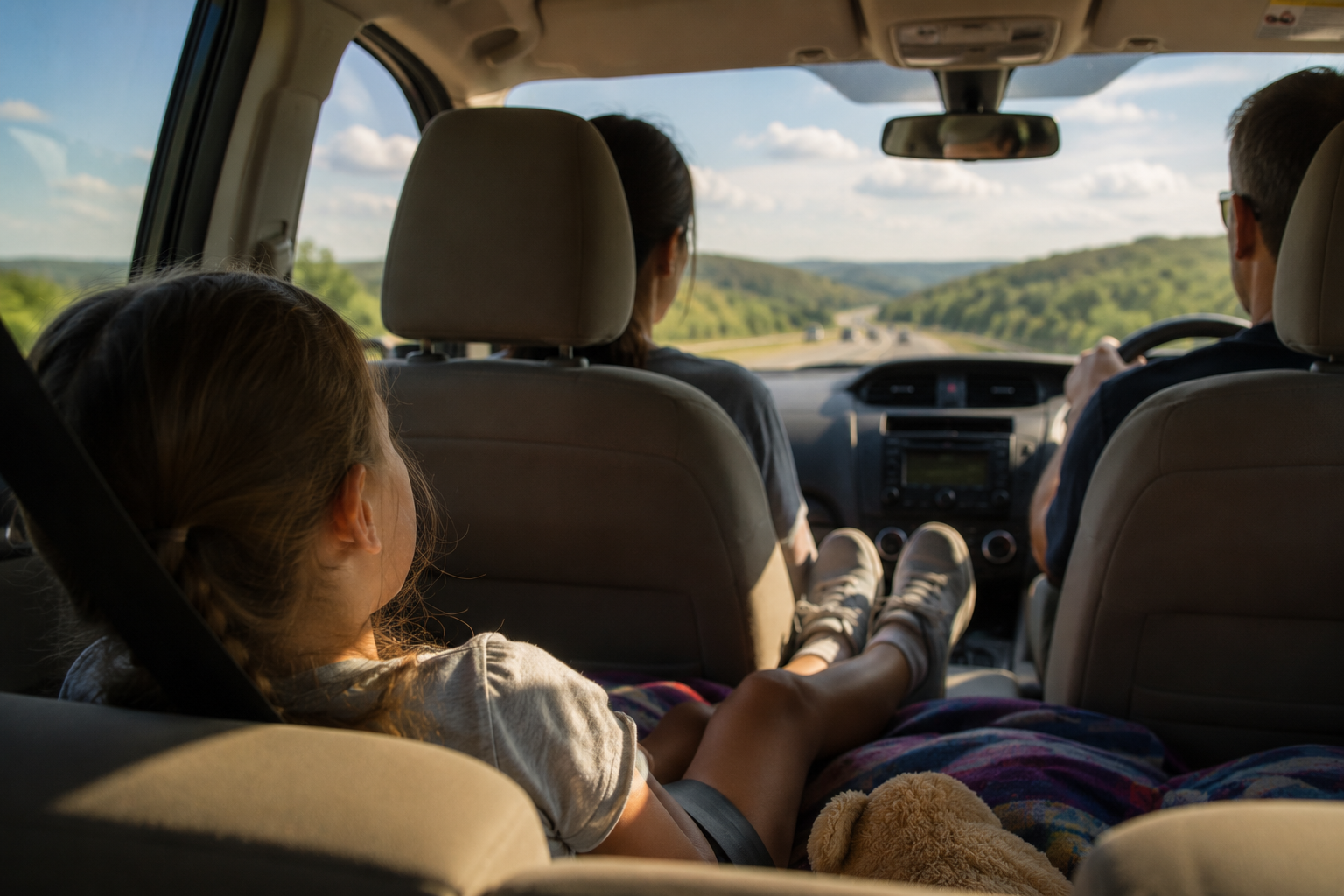
A warm, specific flash memoir prompt for remembering the backseat of a car on a long childhood drive, where boredom, safety, motion, and longing often shared the same window.
Maybe you remember the seat belt rubbing your neck, the hum of tires on pavement, or the strange feeling of watching the world pass while someone else decided where you were going. This flash memoir prompt feeling being backseat car long drive invites you to return to one small scene from childhood, before you had the words for everything you felt.
Long drives can hold more memory than we expect. A child in the backseat may feel trapped, cozy, ignored, free, sleepy, carsick, or full of questions. Sometimes the story is not about the destination at all. It is about what you noticed from the window.
The Prompt
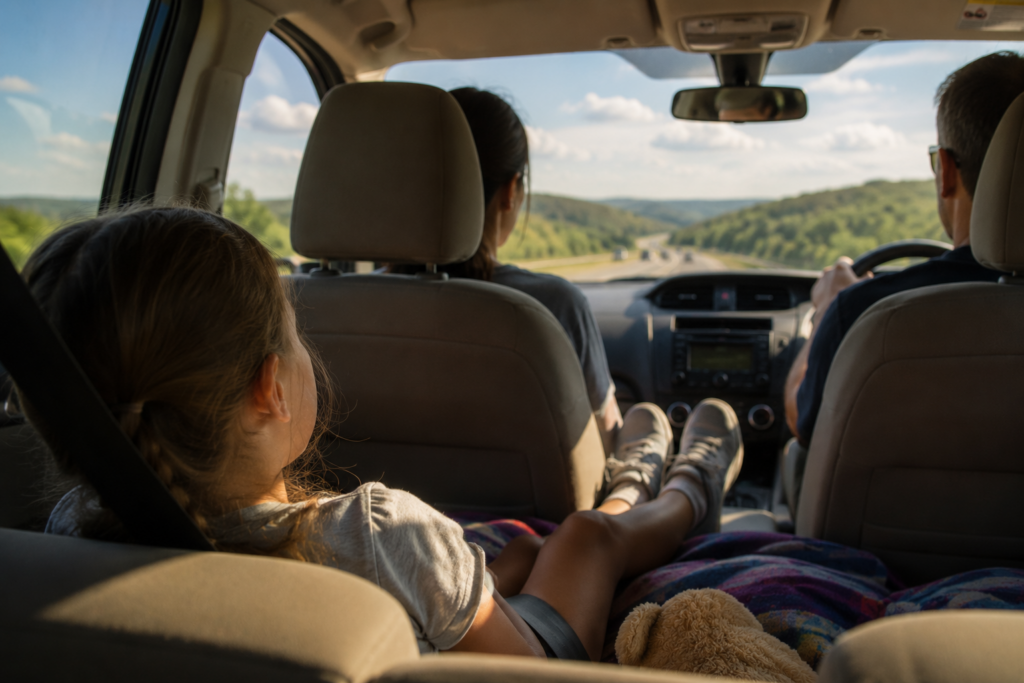
Write about the feeling of being in the backseat of a car on a long drive as a child.
This prompt works because it places you inside a clear physical space. You are not trying to cover your whole childhood. You are returning to one car, one road, one stretch of time. That small frame can help you find a memory with real emotional weight.
You might remember a family vacation, a move to a new town, a drive to visit relatives, or a quiet ride home after something changed. The backseat is a powerful point of view because a child often sees and hears more than adults realize.
Why This Memory Matters
Being a child in the backseat can mean many things at once. You may have felt protected by the adults in the front seats. You may have felt powerless because you had no control over the route, the radio, or the stops. You may have watched your parents talk in low voices and tried to guess what was wrong.
The backseat can also be a place of imagination. Fence posts become a rhythm. Clouds become animals. Passing houses make you wonder who lives there. If you had siblings beside you, the memory may include elbow fights, shared snacks, or the strict invisible line down the middle of the seat.
This kind of memory has built-in contrast. The car moves forward, but the child is still. The world changes outside, but the child is buckled in. That tension can reveal a deeper story about family, trust, fear, or belonging.
If your memory includes an object that carries meaning, like a cracked vinyl seat or a plastic toy on the floor, you might explore it as a symbol. For more practice with that skill, this guide on how to find symbolism in a story can help you notice how ordinary details can hold emotional meaning.


How to Approach This Prompt
Begin with a physical detail. Do not start by explaining the whole trip. Start with what your body remembers.
Maybe your bare legs stuck to the seat. Maybe the window was cold against your forehead. Maybe the car smelled like gum, gasoline, fast food, or your father’s coffee. A strong sensory detail can pull the memory open without forcing it.
Choose one scene. You do not need to write about the full vacation or every mile of the drive. Pick one moment in the car. It could be the hour when everyone fell silent. It could be the moment you woke up in the dark and saw your parent’s face lit by the dashboard.
Write what you noticed before you explain what it meant. As a child, you may not have understood the adult conversation in the front seat. You may not have known why the drive felt sad or exciting. Let the child’s view lead the piece.
For example, instead of writing, “We were poor, and the trip was stressful,” you might write, “My mother counted coins at the gas station while my brother and I pretended not to watch.” That kind of detail lets the reader feel the truth with you.
If you like to mark up your own draft as you revise, try reading it like a short piece of literature. Circle the strongest sensory details, underline the emotional shift, and cross out anything that explains too much. You can also use ideas from this student-friendly guide on how to annotate literature to study your own writing more closely.
A Quick Example
I sat behind my mother on the way to my grandmother’s house, my knees pressed into the pouch on the back of her seat. The car smelled like oranges because she had peeled one with her thumb and passed the sections back to me without turning around. My father kept both hands on the wheel. Nobody talked much after we left the highway. I watched the telephone poles dip and rise, dip and rise, like they were nodding to something I did not know yet. When we stopped for gas, my mother stayed in the car. She looked at me in the rearview mirror and smiled, but it was the kind of smile adults use when they are trying to keep a room from breaking.
Try It Yourself
Set a timer for ten minutes and write from the backseat. Stay inside the car for the whole piece. Let the road, the window, the radio, and the people in the front seats do some of the work.
You can use this flash memoir prompt feeling being backseat car long drive to explore a memory that feels simple at first. Do not worry if the meaning shows up late. Often, the strongest part of a flash memoir comes after you describe the ordinary details closely enough.
If you get stuck, answer one question: what could you see from the backseat that the adults did not know you were seeing? That question may lead you to the real heart of the scene.
Want More Flash Memoir Prompts?
If you enjoyed this flash memoir prompt feeling being backseat car long drive, you may like having a full year of small, focused invitations to keep your memory moving. Explore all 365 prompts in The Memory Trigger: 365 Flash Memoir Writing Prompts.



Get the Free Close Reading Worksheet Pack
Join my email list and receive the printable worksheet pack you can use with any novel or poem.
No spam. Just helpful guides for reading literature well.












