


A warm, specific writing invitation for remembering an object you kept for years, then lost or gave away, through one clear scene, a few sensory details, and the feeling it left behind.
You may not think about the object every day. Then one afternoon, you open a drawer, move a stack of papers, or see someone else with something similar, and the absence returns. The old backpack is gone. The bracelet is gone. The mug with the chip near the handle is gone. For a second, you can almost feel it in your hand.
This flash memoir prompt something owned long time then lost or gave away is less about the object itself and more about the version of you that carried it, wore it, packed it, protected it, or finally let it go.

The Prompt
Write about something you owned for a long time and then lost or gave away.
This prompt works because long-owned objects often collect quiet meaning. They travel with us through school years, moves, jobs, relationships, grief, and ordinary routines. By the time they disappear, they may feel less like stuff and more like proof that a certain part of life really happened.
You do not need to write about the most valuable thing you ever owned. In fact, the best choice may be something small. A keychain. A sweatshirt. A paperback with notes in the margins. A stuffed animal you pretended you had outgrown before you really had.
Why This Memory Matters
Objects can hold stories we do not always know how to tell directly. When you write about something you owned for a long time and then lost or gave away, you may find yourself writing about loyalty, change, regret, relief, or growing up.
Maybe you gave the item away because you wanted to be generous. Maybe you lost it by accident and still feel a tiny sting when you remember. Maybe you threw it out during a move because you were tired, rushed, or trying to become someone new.
The object gives you a door into the memory. You can describe the worn corner, the smell, the weight, or the sound it made. Then the deeper story can arrive slowly. This is often how memoir works best. The reader sees the thing first, then understands why it mattered.
If you are trying to shape the feeling of the scene, it may help to think about the difference between the emotion inside the narrator and the atmosphere around the memory. This guide to tone vs. mood in literature can help you notice how a memory can feel tender, funny, tense, or sad without naming the feeling too soon.





















How to Approach This Prompt
Begin with the object in your hand, even if you no longer have it. Do not start with a full history. Start with one physical detail.
What did it look like near the end? Was it faded, cracked, stretched, stained, bent, or soft from use? Did it still work? Did other people know you had kept it so long, or was it one of those private things that stayed with you almost secretly?
For this flash memoir prompt something owned long time then lost or gave away, choose one scene instead of trying to cover the entire life of the object. Write about the moment you noticed it was gone. Or write about the day you handed it to someone else. Or write about the last time you used it without knowing it was the last time.
Let the meaning wait. First, write what you saw, touched, heard, or did. If you gave away an old coat, show the sleeve hanging from your arm. If you lost a ring, show your thumb rubbing the empty place where it used to be. If you donated a box of books, show the trunk closing.
After you have the scene, ask one simple question: what did losing or giving away this thing change? The answer does not have to be dramatic. A small shift is enough.
You might also read your draft the way a careful reader studies a story. Circle the places where the object appears. Underline the sentence where the emotion begins to surface. If that helps, this guide on how to annotate literature can give you a simple way to notice patterns in your own writing.
A Quick Example
I had the blue lunchbox from fourth grade until my second year of college. By then, the plastic handle had a white stress mark in the middle, and the cartoon astronaut on the front had lost one eye to a long scratch. I used it for crayons, then receipts, then the buttons that fell off shirts. When I moved into my first apartment, I packed fast. I remember holding it over the trash can and thinking, “This is silly to keep.” It made a hollow sound when it landed. Two weeks later, I needed a button for my black coat and thought of the lunchbox before I thought of the coat. I stood in my kitchen, wearing one sleeve, surprised by how much I missed that little blue box.
Try It Yourself
Set a timer for ten minutes and write about one object you owned for a long time, then lost or gave away. Keep the focus tight. Do not explain your whole life. Stay with one scene and one object.
If you get stuck, write this sentence and keep going: “The last time I remember seeing it, it was…”
This flash memoir prompt something owned long time then lost or gave away can bring up feelings you did not expect. Let that happen, but do not force a lesson. The truth may be simple. You kept something for years. Then it left your life. For some reason, you still remember.
Want More Flash Memoir Prompts?
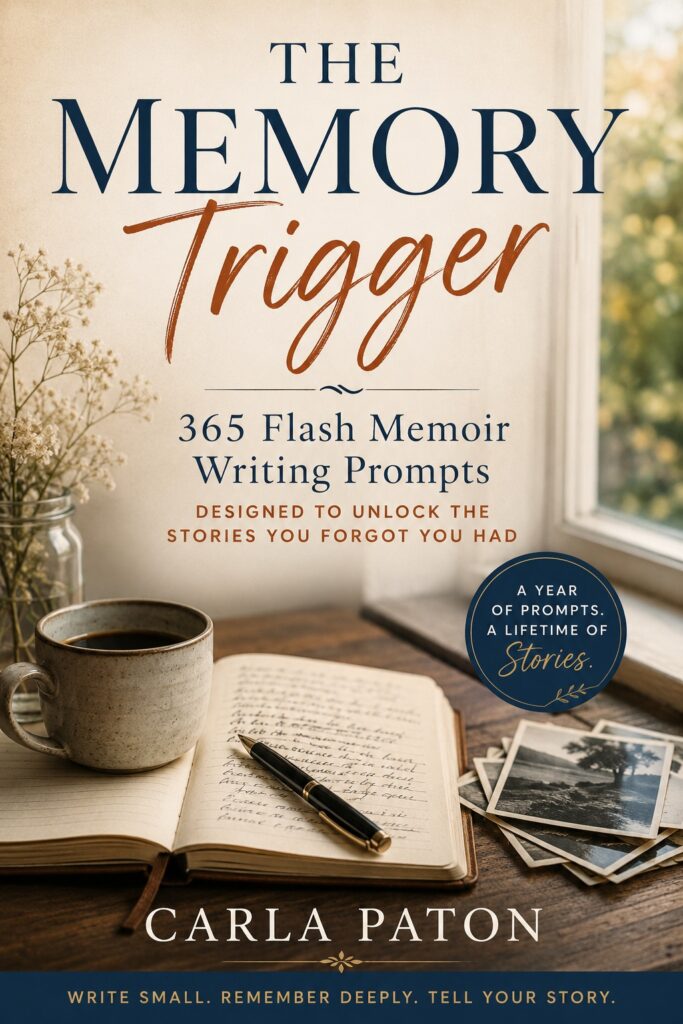
If you enjoy short, focused writing invitations like this one, you may like having a full year of memory starters ready when you need them. Explore all 365 prompts in The Memory Trigger: 365 Flash Memoir Writing Prompts.


Get the Free Close Reading Worksheet Pack
Join my email list and receive the printable worksheet pack you can use with any novel or poem.
No spam. Just helpful guides for reading literature well.












