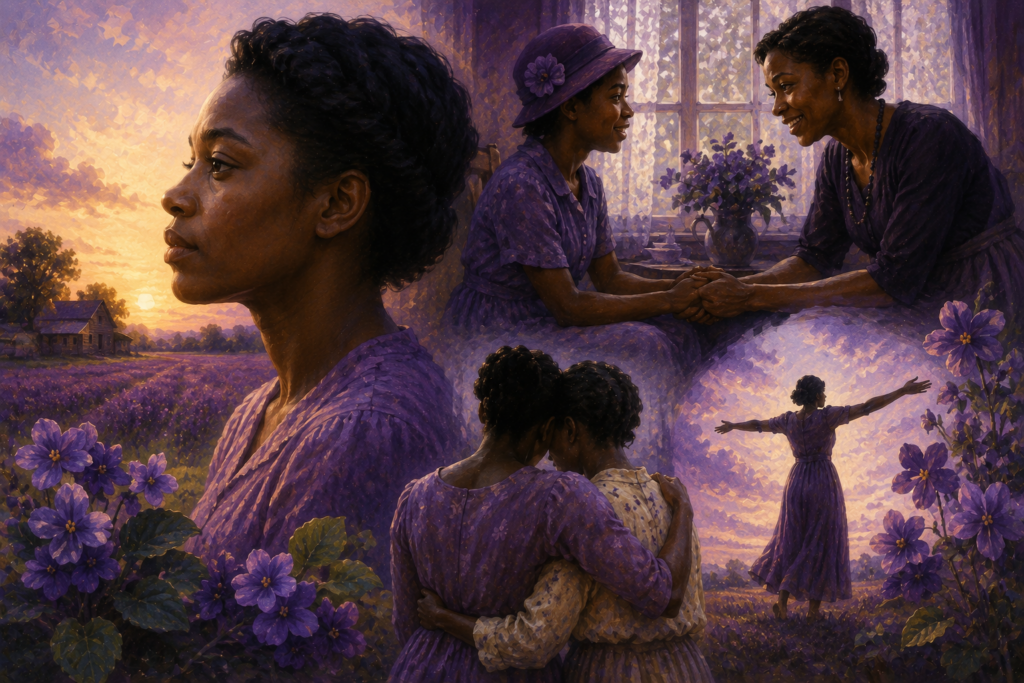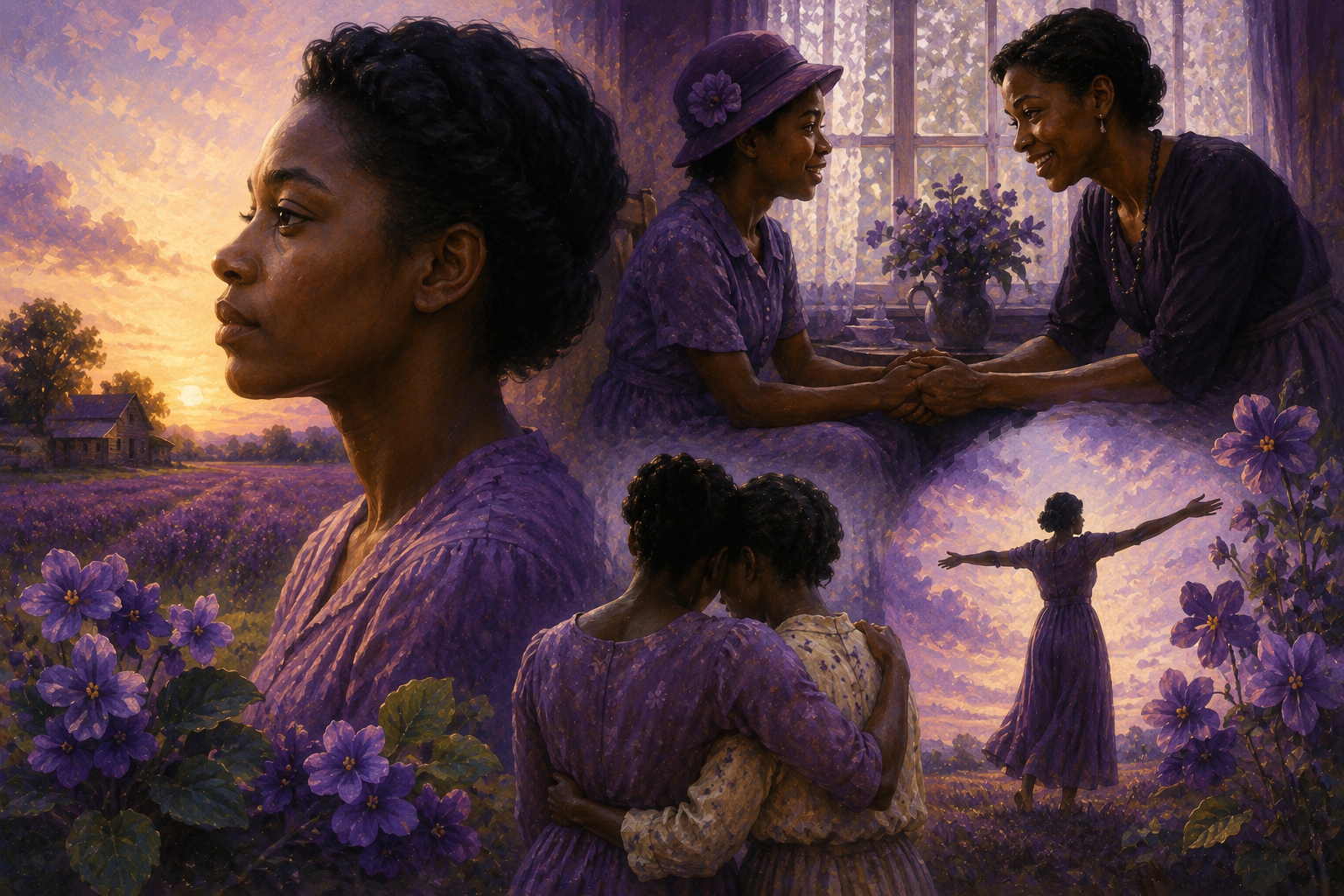
Themes in The Color Purple: A Student-Friendly Guide

The Color Purple themes

Alice Walker’s novel asks readers to watch how people survive pain, claim a voice, and learn love. This guide breaks down the themes in The Color Purple so students can connect the letters, symbols, and conflicts to the novel’s larger meaning.

For helpful background on the author, see Britannica’s Alice Walker biography.

In this Guide

Use this table of contents to jump to the ideas you need for class or review.

  • Why theme matters in the novel
  • Voice and freedom
  • Abuse and survival
  • Sisterhood and chosen family
  • Gender roles and power
  • Faith and spiritual growth
  • Race and identity
  • Symbolism and theme
  • Essay tips and FAQ
The Color Purple themes

Why the themes in The Color Purple matter

The novel is not only about what happens to Celie. It is about how people find worth in a world that tries to silence them.

The themes in The Color Purple are not hidden from the plot. They grow through Celie’s letters, her changing view of God, and her ties with women who help her see herself in a new way.

For students, theme is the bridge between summary and analysis. A summary says Celie writes letters. Analysis asks why those letters matter.

Major themes in The Color Purple: voice and freedom

Celie’s growth begins with language. Her letters show how a silenced person can slowly claim the right to speak.

At the start, Celie writes because she has no safe person to talk to. Her letters to God hold fear, pain, and confusion. Yet even this private act becomes a form of strength.

As Celie changes, her voice changes too. She speaks more clearly about what she wants and what she refuses to accept.

This is one of the most important themes in The Color Purple because the novel links voice with freedom. To speak is not just to make sound. It is to say, I exist, and my life has value.

A useful comparison is Jane Eyre by Charlotte Brontë. Jane also must learn to speak for herself in a world that expects her to stay quiet.

Abuse and survival

The novel shows harm without treating pain as the whole story. Survival becomes a hard, active force.

Celie faces violence, control, and sexual harm. Walker does not present this only to shock the reader. She shows how abuse can shape a person’s sense of self.

At the same time, Celie is never only a victim. Her life shows the slow work of survival. She learns to name what happened, trust others, and build a future.

This theme can be hard to read, but it matters. The novel asks readers to see how systems of power can hurt people inside homes, not just in public life.

Sisterhood and chosen family

Love between women becomes one of the strongest sources of healing in the novel.

Celie’s bond with Nettie, Shug, and Sofia helps her grow. These relationships give Celie models of courage and self-respect.

Nettie represents loyalty across distance. Shug helps Celie see her body and spirit in a new light. Sofia shows open resistance to control.

One of the central themes in The Color Purple is that family is not only blood. Chosen family can help a person survive when the home has become unsafe.

This idea also appears in Little Women by Louisa May Alcott, where female bonds shape identity and moral growth.

Gender roles and power

Walker shows how strict gender roles can trap people.

Many men in the novel are taught that power means control. They expect women to cook, obey, and stay silent.

Celie’s life challenges that belief. Sofia’s anger also challenges it. Shug’s independence offers another path, one shaped by desire and choice.

The novel does not excuse cruel behavior, but it does show how harmful ideas pass from one generation to the next. Power becomes a pattern people learn, copy, and sometimes reject.

For an AP Literature essay, you could argue that Walker uses gender conflict to show how freedom requires a change in both private life and public values.

Faith and spiritual growth

Celie’s view of God changes as her view of herself changes.

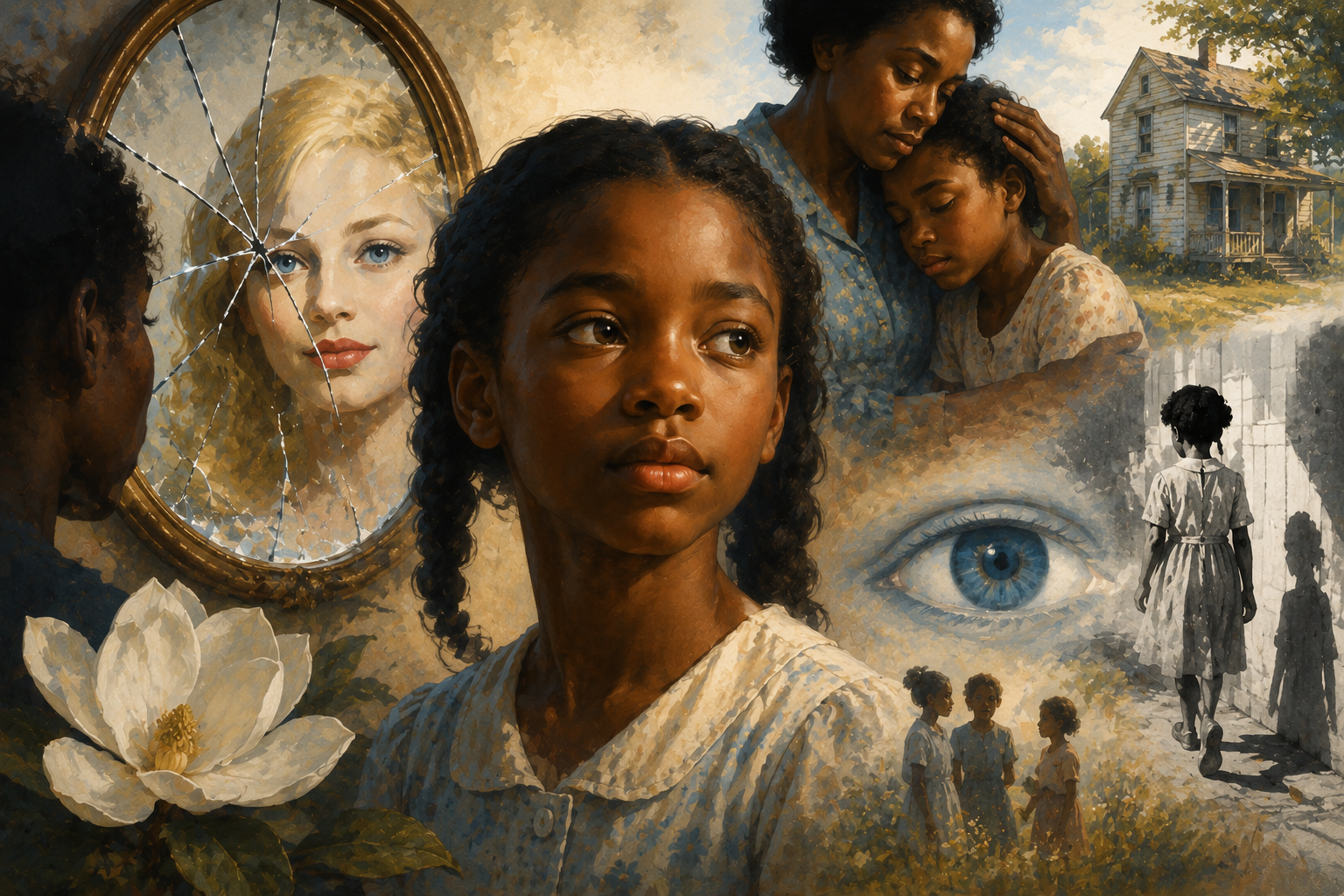
At first, Celie imagines God as distant, male, and tied to authority. This image reflects the world that has hurt her.

Later, Shug helps Celie see God in nature, beauty, and human connection. This shift is not just religious. It is personal.

Faith becomes less about fear and more about wonder. Celie learns that the sacred can appear in color, touch, and love.

This is why the color purple itself matters. It points to beauty that people often miss. If you want help with that kind of detail, read our guide on how to find symbolism in a story.

Race and identity

The novel explores Black life in the American South and connects personal pain to larger social forces.

Celie and the other characters face not only sexism, but racism too. Sofia’s clash with white authority shows how race, gender, and class shape daily danger.

Nettie’s letters from Africa widen the novel’s world. They connect African American identity to African history, while also showing that no culture is simple or perfect.

Walker asks readers to see identity as layered. Race matters, but so do gender, family, faith, and place.

Symbolism connects to themes in The Color Purple

Symbols help the novel turn private details into larger ideas.

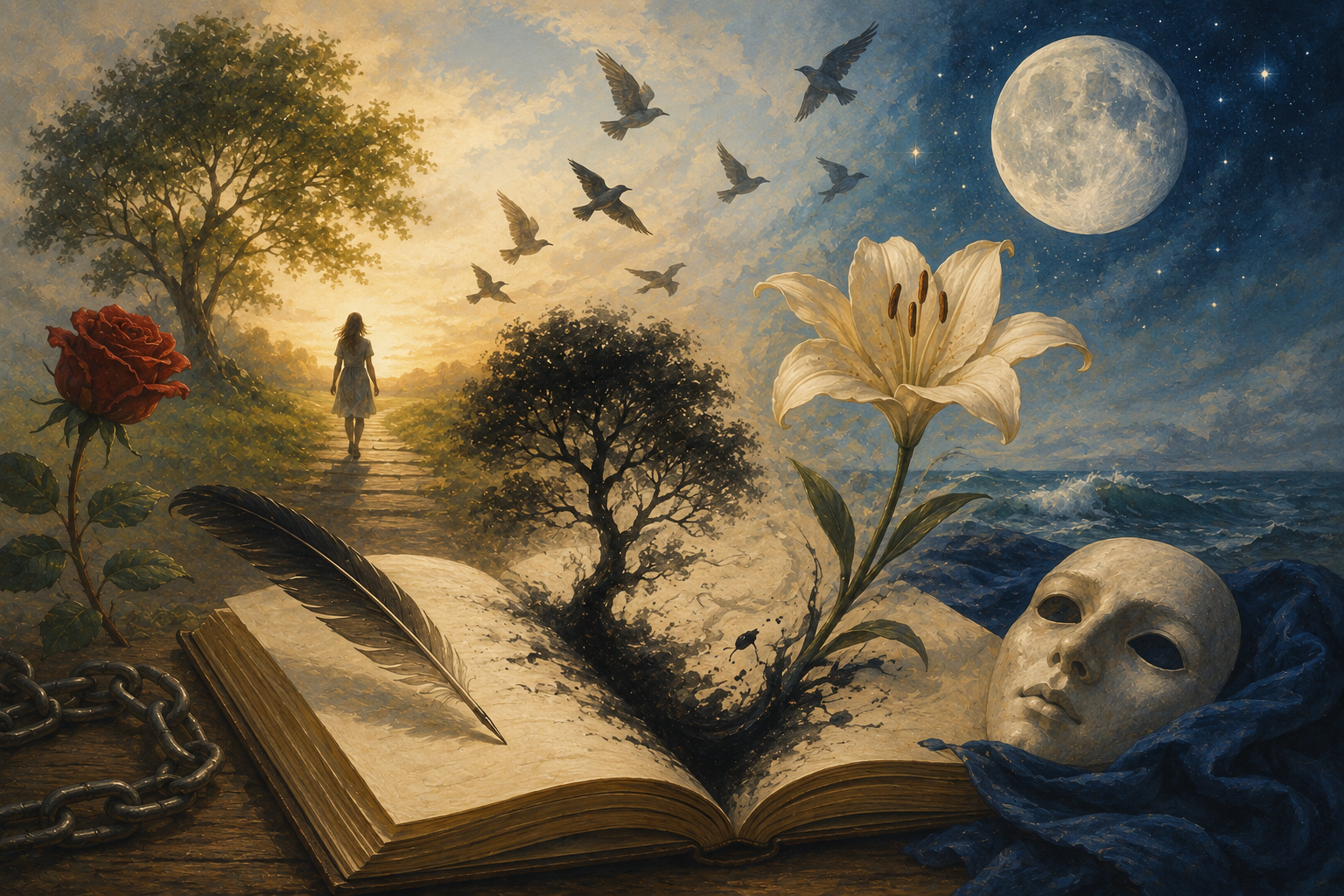
Students often understand themes in The Color Purple more clearly when they track repeated images. Letters, pants, sewing, gardens, and the color purple all carry meaning.

Letters symbolize voice and connection. Pants symbolize work, freedom, and a new self-image. The color purple suggests beauty, spirit, and attention to life.

When you write about symbols, do not just name them. Explain how they change across the novel. For more practice, use this student guide to symbolism.

How to write about themes in The Color Purple

A strong paragraph connects a theme to a clear choice Walker makes.

When you write about themes in The Color Purple, avoid broad claims like, “The book is about love.” Make the claim sharper.

Try this: “Walker presents love as a force that helps Celie recover her voice after years of silence.” That sentence gives you a theme and a direction.

Then use one short moment from the novel as evidence. Explain how the detail supports your idea. A good AP Literature paragraph should not just quote. It should interpret.

If you want a quicker study path, explore our student-friendly literature guides for theme review and essay prep.

Books to pair with this novel

These books work well for comparison essays or deeper reading.

  • Their Eyes Were Watching God by Zora Neale Hurston
  • Beloved by Toni Morrison

Both novels explore voice, memory, and the search for selfhood. They also pair well with high school, AP Literature, and college English study.

FAQ: themes in The Color Purple

These quick answers can help with review before a quiz, essay, or class talk.

What are the main themes in The Color Purple?

The main ideas include voice, survival, sisterhood, gender power, faith, race, and identity. Each one connects to Celie’s growth.

Why is voice so important in the novel?

Voice matters because Celie begins as someone who has been silenced. Her letters show her path toward self-worth and freedom.

What does the color purple symbolize?

It symbolizes beauty, spirit, and the need to notice joy in ordinary life. It also points to Celie’s new way of seeing the world.

Is The Color Purple a feminist novel?

Yes, many readers see it that way. The novel focuses on women’s strength, female bonds, and resistance to male control.

Key Takeaway

The themes in The Color Purple show how a person can move from silence toward selfhood. Walker’s novel is painful at times, but its deepest message is one of voice, beauty, and hard-won freedom.
Books About Good vs Evil

Good vs Evil
Good vs Evil

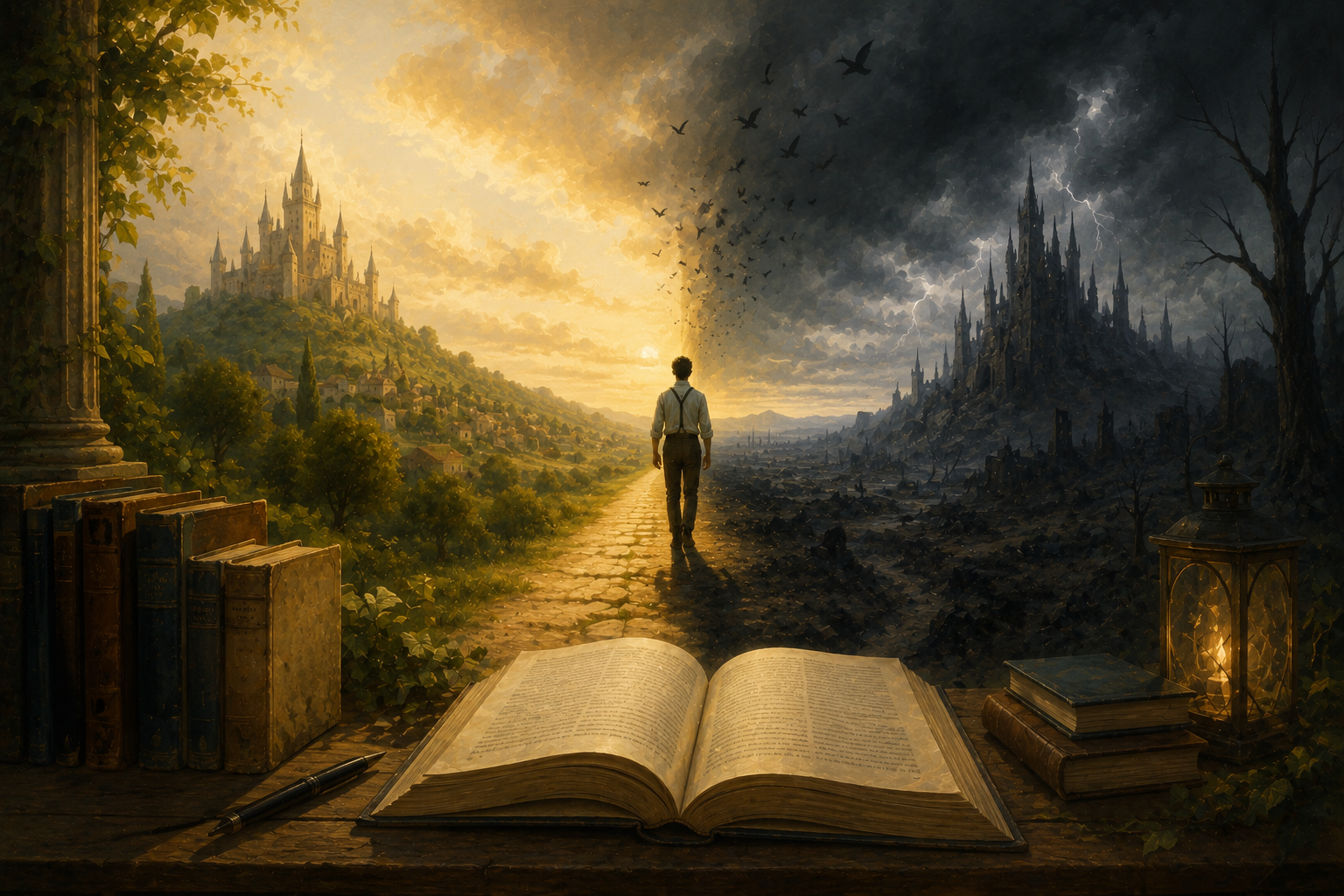
Books about good vs. evil have shaped how readers think about courage, choice, and human nature. These stories ask a simple question with no easy answer: what makes a person do right or wrong?

From ancient myths to modern novels, this conflict helps students see how literature turns moral struggle into powerful drama.

In this Guide

Why Books About Good vs Evil Still Matter

Stories about moral conflict help readers test their own values from a safe distance.

Books about good vs. evil are not only about heroes fighting villains. The best ones show that good and evil can exist inside the same person.

This is why these stories work so well in school. They lead to strong essays, rich class talks, and deeper character study.

In many novels, the “evil” force is not just a monster or ruler. It can be fear, pride, greed, or the pressure to obey.

That makes the conflict feel real. Most readers will never face a dragon, but they will face moments when the right choice is hard.

Classic Books About Good vs Evil

Classic literature often uses clear conflict to explore messy moral questions.

Classic Books About Good vs. Evil include works in which the hero must choose between comfort and duty. These stories often show that goodness takes effort.

In The Lord of the Rings by J.R.R. Tolkien, the One Ring stands for power that corrupts. Frodo does not win because he is strong. He wins because he keeps choosing the hard path.

In Dr. Jekyll and Mr. Hyde by Robert Louis Stevenson, good and evil live inside one body. The novel asks if people can fully hide their darker side.

And in To Kill a Mockingbird by Harper Lee, evil appears through racism and injustice. Atticus Finch shows that goodness can mean standing firm when a whole town turns away.

These books last because they do not give easy answers. They show that moral courage often has a cost.

Modern Books About Good vs Evil for Students

Modern stories often make the line between good and evil harder to see.

Many modern Books About Good vs Evil focus on systems, not just people. A character may face a cruel government, a violent culture, or a society built on silence.

In The Hunger Games by Suzanne Collins, Katniss fights a government that turns suffering into entertainment. The story asks what people owe each other when survival is on the line.

In Harry Potter by J.K. Rowling, evil grows through fear, prejudice, and the hunger for control. Harry’s choices matter because he refuses to become like the enemy he fights.

And in The Book Thief by Markus Zusak, goodness appears in small acts during a brutal time. A hidden person, a shared book, and a quiet risk can become acts of moral strength.

These works are useful for students because they connect moral conflict to identity, power, and fear.

Common Symbols in Books About Good vs Evil

Symbols help writers turn moral struggle into images readers can remember.

In many Books About Good vs Evil, light often points to truth, hope, or moral clarity. Darkness may suggest fear, secrecy, or corruption.

But strong literature does not always keep symbols simple. A bright place can hide danger. A dark setting can protect someone who needs safety.

Objects also carry moral weight. Tolkien’s Ring is one of the clearest examples. It looks small, but it holds a huge pull toward evil.

Doors, roads, forests, and storms can also show a character’s inner struggle. A journey through wild land may reflect a journey through doubt.

For more on how setting can shape meaning, see our guide to nature and isolation in Western writing.

Writers also use names, colors, and seasons to show moral change. A cold winter may suggest loss, while spring can point to renewal.

Major Themes in Books About Good vs Evil

The best moral conflicts are less about winning and more about choosing.

One major theme in Books About Good vs Evil is temptation. A character may want power, safety, or revenge, even when that desire harms others.

Another key theme is free will. Many stories ask whether people are born good or evil, or whether their choices define them.

Redemption also matters. Some characters fall into darkness but still have a chance to change. This makes the story more human.

Justice is a common concern, too. In works like To Kill a Mockingbird, goodness is tied to truth, fairness, and moral duty.

For a deeper look at how thinkers define evil, students can explore the Stanford Encyclopedia of Philosophy entry on evil.

These books are strong choices for students who want clear conflict and rich themes.

If you want to read more Books About Good vs Evil, start with works that offer both action and moral depth.

  • The Lord of the Rings by J.R.R. Tolkien
  • Dr. Jekyll and Mr. Hyde by Robert Louis Stevenson
  • The Book Thief by Markus Zusak

The Lord of the Rings is best for readers who enjoy epic journeys and symbolic objects. It also works well for essays about temptation and sacrifice.

Dr. Jekyll and Mr. Hyde is short, but it has deep ideas about identity. It is a strong pick for students who like Gothic fiction.

The Book Thief shows moral courage in everyday choices. It is moving without losing sight of history.

For background on William Blake, whose poetry often explores innocence and moral conflict, visit the Poetry Foundation’s William Blake page.

How to Analyze Books About Good vs Evil in an Essay

A strong essay should focus on choices, not just labels.

When you write about Books About Good vs Evil, avoid saying one character is “good” and another is “bad” without proof. Look at actions, motives, and change over time.

Ask what the story rewards. Does it value mercy? Does it punish pride? Or does it show that silence can help evil grow?

Pay close attention to setting. A lonely place, a harsh landscape, or a closed room can reveal fear and conflict. You can connect this idea to our article on isolation in Western writing.

Use symbols to support your claim. If light appears during moments of truth, explain how that pattern shapes the theme.

FAQs About Books About Good vs Evil

What are Books About Good vs Evil?

They are stories built around moral conflict. This conflict may be between characters, inside one person, or within a society.

Why do students study good vs evil in literature?

Students study it because it reveals character, theme, and conflict. It also helps readers think about real moral choices.

Is good vs evil always simple in books?

No. Strong literature often shows that people are complex. A “good” person may fail, and a flawed person may seek redemption.

What is a good short book about good vs evil?

Dr. Jekyll and Mr. Hyde is a strong short choice. It is easy to read, but its ideas are deep.

What symbols often appear in these stories?

Common symbols include light, darkness, roads, mirrors, and powerful objects. These images help show moral struggle.

Key Takeaway

Books about good vs. evil matter because they show that moral choices shape who we become. The strongest stories do not just ask who wins. They ask what each character is willing to lose for what is right.

What Is Modernism in Literature?

Modernism in Literature

What Is Modernism in Literature? It is a major literary movement that changed how writers told stories, built characters, and used language.

Modernist writers often show a world that feels uncertain, broken, or hard to understand. This guide will help you see what modernism means and why it still matters in class today.

In This Guide

Modernism in Literature

What Is Modernism in Literature? A Simple Definition

Modernism is a style of writing that reflects the confusion and change of the early 1900s.

When people ask, What Is Modernism in Literature?, the short answer is this: modernism is literature that breaks from older rules to show modern life in a new way.

Modernist writers did not always tell stories in a clear order. They often focused on thoughts, memories, doubts, and private fears.

This style grew after huge social changes, including World War I, rapid city growth, and new ideas in psychology. Many writers felt that old forms could not explain the modern world anymore.

For a broader background, you can explore Britannica’s overview of Modernism.

What Is Modernism in Literature? Why It Matters

Modernism matters because it changed what literature could do.

A good answer to What Is Modernism in Literature? must include this point: modernist texts often ask readers to work harder.

Instead of giving easy answers, modernist writers leave gaps. They may use symbols, shifting points of view, or unclear endings.

This can feel hard at first, but it also makes the reading more active. You are not just following a plot. You are piecing meaning together.

Modernism also matters because it shows how people react to loss, pressure, and change. Many modernist works explore loneliness, fear, and the search for meaning.

What Is Modernism in Literature? Key Features to Notice

Modernist writing often looks and feels different from traditional fiction or poetry.

To answer What Is Modernism in Literature?, look for a few common traits. One major feature is a broken or non-linear structure.

A modernist novel may move between the past and present with little warning. A poem may jump from one image to another without a clear scene change.

Another key feature is stream of consciousness. This means the writing tries to show a character’s thoughts as they happen.

Modernist works also use symbols in bold ways. A city, a river, or even a single object may carry deep meaning.

If you want help with this kind of close reading, try our guide on how to read literature like a scholar.

image-slider-with-thumbnail1.jpeg
PlayPause
previous arrow
next arrow
image-slider-with-thumbnail1.jpeg
image-slider-with-thumbnail3.jpeg
image-slider-with-thumbnail4.jpeg
ChatGPT Image Jun 27, 2026, 06_33_13 PM
ChatGPT Image Jun 27, 2026, 06_36_37 PM
ChatGPT Image Jun 27, 2026, 06_38_39 PM
ChatGPT Image Jun 27, 2026, 06_31_22 PM
image-slider-with-thumbnail7.jpeg
ChatGPT Image Jun 27, 2026, 06_29_43 PM
ChatGPT Image Jun 27, 2026, 06_27_44 PM
image-slider-with-thumbnail6.jpeg
ChatGPT Image Jun 27, 2026, 06_15_07 PM
image-slider-with-thumbnail5.jpeg
ChatGPT Image Jun 27, 2026, 06_22_43 PM
ChatGPT Image Jun 27, 2026, 06_25_37 PM
ChatGPT Image Jun 27, 2026, 06_19_43 PM
ChatGPT Image Jun 27, 2026, 06_12_00 PM
ChatGPT Image Jun 27, 2026, 06_08_50 PM
ChatGPT Image Jun 26, 2026, 04_54_23 PM
ChatGPT Image Jun 27, 2026, 05_53_51 PM
ChatGPT Image Jun 28, 2026, 08_35_55 AM
previous arrow
next arrow

What Is Modernism in Literature? Famous Examples

Modernism becomes easier to understand when you see it in real books and poems.

These examples show What Is Modernism in Literature? through style, structure, and theme.

Mrs Dalloway by Virginia Woolf follows one day in the life of Clarissa Dalloway. The novel moves through thoughts and memories more than outward action.

The Waste Land by T.S. Eliot is one of the most famous modernist poems. It uses many voices, broken images, and references to older myths.

Ulysses by James Joyce is known for its bold style. It turns one ordinary day in Dublin into a complex study of thought, language, and daily life.

For poetry context, the Poetry Foundation’s entry on Modernism is a helpful resource.

Books to Read Next

These books are strong starting points if you want to explore modernist literature.

  • Mrs Dalloway by Virginia Woolf
  • The Waste Land and Other Poems by T.S. Eliot

You can find these titles through libraries, bookstores, or Amazon. If you are new to modernism, start with short sections and take notes as you read.

A Practical Tip for Reading Modernist Literature

Do not try to understand everything on the first read.

Modernist literature often works through patterns. Notice repeated images, sudden shifts, and strange details.

Ask simple questions: Who is speaking? What feels unclear? What idea keeps coming back?

This approach helps with What Is Modernism in Literature? because modernism often hides meaning in form, not just plot.

For more support, use this literary reading guide as a companion while you study.

FAQ: What Is Modernism in Literature?

Here are quick answers to common student questions about modernism.

What Is Modernism in Literature?

Modernism in literature is a movement that broke away from older writing styles. It often shows confusion, change, and inner thought.

When did modernist literature begin?

Modernist literature grew in the late 1800s and early 1900s. It became especially important after World War I.

Why is modernist writing hard to read?

It can be hard because it often uses fragmented structure, symbols, and shifting voices. The meaning may not be clear right away.

Is modernism only found in novels?

No. Modernism appears in novels, poems, plays, and essays.

Key Takeaway

What Is Modernism in Literature? It is a bold way of writing that shows a changing world through broken forms, deep thoughts, and new ways of seeing life.

Flash Memoir Prompt: Relationship that Ended So Gradually You Can’t Name the Moment It Was over

relationship Flash Memoir

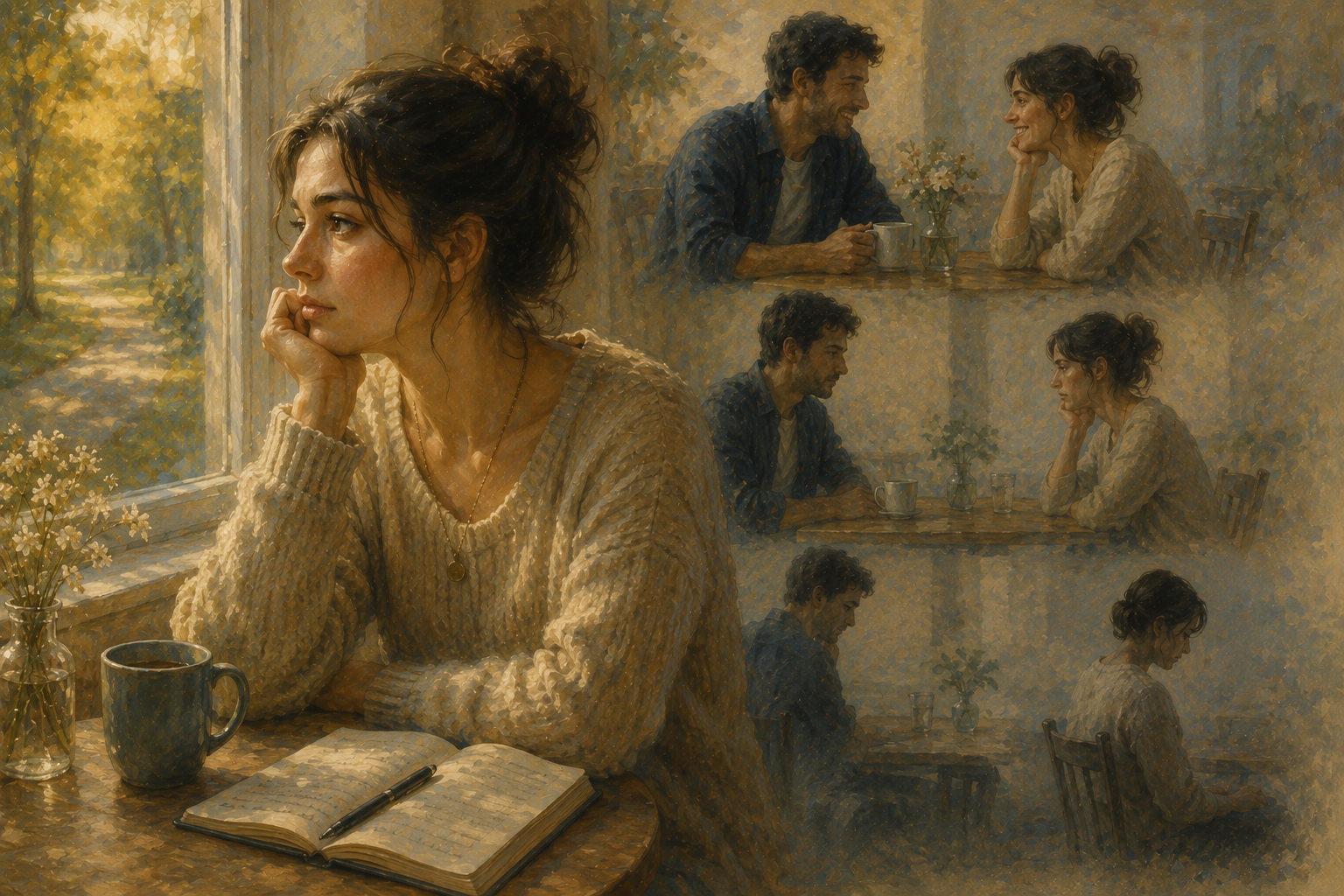
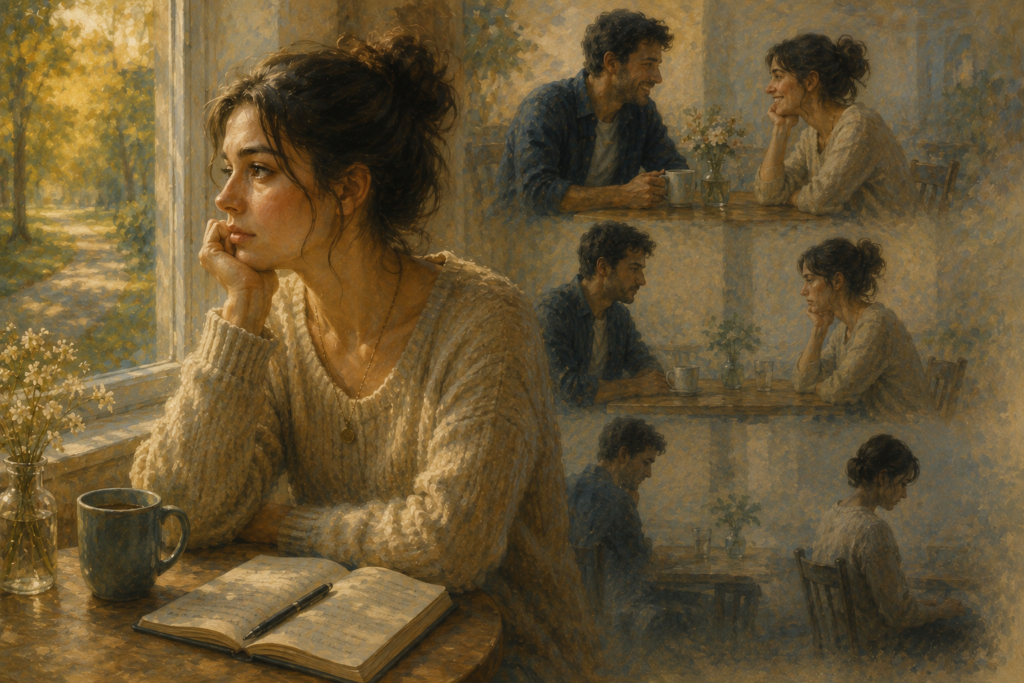
A quiet writing invitation for exploring a relationship that faded in small, almost invisible ways, through one focused scene, sensory detail, and emotional truth. Maybe you remember the last time you sat across from them and realized the silence no longer felt unusual. The cups were on the table, the room looked the same, and nobody said the word goodbye. This flash memoir prompt relationship ended so gradually can’t be pinned to one dramatic moment, which is exactly why it can lead to honest, layered writing.

relationship Flash Memoir

The Prompt

Write about a relationship that ended so gradually you can’t name the moment it was over.

This prompt asks you to look at the slow kind of ending. No slammed door. No final text. No single scene where everything changed. Instead, the relationship thinned out over time. Maybe the phone calls grew shorter. Maybe you stopped saving stories to tell them. Maybe you still saw each other, but the old ease had gone missing.

A memory like this can unlock a powerful flash memoir because it invites you to notice what changed before you fully understood it. Memoir does not always need a huge event. Sometimes the truth is hiding in the way someone stops asking follow-up questions.

Why This Memory Matters

Relationships often end in public ways, with breakups, arguments, moves, or clear decisions. But many of them end quietly. Friendships fade after graduation. Siblings drift through adult routines. A romance becomes polite. A mentor stops feeling like a safe person. You may still have pictures together, but the feeling inside them has changed.

This kind of story matters because it honors the grief that does not come with a ceremony. When no one names the loss, it can feel strange to miss it. You may wonder if it counts. It does.

Writing about a gradual ending can help you find the shape of something you never got to say out loud. It can also help you understand your own part in the fading. Maybe you pulled away first. Maybe you waited for them to notice. Maybe both of you were tired and afraid of making the end official.

If you are a student or a new memoir writer, this prompt is also useful because it builds close observation. You are less focused on explaining the whole relationship and more focused on what one moment reveals. That same skill can help when you analyze characters in literature, because the smallest choices often show the deepest shifts.

How to Approach This Flash Memoir Prompt

Begin with one physical detail from late in the relationship. Choose something small and real. A phone that no longer lights up with their name. A chair left empty at lunch. A birthday message that says “Hope you’re well” instead of an inside joke. A car ride where the radio did all the talking.

Do not try to tell the whole history at once. If you start with “We met in seventh grade,” you may feel pulled into years of background. Instead, drop yourself into one scene where the change was present, even if you did not understand it yet.

Write what you noticed before you explain what it meant. Let the reader see the room, hear the voices, and feel the awkward pause. You can name the emotion later.

For this flash memoir prompt relationship ended so gradually can’t become a summary of sadness. It needs a scene. Ask yourself: Where were you when you first sensed distance? What object was nearby? What did the other person do that felt normal on the outside but different underneath?

You might also read the scene like a page from a story. Mark the details that carry weight, the way you would when you annotate literature. Circle the gesture, the line of dialogue, or the silence that tells the truth.

Try starting with a sentence like: “The first thing I noticed was…” or “By then, we had stopped…” These openings can help you enter the memory without forcing a big lesson too soon.

image-slider-with-thumbnail1.jpeg
PlayPause
previous arrow
next arrow
image-slider-with-thumbnail1.jpeg
image-slider-with-thumbnail3.jpeg
image-slider-with-thumbnail4.jpeg
ChatGPT Image Jun 27, 2026, 06_33_13 PM
ChatGPT Image Jun 27, 2026, 06_36_37 PM
ChatGPT Image Jun 27, 2026, 06_38_39 PM
ChatGPT Image Jun 27, 2026, 06_31_22 PM
image-slider-with-thumbnail7.jpeg
ChatGPT Image Jun 27, 2026, 06_29_43 PM
ChatGPT Image Jun 27, 2026, 06_27_44 PM
image-slider-with-thumbnail6.jpeg
ChatGPT Image Jun 27, 2026, 06_15_07 PM
image-slider-with-thumbnail5.jpeg
ChatGPT Image Jun 27, 2026, 06_22_43 PM
ChatGPT Image Jun 27, 2026, 06_25_37 PM
ChatGPT Image Jun 27, 2026, 06_19_43 PM
ChatGPT Image Jun 27, 2026, 06_12_00 PM
ChatGPT Image Jun 27, 2026, 06_08_50 PM
ChatGPT Image Jun 26, 2026, 04_54_23 PM
ChatGPT Image Jun 27, 2026, 05_53_51 PM
ChatGPT Image Jun 28, 2026, 08_35_55 AM
previous arrow
next arrow

A Quick Example

The last time I knew we were best friends, we were sharing fries in her car outside the grocery store. The windows had fogged at the edges, and she kept checking her phone under the steering wheel. I told her about my interview, making the story funnier than it had been, waiting for her to laugh in the old place. She smiled, but her thumb kept moving. A year before, she would have asked what I wore, what they asked, whether I had said the weird thing I always said when nervous. That night she said, “That’s good, though,” and passed me the ketchup. Nothing ended. We finished the fries. She drove me home. I remember standing in my driveway, holding my bag, feeling like I had forgotten something in her car and knowing I hadn’t.

Try It Yourself

Set a timer for ten minutes and write one scene from a relationship that faded. Keep the scene narrow. Stay with one table, one message, one hallway, one ride home.

If you get stuck, focus on contrast. What would this person have done before? What did they do instead? That difference can carry the whole piece.

You do not need to decide who was right. You do not need to make the ending neat. Let the memory stay a little unfinished if that feels true. This flash memoir prompt relationship ended so gradually can’t be solved like a puzzle, and that is part of its power.

When you finish, read your draft once for the emotional truth. Then read it again for the concrete details. If the piece feels too broad, choose the strongest image and build around it.

Want More Flash Memoir Prompts?

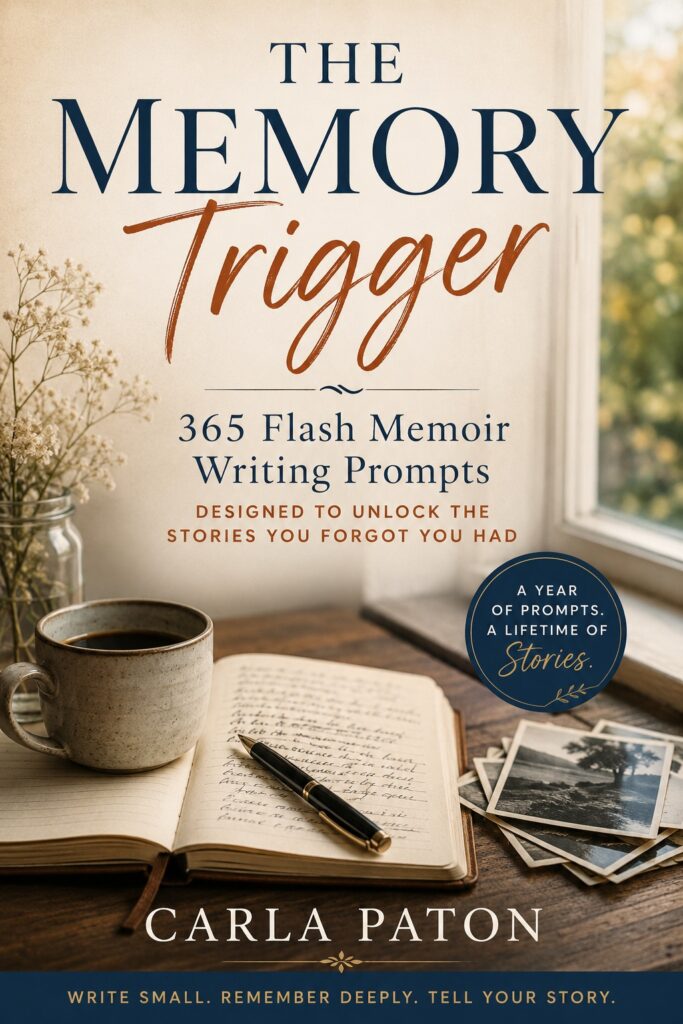
If this prompt opened a memory you were not expecting, keep going. Short prompts can help you return to your life with more patience and attention. Explore all 365 prompts in The Memory Trigger: 365 Flash Memoir Writing Prompts.

The Memory Trigger

The Bluest Eye quotes explained: Important Passages for Essays

bluest eyes quotes

Toni Morrison’s The Bluest Eye gives students many passages that feel quiet at first, then grow sharper the more you study them. This guide to The Bluest Eye quotes explained shows what the major moments mean and how to use them in essays.

In this Guide

  • Why Morrison’s language matters
  • Beauty and shame
  • Family, harm, and silence
  • Voice, structure, and symbols
  • How to use passages in essays
  • Related books and resources
  • FAQ
bluest eyes quotes

The Bluest Eye quotes explained: why Morrison’s language matters

Morrison builds meaning through pattern, contrast, and point of view.

Because Toni Morrison’s novel is still under copyright, this guide paraphrases key passages instead of reprinting long quotes. Use your own copy for exact wording, page numbers, and citation style.

Anyone searching for The Bluest Eye quotes explained should look for pressure points. Notice where a character wants love, where a community repeats a cruel idea, or where the narration shifts.

Morrison does not just tell us that beauty standards hurt Pecola. She shows how those standards enter school, home life, movies, and casual speech.

That is why close reading matters. A single passage can reveal the novel’s view of race, gender, poverty, and childhood pain.

The broken school-reader opening

One of the most important passages echoes a children’s reader about a neat house and a happy family. Morrison changes the rhythm until the language feels rushed and unstable.

This is a strong place for The Bluest Eye quotes explained because the style does part of the argument. The form exposes the lie of the perfect American home.

In an essay, you could argue that Morrison uses a familiar schoolbook sound to question what children are taught to value. The passage asks who gets included in that happy picture and who gets pushed out.

For a public-domain comparison, think of Shakespeare’s Othello, where Iago warns, ‘O, beware, my lord, of jealousy.’ Shakespeare names the danger out loud. Morrison often shows danger through broken patterns and repeated images.

The Bluest Eye quotes explained through beauty and shame

The novel’s beauty passages show how racism can become personal and painful.

Pecola’s wish for blue eyes

Pecola believes blue eyes would change how others see her. Her wish is not simple vanity.

It shows how a cruel culture can teach a child to reject herself. Pecola wants a new face because she thinks love depends on being seen as beautiful.

For The Bluest Eye quotes explained in essays, connect this passage to internalized racism, not just appearance. Morrison shows how beauty can become a social rule.

A strong thesis might say that Pecola’s wish reveals the violence of beauty standards. The desire for blue eyes becomes proof that the world has failed her.

Claudia and the blue-eyed doll

Claudia’s reaction to the doll gives readers a sharp contrast with Pecola’s desire. Claudia does not worship the doll’s beauty.

Her anger asks an important question: why should one kind of beauty be treated as natural or superior?

This moment helps students show contrast. Claudia questions the system that Pecola absorbs.

You can compare this to Jane Eyre by Charlotte Brontë, where appearance affects how people judge worth. Morrison’s novel is harsher because the standard is tied to racial power.

The Bluest Eye quotes explained through family and harm

These passages need careful wording because Morrison shows harm without asking readers to excuse it.

Cholly’s past

Morrison gives Cholly a history marked by fear, humiliation, and violence. That history does not forgive his later actions.

It helps readers see how trauma can move across time. The novel asks us to study causes without removing blame.

In an essay, avoid saying Cholly is simply evil or simply a victim. Morrison’s characterization is more complex than that.

Pauline’s movie dreams

Pauline learns to measure beauty through films and idealized images. Over time, those images shape how she sees herself and her family.

Her story shows that beauty standards do not stay on movie screens. They enter daily life and affect how people give or withhold care.

This passage works well in essays about illusion. Pauline wants order and beauty, but the version she follows comes from a world that rejects her.

For background on Morrison’s life and awards, see Britannica’s profile of Toni Morrison.

The Bluest Eye quotes explained through voice, structure, and symbols

Morrison’s structure helps readers feel the damage the characters cannot always name.

Claudia’s narration

Claudia looks back on childhood with a voice that mixes memory and later understanding. This layered voice matters.

The child voice shows confusion. The adult voice adds insight.

In an essay, you can argue that Claudia’s narration protects Pecola from being reduced to a symbol. Claudia remembers Pecola as a person who was failed by others.

The marigolds

The marigolds connect personal tragedy to a larger failure of care. When they do not grow, the image suggests that something is wrong with the soil of the community.

This symbol is useful because it links nature with moral responsibility. The novel asks whether the community helped create the conditions for Pecola’s suffering.

Blue eyes

Blue eyes become a false promise. Pecola thinks they will bring safety and love.

Instead, the symbol shows how deeply she has accepted the world’s cruel judgment. The image is beautiful on the surface, but painful in meaning.

For more context on Morrison’s literary importance, see the Nobel Prize biography of Toni Morrison.

How to use The Bluest Eye quotes explained in essays

The best essay paragraphs move from evidence to meaning.

Do not drop a passage into a paragraph and hope it proves your point. Set up the context first. Then name the technique and explain the effect.

  • Choose a short passage from your copy of the novel.
  • Identify the speaker or narrator.
  • Name one craft choice, such as symbol, contrast, or repetition.
  • Tie the passage back to your thesis.

The strongest The Bluest Eye quotes explained make a claim about how Morrison writes, not only what happens in the plot.

If you need a full structure for your paper, this guide to writing a literary analysis essay can help you build stronger body paragraphs.

If you want a fast note system, try our printable quote organizer for literature essays.

Essay angles students can build from these passages

Many students know what a passage means, but they struggle to turn it into a thesis. Start with a focused claim.

  • Beauty as a social lesson: The novel shows that beauty standards are taught, not natural.
  • Childhood and damage: Morrison shows how children suffer under adult systems.
  • Community responsibility: Pecola’s tragedy is not hers alone.
  • Voice and memory: Claudia’s narration turns memory into moral witness.

A weak essay says, “This quote shows Pecola is sad.” A stronger essay says the passage shows how racist beauty ideals shape Pecola’s view of herself.

Books to read with The Bluest Eye

You can find these through your school library, local bookstore, or Amazon. No affiliate links are included here.

  • The Bluest Eye by Toni Morrison
  • Their Eyes Were Watching God by Zora Neale Hurston

Hurston’s novel pairs well with Morrison’s because both works explore Black womanhood, voice, and self-definition in American literature.

FAQ: The Bluest Eye quotes explained

What should students focus on when studying key passages?

Focus on context, speaker, symbol, and effect. Ask how Morrison’s language shapes the meaning.

Can I quote The Bluest Eye in a school essay?

Yes. Use brief excerpts from your own copy and cite page numbers in the format your teacher requires.

What is one of the most important passage topics?

Pecola’s desire for blue eyes is central because it shows how racism and beauty standards harm her sense of self.

How should I write about difficult scenes?

Use respectful language. Explain what the scene reveals about power, trauma, and responsibility without treating harm as a plot twist.

Why does Morrison use symbols like marigolds?

Symbols help Morrison connect private pain to a wider social failure. They make the novel’s moral questions visible.

Key takeaway

The Bluest Eye is not just a novel with memorable passages. Its language shows how a culture teaches people what to value and whom to ignore.

Best Classic Cults and Manipulation: Literature’s Most Chilling Power Stories

Cults and Manipulation

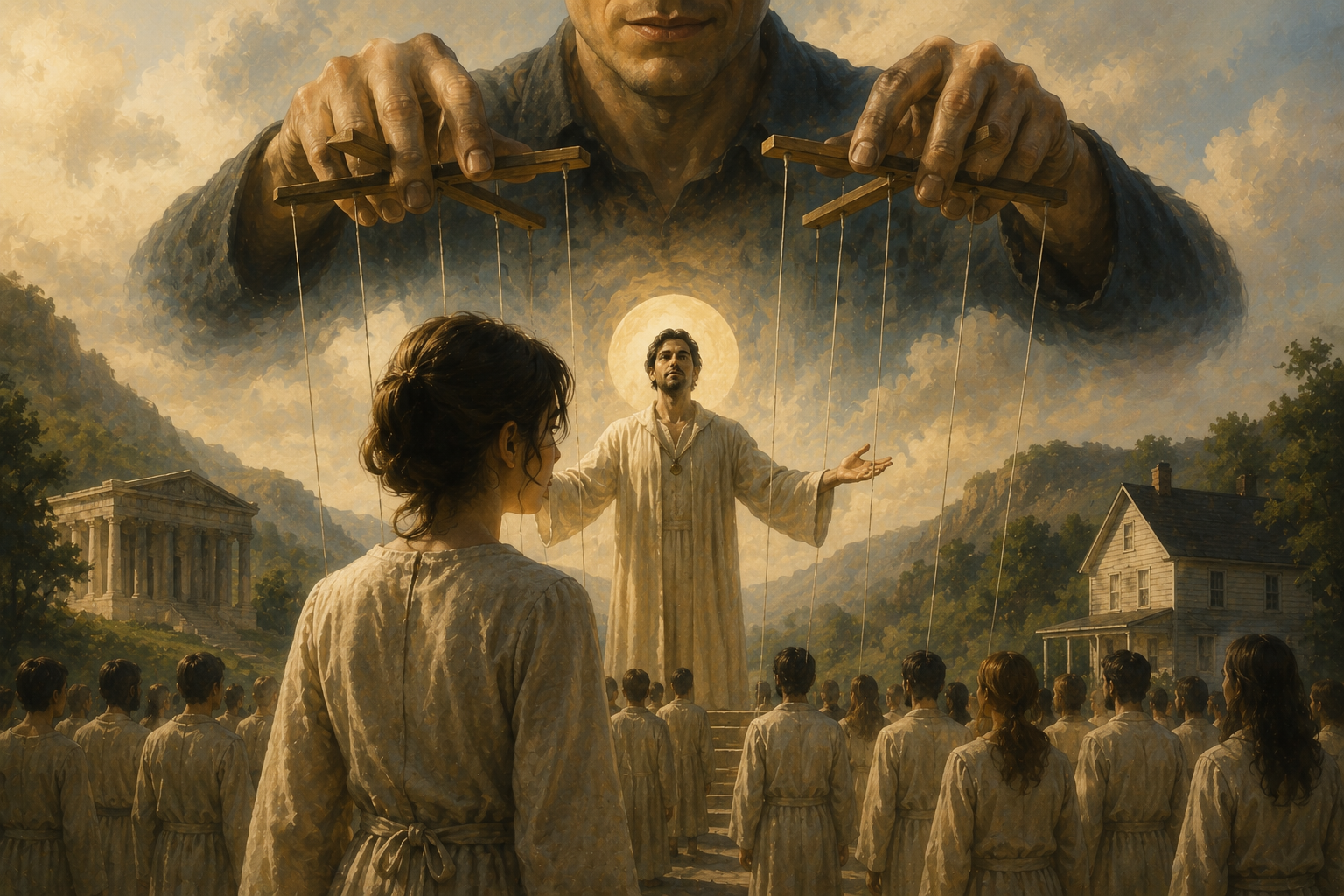
The best classic cults and manipulation stories show how people can lose their freedom without noticing at first. These books and plays are not just dark or strange, they reveal how fear, loyalty, and pressure can change a whole group.

For students, these works are rich choices for essays because they connect character, theme, symbolism, and history in clear ways.

In this Guide

  • Why cults and manipulation matter in classic literature
  • Best classic cults and manipulation books to read first
  • Common themes in these works
  • Symbols that reveal control
  • How to study these texts for class
  • FAQs

Why Best Classic Cults and Manipulation Stories Still Matter

These stories help us see how control can look normal from the inside.

The best classic cults and manipulation stories often begin with ordinary people. A town, a school, a family, or a nation starts to follow a belief system that no one is allowed to question.

That is what makes these works so powerful. They do not always need monsters. The danger comes from people who obey rules, repeat slogans, or fear being cast out.

In literature, cult-like control can appear in many forms. It may come from a leader, a government, a religious group, or even a crowd. The key idea is the same: people give up their judgment because the group seems stronger than the self.

Best Classic Cults and Manipulation Books to Read First

These works are strong starting points for students who want clear themes and powerful examples.

A strong best classic cults and manipulation reading path often starts with George Orwell’s 1984. In the novel, the Party controls language, memory, privacy, and love. Big Brother becomes more than a leader. He becomes a symbol of total power.

Arthur Miller’s The Crucible is another key text. The play is set during the Salem witch trials, but it also reflects fear during the Red Scare. People accuse others to save themselves, and the whole town becomes trapped by panic.

Shirley Jackson’s “The Lottery” is short, but it hits hard. The villagers follow a violent tradition because it has always existed. No one can explain it well, yet they still obey.

William Golding’s Lord of the Flies also fits this topic. The boys form a violent group around fear, status, and ritual. Jack does not need truth to lead. He needs emotion.

Amazon Books: Classic Titles Worth Reading

If you want to build a strong literature list, these books are easy to find on Amazon, in libraries, or through school reading programs.

  • 1984 by George Orwell
  • The Crucible by Arthur Miller

Both texts work well for essays about power, fear, mass belief, and moral choice.

Common Themes in Best Classic Cults and Manipulation Literature

These stories often ask one sharp question: why do people obey harmful systems?

One major theme in the best classic cults and manipulation works is fear. Fear makes characters doubt themselves. It also makes them turn against others.

In The Crucible, fear spreads through accusation. A person can be ruined by a lie, so people lie first to protect themselves.

Another major theme is identity. Cult-like systems often erase the individual. In 1984, Winston’s private thoughts are treated as crimes. The Party wants to control not only what people do, but what they believe is true.

Group loyalty is also central. In “The Lottery,” villagers follow the crowd even when the result is cruel. Jackson shows how tradition can become dangerous when people stop asking why it exists.

Common Symbols in Best Classic Cults and Manipulation Stories

Symbols in these works often turn simple objects into signs of control.

In the best classic cults and manipulation stories, symbols help readers see hidden power. A symbol may look ordinary, but it carries deep fear or pressure.

In 1984, Big Brother’s face is everywhere. His image stands for constant watchfulness. Even when he is not present, people feel watched.

In “The Lottery,” the black box is a key symbol. It is old, worn, and treated with respect. It shows how people can worship tradition even when that tradition harms them.

In Lord of the Flies, the painted faces become masks. The boys use them to hide shame. Once hidden, they act with more cruelty.

These symbols matter because they make manipulation visible. They show how power works through objects, rituals, and repeated images.

How Leaders Manipulate in Classic Literature

Manipulative leaders often use simple tricks that feel familiar.

They create enemies. They repeat slogans. They punish doubt. They make the group feel chosen or threatened.

In Animal Farm, Napoleon changes the rules while claiming to protect the farm. The animals are too tired, scared, or confused to resist. Language becomes a weapon.

In Lord of the Flies, Jack uses fear of the beast to gain control. He offers safety, but his version of safety requires obedience.

This is why the best classic cults and manipulation texts still feel current. They show that control does not always begin with force. Sometimes it begins with a promise.

How to Study Best Classic Cults and Manipulation for Class

These works become easier to analyze when you track patterns as you read.

When you study the best classic cults and manipulation literature, pay attention to repeated words, rules, punishments, and public rituals. These details often reveal the system of control.

It also helps to mark moments when a character doubts the group. Doubt is often the first sign of inner freedom.
If you want a simple method, use this guide on how to take notes while reading a novel. It can help you track symbols, character shifts, and theme evidence without feeling lost.

For essay writing, connect each example to a bigger idea. Do not just say a leader is cruel. Explain how that leader gains trust, spreads fear, or controls truth.

Historical Context That Helps

Many of these works reflect real fears from history.

1984 is often read as a warning about totalitarian power. For a clear overview of that idea, Britannica’s entry on totalitarianism is a helpful resource.

The Crucible connects to the Salem witch trials and to political fear in Miller’s own time. Britannica’s overview of the Salem witch trials gives useful background for students.

Context can deepen your reading, but the human questions still matter most. Why do people join in? Why do they stay silent? What does it cost to resist?

Why These Stories Work So Well for Essays

The topic gives students a clear path from plot to theme.

The best classic cults and manipulation stories are useful for essays because they have visible patterns. You can study leaders, victims, symbols, rules, and turning points.

They also invite strong thesis statements. For example, you might argue that Orwell shows language as the main tool of control. You might argue that Jackson presents tradition as dangerous when it lacks moral thought.

Good essays on this topic should avoid simple claims like “power is bad.” A stronger claim explains how power spreads and why people accept it.

FAQ: Best Classic Cults and Manipulation in Literature

What makes the best classic cults and manipulation stories so powerful?

They show how people can accept harmful systems. That makes the danger feel real, not distant.

Is 1984 about a cult?

Not in the usual sense, but it uses cult-like control. The Party demands total loyalty, controls truth, and turns Big Brother into a figure of worship.

Why is “The Lottery” often linked to manipulation?

The villagers follow a deadly ritual because of tradition and group pressure. No one wants to stand apart from the crowd.

What should I track while reading these works?

Track rules, repeated phrases, symbols, fear tactics, and moments when characters choose silence or resistance.

Key Takeaway

The best classic cults and manipulation stories are not only about strange groups or cruel leaders. They are about how fear, language, and loyalty can shape what people believe.

Great literature asks us to notice those patterns before they become normal. That is why these classics still matter in the classroom and beyond. 📚

Symbolism in Poetry Explained

Poetry Symbolism

Symbolism in Poetry Explained means learning how poets use objects, colors, places, or actions to suggest deeper ideas. Once you understand symbols, poems feel less confusing and much more meaningful.

In this Guide

  • What symbolism means in poetry
  • How symbols work
  • Famous examples from literature
  • How symbolism improves essay analysis
  • Common mistakes to avoid
  • Book suggestions
  • FAQ
Symbolism in poetry

Symbolism in Poetry Explained: What It Means

A symbol is something that stands for more than itself.

In poetry, a rose may not just be a flower. It might suggest love, beauty, youth, or even loss. A storm may point to anger, fear, or change.

That is the heart of Symbolism in Poetry Explained. Poets use concrete things to express abstract ideas. The object is real, but its meaning reaches deeper.

Symbols help poets say more with fewer words. Since poems are often short, every image matters.

image-slider-with-thumbnail1.jpeg
PlayPause
previous arrow
next arrow
image-slider-with-thumbnail1.jpeg
image-slider-with-thumbnail3.jpeg
image-slider-with-thumbnail4.jpeg
ChatGPT Image Jun 27, 2026, 06_33_13 PM
ChatGPT Image Jun 27, 2026, 06_36_37 PM
ChatGPT Image Jun 27, 2026, 06_38_39 PM
ChatGPT Image Jun 27, 2026, 06_31_22 PM
image-slider-with-thumbnail7.jpeg
ChatGPT Image Jun 27, 2026, 06_29_43 PM
ChatGPT Image Jun 27, 2026, 06_27_44 PM
image-slider-with-thumbnail6.jpeg
ChatGPT Image Jun 27, 2026, 06_15_07 PM
image-slider-with-thumbnail5.jpeg
ChatGPT Image Jun 27, 2026, 06_22_43 PM
ChatGPT Image Jun 27, 2026, 06_25_37 PM
ChatGPT Image Jun 27, 2026, 06_19_43 PM
ChatGPT Image Jun 27, 2026, 06_12_00 PM
ChatGPT Image Jun 27, 2026, 06_08_50 PM
ChatGPT Image Jun 26, 2026, 04_54_23 PM
ChatGPT Image Jun 27, 2026, 05_53_51 PM
ChatGPT Image Jun 28, 2026, 08_35_55 AM
previous arrow
next arrow

How Symbols Work in a Poem

Symbols gain meaning from context.

A bird might suggest freedom in one poem. In another poem, it might suggest loneliness if it sits trapped in a cage.

This is why readers should not guess too fast. A symbol does not mean the same thing every time. You need to look at the poem’s tone, images, speaker, and ending.

Learn to read the hidden language the world is always speaking

Unlock the hidden language of symbols — through tarot, dreams, runes, and myth — and learn to read meaning everywhere life speaks in images. A course grounded, Jungian-inspired practice for curious beginners.

Symbolism in Poetry Explained Through Famous Examples

Well-known poems show how powerful a simple symbol can be.

In Robert Frost’s “The Road Not Taken,” the two roads are more than paths in a forest. They suggest life choices. The speaker looks back and wonders how one choice shaped his life.

In Emily Dickinson’s poems, light often points to truth, hope, or inner change. Her images can feel small at first, but they often carry deep emotional weight.

And in William Blake’s “The Tyger,” the tiger is not just an animal. It suggests beauty, terror, power, and mystery. The symbol helps Blake ask hard questions about creation.

These examples show why Symbolism in Poetry Explained matters. A symbol can turn a short poem into a complex idea.

Common Symbols Students See in Poetry

Some symbols appear often, but their meaning still depends on the poem.

  • Light: truth, hope, knowledge, or spiritual insight
  • Darkness: fear, mystery, grief, or confusion
  • Water: life, change, cleansing, or danger
  • Spring: youth, rebirth, or a fresh start
  • Winter: age, death, silence, or emotional coldness
  • Birds: freedom, escape, or the human soul

Do not treat this as a fixed answer key. A poet can use a familiar symbol in a new way.

Why Symbolism in Poetry Explained Helps You Read Better

Symbols help readers move past surface meaning.

Without symbolism, a poem might seem like it is only about a tree, a house, or a bird. With symbolism, that same poem may reveal grief, memory, desire, or fear.

Symbolism in Poetry Explained also helps you slow down. You start to ask better questions, such as: Why does this image repeat? Why does the poem focus on this object? What feeling does it create?

Those questions lead to stronger reading.

How to Write About Symbolism in an Essay

Good essay analysis explains how the symbol works, not just what it means.

A weak sentence might say, “The road symbolizes choices.” That is a start, but it does not go far enough.

A stronger sentence might say, “The two roads symbolize life choices because the speaker must pick one path without knowing where the other would lead.”

That sentence connects the symbol to the poem’s action. It also shows why the symbol matters.

When you write about symbolism, follow this simple pattern:

  • Name the symbol.
  • Explain what it suggests.
  • Connect it to the poem’s larger meaning.

For more support, use this step-by-step poetry analysis guide before you draft your essay.

Symbolism in Poetry Explained for AP Literature and College Essays

Advanced readers need to connect symbols to theme.

In AP Literature and college classes, teachers do not want a simple symbol chart. They want to see how the symbol builds meaning across the poem.

For example, if a poem repeats the image of a locked door, you might ask what the door blocks. Does it keep someone safe? Does it trap the speaker? Or does it suggest a secret?

This is where Symbolism in Poetry Explained becomes useful for essays. Symbols often help reveal the poem’s main conflict or message.

Common Mistakes to Avoid

Symbolism can be powerful, but it is easy to overread.

One mistake is claiming every object is a symbol. Some details simply create setting or mood.

Another mistake is using a meaning that does not fit the poem. If you say water means peace, but the poem shows a flood, your claim will feel weak.

A better approach is to prove your idea with words from the poem. Let the poem guide your interpretation.

Helpful Resources for Learning More

Strong readers keep building their poetry skills.

The Poetry Foundation has many poems, poet biographies, and helpful reading tools. You can also read a clear overview of symbolism from Britannica.

These books can help students understand poetry with more confidence.

  • How to Read a Poem by Edward Hirsch
  • A Poetry Handbook by Mary Oliver

FAQ: Symbolism in Poetry Explained

What is symbolism in poetry?

Symbolism in poetry is when an object, image, place, or action stands for a deeper idea. A flower may suggest beauty, love, or loss, depending on the poem.

How do I find a symbol in a poem?

Look for images that repeat, feel important, or carry strong emotion. Then ask what larger idea that image may suggest.

Can a symbol have more than one meaning?

Yes. Many symbols have layered meanings. The best answer depends on the poem’s words, tone, and context.

Why is Symbolism in Poetry Explained important for essays?

It helps you write deeper analysis. Instead of only naming a symbol, you can explain how it supports the poem’s theme.

Key Takeaway

Symbolism in Poetry Explained is really about seeing how small details carry big meaning. When you learn to spot symbols and support your ideas with evidence, poetry becomes clearer, richer, and easier to write about.

Flash Memoir Prompt: Last Time You Felt Like Part of a Group You No Longer Belong to

flash memoir prompt belong

A focused writing invitation for remembering the last time you briefly felt included in a group you had already left, using one scene, one sensory detail, and one honest emotional turn.

Maybe it happened at a wedding, when an old friend waved you into a photo before remembering you were not really part of that circle anymore. Maybe it happened in a school hallway, a former workplace, a church basement, a team dinner, or a family kitchen where everyone still knew the old version of you.

For one small moment, you belonged again. Then something shifted. A joke did not land. A nickname felt too tight. Someone said “we” and you realized it no longer included you. If you came here looking for a flash memoir prompt last time felt like part of a group you no longer belong to, this one asks you to stay close to that strange in-between feeling.

flash memoir prompt belong

The Prompt

Write about the last time you felt like part of a group you no longer belong to.

This prompt works because it holds two truths at once. You can miss a group and still know you left for a reason. You can feel warmth and distance in the same room. You can remember the comfort of being known while also feeling the ache of being misunderstood.
A memory like this often starts small. It may not be the day you left the group. It may be the moment after, when you returned for a visit, ran into someone by chance, or found yourself laughing at an old routine before realizing your life had moved on.

Why This Memory Matters

Groups shape us. They give us language, habits, stories, and sometimes a sense of safety. A school club, friend group, sports team, workplace, neighborhood, or online community can become part of your identity before you even notice.

So when you no longer belong, the loss can feel confusing. It may not look dramatic from the outside. There may be no argument, no clear ending, no final speech. You may simply stop getting invited. Or you may choose to leave, then feel surprised when a small part of you still wants back in.

This kind of flash memoir prompt last time felt like part of a group can uncover a story about change. It can show who you were then, who you became, and what it felt like to stand between those selves.

The most powerful part may be the detail you did not expect. The smell of the gym floor. The sound of chairs scraping in the same meeting room. The way everyone still ordered the same food. These details can carry more meaning than a long explanation.
If you want to sharpen the emotional feel of your scene, it may help to think about tone and mood in literature. Your memory may feel warm on the surface but lonely underneath. That contrast is often where the truth lives.

How to Approach This Prompt

Begin with a physical detail. Do not start by explaining the whole history of the group. Start with the room, the table, the uniform, the old group chat, the song, the smell of coffee, or the sound of someone calling you by a name you have not heard in years.

Then narrow the memory to one scene. Choose a moment you can see clearly. Maybe you sat with former coworkers at a retirement party. Maybe you walked into your old school and knew exactly where everyone would stand. Maybe you joined an old family tradition and realized the role you used to play had been filled by someone else.

Write what you noticed before you explain what it meant. Let the reader feel the scene with you. If someone hugged you, show how it felt. If you laughed, show what made you laugh. If the mood changed, show the exact second you noticed.

You do not need to judge your past self. You also do not need to make the group seem good or bad. The goal is to tell the truth of one moment. You were there. You felt included. Then you remembered you were outside the circle now.

If you like to mark up memories the way you might mark up a story, try borrowing a simple method from how to annotate literature. Circle the strongest detail in your draft. Underline the sentence where the feeling changes. That may be the heart of the piece.

A Quick Example

I knew where the mugs were, which felt like proof of something. I opened the cabinet in my old office kitchen and reached for the chipped blue one before anyone told me it was still there. The team was crowded around the counter, laughing about the printer that jammed every Tuesday like it had a moral objection to work. I laughed too, too loudly maybe. For ten seconds, I was back inside the rhythm of them. Then Megan said, “We finally fixed the billing mess after you left,” and everyone nodded in that tired, proud way people do after surviving something together. After you left. I stirred powdered creamer into my coffee and watched it dissolve. The mug was still familiar in my hand, but the room had learned how to keep going without me.

Try It Yourself

Set a timer for ten minutes and write the scene without trying to make it perfect. Start with the detail that proves you once belonged. A seat you used to take. A phrase everyone knew. A place where your body still knew what to do.

Then let the moment shift. What reminded you that you were no longer fully part of the group? Was it a look, a missing invitation, a new inside joke, or your own quiet sense that you had changed?

This flash memoir prompt last time felt like part of a group is not asking you to solve the whole relationship. It is asking you to notice the edge between belonging and leaving. That edge can hold a strong story.

Want More Flash Memoir Prompts?

If you want a steady way to keep writing from real memories, explore all 365 prompts in The Memory Trigger: 365 Flash Memoir Writing Prompts. Each prompt gives you one clear doorway into a small, honest piece of your life.

The Memory Trigger

Themes in The Bluest Eye: A Student-Friendly Guide

The Bluest Eye

A clear guide to the major ideas, conflicts, and meanings students should notice in The Bluest Eye.

Toni Morrison’s The Bluest Eye is a short novel that explores deep conflicts over beauty, race, family, and pain. This guide explains the themes in The Bluest Eye in clear language so you can read with more confidence and write stronger essays.

In this Guide

  • Why the novel’s themes matter
  • Beauty standards and self-worth
  • Racism and internalized shame
  • Family, neglect, and the need for love
  • Innocence, trauma, and loss
  • Voice, sight, and storytelling
  • Essay tips and related books
The Bluest Eye

Why Themes in The Bluest Eye Matter

Morrison uses theme to show how a whole society can harm one child.

The Bluest Eye follows Pecola Breedlove, a Black girl who believes blue eyes would make her beautiful and loved. Her wish is painful because it comes from the world around her, not from a simple personal dream.

The novel asks readers to notice who gets valued and who gets ignored. It also asks how children learn shame before they even understand where it came from.

Themes in The Bluest Eye: Beauty Standards and Self-Worth

The novel’s most famous theme is the danger of narrow beauty ideals.

Pecola believes blue eyes would fix her life. To her, blue eyes mean beauty, safety, and love. Morrison shows how cruel this belief is because Pecola has learned to see herself through white beauty standards.

Claudia offers a strong contrast. As a child, she does not understand why white dolls are treated as beautiful. Her anger toward those dolls shows resistance, even if she cannot fully explain it yet.

This is one of the central themes in The Bluest Eye because it connects personal pain to public culture. Beauty is not shown as harmless. It becomes a system that teaches some children to hate themselves.

A helpful comparison is The Great Gatsby. Gatsby also chases an image that society has taught him to value. In Morrison’s novel, though, the cost falls on a vulnerable child, which makes the theme even more tragic.

Themes in The Bluest Eye: Racism and Internalized Shame

Morrison shows that racism can become a voice inside a person’s mind.

Racism in the novel is not only shown through open cruelty. It also appears in the way characters judge beauty, class, home life, and skin tone. Some characters repeat the same values that have hurt them.

Geraldine is one example. She tries to separate herself from people she sees as poor or dirty. Her treatment of Pecola shows how shame can move from one person to another.

When students discuss themes in The Bluest Eye, this point matters: Morrison does not blame Pecola for her suffering. The novel points to a larger culture that teaches false ideas about worth.

For more background on Morrison’s life and career, see Britannica’s biography of Toni Morrison.

Family, Neglect, and the Need for Love

The novel shows how family can be shaped by wounds that began long before the child was born.

Pecola’s home is not a safe place. Her parents, Pauline and Cholly, carry their own pain. Morrison gives their backstories so readers can see how damage repeats across time.

This does not excuse the harm Pecola faces. It helps explain how broken systems can break families. Morrison wants readers to see the roots of violence, not just its result.

Pauline finds comfort in movies and in the white family she works for. Cholly is shaped by abandonment, humiliation, and rage. Pecola is left with the weight of their failures.

If you need help linking a character’s choices to a larger meaning, use this guide to character analysis.

Innocence, Trauma, and Loss

Morrison shows how children pay for adult failure.

Pecola is a child, but the world treats her with little care. She faces poverty, racism, bullying, and abuse. Her innocence is not protected.

The novel is painful because Morrison does not let readers look away. Pecola’s breakdown is tied to the fact that no one with power saves her.

This theme also appears in To Kill a Mockingbird, where children slowly learn that the adult world is unfair. In The Bluest Eye, the lesson is harsher because Pecola has far less protection.

Voice, Sight, and Storytelling

The way the story is told is part of its meaning.

Blue eyes are not only about beauty. They also stand for being seen. Pecola wants eyes that she thinks will change how others look at her.

Claudia’s voice helps the reader understand what Pecola cannot fully say. She looks back on the past and tries to make sense of what happened. Her narration gives Pecola a witness, even though it cannot undo the harm.

The broken Dick and Jane primer also matters. Its neat picture of family life does not match Pecola’s world. As the text breaks apart, the false promise of the perfect home breaks apart too.

You can also read Morrison’s Nobel Prize profile at NobelPrize.org for more context on her work.

How to Write About Themes in The Bluest Eye

A strong essay should connect theme to character, symbol, and structure.

Strong essays about themes in The Bluest Eye do more than name big ideas. They show how Morrison builds those ideas through scenes, images, and voices.

Start with a claim that can be argued. For example, you might argue that Morrison presents beauty standards as a form of violence because they teach Pecola to reject herself.

Then use focused evidence. Pecola’s wish for blue eyes, Claudia’s reaction to dolls, and Pauline’s love of movie images can all support that claim.

Keep the meaning clear. Do not just say that blue eyes are a symbol. Explain what they reveal about power, identity, and the need to be loved.

For extra practice, pair your notes with our printable theme and evidence organizer.

Books to Search on Amazon or at Your Library

If you want to study similar ideas, these books can help you build context:

  • Sula by Toni Morrison
  • Their Eyes Were Watching God by Zora Neale Hurston
  • The Color Purple by Alice Walker

These works also explore identity, community, and the pressure placed on women and girls.

FAQ About Themes in The Bluest Eye

What are the main themes in The Bluest Eye?

The main themes in The Bluest Eye include beauty standards, racism, family harm, trauma, and the need to be seen with love.

Why does Pecola want blue eyes?

Pecola believes blue eyes will make her beautiful and accepted. Her wish shows how deeply society has taught her to reject herself.

Is beauty the most important theme in the novel?

Beauty is one of the most important themes, but it connects to racism, class, and family pain. Morrison makes these ideas work together.

How can I write a thesis about the novel?

Choose one clear idea and link it to evidence. A good thesis should explain what Morrison reveals about society, not just what happens to Pecola.

Key Takeaway

The strongest themes in The Bluest Eye show how society can teach shame and how dangerous that shame becomes when no one protects the vulnerable.

Books Like Toxic Relationships: Why Messy Love Stories Grip Us

Books like Toxic Relationships

Books like Toxic Relationships explore love that harms, traps, or changes people in painful ways. These stories can be hard to read, but they also help us understand power, obsession, fear, and self-worth.

In this guide, we’ll look at why readers are drawn to these books, what themes show up often, and which titles are worth reading for school or personal study.

In this Guide

  • What makes these stories feel so intense
  • Best books with toxic relationship themes
  • Key symbols and themes to watch for
  • How tone and mood shape the reading experience
  • FAQ about toxic relationships in literature

What Makes Books Like Toxic Relationships So Powerful?

These stories show love when it becomes control, fear, or obsession.

Books Like Toxic Relationships often pull readers in because the emotions feel extreme. Characters may confuse pain with passion. They may stay in harmful bonds because they want love, safety, status, or escape.

In literature, toxic relationships are not always romantic. They can appear between parents and children, friends, rivals, or social groups. The key idea is imbalance.

One person may hold more power. One person may use guilt, silence, charm, or fear to keep control. That tension creates strong conflict, which is why these stories often feel so dramatic.

For students, these books are useful because they raise big questions. What does love cost? When does loyalty become harm? Can a person heal after control or betrayal?

Best Books Like Toxic Relationships to Read and Study

These works show harmful bonds in clear, memorable ways.

If you want Books Like Toxic Relationships, start with classic and modern stories that focus on power, obsession, and emotional damage.

Wuthering Heights by Emily Brontë

Wuthering Heights is one of the most famous novels about destructive love. Heathcliff and Catherine share a passionate bond, but it also causes deep pain for everyone around them.

Their relationship is full of pride, revenge, and longing. It shows how love can turn bitter when people care more about possession than peace.

For more background, you can read Britannica’s overview of Wuthering Heights.

Jane Eyre by Charlotte Brontë

Jane Eyre offers a more hopeful view of love, but it still includes secrecy and control. Jane must decide if she can keep her self-respect while loving Mr. Rochester.

This makes the novel a strong choice for students who want to compare unhealthy desire with moral growth. Jane’s strength comes from her ability to leave when staying would hurt her soul.

The Great Gatsby by F. Scott Fitzgerald

Gatsby’s love for Daisy is built on memory, fantasy, and status. He does not fully love Daisy as she is. He loves what she represents.

This creates a quiet form of toxicity. The damage comes from illusion, class pressure, and the belief that the past can be rebuilt.

Gone Girl by Gillian Flynn

Gone Girl gives a dark modern look at marriage, image, and control. Nick and Amy’s relationship is full of lies and performance.

This book is not always taught in school, but it is useful for studying unreliable narration. It asks how well we can ever know a couple from the outside.

Books Like Toxic Relationships in Classic Literature

Classic literature often uses troubled love to reveal social rules and hidden fears.

Many Books Like Toxic Relationships are classics because they show how private pain connects to public pressure. Marriage, money, gender roles, and family honor often shape the harm.

In Othello by William Shakespeare, jealousy destroys trust. Othello’s love for Desdemona becomes twisted by fear and manipulation. Iago poisons the relationship by planting doubt.

In Anna Karenina by Leo Tolstoy, love clashes with society’s rules. Anna’s choices bring passion, but also isolation. The novel asks whether a person can survive when desire cuts them off from every support.

And in Rebecca by Daphne du Maurier, the toxic force is partly a memory. The second Mrs. de Winter feels haunted by Rebecca, even after Rebecca is dead. The relationship between the living and the past becomes a trap.

Common Themes in Books Like Toxic Relationships

These stories repeat certain ideas because toxic bonds often follow patterns.

Books Like Toxic Relationships often explore control. One character may decide what another person can know, say, or do. This can appear as romance, but the goal is power.

Another common theme is obsession. A character may treat love like ownership. Instead of asking, “What does this person need?” they ask, “How can I keep them?”

Identity is also important. Toxic relationships can make characters lose sight of who they are. They may change their values, hide their feelings, or accept blame that does not belong to them.

Some stories focus on escape. A character may need to leave a person, a house, a town, or a version of the self. That journey can become the heart of the book.

If you are studying this topic in real life as well as literature, the National Domestic Violence Hotline’s page on emotional abuse gives clear information about harmful patterns.

Symbols That Often Appear in Books Like Toxic Relationships

Symbols help writers show harm without stating it directly.

In Books Like Toxic Relationships, houses often matter. A house may look safe, but feel cold, locked, or haunted. In Wuthering Heights, the setting reflects rage and emotional storm.

Weather can also signal danger. Storms, fog, and heat often match a character’s inner stress. These details help the reader feel the pressure before the conflict is spoken.

Mirrors are another common symbol. They can show split identity or self-doubt. A character may not recognize who they have become inside a harmful bond.

Letters and secrets also play a major role. Hidden messages, missing facts, and private journals can show how truth gets controlled.

How Tone and Mood Shape Books Like Toxic Relationships

The feeling of the story often tells us how safe or unsafe a relationship is.

Books Like Toxic Relationships often use tense, dark, or uneasy moods. A scene may seem romantic on the surface, but the mood can make the reader feel that something is wrong.

Tone also matters. A narrator might sound bitter, dreamy, angry, or numb. That voice can reveal how the character has been shaped by love, fear, or betrayal.

If you want a clear review of this idea, read our guide to tone vs. mood in literature. It can help you explain why a scene feels romantic, scary, or trapped.

For AP Literature or college essays, this is a strong angle. You can connect tone and mood to theme, character change, and conflict.

Recommended Books to Read Next

These titles are strong picks if you want stories about love, control, and emotional conflict.

  • Wuthering Heights by Emily Brontë
  • Jane Eyre by Charlotte Brontë
  • Rebecca by Daphne du Maurier

Each book gives a different view of toxic love. One centers on revenge, one on self-respect, and one on fear shaped by memory.

How to Write About Books Like Toxic Relationships in an Essay

A strong essay does more than call a relationship “toxic.”

When you write about Books Like Toxic Relationships, explain how the harm works. Is it based on jealousy, control, class, fear, or silence?

Use clear evidence from the text. Look for repeated symbols, shifts in tone, and choices that change a character’s sense of self.

You can also compare two relationships in the same book. For example, in Jane Eyre, Jane’s bond with Rochester can be compared with her bond with St. John. Both test her freedom in different ways.

End your essay by linking the relationship to the larger theme. A toxic bond often reveals what the novel believes about love, power, and identity.

FAQ About Books Like Toxic Relationships

These quick answers can help with reading, studying, or choosing a book.

What are Books Like Toxic Relationships?

They are books that show harmful bonds between characters. These bonds may include control, obsession, jealousy, fear, or emotional damage.

Are toxic relationship books always romantic?

No. They can focus on family, friendship, rivalry, or social power. The main issue is harm caused by an unequal or controlling bond.

Why do teachers assign books with toxic relationships?

These books help students study conflict, theme, symbolism, and character growth. They also raise questions about power and choice.

Is Wuthering Heights a toxic love story?

Yes. Heathcliff and Catherine’s bond is intense, but it also leads to cruelty, revenge, and pain across generations.

How can I analyze tone in these books?

Pay attention to the narrator’s attitude and the feeling of each scene. Our guide on how tone and mood work can help.

Key Takeaway

Books Like Toxic Relationships matter because they show what happens when love turns into control, fear, or obsession. The best of these stories do not just shock us. They help us see why self-respect, truth, and freedom matter in every kind of relationship.

error

Enjoy this article? Please spread the word :)

Follow by Email
BLUESKY
fb-share-icon
Reddit
LinkedIn
Share
RSS