

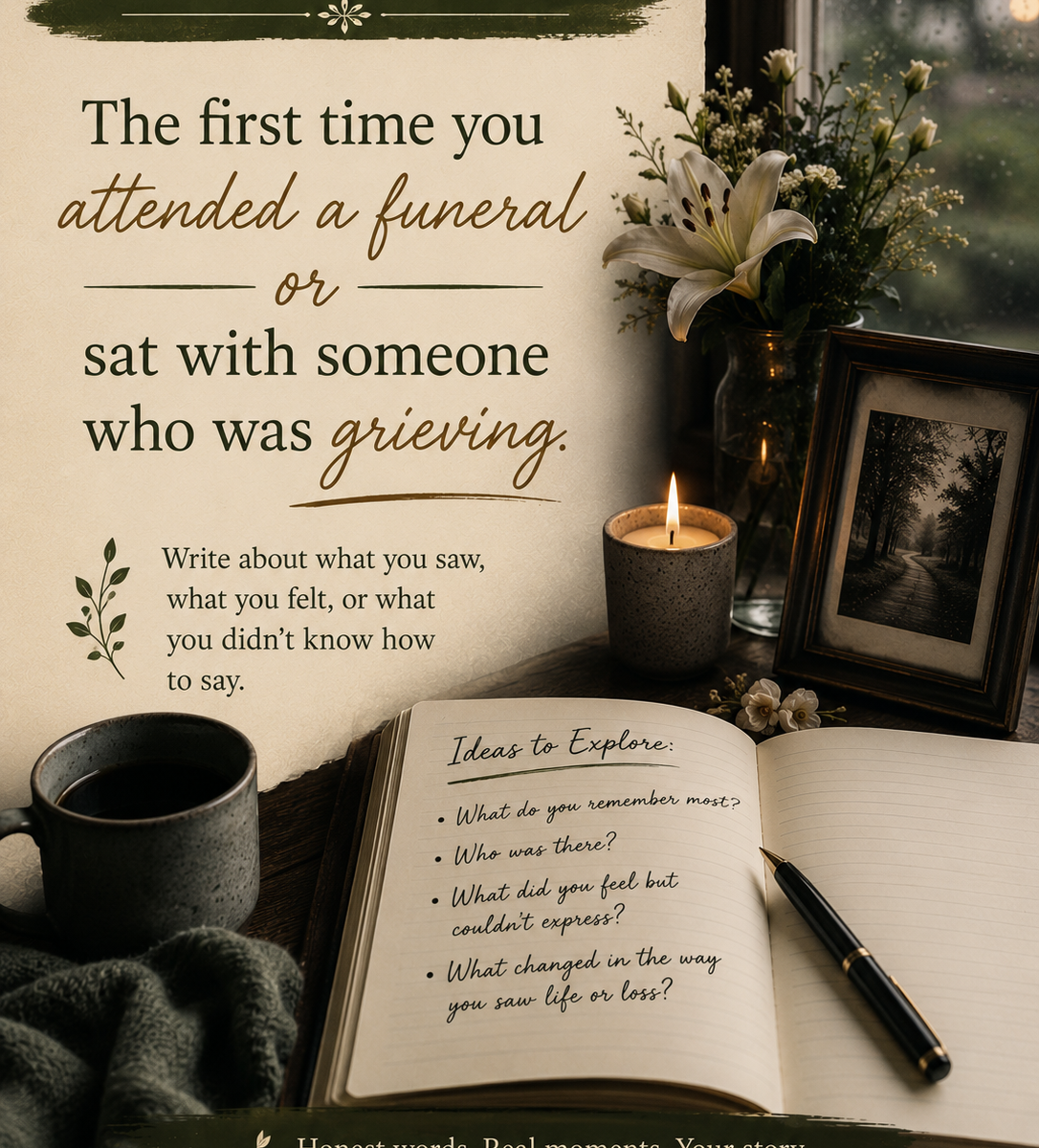
A brief writing invitation for returning to the quiet room, the folded tissues, and the first moment you understood that grief changes the air around people.
The Prompt
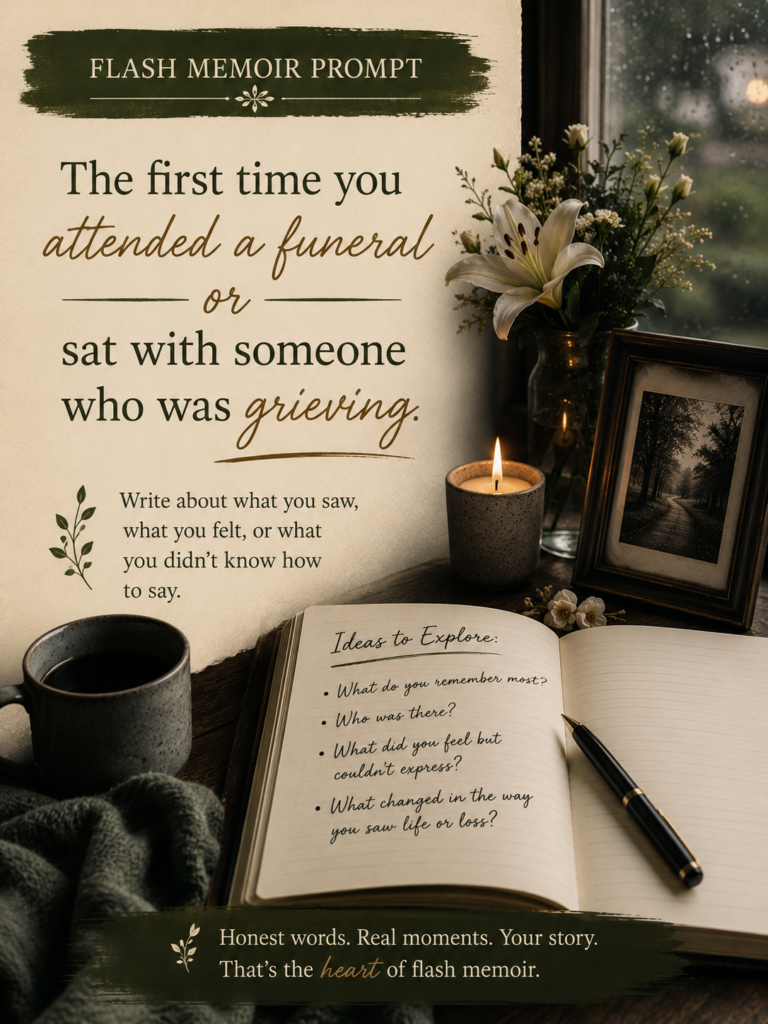
Write about the first time you attended a funeral or sat with someone who was grieving.
This flash memoir prompt first time attended funeral sat with someone grieving asks you to remember a moment when loss became real in a new way. Maybe you were a child in stiff shoes. Maybe you were a teenager unsure where to put your hands. Maybe you were an adult, but grief still caught you off guard because you had never been that close to someone else’s pain.
You do not have to explain death, faith, family history, or healing. For a flash memoir, one small scene is enough. A hallway outside a chapel. A casserole on a kitchen counter. A handkerchief pressed into a palm. The sound of someone trying not to cry.
This kind of prompt works because grief often sharpens memory. Even years later, you may remember the smell of flowers, the scratch of dress clothes, the low murmur of adults, or the quiet shock of seeing someone strong come undone.
Why This Memory Matters
The first time you witness grief, you often learn something without anyone giving you a lesson. You may learn that adults do not always know what to say. You may learn that silence can be a form of care. You may learn that sadness has its own motions, like folding napkins, making coffee, or sitting beside someone without reaching for the perfect words.
This memory may uncover a story about innocence. If you were young, you might have noticed odd details before you understood the meaning of the day. The shiny shoes. The cold church pew. The strange way people smiled and cried in the same breath.
It may also be a story about discomfort. Many people remember feeling embarrassed by grief, not because they were cruel, but because they did not know the rules. Should you hug the person? Should you look at the casket? Should you speak? Should you stay quiet?
That uncertainty can make the writing honest. A strong memoir moment does not need you to act perfectly. It needs you to tell the truth about who you were then.
If you want to deepen the emotional atmosphere of your scene, it can help to think about the difference between tone and mood in literature. In a grief memory, the mood might be heavy or hushed, while your tone as the writer might be tender, confused, distant, or even gently surprised.
How to Approach This Prompt
Start with a physical detail. Do not begin with “I learned that life is short.” Begin with the tissue box. Begin with the too-bright funeral flowers. Begin with the black dress that made your neck itch. Let the reader enter the room before you tell them what it meant.
For this flash memoir prompt first time attended funeral sat with someone grieving, narrow the memory to one scene. Do not try to cover the illness, the death, the service, the family conflict, and the years that followed. Choose one moment you can still see.
You might write about arriving. You might write about sitting beside someone. You might write about the ride home after the funeral, when everyone was quiet and the world outside the car looked strangely normal.
Once you choose the scene, write what you noticed before you explain your feelings. This keeps the piece from becoming too general. Instead of saying, “Everyone was sad,” show one person smoothing a program until the paper softened at the fold.
If you sat with someone who was grieving, let their body language guide the scene. Did they talk too much, go very still, laugh at a strange moment, or ask you to stay? People reveal themselves in small ways during loss. If you enjoy studying those small human signals, you may also like this guide on how to analyze characters in literature, since memoir often asks you to observe real people with the same care.
Be gentle with yourself as you write. This prompt can bring up tender material. You can stop before the hardest part. You can write around the center of the memory and return later if you want to.
A Quick Example
I remember my first funeral mostly by the carpet. It was dark red with tiny gold shapes, and I stared at it because I did not know where else to look. My grandmother sat beside me with her purse in her lap, both hands gripping the clasp. I had never seen her hands so still. Usually she was patting my knee, finding gum, fixing my collar. That day she seemed made of stone. When the music started, she opened her purse and took out a tissue, but she did not use it. She just held it flat between her fingers. I wanted to ask if she was okay, but even at nine I knew it was the wrong question. Instead, I leaned my shoulder against her arm. After a minute, she leaned back.
Try It Yourself
Set a timer for ten minutes and write the scene as if you are walking into it again. Where are you sitting? What do you hear? Who is near you? What do you understand, and what do you misunderstand?
Do not worry about making the memory sound wise right away. First drafts are allowed to be plain. They are allowed to sound young, unsure, or unfinished. In fact, that may be where the truth is.
If the funeral itself feels too large, write about one object from the day. A program, a coat, a plate of food, a flower arrangement, a card on a table. Let that object pull the rest of the memory into focus.
If you choose the “sat with someone grieving” side of the prompt, pay attention to what you did with your body. Maybe you washed dishes, filled a glass of water, sat on the floor, or stood in the doorway. Often, the story lives in what we do when words are too small.
Want More Flash Memoir Prompts?
If this prompt helped you find one clear memory, keep going. Short prompts can open doors to stories you did not know you still carried. Explore all 365 prompts in The Memory Trigger: 365 Flash Memoir Writing Prompts.


Get the Free Close Reading Worksheet Pack
Join my email list and receive the printable worksheet pack you can use with any novel or poem.
No spam. Just helpful guides for reading literature well.












