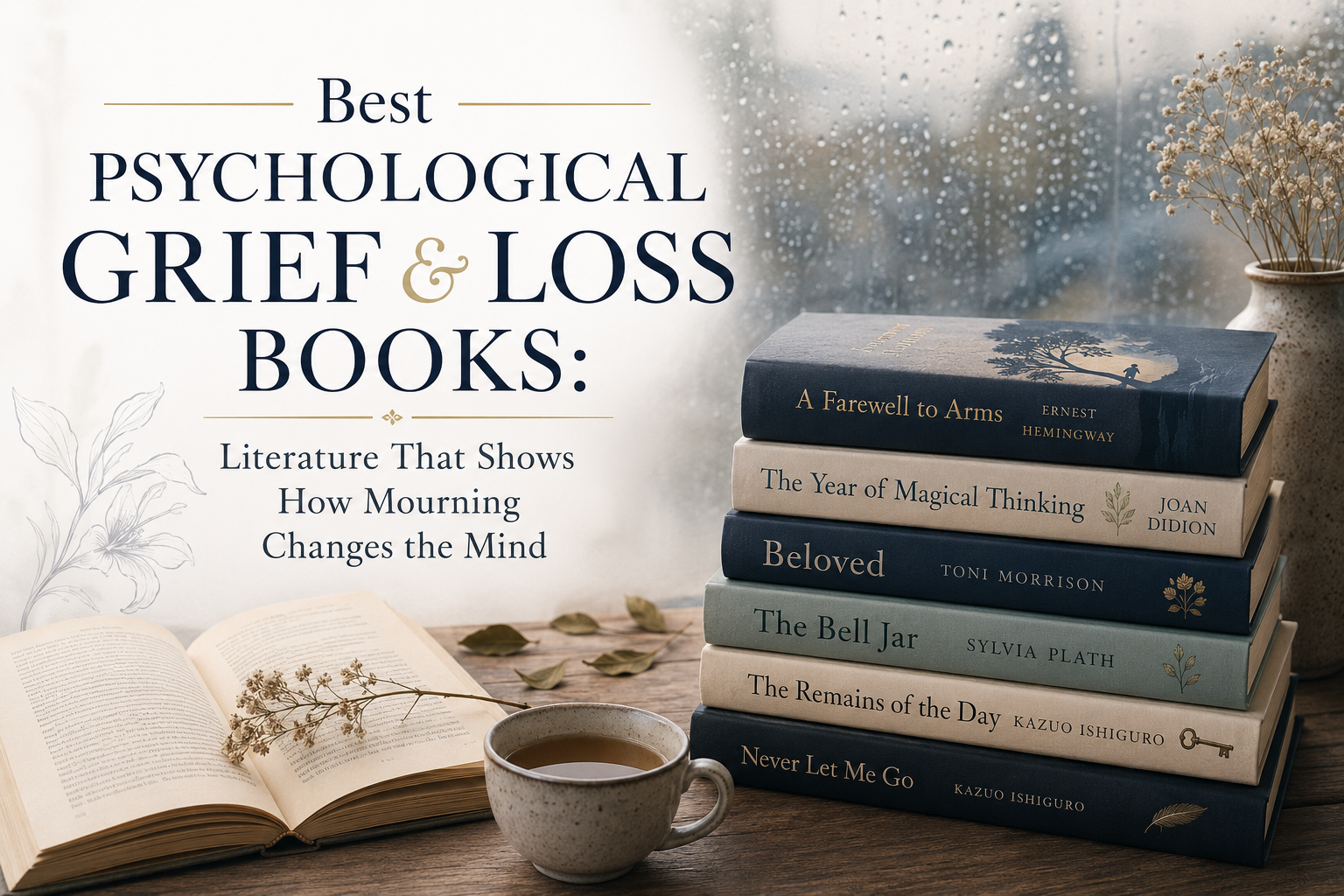
Best Psychological Grief and Loss Books: Literature That Shows How Mourning Changes the Mind

Grief and loss literature

Best Psychological Grief and Loss literature helps readers see how sorrow can shape memory, identity, and hope. These books do more than show sadness. They explore what happens inside a person after love, death, or trauma changes everything.

In this Guide

  • Why Best Psychological Grief and Loss stories matter
  • Recommended books about grief and the mind
  • Major themes and symbols
  • How to read grief literature closely
  • FAQs about grief and loss in literature
Grief and loss literature

Why Best Psychological Grief and Loss Stories Matter

Grief is not only an event in a plot. It is often the force that changes how a character thinks, speaks, and sees the world.

In the best psychological grief and loss stories, mourning feels personal and complex. A character may seem calm on the outside but feel broken within. That gap creates tension and depth.

Literature also helps readers name feelings that can be hard to explain. A novel, poem, or memoir can show denial, guilt, anger, and numbness without turning grief into a simple lesson.

For students, these works are rich for analysis. They often use symbols, silence, fragmented memory, and repeated images to show pain that words cannot fully hold.

Best Psychological Grief and Loss Books to Read First

These books are strong choices for students who want clear, powerful examples of grief as both an emotional and mental experience.

The Year of Magical Thinking by Joan Didion

Joan Didion’s memoir is one of the best psychological grief and loss books because it shows grief as a state of shock. After her husband dies, Didion studies her own mind with sharp honesty.

The title points to “magical thinking,” a mental state where she knows her husband is dead but still feels he might return. This makes the book useful for students who want to study grief, denial, and memory.

Hamlet by William Shakespeare

Hamlet is a classic example of grief that turns inward. He mourns his father, distrusts his mother, and feels trapped by a world that seems false.

His grief becomes tied to doubt and identity. The famous question “To be, or not to be” is not just about death. It is also about pain, purpose, and the burden of thought.

Beloved by Toni Morrison

Beloved belongs in any discussion of best psychological grief and loss literature. Morrison shows how trauma can haunt a family and a home.

The ghost in the novel is more than a supernatural figure. She stands for memory, guilt, and the past that refuses to stay buried.

Common Themes in Best Psychological Grief and Loss Literature

The strongest grief stories often focus on what loss does to the self. Characters may feel split between who they were before and who they must become after loss.

One key theme is memory. Grief can make memory feel alive, painful, or unreliable. In The Year of Magical Thinking, Didion returns to small details because the mind tries to make sense of what cannot be changed.

Another major theme is guilt. Characters may ask what they should have done, even when they had no control. This appears in Hamlet, where grief mixes with duty and self-blame.

A third common theme is haunting. In best psychological grief and loss stories, haunting does not always mean a literal ghost. It can mean a memory, a place, or a voice that keeps returning.

Symbols That Shape Best Psychological Grief and Loss Stories

Symbols help writers show grief without overexplaining it. A room, object, season, or sound can carry emotional weight.

In Beloved, the house at 124 is a major symbol. It holds pain from the past and shows how trauma can fill a physical space.

In poetry, death often appears through small images rather than direct statements. Emily Dickinson’s poem “Because I could not stop for Death” turns death into a carriage ride, which makes the subject feel calm and strange at once. You can read the poem at the Poetry Foundation.

Weather is another common symbol. Rain may suggest sorrow, while winter can suggest numbness or emotional distance. These symbols work best when they connect to a character’s inner life.

How to Read Best Psychological Grief and Loss Literature Closely

Grief literature rewards slow reading. Small word choices often reveal what a character cannot say out loud.

When you read best psychological grief and loss works, pay attention to repeated images. If a writer repeats a color, sound, or object, it may point to hidden pain.

Notice silence too. What a character avoids can matter as much as what they confess. In many grief stories, the unsaid carries the deepest wound.

If you want a clear method for studying these details, read our guide to close reading in literature. It can help you turn small details into stronger analysis.

What Students Can Learn from Grief and Loss in Literature

These works teach more than plot. They show how people survive when life no longer feels stable.

Best Psychological Grief and Loss literature can also build empathy. Readers meet characters who act badly, feel confused, or push others away because sorrow has changed them.

For essays, focus on how the author presents grief through form and language. A broken timeline, repeated phrase, or strange symbol may show the mind under stress.

For more background on tragedy as a literary form, Britannica’s overview of tragedy in literature is a helpful place to start.

Recommended Books for Best Psychological Grief and Loss Readers

If you want to add books to your reading list, start with titles that balance emotional power with rich literary craft.

  • The Year of Magical Thinking by Joan Didion
  • Beloved by Toni Morrison
  • Hamlet by William Shakespeare

Each book gives a different view of grief. Didion writes from lived loss, Morrison explores inherited trauma, and Shakespeare shows mourning tied to doubt and revenge.

FAQs About Best Psychological Grief and Loss Literature

What makes a book part of Best Psychological Grief and Loss literature?

It focuses on how loss affects the mind, not just what happens after a death. These works often explore memory, denial, guilt, and identity.

Is grief literature always depressing?

No. Many grief stories are sad, but they can also be honest, beautiful, and deeply human. Some end with healing, while others end with clearer self-knowledge.

Why do authors use symbols in grief stories?

Symbols help show feelings that characters cannot explain directly. A house, object, or repeated image can reveal hidden pain.

What is a good grief and loss book for students?

The Year of Magical Thinking is a strong choice for advanced high school or college readers. Hamlet is also excellent for AP Literature because it connects grief to theme, language, and character.

Key Takeaway

Best Psychological Grief and Loss literature shows that mourning is not simple. It changes memory, language, and the way people understand themselves.

The best works do not offer easy answers. They help readers sit with hard questions and see how stories can make sorrow feel less silent.
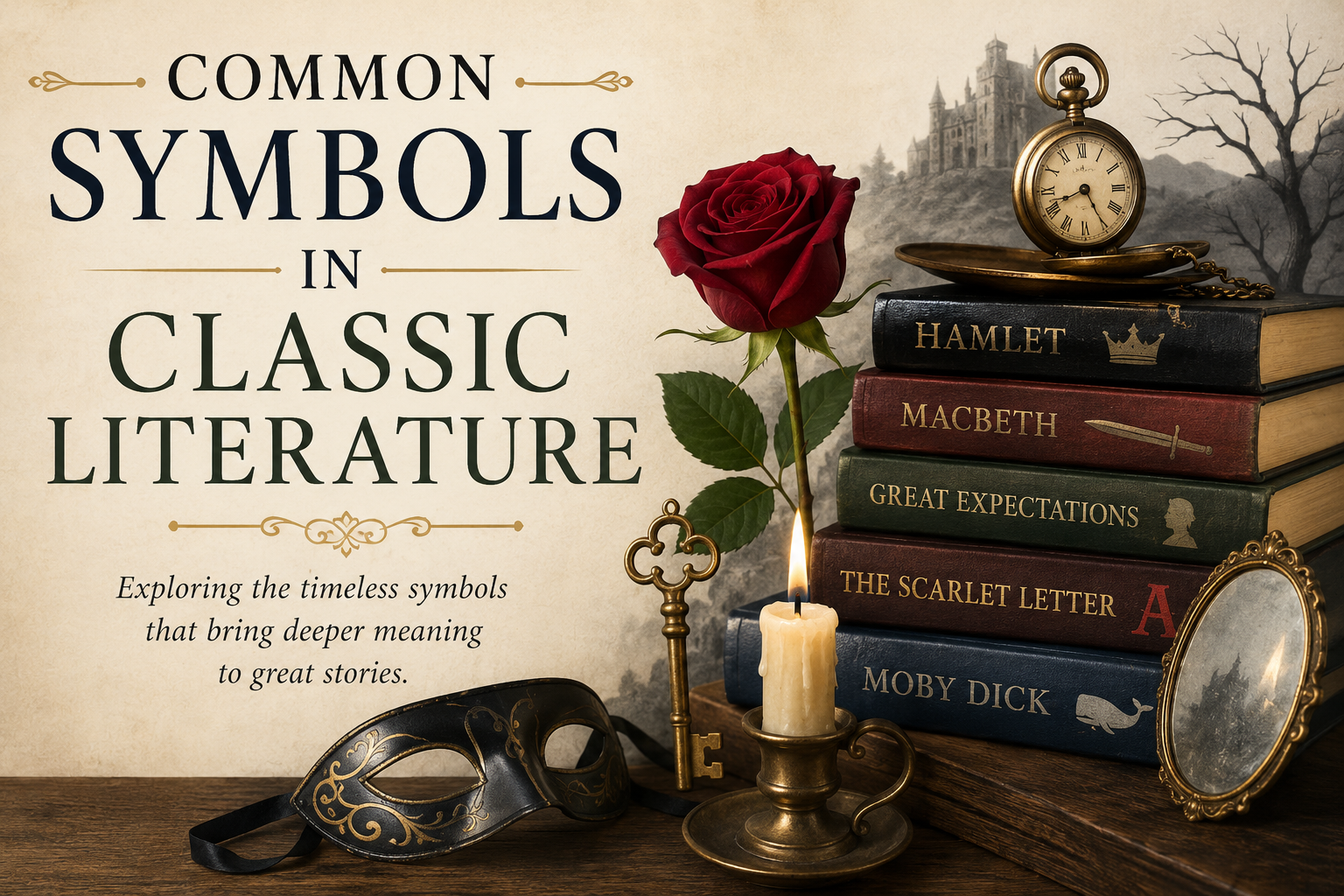
Common Symbols in Classic Literature

literature symbols
literature symbols

Common Symbols in Classic Literature: A Student-Friendly Guide

Common Symbols in Classic Literature can help you see deeper meaning in novels, plays, and poems. When you know what certain objects, colors, or places often suggest, you can read with more confidence and write stronger essays.

This guide explains key symbols, gives clear literary examples, and shows how to use them without overthinking every detail.

In this Guide

  • Why symbols matter in classic literature
  • Common symbols and what they often mean
  • Examples from famous books
  • How to analyze symbols in essays
  • Books that help you practice
  • FAQ and key takeaway

Why Common Symbols in Classic Literature Matter

Symbols help writers say more with less.

A symbol is something that stands for more than itself. It can be an object, place, color, animal, or action that points to a bigger idea.

For students, Common Symbols in Classic Literature are useful because they often connect to major themes. A river may suggest change. A locked room may suggest secrets. A storm may suggest conflict or fear.

Symbols do not always mean the same thing in every book. Context matters. Still, knowing common patterns gives you a strong place to start.

Common Symbols in Classic Literature: Light and Darkness

Light and darkness often show knowledge, truth, danger, or moral conflict.

Light often points to truth, hope, or understanding. Darkness often points to fear, confusion, or hidden evil.

In Frankenstein by Mary Shelley, light can suggest knowledge and discovery. Victor Frankenstein wants to “bring light” to science, but his search leads to pain and guilt.

In Heart of Darkness by Joseph Conrad, darkness is not just a setting. It raises questions about cruelty, power, and what people hide inside themselves.

When you see light or darkness in a classic text, ask what the character understands at that moment. Also ask what the writer may be hiding from the reader.

Common Symbols in Classic Literature: Colors

Colors can carry emotional and social meaning.

Red often suggests passion, sin, blood, or shame. White can suggest purity, innocence, emptiness, or coldness. Green often points to hope, envy, nature, or desire.

In The Scarlet Letter by Nathaniel Hawthorne, the red letter “A” is one of the most famous symbols in American literature. It marks Hester Prynne’s shame, but it also becomes a sign of strength.

In The Great Gatsby by F. Scott Fitzgerald, the green light at the end of Daisy’s dock stands for Gatsby’s dream. It also shows how that dream stays just out of reach.

Colors are among the most important Common Symbols in Classic Literature because they can appear many times across a story. Track when a color appears and how the mood changes around it.

Common Symbols in Classic Literature: Nature

Nature often reflects a character’s inner life.

Writers use weather, seasons, gardens, and wild places to show emotion or change. Spring may suggest youth or rebirth. Winter may suggest death, loss, or loneliness.

In Wuthering Heights by Emily Brontë, the wild moors reflect the fierce emotions of the characters. The setting feels harsh, open, and hard to control.

In King Lear by William Shakespeare, the storm shows Lear’s mental collapse. The weather outside mirrors the chaos inside him.

When you study Common Symbols in Classic Literature, pay close attention to setting. A landscape may reveal more than a character says out loud.

Common Symbols in Classic Literature: Animals

Animals often reveal power, fear, guilt, or instinct.

A snake may suggest danger or betrayal. A bird may suggest freedom or a trapped soul. A dog may suggest loyalty, but it can also show violence, depending on the story.

In Macbeth, Shakespeare uses animal images to show disorder and fear. After Duncan’s murder, nature seems broken, which suggests that Macbeth’s crime has damaged the moral order.

In Lord of the Flies by William Golding, the “beast” becomes a symbol of the boys’ fear. It also points to the violence inside human nature.

Animal symbols work best when you connect them to a theme. Do not stop at “the bird means freedom.” Ask who wants freedom and what blocks it.

Common Symbols in Classic Literature: Objects

Objects can carry a story’s biggest ideas.

A letter, ring, mirror, or weapon can gain meaning as the story moves on. The object may start as a normal item, then become tied to guilt, love, power, or memory.

In The Lord of the Rings by J.R.R. Tolkien, the ring stands for power and temptation. It shows how even good people can change when power takes hold.

In Jane Eyre by Charlotte Brontë, the locked room and hidden spaces at Thornfield Hall suggest secrets, fear, and social limits.

Common Symbols in Classic Literature often gain meaning through repetition. If an object appears at key moments, the author likely wants you to notice it.

Common Symbols in Classic Literature: Journeys and Roads

A journey often shows growth, escape, or a search for truth.

Roads and travel can show a character’s movement from innocence to experience. A physical trip may also reflect an inner change.

In The Odyssey by Homer, Odysseus’s journey is about more than getting home. It tests his pride, loyalty, and wisdom.

In The Adventures of Huckleberry Finn by Mark Twain, the river becomes a path toward freedom. Yet it also shows the moral problems of the society around Huck and Jim.

Journey symbols are useful in essays because they often connect to character growth. Ask what the character learns before and after the journey.

How to Analyze Common Symbols in Classic Literature

A symbol should connect to the whole story, not just one scene.

Start with the basic meaning. What is the object, color, place, or action? Then ask how it changes as the story goes on.

Look for repetition. If a symbol appears more than once, note when it appears and who is present. This can reveal a pattern.

Connect the symbol to a theme. A green light is not important only because it is green. It matters because it connects to dreams, wealth, and longing.

If you want a deeper step-by-step method, read this guide on how to find symbolism in a story.

How to Use Symbols in Literature Essays

Strong symbol analysis stays close to the text.

Do not write that a symbol “obviously” means one thing. Instead, prove your idea with evidence from the story.

A simple essay sentence might look like this:

In The Great Gatsby, the green light symbolizes Gatsby’s dream of a perfect future with Daisy, but its distance shows that the dream is impossible to fully reach.

This works because it names the symbol, explains the meaning, and links it to a theme.

For AP Literature or college essays, you should also explain how the symbol affects the reader. Does it create hope? Does it create doubt? Does it make the ending feel tragic?

Best Books for Studying Common Symbols in Classic Literature

These books give students strong practice with symbolism.

  • The Great Gatsby by F. Scott Fitzgerald
  • The Scarlet Letter by Nathaniel Hawthorne
  • Lord of the Flies by William Golding

Each book uses symbols in a clear way, which makes them helpful for essays and class discussion. They are also common choices in high school and college literature courses.

You can also explore trusted resources like the Poetry Foundation’s definition of symbol and Britannica’s overview of Symbolism for more background.

Quick Study Tips for Symbolism

A few simple habits can make symbol analysis much easier.

Mark repeated objects, colors, and places as you read. Write a short note each time one appears.

Ask what changes near the symbol. Does the mood shift? Does a character act in a new way?

Do not force a meaning. Some details are just details. A symbol matters when the story gives it weight.

When in doubt, return to theme. The best symbol analysis explains how one detail supports the bigger message of the work.

FAQ About Common Symbols in Classic Literature

What are the most common symbols in classic literature?

Some of the most common symbols are light, darkness, colors, nature, animals, objects, and journeys. Their meaning depends on the story’s context.

How do I know if something is a symbol?

Look for repetition, strong description, or a link to a major theme. If the author keeps drawing attention to it, it may be symbolic.

Can one symbol have more than one meaning?

Yes. A strong symbol can hold more than one idea. For example, the scarlet letter in Hawthorne’s novel suggests shame, strength, and identity.

Why do teachers ask students to find symbols?

Symbols help students understand theme, character, and conflict. They also lead to stronger literary analysis.

Should I memorize Common Symbols in Classic Literature?

You can learn common patterns, but do not rely on memorization alone. Always use the text to support your interpretation.

Key Takeaway

Common Symbols in Classic Literature are tools for deeper reading, not secret codes with fixed answers. Notice patterns, connect them to theme, and use evidence from the text to explain your ideas clearly.

Flash Memoir Prompt: First Time You Failed at Something You’d Worked Hard for

flash memoir

A focused flash memoir prompt first time failed at something can help you return to the exact moment when effort met disappointment, and when a younger version of you had to decide what to do next.

Maybe you still remember the room before you remember the failure. The squeak of a gym floor. The smell of pencil shavings during an exam. The heavy silence after an audition, a game, a race, a contest, or a project you wanted badly.

Failure can feel too large to write about, especially when you worked hard for the thing you did not get. But a flash memoir does not need the whole history. It only needs one clear moment when hope shifted into something else.

flash memoir

The Prompt

Write about the first time you failed at something you’d worked hard for.

This prompt works because it asks you to remember effort, not just outcome. The story is not only about losing, missing, falling short, or being told no. It is about the hours before that moment. It is about the version of you who believed effort would protect you from disappointment.

A flash memoir prompt first time failed at something can uncover a memory that still has energy in it. You may remember who was there, what you expected, and how your body reacted when you realized things had gone wrong.

Why This Memory Matters

The first serious failure often changes how we understand fairness. Before it happens, we may believe hard work always leads to the result we want. After it happens, we learn something more complicated.

That does not mean the story has to end with a big lesson. In fact, it may be stronger if it stays close to the scene. Maybe you remember stuffing a rejected application into your backpack. Maybe you remember smiling so no one would ask if you were upset. Maybe you remember your parent saying the wrong thing in the car because neither of you knew what else to say.

These small details carry the emotional truth. They show the reader what the moment felt like without forcing a moral onto it.

If you are trying to understand the deeper meaning of this memory, you might find it helpful to think about theme. This guide on how to identify theme in literature can also help memoir writers notice the ideas hiding inside a personal story.

Your memory may be about shame, pride, pressure, family expectation, resilience, or the pain of wanting something in public. Let the scene show you which one matters most.

How to Approach This Prompt

Begin with one physical detail from the moment you knew you had failed. Do not start with your whole life story. Start with the trophy table you did not reach, the computer screen with the score, the teacher’s red pen, or the phone call that ended too fast.

Then narrow the memory to one scene. You might choose the minute before the result, the moment you found out, or the ride home afterward. A flash memoir works best when it holds the camera steady.

Try to write what you noticed before you explain what it meant. If your hands shook, write that. If the room felt too bright, write that. If someone near you celebrated while you stood still, write that too.

You do not have to make yourself look wise. You can let yourself be young, hurt, angry, embarrassed, or confused. That honesty is often what makes the piece feel alive.

If you like marking up memories the way students mark up texts, you can borrow a few ideas from how to annotate literature. Circle the strongest image in your draft. Underline the sentence that feels most true. Build the rest of the piece around those clues.

For this flash memoir prompt first time failed at something, avoid covering every practice, every hope, and every later success. Stay with the first crack in the plan. That is where the story lives.

A Quick Example

The envelope was thinner than I expected. I knew that before I opened it. All week, I had imagined a thick packet with forms to sign and a letter that began with “Congratulations.” I had practiced my audition song until my throat felt raw. I had even stopped drinking soda because I thought serious singers probably made serious choices. In the kitchen, my mother watched me slide one finger under the flap. The paper inside made a soft scraping sound. “Thank you for auditioning,” it said. I read the first line three times. My mother asked if I was okay, and I nodded because crying felt like one more thing I might do badly. Outside, the neighbor’s dog barked and barked, as if it had already heard the news.

Try It Yourself

Set a timer for ten minutes and write about the first time you failed at something you had worked hard for. Choose one scene and stay there. Let the memory be awkward if it was awkward. Let it be unfair if it felt unfair.

You can begin with this sentence: “I knew I had failed when…” Then follow the memory into the room, the field, the hallway, the stage, or the kitchen where it happened.

When you finish, read your draft once and look for the most honest sentence. That sentence may be quiet. It may not explain everything. Keep it anyway. It might be the center of the piece.

This flash memoir prompt first time failed at something is not asking you to prove that failure made you stronger. It is asking you to remember what it cost to care that much.

Want More Flash Memoir Prompts?

If this prompt opened a memory you did not expect, keep writing. Short prompts can help you build a steady memoir practice one small scene at a time. Explore all 365 prompts in The Memory Trigger: 365 Flash Memoir Writing Prompts.

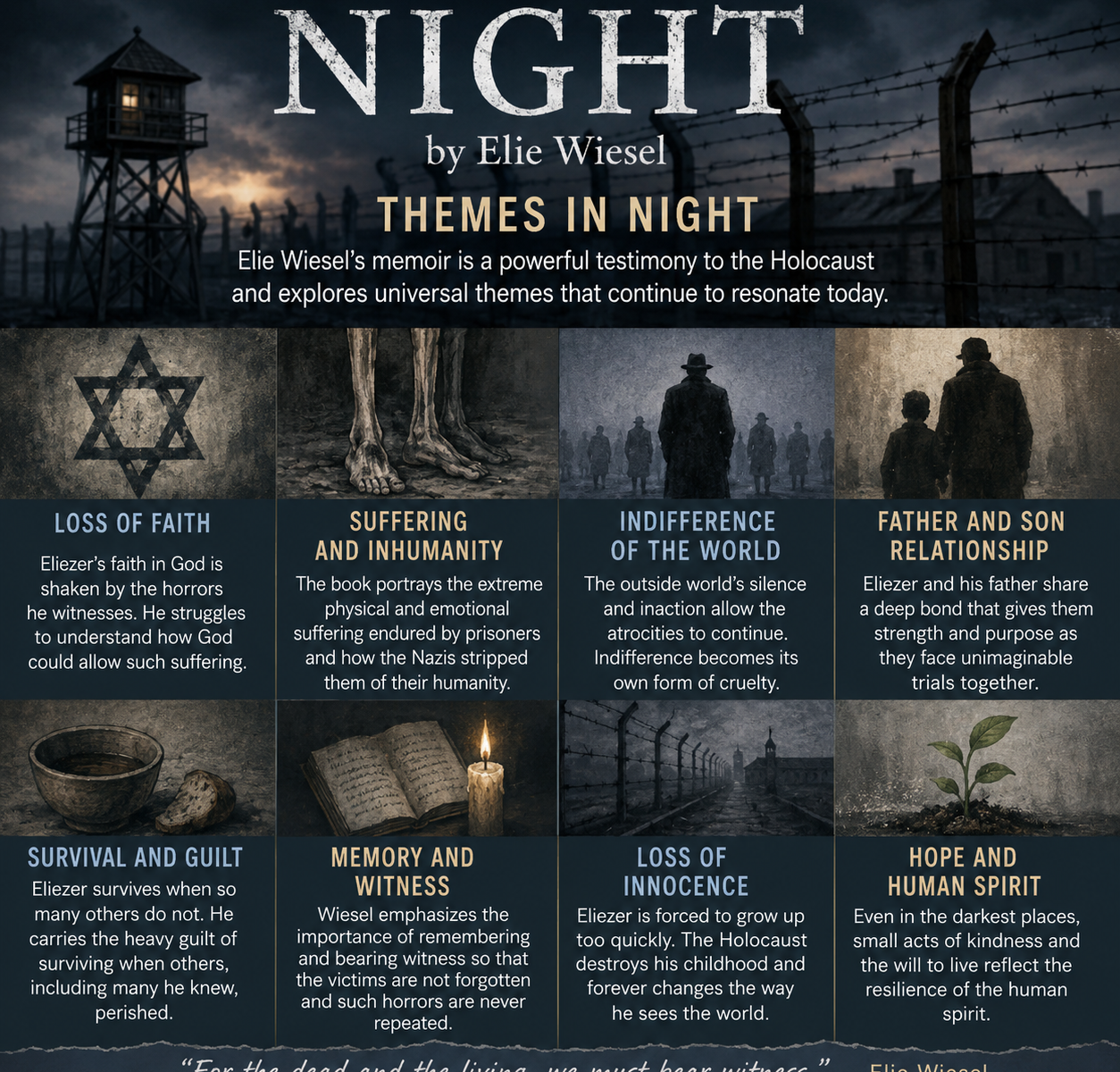
Themes in Night: A Student-Friendly Guide

themes in Night

Elie Wiesel’s Night is a short memoir, but its ideas are deep and hard to forget. The themes in Night help students understand how the book explores faith, cruelty, silence, memory, and survival during the Holocaust.

This guide explains the major ideas in clear terms so you can use them in class talks, essays, and exams.

In this Guide

  • Why the themes in Night matter
  • Faith and doubt
  • Dehumanization and identity
  • Silence and responsibility
  • Memory and witness
  • How to write about theme
  • FAQ
themes in Night

Why the themes in Night matter

The memoir is not just about what happened to Elie Wiesel. It asks what happens to a person’s beliefs, family bonds, and sense of self under extreme evil.

The themes in Night matter because they show how history affects real human lives. Wiesel does not let readers stay distant from the suffering he describes.

Before you write about theme, remember this key point: the book is a memoir, not a made-up story. Its themes come from lived experience.

If you need a quick review of the basic idea of theme, this guide to how to identify theme in literature can help.

Themes in Night: Faith and Doubt

Wiesel shows faith as something that can be tested, wounded, and changed.

At the start, Elie has a deep interest in religion. He studies Jewish texts and wants to understand God in a serious way.

After he enters the camps, his faith faces horror that seems impossible to explain. He sees children suffer. He sees people pray while death surrounds them.

This is one of the most painful themes in Night because Wiesel does not give an easy answer. He shows how suffering can make someone question the beliefs that once gave life meaning.

A useful comparison is Job from the Bible. Job also suffers and questions God, but Wiesel’s world feels even more broken because the evil is made by humans.

For essays, avoid saying Elie simply loses faith. A stronger claim is that his faith changes into anger, doubt, and silence.

Themes in Night: Dehumanization and Identity

The camps try to strip people of names, dignity, and personal worth.

One of the clearest themes in Night is dehumanization. Prisoners are shaved, numbered, starved, beaten, and forced to live in fear.

This matters because Wiesel shows that genocide does not begin with murder alone. It begins when people are treated as less than human.

Elie’s identity changes as the camps take away parts of his former life. He is no longer just a son, student, or believer. He becomes a prisoner who must fight to stay alive.

This theme connects to other Holocaust texts, such as The Diary of a Young Girl by Anne Frank. Both works show how hatred targets identity, but Wiesel shows the inside of the camp system with direct force.

When you write about this theme, focus on how language and treatment change the prisoners. A number replaces a name. Hunger replaces normal thought. Fear replaces daily life.

Family, Survival, and Moral Conflict

Wiesel shows how extreme suffering can strain even the strongest family bond.

Elie and his father depend on each other. Their relationship helps both of them survive for much of the memoir.

Yet the camps create terrible moral pressure. Elie sometimes feels fear, guilt, and frustration as he tries to care for his father while he is also weak.

This theme is hard because it does not judge Elie in a simple way. Instead, it shows how evil systems can force people into choices no one should have to face.

A similar idea appears in King Lear, where family love is tested by power and suffering. In Night, the test is not pride or politics. It is hunger, terror, and death.

Themes in Night: Silence and Responsibility

Silence in the memoir can mean fear, failure, or unanswered pain.

Among the themes in Night, silence is one of the most important. Many people outside the camps do not act in time. Some witnesses turn away. God also seems silent to Elie during the worst moments.

Wiesel uses this silence to ask a serious question: what do people owe each other when evil becomes visible?

The memoir suggests that silence can protect the guilty when innocent people need help. This is why Wiesel later became known as a voice for human rights and memory.

For historical background, students can read the United States Holocaust Memorial Museum page on Elie Wiesel.

Themes in Night: Memory and Witness

Wiesel writes so the dead are not erased by time.

Memory is one of the central themes in Night because the memoir itself is an act of witness. Wiesel tells what he saw so readers cannot claim ignorance.

This does not mean the book only records facts. It also shows how memory carries pain. The past remains alive in the mind of the survivor.

Many works of literature use memory to fight loss. In Beloved by Toni Morrison, memory also forces readers to face violence that society may want to forget.

In Night, memory has a moral purpose. To remember is to honor victims and warn the living.

Loss of Innocence in Night

Elie’s view of the world changes because he sees what humans can do to each other.

At first, Elie is young, curious, and devoted to study. He trusts religious learning and family life.

By the end, his childhood has been destroyed. The famous mirror scene shows a person who has survived but has been deeply changed.

Loss of innocence is not only about growing older. In this memoir, it means being forced to see cruelty before the mind is ready.

How to write about themes in Night

A strong theme statement should say more than one word.

Do not write, “The theme is faith.” That is a topic. Write a full idea, such as, “Wiesel shows that extreme suffering can turn faith into doubt, anger, and silence.”

Use short evidence. Then explain how the evidence proves your point.

Here is a simple pattern: name the theme, connect it to a key moment, and explain what Wiesel wants readers to understand.

Helpful books to read with Night

These books can help students build context and compare ideas:

  • The Diary of a Young Girl by Anne Frank
  • Man’s Search for Meaning by Viktor E. Frankl

These works are different from Night, but they also deal with suffering, memory, and the human search for meaning.

FAQ about themes in Night

What are the main themes in Night?

The main themes in Night include faith and doubt, dehumanization, family bonds, silence, memory, and loss of innocence.

Is Night a novel or a memoir?

Night is a memoir. It is based on Elie Wiesel’s own experience during the Holocaust.

What is the most important theme in Night?

Many students choose faith and doubt because Elie’s relationship with God changes so much. Dehumanization is also central to the book.

How do I find evidence for a theme?

Look for repeated moments, changes in Elie’s thoughts, and scenes that show conflict. Then explain what those moments reveal.

Key Takeaway

The themes in Night show how cruelty attacks faith, identity, family, and memory. Wiesel’s memoir asks readers not only to understand the past, but to carry its warning forward.

Important Fahrenheit 451 Quotes Explained for Students

Fahrenheit 451 quotes

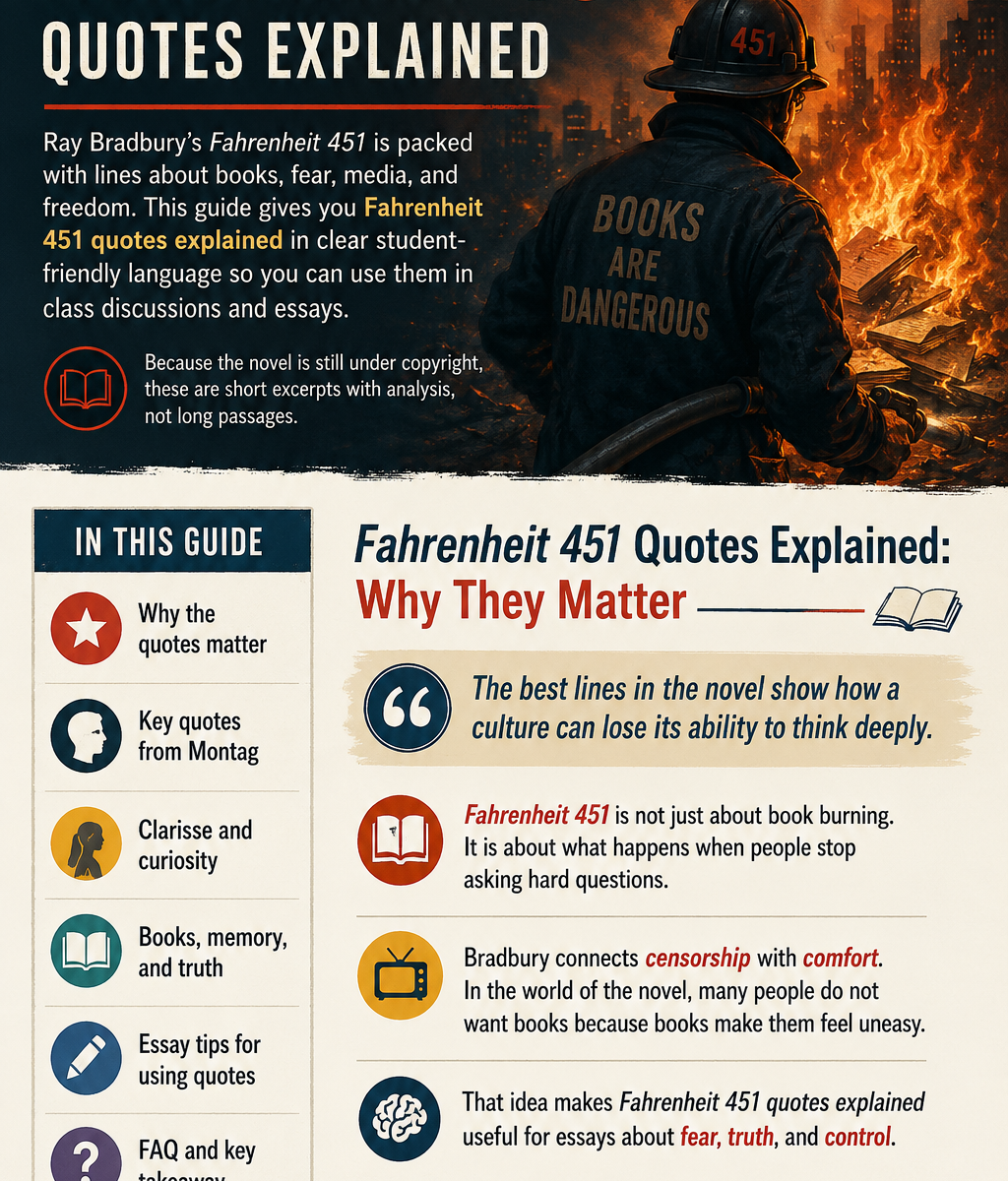
Ray Bradbury’s Fahrenheit 451 is packed with lines about books, fear, media, and freedom. This guide gives you Fahrenheit 451 quotes explained in clear student-friendly language so you can use them in class discussions and essays.

Because the novel is still under copyright, these are short excerpts with analysis, not long passages.

Fahrenheit 451 quotes

In this Guide

  • Why the quotes matter
  • Key quotes from Montag
  • Clarisse and curiosity
  • Books, memory, and truth
  • Essay tips for using quotes
  • FAQ and key takeaway

Fahrenheit 451 Quotes Explained: Why They Matter

The best lines in the novel show how a culture can lose its ability to think deeply.

Fahrenheit 451 is not just about book burning. It is about what happens when people stop asking hard questions.

Bradbury connects censorship with comfort. In the world of the novel, many people do not want books because books make them feel uneasy. That idea makes Fahrenheit 451 quotes explained useful for essays about fear, truth, and control.

For background on Bradbury’s life and major works, Britannica has a helpful overview of Ray Bradbury.

“It was a pleasure to burn.”

This opening line is short, sharp, and disturbing.

Montag begins the novel as a fireman who enjoys destroying books. The word “pleasure” tells us that violence has become normal to him.

This quote works well in essays about irony. Firefighters usually protect homes, but in Bradbury’s world they attack knowledge. That reversal builds the novel’s warning from the first page.

You can compare this to Macbeth, where a character’s first choices reveal the direction of the tragedy. Montag’s early joy does not last, but it shows how far he must change.

“Are you happy?”

Clarisse’s question cuts through Montag’s entire life.

This is one of the most important short quotes in the novel. Clarisse does not argue with Montag. She asks a simple question he has avoided.

When students look for Fahrenheit 451 quotes explained, this line is a strong choice because it reveals conflict. Montag looks successful in his society, but he feels empty.

In an essay, you might say the question starts Montag’s inner change. It makes him see that his job, marriage, and culture may not be as stable as they seem.

“We need to be really bothered once in a while.”

This line shows Bradbury’s belief that comfort can become dangerous.

The novel suggests that people grow when they face hard ideas. Books matter because they challenge readers instead of simply calming them.

This quote is useful for writing about the theme of discomfort. Bradbury does not present pain as good by itself. He shows that honest thought often begins when something shakes us awake.

If you need help turning a quote into a paragraph, read our guide on how to write a literary analysis essay.

“A book is a loaded gun…”

Beatty uses this image to explain why the government fears books.

A gun is powerful because it can change a situation fast. By comparing books to weapons, Beatty admits that ideas have force.

This is one of the clearest censorship quotes in the novel. It shows that the state is not only afraid of pages. It is afraid of independent thought.

For Fahrenheit 451 quotes explained in an essay, this line fits a claim about power. Books threaten control because they help people question what they are told.

“There must be something in books…”

Montag begins to see books as more than objects.

He notices that people suffer to protect them. That makes him wonder what books contain that could matter so much.

This quote is important because it marks a shift in Montag’s mind. He moves from blind obedience toward curiosity.

In a student essay, you could connect this moment to theme. Bradbury suggests that curiosity is the first step toward freedom.

Fahrenheit 451 Quotes Explained for Essays

A strong essay does more than place a quote in the paragraph.

After you use a quote, explain how the words support your claim. Do not assume the quote speaks for itself.

Here is a simple method: make a claim, give the short quote, then explain a key word or image. For example, in “It was a pleasure to burn,” the word “pleasure” matters because it shows Montag’s early emotional state.

When writing about Fahrenheit 451 quotes explained, keep your focus on meaning, not plot summary. Your teacher wants to see how you read the language.

If you want a ready tool for planning paragraphs, you can also use this literary analysis study resource.

“The magic is only in what books say…”

Faber explains that books are valuable because they hold human experience.

He does not treat books as sacred objects by themselves. The value comes from the ideas, details, and honest thought inside them.

This quote helps students avoid a weak essay claim. Bradbury is not saying paper is magic. He is saying that careful thought matters.

This connects to many classic works. In To Kill a Mockingbird, reading and empathy matter because they help people see beyond fear and rumor.

“Remember, the firemen are rarely necessary.”

Beatty’s point is chilling because it places blame on the culture itself.

The government burns books, but many citizens have already stopped caring about them. That means censorship can happen before any fire is lit.

This quote is great for essays about social responsibility. Bradbury warns that freedom can fade when people choose distraction over thought.

As Fahrenheit 451 quotes explained go, this one is especially useful for modern connections. It asks readers to think about what people ignore, not only what governments ban.

“Stuff your eyes with wonder…”

Granger’s advice points toward hope after destruction.

This line tells readers to stay awake to the world. Wonder is the opposite of numb entertainment in the novel.

Bradbury’s ending does not solve every problem, but it gives Montag a new purpose. Memory, attention, and shared stories can help rebuild a damaged world.

You can connect this idea to Matthew Arnold’s poem “Dover Beach,” which appears in the novel. The poem’s line about “ignorant armies” fits Bradbury’s fear of a confused society. You can read the poem at the Poetry Foundation.

More Fahrenheit 451 Quotes Explained by Theme

These short quotes can help you choose evidence for different essay topics.

Censorship and control

Use “A book is a loaded gun…” when you want to show that ideas threaten authority. This quote supports arguments about fear and power.

Technology and distraction

Mildred’s world of screens shows a society that avoids silence and thought. For this theme, focus on scenes where the parlor walls replace real connection.

Change and awakening

Use “Are you happy?” to show the start of Montag’s change. It is a small question with a huge effect.

For more help with essay structure, see our step-by-step post on building a literary analysis essay.

Books to Read with Fahrenheit 451

If you are studying dystopian literature, these books pair well with Bradbury’s novel:

  • 1984 by George Orwell
  • Brave New World by Aldous Huxley
  • The Giver by Lois Lowry

Each book explores control and social pressure in a different way.

FAQ: Fahrenheit 451 Quotes Explained

What is the most famous quote from Fahrenheit 451?

“It was a pleasure to burn” is one of the most famous lines because it opens the novel and sets the dark tone.

What quote shows Montag changing?

“There must be something in books…” shows Montag starting to question his world and his job.

What quote is best for an essay about censorship?

“A book is a loaded gun…” is a strong choice because it shows why people in power fear ideas.

Can I use short quotes from Fahrenheit 451 in a school essay?

Yes. Use brief quotes, cite them as your teacher asks, and spend more time explaining the language than repeating plot.

Key Takeaway

Fahrenheit 451 quotes explained well can help you show how Bradbury uses simple lines to reveal big ideas about freedom, fear, and thought. The best essays do not just quote the novel. They explain why the words matter.

Best Literary Human Nature: Books That Show Who We Really Are

Best human nature books

Great stories help us see the truth about people, even when that truth feels hard to face. Best Literary Human Nature looks at books that explore fear, pride, love, guilt, and moral choice.

These works matter because they ask a simple question: what do people do when life tests them?

In this Guide

  • What Best Literary Human Nature means
  • Why human nature matters in literature
  • Best Literary Human Nature books to read
  • Symbols and themes that reveal character
  • How students can write about human nature
  • FAQs
  • Key takeaway

What Best Literary Human Nature Means

Stories about human nature show what people want, fear, hide, and choose.

The phrase Best Literary Human Nature may sound broad, but the idea is clear. It points to books that reveal how people act under pressure.

Some characters try to do the right thing. Others choose power, comfort, or revenge. Literature lets us watch those choices from a safe distance.

That is why these books stay with us. They do not just tell us what happened. They show us why people behave the way they do.

Why Best Literary Human Nature Stories Still Matter

The best books feel alive because their characters feel real.

Best Literary Human Nature stories matter because readers can see parts of themselves in the characters. A reader may not rule a kingdom like Macbeth, but they may know what ambition feels like.

In William Shakespeare’s Macbeth, ambition grows into violence. Macbeth wants power so badly that he loses his peace, his honor, and his sense of self.

In Mary Shelley’s Frankenstein, Victor wants glory through science. His mistake is not just that he creates life. His deeper failure is that he refuses to care for what he has made.

These stories ask us to think about responsibility. They also ask if people are born flawed or shaped by the choices around them.

Best Literary Human Nature Books to Read

These books are strong choices for students because they are rich, readable, and full of moral conflict.

The Best Literary Human Nature books often focus on a character who faces a hard test. That test may come from society, family, power, or guilt.

To Kill a Mockingbird by Harper Lee

This novel explores justice, fear, and moral courage. Atticus Finch shows that doing the right thing can cost a person comfort and safety.

Scout learns that people are more complex than they first appear. The book asks readers to look past rumor and prejudice.

Lord of the Flies by William Golding

This novel places schoolboys on an island without adult rules. At first, they try to build order. Soon, fear and power begin to take over.

Golding suggests that cruelty can grow when people lose limits. The story is often used in classrooms because it raises sharp questions about civilization and human nature.

Other strong examples

Students may also study The Great Gatsby by F. Scott Fitzgerald or Hamlet by William Shakespeare. Both works show how desire can twist a person’s view of truth.

For helpful background on the idea of human nature, readers can explore Britannica’s overview of human nature.

Best Literary Human Nature Themes Students Should Know

Themes help readers move from “what happened” to “what the story means.”

When students study Best Literary Human Nature, they often notice the same big ideas across different books. These ideas repeat because people face the same inner battles in many times and places.

Ambition and its cost

Ambition can help a character grow. It can also lead to ruin.

Macbeth is the classic example. His desire for power destroys his loyalty and peace of mind.

Goodness under pressure

Many novels ask if a person can stay good when the world is unfair. To Kill a Mockingbird explores this through Atticus, Scout, and the trial of Tom Robinson.

The book does not pretend goodness is easy. It shows that moral courage often feels lonely.

Fear and group behavior

Lord of the Flies shows how fear can spread through a group. The boys begin to follow the loudest voices, not the wisest ones.

This theme matters because people often act differently in a crowd. Literature helps us question that shift.

Symbols That Reveal Human Nature

Symbols give stories deeper meaning without heavy explanation.

In Best Literary Human Nature works, symbols often show what characters cannot say out loud. A symbol may reveal guilt, innocence, power, or loss.

In Lord of the Flies, the conch shell stands for order and shared rules. When the shell loses power, the boys lose their grip on peace.

In Frankenstein, light often connects to knowledge. Yet Shelley shows that knowledge without care can become dangerous.

In The Great Gatsby, the green light stands for Gatsby’s dream. It also shows how desire can trap a person in the past.

Poetry can do this too. The Poetry Foundation’s page on Robert Frost is useful for readers who want to see how poems explore choice and regret.

How to Write About Best Literary Human Nature in an Essay

A strong essay does not just name a theme. It explains how the author builds that theme through character, conflict, and symbol.

If you write about Best Literary Human Nature, start with a clear claim. Do not say, “This book shows human nature.” Say what the book argues about human nature.

For example, an essay on Macbeth could argue that unchecked ambition destroys moral judgment. An essay on Lord of the Flies could argue that fear weakens social order.

Your thesis should be specific, arguable, and tied to the text. If you need help, use this guide on how to write a thesis statement for a literary analysis essay.

After that, choose scenes that prove your point. Focus on what characters say, what they hide, and how they change.

Recommended Books for Best Literary Human Nature Readers

These books are often easy to find and useful for class discussions.

To Kill a Mockingbird by Harper Lee is a strong choice for readers who want a story about justice and moral growth.

Lord of the Flies by William Golding is ideal for readers who want a darker look at fear, power, and group behavior.

Both books work well for essays because they offer clear conflicts and strong symbols. They also give students many ways to discuss Best Literary Human Nature without forcing one simple answer.

Common Mistakes When Reading Human Nature in Literature

It is easy to make human nature sound too simple.

One common mistake is to call a character “good” or “bad” and stop there. Most great books avoid simple labels.

Another mistake is to ignore the setting. A character’s world shapes their choices. Social pressure, fear, and unfair rules often push characters toward action.

A better approach is to ask why a character makes a choice. Then ask what the author wants readers to learn from that choice.

FAQs About Best Literary Human Nature

What does Best Literary Human Nature mean?

Best Literary Human Nature refers to books and stories that reveal how people think, choose, and change. These works often focus on moral conflict.

What is a good book about human nature for students?

To Kill a Mockingbird is a strong choice. It deals with justice, courage, and the way people judge others.

Why do teachers assign books about human nature?

Teachers assign these books because they help students think deeply about character and theme. They also connect literature to real life.

Is human nature a theme?

Human nature is a broad idea, not a theme by itself. A stronger theme would say something specific, such as “fear can make people give up their values.”

How can I find symbols related to human nature?

Look for objects, images, or repeated details that connect to a character’s inner life. Then ask how the symbol changes as the story moves forward.

Key Takeaway

Best Literary Human Nature stories matter because they show people at their most honest moments. They help readers see how fear, desire, guilt, and hope shape human choice.

The strongest literature does not give easy answers. It gives us characters who feel real, choices that matter, and questions we keep asking long after the final page. 📚

Examples of Foreshadowing in Famous Books: Clear Literary Examples for Students

Foreshadowing Examples

Examples of Foreshadowing in Famous Books can help students see how authors prepare readers for key events before they happen.

Foreshadowing is a clue, hint, image, or line of dialogue that points toward a future moment in the story. Once you know how to spot it, major plot turns often feel less random and more carefully planned.

In this Guide

  • What foreshadowing means
  • Examples of Foreshadowing in Famous Books
  • How each example works
  • How to write about foreshadowing in an essay
  • Books to read for more practice
  • FAQ
Foreshadowing Examples

What Is Foreshadowing?

Foreshadowing gives readers a clue about what may happen later.

It can appear through a warning, a symbol, a dream, a strange detail, or a character’s fear. The clue may be clear right away, or it may only make sense after the ending.

Writers use foreshadowing to build suspense. They also use it to make a story feel complete, since the ending often grows from details planted earlier.

Examples of Foreshadowing in Famous Books: Romeo and Juliet

Shakespeare gives away the tragic ending before the play truly starts.

In Romeo and Juliet, the Prologue calls the lovers “star-crossed” and says they will take their own lives. This is direct foreshadowing because the audience learns that Romeo and Juliet will die.

This does not ruin the play. Instead, it creates dread. Readers watch each happy moment with the knowledge that disaster is ahead.

Romeo also senses danger before he goes to the Capulet party. He says he fears “some consequence yet hanging in the stars.” This line hints that the party will start a chain of events he cannot control.

In an essay, you could argue that Shakespeare uses foreshadowing to make fate feel powerful. The characters make choices, but the early warnings make their deaths seem almost written in the stars.

For background on the play, you can read Britannica’s overview of Romeo and Juliet.

Examples of Foreshadowing in Famous Books: Of Mice and Men

John Steinbeck uses small deaths to prepare us for a much larger one.

In Of Mice and Men, Lennie kills soft animals by accident because he does not know his own strength. Early in the novel, he carries a dead mouse in his pocket. Later, he kills his puppy.

These moments foreshadow the death of Curley’s wife. Lennie does not mean to hurt her, but the earlier scenes show that his strength can turn harmless contact into tragedy.

Candy’s old dog also foreshadows the ending. Carlson shoots the dog because he sees it as weak and useless. Candy later says he should have shot the dog himself.

That moment points toward George’s final choice. George kills Lennie himself rather than let a violent mob do it.

Students can write about how Steinbeck uses foreshadowing to make the ending feel painful but not sudden. The clues show that Lennie’s fate has been building from the start.

Examples of Foreshadowing in Famous Books: Macbeth

The witches in Macbeth turn prophecy into a warning.

At the start of the play, the witches tell Macbeth he will become king. Their words foreshadow his rise to power, but they also lead him toward murder.

Later, the witches give Macbeth new predictions. They say he should beware Macduff, that no one “of woman born” can harm him, and that he is safe until Birnam Wood moves to Dunsinane.

Macbeth thinks these clues mean he cannot lose. In the end, each prophecy comes true in a tricky way. Macduff was born by a surgical birth, and soldiers carry branches from Birnam Wood as they march.

This is one of the best examples of foreshadowing in famous books because the clues are both clear and misleading. Shakespeare lets the audience hear the warnings, but Macbeth misreads them.

In an essay, focus on how the prophecies reveal Macbeth’s flaw. He hears what he wants to hear, which helps cause his fall.

Examples of Foreshadowing in Famous Books: The Great Gatsby

F. Scott Fitzgerald fills The Great Gatsby with signs of coming loss.

Early in the novel, Gatsby reaches toward the green light across the bay. The light stands for Daisy and the future he wants. It also foreshadows that his dream will stay out of reach.

Cars also foreshadow danger. The novel shows careless driving more than once, including a car crash after one of Gatsby’s parties. These moments prepare readers for Myrtle’s death by car later in the story.

Nick’s first chapter also looks back with sadness. He says Gatsby turned out “all right” in the end, but he also hints that Gatsby was destroyed by what preyed on him.

That early tone tells readers not to expect a simple love story. It points toward tragedy before the plot reaches it.

When you discuss this in an essay, connect foreshadowing to the novel’s critique of the American Dream. Gatsby’s future looks bright from a distance, but the early clues show that the dream is fragile.

Examples of Foreshadowing in Famous Books: Lord of the Flies

William Golding uses fear and violence to hint at the boys’ collapse.

In Lord of the Flies, the boys worry about a “beast” on the island. At first, the beast seems like a real creature. Over time, it becomes clear that the true danger comes from the boys themselves.

This fear foreshadows the violence that follows. The boys’ terror gives them an excuse to act cruelly.

Piggy’s glasses also foreshadow the loss of order. At first, the glasses help start fires, which can lead to rescue. When they break, it shows that reason and safety have begun to fail.

The falling rock that kills Piggy also has early hints. The boys play near rocks and use them as tools of power. By the time the rock strikes Piggy, the island has turned fully savage.

This is one of the darker Examples of Foreshadowing in Famous Books because the clues show a moral fall, not just a plot event.

Examples of Foreshadowing in Famous Books: Harry Potter and the Sorcerer’s Stone

J.K. Rowling uses foreshadowing to hide answers in plain sight.

In Harry Potter and the Sorcerer’s Stone, Harry believes Snape is the main threat. Many clues seem to support this idea. Snape acts cold, follows Harry, and seems connected to the mystery.

Yet other clues point to Quirrell. He is nervous, often overlooked, and linked to strange moments that do not seem important at first.

The Mirror of Erised also foreshadows the final scene. It shows deep desire, not truth. Later, Harry can get the Stone because he wants to find it, not use it.

This example helps students see that foreshadowing can work with red herrings. A red herring points readers in the wrong direction, while real clues still sit nearby.

In an essay, you could write that Rowling uses foreshadowing to reward careful readers. The ending feels surprising, but the earlier details make it fair.

Examples of Foreshadowing in Famous Books: To Kill a Mockingbird

Harper Lee uses early danger to prepare us for the final attack.

In To Kill a Mockingbird, Bob Ewell threatens Atticus after the trial. This warning foreshadows his later attack on Jem and Scout.

The children also fear Boo Radley for much of the novel. They imagine him as a monster, but this fear prepares a reversal. In the end, Boo becomes their protector.

Scout’s ham costume also matters. It seems funny at first, but it helps save her during the attack because the costume blocks the knife.

These clues show how Lee mixes danger with childhood misunderstanding. The children do not fully see the threat, but readers can sense it.

This is one of the most useful Examples of Foreshadowing in Famous Books for essays about innocence. The clues show that Scout’s world is less safe than she thinks.

How to Discuss Examples of Foreshadowing in Famous Books in an Essay

A strong essay does more than point out a clue. It explains why the clue matters.

Start by naming the moment that hints at the future. Then explain the later event it prepares. After that, connect both moments to a theme.

Here is a simple sentence frame:

The author uses [early clue] to foreshadow [later event], which reveals [theme or character truth].

For example:

Steinbeck uses Lennie’s dead mouse to foreshadow the death of Curley’s wife, which reveals that Lennie’s innocence cannot protect him from the harm his strength causes.

You can also compare two clues. In Macbeth, the witches’ prophecies foreshadow Macbeth’s rise and his fall. This shows how ambition can twist a warning into false confidence.

When you write about Examples of Foreshadowing in Famous Books, avoid saying only, “This creates suspense.” That is true, but it is not enough.

Ask what the foreshadowing reveals about fate, power, guilt, fear, or desire. That deeper point will make your essay stronger.

Why Authors Use Foreshadowing

Foreshadowing helps a story feel planned instead of random.

It also builds tension. Readers may not know exactly what will happen, but they sense that something important is coming.

Some authors use clear warnings, like the Prologue in Romeo and Juliet. Others use symbols, like Gatsby’s green light.

Foreshadowing can also reveal character. Macbeth hears warnings but trusts his pride. Gatsby sees the green light but cannot accept that the past is gone.

To study more tools that work with foreshadowing, visit this guide to common literary devices.

Books to Read for More Examples of Foreshadowing in Famous Books

These books are useful if you want more practice spotting foreshadowing.

  • Of Mice and Men by John Steinbeck
  • The Great Gatsby by F. Scott Fitzgerald
  • Lord of the Flies by William Golding

Each one uses early clues that become more important by the end. They are also common in high school and college literature classes.

Quick Practice: Find the Foreshadowing

Try this with any novel or play you read.

Look for a strange detail that gets extra attention. Ask if it returns later in a bigger way.

Watch for warnings, dreams, symbols, and repeated images. These often point toward a future conflict.

You can also mark moments where a character says something that feels larger than the scene. In literature, casual lines often carry hidden weight.

FAQ: Examples of Foreshadowing in Famous Books

What is a simple definition of foreshadowing?

Foreshadowing is a hint about something that will happen later in a story.

What is one clear example of foreshadowing?

In Romeo and Juliet, the Prologue says the lovers will die. This directly foreshadows the tragic ending.

Can foreshadowing be a symbol?

Yes. Gatsby’s green light is a symbol that also foreshadows his unreachable dream.

How do I write about foreshadowing in an essay?

Name the clue, explain the later event, and connect both to a theme or character flaw.

Is foreshadowing always obvious?

No. Some clues are easy to spot, while others only make sense after you finish the story.

Key Takeaway

Examples of Foreshadowing in Famous Books show that great endings rarely come from nowhere.

Authors plant clues early, then let those clues grow into conflict, tragedy, or surprise. When students notice those clues, they can write sharper essays and read with more confidence. 📚

Flash Memoir Prompt: First Time You Said “I Love You” and Meant It in a Way You Hadn’t Before

Flash Memoir Prompt Love

A quiet writing invitation for returning to the first “I love you” that felt different, heavier, braver, or more honest than the ones that came before.

The Prompt

There is a certain kind of silence that happens after someone says “I love you.” You may remember the room, the sidewalk, the car, or the way your own voice sounded strange to you. This flash memoir prompt first time said i love asks you to return to that moment and notice what made it different.

Write about the first time you said “I love you” and meant it in a way you hadn’t before.

This prompt is powerful because the words themselves are simple. Most of us have heard them many times. We may have said them to family, friends, pets, crushes, or people we were trying not to lose. But one moment may stand apart because the meaning changed.

Maybe it was romantic love. Maybe it was the first time you said it to a child and understood how much fear could fit inside love. Maybe it was said to a parent after years of distance. Maybe you whispered it to someone who was leaving. The prompt asks you to find the moment when the phrase stopped being automatic and became a choice.

Flash Memoir Prompt Love

Why This Memory Matters

“I love you” can be a habit, a promise, an apology, or a risk. In memoir, small phrases often carry a larger story. The words matter, but the scene around them matters just as much.

This memory may uncover a turning point. You might write about growing up, forgiving someone, trusting another person, or realizing that love did not feel the way you expected. The story may also show a younger version of you trying to understand what love required.

Try not to decide too quickly what the memory “means.” Let the details do some of the work. A hand on a steering wheel, a kitchen light left on, a cracked phone screen, or the smell of hospital soap can tell the reader more than a long explanation.

If you are a student, this kind of prompt can also help you practice finding deeper meaning in a scene. The same skill matters when you read stories, poems, or novels. If you want help with that, this guide on how to identify theme in literature can show how small moments often point to larger ideas.

A flash memoir prompt, first time said I love is not asking for your full relationship history. It is asking for one clear memory where the words carried new weight.

How to Approach This Prompt

Begin with the body, not the lesson. What did your throat feel like before you said it? Were your hands busy? Were you looking at the person or looking away?

Narrow the memory to one scene. Do not start with how you met the person, every argument you had, or what happened years later. Start close to the moment when the words were about to leave your mouth.

You might begin with a sentence like, “I was standing by the back door with my coat still on,” or “The phone was warm against my ear.” A physical detail gives the reader a place to stand.

After that, write what you noticed before you explain what it meant. Did the other person laugh? Did they go quiet? Did you regret saying it for one second and then feel relieved? Let the scene move in real time.

If you get stuck, try writing the memory in short lines first. You can always shape it later. Some writers find it helpful to mark the strongest sensory details as they revise, much like they would when they annotate literature for important clues.

Keep the focus tight. This is flash memoir, so a small moment can hold the whole truth. The goal is not to prove that the love lasted. The goal is to show why that one “I love you” felt unlike the others.

A Quick Example

The first time I said it and understood myself, we were outside the laundromat at 10 p.m. My sister had just dropped a basket of warm towels into my trunk because my apartment dryer was broken again. She was tired from work, still in her grocery store polo, and she had one sock half-falling off inside her sandal. I said, “I love you,” the way I always did when we said goodbye. But that night, I heard it differently. I meant, thank you for showing up. I meant, I see how hard you try. She shut the trunk and said, “Love you too, dummy,” and walked back to her car. I stood there longer than I needed to, holding my keys, surprised by how full my chest felt.

Try It Yourself

Set a timer for ten minutes and write the scene without stopping. Do not worry about sounding polished. Focus on where you were, what happened just before the words, and how the room or place changed after you said them.

If the memory feels too tender, write around it at first. Describe the weather, the object in your hand, or the other person’s shoes. Sometimes the safest way into a hard memory is through one ordinary detail.

Once you have a draft, look for the sentence that feels most true. That sentence may not be the prettiest one. It may be plain. Keep it. In flash memoir, plain truth often has the strongest voice.

This flash memoir prompt first time said i love can lead to a sweet piece, a sad one, or something more complicated. Let it be honest before you try to make it neat.

Want More Flash Memoir Prompts?

If this prompt opened a memory you had not thought about in years, keep going. One small scene can lead to another, and a daily practice can help you build a fuller record of your life. Explore all 365 prompts in The Memory Trigger: 365 Flash Memoir Writing Prompts.

Symbols in The Adventures of Huckleberry Finn: What They Mean and Why They Matter

Huckleberry Finn Symbols

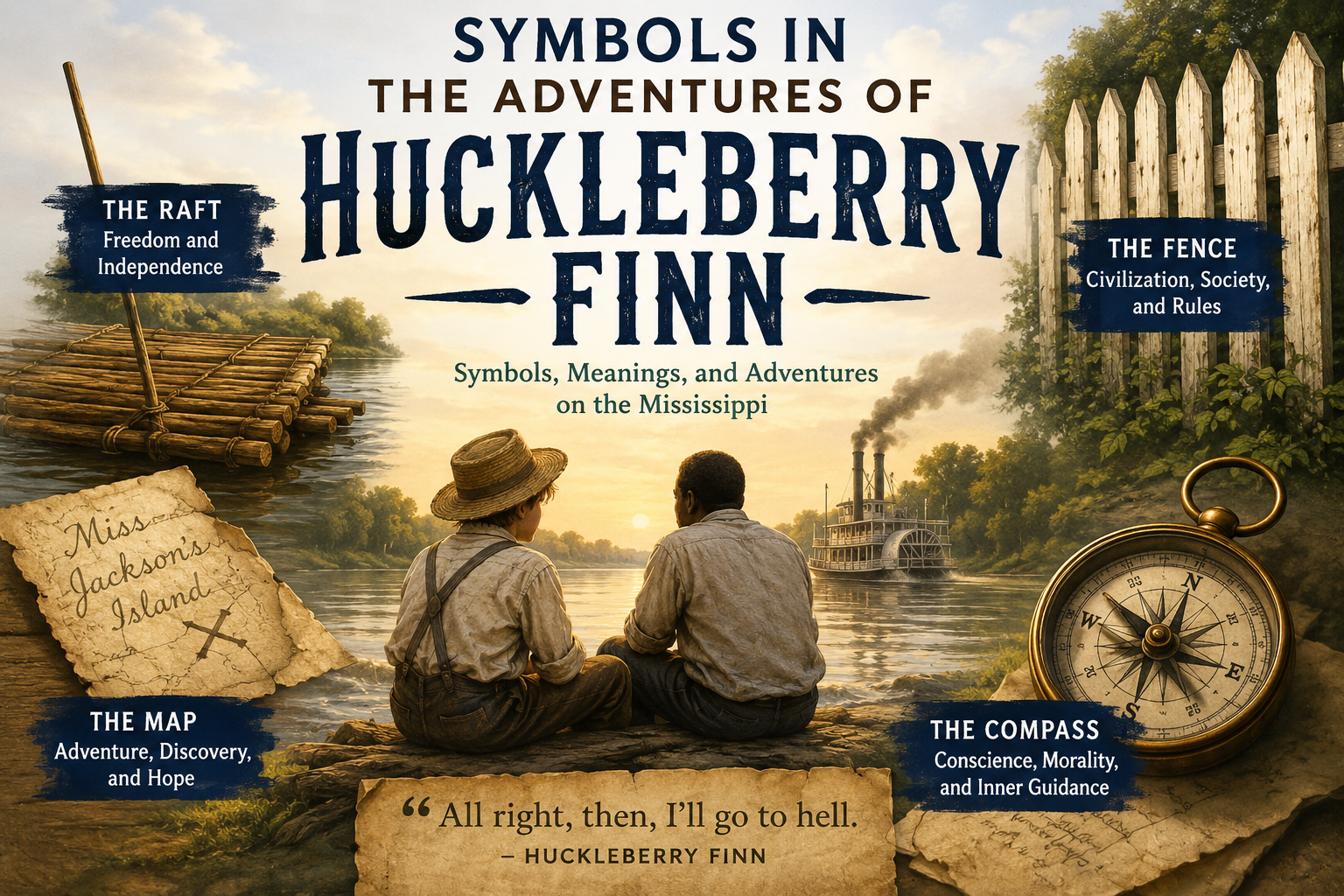
Mark Twain fills his novel with objects and places that mean more than they first seem to mean. The symbols in The Adventures of Huckleberry Finn help readers see how a funny river trip becomes a serious story about freedom, race, and conscience.

This guide explains the most important symbols with clear examples you can use in class or in an essay.

In this Guide

Huckleberry Finn Symbols

Why Symbols in The Adventures of Huckleberry Finn Matter

A symbol is something concrete that points to a deeper idea.

Twain uses simple things, like a river or a raft, to raise hard questions. The book asks what freedom means when a society accepts slavery as normal.

Studying symbols in The Adventures of Huckleberry Finn also helps you track theme. If you need a quick refresher, see our guide on how to find symbolism in a story.

Major symbols in The Adventures of Huckleberry Finn

The main symbols connect Huck’s outer journey with his inner growth.

The river often points to freedom. The shore often points to danger and false values. The raft becomes a small space where Huck and Jim can act more honestly than people in the towns.

These symbols in The Adventures of Huckleberry Finn work like the green light in The Great Gatsby. They are real objects in the story, but they also carry a larger meaning.

The Mississippi River: Freedom and Movement

The Mississippi River is the strongest symbol in the novel.

On the river, Huck escapes his abusive father. Jim also moves away from slavery and toward the hope of reuniting with his family.

The river seems open and free. It lets Huck and Jim leave behind the rules of towns, courts, and slaveholders.

Yet the river is not perfect. It can be dark, confusing, and dangerous. This shows that freedom is not simple. Huck and Jim may escape for a time, but the world around them still threatens their lives.

Theme connection: The river shows the dream of freedom, but it also shows how hard freedom is to reach in an unjust society.

The Raft: A Small World of Trust

The raft is more than transportation.

On the raft, Huck and Jim share food, stories, and fear. They speak as people, not as master and servant.

This matters because the wider world tells Huck that Jim is property. The raft lets Huck see Jim’s kindness and courage for himself.

The raft becomes a symbol of moral space. It is where Huck starts to reject the cruel lessons he has learned.

Theme connection: The raft supports the theme of conscience. Huck begins to choose human feeling over public rules.

The Shore and Towns: Corruption and Social Pressure

The shore often looks safe, but it brings danger.

When Huck and Jim leave the river, they meet feuding families, frauds, angry crowds, and people who defend slavery. The towns are full of rules, but many of those rules are cruel or foolish.

The Grangerford and Shepherdson feud is a clear example. The families act polite, yet they keep a deadly hatred alive.

Twain uses the shore to question what society calls civilized. In this novel, civilization often hides violence.

Theme connection: The shore symbolizes social corruption. It shows why Huck must question the values he has been taught.

Clothes: Identity and Performance

Clothes help Twain show how identity can become a performance.

Huck changes outfits more than once. At one point, he dresses as a girl to gather information. The duke and the king also use clothing and costume to trick people.

These moments are funny, but they also matter. Clothing lets people pretend to be someone else.

Twain suggests that social identity is not always honest. A person can look proper and still act badly.

Theme connection: Clothes reveal the gap between appearance and truth. This supports the novel’s satire of social roles.

The Fog: Confusion and Moral Uncertainty

The fog scene gives a strong image of confusion.

When Huck and Jim are separated in the fog, they lose direction. The river no longer feels clear or safe.

After they reunite, Huck lies to Jim and says the whole event was a dream. Jim is hurt because he trusted Huck.

This moment pushes Huck to feel shame. He apologizes to Jim, which is a major step for him.

Theme connection: The fog symbolizes moral confusion. Huck must learn to see Jim as a full human being, not as a target for jokes.

Superstition: Fear, Belief, and Survival

Superstition appears often in the novel.

Huck and Jim both notice omens and signs. Some beliefs seem silly, but others help them make sense of fear.

For Jim, superstition also shows how people with little power try to read danger before it strikes. He lives in a world where the law does not protect him.

Twain does not treat superstition in one simple way. It can be comic, but it can also reveal deep fear.

Theme connection: Superstition points to uncertainty. It shows how people search for meaning when society feels unsafe.

Jim as a Symbol of Human Dignity

Jim should not be reduced to only a symbol, but he does carry symbolic weight in the novel.

He represents the humanity that a racist society refuses to honor. He is a father, a friend, and a person with his own hopes.

Huck’s view of Jim changes as they travel. That change is central to the novel’s moral conflict.

Twain uses Jim to expose the evil of slavery. The power of the symbol comes from Jim’s real human feeling, not from an abstract idea.

Theme connection: Jim connects the themes of dignity and moral growth. Huck’s conscience forms as he learns to value Jim’s life.

How Symbols in The Adventures of Huckleberry Finn Connect to Theme

Symbols work best when they lead you back to the big ideas of the book.

The symbols in The Adventures of Huckleberry Finn do not sit apart from the plot. They shape the way we understand each choice Huck makes.

The river and raft point toward freedom. The shore points toward social corruption. The fog shows confusion inside Huck’s mind.

If you write about symbolism, always connect the symbol to a theme. For more practice, use our guide on finding symbolism in fiction.

For extra support while you read, try our symbol tracker worksheet to connect each image to a theme.

Why Symbols in The Adventures of Huckleberry Finn Still Matter

Twain’s symbols still matter because the novel asks questions readers still face.

What should a person do when society teaches something wrong? How can friendship change a person’s moral view?

The best symbols in The Adventures of Huckleberry Finn help students see that the book is not just about escape. It is about learning to judge right and wrong for yourself.

For background on the author, Britannica offers a useful overview of Mark Twain. The Library of Congress record for the novel also shows its place in American literary history.

Suggested Books for Further Study

  • Adventures of Huckleberry Finn by Mark Twain
  • Mark Twain: A Life by Ron Powers

FAQ: Symbols in The Adventures of Huckleberry Finn

What are the main symbols in The Adventures of Huckleberry Finn?

The main symbols in The Adventures of Huckleberry Finn include the Mississippi River, the raft, the shore, clothing, fog, and superstition.

What does the Mississippi River symbolize?

The river symbolizes freedom and movement. It also shows risk because Huck and Jim are never fully safe.

What does the raft symbolize?

The raft symbolizes trust and moral space. On it, Huck and Jim build a bond outside the cruel rules of society.

Why is the fog scene important?

The fog shows confusion. It also leads Huck to feel guilt after he hurts Jim with a lie.

How do these symbols help with essays?

They give you concrete evidence. You can explain how each object or place connects to themes like freedom, conscience, and hypocrisy.

Key Takeaway

The symbols in The Adventures of Huckleberry Finn turn a river journey into a moral test. Twain uses concrete images to show Huck’s slow move toward empathy and truth.

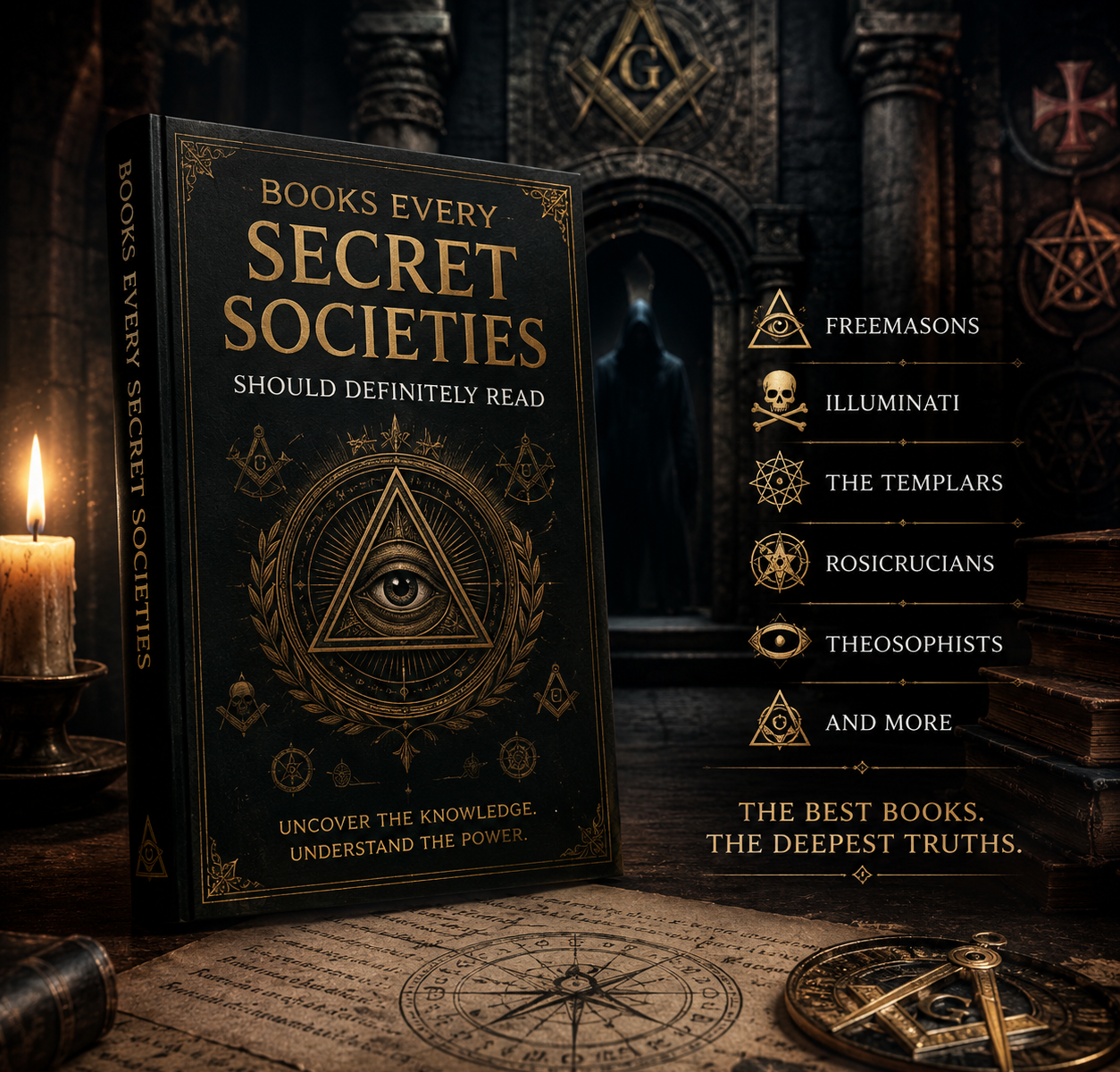
Books Every Secret Societies Fan Should Read

Best Secret societies books

The books that every secret societies fan should read often deal with power, silence, fear, and loyalty. These stories pull readers into hidden rooms, coded rules, and groups that seem exciting at first but often turn dark.

Secret society stories are popular because they mix mystery with big questions about identity and control. They also help students think about how people act when they feel chosen or trapped.

In this Guide

Best Secret societies books

Why Books Every Secret Societies Stories Matter

Hidden groups in fiction often reveal what public life tries to hide.

Secret societies in literature are not just about masks and passwords. They show how people use secrecy to gain power or protect themselves.

In many stories, the group promises belonging. A lonely student, outsider, or curious hero may feel special when chosen. But that feeling can lead to danger when loyalty matters more than truth.

This is why Books Every Secret Societies stories often work well in school discussions. They connect to real themes like peer pressure, class, ambition, and moral choice.

For background on the real history of secret groups, Britannica has a helpful overview of secret societies.

Books Every Secret Societies Reader Should Know

These books use hidden groups to create mystery, tension, and deep moral conflict.

The Secret History by Donna Tartt is one of the most famous campus novels about a closed circle of students. The group studies ancient Greek ideas, but their search for beauty turns into guilt and violence.

This novel is a strong choice for older high school and college readers. It asks how smart people can excuse terrible actions when they think they are above normal rules.

Ninth House by Leigh Bardugo brings secret societies into a dark fantasy version of Yale. The book looks at wealth, privilege, and the cost of power.

It also shows how hidden systems can protect the powerful. That makes it a useful book for readers who want mystery with social meaning.

Foucault’s Pendulum by Umberto Eco is a harder read, but it is important for the genre. It explores codes, fake history, and the danger of believing too much in hidden patterns.

These Books Every Secret Societies titles show that secrecy can be thrilling, but it can also twist how people see the world.

Classic and Modern Examples of Books Every Secret Societies Fans Enjoy

Secret society themes appear in many kinds of literature, from gothic tales to campus novels.

In Frankenstein by Mary Shelley, there is no formal secret society, but the novel still shares the same fears. Victor hides his work, breaks moral limits, and refuses to face what he has made.

That secret knowledge becomes a curse. Like many Books Every Secret Societies stories, the novel warns that hidden ambition can destroy both the self and others.

In Jane Eyre by Charlotte Brontë, secrets shape the plot and control who has power. The hidden truth at Thornfield Hall shows how secrecy can trap women and protect men with status.

Modern campus novels often use clubs, houses, and elite groups to ask similar questions. Who gets invited? Who stays outside? What price does someone pay to belong?

That pattern is one reason Books Every Secret Societies stories feel so modern, even when the books are old.

Symbols and Themes in Secret Societies Stories

Secret society books often use simple objects that carry heavy meaning.

Masks often stand for false identity. A character may hide fear, guilt, or desire behind a public face.

Keys often suggest access. A key may open a room, but it can also open a truth the character is not ready to face.

Closed doors show exclusion. They remind readers that some people are kept out of power while others meet in private.

Common themes include loyalty, guilt, ambition, and control. These themes matter because secret societies are rarely just clubs. They are systems with rules, rewards, and punishments.

Books Every Secret Societies fans enjoy often ask one main question: What would you do to feel chosen?

These titles are strong picks if you want stories with hidden groups and moral tension.

  • The Secret History by Donna Tartt
  • Ninth House by Leigh Bardugo
  • Foucault’s Pendulum by Umberto Eco

If you read for class, keep track of repeated symbols and turning points. This guide on how to take notes while reading a novel can help you spot patterns without slowing down too much.

How to Read Secret Societies Stories with Purpose

Pay attention to who controls information.

In these books, knowledge is rarely neutral. A secret can protect someone, but it can also harm people who do not know the truth.

Notice how characters change after they join the group. Do they become braver, colder, or more afraid? Their behavior often shows the real cost of belonging.

Also watch the setting. Old libraries, private schools, locked rooms, and night scenes often create a mood of danger.

Books Every Secret Societies stories reward close reading because small details often return later with new meaning.

Why Students Connect with Secret Society Literature

These stories turn school, friendship, and ambition into high-stakes drama.

Students often understand the pressure to fit in. Secret society fiction takes that pressure and makes it larger.

The chosen group may seem exciting at first. But the story usually asks whether status is worth the loss of freedom.

That is why Books Every Secret Societies novels work well for AP Literature and college essays. They give readers clear conflicts and rich symbols to analyze.

For more context on gothic and mystery traditions, Britannica’s page on the Gothic novel is a useful starting point.

FAQs About Books Secret Societies

What are Books Every Secret Societies stories usually about?

They are usually about hidden groups, private rules, and the danger of secret power. Many focus on loyalty, guilt, and ambition.

What is the best secret society novel to start with?

The Secret History by Donna Tartt is a strong starting point for older readers. It is popular, literary, and full of themes students can analyze.

Are secret society books good for school essays?

Yes. They often include clear symbols, complex characters, and strong moral questions.

Why do secret society stories often take place at schools?

Schools already have social groups, pressure, and competition. That setting makes secrecy feel more intense.

Do all secret society books include crime or violence?

No. Some focus more on mystery, class, or identity. But many use crime to show how secrecy can grow out of control.

Key Takeaway

Books Every Secret Societies fan should read are not only about hidden clubs. They are about power, belonging, and the choices people make when no one outside the group is watching.

These stories stay popular because they make readers ask a sharp question: If a secret gave you power, would you keep it?

error

Enjoy this article? Please spread the word :)

Follow by Email
BLUESKY
fb-share-icon
Reddit
LinkedIn
Share
RSS