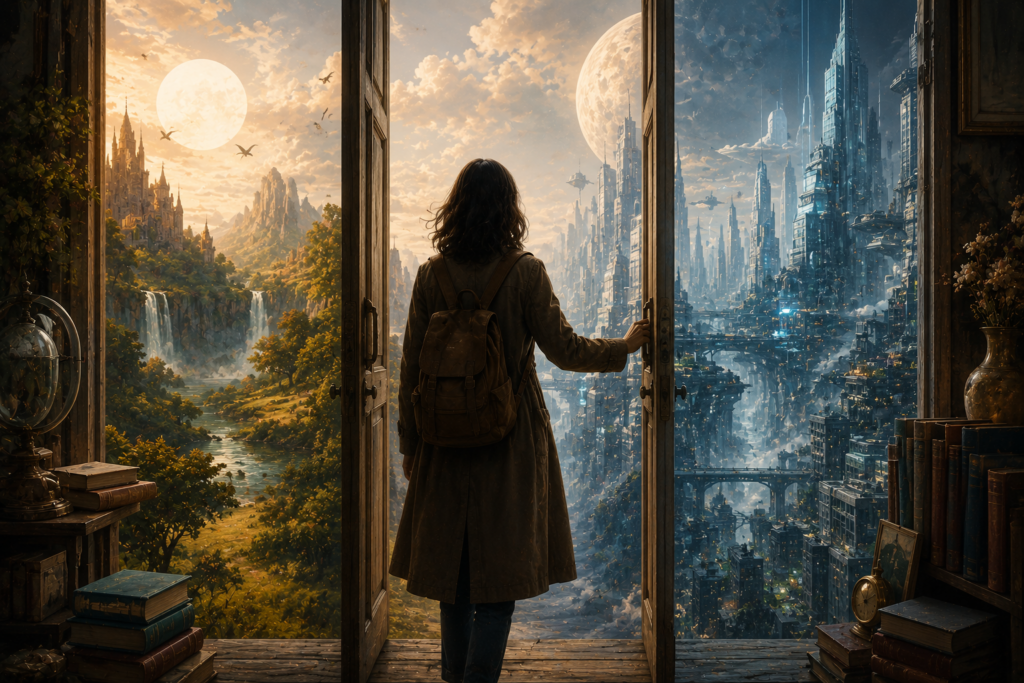
Best Novels About Parallel Worlds: A Guide to Other Realities in Fiction

Parallel Worlds

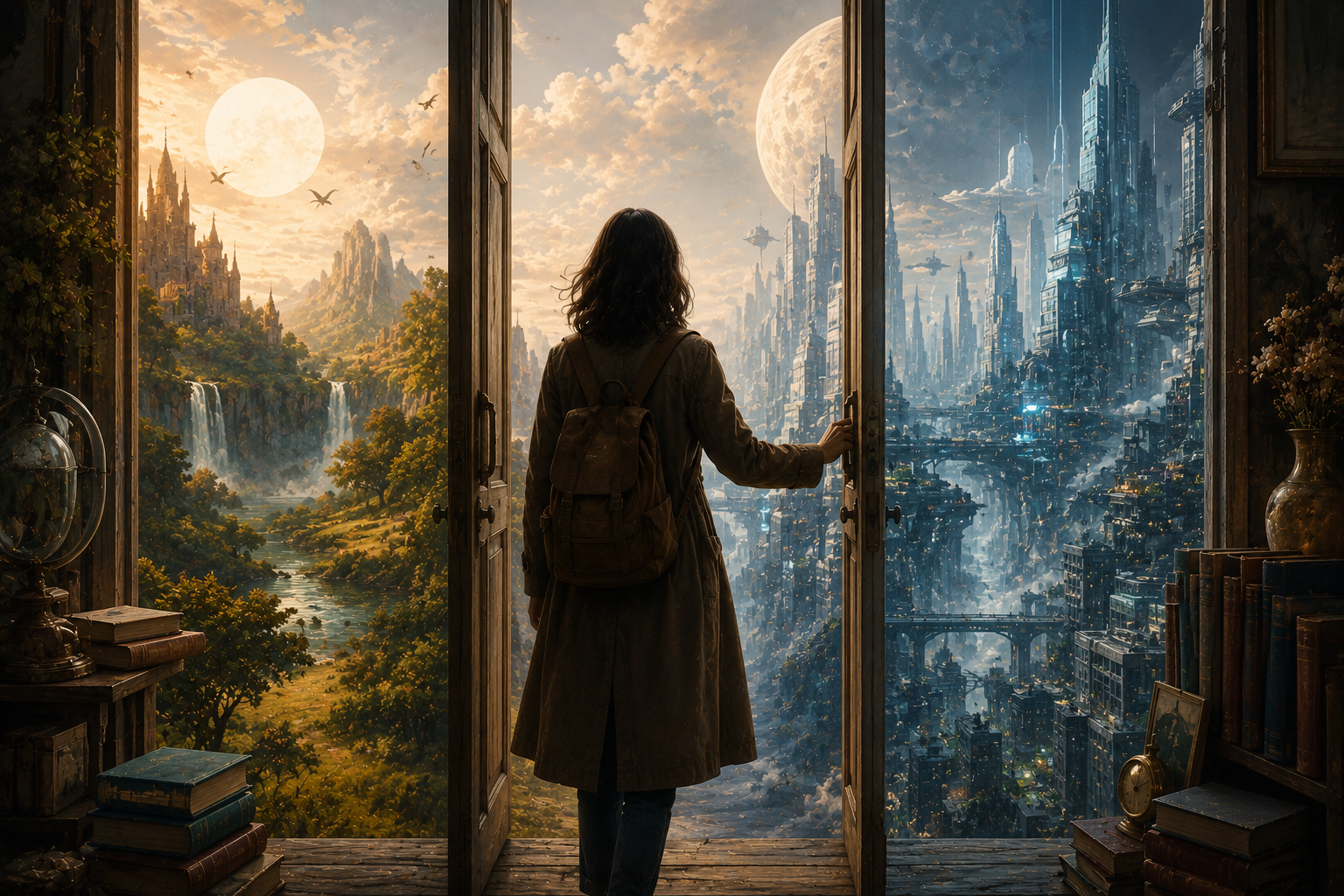
The Best Novels About Parallel Worlds do more than send characters into strange places. They help readers ask big questions about choice, identity, power, and home.

From Narnia to Wonderland, these stories make the impossible feel close. They also give students rich material for essays, class talks, and close reading.

In this Guide

  • Why parallel world novels still matter
  • Best novels about parallel worlds for students
  • Common symbols and themes
  • How tone and mood work in these books
  • Book suggestions to buy or borrow
  • FAQs
  • Key takeaway
Parallel Worlds

Why the Best Novels About Parallel Worlds Still Matter

Parallel worlds turn abstract ideas into places readers can enter.

In these novels, a wardrobe can open into a frozen kingdom. A rabbit hole can lead to a world where logic falls apart. A hidden city can sit right under the one we know.

For students, the Best Novels About Parallel Worlds are useful because they make theme easy to see. The “other world” often shows what the real world tries to hide.

These books also fit inside the larger tradition of fantasy. For more background, see Britannica’s short guide to fantasy as a literary genre.

Best Novels About Parallel Worlds for Students

These books are strong choices for high school, AP Literature, and college readers.

Alice’s Adventures in Wonderland by Lewis Carroll

Carroll’s novel sends Alice into a world where rules shift without warning. Wonderland is funny, but it can also feel tense.

The book works well for essays about nonsense, childhood, and authority. Alice keeps asking for order, but the world around her refuses to give it.

You can learn more about the novel’s background through Britannica’s page on Alice’s Adventures in Wonderland.

The Lion, the Witch and the Wardrobe by C. S. Lewis

Narnia is one of the most famous parallel worlds in children’s literature. The wardrobe is a simple object, but it becomes a doorway into danger and wonder.

This novel is often read as a story about courage and moral choice. The cold world of Narnia reflects a place trapped by fear.

The Golden Compass by Philip Pullman

Pullman’s world looks close to our own, but it has daemons, armored bears, and a deep fight over knowledge. The novel feels bold because its fantasy world has political force.

It is a good pick for students who want a more complex parallel world. It raises questions about truth, control, and what adults owe to children.

A Wrinkle in Time by Madeleine L’Engle

This novel blends science fiction with fantasy. Meg travels across space and enters places that feel like alternate versions of reality.

The book is useful for studying love, fear, and the pressure to conform. Its strange worlds help show Meg’s inner struggle.

Piranesi by Susanna Clarke

Piranesi lives in a vast House filled with halls, statues, and tides. The world feels calm at first, but its mystery grows darker.

This is one of the Best Novels About Parallel Worlds for older students. It rewards close reading and works well for college-level discussion.

What the Best Novels About Parallel Worlds Have in Common

The strongest parallel world stories use the second world for more than escape.

A good parallel world has rules. It may feel magical, but it still follows a pattern. Readers learn those rules as the main character does.

Most of these stories also use contrast. The real world may feel dull or harsh. The parallel world may feel bright, cruel, or full of secrets.

That contrast helps reveal character. When a hero crosses into another world, the author can test what that person values most.

Symbols and Themes in the Best Novels About Parallel Worlds

Parallel world novels often use simple objects with deep meaning.

Doors and portals are the most common symbols. A wardrobe, rabbit hole, or hidden gate marks the move from ordinary life into mystery.

Mirrors and doubles can suggest split identity. A character may meet a version of life that feels both strange and familiar.

Maps and paths often stand for choice. In many of the Best Novels About Parallel Worlds, the journey matters as much as the final answer.

The major themes are often identity and freedom. These books ask who we become when the normal world no longer controls us.

How the Best Novels About Parallel Worlds Shape Tone and Mood

Parallel worlds can change a story’s emotional feel in one scene.

Wonderland can seem playful, then suddenly unfair. Narnia can feel magical, then turn cold and dangerous. Piranesi’s House feels peaceful, but that peace hides loss.

This is where tone and mood matter. If you want a clear review of the difference, read our guide to tone and mood in literature.

When you read the Best Novels About Parallel Worlds, notice how the setting changes your feelings. That shift often points to the author’s deeper message.

Amazon Book Suggestions: Best Novels About Parallel Worlds to Buy or Borrow

If you want to build a small reading list, start with books that offer rich worlds and strong themes.

  • The Golden Compass by Philip Pullman
  • Piranesi by Susanna Clarke

You can search these titles on Amazon, check your school library, or borrow them from a local library. Both books are strong choices for students who want layered fantasy with serious ideas.

FAQ About the Best Novels About Parallel Worlds

What is a parallel world novel?

A parallel world novel features a second reality that exists beside, beneath, or beyond the normal world. Characters often cross into it through a portal, a secret path, or a strange event.

Why do authors use parallel worlds?

Authors use parallel worlds to explore real problems in a fresh way. A made-up world can reveal fear, injustice, hope, or hidden truth.

Are parallel world novels only fantasy?

No. Many are fantasy, but some mix science fiction, mystery, or literary fiction. The key idea is the presence of another reality.

Which parallel world novel is best for AP Literature?

Piranesi is a strong AP Literature choice because it has rich symbols, a complex setting, and deep questions about memory and identity.

What should students look for while reading?

Look for portals, rules, contrasts, and changes in mood. These details often reveal the story’s theme.

Conclusion: Why These Other Worlds Stay With Us

The Best Novels About Parallel Worlds stay with readers because they make us see our own world in a new light. They give us wonder, but they also ask hard questions.

For students, these books are more than fun escapes. They are powerful texts for studying theme, setting, symbol, and character growth.

Key Takeaway

Parallel worlds help fiction ask real questions. The stranger the world looks, the more it may reveal about our own.
Most Beautiful Small Town Secrets: What Literature Teaches Us About Hidden Places

Small Town Secrets

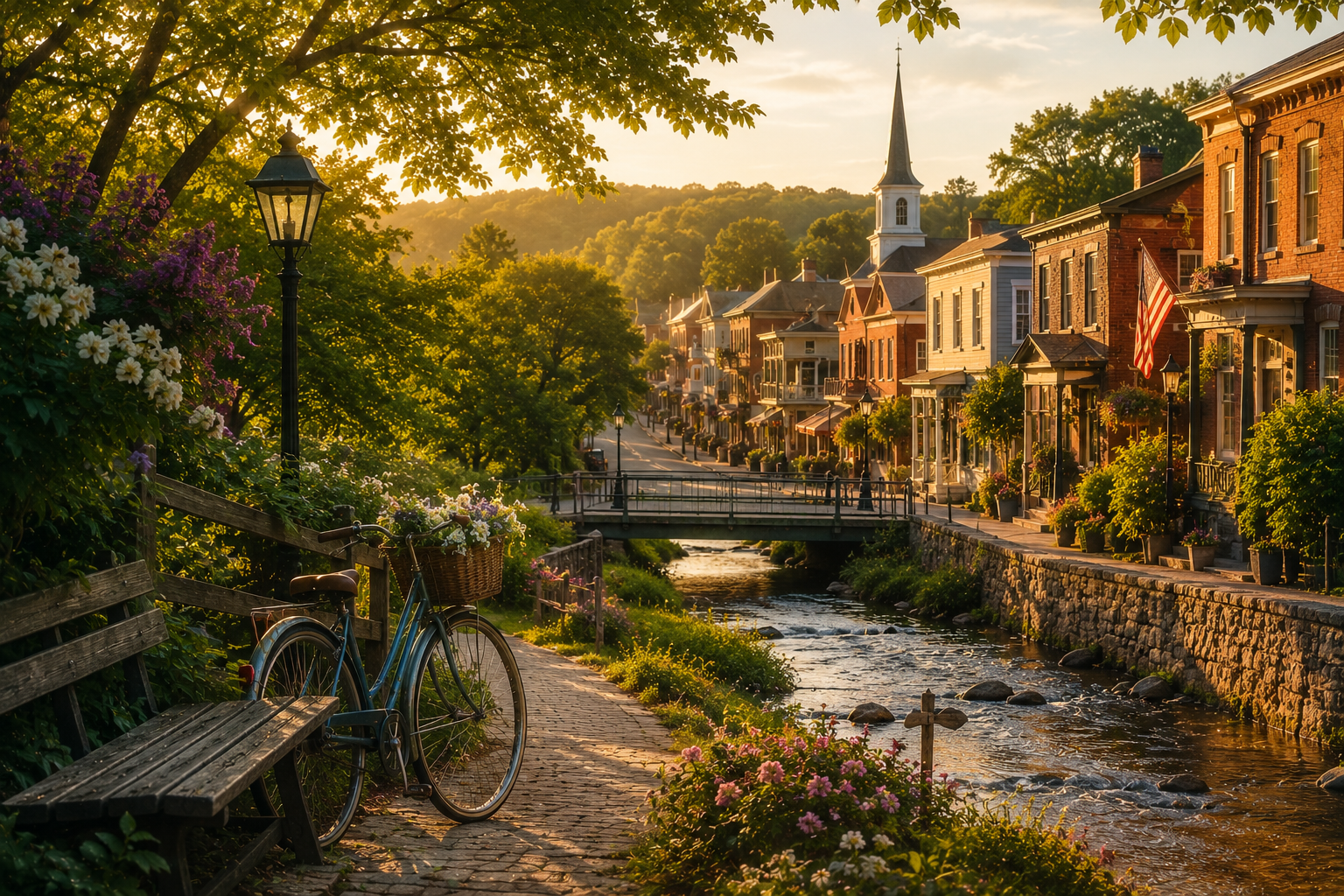
Most Beautiful Small Town Secrets are more than pretty streets, quiet porches, and local legends. In literature, they often reveal the private fears, hopes, and choices that shape a whole community.

Small towns can look peaceful from the outside, but stories show us what lives under the surface.

In this Guide

  • Why small town secrets matter in literature
  • Classic examples from famous books
  • Symbols and themes to watch for
  • Recommended books to read
  • FAQ for students and readers
Small Town Secrets

Why Most Beautiful Small Town Secrets Matter in Literature

Small towns make secrets feel personal because everyone seems to know everyone.

Writers use small towns to show how public life and private life can clash. A character may smile at church, wave at a neighbor, or sit in a classroom, yet hide pain that no one wants to see.

That is why Most Beautiful Small Town Secrets work so well in fiction. Beauty creates contrast. The town may look calm, but the story asks us to look closer.

This setting also helps students notice social pressure. In a small town, gossip can act like a law. Reputation can matter as much as truth.

Most Beautiful Small Town Secrets in Classic Literature

Many classic books use quiet towns to explore deep conflict.

In To Kill a Mockingbird by Harper Lee, Maycomb seems slow and familiar. Yet the town hides racism, fear, and moral courage. The beauty of childhood memories sits beside serious injustice.

In Winesburg, Ohio by Sherwood Anderson, the town is full of lonely people. Each person carries a private story. These Most Beautiful Small Town Secrets are not always shocking, but they are deeply human.

In Thornton Wilder’s Our Town, Grover’s Corners appears simple. The play shows daily life, family love, and the passing of time. Its secret is that ordinary life is more precious than people realize.

You can read more about Winesburg, Ohio through Britannica’s overview.

Symbols Behind Most Beautiful Small Town Secrets

Small town stories often use simple objects to carry deeper meaning.

A locked room may stand for shame. A garden may suggest hope. A main street may show the public face of the town, while a back road may reveal what people hide.

In Most Beautiful Small Town Secrets, houses often matter. A bright porch can seem warm, but it can also hide family tension. A broken fence can suggest a broken boundary between private life and public talk.

Weather also plays a strong role. Summer heat can build pressure. A storm can mark a moment when truth breaks through.

These symbols help readers see that setting is never just background. It can act like a mirror for the characters.

Key Themes in Most Beautiful Small Town Secrets

Small towns in literature often ask big moral questions.

One major theme is appearance versus reality. A town may seem safe, polite, or pure, but the plot reveals what people refuse to face.

Another theme is belonging. Characters may want to fit in, but the town’s rules can limit who they become. This is common in coming-of-age stories.

Memory is also important. Many small town stories look back at childhood, family history, or old choices. The past does not stay buried for long.

Emily Dickinson’s poetry is a helpful match here because she often finds mystery in small spaces and quiet moments. If you want a student-friendly guide, read how to read Emily Dickinson.

These books are strong choices for students who want rich settings and hidden conflict.

  • Winesburg, Ohio by Sherwood Anderson
  • To Kill a Mockingbird by Harper Lee

Winesburg, Ohio is best for readers who like linked stories and quiet sadness. It shows how one town can hold many private worlds.

To Kill a Mockingbird is best for readers who want a clear plot with moral conflict. It shows how small town life can protect old beliefs, even when those beliefs hurt people.

For poetry that captures hidden feeling in plain language, Emily Dickinson is also worth reading. The Poetry Foundation’s Emily Dickinson page gives helpful background.

How Students Can Read Small Town Secrets More Closely

Start by asking what the town wants people to believe.

Then ask what the story slowly reveals. Pay attention to who has power, who gets judged, and who stays silent.

Look for repeated places. A courthouse, school, cemetery, or front porch can tell you what the town values.

It also helps to track gossip. In many stories, gossip shows fear more than truth. It can reveal what the town refuses to discuss in public.

Why Most Beautiful Small Town Secrets Still Feel Modern

These stories still matter because every community has a public face.

Today, that public face may appear on social media, school websites, or local news. The idea is the same. People and places often show only part of the truth.

Most Beautiful Small Town Secrets remind us to read beyond first impressions. A pretty setting can hold grief, courage, love, and change.

FAQ About Most Beautiful Small Town Secrets

What does “Most Beautiful Small Town Secrets” mean in literature?

It refers to hidden truths inside peaceful or charming small town settings. These secrets often reveal conflict, pain, or moral growth.

Why do writers use small towns so often?

Small towns make relationships feel close and intense. A secret can affect the whole community.

What is a good book about small town secrets for students?

To Kill a Mockingbird is a strong choice because it connects setting, justice, and character growth in a clear way.

Are small town secrets always dark?

No. Some secrets reveal kindness, love, or hidden strength. The secret may be painful, but it can also lead to truth.

Key Takeaway

Most Beautiful Small Town Secrets show that quiet places can hold powerful stories. In literature, the smallest setting can reveal the biggest truths about people.

Books Like Fear and Anxiety: Literature That Makes Inner Fear Visible

Fear and Anxiety

Readers often search for Books Like Fear and Anxiety because they want stories that name what many people feel but struggle to explain. These books turn panic, dread, doubt, and stress into characters, symbols, and powerful scenes.

For students, these works can also make essays richer because they connect personal feeling with big literary themes.

In this Guide

  • What makes these books powerful
  • Classic novels about fear and anxiety
  • Modern books with anxious characters
  • Common symbols and themes
  • Recommended books to read
  • FAQs
Fear and Anxiety

What Makes Books Like Fear and Anxiety So Powerful?

These stories show how fear changes the way people see the world.

Books Like Fear and Anxiety matter because they do more than describe nervous feelings. They show how fear shapes choices, breaks trust, and makes ordinary places feel strange.

In literature, anxiety often appears as a locked room, a dark street, a storm, or a voice inside the mind. These symbols help readers understand feelings that are hard to say out loud.

That is why these books work well in high school and college classes. They give students a clear path into theme, mood, conflict, and character study.

Classic Books Like Fear and Anxiety for Students

Many classic works explore fear through guilt, isolation, and pressure.

One strong example is Crime and Punishment by Fyodor Dostoevsky. Raskolnikov’s fear does not only come from the police. It comes from his own mind after he commits murder.

His anxiety grows because he cannot escape himself. This makes the novel a powerful study of guilt and moral fear.

Another key example is Frankenstein by Mary Shelley. Victor Frankenstein fears the creature he made, but he also fears the truth about his own ambition.

The novel shows that fear often starts when a person refuses to face responsibility.

The Metamorphosis by Franz Kafka also belongs in any discussion of Books Like Fear and Anxiety. Gregor Samsa wakes as an insect, but the deeper horror is his family’s shame and rejection.

Kafka turns anxiety into a strange body. That image helps readers see how fear can make a person feel less than human.

Modern Books Like Fear and Anxiety Worth Reading

Modern stories often connect anxiety to identity, family, school, work, and social pressure.

The Bell Jar by Sylvia Plath is one of the most important modern novels about mental distress. Esther Greenwood feels trapped under an invisible weight.

The “bell jar” becomes a symbol of isolation. It shows how anxiety and depression can make the outside world feel distant and unreal.

Speak by Laurie Halse Anderson is another strong choice for students. Melinda’s silence shows how trauma can turn fear inward.

The novel uses art, school spaces, and voice as symbols. Each one helps show Melinda’s slow return to strength.

The Perks of Being a Wallflower by Stephen Chbosky also fits with Books Like Fear and Anxiety. Charlie’s letters reveal fear, memory, and loneliness in a direct, honest style.

These modern works help readers see that anxiety is not always loud. Sometimes it hides in silence, routine, or a smile.

Symbols and Themes in Books Like Fear and Anxiety

Writers often use symbols to make fear feel real on the page.

One common symbol is the house. In many stories, a house should mean safety. When the house feels unsafe, the reader senses deep emotional trouble.

In Edgar Allan Poe’s “The Fall of the House of Usher,” the house reflects the family’s decay and terror. You can learn more about Poe’s work through the Poetry Foundation’s page on Edgar Allan Poe.

Darkness is another common symbol. It may show confusion, danger, or the unknown.

Water can also point to anxiety. A flood, river, or deep sea may show a mind that feels out of control.

The strongest Books Like Fear and Anxiety often use setting as a mirror. The outside world reflects the character’s inner state.

Common themes include guilt, isolation, loss of control, and fear of change. These themes help readers connect private emotion to larger human problems.

How to Read Books Like Fear and Anxiety in Class

A careful reading can turn emotional scenes into strong analysis.

When you read Books Like Fear and Anxiety, start by asking what the main character fears most. Is it death, shame, failure, truth, or being alone?

Next, look for repeated images. A sound, color, room, or object may carry symbolic meaning.

Pay close attention to sentence style too. Short, broken sentences can create panic. Long, heavy sentences can make a scene feel trapped.

This same skill helps with poetry. If you want a clear method, read our guide on how to analyze poetry step by step.

Poems often use fear in a tight space. A single image can carry a whole emotional world.

These titles are strong choices for students who want literature with emotional depth.

  • The Bell Jar by Sylvia Plath
  • Frankenstein by Mary Shelley
  • Speak by Laurie Halse Anderson

Each book offers a different view of fear. One explores mental illness, one explores ambition and guilt, and one explores trauma and voice.

If you are building a reading list around Books Like Fear and Anxiety, these are useful starting points because they are widely taught and easy to discuss in essays.

Why Books Like Fear and Anxiety Matter in Literary Culture

These books help readers talk about feelings that society often hides.

Fear has always been part of literature. Ancient myths, Gothic novels, war stories, and modern school novels all use fear to ask serious questions.

What do people do when they lose control? How does guilt change a person? Can truth set someone free, or does it make life harder?

Books Like Fear and Anxiety stay popular because these questions never go away.

They also remind readers that fear is not a weakness. In many stories, fear becomes the first step toward honesty.

For background on Gothic fiction, which often explores dread and inner terror, Britannica offers a helpful overview of the Gothic novel.

FAQ: Books Like Fear and Anxiety

What are Books Like Fear and Anxiety usually about?

They are usually about fear, stress, guilt, trauma, or the feeling of being trapped. They often show how a character’s mind changes under pressure.

Are these books good for AP Literature essays?

Yes. Many of them have clear themes, strong symbols, and complex characters. That makes them useful for literary analysis.

What is a good first book to read in this category?

Frankenstein is a strong first choice. It has fear, guilt, science, family conflict, and rich symbolism.

Do these books always have sad endings?

No. Some are tragic, but others show healing or self-knowledge. The main focus is not sadness. It is emotional truth.

Key Takeaway

Books Like Fear and Anxiety help readers see how literature turns hidden feelings into stories, symbols, and unforgettable characters.

They are worth reading because they show that fear can reveal who people are, what they value, and what they must face to grow.

Best Dark Academia Novels to Read

Dark Academia novels

The Best Dark Academia Novels to Read mix old libraries, intense friendships, secret knowledge, and moral danger. These books are perfect for students and literature lovers who want stories with mystery, beauty, and serious ideas.

If you enjoy campus settings, gothic moods, or characters who chase knowledge too far, this guide will help you choose your next read.

In this Guide

What Makes the Best Dark Academia Novels to Read Feel So Compelling?

Dark academia turns learning into something beautiful, tense, and dangerous.

These novels often take place in elite schools, old colleges, private libraries, or hidden societies. The setting matters because it makes knowledge feel powerful, rare, and sometimes unsafe.

The best stories in this genre ask hard questions. What happens when ambition beats kindness? Can beauty excuse cruelty? Should people seek truth at any cost?

This is why the Best Dark Academia Novels to Read often connect well with classic literature. Many of them echo works like Frankenstein, where a student’s hunger for knowledge leads to disaster.

If you want to read this genre with stronger literary insight, this guide on how to read literature like a scholar can help you spot symbols, themes, and patterns more clearly.

Best Dark Academia Novels to Read First

Start with books that show the core mood of the genre without feeling too hard to follow.

The Best Dark Academia Novels to Read first should pull you in fast. They should have strong characters, a tense setting, and ideas worth discussing in class or with friends.

1. The Secret History by Donna Tartt

The Secret History is one of the most famous dark academia novels. It follows a group of classics students at a small college in Vermont, where beauty, pride, and obsession lead to murder.

This book fits the genre because it shows how learning can become a way to feel superior. Greek tragedy, secret rituals, and moral guilt shape the whole story.

Choose this if you want a slow, rich novel with deep character study and a strong sense of doom.

2. If We Were Villains by M.L. Rio

This novel follows Shakespeare students at an elite arts school. Their friendships turn toxic as stage roles and real life begin to blur.

It is a strong choice for readers who like theater, rivalry, and emotional tension. Students who study Shakespeare may enjoy how the novel uses plays like Macbeth and King Lear.

Pick this one if you want a faster read than The Secret History, but still want a literary feel.

3. Babel by R.F. Kuang

Babel takes place at Oxford and blends fantasy with history. It follows a student who studies language, translation, and power in the British Empire.

This is one of the Best Dark Academia Novels to Read if you want more than mood. It asks sharp questions about empire, race, language, and who gets to control knowledge.

Choose this if you like big ideas and want a book that feels useful for essays or class discussion.

4. Ninth House by Leigh Bardugo

Ninth House brings dark academia into a modern fantasy world. It follows secret societies at Yale, where magic, privilege, and violence hide behind polished doors.

This book fits the genre through its campus setting and its focus on power. It also shows how elite spaces can protect people who harm others.

Pick this if you want a darker, more supernatural story with a mystery plot.

5. Vita Nostra by Marina and Sergey Dyachenko

Vita Nostra is strange, intense, and unsettling. It follows a young woman who attends a mysterious school where the lessons seem to change her mind and body.

This book is ideal for readers who want dark academia that feels surreal. It is less cozy than many campus novels, but it is powerful and original.

Choose this if you like weird fiction and do not mind a story that keeps you off balance.

6. The Maidens by Alex Michaelides

The Maidens is a campus thriller set at Cambridge. It centers on a secret group of female students and a murder mystery tied to Greek myth.

This is a good option for readers who want the dark academia mood in a more direct thriller form. It has old colleges, hidden motives, and a strong sense of danger.

Pick this if you want something quick, suspenseful, and easy to read between school assignments.

Best Dark Academia Novels to Read If You Like Classics

Some older novels helped shape the dark academia mood long before the term became popular.

The Best Dark Academia Novels to Read are not all modern. Many classic works explore ambition, beauty, pride, and forbidden knowledge.

7. Frankenstein by Mary Shelley

Frankenstein is a key book for dark academia fans. Victor Frankenstein is a student who wants to master life and death, but his discovery leads to pain and ruin.

The novel fits the genre because it links study with danger. Victor’s education does not make him wiser. It makes him reckless.

For background on the gothic tradition, Britannica’s overview of the Gothic novel is a helpful starting point.

8. The Picture of Dorian Gray by Oscar Wilde

This novel is not set in a school, but it belongs on any dark academia reading list. It focuses on beauty, art, influence, and moral decay.

Dorian’s world is full of clever talk and dangerous ideas. Like many dark academia characters, he treats life as an experiment and ignores the cost.

Choose this if you enjoy elegant writing and sharp ideas about art and corruption.

9. Possession by A.S. Byatt

Possession follows scholars who study the letters and lives of two Victorian poets. It is a literary mystery built around research, desire, and hidden history.

This novel is a great fit for college readers or advanced high school students. It shows the thrill of close reading and the risks of turning writers into objects to own.

If you like poetry, you may also enjoy browsing the Poetry Foundation for poems and poet biographies connected to literary study.

10. Never Let Me Go by Kazuo Ishiguro

Never Let Me Go begins at a strange boarding school called Hailsham. The students grow up with art, rules, and secrets they do not fully understand.

This novel has a quiet style, but its emotional force is strong. It fits dark academia through its school setting, hidden truth, and deep questions about what makes a human life valuable.

Pick this if you want a thoughtful book that feels calm at first, then becomes haunting.

How to Choose the Best Dark Academia Novels to Read for Class or Fun

Your best choice depends on the kind of reading experience you want.

If you want a classic dark academia feel, start with The Secret History or If We Were Villains. These books give you elite schools, intense friendships, and moral collapse.

If you want a book with strong social themes, try Babel. It works well for readers who care about history, language, and power.

If you prefer classic literature, choose Frankenstein or The Picture of Dorian Gray. These books are shorter than many modern novels and often appear in literature courses.

The Best Dark Academia Novels to Read for school are the ones that give you something to argue about. Look for books with symbols, inner conflict, and choices that have serious consequences.

As you read, track repeated images like candles, portraits, old buildings, or locked rooms. You can also use scholar-style reading habits to notice how setting and theme work together.

Best Dark Academia Novels to Read: Books to Look For Online or at the Library

These titles are easy to search for on Amazon, in school libraries, or through local bookstores.

If you want to buy or borrow a few key books, start with these:

  • The Secret History by Donna Tartt
  • If We Were Villains by M.L. Rio
  • Babel by R.F. Kuang

These are among the Best Dark Academia Novels to Read because they show different sides of the genre. One is literary and quiet, one is dramatic and tense, and one links academia to history and power.

Why Students Often Connect With the Best Dark Academia Novels to Read

Dark academia makes school feel like a place where big choices matter.

Students often enjoy this genre because it turns study into a story with real stakes. The characters read hard books, chase praise, and make choices that reveal who they are.

These novels also reflect common student pressures. Many characters want to be special, smart, admired, or chosen. That desire can lead to growth, but it can also lead to harm.

The Best Dark Academia Novels to Read do not just make learning look stylish. They ask whether knowledge has value without ethics.

FAQ About the Best Dark Academia Novels to Read

What are the Best Dark Academia Novels to Read for beginners?

Start with If We Were Villains if you want a fast story, or The Secret History if you want a deeper literary novel. Both show the main themes of the genre clearly.

Is dark academia only about college students?

No. Many dark academia books take place in schools or universities, but the genre is really about knowledge, beauty, ambition, and danger.

Are dark academia novels good for AP Literature?

Some are useful for AP Literature style thinking, especially Frankenstein, The Picture of Dorian Gray, and Never Let Me Go. They offer strong themes and rich character conflict.

Which dark academia novel is the most literary?

The Secret History is often seen as the major modern dark academia novel. For classics, Frankenstein and The Picture of Dorian Gray are strong choices.

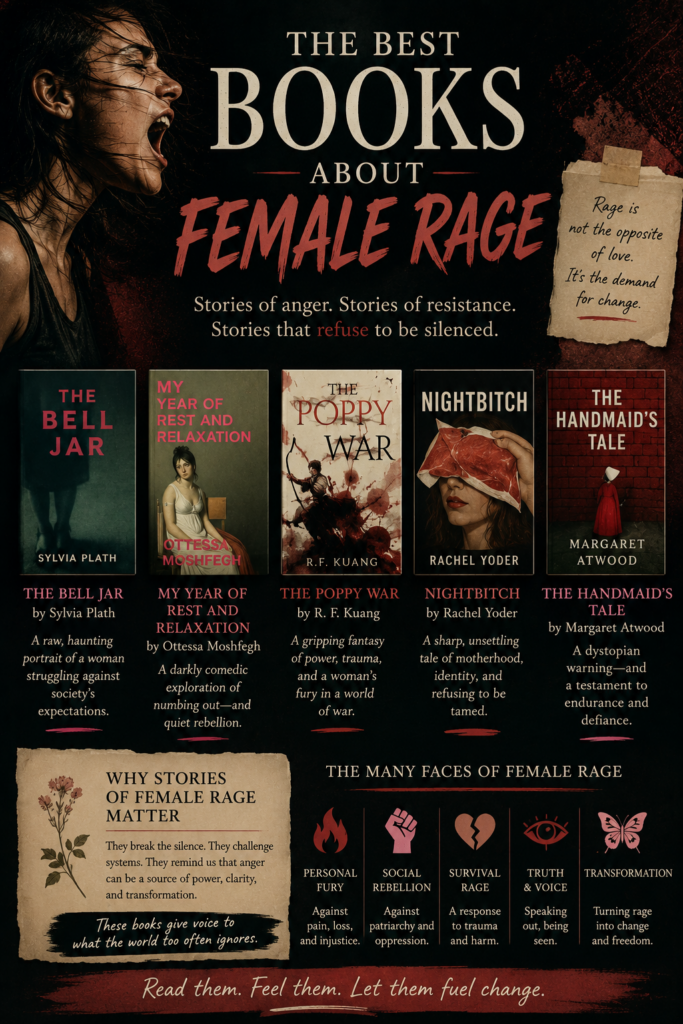
Best Books About Female Rage: Powerful Stories Students Should Read

Best Books about Female Rage

The best books about female rage show what happens when women are ignored, trapped, judged, or pushed too far. These stories do more than show anger. They reveal pain, power, and the cost of silence.

For students, these books can make classic themes feel urgent and real. They also help readers see how literature turns private anger into public meaning.

In this Guide

  • Why female rage matters in literature
  • Best books about female rage for students
  • Classic works that shaped the theme
  • Modern books with fierce female voices
  • Symbols and themes to watch for
  • Books to consider buying
  • FAQs
Best Books about Female Rage

Why the Best Books About Female Rage Matter

Female rage in literature is rarely just anger. It often grows from control, fear, shame, or loss.

The best books about female rage ask a hard question: what happens when a woman is denied a voice? Sometimes she fights back. Sometimes she breaks down. Or sometimes she changes the world around her.

These stories matter because they challenge old ideas about how women “should” act. A calm woman may be praised, but an angry woman is often called dangerous. Literature shows why that label is not always fair.

Female rage can also shape tone and mood. If you want a clear student-friendly guide to that difference, read this explanation of tone vs. mood in literature.

Best Books About Female Rage for Students

These works are useful for high school, AP Literature, and college readers because they connect emotion with theme.

The best books about female rage often pair personal pain with social pressure. That makes them strong choices for essays about gender, power, identity, and justice.

The Yellow Wallpaper by Charlotte Perkins Gilman

This short story is one of the clearest works about female anger under control. The narrator is trapped in a room by her husband and doctor, who claim they know what is best for her.

Her rage does not start as a loud protest. It builds through fear and isolation. The wallpaper becomes a symbol of the life she cannot escape.

This story works well for essays because it shows how silence can become madness. It also shows how medical power can be used against women.

Medea by Euripides

Medea is one of the oldest and most famous stories of female rage. She is betrayed by Jason, and her anger turns into revenge.

Readers may not agree with her choices, but the play forces us to face her pain. She is not a simple villain. She is a woman who has lost status, love, and safety.

You can read more about the myth and its long history through Britannica’s overview of Medea.

Jane Eyre by Charlotte Brontë

Jane’s rage is quieter than Medea’s, but it is just as important. She refuses to accept cruelty, even when she has little power.

Her anger helps her protect her self-worth. She says no when society expects her to obey.

This makes Jane Eyre a strong pick for readers who want a novel about inner strength. Jane’s rage is tied to dignity.

Classic Best Books About Female Rage

Classic literature often hides female rage under manners, silence, or tragedy.

Some of the best books about female rage are classics because they show how long women have had to fight for control over their lives.

The Awakening by Kate Chopin

Edna Pontellier feels trapped by marriage and motherhood. Her anger is not always direct, but it shapes her choices.

The sea becomes a key symbol in the novel. It suggests freedom, danger, and escape.

The Awakening is useful for essays about identity. It also raises hard questions about the cost of freedom.

Wide Sargasso Sea by Jean Rhys

This novel gives a voice to Bertha Mason from Jane Eyre. In Rhys’s version, Bertha is Antoinette, a woman shaped by racism, marriage, and loss.

Her rage comes from being renamed and controlled. The novel asks readers to rethink who gets called “mad.”

For students, this book is a great example of a literary response. It talks back to a classic text.

Beloved by Toni Morrison

Beloved shows rage born from slavery, grief, and memory. Sethe’s anger cannot be separated from the violence done to her body and family.

Morrison does not make rage simple. She shows how trauma lives in a house, a family, and a community.

This novel is often taught in college because it is rich with symbols. The ghost, the house, and the scars all carry deep meaning.

Modern Best Books About Female Rage

Modern writers often make female rage sharper, stranger, and more direct.

The best books about female rage today may use horror, satire, or myth to show anger in bold ways. These books can feel intense, but they speak to real pressures.

The Vegetarian by Han Kang

In The Vegetarian, Yeong-hye stops eating meat after a disturbing dream. Her choice seems small at first, but it becomes a deep refusal.

Her body becomes the place where others try to control her. And her silence feels like protest.

This novel is useful for readers who want to study power inside a family. It also shows how society can punish women who reject their assigned role.

Nightbitch by Rachel Yoder

Nightbitch mixes motherhood, rage, and dark humor. The main character believes she may be turning into a dog.

That strange idea becomes a symbol for anger that has no safe place to go. The novel uses the body to show frustration and hunger for freedom.

This book is best for older students or college readers because of its mature themes.

Circe by Madeline Miller

Circe retells Greek myth from the view of a woman often treated as a side character. Circe’s rage comes from exile, betrayal, and years of being dismissed.

Her power grows as she learns to trust herself. The novel turns anger into self-knowledge.

This makes Circe one of the more accessible modern choices for students who enjoy myth.

Symbols and Themes in the Best Books About Female Rage

Female rage often appears through strong images before it appears in direct speech.

In the best books about female rage, symbols help readers see what characters cannot say out loud. A room, a sea, a body, or a ghost can hold years of pain.

Rooms and houses

Rooms often show limits. In The Yellow Wallpaper, the room becomes a prison. In Beloved, the house holds the past like a wound.

These spaces show how private life can become a place of control.

Bodies

Many books use the female body as a site of conflict. In The Vegetarian, Yeong-hye’s body becomes a protest. In Nightbitch, the body becomes wild and strange.

This theme helps readers see how control over the body can connect to control over the self.

Fire and water

Fire often suggests revenge or destruction. Water often suggests freedom or escape.

In The Awakening, the sea calls to Edna with beauty and danger. In many rage stories, nature reflects a woman’s inner life.

To write about these symbols well, pay close attention to tone. The mood around a symbol can change its meaning. For a quick review, use Rapid Reads Press’s guide to tone and mood.

Recommended Books to Buy or Borrow

If you want to start with the best books about female rage, these titles are strong choices for study or personal reading.

  • The Bell Jar by Sylvia Plath
  • The Vegetarian by Han Kang
  • Circe by Madeline Miller

The Bell Jar is especially useful for students who want to study mental health, gender roles, and voice. You can learn more about Sylvia Plath through the Poetry Foundation’s Sylvia Plath profile.

How to Write About Female Rage in Literature

A strong essay about female rage should avoid one simple claim: “She is angry.” That is only the start.

Ask what causes the anger. Look at who has power. Notice what the character is allowed to say and what she must hide.

Good analysis also looks at form. A play like Medea uses speeches and public conflict. A story like The Yellow Wallpaper uses a private journal voice.

When you write, connect rage to a larger theme. Female rage may reveal injustice, loss, freedom, or identity.

FAQ: Best Books About Female Rage

What are the best books about female rage for AP Literature?

Strong choices include Medea, The Awakening, Beloved, and Jane Eyre. Each one offers rich themes and strong character analysis.

Is female rage always shown as violent?

No. Female rage can be quiet, hidden, or symbolic. It may appear through silence, refusal, or escape.

Why do so many books connect female rage with madness?

Many societies have labeled angry women as “mad” to dismiss them. Literature often questions that label and asks who benefits from it.

What symbols should I look for in books about female rage?

Look for rooms, locked doors, mirrors, bodies, fire, and water. These symbols often show pressure or a desire for freedom.

Are modern books about female rage good for students?

Yes, but some are better for older readers. Books like Circe are accessible, while Nightbitch fits college-level study better.

Key Takeaway

The best books about female rage show anger as more than an emotion. They show it as a response to control, silence, and harm.

These stories help readers understand why rage can be frightening, but also truthful. In literature, female rage often becomes a path to voice, power, and self-knowledge.

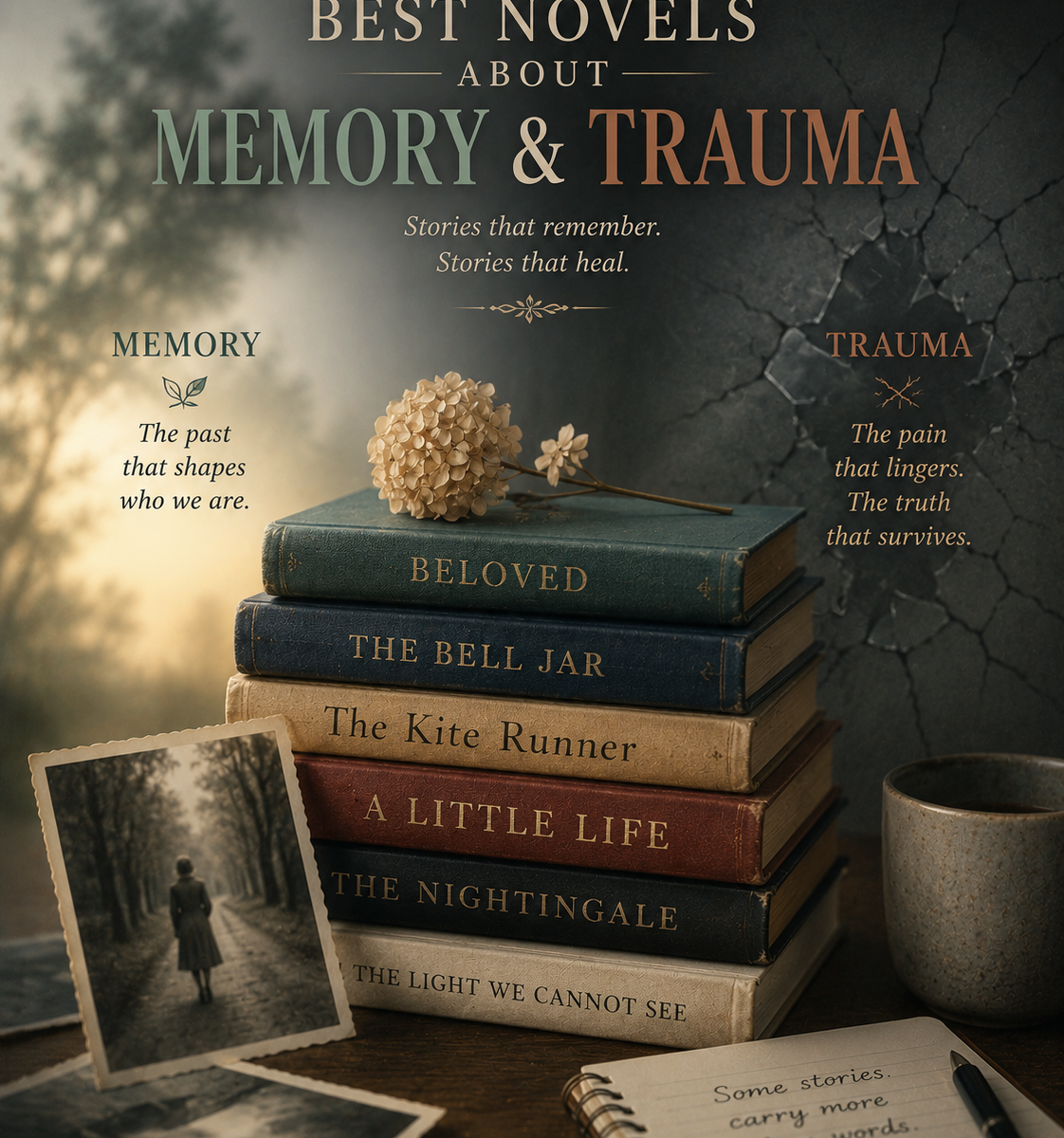
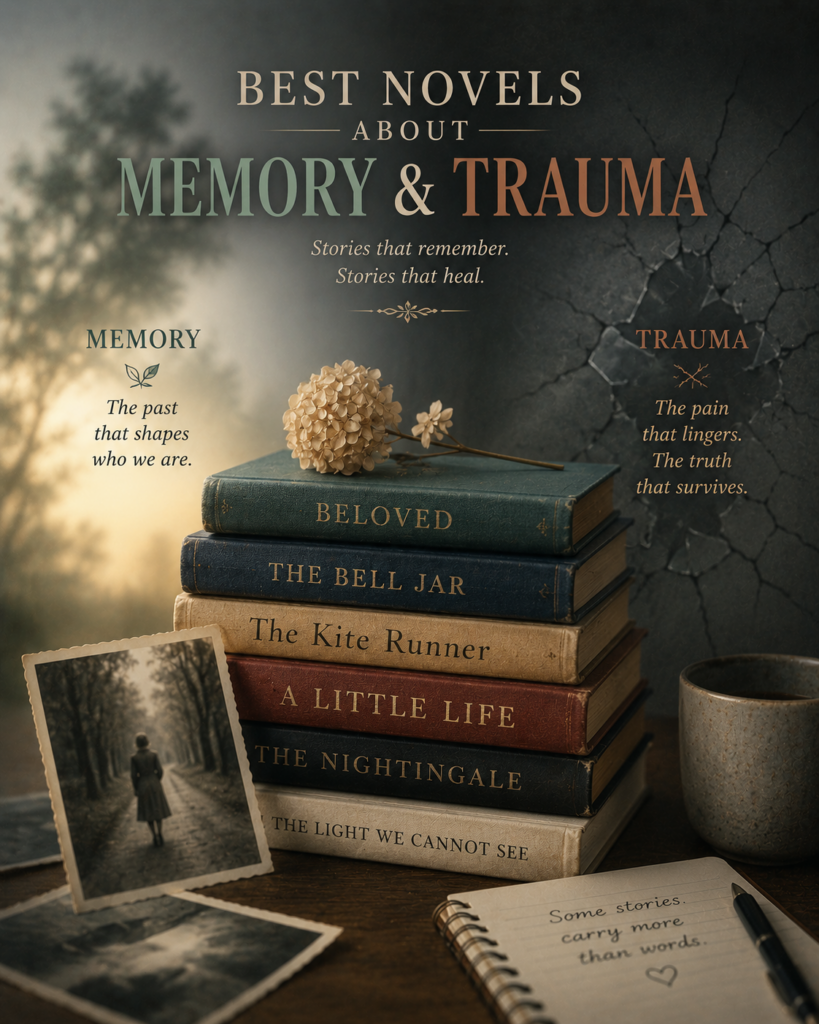
Best Novels About Memory and Trauma: Powerful Books That Stay with You

Best Novels about Memory and Trauma

The Best Novels About Memory and Trauma show how the past can shape a person’s life long after the event has ended. These books help readers understand pain, survival, silence, and the strange ways memory can return.

For students, these novels also offer rich themes, symbols, and character studies. They are strong choices for essays, class talks, and deeper reading.

In this Guide

  • Why novels about memory and trauma matter
  • Best novels to read first
  • How trauma changes storytelling
  • Common symbols and themes
  • How students can read these books with care
  • Book suggestions
  • FAQs
  • Key takeaway
Best Novels about Memory and Trauma

Why the Best Novels About Memory and Trauma Matter

These stories help readers see how the past lives inside the present.

The Best Novels About Memory and Trauma do not treat memory like a simple record. In these books, memory can be broken, hidden, repeated, or changed by fear.

That makes the reading experience feel more real. People who suffer often do not remember events in a neat order. A sound, place, smell, or word can bring the past back at once.

These novels also ask hard questions. Can a person heal if they cannot speak about what happened? Can a family move forward if it hides the truth? Or can a nation face its own violent history?

Books like Beloved by Toni Morrison and The Things They Carried by Tim O’Brien explore these questions with great care. They show that trauma is not only personal. It can also be passed through families, wars, and cultures.

Best Novels About Memory and Trauma to Read First

These books are strong starting points because they are often taught and widely discussed.

If you are new to the Best Novels About Memory and Trauma, start with books that use clear emotional conflicts and strong symbols. The stories below are well-known, but they still feel fresh because they ask deep human questions.

Beloved by Toni Morrison

Beloved is one of the most important American novels about memory, slavery, and grief. Set after the Civil War, it follows Sethe, a woman haunted by the past in both real and ghostly ways.

The novel shows how trauma can return through the body, the home, and family bonds. Morrison does not let the past stay buried. She turns memory into a living force.

You can learn more about Morrison’s life and impact through Britannica’s overview of Toni Morrison.

The Things They Carried by Tim O’Brien

This Vietnam War novel blurs the line between fact and fiction. O’Brien writes about soldiers, fear, guilt, and the stories people tell to survive.

Memory in this book is not perfect. It shifts because pain shifts it. That is part of the point.

The title itself is a symbol. The soldiers carry weapons and supplies, but they also carry shame, love, fear, and regret.

Slaughterhouse-Five by Kurt Vonnegut

Slaughterhouse-Five follows Billy Pilgrim, a man who becomes “unstuck in time.” His life moves back and forth between moments, including the bombing of Dresden during World War II.

The strange structure shows how trauma can break normal time. Billy does not simply remember the war. He seems trapped inside it.

This is one reason the novel remains one of the Best Novels About Memory and Trauma for students who want to study form and theme together.

The Remains of the Day by Kazuo Ishiguro

This quiet novel follows Stevens, an English butler who looks back on his life. At first, his memories seem calm and controlled.

As the story unfolds, readers see what he has avoided. His trauma comes through restraint, regret, and missed chances.

The book is a powerful example of emotional repression. It shows that silence can be just as painful as open grief.

Never Let Me Go by Kazuo Ishiguro

This novel may look like science fiction, but its deepest subject is memory. Kathy tells the story of her childhood at a strange boarding school and slowly reveals the truth about her life.

The novel studies how people remember youth when they know loss is near. It is calm on the surface, but deeply sad underneath.

For students, it is a great book for essays about identity, control, and the stories people tell themselves.

How Trauma Changes Storytelling

In many trauma novels, the form of the story reflects the mind of the character.

The Best Novels About Memory and Trauma often avoid a straight timeline. This is not a trick. It helps readers feel how trauma works.

A character may jump from the present to the past without warning. A scene may repeat with new details. A narrator may leave out facts because the truth is too painful.

In Beloved, memories arrive in pieces. In Slaughterhouse-Five, time itself feels broken. And in The Things They Carried, stories are retold because one version is never enough.

This style can feel hard at first. But it teaches readers to notice structure. The way a story is told can matter as much as what happens.

If you are studying older texts too, the same skill helps. Paying close attention to language and structure can make difficult works easier, as explained in this guide to understanding Shakespearean language.

Symbols and Themes in the Best Novels About Memory and Trauma

These novels often use objects, places, and repeated images to show what words cannot fully explain.

One common symbol is the house. In Beloved, the home is not just a setting. It holds grief, fear, and history.

Another key symbol is the body. Trauma often appears through scars, pain, habits, or silence. A character may not speak about the past, but the body still remembers.

Objects also carry meaning. In The Things They Carried, the items soldiers hold become signs of emotional weight. What they carry shows who they are and what they fear.

Time is another major theme. In the Best Novels About Memory and Trauma, the past is not really past. It presses into the present and changes how characters see themselves.

These books also focus on truth. A memory may be honest even if it is not fully accurate. That idea can lead to strong essay topics about narration and trust.

Why Memory Is Not Always Reliable

Memory can protect people, but it can also hide what hurts too much.

Many trauma novels use unreliable narrators. This does not always mean the narrator lies on purpose. Sometimes the narrator cannot face the full truth yet.

In The Remains of the Day, Stevens tells his life story in a careful voice. He seems proper and calm. But readers start to sense the sadness under his control.

In Never Let Me Go, Kathy’s memories feel gentle, but they lead toward a painful truth. Her calm tone makes the novel even more haunting.

This is why the Best Novels About Memory and Trauma reward close reading. Small details often reveal what the narrator cannot say directly.

How Students Can Read These Novels With Care

These books can be powerful, but some scenes may feel heavy.

When you read the Best Novels About Memory and Trauma, give yourself time. Do not rush through painful chapters just to finish the plot.

Take notes on repeated images, changes in time, and moments of silence. Ask what the character avoids. Ask what the book returns to again and again.

It also helps to learn basic facts about trauma. The National Institute of Mental Health page on PTSD offers clear information about how trauma can affect memory and daily life.

For class essays, focus on one clear idea. You might write about the haunted house in Beloved, the broken timeline in Slaughterhouse-Five, or the weight of objects in The Things They Carried.

Amazon Book Suggestions: Best Novels About Memory and Trauma

These titles are easy to find online, in libraries, and in many school reading lists.

If you want to build a reading list, these are strong choices:

  • Beloved by Toni Morrison
  • The Things They Carried by Tim O’Brien
  • Never Let Me Go by Kazuo Ishiguro

Each book gives a different view of memory and pain. Together, they show why the Best Novels About Memory and Trauma matter in modern literature.

Best Novels About Memory and Trauma for Essay Topics

These books offer rich ideas for literary analysis.

For an essay on symbolism, Beloved is a strong choice. You can study the house, the ghost, or the idea of rememory.

For an essay on structure, Slaughterhouse-Five works well. Its broken timeline shows how war changes the mind.

For an essay on narration, The Remains of the Day gives you a lot to explore. Stevens reveals his pain through what he refuses to admit.

If you need help with close reading, use skills that apply across many texts. This guide on how to understand difficult literary language can help you slow down and read with more focus.

FAQs About the Best Novels About Memory and Trauma

What makes a novel about memory and trauma powerful?

A powerful trauma novel shows how the past affects the present. It often uses symbols, broken timelines, or silence to reveal pain.

Are the Best Novels About Memory and Trauma hard to read?

Some can be emotionally difficult. They are worth reading with care, breaks, and class discussion when possible.

Which novel should students start with?

The Things They Carried is a good starting point because its chapters are short and its themes are clear. Beloved is deeper and more complex, but very rewarding.

Why do these novels often use non-linear time?

Trauma does not always feel like a normal memory. A broken timeline can show how the past returns without warning.

Can these books help with AP Literature essays?

Yes. The Best Novels About Memory and Trauma offer strong examples of theme, character, symbolism, and narrative structure.

Key Takeaway

The Best Novels About Memory and Trauma show that the past is never simple. These books help readers see how pain can shape identity, how silence can speak, and how stories can become a path toward truth.

For students, they are more than moving reads. They are some of the richest texts for close reading, essay writing, and serious thought.

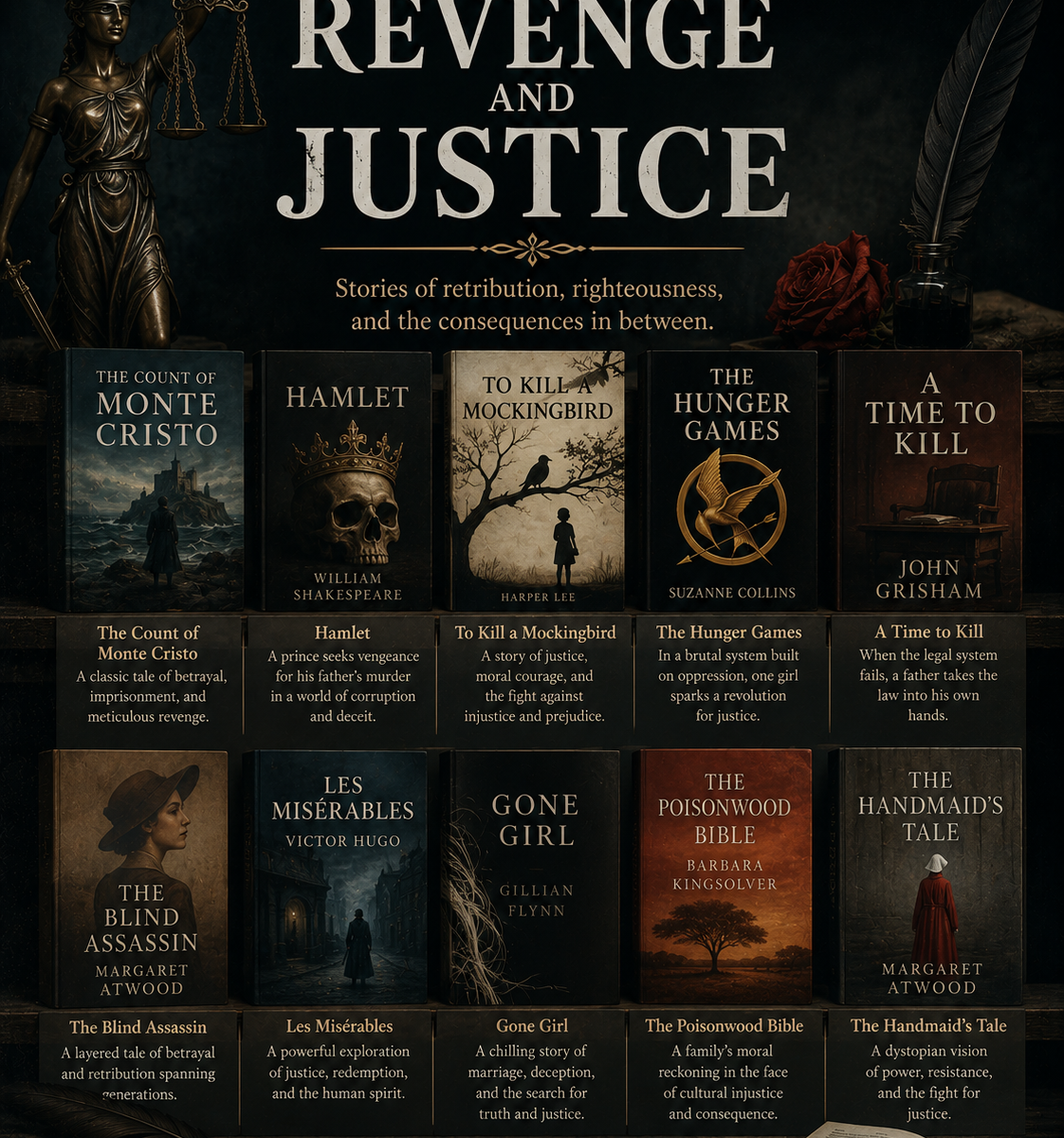
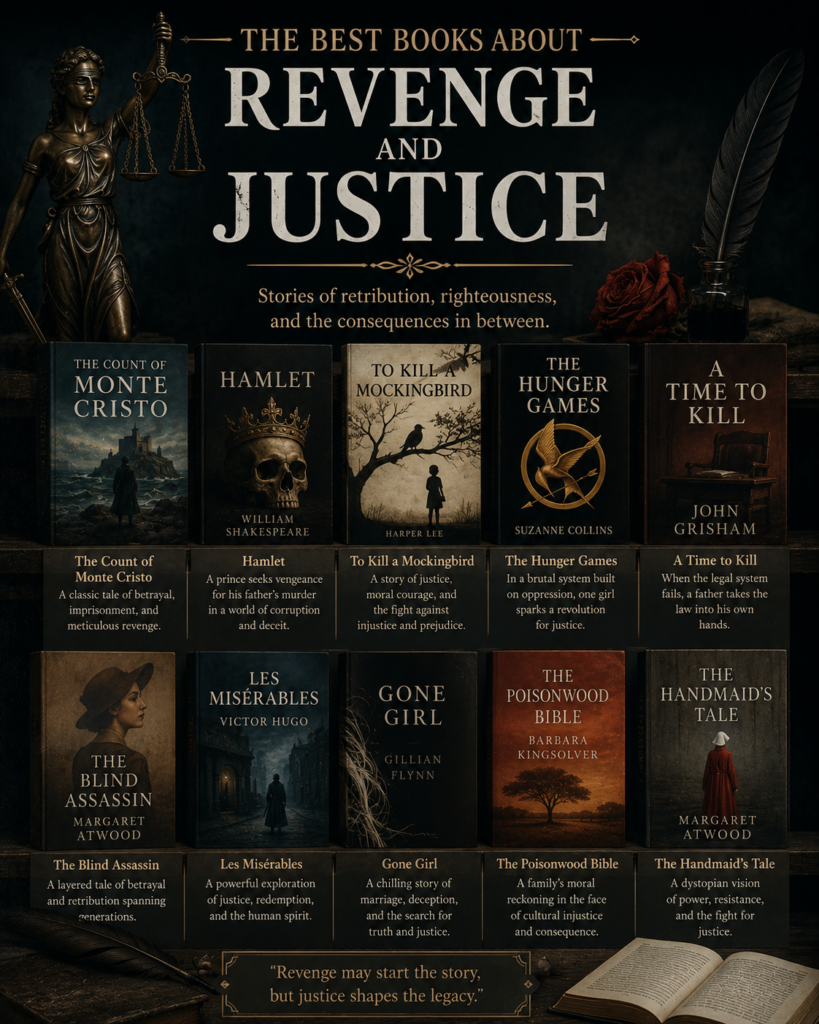
Best Books About Revenge and Justice: Powerful Stories of Payback, Law, and Moral Choice

Best Books about Revenge and Justice

The Best Books About Revenge and Justice ask one hard question: what should happen after someone is wronged? These stories pull readers into pain, anger, punishment, and the search for fairness.

Some books show revenge as a trap. Others show justice as slow, painful, and worth the fight.

In this Guide

  • Why revenge and justice matter in literature
  • Best books to read first
  • Classic revenge and justice stories
  • Symbols and themes to watch for
  • Modern books about revenge and justice
  • FAQ

Why the Best Books About Revenge and Justice Still Matter

These stories stay popular because they deal with feelings almost everyone understands.

Revenge begins with a wound. A person is betrayed, hurt, or ignored by the law. The anger feels fair at first, but many books ask whether revenge can ever heal the damage.

Justice is different. It looks for truth, balance, and repair. In literature, justice often moves slowly, while revenge moves fast.

That tension makes the Best Books About Revenge and Justice so powerful. They do not give easy answers. They make readers ask what they would do in the same place.

Best Books About Revenge and Justice to Read First

Start with books that make the moral conflict clear and easy to follow.

The Count of Monte Cristo by Alexandre Dumas is one of the most famous revenge novels ever written. Edmond Dantès is betrayed, sent to prison, and stripped of his future. When he escapes, he builds a new life around revenge.

At first, his plan feels thrilling. His enemies deserve punishment. Yet the novel slowly asks whether revenge turns Edmond into the kind of person he hates.

Hamlet by William Shakespeare is another key text. Hamlet learns that his father was murdered, and he feels forced to act. But he doubts himself, delays, and studies the meaning of guilt.

This is why many teachers include Hamlet in lessons about revenge tragedy. The play is not only about payback. It is about thought, fear, grief, and the cost of violence.

If Shakespeare feels hard at first, try this helpful guide on how to read difficult classic literature. It can make older texts feel less stressful.

Classic Best Books About Revenge and Justice

Classic literature often treats revenge as both tempting and dangerous.

Medea by Euripides is one of the oldest and darkest revenge stories. Medea is betrayed by Jason, and her anger becomes deadly. The play shows how personal pain can grow into something beyond control.

Wuthering Heights by Emily Brontë also explores revenge across time. Heathcliff is hurt by class shame, rejection, and loss. Instead of finding peace, he spreads pain to the next generation.

Les Misérables by Victor Hugo offers a different view. Jean Valjean is punished by the law, but the law does not always equal justice. His story asks whether mercy can be more powerful than punishment.

The Best Books About Revenge and Justice often show that legal rules and moral truth are not always the same thing.

Symbols and Themes in the Best Books About Revenge and Justice

Revenge and justice stories often use strong symbols to show inner conflict.

In Hamlet, the skull reminds readers that death comes for everyone. It cuts through pride, revenge, and power. Hamlet must face the fact that all human plans end the same way.

In The Count of Monte Cristo, prison becomes a symbol of stolen life. Edmond loses his name, freedom, and trust. His escape feels like rebirth, but his new identity is shaped by anger.

Justice is often linked with light, truth, or confession. Revenge is often linked with masks, secrets, or poison. These symbols help readers see the difference between healing and harm.

A major theme in the Best Books About Revenge and Justice is moral change. The person seeking payback may become colder. The person seeking justice may need patience, courage, and self-control.

Modern Best Books About Revenge and Justice

Modern books often connect revenge and justice to race, gender, class, and history.

Beloved by Toni Morrison is not a simple revenge story. It is a novel about slavery, memory, trauma, and the deep need for justice. The past returns in a haunting form, and the characters must face what was done to them.

True Grit by Charles Portis follows Mattie Ross as she seeks justice for her father’s murder. Mattie is young, sharp, and determined. Her journey shows how revenge can look brave but still carry a heavy cost.

Gone Girl by Gillian Flynn uses revenge in a modern marriage plot. It shows how control, image, and public judgment can shape a person’s idea of justice.

These modern examples prove that the Best Books About Revenge and Justice are not stuck in the past. They still speak to today’s fears about truth, power, and fairness.

Recommended Books to Buy or Borrow

These books are strong choices for students, book clubs, or anyone who wants a deep story with moral conflict.

  • The Count of Monte Cristo by Alexandre Dumas
  • True Grit by Charles Portis

For background on Shakespeare’s revenge tragedy tradition, the Britannica entry on revenge tragedy is a useful place to start.

You can also explore author and poetry resources at the Poetry Foundation, especially if you want to connect themes of justice to poems.

How to Read the Best Books About Revenge and Justice for Class

Do not read these books only for plot. Pay attention to choices.

Ask what the wronged character wants. Is it truth, punishment, peace, or control? The answer often shows whether the story is moving toward justice or revenge.

Watch how the writer treats violence. If revenge seems exciting at first but empty later, that shift matters. Many authors want readers to feel the pull of revenge before they see its cost.

If a book feels slow or difficult, use notes, summaries, and rereading as tools. This guide to reading difficult classic literature can help you stay focused without losing the main ideas.

FAQ About the Best Books About Revenge and Justice

What are the Best Books About Revenge and Justice for beginners?

The Count of Monte Cristo and True Grit are great starting points. Both have clear plots, strong characters, and big moral questions.

Why do authors write so much about revenge?

Revenge creates instant conflict. It also lets authors explore grief, anger, pride, and the limits of human judgment.

Is revenge ever shown as good in literature?

Sometimes revenge feels justified at first. But many books show that it damages the person who seeks it.

What is the difference between revenge and justice?

Revenge is personal payback. Justice seeks truth, fairness, and a result that is larger than one person’s anger.

Key Takeaway

The Best Books About Revenge and Justice show that payback may feel powerful, but it rarely brings peace.

Great literature asks readers to look past anger and think about truth, mercy, guilt, and repair. That is why these stories still matter in classrooms and in everyday life.

In the end, the strongest revenge and justice books do more than punish villains. They ask what kind of person we become when we decide what others deserve.

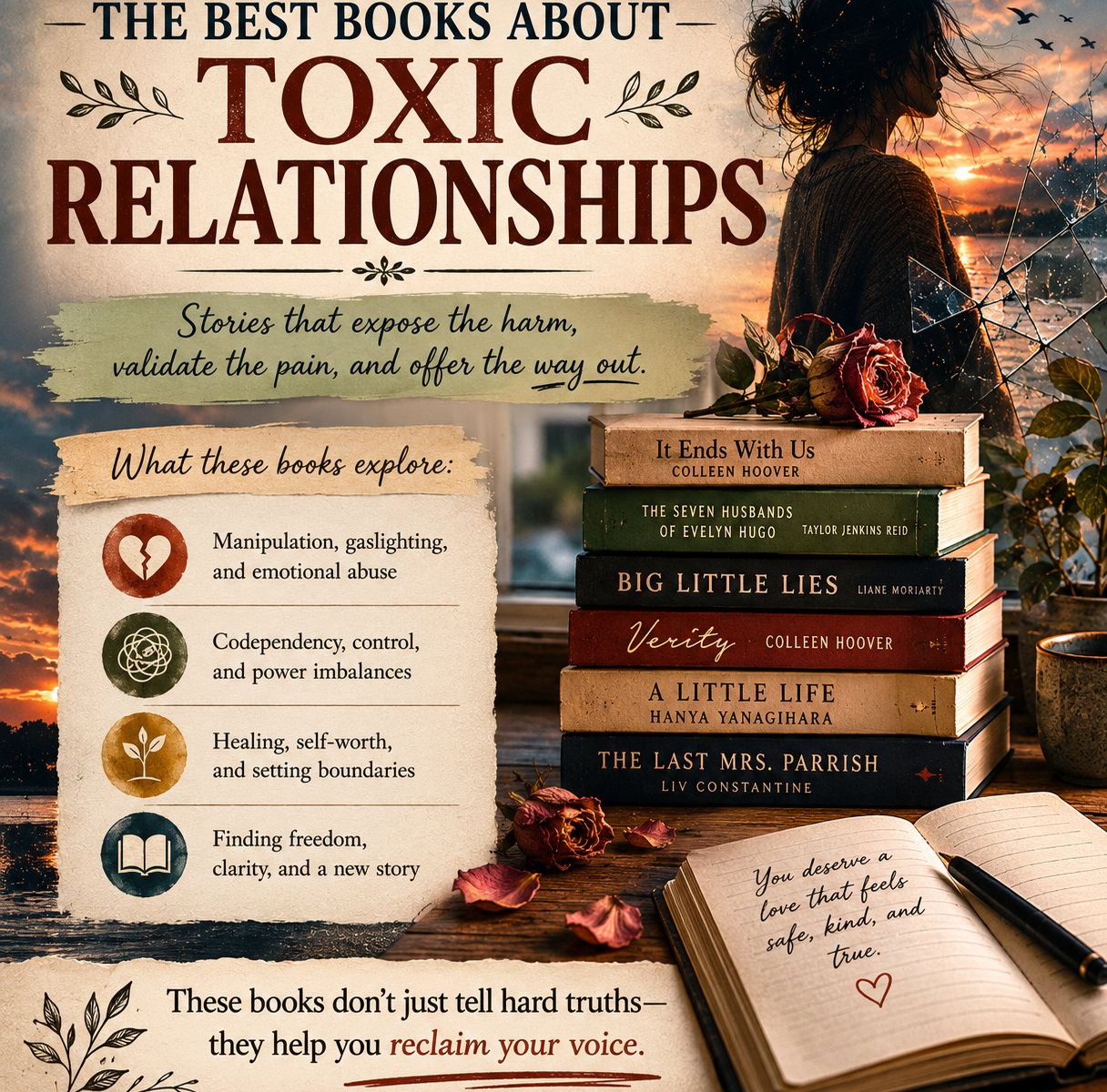
Best Books About Toxic Relationships: Literature That Shows Love, Power, and Control

Toxic relationships

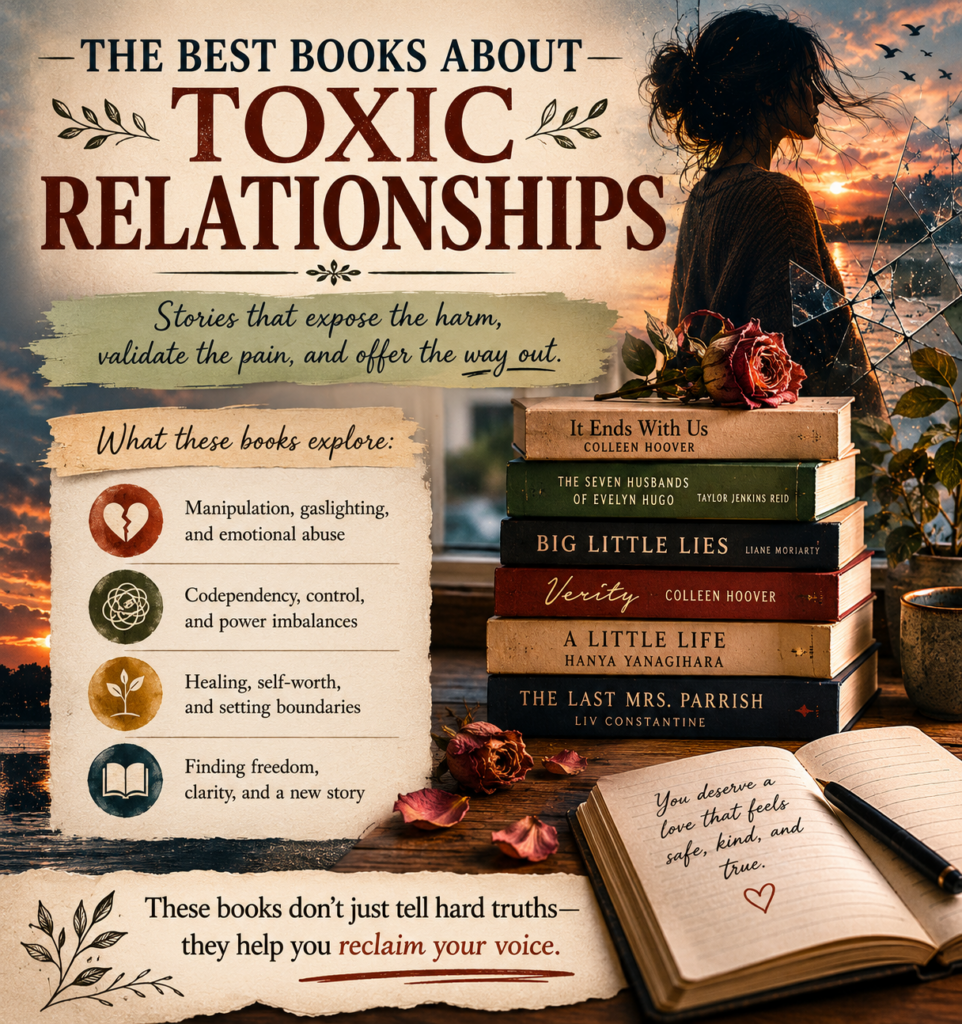
The Best Books About Toxic Relationships do more than show romance gone wrong. They help readers see how love can turn into control, obsession, fear, or self-loss.

These books can be hard to read, but they often teach us how people hide pain, excuse harm, and search for freedom.

In this Guide

  • What makes a toxic relationship in literature
  • Best Books About Toxic Relationships to read first
  • Key themes and symbols
  • Why students study these books
  • FAQs
  • Key takeaway
Toxic relationships

What Makes the Best Books About Toxic Relationships So Powerful?

The strongest stories show that toxic love is not always easy to spot at first.

In literature, a toxic relationship often begins with charm, beauty, or intense emotion. Over time, the bond becomes harmful. One person may control the other, lie often, use guilt, or treat love like ownership.

The Best Books About Toxic Relationships show this shift with care. They do not just say, “This is bad.” They show how people get trapped, why they stay, and what it costs them.

That is why these books matter in school. They help students talk about power, gender roles, class, trauma, and identity through stories that feel personal.

Best Books About Toxic Relationships to Read First

These classic and modern books give readers strong examples of unhealthy love, obsession, and control.

1. Wuthering Heights by Emily Brontë

Wuthering Heights is one of the Best Books About Toxic Relationships because it shows love as wild, painful, and destructive.

Heathcliff and Catherine love each other deeply, but their bond hurts almost everyone around them. Their relationship is full of pride, revenge, class shame, and emotional cruelty.

The moors in the novel act as a symbol of their love. They are open and beautiful, but also harsh and dangerous.

2. The Great Gatsby by F. Scott Fitzgerald

The Great Gatsby may look like a love story, but it is really about fantasy, wealth, and emotional damage.

Gatsby’s love for Daisy becomes a dream he cannot let go. Daisy and Tom’s marriage is also toxic because it rests on money, lies, and carelessness.

For a deeper look at these characters, read our Great Gatsby analysis.

3. Rebecca by Daphne du Maurier

Rebecca is a gothic novel about jealousy, fear, and control inside marriage.

The unnamed narrator feels trapped by the memory of her husband’s first wife. Manderley, the great house, becomes a symbol of pressure and silence.

This novel is one of the Best Books About Toxic Relationships because it shows how a person can feel erased inside a relationship.

More Best Books About Toxic Relationships for Students

Some books show toxic love through romance. Others show it through family, friendship, or social pressure.

Jane Eyre by Charlotte Brontë

Jane Eyre asks a key question: Can love be healthy if one person has far more power?

Jane cares for Mr. Rochester, but she refuses to lose her self-respect. That choice makes the novel different from many toxic love stories.

A Streetcar Named Desire by Tennessee Williams

This play shows a violent and harmful marriage through Stanley and Stella.

It also shows how desire, class conflict, and denial can trap people. The play is often studied in AP Literature because its symbols are clear and rich.

Normal People by Sally Rooney

This modern novel shows a bond that is loving, painful, and confusing.

Connell and Marianne care for each other, but their relationship suffers because of shame, class pressure, and poor communication.

Symbols in the Best Books About Toxic Relationships

Writers often use objects and places to show emotional danger.

In The Great Gatsby, the green light stands for Gatsby’s dream of Daisy. It also shows how desire can turn into illusion. You can explore this symbol more in our guide to The Great Gatsby.

In Rebecca, Manderley is more than a house. It stands for memory, fear, and a past that controls the present.

In Wuthering Heights, the moors reflect wild emotion. They feel free, but they also suggest danger and isolation.

These symbols help make the Best Books About Toxic Relationships more than simple warnings. They turn private pain into something readers can see and study.

Common Themes in the Best Books About Toxic Relationships

Toxic relationships in literature often reveal larger problems in society.

Power is one major theme. Many harmful relationships grow when one person has more money, status, age, or control.

Obsession is another key theme. Gatsby does not love Daisy as she really is. He loves the dream he built around her.

Identity also matters. In many of the Best Books About Toxic Relationships, a character must decide whether love is worth losing the self.

For background on major authors and classic texts, resources like Britannica’s overview of the novel can help students place these works in a wider literary tradition.

Why Readers Are Drawn to Best Books About Toxic Relationships

These stories are intense because they feel close to real life.

Many readers know what it feels like to want approval, fear rejection, or excuse bad behavior from someone they love. Literature gives those feelings shape.

The Best Books About Toxic Relationships also help readers ask better questions. Is this love, or control? Is this loyalty, or fear? Is this passion, or harm?

Good books do not always give easy answers. They make readers think with more care.

Recommended Books to Add to Your Reading List

If you want to explore this topic, start with books that are rich, readable, and often taught in school.

  • Wuthering Heights by Emily Brontë
  • The Great Gatsby by F. Scott Fitzgerald
  • Rebecca by Daphne du Maurier

These are some of the Best Books About Toxic Relationships because they show different forms of harm. One focuses on revenge, one on illusion, and one on fear inside marriage.

How to Read Toxic Relationship Stories in Class

Read these books with attention to both emotion and structure.

Notice who has power in each scene. Look at who speaks, who stays silent, and who gets believed.

Track symbols as they repeat. A house, a light, a room, or a landscape can show what a character cannot say out loud.

It also helps to read author background from trusted sources. The Poetry Foundation has useful material on many writers, movements, and literary terms.

FAQs About the Best Books About Toxic Relationships

These quick answers can help students choose and study the right book.

What are the Best Books About Toxic Relationships for high school students?

The Great Gatsby, Jane Eyre, and Wuthering Heights are strong choices. They are often taught and offer clear themes to analyze.

Are toxic relationship books only about romance?

No. They can also focus on family, friendship, class pressure, or social control.

Why do teachers assign books about toxic relationships?

Teachers use them to discuss power, choice, identity, and moral conflict. These topics help students build deeper reading skills.

Is The Great Gatsby about a toxic relationship?

Yes. Gatsby’s dream of Daisy is unhealthy because it turns her into an ideal. Tom and Daisy’s marriage is also built on privilege and harm.

Key Takeaway

The Best Books About Toxic Relationships show that love in literature is not always safe, pure, or simple.

These stories matter because they reveal how control can hide inside romance, wealth, memory, and desire. When readers study them closely, they learn to see both the beauty of language and the warning signs in human behavior.

Best Literary Time Travel and Memory: Books, Themes, and Symbols That Bend Time

Literary time travel

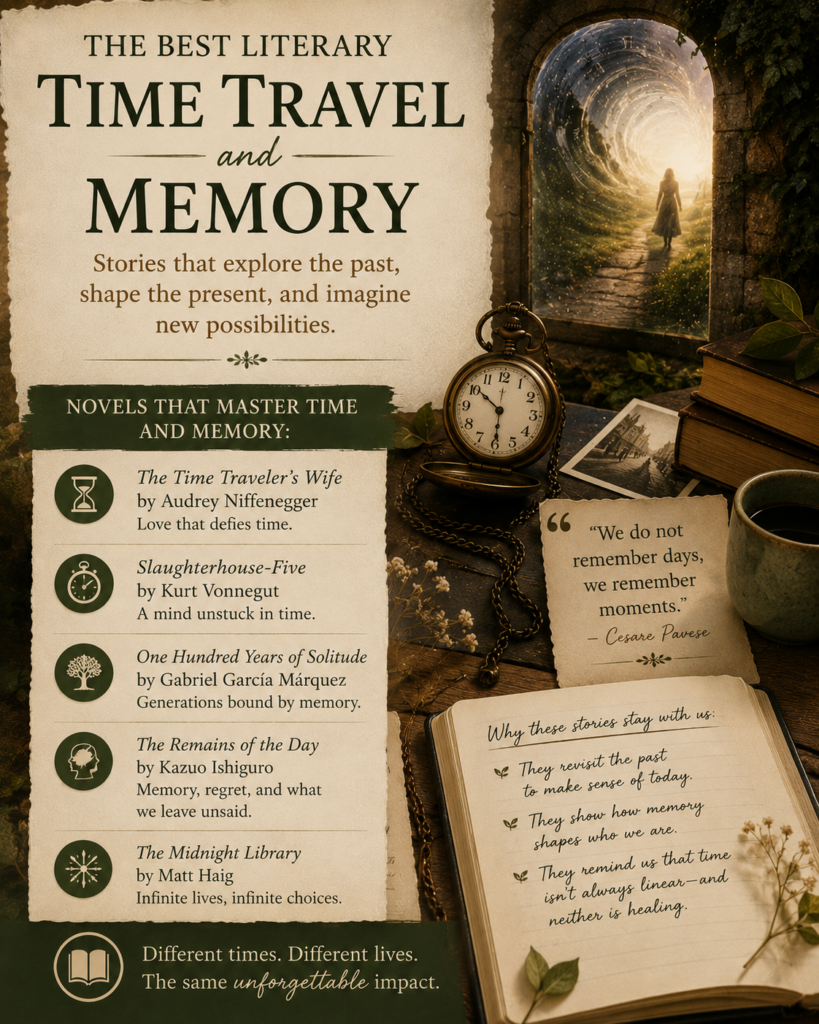
Best Literary Time Travel and Memory is a rich topic because books often treat time as more than a clock. In literature, time can reveal grief, guilt, love, trauma, and the deep need to understand the past.

From science fiction to modern novels, writers use time travel and memory to ask one big question: can people ever escape what happened before?

In this Guide

  • Why time travel and memory matter in literature
  • Best Literary Time Travel and Memory in famous books
  • Recommended books to read
  • Key themes and symbols
  • How students can analyze these stories
  • FAQs
  • Key takeaway
Literary time travel

Why Best Literary Time Travel and Memory Still Matters

Stories about time often feel strange, but their emotions are easy to understand.

Best Literary Time Travel and Memory matters because it shows how the past shapes the present. A character may travel through time, but the real journey is often inside the mind.

Memory can comfort a character. It can also trap them. In many books, the past returns because someone has not faced it yet.

This is why time travel stories are not only about machines or magic. They are also about regret, hope, and the wish to fix what cannot be fixed.

Best Literary Time Travel and Memory in Classic and Modern Books

Many famous books bend time to show how people live with pain, history, and desire.

In Slaughterhouse-Five by Kurt Vonnegut, Billy Pilgrim becomes “unstuck in time.” He moves between war, home, and alien spaces. The broken timeline mirrors the shock of trauma.

In Kindred by Octavia E. Butler, Dana travels from 1970s California to the era of slavery. The time travel is direct and frightening. It forces readers to see history as something alive, not distant.

In The Time Traveler’s Wife by Audrey Niffenegger, time travel affects love and family. The story asks whether love can survive when time itself feels unfair.

Best Literary Time Travel and Memory also appears in books without actual time machines. In Mrs Dalloway by Virginia Woolf, memory carries characters back into old choices and lost chances.

Recommended Books for Best Literary Time Travel and Memory

These books are strong picks for students who want clear examples of time, memory, and identity.

  • Kindred by Octavia E. Butler
  • Slaughterhouse-Five by Kurt Vonnegut
  • The Time Traveler’s Wife by Audrey Niffenegger

Kindred works well for class discussion because it connects time travel to race, power, and family history.

Slaughterhouse-Five is a key text for war literature. It uses a strange time structure to show how trauma changes memory.

The Time Traveler’s Wife gives the theme a personal focus. It shows how time can feel romantic, painful, and out of human control.

Memory as a Form of Time Travel

Not every story needs a time machine to move through time.

Memory is often the most common form of time travel in literature. A smell, place, photo, or sound can pull a character into the past.

In In Search of Lost Time by Marcel Proust, a small taste of cake brings back a flood of memory. The moment is famous because it shows how the past can return without warning.

In Beloved by Toni Morrison, memory is painful and hard to escape. The past becomes almost physical. It enters the home, the body, and the lives of the characters.

This is why Best Literary Time Travel and Memory fits both science fiction and literary fiction. Both forms ask how the past still touches the present.

Symbols in Best Literary Time Travel and Memory Stories

Writers often use simple objects to make time feel visible.

Clocks are the clearest symbol. They can show order, pressure, or fear. A broken clock may suggest that normal time no longer works.

Photographs also matter. They freeze one moment, but they can stir deep emotion. A photo may seem still, yet it can move a character back into loss or love.

Doors, roads, mirrors, and rivers often appear in stories about time. Each one can suggest a passage from one state of life to another.

Nature can also shape memory. A desert, forest, or lonely plain may hold the weight of the past. For more on place and meaning, read our guide to nature and isolation in Western writing.

Major Themes in Best Literary Time Travel and Memory

The best time travel stories use big ideas in personal ways.

Regret is one major theme. Characters often want to change a mistake, save a loved one, or choose a different path.

Trauma is another key theme. In many novels, time feels broken because the mind cannot leave a painful event behind.

Identity also matters. If memory shapes who we are, then a change in memory can change the self.

These themes make Best Literary Time Travel and Memory useful for AP Literature and college essays. The topic helps students connect plot structure to deeper meaning.

How Time Structure Shapes the Reader’s Experience

A story’s timeline can affect how readers feel.

A straight timeline feels steady. A broken timeline feels uncertain. When scenes jump between past and present, readers may feel the same confusion as the character.

Vonnegut uses this method in Slaughterhouse-Five. The jumps in time are not random. They show how war has damaged Billy’s sense of reality.

Woolf uses memory in a different way. In Mrs Dalloway, one day in London opens into many years of feeling and thought.

For background on memory as a human process, the Britannica overview of memory offers a helpful starting point.

Why Students Should Study Best Literary Time Travel and Memory

This topic helps students read beyond the surface.

When a book moves through time, ask why. The author may want readers to feel grief, suspense, shock, or longing.

Students can also look for patterns. What moments return? Which memories repeat? What does the character avoid?

Best Literary Time Travel and Memory gives students a strong way to discuss theme, structure, symbol, and character at once.

It also connects well to place. A setting can act like a memory bank, especially when nature reflects loss or silence. Our article on landscape and isolation in literature explores this idea in more depth.

Poetry, Time, and Memory

Poetry often treats time as brief, fragile, and emotional.

Many poems look back at childhood, lost love, or death. The speaker may not travel through time in a literal way, but memory creates the same effect.

T.S. Eliot’s poetry often explores time, history, and spiritual longing. You can learn more about Eliot through the Poetry Foundation’s T.S. Eliot page.

Poems are useful for this topic because they can turn one moment into a doorway. A single image can open years of memory.

How to Write About Best Literary Time Travel and Memory

A strong essay starts with the reason behind the time shift.

Do not only say that a story jumps in time. Explain what the jump reveals. Does it show trauma, love, fear, or guilt?

Use short quotes that show the pattern. Then connect those quotes to the character’s inner life.

A helpful thesis might say: “The broken timeline shows that the character cannot separate the present from the past.”

This keeps your essay focused on meaning, not just plot summary.

FAQs About Best Literary Time Travel and Memory

What is literary time travel?

Literary time travel means a story moves across different points in time. This can happen through science fiction, magic, dreams, or memory.

Is memory a form of time travel in literature?

Yes. Memory can move a character back into the past in an emotional way. It may feel as powerful as real time travel.

What book is best for studying time travel and memory?

Kindred by Octavia E. Butler is one of the best choices. It uses time travel to explore history, family, and power.

Why do authors use broken timelines?

Authors use broken timelines to show how people think and feel. This structure can reveal trauma, regret, or deep longing.

Can this topic help with AP Literature essays?

Yes. Best Literary Time Travel and Memory is useful because it connects structure, theme, and character change.

Key Takeaway

Best Literary Time Travel and Memory shows that the past is never fully gone. In literature, time can break, bend, and return because characters still carry what they have loved, lost, or feared.

The strongest stories about time are not only about where a character goes. They are about what the character finally understands.

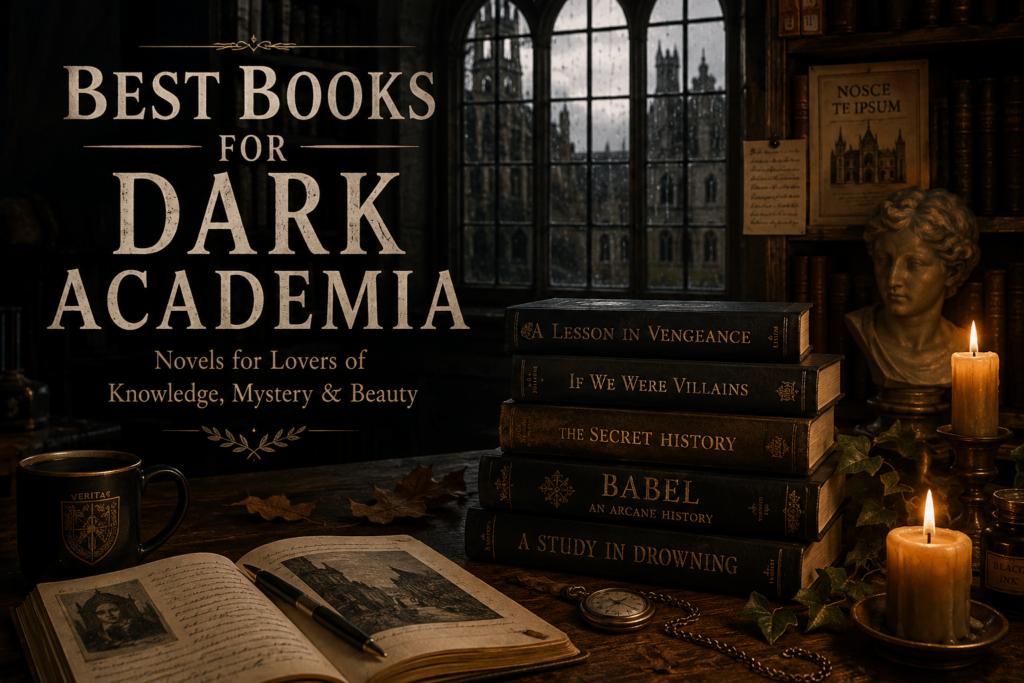
Best Books for Dark Academia

Dark Academia books
Dark Academia books

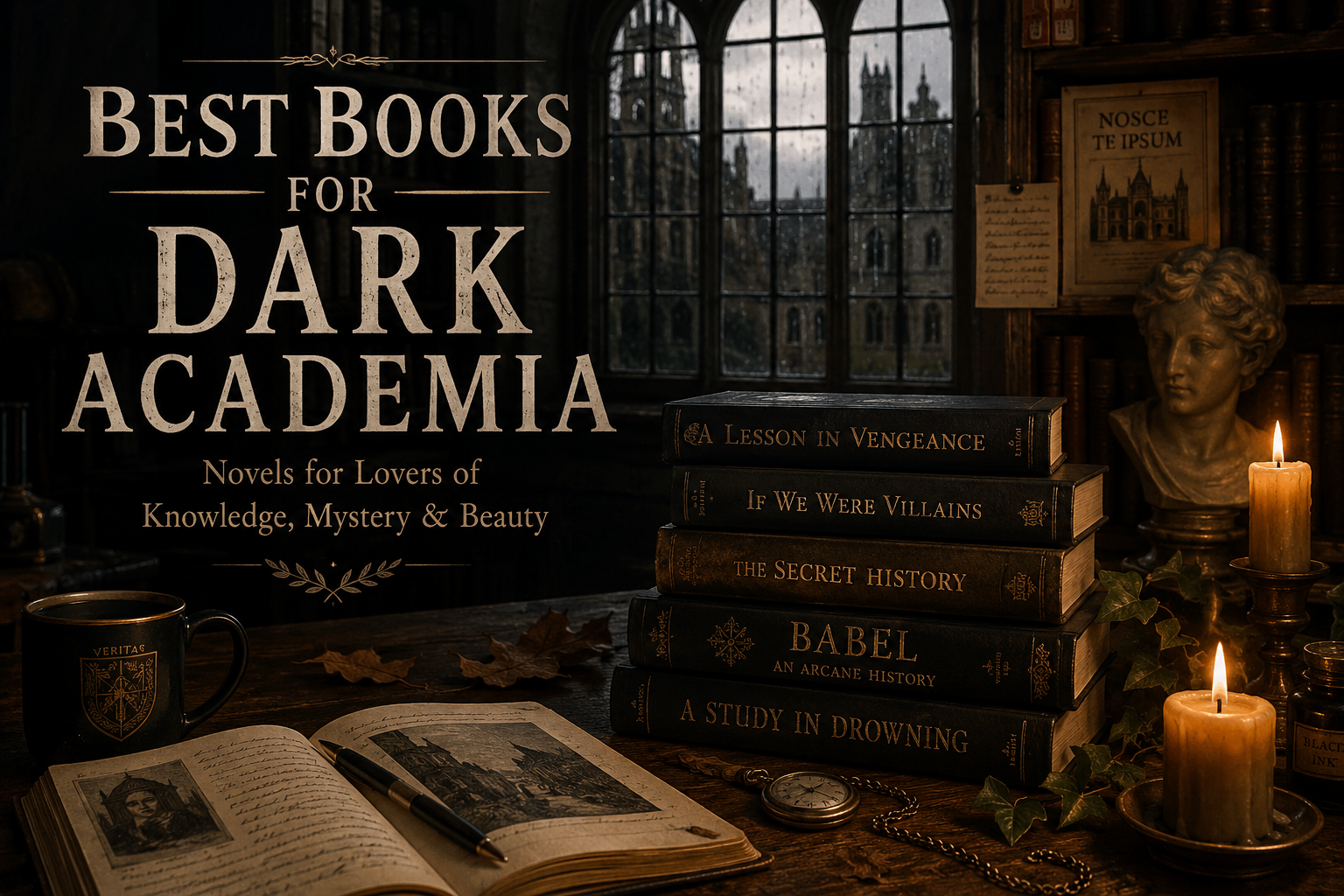
The Best Books for Dark Academia mix mystery, ambition, beauty, and danger. These stories often take place in schools, libraries, old houses, or elite circles where knowledge feels powerful and risky.

If you like candlelit study rooms, secret clubs, moral questions, and characters who want too much, this guide will help you find your next read.

In this Guide

  • What makes dark academia books so popular
  • Best Books for Dark Academia to read first
  • Major themes and symbols
  • Books worth buying or borrowing
  • How students can read dark academia well
  • FAQs

What Makes the Best Books for Dark Academia So Compelling?

Dark academia is about learning, but it is also about obsession.

The Best Books for Dark Academia often show smart characters who chase beauty, status, or truth. At first, their world looks polished. Soon, it starts to crack.

These books often include old campuses, Latin phrases, rare books, art, poetry, and hidden guilt. The setting matters because it makes learning feel grand, but also cold.

Dark academia also asks a hard question: What happens when intelligence is not matched by kindness?

Best Books for Dark Academia: Classic and Modern Picks

These books capture the mood of dark academia in different ways, from elite schools to haunted minds.

The Secret History by Donna Tartt

Many readers see The Secret History as the heart of dark academia. It follows a group of college students who study Greek classics under a strange and powerful professor.

The book explores beauty, guilt, and the danger of feeling above normal rules. It is one of the Best Books for Dark Academia because it turns scholarship into suspense.

If We Were Villains by M.L. Rio

This novel follows theater students who live and breathe Shakespeare. Their friendships are intense, and their roles begin to blur with real life.

The book is a strong choice for students who enjoy drama, rivalry, and literary clues. It also shows how art can shape identity in harmful ways.

Frankenstein by Mary Shelley

Frankenstein is not set in a modern university, but it fits the dark academia mood well. Victor Frankenstein wants knowledge so badly that he forgets his duty to others.

The novel warns readers about ambition without care. It is also a major work in Gothic literature, a tradition you can learn more about through Britannica’s overview of the Gothic novel.

The Picture of Dorian Gray by Oscar Wilde

This novel is full of art, beauty, style, and moral decay. Dorian wants to stay young while his portrait carries the damage of his choices.

It belongs with the Best Books for Dark Academia because it asks what people will trade for beauty and pleasure.

Jane Eyre by Charlotte Brontë

Jane Eyre has a strong Gothic mood, a mysterious house, and a heroine who values education and self-respect. Jane’s inner life matters as much as the plot.

The novel works well for students who want dark atmosphere but also moral strength.

Babel by R.F. Kuang

Babel is a modern dark academia novel about language, empire, and power. It takes place in Oxford and asks who benefits from elite education.

This book is a great pick for readers who want dark academia with sharp social criticism.

Major Themes in the Best Books for Dark Academia

Dark academia feels stylish, but its deepest power comes from its themes.

In the Best Books for Dark Academia, ambition often becomes dangerous. Characters want to be brilliant, rare, or admired. That desire can push them toward lies and harm.

Class is another major theme. Many dark academia stories show who gets access to elite schools, private libraries, and powerful mentors. The mood may feel romantic, but the system can be unfair.

Secrecy also plays a key role. Hidden rooms, private languages, and secret groups create suspense. They also show how knowledge can divide people.

For another look at wealth, image, and moral decline, read our Great Gatsby analysis. Gatsby is not a dark academia novel, but it shares the same interest in status and illusion.

Symbolism in the Best Books for Dark Academia

Symbols help dark academia feel rich, strange, and memorable.

Books and libraries often stand for power. They suggest wisdom, but they can also suggest control. A locked library may mean that knowledge is not open to everyone.

Old buildings often symbolize tradition. A stone campus or decaying mansion can look beautiful while hiding fear, guilt, or corruption.

Mirrors and portraits often show divided identity. In The Picture of Dorian Gray, the portrait becomes a symbol of the soul. It shows the truth that Dorian refuses to face.

Storms, fog, and candlelight also shape the mood. They make the world feel uncertain, which fits stories about secrets and guilt.

Books Worth Buying or Borrowing for a Dark Academia Shelf

If you want to start a small shelf, begin with books that show the range of the genre.

Here are a few strong choices you can find at many bookstores, libraries, or on Amazon without needing any special edition:

  • The Secret History by Donna Tartt
  • If We Were Villains by M.L. Rio

These titles are easy entry points because they have strong plots, literary references, and tense student groups.

How to Read the Best Books for Dark Academia in School

Dark academia books are fun to read, but they also reward close attention.

When you read the Best Books for Dark Academia, track what the main character wants. Then ask what they are willing to risk to get it.

Pay attention to setting. A classroom, library, or old house is never just a backdrop. It often reflects power, fear, or desire.

Notice references to art, poetry, and myth. These allusions can reveal what the characters admire. They can also show how characters use culture to excuse bad choices.

If you study poetry with dark academia themes, the Poetry Foundation’s page on T.S. Eliot is a helpful place to start. Eliot’s work often explores decay, memory, and modern anxiety.

Why the Best Books for Dark Academia Still Matter

Dark academia is not just an aesthetic. It speaks to real fears about success, pressure, and belonging.

Students may connect with these stories because school can feel intense. Grades, image, talent, and social status can seem like everything.

The Best Books for Dark Academia remind readers that knowledge should not come at the cost of empathy. A brilliant mind can still make cruel choices.

That warning is part of what makes the genre last.

FAQs About the Best Books for Dark Academia

Here are quick answers to common questions about the genre.

What are the Best Books for Dark Academia for beginners?

The Best Books for Dark Academia for beginners include The Secret History, If We Were Villains, and Frankenstein. These books show the genre’s mood, themes, and moral questions clearly.

Is dark academia always set at a school?

No. Many dark academia stories take place at schools or universities, but the genre can also include old houses, museums, libraries, and artistic circles.

Why is Frankenstein considered dark academia?

Frankenstein fits because it focuses on dangerous knowledge, ambition, and isolation. Victor wants to master life itself, but he ignores the human cost.

Are dark academia books good for AP Literature?

Yes, many are useful for AP Literature because they deal with theme, symbolism, character flaws, and moral conflict. Classics like Frankenstein and Jane Eyre are especially strong choices.

Key Takeaway

The Best Books for Dark Academia are not only about old libraries and clever students. They show how beauty, learning, and ambition can become dangerous when people forget compassion.

If you want books with mood, mystery, and serious ideas, dark academia is a rich place to begin. 📚

error

Enjoy this article? Please spread the word :)

Follow by Email
BLUESKY
fb-share-icon
Reddit
LinkedIn
Share
RSS