

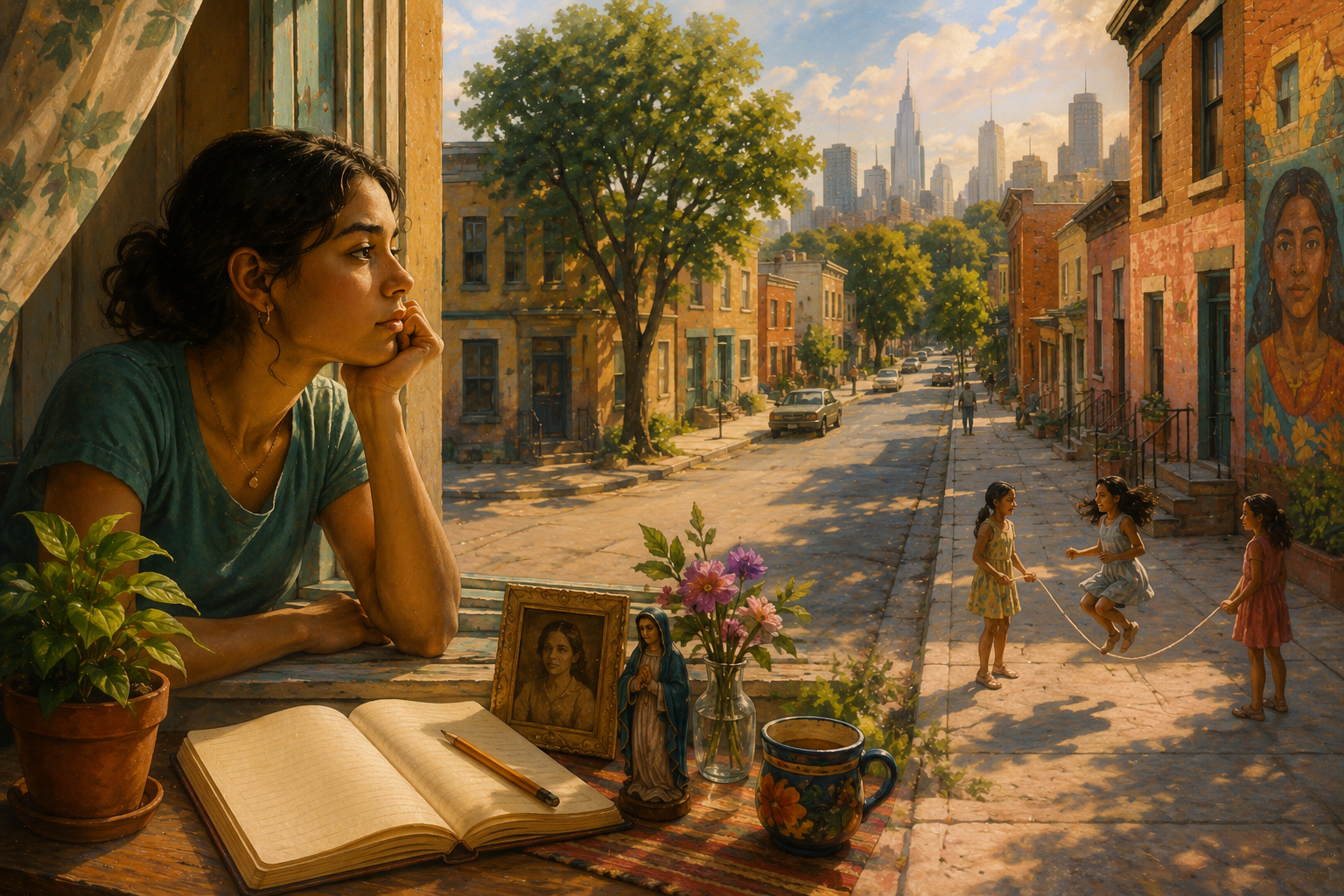
Students often search for themes in The House on Mango Street because the book feels simple at first, but its meaning runs deep. Sandra Cisneros uses short vignettes to show how Esperanza sees home, power, shame, and hope in her neighborhood.
In this Guide
Use this guide to review the main ideas before a quiz, essay, or class talk.
- Why the themes matter
- Major themes to track
- Esperanza’s growth
- Symbols and deeper meaning
- Essay tips
- Helpful books and links
- FAQ
Why Themes in The House on Mango Street Matter
Theme is the message a story asks you to think about, not just a topic.
The themes in The House on Mango Street matter because the book is built from short scenes. Each vignette adds one small truth about Esperanza’s world.
Cisneros does not give long speeches about poverty or identity. She shows a girl who observes her street, her family, and herself with sharp eyes.
If you need a quick refresher, read how to identify theme in literature before you take notes.
Major Themes in The House on Mango Street
The strongest ideas grow from Esperanza’s daily life, not from abstract lessons.
These themes in The House on Mango Street can help you build strong essay claims. They also help explain why the book still feels current for many students.
Identity and Self-Definition
Esperanza wants to decide who she is. Her name, her house, and her neighborhood all shape how others see her.
She does not fully reject her background, but she does not want it to trap her. This makes identity one of the most important ideas in the book.
A helpful comparison is Jane Eyre. Like Jane, Esperanza wants a voice that belongs to her, not one handed to her by others.
Home and Belonging
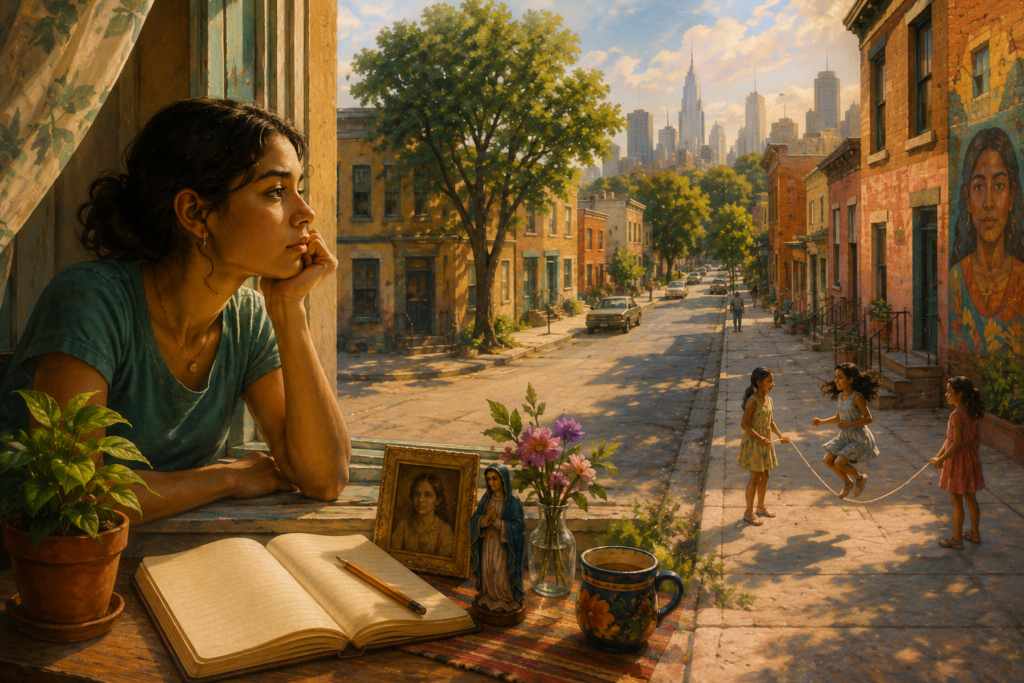
Mango Street is both shelter and burden. Esperanza’s family has a house, but it is not the dream house she hoped for.
The house becomes a symbol of limits. It shows that having a place to live is not the same as feeling proud, safe, or free.
This theme connects well to A Raisin in the Sun by Lorraine Hansberry. In both works, a home carries dreams about class, dignity, and the future.
Gender and Power
Cisneros shows how girls and women face rules that boys often do not face. Some women in the neighborhood seem stuck by marriage, fear, or family pressure.
Esperanza notices these patterns. She learns that growing up as a girl can bring danger, but it can also bring new awareness.
This theme is not simple. The book shows pain, but it also shows women who survive and find small forms of strength.
Shame and Social Class
Esperanza often feels shame about her house and her family’s poverty. She knows how quickly people judge a person by where they live.
The book asks readers to see how class can affect confidence. It can shape what a young person believes is possible.
Cisneros does not blame Esperanza for wanting more. She shows that her desire for a better life comes from both pain and hope.
Voice and Writing
Esperanza’s voice is one of her strongest sources of freedom. By telling her own story, she takes control of how Mango Street is remembered.
Writing becomes more than a hobby. It becomes a way to name hurt, protect memory, and imagine a future.
For guided practice, you can use our literature theme worksheet as you chart key passages and write theme statements.
Dreams and Escape
Esperanza dreams of leaving Mango Street. Yet the book does not treat escape as a clean break.
By the end, she knows she may leave, but she also feels tied to those who cannot. Her dream becomes more mature because it includes responsibility.
How Themes in The House on Mango Street Shape Esperanza
Esperanza changes because she learns to read the world around her.
The themes in The House on Mango Street shape her from the first vignette to the last. At first, she feels embarrassed by her home. Later, she sees that Mango Street has helped form her voice.
Her growth is not neat or easy. She still wants another kind of life, but she begins to understand that leaving does not mean forgetting.
This is why the ending feels powerful. Esperanza wants freedom, but she also wants to speak for the people and places that shaped her.
Symbols That Support Themes in The House on Mango Street
Symbols help readers see big ideas through small details.
And symbols make the themes in The House on Mango Street easier to track. Cisneros often uses plain objects, but she gives them emotional weight.
The House
The house on Mango Street is the central symbol. It stands for poverty, family, shame, and desire.
Esperanza wants a house of her own one day. That dream is not only about money. It is about control over her life.
Windows
Several women are linked to windows. They look out at the world but cannot fully enter it.
Windows suggest distance. They show the gap between wanting freedom and having the power to claim it.
Names
Esperanza’s name carries family history and personal discomfort. She wants a name that fits the self she hopes to become.
Names in the book show how identity can feel inherited, chosen, or forced.
Discussing Themes in The House on Mango Street in an Essay
A strong theme essay needs a claim, not just a topic.
When you write about themes in The House on Mango Street, avoid saying only, “The theme is identity.” Turn the topic into a full idea.
For example: Cisneros shows that identity is shaped by family and place, but Esperanza can still define herself through language.
Use short quotations from several vignettes. Since the book is brief and fragmented, patterns matter more than one long scene.




















Author Background and Context
A little context can help, but the text should still lead your interpretation.
Sandra Cisneros is a major Mexican American writer whose work often explores language, gender, and culture. You can read more about her life at Britannica’s Sandra Cisneros biography.
For classroom context, the NEA Big Read guide to The House on Mango Street offers useful background on the novel and its impact.
Books That Pair Well with The House on Mango Street
These books can deepen your study of voice, place, and self-discovery.
- The House on Mango Street by Sandra Cisneros
- Woman Hollering Creek and Other Stories by Sandra Cisneros
You can find these titles through your school library, local bookstore, or Amazon search.
FAQ: Themes in The House on Mango Street
Use these quick answers to review before class.
What are the main themes in The House on Mango Street?
The main themes include identity, home, gender, class, voice, and dreams. Most of them connect to Esperanza’s search for self-definition.
What is the most important theme in the book?
Identity may be the central theme because Esperanza spends the book deciding who she is and who she wants to become.
How does Mango Street affect Esperanza?
Mango Street makes Esperanza feel shame, but it also gives her stories to tell. It becomes part of her voice.
Why does Esperanza want a house of her own?
She wants privacy, pride, and freedom. The house she imagines stands for control over her future.
Key Takeaway
The themes in The House on Mango Street show a young girl learning that home can limit her, shape her, and give her a voice. Esperanza’s power comes from seeing her world clearly and telling the truth about it.


Get the Free Close Reading Worksheet Pack
Join my email list and receive the printable worksheet pack you can use with any novel or poem.
No spam. Just helpful guides for reading literature well.












