

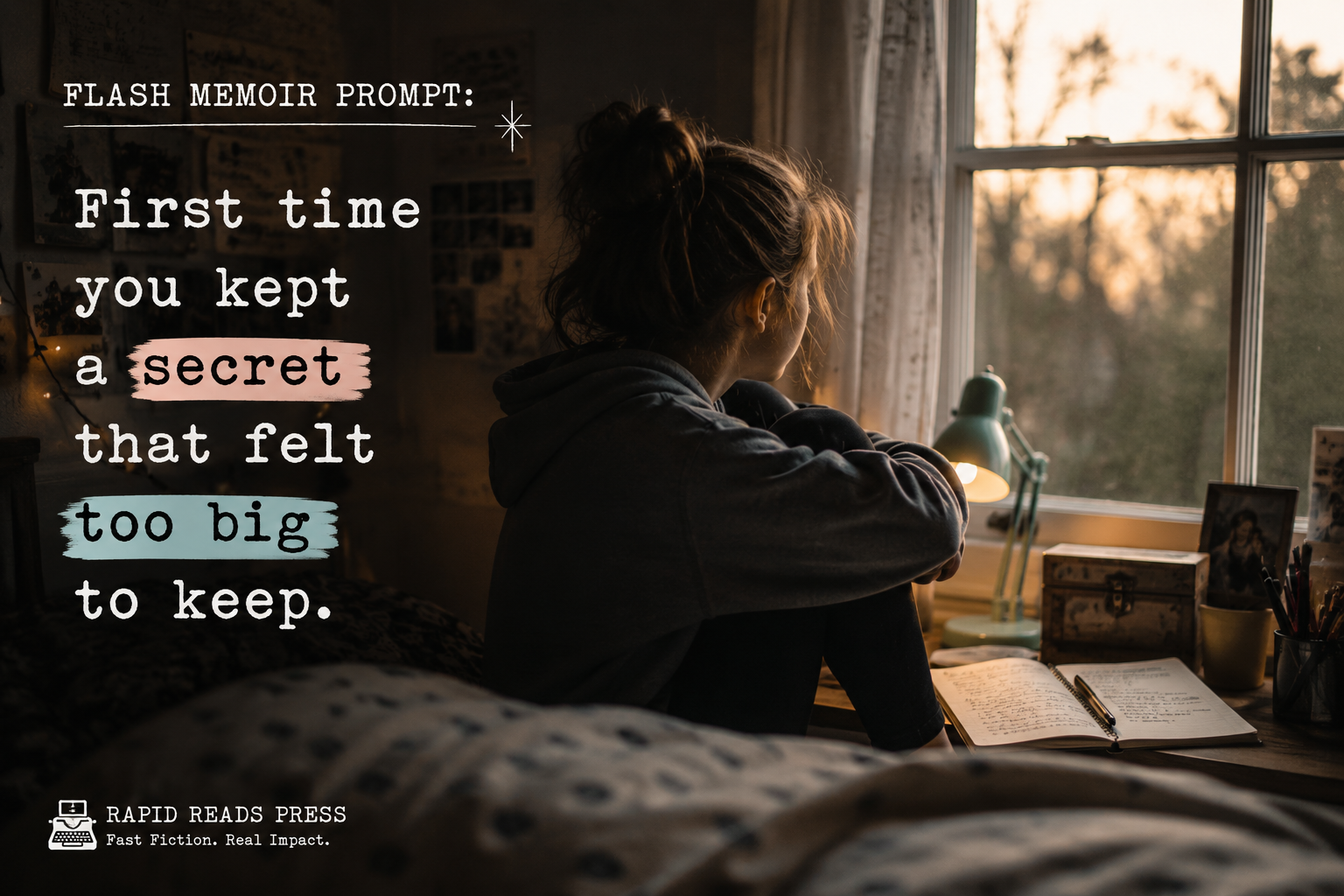
A brief writing invitation for returning to the first secret that felt bigger than your hands, and finding the small scene where silence began to weigh something.
You might remember the moment by its temperature. A hot face. Cold fingers. A stomach that seemed to drop before anyone even asked a question.
If you need a flash memoir prompt, first time kept secret felt too big for your own chest, begin with the moment you knew you would stay quiet. That moment may have lasted only a few seconds, but it can hold a whole story.
Secrets are strange in childhood and young adulthood. Sometimes they make you feel chosen. Sometimes they make you feel trapped. Sometimes you do not even know whether the secret belongs to you, but there you are, carrying it anyway.
The Prompt
Write about the first time you kept a secret that felt too big to keep.
This prompt can unlock a meaningful memory because it asks you to write about pressure. The secret itself matters, but the real story may be in what it did to your body, your voice, and your sense of right and wrong.
You do not need to reveal every detail if the memory still feels private. A flash memoir can work around the edges. You can write about the hallway, the dinner table, the unanswered phone call, or the way someone looked at you as if they knew.
For this flash memoir prompt first time kept secret felt heavy, try to focus on one clear scene instead of the whole history around it. The smaller the moment, the stronger the memory often becomes.
Why This Memory Matters
The first secret that felt too big often marks a change. Before it, you may have believed adults knew everything, friends always told the truth, or families said what needed to be said. After it, the world may have felt more complicated.
This kind of memory may uncover a story about loyalty. Maybe you kept a friend’s secret because you did not want to betray them. Maybe you held in something you had seen because speaking would have changed the room forever.
It may also uncover a story about fear. You might have worried someone would be angry, hurt, disappointed, or blamed. A secret can make a child feel powerful for a moment, then powerless for much longer.
In literature, secrets often push a story forward because they affect how people act when no one says the truth out loud. If you want to see how hidden truth and public judgment can shape a character, the Scarlet Letter study guide offers a clear example of secrecy at the center of a story.
In memoir, though, the point is not to turn your life into a lesson. The point is to notice what the secret changed. Did you become more careful? Did you start listening at doors? Did you learn that silence can feel loud?
How to Approach This Prompt
Start with a physical detail. Do not begin by explaining the whole situation. Begin with a hand on a doorknob, a folded note in a pocket, the smell of cafeteria pizza, or the sound of your own breathing while someone waited for your answer.
Then narrow the memory to one scene. Ask yourself: Where was I standing or sitting when I first understood this secret was mine to carry? Who else was there? What did I do with my face?
For this flash memoir prompt first time kept secret felt too big, try writing what you noticed before you write what it meant. Maybe you noticed your mother’s keys on the counter, your best friend’s red eyes, or the way your notebook paper tore when you erased too hard.
Let the meaning arrive later. Memory often works that way. First comes the small object. Then comes the feeling.
You may also want to think about the mood of the scene. Was it tense, quiet, weirdly normal, or almost funny because everyone was acting like nothing had happened? If you need help naming the feeling of a scene, this guide to tone vs. mood in literature can help you separate the narrator’s voice from the atmosphere around the memory.
Avoid trying to tell the entire secret from beginning to end. Flash memoir works best when it trusts one image. You can leave some things unsaid. In fact, a story about a secret may feel more honest when it does not explain everything.
A Quick Example
I was nine when I found the birthday present hidden behind the water heater. It was a blue bike with silver streamers curled like ribbon candy from the handlebars. My father saw me see it. For one second, we both froze in the basement light. Then he put one finger to his mouth and smiled, but his smile looked nervous, as if I had caught him doing something worse than being kind. At dinner, my mother asked why I was so quiet. I stared at my peas and said I was tired. The secret buzzed in me all week. By Saturday, when she rolled the bike into the yard, I had practiced surprise so many times that my real joy came out wrong.
Try It Yourself
Set a timer for ten minutes and write this sentence at the top of the page: “The first secret I remember keeping was…” Then move straight into a scene.
Do not worry yet about whether the secret was serious enough. If it felt big to you then, it belongs on the page. Childhood size and adult size are not the same, and memoir often lives in that difference.
If the memory feels tender, give yourself permission to write around it. Describe the room. Describe the weather. Describe what your hands did. You can decide later what to keep, change, or leave private.
This flash memoir prompt first time kept secret felt too big to keep is really an invitation to study the weight of silence. What did you carry? Why did you carry it? What did that younger version of you understand before they had the words?
Want More Flash Memoir Prompts?
Explore all 365 prompts in The Memory Trigger: 365 Flash Memoir Writing Prompts. Use them one at a time, and let each small memory become a doorway into a fuller story.


Get the Free Close Reading Worksheet Pack
Join my email list and receive the printable worksheet pack you can use with any novel or poem.
No spam. Just helpful guides for reading literature well.












