Themes in The Things They Carried: A Student-Friendly Guide

Themes in Things They Carried

A clear guide to the major ideas, conflicts, and meanings students should notice in The Things They Carried.

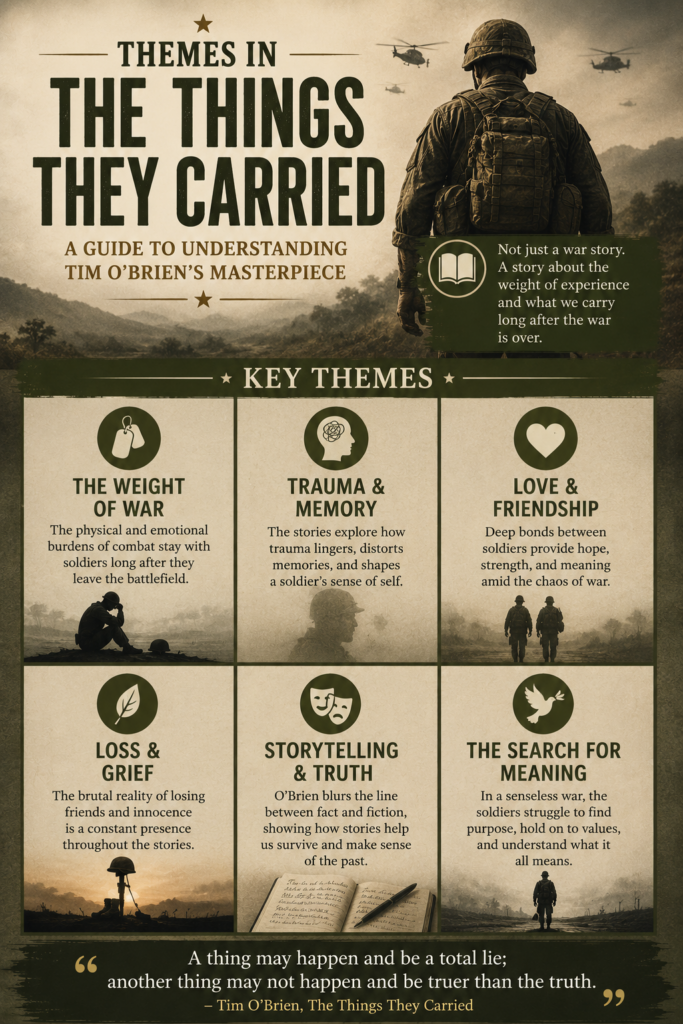
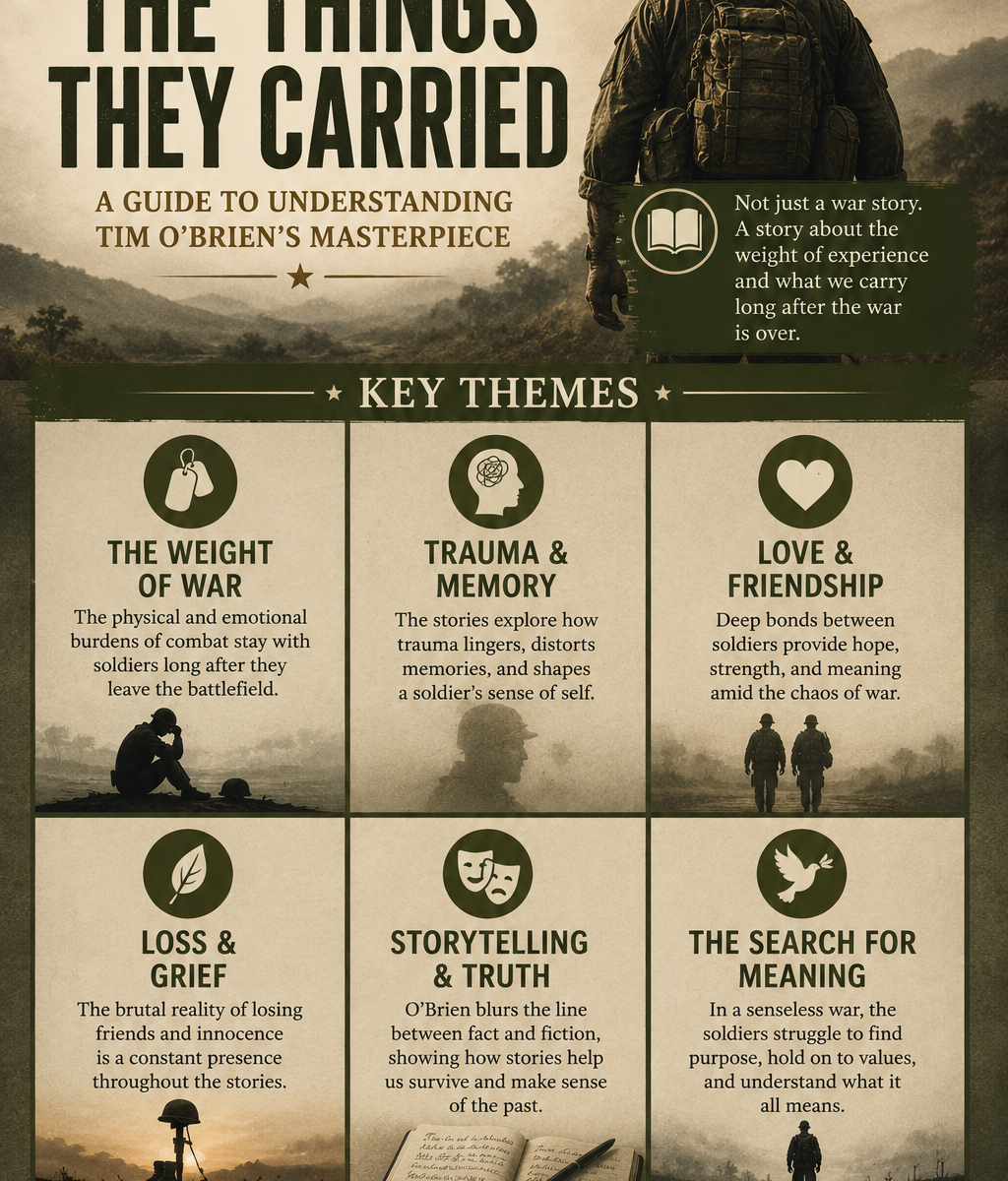
The themes in The Things They Carried help readers see the deep cost of war on the mind, body, and heart. Tim O’Brien does not just write about combat. He writes about fear, memory, guilt, truth, and the stories people need in order to survive.

In this Guide

Use this guide as a map before class discussion, essay prep, or a close reading quiz.

  • Why the themes matter
  • War and fear
  • Storytelling and truth
  • Guilt and shame
  • Courage and masculinity
  • Love, loss, and memory
  • How to write about the novel
  • FAQ
Themes in Things They Carried

Why the Themes in The Things They Carried Matter

The novel asks what soldiers carry after the war ends.

At first, the title seems simple. The soldiers carry guns, food, letters, photos, and gear. Yet the real weight is emotional.

They carry fear, regret, secrets, and memories. Those burdens do not fit in a backpack, but they shape every choice the men make.

When students study the themes in The Things They Carried, they should look at both kinds of weight. Physical objects often point to hidden pain.

This is a key reason the book works so well in AP Literature and college courses. It turns small details into big questions about truth, trauma, and survival.

Major themes in The Things They Carried

The novel has no single easy message about war.

The major themes in The Things They Carried overlap. Fear connects to shame. Shame connects to courage. Memory connects to truth.

O’Brien writes the book as linked stories, not as a straight plot. This form helps readers feel how memory works. The past comes back in pieces.

These themes in The Things They Carried also make the novel feel personal. Even when the setting is Vietnam, the deeper questions matter far beyond one war.

For background on the real conflict behind the novel, Britannica’s overview of the Vietnam War is a helpful place to start.

War and the Weight of Fear

Fear is one of the strongest forces in the novel.

The soldiers fear death, wounds, traps, and mistakes. They also fear looking weak in front of each other.

This kind of fear changes how they act. Some men joke. Some turn quiet. And some try to prove they are brave, even when they are not.

O’Brien shows that fear in war is not rare. It is constant. It becomes part of daily life.

This theme also appears in novels like All Quiet on the Western Front by Erich Maria Remarque. Both books show war as a place where young men lose their old ideas about honor.

Storytelling, Memory, and Truth

O’Brien wants readers to question what truth means in a story.

One of the most famous ideas in the book is that a story can feel true even if every fact is not exact. O’Brien calls attention to the difference between happening-truth and story-truth.

This does not mean the book says facts do not matter. It means memory can hold emotional truth in ways a report cannot.

A soldier may not remember every detail in order. Yet he may remember the guilt, sound, heat, or fear with painful force.

This is one of the most important themes in The Things They Carried because the whole book is built around memory. Stories help the narrator return to the past, face it, and give it shape.

For more on the author, see Britannica’s brief biography of Tim O’Brien.

Guilt, Shame, and Moral Confusion

The novel treats guilt as a wound that does not heal fast.

Many characters feel guilt for things they did, did not do, or could not stop. This guilt is not always logical, but it is real.

Lieutenant Jimmy Cross feels guilt after Ted Lavender dies. He thinks his daydreams about Martha made him fail as a leader.

O’Brien also explores guilt through stories about killing. The narrator cannot escape the image of a dead young man, even as others try to make the moment seem normal.

The moral world of the novel is muddy. Characters often do not know what the right choice is. Even after they choose, they may not be sure what the choice means.

This is different from a simple hero story. Like Macbeth, the book shows how guilt can replay in the mind long after the act itself.

Masculinity and the Pressure to Be Brave

The soldiers are often trapped by what they think manhood requires.

In the novel, courage is not always pure. Sometimes men act brave because they fear shame more than danger.

O’Brien says he went to war partly because he was embarrassed not to. That detail makes courage more complex.

The book asks a sharp question: Is it brave to go along with what others expect, or brave to resist?

This theme matters for students because it breaks apart a common idea about war. The novel does not treat bravery as simple strength. It shows bravery as fear, pride, doubt, and pain mixed together.

Love, Loss, and Emotional Burdens

Love is another thing the characters carry.

Jimmy Cross carries Martha’s letters and photos. He turns them into a dream of comfort, but that dream cannot protect him from war.

Other characters carry memories of home, family, and old selves. Those memories can help them survive, but they can also hurt.

Loss appears over and over. Some deaths happen fast. Some losses happen slowly, as men become less like the people they were before Vietnam.

This is why the title matters so much. The men do not just carry supplies. They carry emotional lives that war keeps breaking open.

How to Write About themes in The Things They Carried

A strong essay connects theme to choices the author makes.

When you write about the themes in The Things They Carried, do not stop at naming a theme. Explain how O’Brien builds it through objects, structure, voice, and repeated memories.

A weak claim says, war is bad. A stronger claim says O’Brien shows war as a force that blurs truth, creates guilt, and leaves soldiers with memories they cannot set down.

Use short quotes and explain them closely. Look at what the object, image, or story reveals about a character’s inner life.

If you need help turning a theme into a thesis, use our guide on how to write a literary analysis essay. It can help you move from notes to a clear argument.

For a quick study boost, you can also use the RapidReads Press theme study guide to track key scenes and build better paragraphs.

Essay Examples: Turning Theme into Analysis

Good analysis makes a theme specific.

Here is a basic idea: The book is about memory.

Here is a stronger version: In The Things They Carried, O’Brien presents memory as both a burden and a survival tool, since stories force the narrator to relive trauma while also helping him face it.

That second sentence gives you more to prove. You can point to the book’s repeated scenes, shifting truth claims, and return to dead characters through story.

Another essay could focus on shame. You might argue that O’Brien presents shame as more powerful than patriotism because men often choose danger to avoid public judgment.

For more help with essay structure, this literary analysis essay guide can help you build topic sentences and evidence.

Books to Search for on Amazon

These related books can deepen your understanding of war literature.

Going After Cacciato by Tim O’Brien is another novel that mixes war, memory, and imagination.

Dispatches by Michael Herr offers a vivid nonfiction look at the Vietnam War and its psychological strain.

These books pair well with the themes in The Things They Carried because they also ask how people describe events that seem almost impossible to explain.

FAQ: themes in The Things They Carried

Here are quick answers to common student questions.

What are the main themes in The Things They Carried?

The main themes in The Things They Carried include the burden of war, fear, guilt, shame, memory, storytelling, and the pressure to seem brave.

What does the title mean?

The title refers to both physical items and emotional burdens. The soldiers carry weapons and supplies, but they also carry grief, fear, and memory.

Why is storytelling so important in the novel?

Storytelling helps the narrator return to painful memories. It also lets him explore a deeper kind of truth than facts alone can show.

Is The Things They Carried anti-war?

The book strongly shows the damage war causes. It does not preach in a simple way, but it does question ideas about glory, courage, and honor.

How can I write a thesis about the novel?

Choose one theme and explain how O’Brien develops it. Mention a method, such as symbols, repeated stories, or the narrator’s voice.

Key Takeaway

The novel shows that the heaviest burdens are often invisible.

The themes in The Things They Carried reveal war as a lasting mental and emotional weight. O’Brien’s stories ask readers to see truth not only in what happened, but in what people carry afterward.
Ekphrasis Poetry Prompt Inspired by a Flooded Midnight Train Station

ekphrasis poetry prompt

Some images feel less like pictures and more like memories waiting for language.

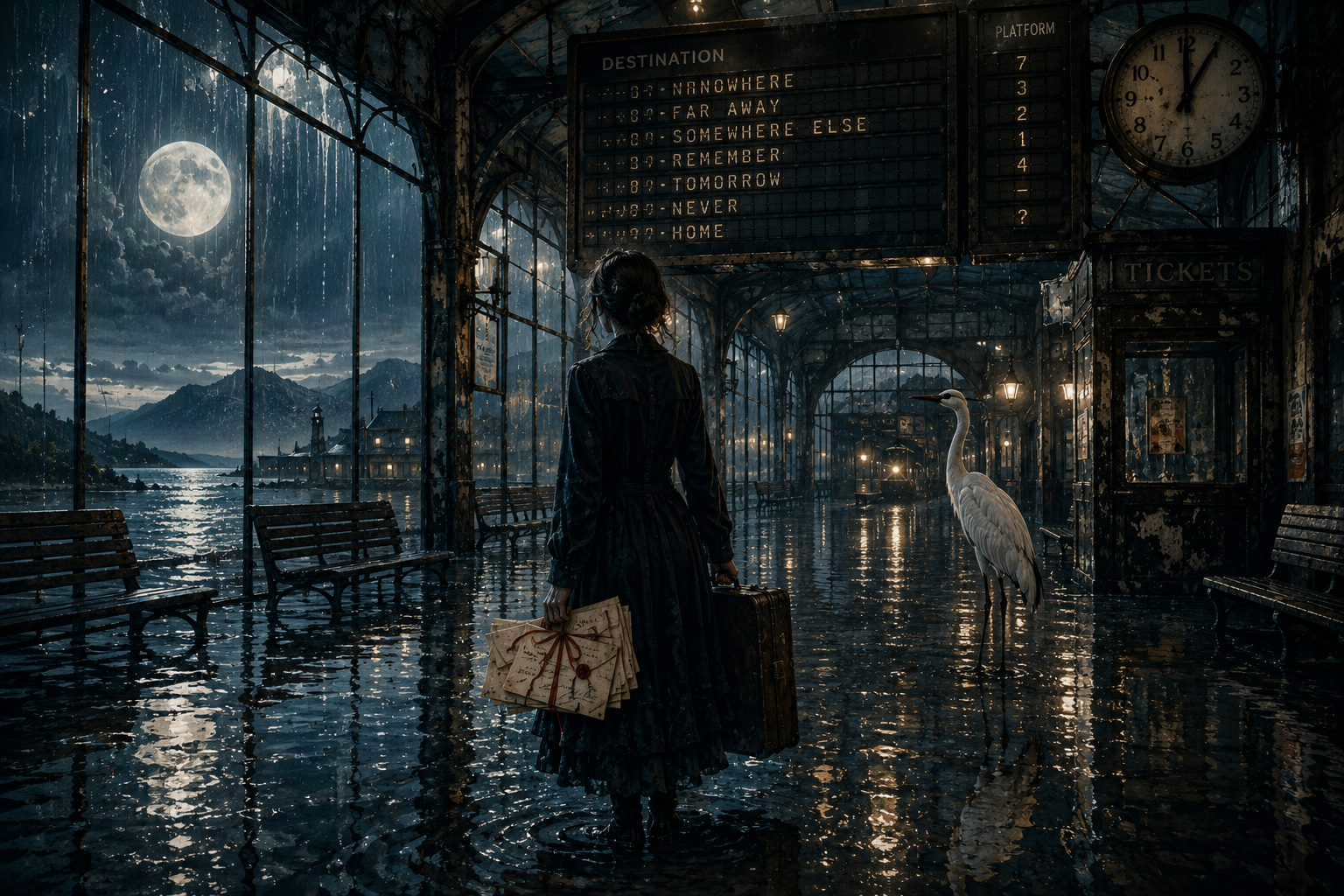
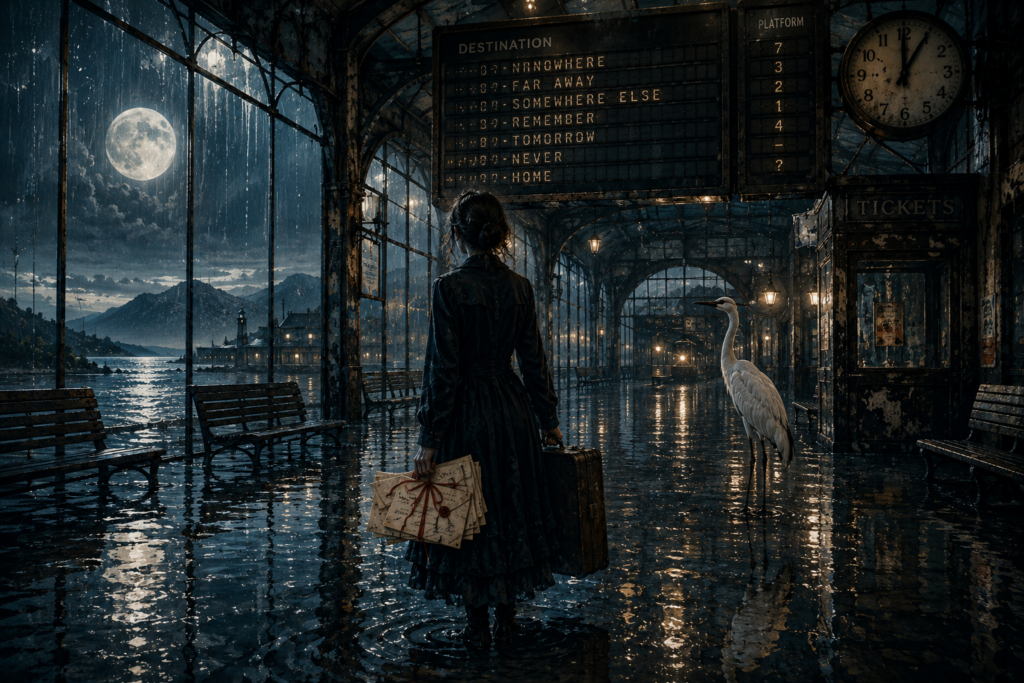
This ekphrasis poetry prompt begins with a strange and lonely scene: a woman standing in a flooded train station long after midnight while rain slides down cracked windows and unreadable destination signs flicker overhead. She carries old letters tied together with red thread. A white crane waits beside her in silence. Outside, the moon hangs low enough to feel personal.

ekphrasis poetry prompt

Ekphrastic writing asks you to respond to an image through poetry or reflection. The image becomes a doorway into emotion, memory, symbolism, and voice. If you want a deeper understanding of how imagery and symbolism work together in literature, this guide on how to analyze poetry step by step can help strengthen your reading and writing practice:

How to Analyze Poetry Step by Step

What Is an Ekphrasis Poetry Prompt?

An ekphrasis poetry prompt uses visual art or an imagined scene as the starting point for a poem. The goal is not to describe every detail mechanically. The goal is to enter the emotional atmosphere of the image and discover what it reveals.

The word “ekphrasis” comes from ancient Greek rhetorical traditions and still appears often in poetry studies today. The Poetry Foundation explains ekphrasis as writing that responds to visual art in a vivid and imaginative way.

This particular ekphrasis poetry prompt works well for themes like grief, departure, memory, identity, loneliness, migration, unfinished conversations, or emotional change.

The Ekphrasis Poetry Prompt

Write a poem inspired by the flooded train station image.

Focus on one emotional tension inside the scene. Maybe the letters contain words that were never sent. Maybe the station no longer exists. Maybe the crane represents a person who died years ago. Maybe the water reflects memories instead of light.

You do not need to explain the entire setting. Let the poem stay uncertain in places. Images often become stronger when they leave room for silence.

Try beginning with one concrete detail:
“Her suitcase smelled like rain and old paper.”
“The station clock had stopped at 12:14.”
“The bird watched her like it remembered everything.”

How This Ekphrasis Poetry Prompt Builds Symbolism

Strong ekphrastic poems often rely on symbolism instead of direct explanation. In this image, the train station can suggest transition or emotional suspension. Water may represent memory or instability. The unreadable signs may reflect confusion about identity or the future.

If you want help understanding literary symbolism more deeply, this guide may help:

How to Find Symbolism in a Story

You can also let one object become the emotional center of the poem. Instead of writing about the whole station, write only about the letters, the crane, or the reflection in the water.

Questions to Explore While Writing

Who was meant to receive the letters?

Why has the woman stayed so late?

What memory does the station hold?

Why is the crane calm while everything else feels abandoned?

What destination can no longer be reached?

You may discover that the poem becomes less about the image itself and more about a moment in your own emotional history.

Why Ekphrastic Poetry Feels So Personal

Many writers struggle to begin with abstract feelings alone. Images help because they give emotion a physical shape. A flooded room, a flickering sign, or a silent bird can carry emotional weight before the poem fully understands itself.

That is part of what makes an ekphrasis poetry prompt useful. The image creates pressure. The poem becomes the response.

Sometimes the strongest lines arrive when the writer stops trying to explain everything.

Final Reflection

The best ekphrastic poems often feel haunted by something unsaid. This image invites that kind of writing. You do not need a perfect interpretation. You only need one honest emotional thread to follow.

Let the station become a place where memory waits.

Themes in Animal Farm: A Student-Friendly Guide

Themes in Animal Farm

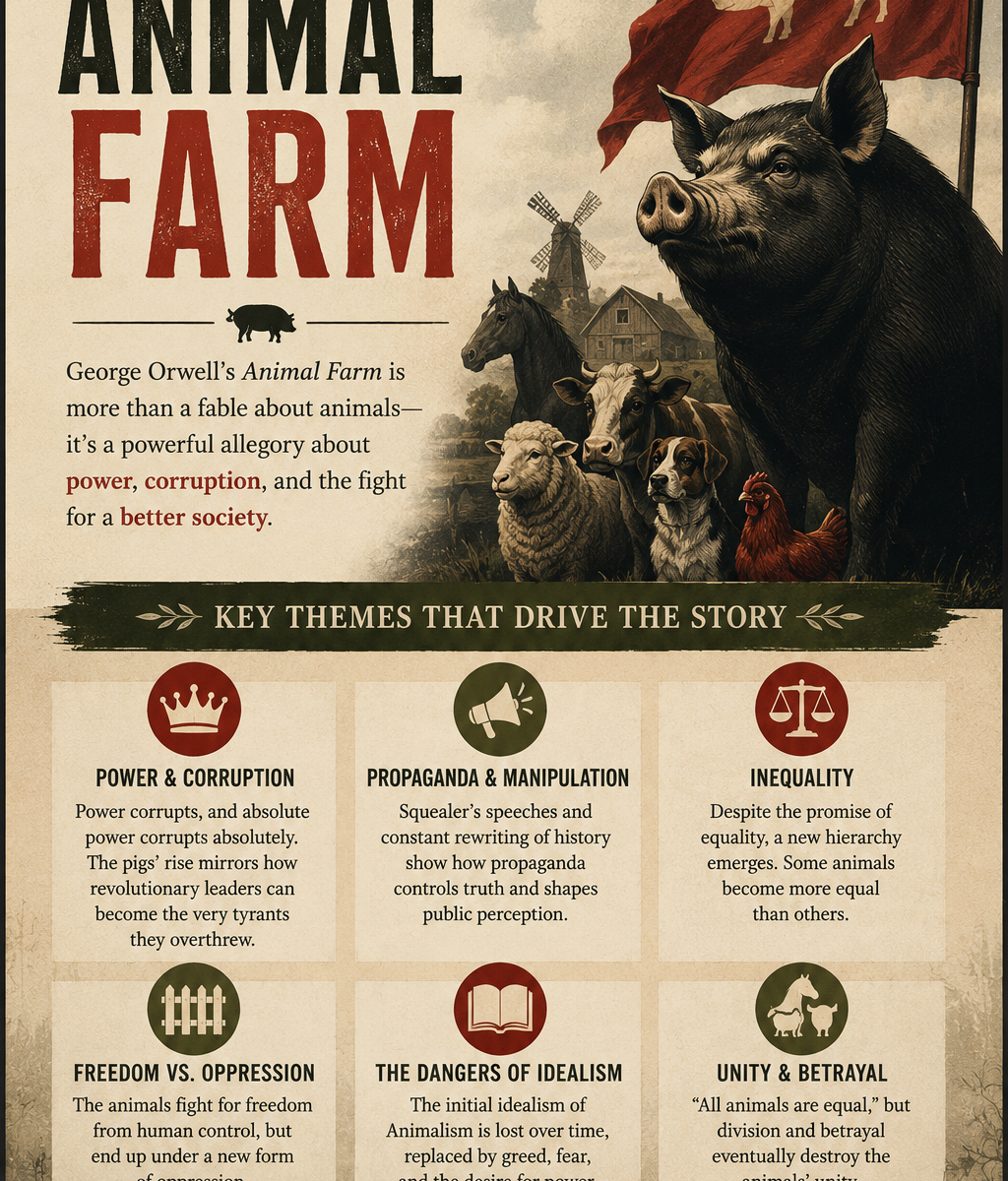
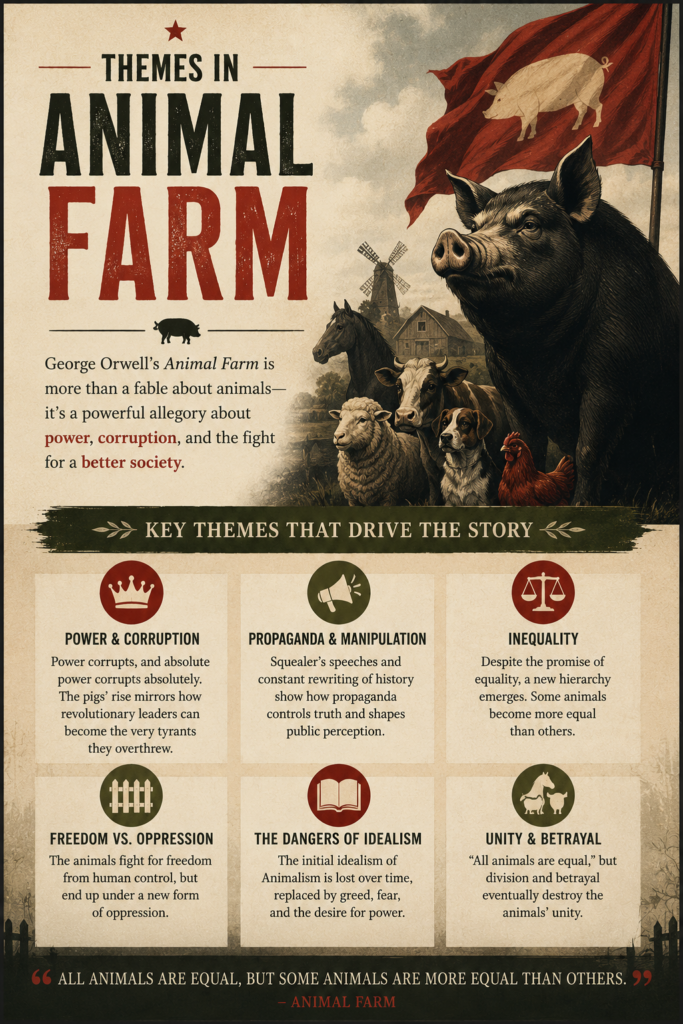
George Orwell’s Animal Farm may look simple at first, but it is packed with deeper ideas about power, truth, fear, and class. This guide explains the themes in Animal Farm in a clear way, so students can use them in class talks, essays, and AP Literature analysis.

In this Guide

  • Why the novel’s themes matter
  • Power and corruption
  • Propaganda and language
  • Class and exploitation
  • Fear, silence, and control
  • Idealism and betrayal
  • How to write about the themes
  • Book suggestions
  • FAQ
Themes in Animal Farm

Why the Themes in Animal Farm Matter

Orwell uses a farm to tell a sharp story about politics, human weakness, and the danger of blind trust.

Animal Farm is an allegory. That means the animals, places, and events stand for larger ideas. The farm reflects the Russian Revolution and the rise of Soviet power, but the novel also speaks to any society where leaders abuse trust.

Studying the themes in Animal Farm helps students move beyond plot summary. Instead of only saying what Napoleon does, you can explain what his actions reveal about power.

If you need help connecting theme to character choices, this guide on how to analyze characters in literature can help you build stronger claims.

Power and Corruption: One of the Central Themes in Animal Farm

The novel shows how power can change leaders, especially when no one can hold them accountable.

At the start, the animals dream of freedom. They want to escape Mr. Jones and build a fair society. Old Major’s speech gives them hope, and the rebellion feels like a fresh start.

That hope does not last. Napoleon slowly takes control of the farm. He uses the dogs to scare the other animals, changes the commandments, and gives the pigs special rights.

This makes power and corruption one of the most important themes in Animal Farm. Orwell suggests that leaders may begin with noble words, but power can lead them to greed and cruelty.

A strong essay point could be: Napoleon does not become corrupt by accident. He protects his power by removing rivals, rewriting rules, and making others afraid.

This theme also appears in Shakespeare’s Macbeth. Macbeth gains power through violence, then commits more violence to keep it. Both works show that unchecked power can destroy moral judgment.

Propaganda: One of the Most Important Themes in Animal Farm

Orwell shows that language can shape what people believe, even when the truth is right in front of them.

Squealer is the main voice of propaganda in the novel. He explains Napoleon’s choices, twists facts, and makes the animals doubt their own memories.

When the pigs take the milk and apples, Squealer claims they need them for brain work. When Napoleon changes plans about the windmill, Squealer makes it sound as if Napoleon was right all along.

This is one of the key themes in Animal Farm because Orwell cared deeply about political language. He believed words could be used to hide lies, protect leaders, and weaken public thought.

The changing commandments are a clear symbol of this theme. The rule that says all animals are equal slowly turns into a cruel joke. By the end, equality has become a word with no real meaning.

For more background on Orwell’s life and political views, students can read this short overview from Britannica.

Class, Work, and Exploitation in the Themes in Animal Farm

The farm claims to be equal, but some animals work hard while others enjoy the rewards.

Boxer is the clearest example of exploitation. He is loyal, strong, and honest. His favorite sayings show his faith in the system, even when the system fails him.

Napoleon uses Boxer’s labor but does not protect him. When Boxer grows weak, the pigs sell him instead of giving him care. This moment is one of the saddest parts of the book because it shows how deeply the workers have been betrayed.

Class is one of the major themes in Animal Farm because the rebellion was supposed to end unfair treatment. Instead, the pigs become a new ruling class.

Orwell does not attack the idea of fairness. He attacks leaders who use the language of fairness while they build a system that serves only them.

Fear, Silence, and Control

The animals lose freedom not all at once, but through small steps that train them to stay quiet.

Napoleon uses fear in direct ways. The dogs threaten anyone who might resist. Public confessions and executions shock the animals and make them feel helpless.

Fear also works in quiet ways. The animals worry that Mr. Jones might return. Squealer repeats this fear whenever the pigs need support.

Because of that, many animals stop asking questions. Clover senses that something is wrong, but she cannot explain it clearly. Benjamin understands more than most, yet he rarely acts.

This theme matters because Orwell asks a hard question: What happens when people know something is wrong, but stay silent?

Idealism and Betrayal

The novel begins with a dream of justice, then shows how that dream can be stolen.

Old Major imagines a world where animals control their own labor and live without human abuse. His vision inspires the rebellion, and for a short time, the farm feels full of purpose.

Napoleon betrays that vision. He keeps the songs and slogans when they help him, but he destroys the real meaning behind them.

This is one reason the ending feels so bitter. The animals look from pig to man and from man to pig, but they can no longer tell the difference. The revolution has come full circle.

The theme of betrayed idealism also appears in dystopian works like Orwell’s 1984. In both books, leaders use language and fear to crush independent thought.

Education and Ignorance

Orwell links knowledge to freedom because the animals who cannot read are easier to control.

The pigs learn to read and write well, which gives them power over the farm’s laws and records. Many other animals can only learn a few letters, or they depend on the pigs to explain everything.

This creates an unfair gap. Those who control knowledge control truth. The other animals cannot challenge changes to the commandments because they cannot prove what the words used to say.

This theme is useful for students because it connects to real life. Education is not only about school. It is also about the ability to question, compare facts, and notice when language hides harm.

How to Write About the Themes in Animal Farm

A strong theme paragraph should connect an idea to a pattern in the text.

When you write about themes in Animal Farm, do not just name the theme. Show how Orwell develops it through characters, events, symbols, and changes in tone.

For example, instead of writing, Napoleon is corrupt, write a fuller claim: Orwell shows that power becomes dangerous when a leader controls force, language, and history.

Then use evidence. You might discuss the dogs, Squealer’s speeches, or the changing commandments. Explain why that evidence matters.

Try this simple essay frame:

  • Claim: Orwell presents propaganda as a tool of control.
  • Evidence: Squealer changes facts to defend Napoleon.
  • Analysis: The animals accept lies because they lack power, memory, and education.

Common Symbols Connected to Themes

Symbols help Orwell turn simple farm details into larger political ideas.

The windmill stands for hope, labor, and false promises. The animals work hard on it because they believe it will improve their lives. Napoleon later uses it as a way to demand more labor.

The seven commandments stand for the original values of the rebellion. As the pigs change them, the reader sees truth itself become unstable.

The farmhouse stands for privilege. At first, it represents human corruption. When the pigs move in, it shows that they have become like the old rulers.

These symbols support many themes in Animal Farm, especially corruption, inequality, and the loss of truth.

Relevant Books for Students

If you want to compare Orwell’s ideas with other major works, these books are useful choices:

  • 1984 by George Orwell
  • Lord of the Flies by William Golding

Both books ask how people behave when rules, truth, and power shift. They also pair well with essays about fear and control.

Author and Historical Context

Orwell wrote with deep concern about political lies and the abuse of revolutionary hope.

Animal Farm was published in 1945. It reflects events tied to the Russian Revolution and Joseph Stalin’s rule, but its message is wider than one country or period.

Students can learn more about the book’s publication and context from the British Library’s introduction to Animal Farm.

Knowing the history helps, but the novel still works without it. Orwell’s warning is clear: any society can become unjust if people stop questioning those in power.

FAQ: Themes in Animal Farm

What are the main themes in Animal Farm?

The main themes in Animal Farm include power and corruption, propaganda, class exploitation, fear, education, and betrayal of ideals.

What is the most important theme in Animal Farm?

Power and corruption may be the most central theme. Napoleon’s rise shows how a leader can turn a fight for freedom into a new form of oppression.

How does Orwell show propaganda in the novel?

Orwell uses Squealer, slogans, and changed commandments to show how language can protect lies and control public memory.

Why is Boxer important to the novel’s themes?

Boxer shows how loyal workers can be exploited by leaders who praise their labor but do not value their lives.

Is Animal Farm only about the Russian Revolution?

No. The novel is based on that history, but its themes apply to many societies where power, fear, and propaganda shape public life.

Key Takeaway

The themes in Animal Farm show how freedom can fail when power goes unchecked, truth becomes weak, and ordinary people are taught not to question authority.

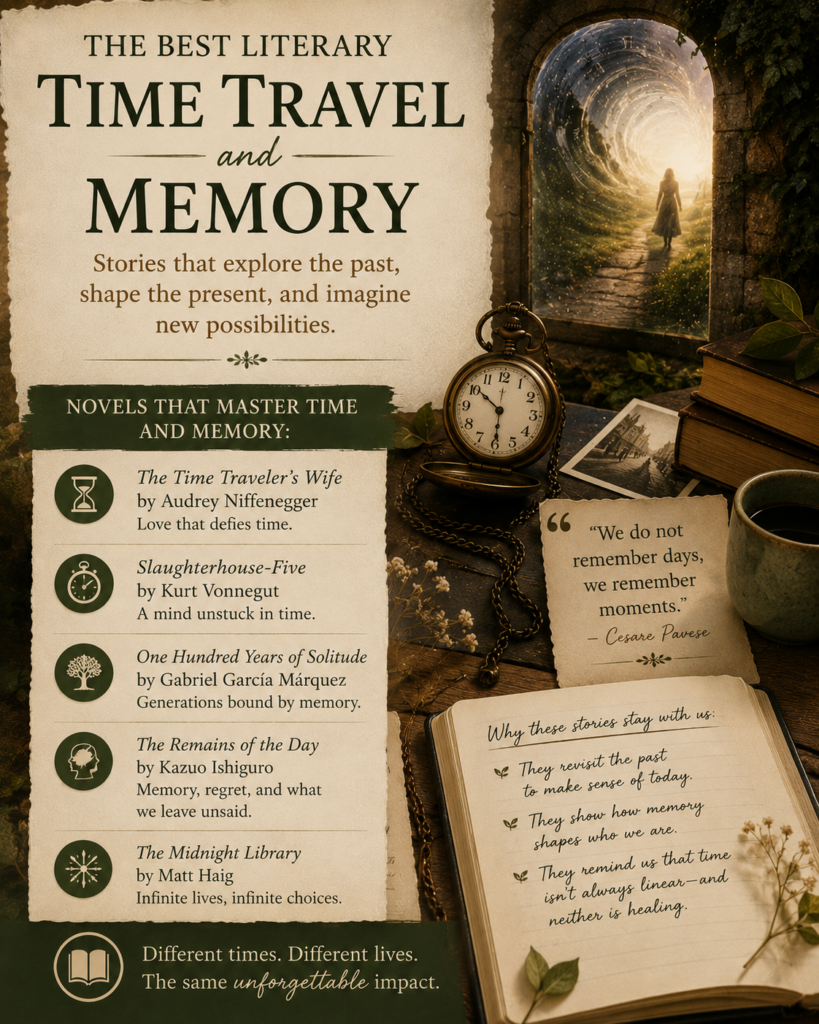
Best Literary Time Travel and Memory: Books, Themes, and Symbols That Bend Time

Literary time travel

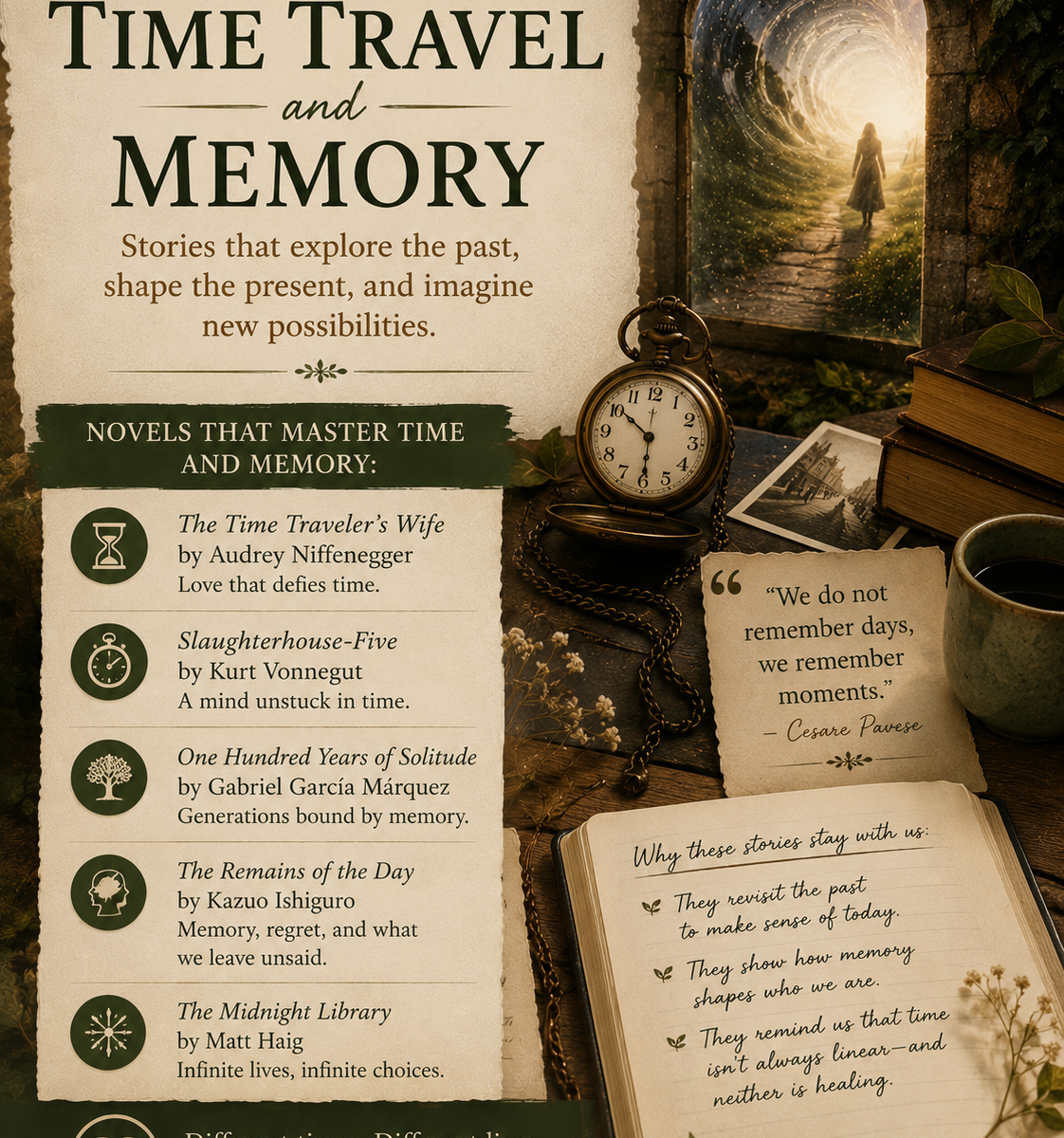
Best Literary Time Travel and Memory is a rich topic because books often treat time as more than a clock. In literature, time can reveal grief, guilt, love, trauma, and the deep need to understand the past.

From science fiction to modern novels, writers use time travel and memory to ask one big question: can people ever escape what happened before?

In this Guide

  • Why time travel and memory matter in literature
  • Best Literary Time Travel and Memory in famous books
  • Recommended books to read
  • Key themes and symbols
  • How students can analyze these stories
  • FAQs
  • Key takeaway
Literary time travel

Why Best Literary Time Travel and Memory Still Matters

Stories about time often feel strange, but their emotions are easy to understand.

Best Literary Time Travel and Memory matters because it shows how the past shapes the present. A character may travel through time, but the real journey is often inside the mind.

Memory can comfort a character. It can also trap them. In many books, the past returns because someone has not faced it yet.

This is why time travel stories are not only about machines or magic. They are also about regret, hope, and the wish to fix what cannot be fixed.

Best Literary Time Travel and Memory in Classic and Modern Books

Many famous books bend time to show how people live with pain, history, and desire.

In Slaughterhouse-Five by Kurt Vonnegut, Billy Pilgrim becomes “unstuck in time.” He moves between war, home, and alien spaces. The broken timeline mirrors the shock of trauma.

In Kindred by Octavia E. Butler, Dana travels from 1970s California to the era of slavery. The time travel is direct and frightening. It forces readers to see history as something alive, not distant.

In The Time Traveler’s Wife by Audrey Niffenegger, time travel affects love and family. The story asks whether love can survive when time itself feels unfair.

Best Literary Time Travel and Memory also appears in books without actual time machines. In Mrs Dalloway by Virginia Woolf, memory carries characters back into old choices and lost chances.

Recommended Books for Best Literary Time Travel and Memory

These books are strong picks for students who want clear examples of time, memory, and identity.

  • Kindred by Octavia E. Butler
  • Slaughterhouse-Five by Kurt Vonnegut
  • The Time Traveler’s Wife by Audrey Niffenegger

Kindred works well for class discussion because it connects time travel to race, power, and family history.

Slaughterhouse-Five is a key text for war literature. It uses a strange time structure to show how trauma changes memory.

The Time Traveler’s Wife gives the theme a personal focus. It shows how time can feel romantic, painful, and out of human control.

Memory as a Form of Time Travel

Not every story needs a time machine to move through time.

Memory is often the most common form of time travel in literature. A smell, place, photo, or sound can pull a character into the past.

In In Search of Lost Time by Marcel Proust, a small taste of cake brings back a flood of memory. The moment is famous because it shows how the past can return without warning.

In Beloved by Toni Morrison, memory is painful and hard to escape. The past becomes almost physical. It enters the home, the body, and the lives of the characters.

This is why Best Literary Time Travel and Memory fits both science fiction and literary fiction. Both forms ask how the past still touches the present.

Symbols in Best Literary Time Travel and Memory Stories

Writers often use simple objects to make time feel visible.

Clocks are the clearest symbol. They can show order, pressure, or fear. A broken clock may suggest that normal time no longer works.

Photographs also matter. They freeze one moment, but they can stir deep emotion. A photo may seem still, yet it can move a character back into loss or love.

Doors, roads, mirrors, and rivers often appear in stories about time. Each one can suggest a passage from one state of life to another.

Nature can also shape memory. A desert, forest, or lonely plain may hold the weight of the past. For more on place and meaning, read our guide to nature and isolation in Western writing.

Major Themes in Best Literary Time Travel and Memory

The best time travel stories use big ideas in personal ways.

Regret is one major theme. Characters often want to change a mistake, save a loved one, or choose a different path.

Trauma is another key theme. In many novels, time feels broken because the mind cannot leave a painful event behind.

Identity also matters. If memory shapes who we are, then a change in memory can change the self.

These themes make Best Literary Time Travel and Memory useful for AP Literature and college essays. The topic helps students connect plot structure to deeper meaning.

How Time Structure Shapes the Reader’s Experience

A story’s timeline can affect how readers feel.

A straight timeline feels steady. A broken timeline feels uncertain. When scenes jump between past and present, readers may feel the same confusion as the character.

Vonnegut uses this method in Slaughterhouse-Five. The jumps in time are not random. They show how war has damaged Billy’s sense of reality.

Woolf uses memory in a different way. In Mrs Dalloway, one day in London opens into many years of feeling and thought.

For background on memory as a human process, the Britannica overview of memory offers a helpful starting point.

Why Students Should Study Best Literary Time Travel and Memory

This topic helps students read beyond the surface.

When a book moves through time, ask why. The author may want readers to feel grief, suspense, shock, or longing.

Students can also look for patterns. What moments return? Which memories repeat? What does the character avoid?

Best Literary Time Travel and Memory gives students a strong way to discuss theme, structure, symbol, and character at once.

It also connects well to place. A setting can act like a memory bank, especially when nature reflects loss or silence. Our article on landscape and isolation in literature explores this idea in more depth.

Poetry, Time, and Memory

Poetry often treats time as brief, fragile, and emotional.

Many poems look back at childhood, lost love, or death. The speaker may not travel through time in a literal way, but memory creates the same effect.

T.S. Eliot’s poetry often explores time, history, and spiritual longing. You can learn more about Eliot through the Poetry Foundation’s T.S. Eliot page.

Poems are useful for this topic because they can turn one moment into a doorway. A single image can open years of memory.

How to Write About Best Literary Time Travel and Memory

A strong essay starts with the reason behind the time shift.

Do not only say that a story jumps in time. Explain what the jump reveals. Does it show trauma, love, fear, or guilt?

Use short quotes that show the pattern. Then connect those quotes to the character’s inner life.

A helpful thesis might say: “The broken timeline shows that the character cannot separate the present from the past.”

This keeps your essay focused on meaning, not just plot summary.

FAQs About Best Literary Time Travel and Memory

What is literary time travel?

Literary time travel means a story moves across different points in time. This can happen through science fiction, magic, dreams, or memory.

Is memory a form of time travel in literature?

Yes. Memory can move a character back into the past in an emotional way. It may feel as powerful as real time travel.

What book is best for studying time travel and memory?

Kindred by Octavia E. Butler is one of the best choices. It uses time travel to explore history, family, and power.

Why do authors use broken timelines?

Authors use broken timelines to show how people think and feel. This structure can reveal trauma, regret, or deep longing.

Can this topic help with AP Literature essays?

Yes. Best Literary Time Travel and Memory is useful because it connects structure, theme, and character change.

Key Takeaway

Best Literary Time Travel and Memory shows that the past is never fully gone. In literature, time can break, bend, and return because characters still carry what they have loved, lost, or feared.

The strongest stories about time are not only about where a character goes. They are about what the character finally understands.

What Is Mood in Literature? A Beginner-Friendly Guide

mood in literature

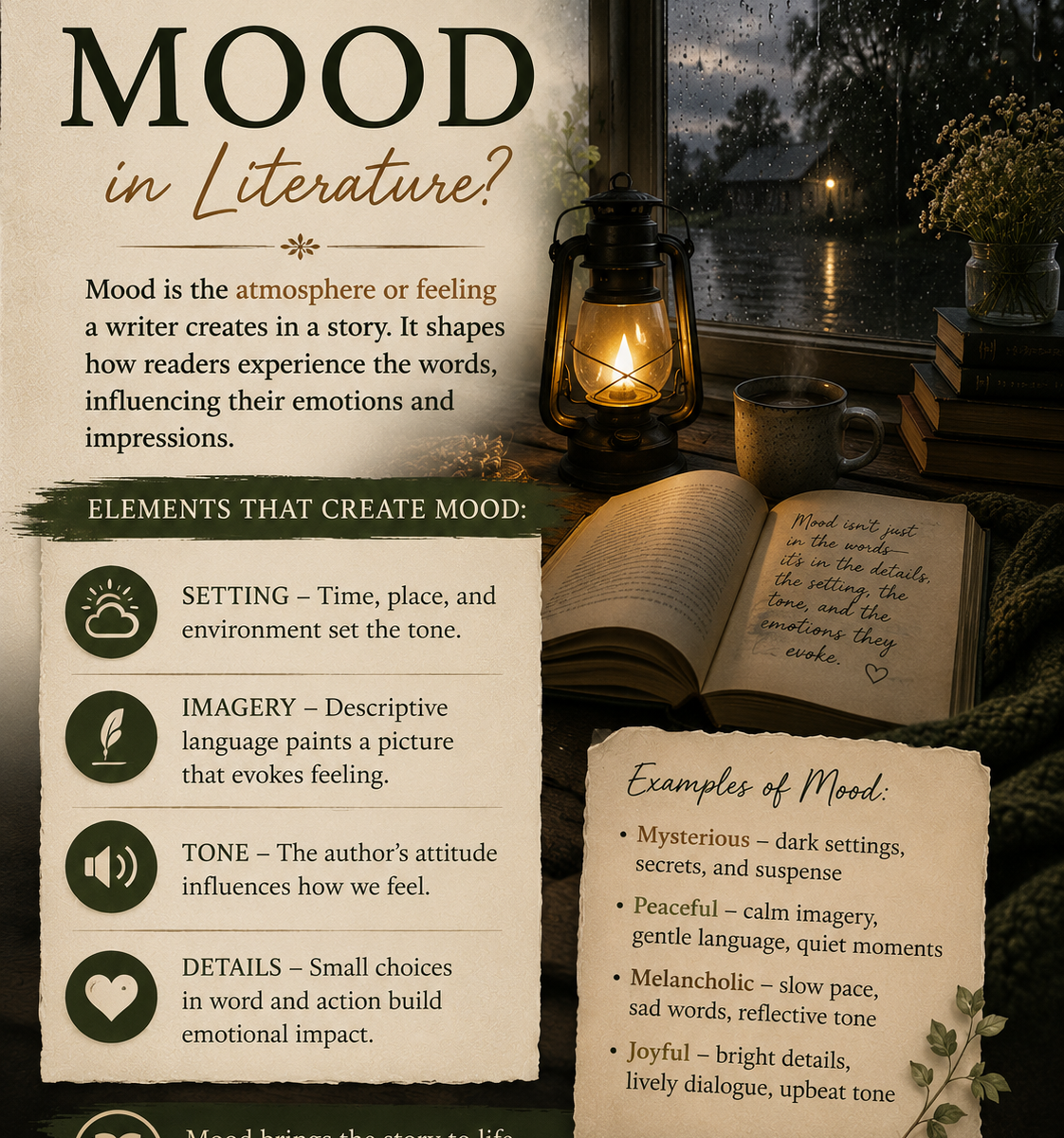
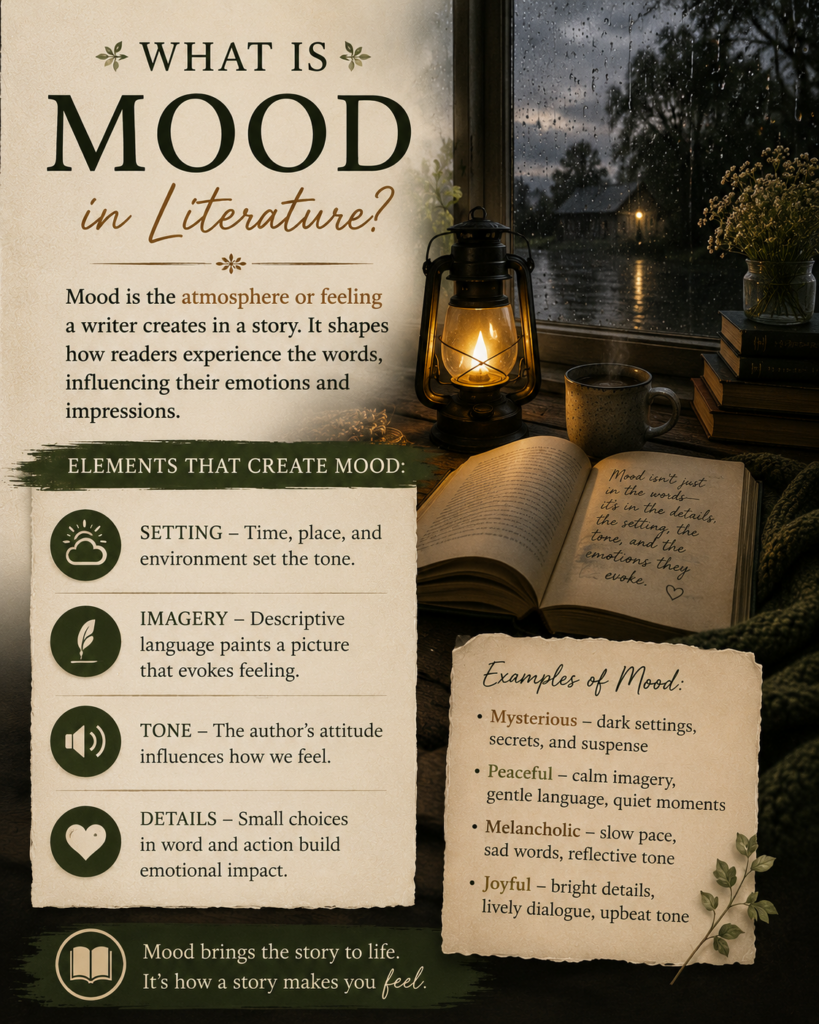
What Is Mood in Literature? It is the feeling a story or poem creates for the reader. Mood can make a scene feel scary, peaceful, tense, hopeful, or sad.

Writers build mood through setting, word choice, imagery, and details. Once you know how mood works, you can read literature with more confidence.

In this Guide

mood in literature

What Is Mood in Literature? A Simple Definition

Mood is the emotional atmosphere of a text.

When students ask What Is Mood in Literature?, the simplest answer is this: mood is how the writing makes you feel. It is not always one emotion. A story can shift from calm to fearful, or from hopeful to tragic.

For example, a dark forest at night may create a mood of fear. A warm kitchen with fresh bread may create comfort. The mood comes from the details the writer chooses.

Mood is different from tone. Tone is the writer’s attitude toward the subject. Mood is the feeling created in the reader. If you want a deeper comparison, read this guide on tone vs. mood in literature.

What Is Mood in Literature? Why It Matters

Mood helps readers feel the meaning of a text, not just understand it.

A strong answer to What Is Mood in Literature? should explain why mood matters. Mood shapes the way we react to characters, events, and themes.

In a ghost story, mood can make a simple hallway feel dangerous. In a love poem, mood can make a short moment feel full of longing. Mood guides the reader’s emotional response.

Mood also supports theme. If a story has a lonely mood, it may explore isolation. If a poem has a peaceful mood, it may suggest acceptance or healing.

What Is Mood in Literature? Examples from Famous Texts

Examples make mood easier to see.

In Edgar Allan Poe’s “The Tell-Tale Heart,” the mood is tense and disturbed. The narrator’s panic, the repeated sound of the heartbeat, and the dark setting all create fear.

In To Kill a Mockingbird by Harper Lee, some scenes have a warm and curious mood, especially when Scout describes childhood in Maycomb. Other scenes feel tense because the novel deals with racism and injustice.

In Romeo and Juliet by William Shakespeare, the mood often shifts. The balcony scene feels romantic and hopeful. Later scenes feel tragic as conflict grows.

In Robert Frost’s poem “Stopping by Woods on a Snowy Evening,” the mood is quiet and thoughtful. The snowy setting and soft rhythm create calm, but there is also a hint of sadness.

You can explore more poems and author pages through the Poetry Foundation, which is a helpful source for poetry study.

What Is Mood in Literature? How to Spot It

Look for the choices that shape your feelings as you read.

If you still wonder What Is Mood in Literature?, pause during a scene and ask, “What feeling is this passage giving me?” Then look for proof in the text.

Start with the setting. A storm, a locked room, or an empty street can create unease. A sunny field or a busy home can create warmth.

Next, study word choice. Words like “shattered,” “cold,” and “silent” may create a bleak mood. Words like “golden,” “soft,” and “bright” may create a gentle mood.

Pay attention to imagery too. Imagery uses sensory details, such as sight, sound, touch, smell, and taste. These details help the reader feel present in the scene.

Common Mood Words in Literature

Knowing mood words can help you write stronger answers in class.

Here are useful mood words you may see in literature:

  • Joyful
  • Gloomy
  • Suspenseful
  • Peaceful
  • Lonely
  • Angry
  • Mysterious
  • Hopeful

Try to choose the most exact word. “Sad” may work, but “grief-stricken” or “lonely” may fit better if the text supports it.

Mood vs. Tone: A Quick Reminder

Tone and mood are related, but they are not the same thing.

Mood is the feeling created for the reader. Tone is the author’s or speaker’s attitude. A narrator may have a bitter tone, while the mood for the reader may feel uneasy.

For a fuller breakdown with examples, visit this guide to tone and mood differences.

Books That Teach Mood Well

These works are useful if you want to practice finding mood.

  • The Tell-Tale Heart and Other Writings by Edgar Allan Poe
  • To Kill a Mockingbird by Harper Lee

Both books use setting, imagery, and tension in clear ways. They are strong choices for students who want to study mood in action.

Practical Reading Tip for Analyzing Mood

Use a simple question to guide your notes.

When you read a scene, write one mood word in the margin. Then underline two details that create that mood. This helps you move from feeling to evidence.

For example, if you write “tense,” look for details like short sentences, dark images, or nervous actions. Your analysis will be much stronger when you connect the mood to specific words from the text.

FAQ: What Is Mood in Literature?

What Is Mood in Literature? Short answer

Mood is the feeling or atmosphere a text creates for the reader. It can be scary, calm, sad, hopeful, or tense.

How is mood different from tone?

Mood is what the reader feels. Tone is the writer’s or speaker’s attitude toward the subject.

What creates mood in a story?

Setting, word choice, imagery, pacing, and character actions can all help create mood.

Can the mood change in one story?

Yes. Many stories shift mood as events change. A scene may begin peaceful and turn frightening.

Why do teachers ask about mood?

Teachers ask about mood because it helps students connect emotion, language, and meaning in a text.

Key Takeaway

What Is Mood in Literature? Mood is the feeling a text creates in the reader. To analyze it well, name the feeling, find the details that create it, and explain how those details shape the meaning.

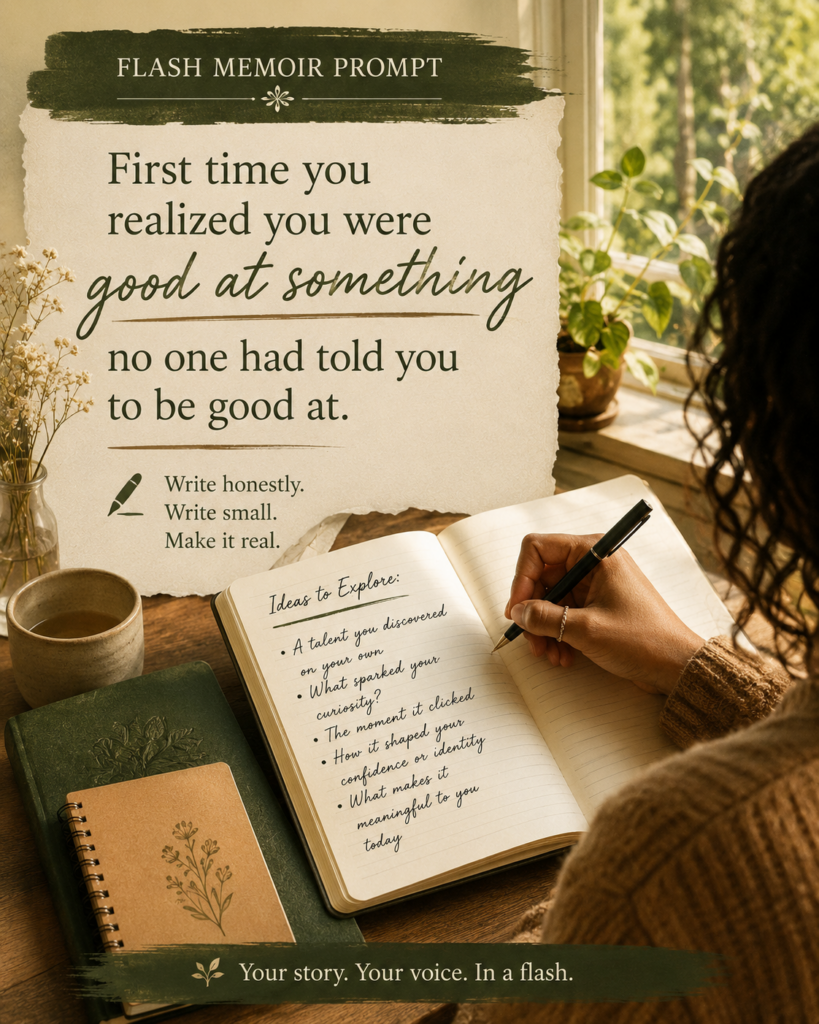
Flash Memoir Prompt: First Time You Realized You Were Good at Something No One Had Told You to Be Good at

Flash Memoir prompt good at something

A brief writing invitation for remembering the first time your private talent stepped into the light, even before anyone gave it a name.

Maybe it happened in the corner of a classroom, while everyone else was trying to finish the real assignment. You were doodling in the margin, fixing a broken toy, making a younger sibling laugh, or solving a problem faster than the adults expected. Then came that small shock: wait, I can do this.

This flash memoir prompt, the first time you realized you were good at something no one had told you to value, is about that quiet moment of self-recognition. It may not come with applause. It may not even come with a compliment. Sometimes the first person to notice your gift is you.

Flash Memoir prompt good at something

The Prompt

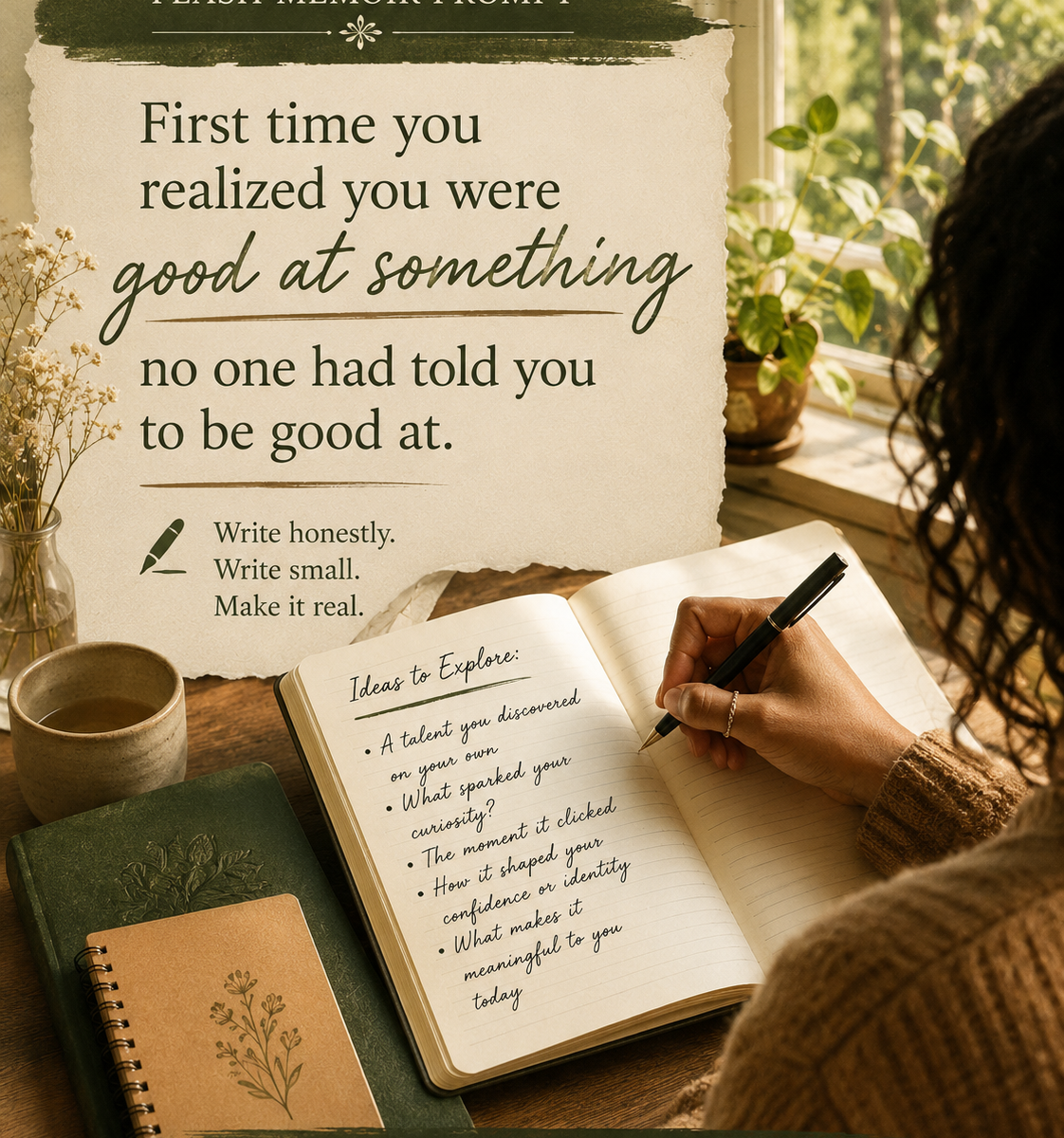
Write about the first time you realized you were good at something no one had told you to be good at.

This prompt can unlock a meaningful memory because it asks you to look for a talent before it became part of your identity. Before the award, the grade, the job, the label, or the expectation, there may have been one ordinary scene where you surprised yourself.

The memory might be small. You folded paper into something beautiful. You calmed a nervous friend. You heard the rhythm in a sentence. You spotted the flaw in a plan. You understood an animal, a machine, a recipe, a song, or a person before anyone explained it to you.

That is enough for a flash memoir. The point is not to prove that you became excellent. The point is to return to the first spark.

Why This Memory Matters

Many of us remember what we were told to be good at. Get good grades. Be polite. Win the game. Sit still. Speak clearly. Follow the rules. Those skills often come with pressure attached.

But the abilities we discover on our own can feel different. They may feel freer. They may also feel confusing, especially if no one around us knows how to respond.

This flash memoir prompt first time realized good at memory may uncover a story about hidden confidence. It may bring back the first clue that you had a way of seeing the world that belonged to you. That clue might have changed how you moved through a room, even if only for a minute.

There can also be tenderness in this kind of story. Maybe you were good at making peace because your house was tense. Maybe you were good at reading faces because you had to be. Maybe you were good at making people laugh because silence felt too heavy.

A memoir scene does not have to turn every talent into a victory. Sometimes the gift came with a cost. Sometimes you felt proud and embarrassed at the same time. That mix is where the real story often lives.

If you are writing this for a class or personal project, it may help to think about theme. A memory like this often points to a larger idea about identity, attention, or courage. If you want help naming that larger idea, this guide on how to identify theme in literature can also help you think about theme in your own life writing.

How to Approach This Prompt

Begin with one physical detail from the scene. Do not start by announcing the lesson. Start with the thing your hands touched, the sound in the room, or the face of the person nearby.

For example, you might begin with the smell of sawdust in a garage, the squeak of sneakers on a gym floor, the blue ink on your fingers, or the weight of a baby cousin in your lap. A clear detail can pull the whole memory closer.

Next, narrow the memory to one scene. You are not writing your full life story. You are writing the moment when you noticed something about yourself.

Ask yourself: Where was I? What was I doing? Who was there? What happened right before I realized I was good at it?

Then write what you noticed before you explain what it meant. If you were good at drawing, show the pencil moving. If you were good at fixing things, show the stuck part loosening. If you were good at comforting people, show the person’s breathing change.

Try to avoid turning the piece into a resume. You do not need to tell us every later success. A flash memoir works best when it trusts one moment to carry the weight.

You can also reread your draft like you would study a short text. Mark the strongest image, the emotional turn, and the sentence where the meaning becomes clear. This simple habit is close to how to annotate literature, and it can make your own writing sharper.

A Quick Example

I was nine, sitting under the card table at my aunt’s house, because the adults had taken every chair. My cousin Leo was crying over a spaceship model with one wing snapped clean off. No one wanted to deal with it. I picked up the tiny gray piece and turned it in my fingers until I saw how the broken edge matched the gluey scar on the ship. I asked for tape, then a toothpick, then held the wing still until my arm hurt. When Leo stopped crying, he looked at the ship like I had saved a real one from crashing. I remember feeling heat rise in my face. I had not known I could fix things. I had only known I hated seeing broken things stay broken.

Try It Yourself

Set a timer for ten minutes and write from the prompt without trying to sound impressive. Let the memory arrive in plain language.

If you get stuck, begin with this sentence: “The first clue was…” Then name one object from the scene. Follow that object into the memory.

As you write, stay close to the child, teen, or younger version of yourself who lived the moment. What did they believe was happening? What did they feel in their body? Did they feel proud, shy, startled, or suddenly older?

This flash memoir prompt first time realized good at something no one had assigned you can help you find a quieter kind of origin story. It is the story of a talent before it had a title.

Want More Flash Memoir Prompts?

If this prompt opened a memory you did not expect, keep following that thread. Short prompts can lead to honest scenes, especially when you give yourself permission to write one small truth at a time. Explore all 365 prompts in The Memory Trigger: 365 Flash Memoir Writing Prompts.

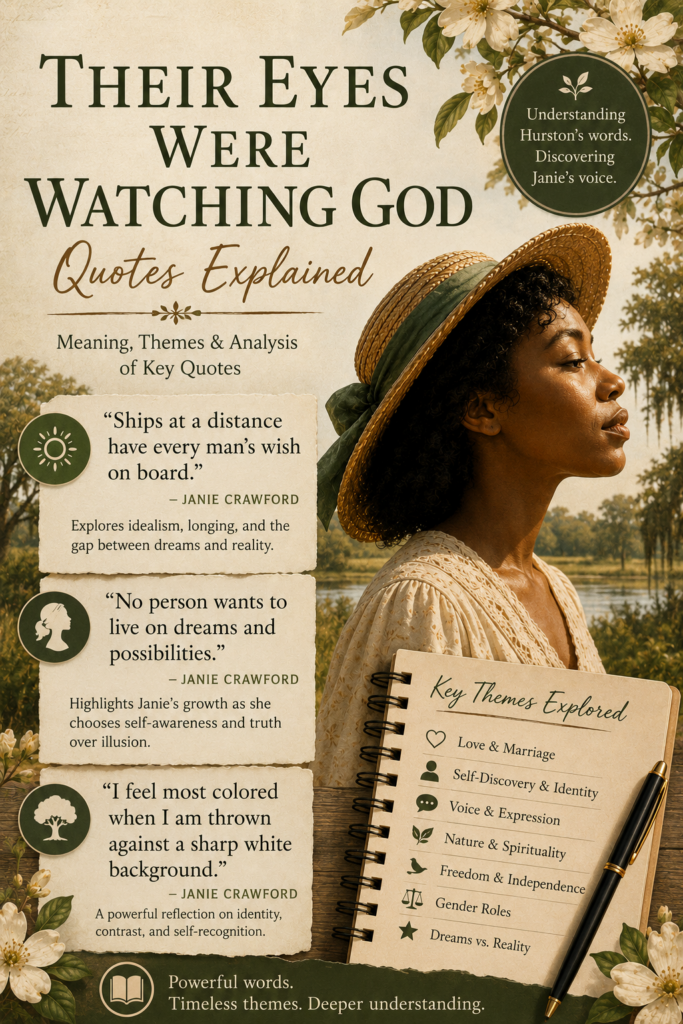
Their Eyes Were Watching God Quotes Explained: Important Passages for Essays

Their Eyes Were Watching God Quotes

A guide to memorable passages and how students can use them in essays.

Students often remember Zora Neale Hurston’s novel for its rich voice, bold symbols, and deep look at Janie’s self-discovery. This guide to Their Eyes Were Watching God quotes explained will help you connect key passages to theme, character, and essay claims.

In this Guide

  • Why the quotes matter
  • The horizon and Janie’s dreams
  • Voice, silence, and storytelling
  • Love, power, and marriage
  • Nature, the storm, and fate
  • How to use quotes in essays
  • FAQ
Their Eyes Were Watching God Quotes

Their Eyes Were Watching God quotes explained: why the passages matter

Hurston uses short, vivid lines to show Janie’s growth from a young dreamer into a woman who owns her story.

When you study Their Eyes Were Watching God quotes explained, look for two things: what the words say on the surface and what they reveal about Janie’s inner life.

The novel works like a framed story. Janie tells Pheoby what happened, so the quotes often carry both memory and meaning.

Essay tip: Do not drop a quote into your paragraph and move on. Explain how the language proves your point.

Their Eyes Were Watching God quotes explained: the horizon and Janie’s dreams

The horizon is one of the novel’s strongest symbols because it marks the space between what Janie has and what she wants.

Short quote: “Ships at a distance”

This opening image links dreams to ships far away on the water. It suggests that some people keep waiting for life to bring their hopes closer.

For Janie, the horizon means more than travel. It stands for freedom, desire, and a future she can choose for herself.

This is a key reason Their Eyes Were Watching God quotes explained can help students write about theme. The same symbol returns as Janie learns what love, independence, and self-knowledge mean.

A useful comparison is the green light in The Great Gatsby. Both symbols point toward desire, but Hurston’s horizon becomes more personal because Janie earns a clearer view of herself.

Voice, silence, and Their Eyes Were Watching God quotes explained

Janie’s journey is not only about love. It is also about finding the right to speak.

Short quote: “the horizon”

Near the end, Janie’s return to this image shows that she has not lost her dream. She has changed how she understands it.

At the start, others speak for her or over her. Nanny, Logan, and Joe all try to shape her life through their own ideas of safety, labor, or public image.

Joe Starks is especially important here. He wants Janie to look like a mayor’s wife, but he does not want her to have a public voice.

Use Their Eyes Were Watching God quotes explained to show how Hurston connects speech with power. When Janie speaks at last, her words show that her inner self has survived.

Love, power, and marriage in key quotes

Hurston uses Janie’s relationships to test different ideas of love.

Janie’s first marriage to Logan Killicks is tied to duty and survival. Nanny wants Janie safe, but safety without love feels empty to Janie.

Her marriage to Joe Starks brings status, yet it also brings control. Joe gives Janie a larger house, but he limits her freedom.

Tea Cake offers a different kind of love because he treats Janie more like a person than a symbol. Still, the novel does not present love as perfect or simple.

For Their Eyes Were Watching God quotes explained, focus on how Hurston shows love as both joy and risk. A strong essay can argue that Janie does not just search for romance. She searches for a life that feels true.

Literary connection: Like Jane in Jane Eyre, Janie wants love without losing her self-respect.

Nature, the storm, and fate

The storm scene shows human limits in a world that cannot be fully controlled.

Short quote: “watching God”

This phrase points to fear, awe, and helplessness. During the hurricane, people stop trusting wealth, plans, or social rank.

The storm also changes the novel’s tone. It moves the story from personal choice to survival.

This moment matters because Janie and Tea Cake face a force larger than love. Hurston suggests that nature can test human bonds in ways people cannot predict.

If you know King Lear, you can compare how a storm reveals truth. In both works, nature strips away pride and shows what people are made of.

How to use Their Eyes Were Watching God quotes explained in essays

A good quote paragraph needs a claim, context, evidence, and analysis.

Start with a clear point. Then give only the context your reader needs.

After the quote, explain the words. Ask why Hurston uses that image, symbol, or tone.

For Their Eyes Were Watching God quotes explained, avoid plot summary. Your teacher already knows what happened. Show how the language creates meaning.

Here is a simple model:

Claim: Hurston uses the horizon to show Janie’s desire for a larger life.

Context: The image appears as Janie thinks about dreams and what people hope to reach.

Analysis: The distant horizon suggests that Janie’s dream is not easy to reach, but it remains visible. This makes her growth feel active, not accidental.

If you want more help with structure, read our guide on how to write a literary analysis essay.

For faster review, you can also use our quote analysis study aid as you plan your essay.

Best books to pair with this novel

These books can help students build context and compare themes.

  • Their Eyes Were Watching God by Zora Neale Hurston
  • Passing by Nella Larsen
  • Their Eyes Were Watching God: A Casebook edited by Cheryl A. Wall

You can search these titles on Amazon, at your school library, or through a local bookstore.

Helpful outside resources

For author background, visit the Britannica biography of Zora Neale Hurston.

For more historical context, explore the Library of Congress Zora Neale Hurston collection.

FAQ: Their Eyes Were Watching God quotes explained

What is the most important quote in the novel?

The opening image, “Ships at a distance,” is one of the most important because it introduces dreams, gender, and the horizon symbol.

What does the horizon mean?

The horizon stands for Janie’s dreams, freedom, and search for a life that belongs to her.

Why is voice so important in the novel?

Voice matters because Janie’s growth depends on her ability to speak, remember, and define herself.

Can I use short quote fragments in an essay?

Yes. Short fragments often work well if you explain them closely and connect them to your claim.

How many quotes should I use in a paragraph?

One strong quote is usually enough. Spend more space on analysis than on quoted text.

Key Takeaway

Their Eyes Were Watching God quotes explained show that Janie’s story is about more than romance. It is about voice, freedom, and the courage to claim a life of her own.

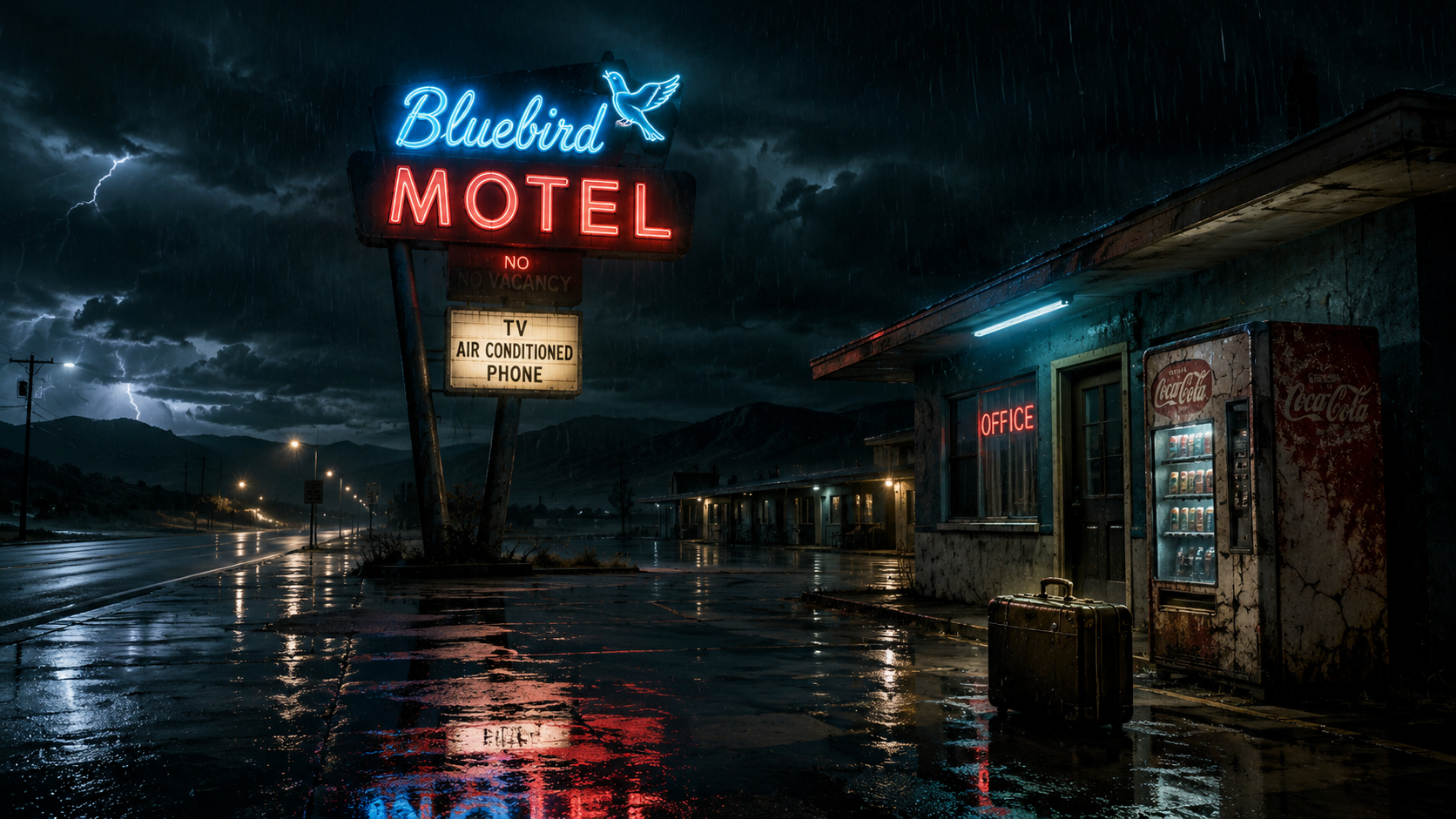
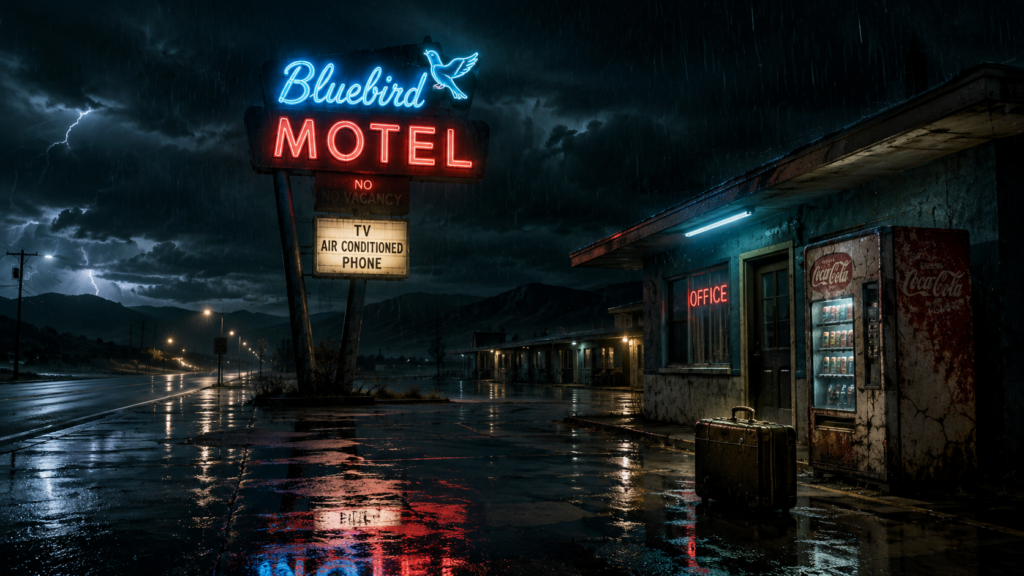
Ekphrasis Poetry Prompt: The Motel Sign Still Buzzing

Ekphrasis Poetry Prompt Motel

Some images feel like they already contain a story before a single word arrives. A flickering motel sign in the rain. A suitcase left beside a vending machine. An empty highway with no headlights coming. The image does not explain itself, which is exactly why it can unlock strong poetry.

This ekphrasis poetry prompt asks you to enter the emotional atmosphere of an image instead of simply describing it. You are not writing a summary of what you see. You are writing toward the feeling underneath it.

Ekphrasis Poetry Prompt: The Motel Sign Still Buzzing

Write a poem inspired by an empty roadside motel at midnight during a storm.

Somewhere nearby, a neon sign still buzzes. A suitcase sits abandoned beside a vending machine. Rain keeps falling. No one arrives.

Your speaker may be someone who stayed there years ago, someone passing through, someone waiting for a person who never came back, or even someone who cannot leave. The poem can stay realistic or drift toward the surreal.

Try to focus on sensory detail instead of explanation. Let the image create emotional pressure on its own.

Questions to Explore

Why was the suitcase left behind?

What does the storm seem to remember?

What feeling hangs in the silence?

Or, what happened just before this moment?

What does the speaker refuse to admit?

You do not need to answer every question directly. Sometimes the strongest poems leave part of the image unresolved.

Why This Ekphrasis Poetry Prompt Works

Ekphrasis poetry becomes powerful when the image feels emotionally alive. An empty motel can suggest escape, regret, loneliness, freedom, disappearance, memory, or reinvention without stating any of those ideas outright.

Images like this give poets something concrete to return to while writing. The glowing sign, the rainwater, the cracked pavement, and the abandoned suitcase can act as emotional anchors throughout the poem.

If the poem feels stuck, narrow your focus. Write only about the sound of the rain hitting the sign. Write only about the suitcase handle. Or, write only about the color of the reflected neon on the wet asphalt.

Small details often carry the emotional weight.

Try Different Angles

You could write this poem as:

A narrative free verse poem

A fragmented prose poem

A noir-inspired monologue

A memory poem about leaving home

A surreal dream poem

A poem spoken by the motel itself

The image does not need to stay literal. Let it shift as the poem develops.

A Final Thought

Good ekphrasis poetry does not just describe an image. It enters it. The goal is not accuracy. The goal is emotional resonance.

Somewhere in the storm, the motel sign is still buzzing. Let the poem begin there.

Animal Farm Character Analysis: Key Characters, Motivations, and Conflicts

Animal Farm analysis

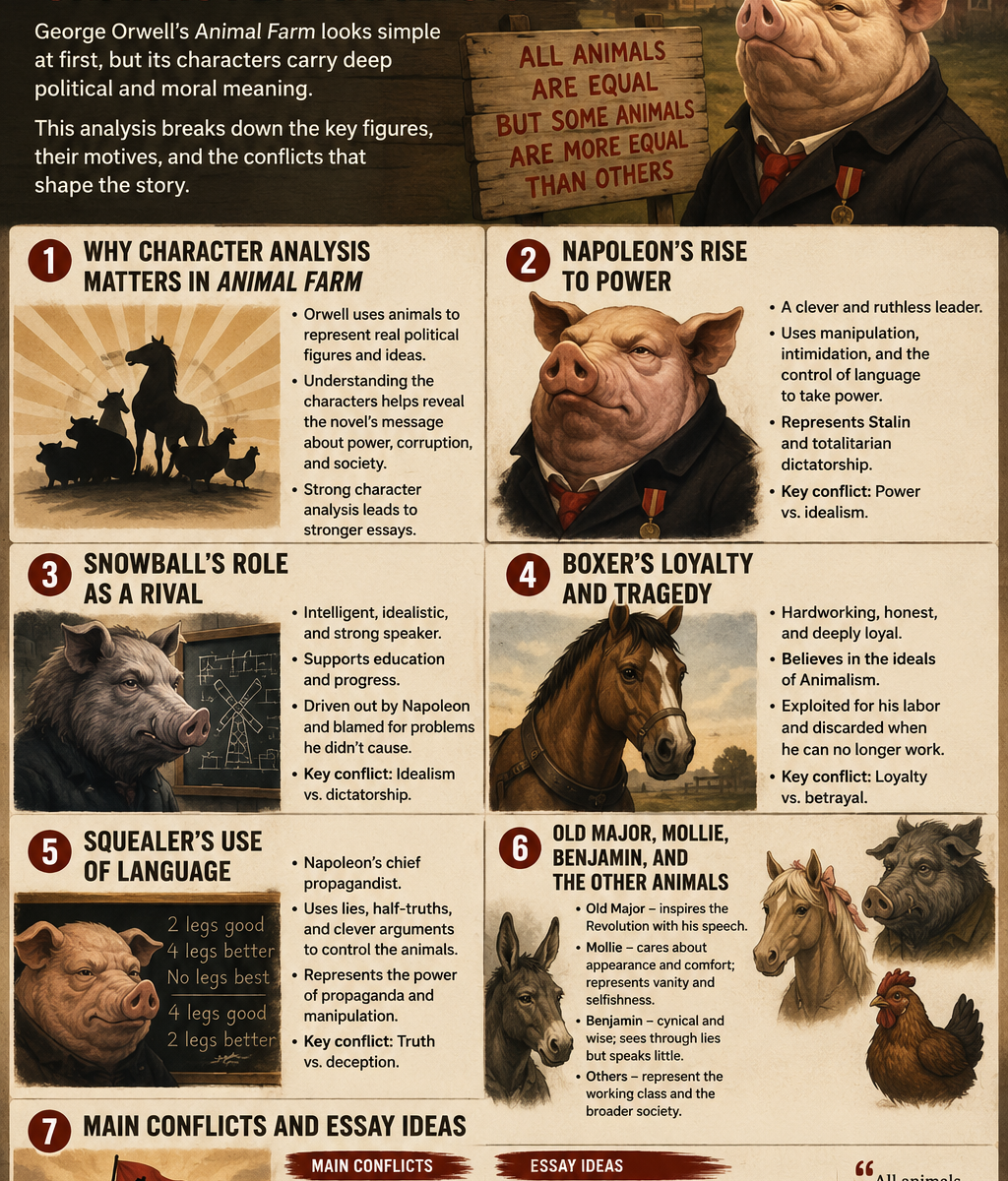
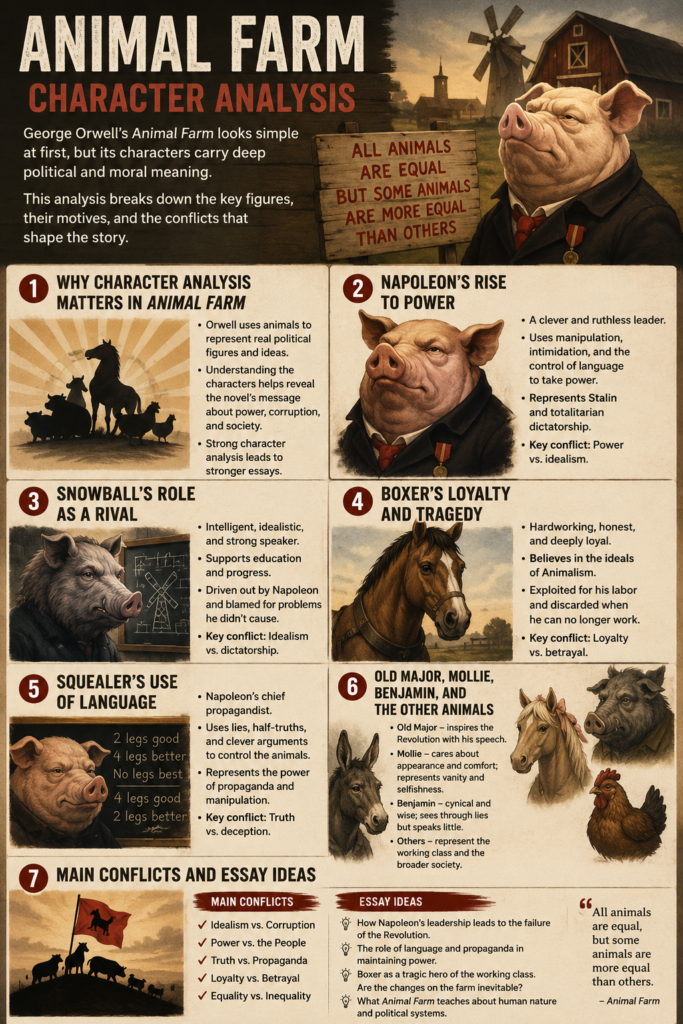
George Orwell’s Animal Farm looks simple at first, but its characters carry deep political and moral meaning. This Animal Farm character analysis breaks down the key figures, their motives, and the conflicts that shape the story.

Use this guide for class discussions, essays, and quote-based analysis.

In this Guide

  • Why character analysis matters in Animal Farm
  • Napoleon’s rise to power
  • Snowball’s role as a rival
  • Boxer’s loyalty and tragedy
  • Squealer’s use of language
  • Old Major, Mollie, Benjamin, and the other animals
  • Main conflicts and essay ideas
  • Books for further reading
  • FAQ
Animal Farm analysis

Animal Farm Character Analysis: Why the Characters Matter

The animals are not just farm creatures. They stand for people, groups, and ideas from the Russian Revolution and from human society in general.

Orwell uses each character to show how power can change a movement. A dream of fairness turns into a system ruled by fear.

This is why Animal Farm character analysis works best when you ask two questions: What does this character want? What does this character reveal about power?

If you want a wider method for studying fiction, read our guide on how to analyze characters in literature.

Animal Farm Character Analysis of Napoleon

Napoleon is the main force behind the farm’s collapse into tyranny. He begins as one of the leaders of the rebellion, but he soon makes power his true goal.

Napoleon does not win through wisdom or kindness. He wins through fear, secrecy, and control.

His dogs become his private police. Once he drives Snowball away, no one can challenge him. He changes rules, takes special privileges, and slowly becomes like the humans the animals once hated.

Napoleon’s motivation is clear: he wants total control. He claims to serve the farm, but his choices serve himself.

In an essay, Napoleon can be compared to Macbeth from Shakespeare’s Macbeth. Both characters let ambition swallow their morals. Once they gain power, they use violence to keep it.

Snowball: The Rival Who Becomes a Scapegoat

Snowball is smart, active, and full of plans. He wants the farm to improve, but he also wants influence.

Unlike Napoleon, Snowball believes in public speeches and big projects. His plan for the windmill shows his hope for progress. It also shows that not every leader with good ideas can survive a brutal power struggle.

After Napoleon forces him out, Snowball becomes a scapegoat. Whenever something goes wrong, Napoleon blames him.

This part of Animal Farm character analysis matters because Snowball becomes more useful to Napoleon as an enemy than as a real person. Fear of Snowball helps Napoleon control the animals.

Students can connect Snowball to the idea of the “outsider” in literature. Like many blamed figures in political stories, he is turned into a symbol of danger.

Boxer: Loyalty, Labor, and Tragedy

Boxer is one of the most painful characters in the novel. He is strong, honest, and deeply loyal to the farm.

His two sayings are “I will work harder” and “Napoleon is always right.” These lines show both his goodness and his weakness.

Boxer wants to help the rebellion succeed. He believes that hard work can fix every problem. Yet he does not question the leaders who use him.

His death is the emotional center of the book. When Napoleon sells Boxer to the knacker, the reader sees the full cruelty of the new system.

For discussion posts, Boxer is often the best character to use when writing about trust. He shows how loyalty can become dangerous when leaders do not deserve it.

Squealer: Language as a Tool of Control

Squealer is Napoleon’s speaker. He explains, excuses, and twists the truth.

He does not need to be strong because his power comes from words. He changes facts until the animals doubt their own memories.

When the commandments change, Squealer helps make the changes seem normal. When the pigs take more food, he makes it sound necessary. When Boxer is taken away, he tells a false story to calm the farm.

This Animal Farm character analysis shows that propaganda is one of Orwell’s main concerns. Squealer proves that language can protect injustice when people stop asking questions.

For helpful background on Orwell and his political writing, see the Britannica entry on George Orwell.

Old Major: The Dream That Starts the Rebellion

Old Major appears only at the start, but his ideas shape the whole novel. He gives the animals a vision of freedom from human control.

His speech inspires hope. He teaches the animals that their suffering comes from human greed.

Still, Old Major’s dream is simple compared with what happens later. He does not explain how power should be shared after the rebellion.

That gap matters. The animals know what they are against, but they do not know how to protect their new society from corruption.

Benjamin: The Quiet Witness

Benjamin is the donkey who sees more than he says. He is cynical, careful, and hard to fool.

He can read, and he understands that the pigs have betrayed the rebellion. Yet he rarely acts.

His silence raises a hard question: Is knowing the truth enough? Orwell suggests that wisdom without courage may not stop injustice.

Benjamin becomes most moving when Boxer is taken away. He finally speaks with urgency, but it is too late.

Mollie: Comfort Over Commitment

Mollie is often easy to dismiss, but she has an important role. She cares more about ribbons, sugar, and comfort than the ideals of the rebellion.

Her motivation is personal safety. She does not want freedom if it means sacrifice.

Mollie leaves the farm because the new life demands too much from her. In this way, she shows that not everyone joins a revolution for the same reason.

In Animal Farm character analysis, Mollie can help students write about class, privilege, and self-interest.

Clover, Moses, and the Sheep

Clover is caring and loyal, but she senses that something is wrong. She cannot always explain it, which makes her a realistic character.

She represents ordinary people who feel injustice but lack the tools to fight it.

Moses, the raven, talks about Sugarcandy Mountain. His stories offer comfort, but they also distract the animals from life on the farm.

The sheep repeat slogans without thought. Their role is simple but important. They show how noise can drown out reason.

Major Conflicts in Animal Farm

The main conflict begins as animals versus humans. The animals rebel against Mr. Jones because he neglects and exploits them.

After the rebellion, the deeper conflict becomes animals versus pigs. The pigs take control of the farm and turn the old oppression into a new one.

There is also a conflict between memory and propaganda. The animals remember the original commandments, but Squealer teaches them to doubt what they know.

This is a key point for any Animal Farm character analysis. Orwell shows that political control depends not only on force, but also on control of the past.

For more help with character-based essays, you can use this simple character analysis framework.

How Character Choices Shape the Story

Every major turn in the novel comes from a character’s choice. Napoleon chooses power. Boxer chooses trust. Benjamin chooses silence.

These choices build the tragedy of the farm. No single animal causes everything, but many choices allow the pigs to win.

This makes Animal Farm useful for student essays. You can argue that Orwell’s message is not only about bad leaders. It is also about the danger of passive followers.

Essay Ideas for Animal Farm Character Analysis

A strong essay should connect character traits to the novel’s larger message. Do not just say that Napoleon is cruel. Explain how his cruelty changes the farm.

You might write about Boxer as a symbol of exploited workers. You could also study Squealer as a symbol of propaganda.

Another strong option is Benjamin. His character helps you explore silence, guilt, and responsibility.

For quote-based writing, choose short lines that reveal motive. Boxer’s motto, Squealer’s speeches, and the final commandment all work well.

Relevant Books for Further Reading

If you want more context, these books can help:

  • Animal Farm by George Orwell
  • 1984 by George Orwell

For historical background, the Britannica overview of the Russian Revolution can help you connect the novel to real events.

FAQ: Animal Farm Character Analysis

Who is the most important character in Animal Farm?

Napoleon is the most important character because his choices control the farm’s future. His rise shows how a revolution can become a dictatorship.

What does Boxer represent?

Boxer represents loyal workers who give everything to a system that does not protect them. His story is tragic because his trust is used against him.

Why is Squealer important?

Squealer shows the power of propaganda. He uses language to hide lies and defend Napoleon’s rule.

Is Snowball a good character?

Snowball has better goals than Napoleon, but he is not perfect. He wants progress, yet he also wants leadership and control.

What is the main lesson from the characters?

The novel warns that power can corrupt leaders, but it also warns that silence and blind trust can help corruption grow.

Key Takeaway

Animal Farm character analysis helps readers see how Orwell builds a warning about power. The tragedy of the farm comes from ambition, fear, and the failure to question leaders before it is too late.

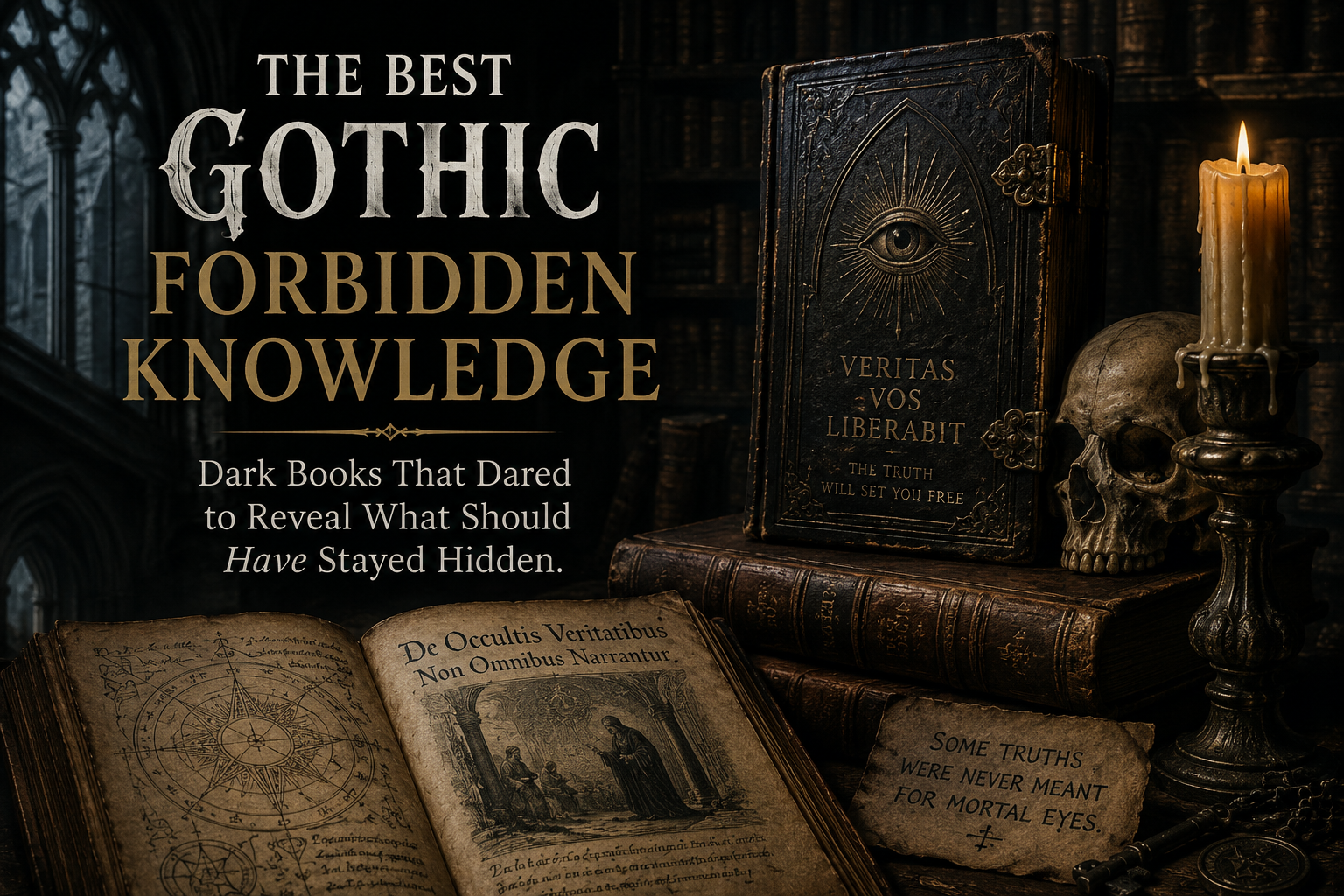
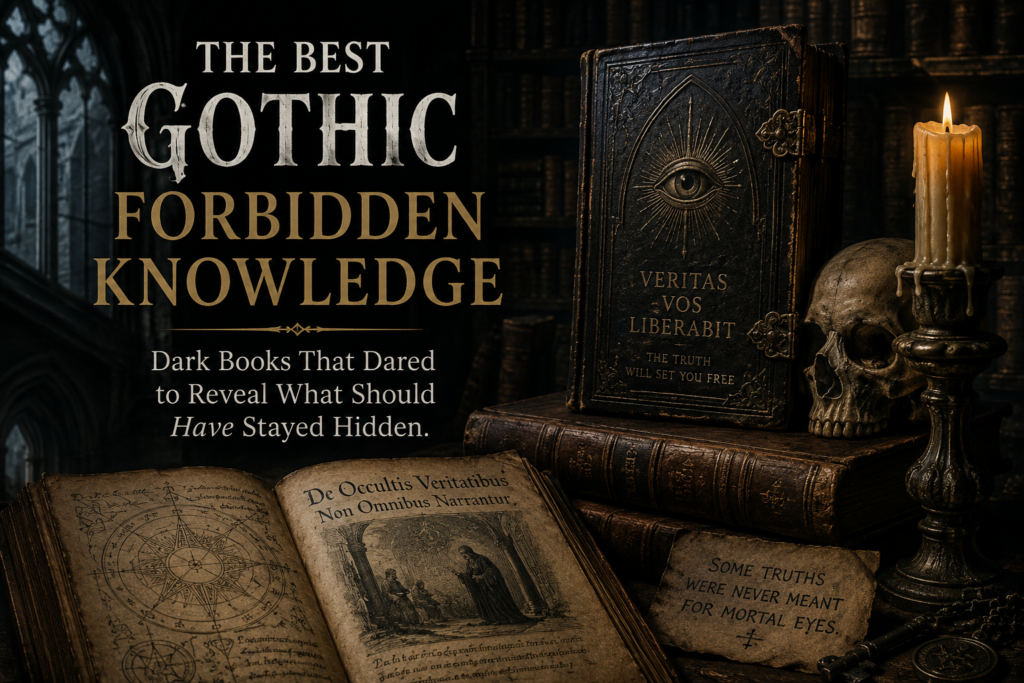
Best Gothic Forbidden Knowledge: Dark Books, Dangerous Secrets, and Why They Still Matter

Best Gothic Forbidden Knowledge Books

Best Gothic Forbidden Knowledge stories ask a scary question: what happens when people learn what they were never meant to know?

These tales mix mystery, fear, old houses, strange science, and secret books. They show how the search for truth can lead to power, madness, or ruin.

In this Guide

What Does Best Gothic Forbidden Knowledge Mean?

Gothic forbidden knowledge is the dangerous truth hidden behind locked doors, secret papers, strange experiments, or ancient curses.

In these stories, knowledge is not always good. A character may want to solve a mystery, raise the dead, break a rule, or control nature.

The problem is that the truth often changes them. Once they know too much, they cannot return to who they were.

Best Gothic Forbidden Knowledge stories often warn readers about pride. They ask if every secret should be uncovered.

Why Best Gothic Forbidden Knowledge Feels So Powerful

This theme works because it connects fear with curiosity.

Most people want answers. Gothic literature turns that normal wish into something unsafe. The more a character learns, the darker the world becomes.

That is why these stories feel tense. A locked room is scary, but the secret inside may be worse.

The best Gothic forbidden knowledge tales also make readers question progress. Science, books, history, and religion can all offer truth, but truth may come with a cost.

For background on the Gothic tradition, Britannica has a helpful overview of the Gothic novel.

Best Gothic Forbidden Knowledge Books and Examples to Read First

These works show how dangerous secrets can shape a story.

Frankenstein by Mary Shelley is one of the most famous examples. Victor Frankenstein wants to discover the secret of life. He succeeds, but his success brings grief, fear, and guilt.

Victor’s mistake is not just that he learns too much. His real failure is that he refuses to care for what he creates.

Dracula by Bram Stoker uses forbidden knowledge in a different way. The characters must study old legends, strange signs, and hidden threats to fight Count Dracula.

Dracula himself also stands for a dark kind of knowledge. He knows how to cross borders, control others, and hide his corruption. For more on this idea, read Count Dracula as a symbol of fear and corruption.

The Strange Case of Dr. Jekyll and Mr. Hyde by Robert Louis Stevenson explores the secret self. Dr. Jekyll wants to divide good from evil, but his experiment frees a part of him that he cannot control.

Best Gothic Forbidden Knowledge books are not only about monsters. They are about people who open a door and find their own darkness on the other side.

Recommended Books for Gothic Forbidden Knowledge Fans

These books are strong choices for students, book clubs, or readers who want a deeper Gothic shelf.

  • Frankenstein by Mary Shelley
  • Dracula by Bram Stoker
  • The Strange Case of Dr. Jekyll and Mr. Hyde by Robert Louis Stevenson

Each book shows a different version of the same danger. A person seeks hidden truth, then must face what that truth awakens.

Common Symbols in Best Gothic Forbidden Knowledge

Gothic stories use symbols to make secret knowledge feel alive.

Locked rooms often stand for hidden truth. A door may protect the world from a secret, or protect a character from knowing too much.

Old books and letters show that the past still has power. In many Gothic tales, the truth is not new. It has been buried, ignored, or feared for years.

Laboratories can stand for human pride. In Frankenstein, the lab is a place of discovery, but it also becomes a place of moral failure.

Castles and ruined houses suggest that secrets live inside families and cultures. The building itself can feel like a mind full of guilt.

In Best Gothic Forbidden Knowledge stories, symbols often warn the reader before the character understands the danger.

Major Themes in Best Gothic Forbidden Knowledge Stories

These stories are scary because they deal with real human choices.

Curiosity and danger sit at the center. Characters want to know more, but their search can hurt them or others.

Pride and punishment also appear often. Victor Frankenstein believes he can master life itself, but he cannot master the results.

Hidden identity plays a major role in Dr. Jekyll and Mr. Hyde. The secret is not in a castle. It is inside the human mind.

The past returning is another key theme. Gothic secrets rarely stay buried. They rise back up through letters, ghosts, bloodlines, or memory.

The British Library offers strong context on the origins of the Gothic and why these themes became so popular.

Why Best Gothic Forbidden Knowledge Matters for Students

This theme helps students read Gothic literature with more purpose.

Instead of seeing the stories as only dark or strange, students can ask deeper questions. Who wants knowledge? Who hides it? Who pays the price?

These questions work well for essays. They connect plot, character, setting, and theme in a clear way.

Best Gothic Forbidden Knowledge also links to modern life. Today, people still debate science, privacy, power, and the limits of discovery.

That is why Gothic literature still feels fresh. The castles may be old, but the fears are not.

How to Spot Forbidden Knowledge in Gothic Literature

Look for moments when a character crosses a line.

That line might be moral, scientific, religious, or personal. The character may read a secret text, enter a forbidden room, or test a dangerous idea.

Pay attention to the setting right before the discovery. Storms, darkness, silence, and decay often signal that the story has reached unsafe ground.

Also watch how the character changes after the truth appears. In the best Gothic forbidden knowledge stories, the discovery leaves a mark.

FAQs About Best Gothic Forbidden Knowledge

What is Best Gothic Forbidden Knowledge in literature?

It refers to Gothic stories where hidden truth, secret science, or dangerous learning leads to fear, guilt, or destruction.

Is Frankenstein a Gothic forbidden knowledge story?

Yes. Victor Frankenstein seeks the secret of life, but his discovery creates suffering that he cannot escape.

Why do Gothic stories use old books and locked rooms?

They show that truth is hidden for a reason. These symbols make knowledge feel dangerous before the secret is revealed.

How does Dracula connect to forbidden knowledge?

The heroes must learn ancient lore to fight Dracula. Dracula also represents hidden corruption and fear, which you can explore more in this analysis of Count Dracula.

Why is forbidden knowledge still popular?

It speaks to a modern fear: we want progress, but we worry about what happens when power grows faster than wisdom.

Key Takeaway

Best Gothic Forbidden Knowledge stories remind us that truth can be powerful, but power needs responsibility.

The strongest Gothic tales do more than scare us. They ask what we should know, what we should leave alone, and what kind of people we become after the door opens.

error

Enjoy this article? Please spread the word :)

Follow by Email
BLUESKY
fb-share-icon
Reddit
LinkedIn
Share
RSS