


A quiet writing invitation for remembering the small private place in your childhood home where you went to be alone, and what that spot still knows about you.
Maybe it was the space behind the living room chair. Maybe it was the top bunk, the basement steps, the closet floor, or the patch of carpet beside the heater vent. Every childhood home has a place where a child can disappear without really leaving.
This flash memoir prompt specific corner spot childhood home invites you to return to one of those private places. Not the whole house. Not your entire childhood. Just one spot where you sat with your thoughts before you had the words for them.

The Prompt
Write about a specific corner or spot in your childhood home where you went to be alone.
This prompt works because a place can hold a feeling better than a summary can. If you write, “I was lonely,” the reader may understand you. But if you describe the dusty gap between the couch and the wall where you hid with a comic book and a sleeve of crackers, the reader can feel the loneliness without being told what to feel.
Try to choose one real place. The more specific, the better. “My room” may be too broad. “The triangle of floor between my bed and the radiator” gives your memory a clear shape.
Why This Memory Matters
The spot you chose as a child says something about what you needed. Maybe you wanted quiet in a loud house. Maybe you wanted control in a home where adults made all the decisions. Or maybe you wanted to cry where no one would ask questions.
Some childhood hiding places were peaceful. Others were protective. A few were just funny, like squeezing into a laundry basket because you wanted to read without a sibling stealing the book. The emotional truth does not have to be dramatic. It only has to be honest.
This kind of memory can also reveal what you noticed as a child. The smell of old coats in a closet. The hum of the refrigerator near the kitchen floor. The scratchy wallpaper beside your cheek. Those details can become symbols without you forcing them. If you want help noticing how objects and places carry meaning, you may enjoy this guide on how to find symbolism in a story.
Your private corner may also show how you learned to be with yourself. Did you make up stories there? Did you rehearse arguments? Or did you pray, sulk, read, listen, or dream? A small place can hold a large part of who you were becoming.


How to Approach This Prompt
Begin with a physical detail. Do not start by explaining your family, your personality, or the whole history of the house. Start with the carpet. The door hinge. The slant of afternoon light.
You might write one sentence like, “The corner behind the blue recliner smelled like dust and peppermint candy.” That sentence gives you a doorway into the memory.
Then narrow the memory to one scene. Choose one day, one hour, or one moment when you went to that spot. What had just happened? What did you carry with you? Or what could you hear from the rest of the house?
Write what you noticed before you explain what it meant. If your parents were arguing, you do not need to describe every argument they ever had. Show the television volume rising in the next room. Show your hand tracing the crack in the wall. Let the scene do some of the work.
If you teach writing or use prompts with students, this is also a great exercise in close observation. Writers can mark sensory details, repeated images, and emotional shifts just as they would when they annotate literature. The same skills that help us read a story can help us write one from memory.
Do not try to tell the whole story of your childhood home at once. For this flash memoir prompt specific corner spot childhood home, the power is in the small frame. Stay in the corner. Let the rest of the house remain just outside the scene.
A Quick Example
The best place to be alone was under the sewing table in my mother’s room. The machine sat on top like a quiet animal, heavy and black, with gold letters I could not read yet. I fit beneath it if I pulled my knees close and kept my head bent. Fabric scraps hung over the edge, so no one saw me unless they were looking. I went there after my older brother called me a baby for crying during a thunderstorm. From under the table, the thunder sounded softer, like someone moving furniture far away. I held a square of yellow cloth against my cheek and watched my mother’s foot pedal rest above the carpet. I did not know how to ask for comfort, so I borrowed it from the things she had touched.
Try It Yourself
Set a timer for ten minutes and write about your childhood hiding spot without stopping to fix the sentences. Let the memory arrive in pieces. The shape of the room may come first. The feeling may come later.
If you get stuck, answer one simple question: What could you see from that spot that no one else noticed? That view may lead you straight into the heart of the scene.
You do not need to make the memory neat. You do not need a perfect ending. A flash memoir can close with a single image, like a closet door left open, a book hidden under a pillow, or the last square of sunlight on the floor.
Want More Flash Memoir Prompts?
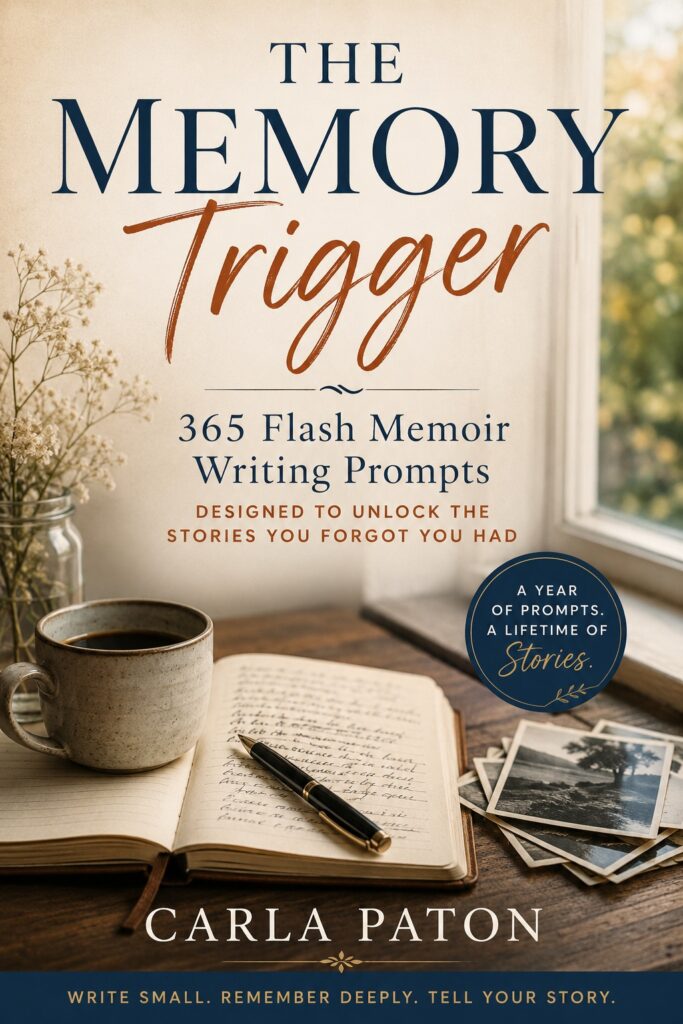
If this prompt helped you remember a place you had almost forgotten, keep going. One small memory often opens the door to another. Explore all 365 prompts in The Memory Trigger: 365 Flash Memoir Writing Prompts.


Get the Free Close Reading Worksheet Pack
Join my email list and receive the printable worksheet pack you can use with any novel or poem.
No spam. Just helpful guides for reading literature well.












