

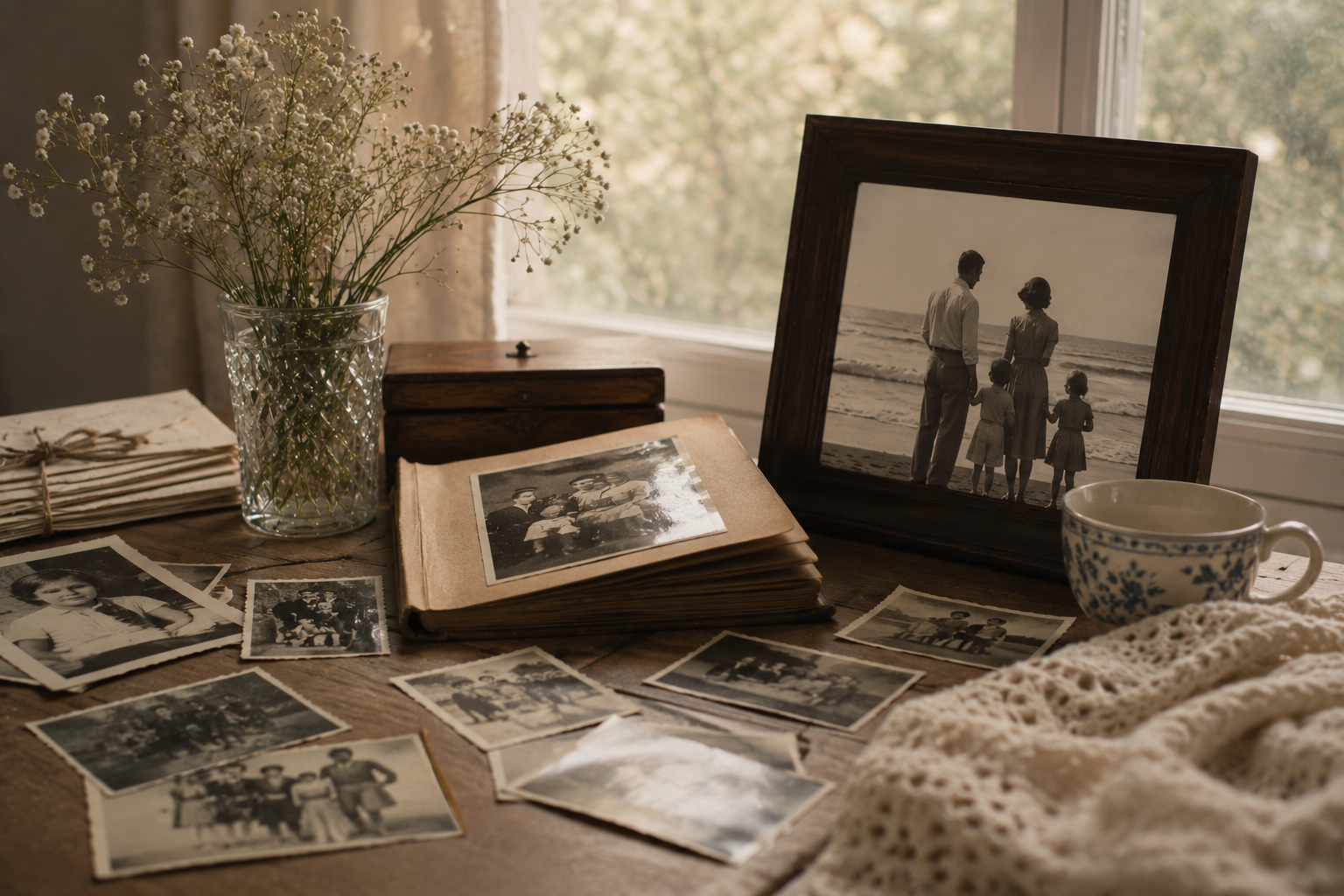
A focused flash memoir invitation for remembering a version of your family that has faded, changed, or quietly disappeared.
You might notice it at a holiday table, when someone reaches for a serving spoon that used to belong to your grandmother. Or in a photo where everyone is younger, louder, closer, and you realize that exact group of people will never sit in the same room again.
This flash memoir prompt about a version of your family that no longer exists is not only about loss. It can also be about change, distance, growing up, divorce, moving away, old routines, or the strange way families become new families over time.
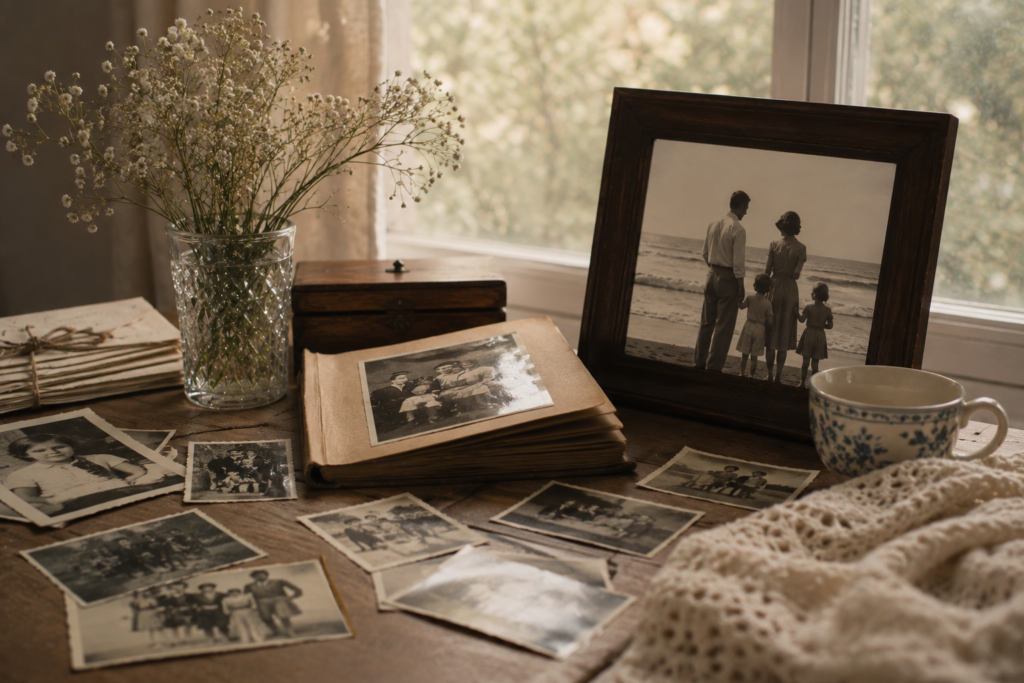
The Prompt
Write about a version of your family that no longer exists.
This prompt can open a strong memory because it asks you to look at your family as it once was, not as a full history, but as one lived moment. Maybe the old version of your family was noisy and crowded. Maybe it was quiet because everyone avoided the same subject. Maybe it was happy, but only in the way you understood happiness then.
A good flash memoir prompt version family no longer exists can help you find the small scene that holds the larger truth. You do not need to explain every change. You only need to show the reader what it felt like to be there before everything shifted.
Why This Memory Matters
Families change in ways that can be easy to miss while they are happening. Someone leaves for college. Someone stops calling. A parent remarries. A sibling becomes a stranger for a while. A child grows up and no longer believes the adults know everything.
When you write about a version of your family that no longer exists, you are writing about time. You are also writing about roles. Who made everyone laugh? Who kept the peace? Who always sat in the same chair? Who did you think you were in that family?
This kind of memory may uncover grief, but it may also uncover tenderness. You might remember the family before the big argument, before the move, before the illness, before everyone got their own phones and stopped watching the same movie on the couch.
If you enjoy looking closely at people and their choices, you may find it useful to think like a reader studying a novel. This guide on how to analyze characters in literature can help you notice patterns, motives, and quiet details in real life too.
How to Approach This Prompt
Begin with one physical detail. Choose something small enough to hold in your hand or picture clearly in your mind. A cracked bowl. A bunk bed. A station wagon. A stack of TV trays. A hallway light left on at night.
Then narrow the memory to one scene. Do not try to tell the whole family history at once. The whole story may be too large for a flash memoir piece. One evening can carry enough weight.
Write what you noticed before you explain what it meant. If your parents were still together then, show them passing plates across the table. If your siblings still shared a bedroom, show the line of stuffed animals between the beds. If your grandparents still hosted Sunday dinner, show the smell of soup in the entryway.
Try not to rush toward the lesson. Let the reader stand inside the old version of your family for a moment. Let them hear the voices, see the furniture, and sense what no one said out loud.
After you draft, you can reread your piece and mark the details that feel alive. Writers do this in memoir the same way students mark important lines in a story. If that skill helps you, here is a simple guide on how to annotate literature that can also work for your own drafts.
A Quick Example
Before my parents sold the house, Sunday mornings belonged to pancakes. My father stood at the stove in his robe, flipping them too early, so the middles stayed soft. My mother read the paper at the table and circled grocery coupons with a red pen. My brother and I fought over the syrup bottle even though there was plenty. The dog slept under my chair because I dropped crumbs on purpose. Nothing about it seemed special then. It was just breakfast. Years later, after the divorce and the apartment kitchens and the holidays split into two calendars, I found the old griddle in a box. The handle was loose. I held it for a minute and could almost hear my mother say, “Use a plate, not a napkin.”
Try It Yourself
Set a timer for ten minutes and write about one version of your family that no longer exists. Start with the room, the object, or the sound that brings it back fastest.
You do not have to make the memory neat. You do not have to decide if it was good or bad. Just return to the scene and tell the truth from where you stood then.
If the writing surprises you, follow that surprise. The best flash memoir pieces often begin with a simple image and end with a feeling the writer did not expect to find.
Want More Flash Memoir Prompts?
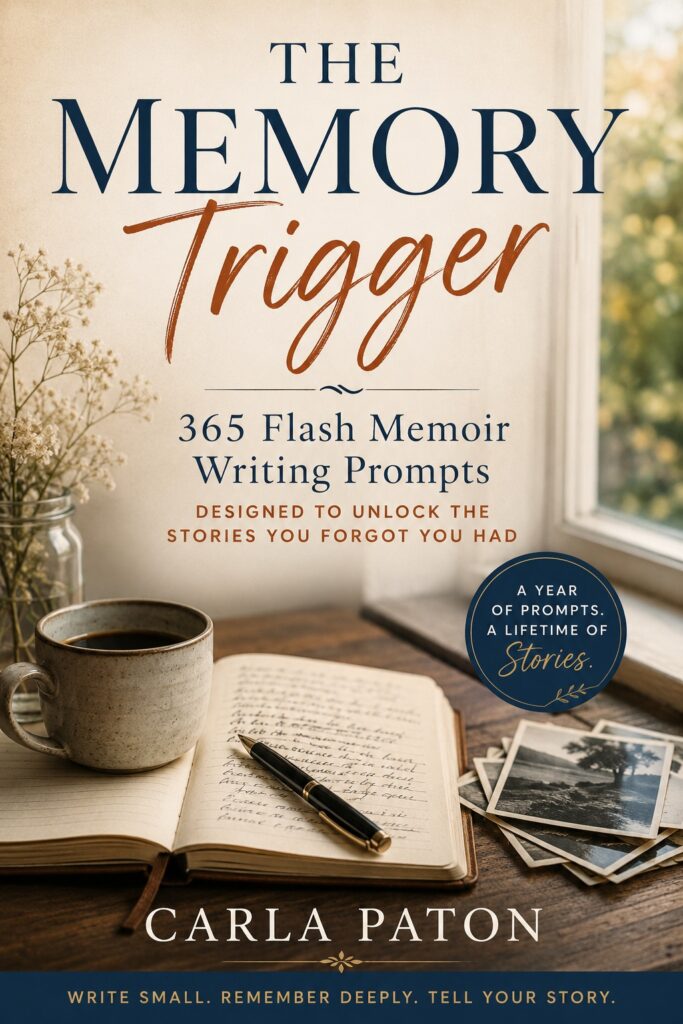
If this prompt helped you remember a scene you had not thought about in years, keep going. Explore all 365 prompts in The Memory Trigger: 365 Flash Memoir Writing Prompts.


Get the Free Close Reading Worksheet Pack
Join my email list and receive the printable worksheet pack you can use with any novel or poem.
No spam. Just helpful guides for reading literature well.












